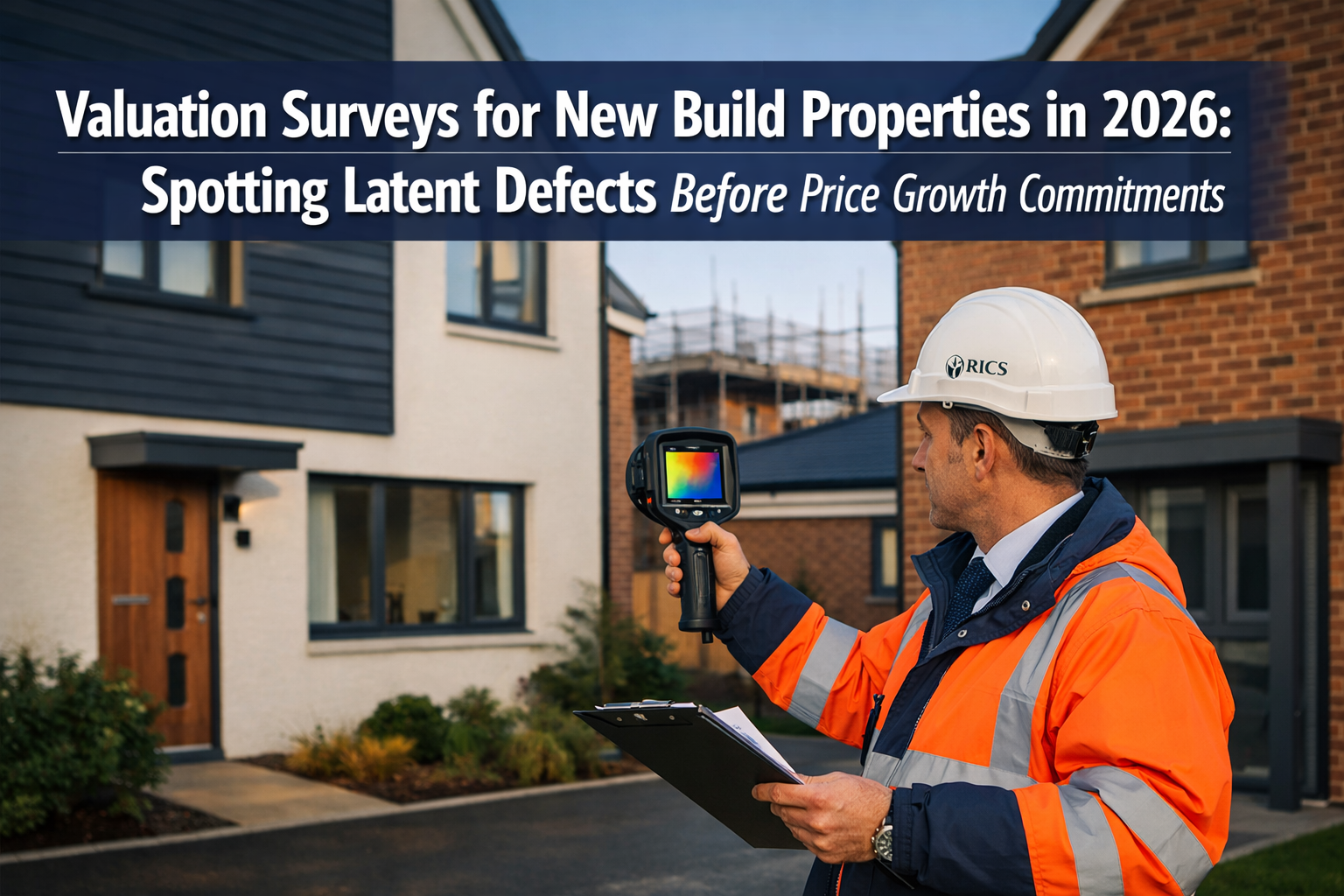

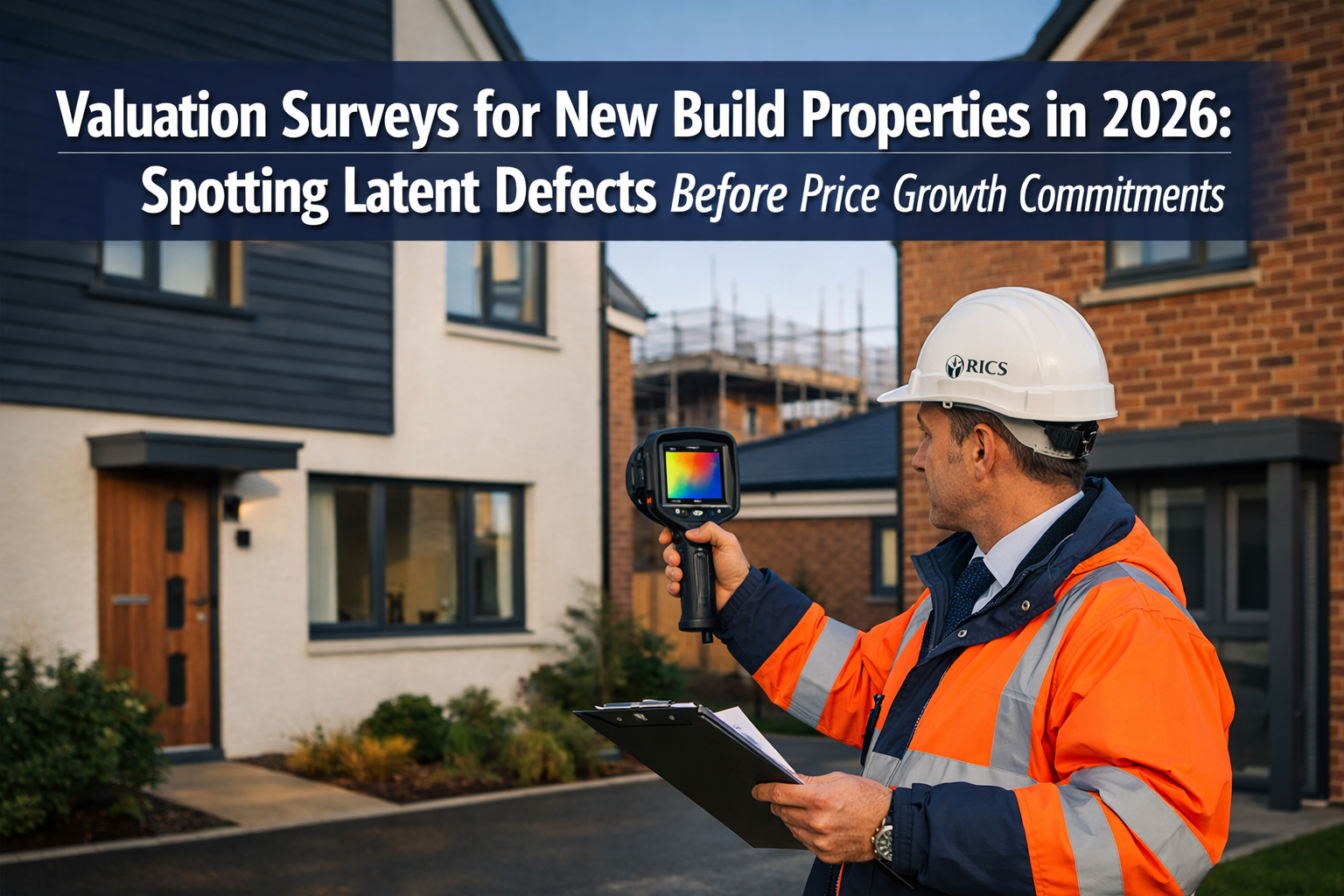
The UK property market in 2026 presents a unique challenge for new build buyers. With house prices forecast to grow between 2-5% this year[1], making the right purchasing decision has never been more critical. Yet beneath the pristine finishes and modern facades of new developments, latent defects can lurk—hidden problems that won't reveal themselves for months or even years after completion. Valuation Surveys for New Build Properties in 2026: Spotting Latent Defects Before Price Growth Commitments represents a crucial protective strategy for buyers navigating this recovering market.
Professional valuation surveys have become increasingly vital as modest price growth returns to the UK housing sector[2]. These comprehensive assessments combine RICS-compliant valuation techniques with thorough defect detection, ensuring buyers understand exactly what they're paying for before committing to properties that may appreciate in value over the coming years.
Key Takeaways
- 🏗️ New builds aren't defect-free: Modern construction can hide significant issues including structural movement, inadequate insulation, and water ingress that affect long-term value
- 📊 2-5% growth makes accuracy critical: With modest UK house price increases forecast for 2026, accurate valuations protect buyers from overpaying in a stabilizing market[1]
- 🔍 Professional surveys identify hidden costs: RICS-qualified surveyors detect latent defects that could cost £5,000-£50,000+ to remedy, adjusting valuations accordingly
- 📋 New homebuying rules change the game: 2026 regulations introduce earlier inspection protocols and enhanced risk mitigation procedures for property transactions[3]
- 💰 Regional variations affect new build values: Southern properties command 150-200% premiums over Northern equivalents, requiring specialized regional valuation expertise[4]
Understanding Valuation Surveys for New Build Properties in 2026
What Makes New Build Valuations Different?
New build properties require a fundamentally different valuation approach compared to established homes. While traditional properties have track records showing how they've performed over decades, new builds present unique challenges:
No historical data exists for the specific property, meaning valuers must rely on comparable sales from the same development or similar schemes nearby. This becomes particularly complex when developers offer incentives like stamp duty contributions, upgraded fixtures, or part-exchange schemes that artificially inflate headline prices.
Construction quality varies significantly between developers and even between phases of the same development. A specialist defect survey can identify workmanship issues before they become expensive problems.
Warranty coverage creates false security. While most new builds come with 10-year NHBC or similar warranties, these typically only cover major structural defects. Many costly issues—including damp, thermal efficiency problems, and minor structural movement—fall outside warranty parameters.
The RICS Valuation Framework for 2026
The Royal Institution of Chartered Surveyors (RICS) sets the professional standards for property valuation in the UK. In 2026, RICS-compliant valuations for new builds incorporate several critical components:
| Valuation Component | Purpose | Impact on Price |
|---|---|---|
| Comparable Analysis | Establishes baseline market value using recent sales | Primary price indicator |
| Physical Inspection | Identifies visible and latent defects | -£5,000 to -£50,000+ adjustment |
| Regional Market Assessment | Accounts for local demand and growth patterns | ±10-20% variation |
| Developer Premium Adjustment | Removes artificial price inflation from incentives | -5-15% typical correction |
| Future Marketability Review | Evaluates resale potential and buyer appeal | Affects negotiation position |
Understanding methods of valuation helps buyers appreciate why professional surveys provide more accurate pricing than developer marketing materials.
Why 2026 Market Conditions Demand Rigorous Surveys
The current market environment makes professional valuation surveys particularly important. With price growth returning after a period of uncertainty, buyers face a critical decision point: purchase now to benefit from anticipated appreciation, or risk being priced out as values climb[2].
However, modest growth rates of 2-5% leave little margin for error. Overpaying by even 3-4% effectively eliminates a full year's expected appreciation. When latent defects emerge requiring expensive remediation, buyers who skipped proper surveys can find themselves in negative equity despite overall market growth.
The new homebuying rules introduced in 2026 reflect this reality, emphasizing earlier inspections and comprehensive risk assessment[3]. These regulatory changes acknowledge that buyer protection requires professional scrutiny, particularly for new construction where problems may not be immediately apparent.
Common Latent Defects in New Build Properties and Their Valuation Impact
Structural and Foundation Issues
Despite modern building regulations, structural problems remain surprisingly common in new developments. These issues often don't manifest until months or years after completion:
Foundation settlement occurs when inadequate ground preparation or poor drainage causes differential movement. Early warning signs include hairline cracks around door frames, sticking doors, and minor floor slopes. Left unaddressed, settlement can lead to major structural repairs costing £15,000-£50,000+.
Inadequate structural support for load-bearing elements sometimes results from design errors or construction shortcuts. Professional surveyors assess whether lintels, beams, and load-bearing walls meet building regulations and structural requirements. For complex concerns, structural engineering assessments provide detailed analysis.
Poor construction quality in masonry work, including inadequate wall ties, improper cavity installation, or substandard brickwork, creates long-term stability concerns. These defects typically reduce property value by 2-5% and require remediation costs of £8,000-£25,000.
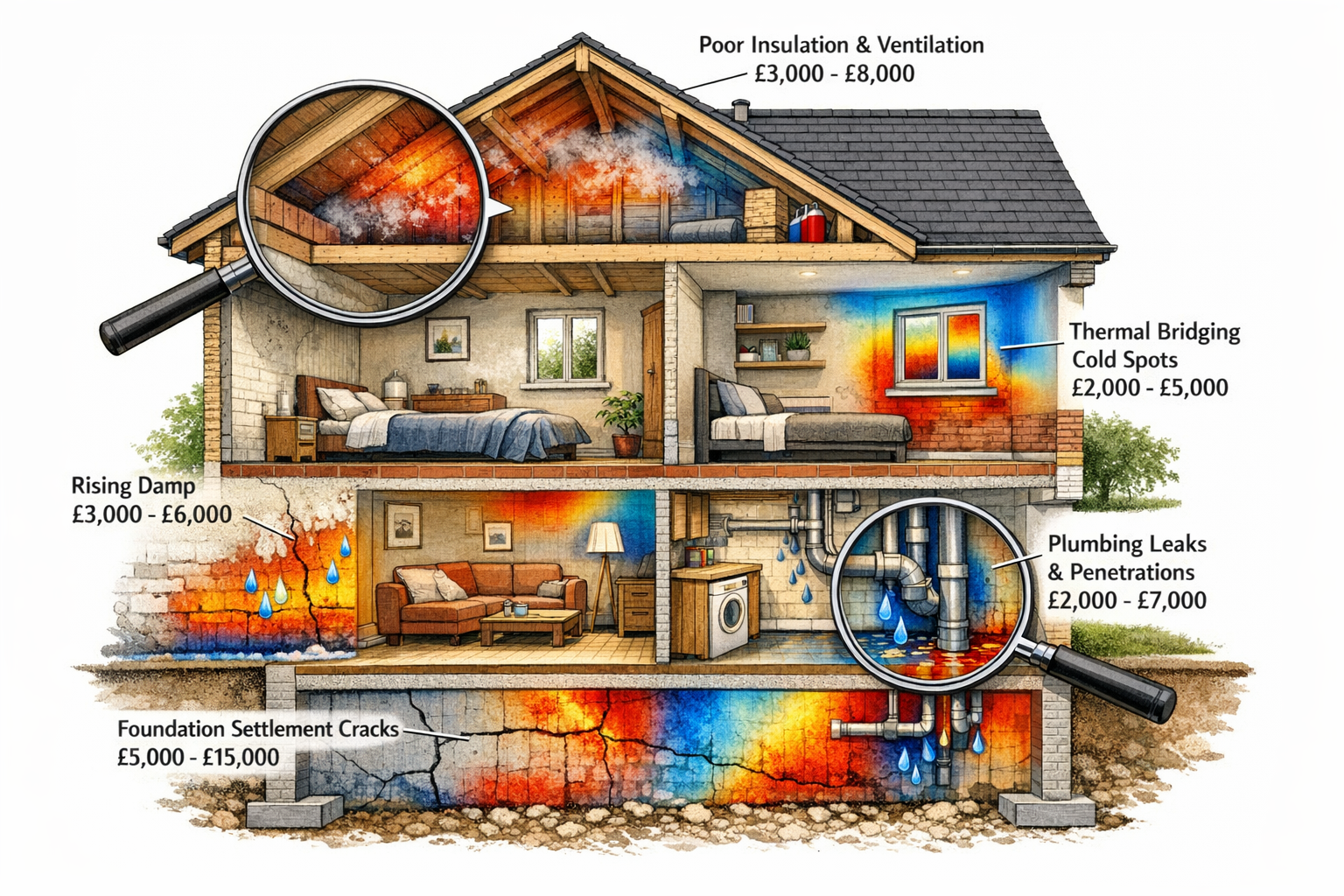
Water Ingress and Damp Problems
Water-related defects represent the most common category of latent issues in new builds:
-
Roof defects: Improperly installed membranes, inadequate flashing, or poor valley construction allow water penetration. Roof surveys identify these problems before they cause interior damage (typical repair cost: £3,000-£12,000)
-
Rising damp: Despite modern damp-proof courses, installation errors or bridging can allow moisture to rise through walls. This particularly affects ground floor rooms and can cost £2,000-£8,000 to remedy properly[2]
-
Penetrating damp: Poorly sealed window and door installations, inadequate render application, or missing cavity trays allow water ingress through external walls (remediation cost: £1,500-£6,000 per affected area)
-
Condensation and ventilation: Inadequate ventilation in modern airtight construction leads to condensation, mold growth, and deteriorating internal finishes (resolution cost: £1,000-£4,000)
Professional damp surveys use moisture meters and thermal imaging to detect water ingress before visible damage occurs, allowing buyers to negotiate price reductions or require developer remediation before completion.
Thermal Efficiency and Insulation Defects
Modern building regulations mandate high energy efficiency standards, yet thermal performance often falls short of design specifications:
Missing or inadequate insulation in walls, roofs, or floors reduces energy efficiency and increases heating costs by 20-40% annually. Thermal imaging surveys reveal cold spots indicating insulation gaps—a defect costing £3,000-£15,000 to remedy depending on property size.
Thermal bridging occurs where structural elements create pathways for heat loss, particularly around window reveals, floor junctions, and party walls. This not only increases energy costs but can cause localized condensation and mold growth.
Air leakage through poorly sealed building fabric undermines energy efficiency ratings. Properties achieving lower EPC ratings than advertised may be overvalued by £5,000-£15,000 relative to their actual running costs.
Plumbing and Services Installation Issues
Hidden services defects create ongoing problems:
- Incorrectly installed heating systems that fail to heat rooms adequately
- Plumbing leaks within walls or floor voids that cause gradual water damage
- Electrical installation errors creating safety hazards or requiring expensive rewiring
- Inadequate drainage causing waterlogging or subsidence risk
These issues typically cost £2,000-£10,000 to rectify and should reduce purchase valuations accordingly.
Implementing Valuation Surveys for New Build Properties in 2026: The Professional Process
Selecting the Right Survey Level
Not all surveys provide equal protection. Understanding which survey type suits new build properties ensures comprehensive defect detection:
Level 2 HomeBuyers Report provides a visual inspection covering major defects and urgent issues. This intermediate option suits newer properties in good condition but may miss subtle latent defects. Cost: £400-£800 for typical new builds.
Level 3 Building Survey (formerly Full Structural Survey) offers comprehensive assessment including detailed defect analysis, construction quality evaluation, and specific advice on identified problems. This represents the gold standard for new build purchases, particularly for larger properties or where construction quality concerns exist. Cost: £600-£1,500 depending on property size.
The difference between Level 2 and Level 3 surveys significantly impacts defect detection capability. For new builds where latent defects pose the primary risk, Level 3 surveys provide superior protection.
The RICS-Compliant Inspection Process
Professional valuers follow systematic inspection protocols:
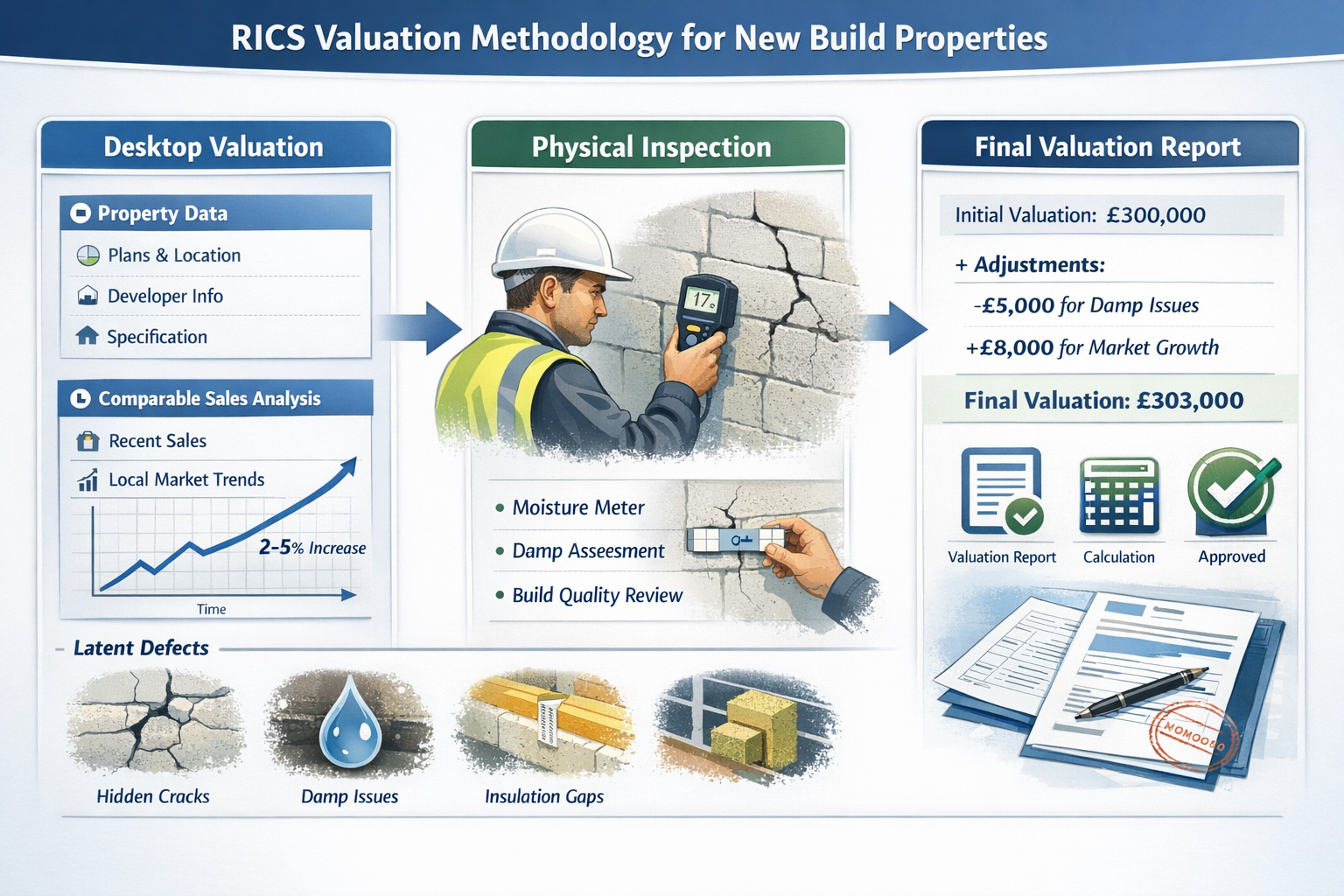
Desktop research phase involves analyzing comparable sales data, reviewing planning documents, examining developer track records, and assessing local market conditions. This establishes baseline valuation expectations before physical inspection.
Physical inspection covers all accessible areas including:
- External envelope (walls, roof, foundations, drainage)
- Internal spaces (structural elements, finishes, services)
- Specialized testing (moisture readings, thermal imaging, level checks)
- Photographic documentation of all defects and concerns
Post-inspection analysis synthesizes findings into comprehensive valuation adjustments. Identified defects are categorized by severity and repair cost, with corresponding valuation reductions calculated.
Valuation Adjustments for Identified Defects
Professional surveyors apply systematic adjustments when latent defects are identified:
"In a market where price growth is modest, professional property surveys are increasingly vital to ensure buyers are paying fair prices and not inheriting expensive problems." [2]
Minor defects (cosmetic issues, minor finishing problems) typically warrant £500-£2,000 reductions per issue. While individually small, multiple minor defects can accumulate to significant valuation adjustments.
Moderate defects (localized damp, minor structural movement, service installation issues) justify £2,000-£10,000 reductions depending on remediation complexity.
Major defects (significant structural problems, widespread water ingress, fundamental construction failures) require £10,000-£50,000+ adjustments and may render properties unmortgageable until rectified.
Negotiating with Developers Using Survey Evidence
Armed with professional survey evidence, buyers gain substantial negotiating leverage:
Request remediation before completion: Developers typically prefer fixing identified problems rather than reducing sale prices, as this avoids setting precedents for other buyers in the development.
Negotiate price reductions: When developers refuse remediation, survey evidence justifies price reductions equivalent to repair costs plus a premium for inconvenience (typically 1.2-1.5x actual repair costs).
Require warranty extensions: For defects falling outside standard warranty coverage, negotiate extended protection periods or specific defect insurance.
Walk away with confidence: When surveys reveal fundamental problems, buyers can withdraw knowing they've avoided a costly mistake. The survey fee represents excellent value compared to potential losses from purchasing a defective property.
Regional Variations in New Build Valuations
The 2026 UK property market shows pronounced regional differences affecting new build values:
Southern properties command significant premiums, with comparable new builds in London and the South East valued 150-200% higher than equivalent Northern properties[4]. This regional disparity requires specialized local market knowledge for accurate valuation.
Northern markets offer better value but slower appreciation rates. New builds in these regions require particularly careful defect assessment, as lower price points leave less room for expensive remediation while maintaining positive equity.
Regional building practices vary significantly, with different construction methods, material preferences, and workmanship standards affecting defect prevalence and remediation costs. Local chartered surveyors provide essential regional expertise for accurate valuations.
Protecting Your Investment: Next Steps for New Build Buyers
Timing Your Survey Strategically
The new 2026 homebuying rules emphasize earlier inspection protocols[3], but buyers should consider survey timing carefully:
Pre-reservation surveys aren't typically possible as properties remain incomplete, but reviewing show homes and completed units in earlier phases reveals developer construction standards.
Pre-exchange surveys provide maximum negotiating leverage. Conducting comprehensive surveys after reservation but before exchanging contracts allows buyers to withdraw or renegotiate without financial penalty if serious defects emerge.
Pre-completion snagging identifies finishing defects requiring correction before legal completion, though this differs from comprehensive valuation surveys focusing on latent defects and structural issues.
Choosing Qualified Surveyors
Surveyor selection significantly impacts survey quality and valuation accuracy:
✅ RICS qualification ensures professional standards and regulatory oversight
✅ New build experience provides familiarity with modern construction methods and common defects
✅ Local market knowledge enables accurate comparable analysis and regional valuation adjustments
✅ Professional indemnity insurance protects buyers if surveys miss significant defects
✅ Comprehensive reporting delivers detailed findings with photographic evidence and clear recommendations
Registered RICS valuers meet these criteria and provide the professional assurance essential for significant property investments.
Understanding Survey Costs vs. Risk
Survey costs represent a small percentage of purchase prices but provide disproportionate value:
For a typical £350,000 new build, a comprehensive Level 3 survey costing £800-£1,200 represents just 0.23-0.34% of the purchase price. Yet this investment can:
- Identify defects requiring £10,000-£50,000+ remediation
- Enable price negotiations saving 2-5% of purchase price (£7,000-£17,500)
- Prevent purchasing fundamentally defective properties
- Provide evidence for warranty claims or legal action if problems emerge later
The question isn't whether buyers can afford professional surveys—it's whether they can afford to purchase without them.
Integrating Surveys with Mortgage Valuations
Mortgage lenders require valuations confirming properties provide adequate security for loans. However, lender valuations serve the lender's interests, not the buyer's:
Mortgage valuations typically involve brief inspections focusing on market value and mortgageability. They rarely identify latent defects or provide detailed condition assessments.
Independent buyer surveys complement mortgage valuations by:
- Providing comprehensive defect identification
- Offering detailed condition analysis
- Enabling informed purchasing decisions
- Supporting price negotiations
Buyers should never rely solely on mortgage valuations when purchasing new builds, as these don't provide the defect detection essential for protecting buyer interests.
Documentation and Long-Term Value Protection
Professional surveys create valuable documentation:
Baseline condition records establish property condition at purchase, supporting future warranty claims or legal action if latent defects emerge.
Valuation evidence justifies purchase prices for future sales, capital gains tax calculations, or insurance purposes. Capital gains tax valuations may reference original purchase surveys.
Maintenance planning based on survey recommendations helps buyers budget for future repairs and maintain property value.
Insurance claims support provides professional evidence if defects cause damage requiring insurance claims.
Conclusion
Valuation Surveys for New Build Properties in 2026: Spotting Latent Defects Before Price Growth Commitments represents essential due diligence in today's recovering UK property market. With house prices forecast to grow 2-5% this year[1], buyers face pressure to purchase quickly to benefit from appreciation. Yet this modest growth leaves little margin for error—overpaying or inheriting expensive defects can eliminate years of expected gains.
Professional RICS-compliant surveys provide the comprehensive defect detection and accurate valuation essential for confident purchasing decisions. From structural problems and water ingress to thermal efficiency issues and services defects, experienced surveyors identify hidden problems that could cost tens of thousands to remedy.
The investment in professional surveys—typically £400-£1,500—represents exceptional value compared to the financial risks of purchasing without proper inspection. Survey evidence enables effective negotiation with developers, supports informed decision-making, and provides long-term documentation protecting buyer interests.
Take Action Now
🔍 Commission a comprehensive survey before exchanging contracts on any new build property
📋 Choose RICS-qualified surveyors with new build experience and local market knowledge
💰 Use survey evidence to negotiate price reductions or require developer remediation
📊 Understand regional variations affecting new build values in your target area
🏗️ Don't rely on warranties alone—many costly defects fall outside standard coverage
The UK property market in 2026 offers opportunities for buyers who approach purchases with professional guidance and thorough due diligence. Choosing the right property survey provides the foundation for successful new build investment, protecting both immediate interests and long-term value in a market poised for modest but meaningful growth.
References
[1] Property Buying Predictions For 2026 What New Build Buyers Should Expect – https://snagmastersw.co.uk/property-buying-predictions-for-2026-what-new-build-buyers-should-expect/
[2] House Prices Start 2026 On A Cautious Note What Buyers Should Know – https://arnoldandbaldwin.co.uk/insights/house-prices-start-2026-on-a-cautious-note-what-buyers-should-know
[3] Building Surveys Under New Homebuying Rules Earlier Inspections And Risk Mitigation In 2026 – https://nottinghillsurveyors.com/blog/building-surveys-under-new-homebuying-rules-earlier-inspections-and-risk-mitigation-in-2026
[4] Valuing North Vs South Uk Properties In 2026 Surveyor Techniques For Diverging Regional Markets – https://nottinghillsurveyors.com/blog/valuing-north-vs-south-uk-properties-in-2026-surveyor-techniques-for-diverging-regional-markets