
The Northern England property market is experiencing an unprecedented transformation in 2026. While London and the Southeast grapple with affordability constraints, cities like Manchester, Birmingham, Leeds, and Liverpool are witnessing remarkable price surges—some reporting growth rates exceeding 10% annually. For chartered surveyors, this regional shift demands a fundamental recalibration of Valuation Strategies for Northern UK House Price Surge: RICS Techniques for Surveyors in 2026's Regional Boom. Traditional comparable analysis methods designed for stable markets simply cannot capture the nuances of these affordability-driven growth patterns.
This seismic shift in regional dynamics presents both opportunities and challenges. Surveyors must now navigate volatile comparables, rapidly appreciating neighborhoods, and clients who require sophisticated market positioning insights. The question isn't whether Northern markets will continue their upward trajectory—it's whether surveyors possess the specialized RICS-compliant techniques to deliver accurate, defensible valuations in this high-growth environment.
Key Takeaways
- 📊 Northern markets are outpacing Southern regions by 5-8 percentage points in annual growth, requiring adapted comparable selection criteria
- 🎯 RICS Red Book compliance demands enhanced market commentary that addresses regional positioning and affordability migration patterns
- 🔍 Traditional valuation methods need adjustment factors specific to Northern boom conditions, including velocity metrics and regeneration premiums
- 💼 Surveyors must integrate multi-dimensional analysis combining local comparables, regional trends, and national affordability pressures
- ✅ Specialized checklists and case study frameworks provide systematic approaches for high-growth area valuations
Understanding the 2026 Northern UK Property Market Dynamics
The Affordability Migration Phenomenon
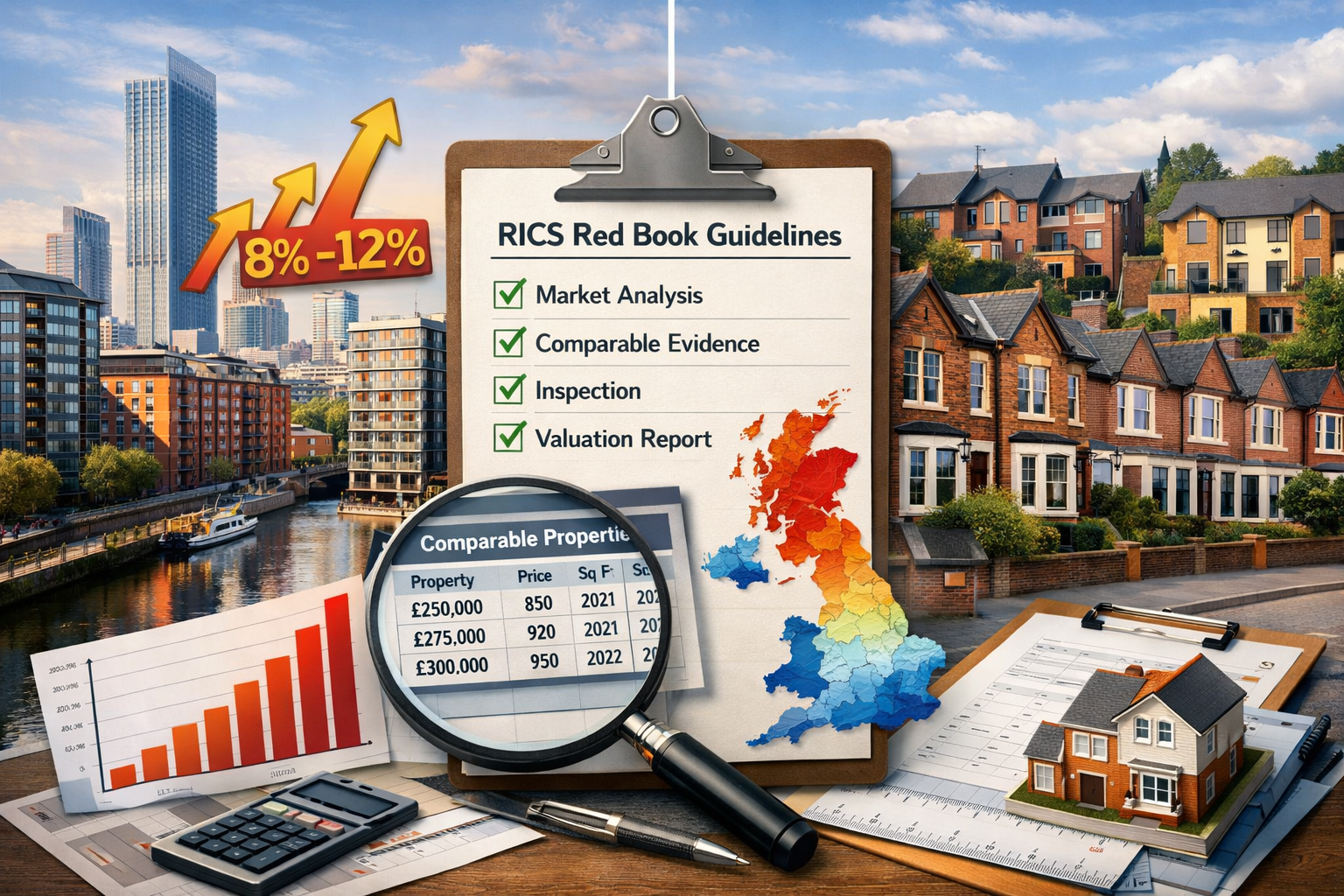
The 2026 property landscape represents a fundamental rebalancing of UK housing demand. Southern property prices—particularly in London and surrounding counties—have reached levels that exclude significant portions of middle-income buyers. This affordability crisis has catalyzed a mass migration of both residents and investors toward Northern cities where property values remain accessible while offering comparable amenities and employment opportunities.
Key drivers include:
- 🏢 Remote work policies enabling location flexibility
- 🚄 Improved transport infrastructure connecting Northern cities
- 💰 Price-to-earnings ratios 40-60% lower than Southern equivalents
- 🎓 Strong university presence attracting young professionals
- 🏗️ Substantial regeneration investment in city centers
Traditional comparable analysis requires significant adaptation when valuing Northern England properties in 2026, as historical data may not reflect current market velocity[2]. Surveyors conducting RICS building surveys must recognize that standard depreciation curves and appreciation patterns established in stable markets don't apply uniformly across these high-growth regions.
Regional Price Divergence Patterns
The 2026 recovery isn't monolithic—it's characterized by pronounced regional variations that demand granular market knowledge. Manchester's Ancoats district might appreciate at 12% annually while nearby areas see only 4-5% growth. Birmingham's Jewellery Quarter commands different dynamics than Edgbaston or Harborne.
| Region | 2025-2026 Growth | Key Drivers | Comparable Challenges |
|---|---|---|---|
| Greater Manchester | 9-12% | Tech sector, Northern Powerhouse | Rapid neighborhood transformation |
| Birmingham | 8-11% | HS2 anticipation, regeneration | Mixed-use development impact |
| Leeds | 7-10% | Financial services, student demand | City center vs. suburbs divergence |
| Liverpool | 6-9% | Cultural investment, waterfront | Heritage vs. new-build premiums |
| Newcastle | 5-8% | Lifestyle appeal, affordability | Limited comparable stock |
When preparing RICS building surveys, integrating valuation commentary addressing regional market positioning helps clients understand not just current value but trajectory and risk factors[3]. This contextual analysis has become essential rather than optional in 2026's divergent market.
The Regeneration Premium Challenge
Northern cities have benefited from billions in regeneration investment, creating localized value uplift that traditional valuation models struggle to quantify. A Victorian terrace adjacent to a newly completed transport hub or cultural quarter may experience appreciation completely disconnected from broader area trends.
Surveyors must account for:
- ✨ Proximity premiums to regeneration zones (often 15-25% above area baseline)
- 🕐 Timing considerations for phased development completion
- 🎨 Amenity value from new infrastructure, retail, and cultural facilities
- 📈 Anticipatory pricing where markets price in future improvements
Understanding these dynamics requires surveyors to maintain detailed knowledge of local development pipelines and planning permissions—information that extends well beyond traditional comparable analysis.
RICS-Compliant Valuation Strategies for Northern UK House Price Surge: Techniques and Methodologies
Adapting the Comparable Method for High-Growth Markets
The comparable method remains the foundation of residential valuation, but its application in Northern England's 2026 boom requires sophisticated refinement. The RICS Red Book provides the framework, but surveyors must interpret guidance through the lens of rapid market movement[1].
Enhanced Comparable Selection Criteria:
- Temporal Proximity – Prioritize transactions within 8-12 weeks maximum (vs. traditional 6-month window)
- Micro-Location Matching – Match to specific neighborhoods, not just postal districts
- Property Condition Parity – Adjust heavily for renovation status in improvement-driven markets
- Transaction Type Verification – Distinguish between standard sales, investor purchases, and distressed transactions
- Amenity Proximity – Weight comparables by distance to regeneration zones, transport hubs
"In rapidly appreciating markets, a comparable from six months ago may undervalue current market position by 5-10%. Surveyors must apply time-adjustment factors based on demonstrable market velocity."
For properties requiring specialist defect surveys, condition adjustments become particularly critical. A Northern terrace requiring £30,000 in remedial work represents a different value proposition in a 10% annual growth market versus a 2% growth environment—the renovation cost is recovered more rapidly through appreciation.
Implementing Regional Adjustment Factors
The RICS Red Book compliance demands that valuations reflect market reality, not mechanistic formula application[1]. In 2026's Northern boom, this necessitates explicit regional adjustment factors that account for:
Market Velocity Adjustments:
- Calculate monthly appreciation rates from recent transaction data
- Apply time-adjustment factors to comparables older than 60 days
- Document methodology transparently in valuation reports
Affordability Migration Premiums:
- Identify properties attractive to Southern relocators (typically £200k-£400k range)
- Apply premiums of 3-7% for properties meeting "London buyer" criteria
- Consider commutability factors to major employment centers
Regeneration Proximity Multipliers:
- Establish distance-based adjustment scales (e.g., within 500m = +15%, 500m-1km = +8%)
- Account for development phase and completion timelines
- Adjust for negative impacts during construction phases
When conducting desktop house valuations, these adjustment factors must be clearly documented and justified through market evidence. The goal isn't to inflate values artificially but to capture genuine market dynamics that traditional methods might overlook.
Integrating Investment Method Analysis
For certain Northern properties—particularly those in high-rental-demand areas—the investment method provides valuable corroboration of market value. This approach considers:
- 💷 Gross rental yields (often 5-8% in Northern cities vs. 3-4% in London)
- 📊 Capitalization rates reflecting investor appetite
- 🏘️ Rental growth projections based on employment and population trends
- 🔄 Void period assumptions adjusted for local market conditions
The investment method proves particularly valuable for buy-to-let properties and HMOs (Houses in Multiple Occupation) that dominate certain Northern neighborhoods. When rental yields and capital appreciation both trend positively, this dual-return scenario attracts investor premium pricing that comparable-only analysis might miss.
The Five-Point RICS Valuation Checklist for Northern Boom Markets
To ensure comprehensive, defensible valuations in high-growth Northern markets, surveyors should implement this systematic checklist:
1. Market Context Documentation ✅
- Record regional growth rates from Land Registry data
- Document local regeneration projects and timelines
- Note affordability metrics (price-to-earnings ratios)
- Capture employment and population trend data
2. Enhanced Comparable Analysis ✅
- Source minimum 5-7 comparables (vs. traditional 3-5)
- Verify transaction dates and adjust for market movement
- Apply micro-location matching criteria
- Document condition differentials with photographic evidence
3. Regional Adjustment Application ✅
- Calculate and apply time-adjustment factors
- Assess regeneration proximity premiums
- Evaluate affordability migration appeal
- Consider transport infrastructure improvements
4. Risk Factor Assessment ✅
- Identify market sustainability indicators
- Note potential oversupply in specific segments
- Consider interest rate sensitivity
- Evaluate local economic dependencies
5. Client Communication Enhancement ✅
- Provide market positioning commentary
- Explain regional dynamics and growth drivers
- Offer trajectory insights (not predictions)
- Contextualize value within national framework
This checklist aligns with RICS professional standards while addressing the specific complexities of 2026's Northern market conditions. For surveyors managing commercial property valuations, similar principles apply with sector-specific adjustments.
Case Studies and Practical Applications of Valuation Strategies for Northern UK House Price Surge
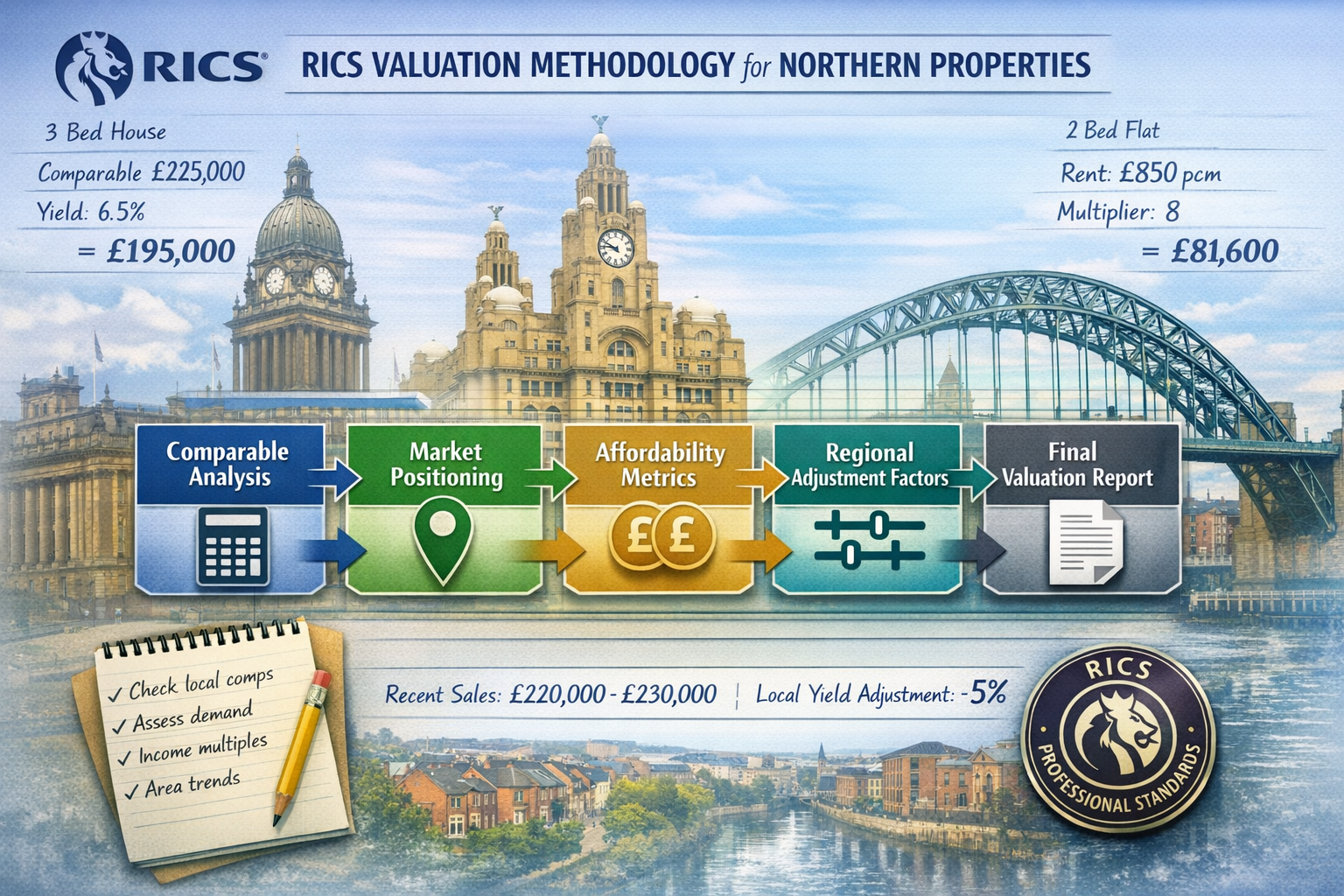
Case Study 1: Manchester Victorian Terrace in Regeneration Zone
Property Profile:
- 3-bedroom mid-terrace Victorian property
- Location: 400 meters from new Metrolink extension
- Condition: Modernized with period features retained
- Target market: Young professionals and Southern relocators
Valuation Challenge:
Traditional comparables from 6 months prior valued similar properties at £285,000. However, the Metrolink completion and neighborhood transformation suggested significant appreciation.
Applied RICS Techniques:
- Temporal Adjustment – Applied 1.5% monthly growth factor based on recent sales = +£12,825
- Regeneration Proximity Premium – 400m from transport hub = +12% = £34,200
- Comparable Refinement – Prioritized 3 sales within 8 weeks showing £310k-£325k range
- Investment Method Verification – Rental yield of 6.2% at £1,600/month supported higher valuation
Final Valuation: £332,000 (16.5% above 6-month-old comparables)
Outcome: The property sold within 2 weeks at £335,000, validating the enhanced valuation methodology. The surveyor's detailed market commentary helped the buyer secure mortgage approval despite the apparent premium to older comparables.
Case Study 2: Birmingham New-Build Apartment with HS2 Anticipation
Property Profile:
- 2-bedroom apartment in city center development
- Completion: Q4 2025
- Location: 1.2km from planned HS2 terminus
- Developer pricing: £245,000
Valuation Challenge:
Limited comparable stock for new-build apartments in this specific location. Developer pricing might not reflect true market value. Buyer required independent RICS valuation for mortgage purposes.
Applied RICS Techniques:
- New-Build Premium Analysis – Assessed typical 5-8% premium for new construction
- HS2 Anticipatory Pricing – Market research showed 8-15% premium for HS2 proximity properties
- Rental Investment Verification – Projected £1,350/month rent = 6.6% gross yield
- Comparable Expansion – Included resale apartments in adjacent developments (£230-£255k range)
- Risk Assessment – Noted oversupply concerns in city center apartment segment
Final Valuation: £238,000 (£7,000 below developer pricing)
Outcome: The valuation identified that developer pricing incorporated speculative HS2 premium not yet fully reflected in resale market. Buyer negotiated £5,000 reduction. The comprehensive surveyor pricing methodology and transparent risk assessment protected the client from overpaying.
Case Study 3: Leeds Student-Area HMO with Yield Focus
Property Profile:
- 6-bedroom HMO near university campus
- Licensed for 6 unrelated tenants
- Gross annual rental: £42,000
- Condition: Good, compliant with HMO regulations
Valuation Challenge:
HMO properties require dual consideration of residential comparables and investment yields. The Leeds student market showed strong demand but also regulatory uncertainty around HMO licensing.
Applied RICS Techniques:
- Investment Method Primary – Applied 7.5% capitalization rate = £560,000
- Comparable Method Secondary – Similar 6-bed properties (non-HMO) valued £380-£420k
- HMO Premium Calculation – Typical 30-40% premium for licensed, performing HMOs
- Risk Adjustment – Applied 5% discount for regulatory uncertainty
- Market Positioning – Assessed against investor demand metrics
Final Valuation: £485,000
Outcome: The investment method suggested higher value (£560k), but comparable analysis and risk factors justified a more conservative position. The property sold to an experienced HMO investor at £490,000, demonstrating the value of balanced methodology.
Practical Checklist for Northern Property Valuations
Based on these case studies, surveyors should implement this practical workflow:
Pre-Inspection Phase:
- ✅ Research local regeneration projects within 2km radius
- ✅ Download Land Registry price paid data for last 3 months
- ✅ Identify major employers and employment trends
- ✅ Review local planning applications for supply pipeline
- ✅ Assess transport infrastructure developments
Inspection Phase:
- ✅ Document property condition with detailed photography
- ✅ Note proximity to amenities, transport, regeneration zones
- ✅ Assess appeal to different buyer demographics
- ✅ Identify any defects requiring specialist surveys
- ✅ Evaluate rental potential for investment method analysis
Analysis Phase:
- ✅ Source 5-7 comparables within 12-week timeframe
- ✅ Calculate time-adjustment factors based on market velocity
- ✅ Apply regional adjustment factors systematically
- ✅ Cross-verify with investment method where applicable
- ✅ Assess risks and sustainability factors
Reporting Phase:
- ✅ Provide comprehensive market context section
- ✅ Explain adjustment factors with transparent methodology
- ✅ Include regional growth data and trends
- ✅ Offer clear risk assessment
- ✅ Ensure full RICS Red Book compliance[1]
For surveyors working across multiple regions, comparing these Northern techniques with approaches used in Central London or North London markets highlights the importance of regional specialization.
Advanced Considerations for Surveyors Managing Northern Portfolio Valuations
Addressing Market Sustainability Concerns
While Northern markets show strong growth in 2026, professional surveyors must balance optimism with prudent risk assessment. Clients deserve honest evaluation of sustainability factors:
Economic Dependency Risks:
- Over-reliance on specific industries (e.g., financial services in Leeds)
- Public sector employment concentration
- Vulnerability to economic downturns
Supply Pipeline Analysis:
- New-build apartment oversupply in city centers
- Conversion of commercial to residential units
- Impact of permitted development rights
Interest Rate Sensitivity:
- Higher loan-to-value ratios in affordable markets
- First-time buyer exposure to rate increases
- Buy-to-let investor sensitivity to yield compression
Regulatory Considerations:
- HMO licensing restrictions
- Selective licensing schemes
- Energy efficiency requirements (EPC ratings)
When conducting probate valuations or divorce valuations, these risk factors must inform the valuation approach—particularly regarding market value versus forced sale scenarios.
Technology Integration for Enhanced Accuracy
Modern surveyors leverage technology tools to enhance valuation accuracy in fast-moving markets:
🖥️ Automated Valuation Models (AVMs) – Provide baseline estimates and trend data
📱 Mobile surveying apps – Enable real-time comparable research during inspections
📊 GIS mapping tools – Visualize regeneration zones and amenity proximity
📈 Market analytics platforms – Track velocity metrics and supply/demand indicators
🤖 AI-assisted comparable selection – Identify optimal matches from large datasets
However, technology should augment rather than replace professional judgment. The nuanced understanding of local markets, regeneration impacts, and buyer psychology remains irreplaceable in 2026's complex environment.
Professional Development and Regional Specialization
The Northern market boom demands continuous professional development. Surveyors should:
- 📚 Attend RICS regional market briefings and webinars
- 🏆 Pursue specialist accreditations in high-growth market valuation
- 🤝 Network with local estate agents and developers
- 📰 Monitor regional property press and development news
- 🎓 Study regeneration economics and urban planning principles
RICS awards recognize excellence in regional property expertise, encouraging surveyors to develop deep local knowledge[4]. This specialization becomes increasingly valuable as clients seek surveyors who understand specific Northern markets rather than generalists applying national frameworks.
Cross-Border Valuation Considerations
For surveyors operating across England, understanding regional valuation differences enhances professional capability:
| Aspect | Northern Markets | Southern Markets |
|---|---|---|
| Growth Drivers | Affordability, regeneration | Established premium, scarcity |
| Comparable Availability | Abundant, rapid turnover | Limited, slower market |
| Time Adjustments | Essential (1-2% monthly) | Less critical (0.3-0.5% monthly) |
| Investment Yields | 5-8% gross | 3-4% gross |
| Buyer Demographics | First-time, relocators, investors | Equity-rich, downsizers |
Surveyors working in areas like Surrey or Berkshire can apply Northern techniques in reverse—understanding why Southern markets show relative price stability despite national growth trends.
Conclusion

The Valuation Strategies for Northern UK House Price Surge: RICS Techniques for Surveyors in 2026's Regional Boom represent a fundamental evolution in professional practice. As Northern cities like Manchester, Birmingham, Leeds, and Liverpool experience unprecedented growth driven by affordability migration and regeneration investment, surveyors must adapt traditional methodologies to capture these dynamic market conditions accurately.
The key principles outlined in this article—enhanced comparable selection, regional adjustment factors, investment method integration, and comprehensive risk assessment—provide a systematic framework for RICS-compliant valuations in high-growth environments. The case studies demonstrate that these techniques deliver accurate, defensible valuations that protect clients while reflecting genuine market dynamics.
Actionable Next Steps for Surveyors
Immediate Actions (This Week):
- ✅ Review your current comparable selection criteria and tighten temporal windows to 8-12 weeks
- ✅ Create a regional adjustment factor template for your primary operating areas
- ✅ Research regeneration projects within your coverage zones
- ✅ Update valuation report templates to include enhanced market commentary sections
Short-Term Development (This Month):
- 📊 Establish relationships with local estate agents for market intelligence
- 📚 Complete RICS CPD modules on high-growth market valuation
- 🗺️ Map regeneration zones and transport developments in key cities
- 💼 Review and refine your surveyor pricing structure to reflect enhanced methodology
Long-Term Strategy (This Quarter):
- 🎯 Develop regional specialization in specific Northern markets
- 🤝 Network with developers and regeneration agencies
- 📈 Build proprietary databases of market velocity metrics
- 🏆 Pursue advanced RICS accreditations in residential valuation
Professional Excellence:
The Northern UK property surge of 2026 presents both challenges and opportunities. Surveyors who embrace sophisticated, RICS-compliant valuation strategies position themselves as trusted advisors in this transformative market. By combining traditional comparable analysis with regional adjustment factors, investment method verification, and comprehensive market commentary, professionals deliver valuations that serve clients, support sound lending decisions, and uphold the integrity of the property market.
The techniques outlined here aren't merely academic exercises—they're practical tools that distinguish competent surveyors from exceptional ones. As Northern markets continue their growth trajectory, those who master these Valuation Strategies for Northern UK House Price Surge will lead the profession into this new regional paradigm.
For surveyors committed to excellence, the message is clear: adapt your methodology, deepen your regional knowledge, and embrace the complexity of 2026's divergent markets. Your clients, your professional reputation, and the broader property market all depend on your ability to deliver accurate, insightful valuations in this era of unprecedented regional transformation.
References
[1] Red Book Uk – https://www.rics.org/profession-standards/rics-standards-and-guidance/sector-standards/valuation-standards/red-book/red-book-uk
[2] Valuing Northern England Properties In 2026 Surveyor Tactics For Outpacing Southern Affordability Pressures – https://nottinghillsurveyors.com/blog/valuing-northern-england-properties-in-2026-surveyor-tactics-for-outpacing-southern-affordability-pressures
[3] Valuation Strategies For The 2026 Uk Housing Recovery Regional Price Divergence And Surveyor Tactics – https://nottinghillsurveyors.com/blog/valuation-strategies-for-the-2026-uk-housing-recovery-regional-price-divergence-and-surveyor-tactics
[4] Uk Awards – https://www.rics.org/training-events/rics-awards/uk-awards