

The UK property market stands at a critical juncture in early 2026. After months of declining prices and weakening demand, tentative signs of recovery are emerging—but the path forward remains uncertain. For property surveyors and valuers, this transitional period presents unique challenges that require careful calibration of appraisal techniques and a deep understanding of market dynamics.
The Valuation Challenges in Early 2026 Recovery: RICS Adjustments for House Price Stabilization and Mortgage Rate Impacts represent a complex interplay of improving sentiment, regional disparities, and economic headwinds. RICS (Royal Institution of Chartered Surveyors) data from January 2026 reveals a market in flux—where net balances are improving but remain negative, where buyer enquiries are rising yet caution persists, and where mortgage rate trajectories hold the key to sustained momentum.
For registered RICS valuers, understanding these nuances is essential to delivering accurate, defensible property valuations that reflect both current conditions and forward-looking market expectations.
Key Takeaways
- 📊 House price net balance improved to -10% in January 2026, up from -19% in October 2025, signaling potential stabilization but ongoing weakness
- 🏠 Regional disparities are widening, with Scotland and Northern Ireland showing strength while southern England faces affordability challenges
- 💷 Mortgage rate trajectory remains the critical variable, with anticipated Bank of England cuts potentially catalyzing recovery in spring 2026
- 📈 12-month price outlook reached +43%, the most positive sentiment since early 2025, though near-term expectations remain cautious
- 🔍 Surveyors must refine valuation methodologies to account for gradual recovery patterns, regional variations, and economic uncertainty
Understanding the Current Market Context: RICS Data and Recovery Signals
The Numbers Behind the Tentative Recovery
The Valuation Challenges in Early 2026 Recovery: RICS Adjustments for House Price Stabilization and Mortgage Rate Impacts begin with understanding the fundamental market metrics that define the current landscape. RICS residential market survey data for January 2026 provides crucial insights into market momentum.
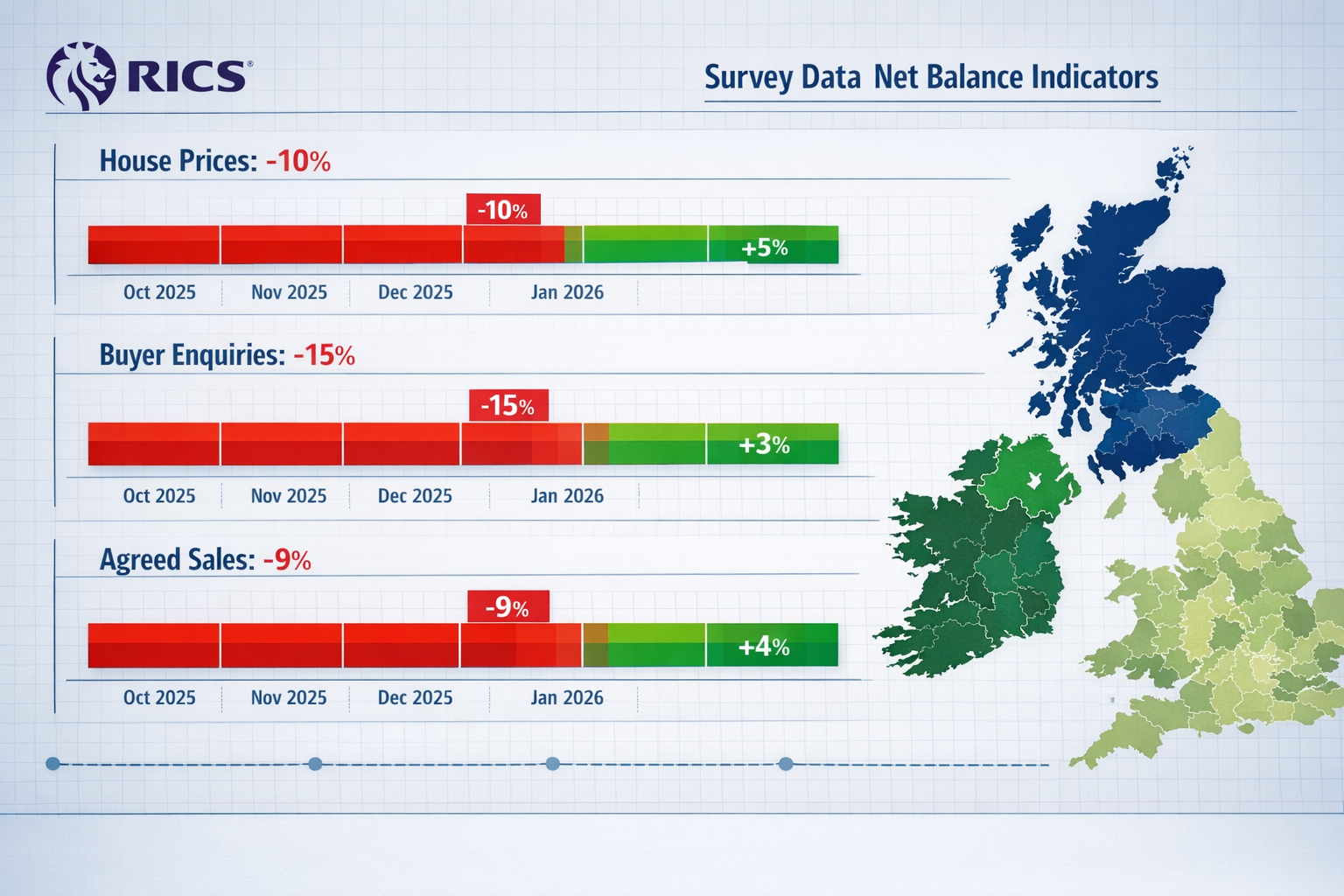
House prices showed a net balance of -10% for the three-month period ending January 2026—a significant improvement from the low of -19% recorded in October 2025 [1]. While this figure remains negative (indicating more surveyors reporting price declines than increases), the trend direction suggests the worst may be behind the market.
Similarly, new buyer enquiries demonstrated gradual recovery, with the net balance improving to -15% in January 2026, compared to -21% in December 2025 and -29% in November 2025 [1]. This consistent monthly improvement indicates easing downward pressure on demand, though absolute levels remain subdued.
Perhaps most encouraging, agreed sales reached a net balance of -9% in January 2026—the least negative reading since June 2025 [1]. This metric suggests that transaction activity is stabilizing, providing a foundation for potential market recovery.
What These Net Balances Mean for Valuers
For property professionals conducting valuation assessments, these net balance figures require careful interpretation:
- Negative balances indicate ongoing price pressure but improving trends suggest the rate of decline is slowing
- Transaction volumes remain below historical norms, affecting comparable evidence availability
- Market velocity is improving, reducing the risk of further sharp corrections
- Forward-looking indicators suggest stabilization rather than immediate growth
When preparing valuations, surveyors must consider these dynamics alongside traditional valuation factors such as location, condition, and property characteristics.
The Sentiment Shift: Looking Ahead
A remarkable shift has occurred in forward-looking expectations. The 12-month price outlook reached +43% net balance in January 2026—meaning 43% more respondents expect prices to rise than fall over the coming year [1]. This represents the most positive outlook since February 2025.
However, near-term expectations remain cautious, with a -4% net balance for the next three months [1]. This divergence highlights a key challenge: while medium-term confidence is building, immediate uncertainty persists.
As RICS Chief Economist Simon Rubinsohn noted, "any recovery is likely to be gradual" and "whether this tentative improvement develops into sustained momentum will depend heavily on the trajectory of mortgage rates and broader macro confidence over the coming months" [1].
Regional Variations and the North-South Divide in Property Valuations
Geographic Disparities in Price Performance
One of the most significant Valuation Challenges in Early 2026 Recovery: RICS Adjustments for House Price Stabilization and Mortgage Rate Impacts involves navigating substantial regional variations across the UK property market.
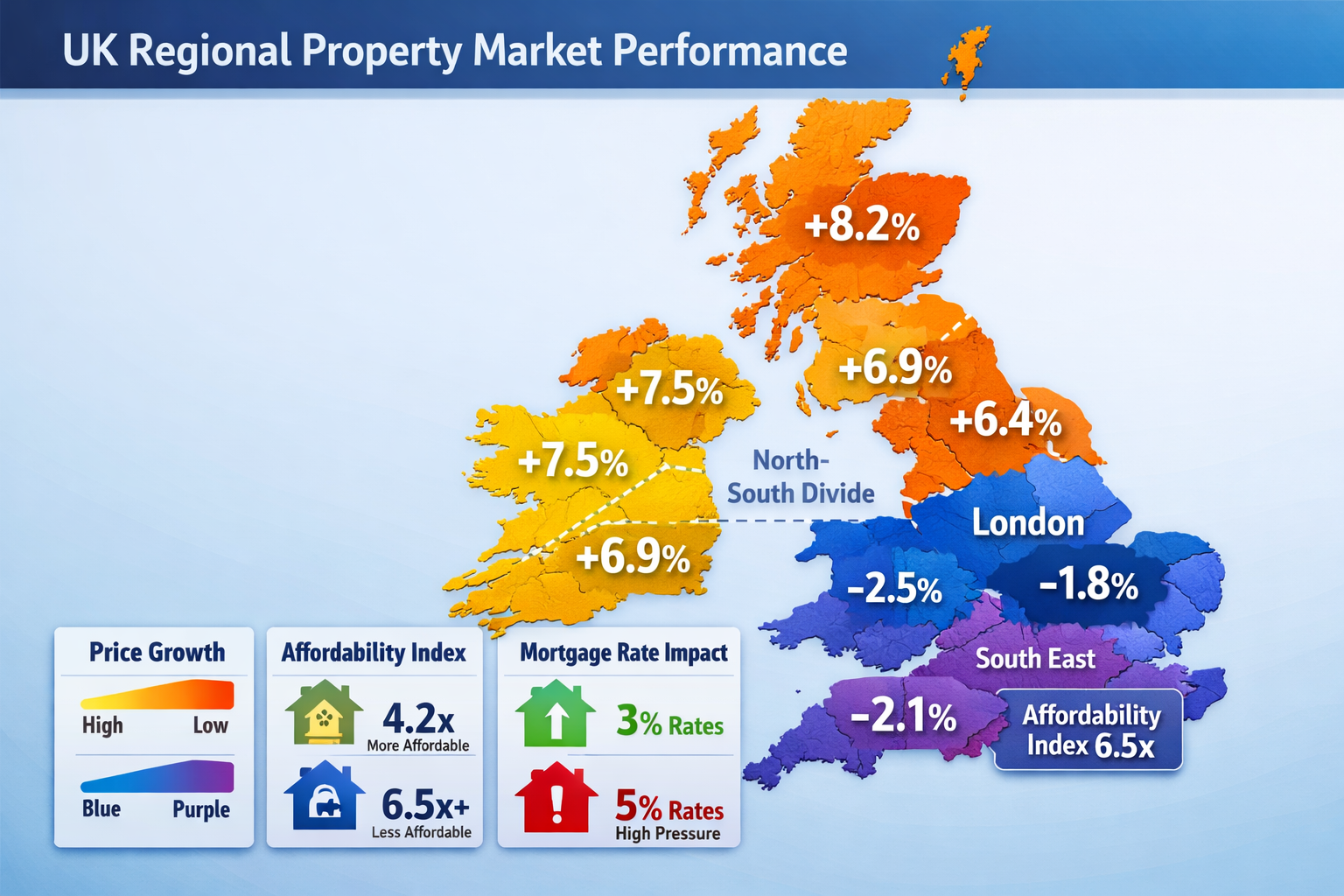
Scotland and Northern Ireland continue to demonstrate the strongest price growth, with upward trends also evident in the North West and North of England [1]. These regions benefit from relatively better affordability ratios and stronger local economic conditions.
In stark contrast, London, the South East, South West, and East Anglia continue to lag, reflecting ongoing affordability challenges [1]. Higher absolute price levels, combined with mortgage rate pressures, have dampened demand in these traditionally premium markets.
The HomeOwners Alliance forecasts this pattern will persist throughout 2026, predicting higher price growth in northern England compared to southern regions [2]. This geographic divergence creates distinct valuation contexts that require region-specific analysis.
Implications for Valuation Practice
When conducting property valuations across different regions, surveyors must adjust their approach:
In Northern Regions:
- ✅ Greater confidence in positive price momentum
- ✅ Stronger buyer demand supporting valuations
- ✅ More robust comparable evidence from recent transactions
- ⚠️ Still monitor for overheating risks as recovery progresses
In Southern Regions:
- ⚠️ Continued price pressure requiring conservative assumptions
- ⚠️ Affordability constraints limiting buyer pools
- ⚠️ Sparse transaction activity affecting comparable quality
- ✅ Potential for stronger recovery once mortgage rates ease significantly
For properties in transitional areas or those with regional appeal, valuers should consider conducting desktop valuations as preliminary assessments before full inspections.
Affordability as a Valuation Constraint
Affordability has emerged as the primary constraint in southern markets. With median house prices remaining elevated relative to local incomes, even modest mortgage rate reductions may not immediately restore demand to historical levels.
Valuers must incorporate affordability analysis into their assessments, considering:
- Local income levels and employment trends
- Mortgage availability at different loan-to-value ratios
- First-time buyer accessibility
- Investor demand dynamics
This comprehensive approach ensures valuations reflect realistic market demand rather than simply extrapolating from limited comparable evidence.
Mortgage Rate Trajectories and Their Impact on Property Valuations
The Critical Role of Mortgage Rates
Perhaps no single factor influences the Valuation Challenges in Early 2026 Recovery: RICS Adjustments for House Price Stabilization and Mortgage Rate Impacts more than the trajectory of mortgage rates. As the primary determinant of housing affordability for the majority of buyers, mortgage pricing directly affects demand, transaction volumes, and ultimately property values.
Current Rate Environment and Near-Term Expectations
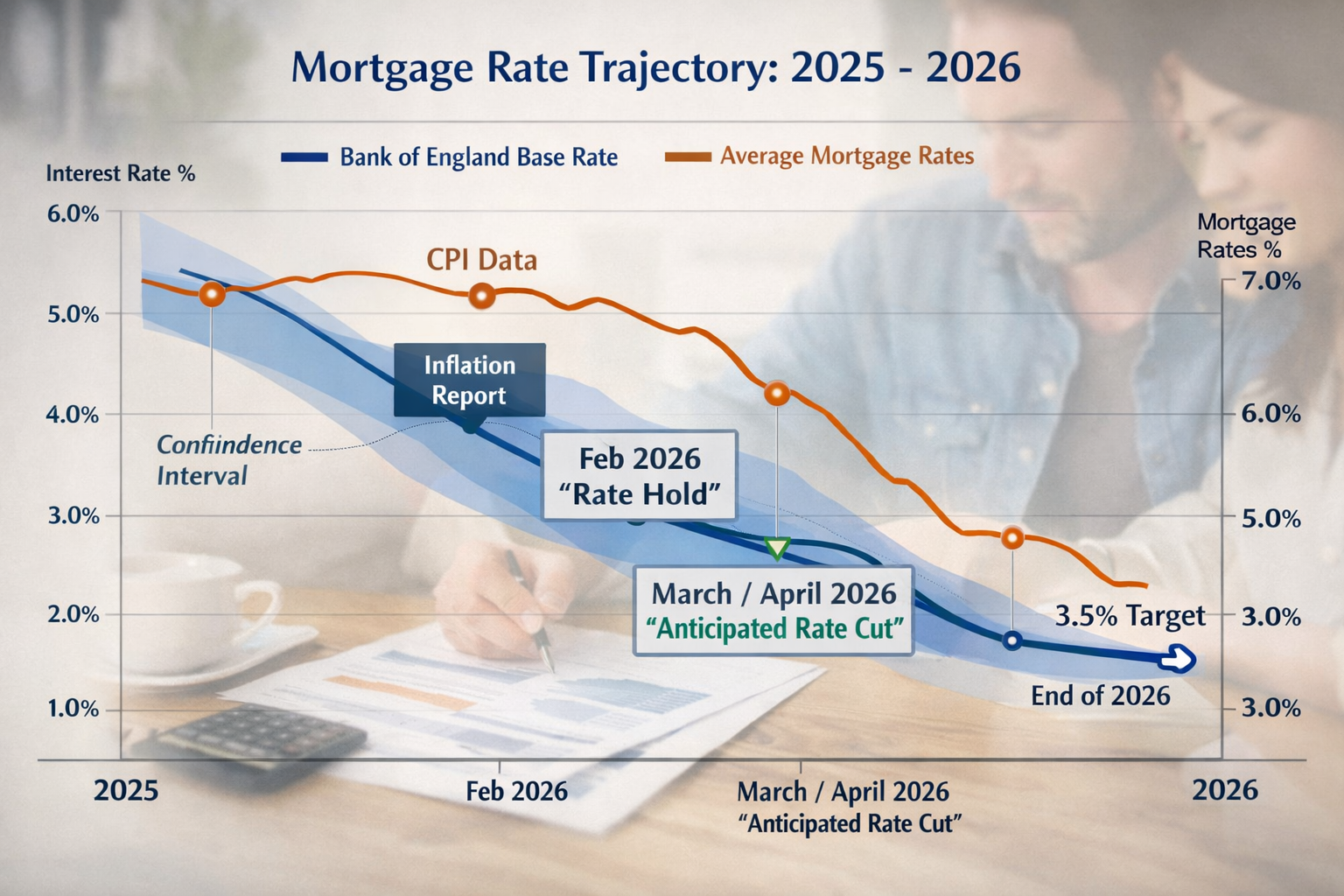
The Bank of England held interest rates in February 2026 amid persistent inflation concerns [4]. However, market expectations point to a base rate cut in March or April 2026, bringing the rate to 3.5%, with one or two additional reductions likely as the year progresses [3].
This anticipated easing has already begun influencing market sentiment, contributing to the improved 12-month outlook among RICS respondents. However, recent mortgage rate increases in early 2026 have dampened near-term momentum [4], creating a challenging environment for valuers assessing current market value.
Modeling Rate Impacts in Valuation Analysis
Professional surveyors must incorporate mortgage rate scenarios into their valuation frameworks. This involves:
Scenario Analysis:
- Base case: Assumes anticipated rate cuts materialize as expected
- Optimistic case: Faster or deeper rate reductions stimulating demand
- Pessimistic case: Delayed cuts or renewed rate increases
Affordability Modeling:
- Calculate monthly payment impacts at different rate levels
- Assess buyer pool size at various price points
- Consider deposit requirements and lending criteria
Comparable Adjustment:
- Weight recent transactions based on prevailing rates at sale date
- Adjust for changing buyer purchasing power
- Consider time-on-market trends as rate sensitivity indicator
When preparing freehold valuations or other property assessments, incorporating these rate dynamics ensures valuations remain relevant as market conditions evolve.
The Gradual Recovery Thesis
The HomeOwners Alliance projects modest 2% house price growth for 2026, supported by easing mortgage rates and steady wage growth [2]. This forecast represents "modest price growth rather than a sharp rebound"—a characterization that aligns with the gradual recovery thesis articulated by RICS.
For valuers, this suggests:
- Avoid aggressive growth assumptions in forward-looking valuations
- Emphasize stability over momentum in market commentary
- Monitor monthly data releases for signs of acceleration or deceleration
- Maintain conservative risk adjustments given ongoing uncertainty
RICS Valuation Standards and Best Practices for 2026 Market Conditions
Applying the Red Book in Uncertain Markets
The RICS Valuation – Global Standards (the "Red Book") provides the framework for professional valuation practice. In the context of early 2026 recovery, several key principles deserve emphasis:
Market Value Definition:
The Red Book defines market value as "the estimated amount for which an asset should exchange on the valuation date between a willing buyer and a willing seller in an arm's length transaction, after proper marketing and where the parties had each acted knowledgeably, prudently and without compulsion."
In a market characterized by improving but still-negative net balances, determining this "willing buyer and willing seller" equilibrium requires careful analysis of:
- Recent transaction evidence weighted by recency
- Current marketing periods and pricing strategies
- Withdrawal rates and price reduction patterns
- Buyer motivation and urgency levels
Enhanced Due Diligence in Comparable Selection
The quality of comparable evidence directly determines valuation accuracy. In early 2026 conditions, valuers should:
Prioritize Recent Transactions:
- Focus on sales completed within the past 3-6 months
- Consider agreed sales with completion pending
- Adjust for time differences using local market trends
Assess Transaction Circumstances:
- Identify motivated seller situations requiring adjustment
- Recognize cash buyer transactions (less rate-sensitive)
- Account for chain-free advantages in pricing
Geographic Granularity:
- Drill down to micro-location level given regional variations
- Consider neighborhood-specific demand drivers
- Assess local amenity and transport infrastructure changes
When conducting RICS building surveys alongside valuations, the physical condition assessment should inform value adjustments, particularly in markets where buyers have increased negotiating power.
Transparency and Uncertainty Disclosure
Professional standards require valuers to clearly communicate uncertainty in their reports. In early 2026, this means:
Explicit Market Commentary:
- Describe current market conditions using RICS survey data
- Explain regional context and local variations
- Discuss mortgage rate sensitivity and economic factors
Confidence Intervals:
- Consider providing valuation ranges rather than point estimates
- Explain factors that could push values toward upper or lower bounds
- Discuss scenarios that might materially affect value
Assumptions and Special Assumptions:
- Clearly state assumptions about market trajectory
- Identify special assumptions if instructed (e.g., assuming rate cuts)
- Explain limitations in comparable evidence
This transparency protects both the valuer and the client, ensuring decisions are made with full understanding of market dynamics.
Rental Market Dynamics and Investment Property Valuations
The Rental Supply-Demand Imbalance
While residential sales markets show tentative recovery, the rental market presents a different picture with significant implications for investment property valuations.
Tenant demand edged higher in the three months to January 2026, ending two consecutive quarters of flat or negative readings [1]. However, landlord instructions remain firmly negative, creating a persistent supply-demand imbalance.
This imbalance means rental prices are expected to continue rising in the near term [1], affecting investment property valuations through:
- Higher rental yields supporting capital values
- Stronger investor demand for buy-to-let properties
- Reduced void periods improving cash flow certainty
- Rental growth expectations enhancing forward-looking valuations
Valuing Investment Properties in 2026
For investment property valuations, surveyors must consider:
Yield Compression Risks:
- Rising rental income may compress yields if capital values increase
- Monitor investor return expectations in higher rate environment
- Consider alternative investment opportunities (bonds, equities)
Regulatory Environment:
- Energy efficiency requirements affecting older stock
- Licensing and compliance costs
- Tax treatment changes for landlords
Tenant Quality and Covenant Strength:
- Employment stability in local economy
- Affordability relative to local wages
- Default risk and void period expectations
When preparing valuations for lease extension purposes or other leasehold matters, the rental market context provides crucial evidence for assessing marriage value and relativity.
Practical Recommendations for Surveyors Navigating 2026 Valuation Challenges
Refining Appraisal Techniques for Gradual Recovery
To effectively address the Valuation Challenges in Early 2026 Recovery: RICS Adjustments for House Price Stabilization and Mortgage Rate Impacts, surveyors should adopt enhanced methodologies:
1. Implement Dynamic Comparable Weighting 🎯
Rather than treating all comparables equally, apply weighting based on:
- Transaction recency (higher weight to recent sales)
- Similarity to subject property
- Transaction circumstances (arms-length, motivated, etc.)
- Prevailing mortgage rates at transaction date
2. Incorporate Forward-Looking Indicators 📊
Use RICS net balance data to inform adjustments:
- Positive trend direction suggests upward adjustment consideration
- Regional variations inform geographic adjustments
- Sales expectations indicate market velocity impacts
3. Enhance Market Commentary 📝
Provide clients with comprehensive context including:
- Current RICS survey metrics for relevant region
- Mortgage rate environment and expectations
- Local market transaction volumes and trends
- Risk factors and uncertainty sources
4. Maintain Regular Market Monitoring 🔍
Establish systematic processes for:
- Monthly review of RICS survey releases
- Tracking local transaction activity
- Monitoring mortgage rate movements
- Updating comparable databases
Understanding Surveyor Pricing and Value Proposition
As market conditions evolve, clients may question surveyor pricing in uncertain times. Surveyors should articulate the enhanced value they provide:
- Risk mitigation through accurate valuation in volatile markets
- Professional indemnity protection for lending decisions
- Regulatory compliance with RICS standards
- Expert market knowledge unavailable through automated tools
The complexity of early 2026 market conditions actually increases the value of professional expertise, as simple algorithmic approaches struggle with nuanced regional variations and transitional market dynamics.
Collaboration and Professional Development
Navigating these challenges requires ongoing professional development:
Stay Connected with RICS Resources:
- Review monthly residential market surveys
- Attend RICS webinars on market conditions
- Participate in regional valuer forums
- Engage with continuing professional development
Build Local Market Intelligence:
- Network with estate agents and mortgage brokers
- Monitor planning applications and development activity
- Track local economic indicators and employment
- Understand infrastructure and amenity changes
Leverage Technology Appropriately:
- Use data analytics for comparable identification
- Employ mapping tools for geographic analysis
- Maintain digital comparable databases
- Apply statistical methods for trend analysis
Conclusion: Navigating Uncertainty with Professional Expertise
The Valuation Challenges in Early 2026 Recovery: RICS Adjustments for House Price Stabilization and Mortgage Rate Impacts represent a defining moment for UK property professionals. After months of market weakness, tentative signs of recovery are emerging—but the path forward remains uncertain and heavily dependent on mortgage rate trajectories and broader economic confidence.
For surveyors and valuers, this environment demands enhanced rigor, transparency, and market awareness. The improving RICS net balances—from house prices at -10% to buyer enquiries at -15% and agreed sales at -9%—signal stabilization rather than robust growth. Regional variations, with northern areas outperforming southern markets, require geographic nuance in valuation approaches.
Key principles for navigating 2026 valuation challenges include:
✅ Embrace transparency about market uncertainty and valuation confidence levels
✅ Apply enhanced comparable analysis with dynamic weighting and recency adjustments
✅ Incorporate mortgage rate scenarios into affordability and demand assessments
✅ Recognize regional disparities and adjust methodologies accordingly
✅ Monitor RICS data releases monthly to track market evolution
✅ Maintain professional standards through Red Book compliance and clear communication
Actionable Next Steps
For Property Professionals:
- Review your current valuation templates to ensure they capture market uncertainty
- Establish a system for tracking RICS monthly survey data
- Build region-specific comparable databases with enhanced transaction details
- Consider scenario analysis for properties in rate-sensitive segments
- Engage with clients proactively about market conditions and valuation implications
For Property Buyers and Sellers:
- Seek professional RICS valuations rather than relying on automated estimates
- Understand that current valuations reflect transitional market conditions
- Consider timing decisions based on anticipated mortgage rate movements
- Recognize regional variations in market strength and recovery timing
- Request comprehensive market commentary as part of valuation reports
For Lenders and Investors:
- Ensure valuation instructions clearly specify required market analysis depth
- Review valuation reports for adequate uncertainty disclosure
- Consider supplementary analysis for properties in weak market segments
- Monitor portfolio exposure to rate-sensitive geographic areas
- Maintain conservative lending criteria until recovery momentum strengthens
The gradual recovery anticipated for 2026—with modest 2% price growth projected nationally—requires patience, professional expertise, and careful market monitoring. By refining appraisal techniques, embracing RICS data insights, and maintaining rigorous professional standards, surveyors can navigate these challenges while delivering accurate, defensible valuations that serve their clients' needs.
As spring 2026 approaches with anticipated Bank of England rate cuts, the market may gain clearer direction. Until then, professional judgment informed by comprehensive market analysis remains the cornerstone of reliable property valuation in this transitional period.
References
[1] Uk Resi Survey Jan 2026 Report Shows Early Signs Market Recovery Despite Caution – https://www.rics.org/news-insights/uk-resi-survey-jan-2026-report-shows-early-signs-market-recovery-despite-caution
[2] House Price Forecast – https://hoa.org.uk/advice/guides-for-homeowners/i-am-buying/house-price-forecast/
[3] Uk Economy Property Update February 2026 – https://www.rics.org/content/dam/ricsglobal/documents/market-surveys/uk-economy-property-update-february-2026.pdf
[4] Rics Uk Housing Market Signs Of Tentative Recovery – https://moneyweek.com/investments/house-prices/rics-uk-housing-market-signs-of-tentative-recovery