
The private rental sector stands at a regulatory crossroads in 2026. With the Renters' Rights Act receiving Royal Assent in October 2025 and key provisions taking effect from May 1, 2026, chartered surveyors face unprecedented challenges in accurately valuing rental properties[5]. The fundamental question for property professionals is no longer simply "What is this investment worth?" but rather "How do we recalibrate valuations when traditional income assumptions no longer apply?"
Valuation Adjustments for Stricter Rental Regulations: Surveyor Strategies Under 2026's Evolving Lettings Landscape represents the most significant shift in buy-to-let assessment methodology in decades. Automatic rent review clauses have become void, rental increase frequency is legally restricted, and tribunal oversight now governs what landlords can charge[2]. For surveyors conducting investment valuations, these changes demand a complete reconsideration of cash flow modeling, yield calculations, and risk assessment frameworks.
Key Takeaways
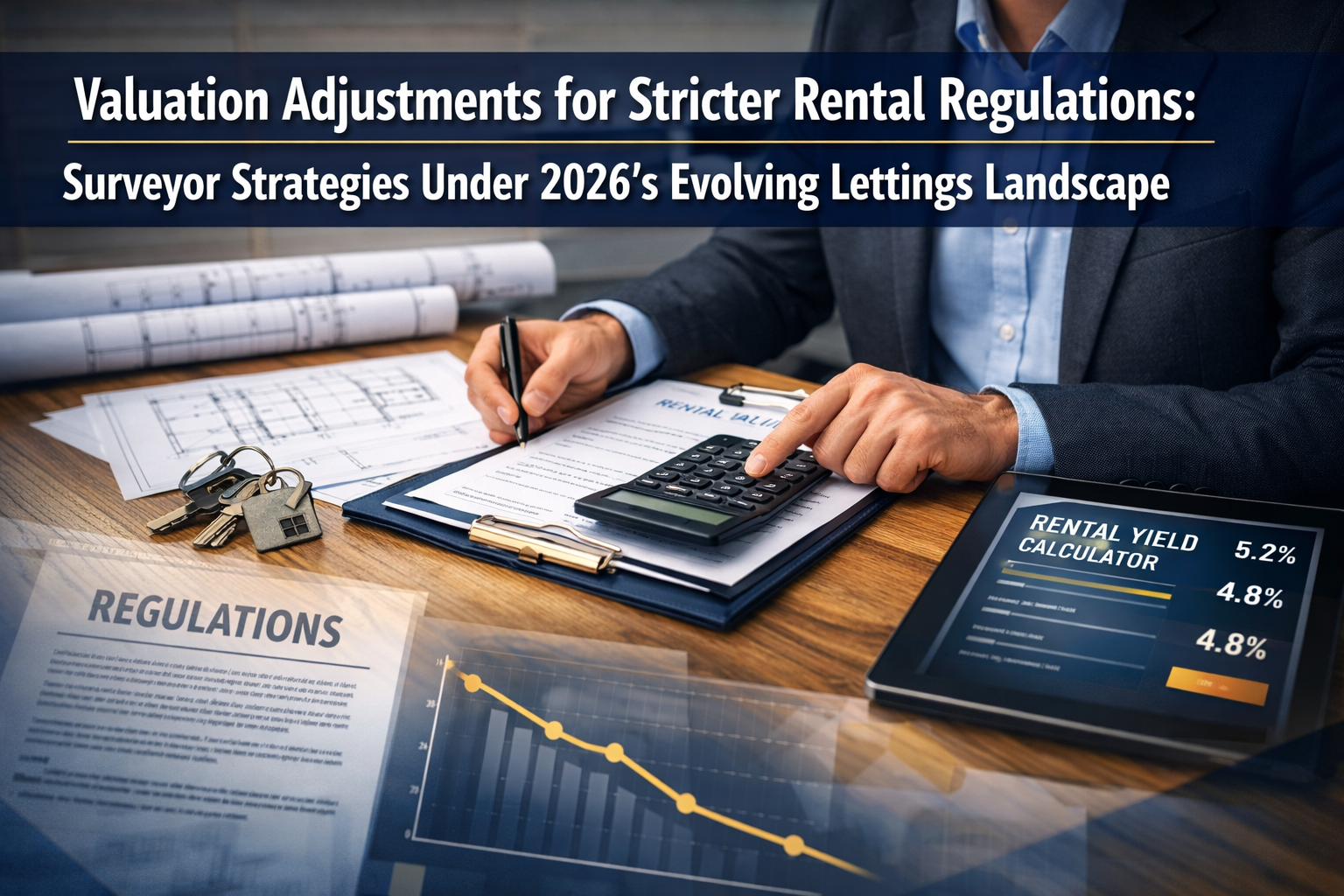
- 🔴 Automatic rent review clauses became legally void on May 1, 2026, fundamentally changing income projection methodologies for rental property valuations
- 📊 Rent increases are now limited to once per 12-month period with mandatory two-month Section 13 notice, requiring adjusted cash flow forecasting
- ⚖️ Tribunal market-rate benchmarks mean surveyors must emphasize comparable market analysis to justify rental levels and demonstrate reasonableness
- 💰 Conservative modeling within 5-10% annual increases is recommended, as tribunal challenges increase significantly above this range
- 📉 Yield compression is inevitable as compliance costs rise and income flexibility decreases, requiring risk-adjusted valuation approaches
Understanding the 2026 Regulatory Framework and Its Valuation Impact
The Renters' Rights Act fundamentally reshapes the legal landscape for residential lettings. Following Royal Assent on October 27, 2025, the legislation's core provisions came into force on May 1, 2026, creating immediate implications for property valuations[5]. Chartered surveyors must understand these changes not merely as legal technicalities but as material factors affecting investment value.
The End of Automatic Rent Review Clauses
Perhaps the most significant change for valuation purposes is the complete invalidation of automatic or contract-based rent review clauses. From May 1, 2026, all such clauses became legally void, even in existing tenancy agreements[2]. This represents a seismic shift for investment property valuations that previously relied on contractually guaranteed rental escalation.
Previously, landlords could include clauses stipulating automatic annual increases tied to inflation indices or fixed percentages. These provisions provided predictable income growth that surveyors could confidently incorporate into discounted cash flow models. Now, every rent increase requires formal process and tenant acceptance or tribunal adjudication.
For surveyors conducting property valuations, this means:
- Income certainty has decreased dramatically – future rental income projections carry higher risk
- Cash flow modeling must assume potential tenant challenges to proposed increases
- Yield calculations require downward adjustment to reflect reduced income flexibility
- Comparable analysis becomes more critical than contractual terms when assessing market rent
Frequency Restrictions and Formal Notice Requirements
The 2026 regulations impose strict limitations on how often landlords can increase rent. Rent can only be increased once per 12-month period, and landlords must provide a mandatory two-month formal Section 13 notice[1]. This contrasts sharply with previous practices where some landlords implemented more frequent adjustments.
For valuation purposes, this frequency restriction has several implications:
Impact on Income Projections: Surveyors must model rental income assuming maximum annual adjustments rather than more frequent increases. In high-inflation environments, this creates a lag between market rent growth and actual rental income.
Timing Considerations: The two-month notice period means rental increases cannot respond immediately to market changes. Valuers should factor this administrative delay into income timing assumptions.
Reduced Flexibility Premium: Properties that previously benefited from flexible rental adjustment mechanisms now trade at compressed yields compared to pre-2026 valuations.
Understanding these valuation factors is essential for accurate assessment in the current regulatory environment.
Valuation Adjustments for Stricter Rental Regulations: Tribunal Assessment Framework
The introduction of tribunal oversight represents perhaps the most significant constraint on rental income projections. When tenants challenge proposed rent increases, tribunals assess whether the new rent aligns with comparable market rates for similar properties in the area[1]. Critically, tribunals cannot increase rent beyond the landlord's original proposal, removing upside risk for tenants but capping valuation upside for investors[2].
The Tribunal Evaluation Criteria
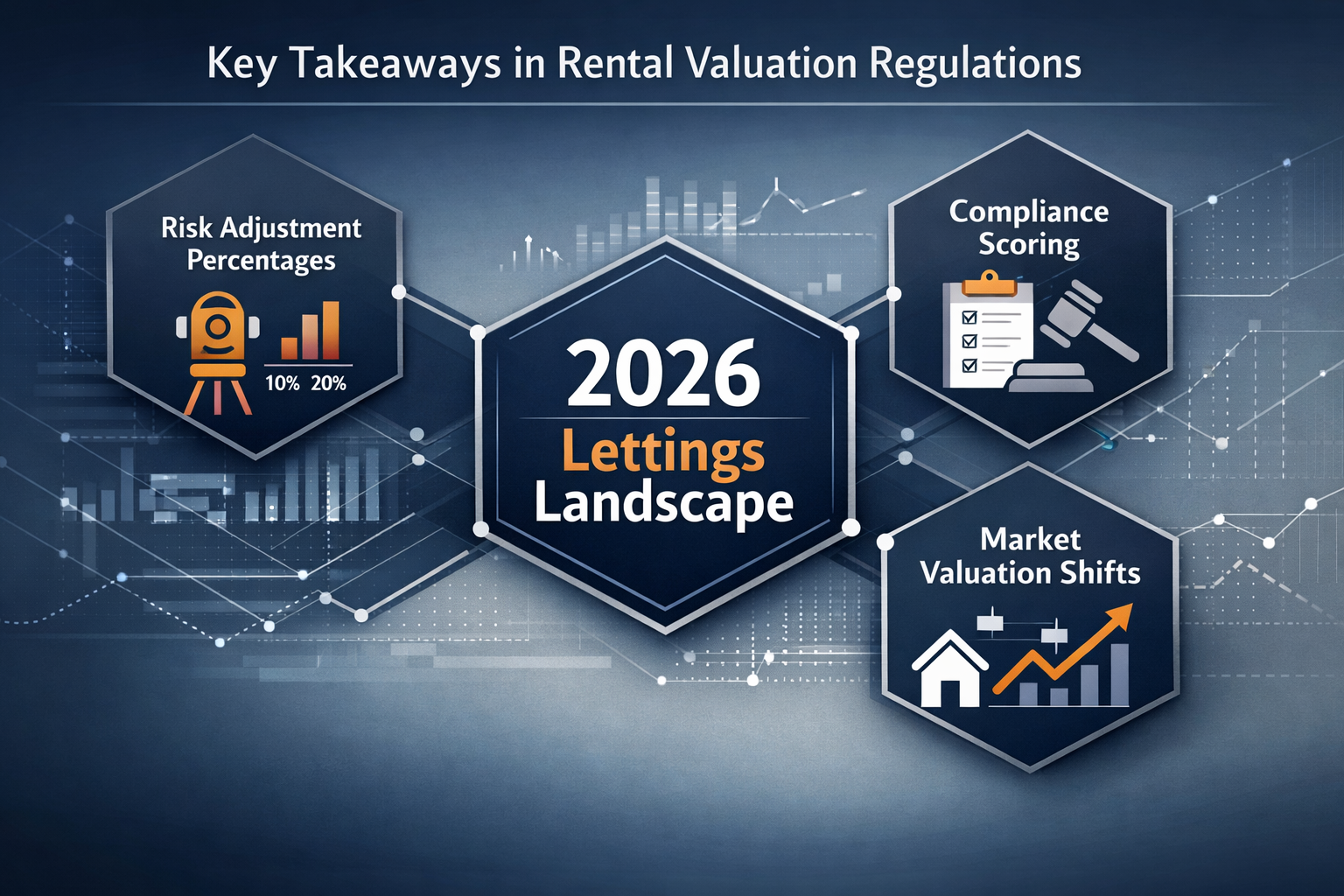
Tribunals evaluating rent increases consider multiple factors beyond simple market comparison. Surveyors must understand this multi-factor assessment framework to properly advise clients and support valuation conclusions[1]:
| Assessment Factor | Valuation Consideration | Documentation Required |
|---|---|---|
| Comparable Market Rent | Primary benchmark for reasonableness | Recent lettings of similar properties in locality |
| Market Conditions | Supply-demand dynamics affecting pricing power | Market reports, vacancy rates, rental trend data |
| Property Condition | Better condition justifies premium positioning | Inspection reports, maintenance records, EPC ratings |
| Tenant History | Long-term good tenants may warrant moderation | Tenancy duration, payment history, property care |
| Frequency of Previous Increases | Recent increases may limit current adjustment | Rental payment history, previous Section 13 notices |
| Property Improvements | Capital improvements justify higher rent | Invoices, before/after photos, added amenity value |
Acceptable Increase Thresholds
Industry guidance suggests clear thresholds for tribunal acceptability. According to current practice, a 5-10% annual increase is likely to be accepted by tribunals, 10-15% may be challenged, and 15%+ increases are very likely to be challenged and reduced[1].
These thresholds have direct valuation implications:
Conservative Income Modeling: Prudent surveyors should model increases within the 5-10% range for income projections, particularly for properties without significant improvements or in stable market conditions.
Risk-Adjusted Scenarios: Valuation reports should present multiple scenarios – optimistic (10% increases), base case (7% increases), and conservative (5% increases) – to reflect tribunal uncertainty.
Comparable Evidence Requirements: Higher proposed increases require stronger comparable evidence. Surveyors must maintain robust databases of recent lettings to support market-rate justifications.
Market Context Matters: The 3.5% private rent inflation recorded nationally as of February 2026 provides a baseline benchmark[7]. Proposed increases significantly exceeding current inflation rates face heightened scrutiny absent compelling property-specific justification.
For chartered surveyors working across different regions, understanding local market dynamics becomes even more critical. Whether conducting valuations for chartered surveyors in Surrey, West London, or Hertfordshire, regional rental growth patterns must inform tribunal-acceptable increase assumptions.
Surveyor Strategies for Risk-Adjusted Valuation Under 2026 Regulations
Professional surveyors must adapt their methodologies to reflect the new regulatory reality. Valuation Adjustments for Stricter Rental Regulations: Surveyor Strategies Under 2026's Evolving Lettings Landscape requires a fundamental reconsideration of traditional approaches.
Recalibrating Investment Yield Calculations
The cornerstone of buy-to-let valuation is the investment yield – the relationship between rental income and capital value. The 2026 regulations compress yields through multiple mechanisms:
Income Ceiling Effects: The inability to implement automatic increases and the tribunal oversight create an effective ceiling on rental income growth. Properties that previously achieved 8-10% annual rental growth may now realistically achieve only 5-7%.
Compliance Cost Increases: Meeting regulatory requirements imposes additional costs. Formal Section 13 notices, potential tribunal fees, enhanced property maintenance to justify market-rate rents, and professional advice all reduce net operating income.
Risk Premium Adjustments: Investors now face greater income uncertainty. Valuers should apply higher capitalization rates (lower multiples) to reflect this increased risk. A property previously valued at a 4.5% yield might now warrant a 5.0-5.5% yield to compensate for regulatory constraints.
Void Period Assumptions: If tenants challenge increases and subsequently vacate, landlords face extended void periods while securing new tenants at market rates. Conservative valuations should assume longer average void periods than pre-2026 models.
Comparable Market Analysis as Primary Methodology
With contractual rent review clauses invalidated, comparable market analysis becomes the primary valuation methodology. Surveyors must develop robust comparable databases that include:
✅ Recent lettings (within past 3-6 months) of similar properties in the immediate locality
✅ Property specifications including size, condition, amenities, and EPC ratings
✅ Tenancy terms and any special conditions affecting rent levels
✅ Market positioning relative to local supply-demand dynamics
✅ Adjustment factors for differences between subject property and comparables
This approach aligns with RICS Red Book principles but requires more extensive comparable evidence than traditional investment valuations. Surveyors should maintain detailed records of rental transactions, ideally verified through multiple sources including letting agents, Land Registry data, and direct market intelligence.
Professional registered RICS valuers must ensure their comparable analysis methodology withstands potential tribunal scrutiny. The same evidence supporting the valuation may later support a landlord's Section 13 notice if challenged.
Scenario Modeling and Sensitivity Analysis
Given the uncertainty inherent in the new regulatory framework, comprehensive valuations should include scenario modeling:
Optimistic Scenario: Assumes 10% annual increases accepted without challenge, minimal void periods, and strong market rent growth continuing. This scenario reflects the upper bound of reasonable expectations.
Base Case Scenario: Assumes 7% annual increases, occasional tenant challenges requiring negotiated settlements at 5-6%, and normal void periods. This represents the most probable outcome for well-maintained properties in balanced markets.
Conservative Scenario: Assumes 5% annual increases, regular tenant challenges requiring tribunal adjudication, extended void periods following disputes, and additional compliance costs. This scenario protects against downside risk.
Each scenario should include:
- 📈 Detailed cash flow projections over 10-year holding period
- 💷 Net present value calculations using appropriate discount rates
- 📊 Internal rate of return analysis
- 🎯 Exit value assumptions reflecting market conditions at disposition
Documentation and Evidence Standards
The tribunal framework elevates the importance of documentation quality in valuation reports. Surveyors should:
Maintain Comprehensive Comparable Files: Include property addresses, letting dates, rental amounts, property specifications, and source verification for all comparables cited.
Document Market Conditions: Incorporate current market reports, supply-demand analysis, and rental trend data from reputable sources. The continued supply constraints in the rental market support ongoing rent growth despite regulatory limitations[6].
Justify Adjustment Factors: Clearly explain any adjustments made to comparable rents for differences in property characteristics, condition, or location.
Address Regulatory Compliance: Note the subject property's compliance status with current regulations, including EPC ratings, safety certifications, and any planned improvements.
Provide Clear Methodology Explanation: Articulate the valuation approach, assumptions made, and rationale for yield selection or comparable adjustments.
This enhanced documentation serves dual purposes: supporting the valuation conclusion and providing evidence that could later support a landlord's rent increase justification if challenged.
Practical Implementation for Different Property Types
The regulatory impact varies across different segments of the rental market. Surveyors must tailor their approaches accordingly.
Standard Buy-to-Let Residential Properties
For typical residential rental properties, the full force of the Renters' Rights Act applies. These properties face:
- Maximum 12-month increase frequency
- Full tribunal challenge rights
- Void automatic rent review clauses
- Section 13 notice requirements
Valuation Approach: Conservative income modeling within 5-7% annual growth, yield compression of 0.5-1.0% compared to pre-2026 valuations, and enhanced comparable analysis focusing on recent market lettings.
Houses in Multiple Occupation (HMOs)
HMO properties present unique valuation challenges under the new framework. Room-by-room letting creates complexity in applying Section 13 notices and comparable analysis.
Valuation Approach: Consider the property as a single investment unit rather than individual room lettings. Comparable analysis should focus on similar HMO properties with equivalent room counts and amenity standards. Factor higher management costs for coordinating multiple Section 13 notices if room rents are increased.
Portfolio Valuations
Large portfolio valuations require aggregated analysis while recognizing property-specific variations. Not all properties will achieve identical rental growth rates.
Valuation Approach: Segment the portfolio by property type, location, and condition. Apply differentiated growth assumptions based on each segment's market positioning. Properties in high-demand areas with superior condition may achieve upper-end growth assumptions (8-10%), while properties in softer markets or requiring improvements should use conservative assumptions (4-6%).
Understanding surveyor pricing for portfolio work helps clients budget appropriately for comprehensive valuation services.
Social Housing and Affordable Rent Properties
Social housing operates under different regulatory frameworks. Social housing rent increases are capped at CPI+1%, resulting in a 4.8% cap for the period April 2026 to March 2027 under the 10-year rent settlement[4].
Valuation Approach: Use the regulated formula (CPI+1%) for income projections rather than market-based assumptions. These properties trade at different yields than private sector comparables, reflecting the income certainty provided by regulatory caps and typically longer-term tenancies.
Regional Market Considerations and Local Expertise
The impact of regulatory changes varies significantly by region. Local market dynamics, supply-demand imbalances, and regional rental growth patterns all influence how the 2026 regulations affect property values.
High-Demand Urban Markets
In areas with persistent supply shortages and strong tenant demand, landlords retain greater pricing power despite regulatory constraints. Markets like London, Richmond, and Hampstead continue experiencing robust rental growth.
Valuation Impact: Upper-end growth assumptions (8-10%) remain justifiable for well-presented properties in prime locations. Tribunal challenges are less likely when proposed increases align with strong comparable evidence of market rent growth.
Suburban and Commuter Belt Areas
Areas like Guildford, Weybridge, and St Albans show more moderate rental growth reflecting balanced supply-demand dynamics.
Valuation Impact: Mid-range growth assumptions (6-8%) are appropriate. Surveyors should carefully analyze local comparable evidence as these markets show greater variation in rental performance by property type and condition.
Softer Rental Markets
Some regions experience softer rental demand due to economic factors, population shifts, or oversupply. In these markets, the regulatory constraints have less practical impact as market forces already limit rental growth.
Valuation Impact: Conservative growth assumptions (4-6%) reflect market realities rather than regulatory constraints. Focus valuation on property-specific factors that differentiate the subject from competing rentals.
Integration with Other Valuation Services
Rental regulation changes intersect with other valuation contexts, creating additional considerations for surveyors.
Mortgage Lending Valuations
Lenders increasingly scrutinize buy-to-let valuations given the regulatory changes. Surveyors conducting mortgage valuations must:
- Clearly explain regulatory impact on rental income projections
- Demonstrate conservative income assumptions aligned with tribunal-acceptable increases
- Address compliance status and any remedial work required
- Provide robust comparable evidence supporting market rent assumptions
Lenders may require lower loan-to-value ratios or higher interest coverage ratios to compensate for increased income uncertainty.
Divorce and Family Valuations
Divorce valuations of rental properties must reflect current market conditions and regulatory constraints. The investment value of a rental property in 2026 differs materially from pre-regulation values.
Key Consideration: Ensure both parties understand that rental property values have likely compressed due to yield adjustments, and future income projections are more constrained than historical performance might suggest.
Tax-Related Valuations
Capital gains tax valuations require careful consideration of the valuation date. Properties valued before May 1, 2026, should use pre-regulation assumptions, while post-implementation valuations must reflect the new regulatory reality.
Key Consideration: The timing of disposal relative to the May 1, 2026, implementation date may significantly affect tax liabilities due to value compression following regulatory changes.
Leasehold Property Considerations
For rental properties held on leasehold terms, the interaction between ground rent obligations, service charges, and rental income becomes more complex under constrained income growth scenarios.
Lease extension valuations must consider the investment value of the extended lease reflecting current rental market conditions and regulatory constraints.
Future-Proofing Valuation Methodologies
As the rental market adapts to the 2026 regulatory framework, surveyors must remain vigilant for emerging trends and potential further regulatory changes.
Monitoring Market Response
The rental supply continues below pre-pandemic levels despite slightly cooling demand, meaning rents are still expected to rise during 2026[6]. Surveyors should:
- Track actual tribunal decisions and outcomes to refine acceptable increase assumptions
- Monitor landlord exit rates and impact on supply-demand dynamics
- Assess whether regulatory constraints accelerate rent growth in remaining stock
- Evaluate tenant behavior regarding increase challenges
Anticipating Further Regulatory Evolution
The 2026 regulations may not represent the final state of rental market regulation. Potential future changes could include:
- Additional restrictions on rent increase percentages
- Enhanced tenant protections affecting property management costs
- Energy efficiency requirements affecting property values
- Local authority licensing schemes adding compliance costs
Prudent valuations should acknowledge regulatory risk as an ongoing factor affecting long-term investment value.
Technology and Data Analytics
Advanced data analytics increasingly support valuation work. Surveyors should leverage:
- Automated comparable analysis tools drawing from comprehensive rental transaction databases
- Predictive modeling incorporating regulatory constraints, market trends, and property-specific factors
- Geographic information systems mapping rental performance by micro-location
- Tribunal outcome databases tracking challenge rates and adjustment patterns
These technological tools enhance valuation accuracy and provide more robust evidence supporting conclusions.
Conclusion
Valuation Adjustments for Stricter Rental Regulations: Surveyor Strategies Under 2026's Evolving Lettings Landscape represents the most significant methodological shift in rental property valuation in decades. The invalidation of automatic rent review clauses, frequency restrictions on increases, and tribunal oversight fundamentally alter the risk-return profile of buy-to-let investments.
Chartered surveyors must adapt by:
✅ Recalibrating yield assumptions to reflect compressed income flexibility and increased regulatory risk
✅ Emphasizing comparable market analysis as the primary methodology given the invalidation of contractual rent escalation clauses
✅ Modeling conservative income growth within the 5-10% range most likely to withstand tribunal scrutiny
✅ Enhancing documentation standards to support both valuation conclusions and potential future rent increase justifications
✅ Implementing scenario analysis to capture the range of possible outcomes under regulatory uncertainty
The rental market continues to evolve, with supply constraints supporting ongoing rent growth despite regulatory limitations. However, the era of predictable, contractually guaranteed rental escalation has ended. Professional surveyors who adapt their methodologies to reflect this new reality will provide the most valuable guidance to clients navigating 2026's transformed lettings landscape.
Next Steps for Property Professionals
For Landlords: Commission updated valuations of rental portfolios to understand the impact of regulatory changes on asset values. Consider whether property improvements could justify stronger rental positioning and tribunal-acceptable increases.
For Investors: Engage experienced surveyors who understand the regulatory framework and can provide risk-adjusted valuation analysis. Ensure investment decisions reflect realistic income projections under the new constraints.
For Lenders: Review valuation policies and lending criteria to ensure they adequately address regulatory risks. Consider requiring enhanced comparable evidence and scenario analysis in buy-to-let valuation reports.
For Surveyors: Invest in comprehensive comparable databases, develop expertise in tribunal assessment frameworks, and enhance documentation standards. Consider specialized training in rental regulation and its valuation implications.
The regulatory landscape will continue evolving, but the fundamental principles of professional valuation remain constant: thorough analysis, robust evidence, clear methodology, and transparent communication of assumptions and limitations. Surveyors who maintain these standards while adapting to regulatory changes will continue delivering valuable professional services in the transformed rental market of 2026 and beyond.
References
[1] Uk Rent Increase Rules 2026 – https://www.essentialpropertyoptions.co.uk/post/uk-rent-increase-rules-2026
[2] Renters Rights Act New Rent Increase Rules Explained 2026 – https://felixaccountants.com/renters-rights-act-new-rent-increase-rules-explained-2026/
[4] Rent Increase Landlords – https://theindependentlandlord.com/rent-increase-landlords/
[5] Consideration Of Implications Of Renters Rights Act On Valuation – https://www.rics.org/news-insights/consideration-of-implications-of-renters-rights-act-on-valuation
[6] ochomes.co.uk – https://ochomes.co.uk/blog/the-uk-rental-market-is-entering-a-new-phase-in-2026/60452
[7] The 2026 Renters Rights Act Navigating The New Rules For Stourbridge Landlords – https://www.hunters.com/guides/stourbridge/the-2026-renters-rights-act-navigating-the-new-rules-for-stourbridge-landlords/