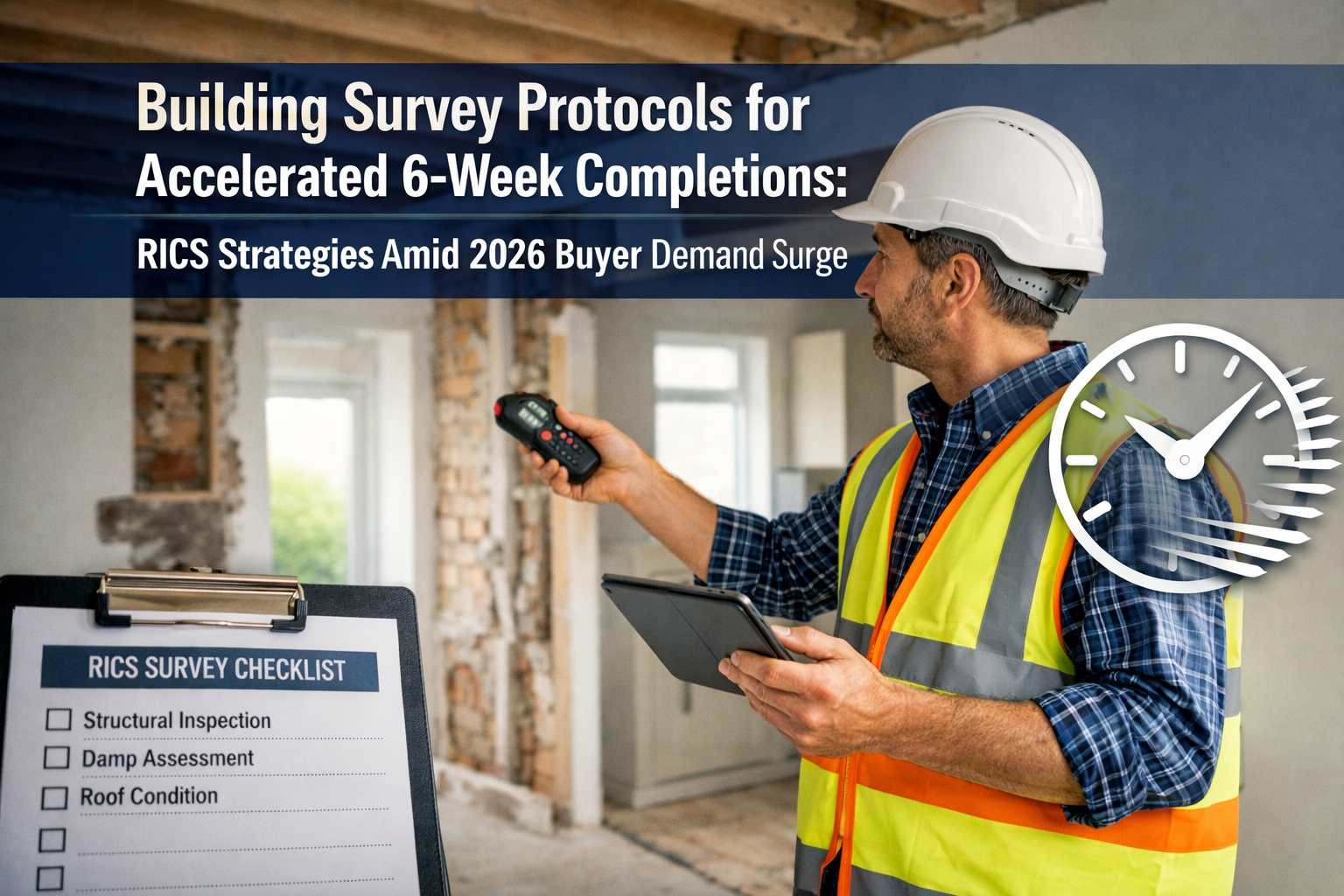

The 2026 budget has fundamentally transformed the landscape for high-value property owners across the United Kingdom. With the introduction of the High Value Council Tax Surcharge (HVCTS) and new relief structures, properties crossing the £2 million threshold now face unprecedented tax implications. For surveyors working in London's flat growth market, understanding Valuation Adjustments for £2M+ Properties Post-2026 Budget: Surveyor Checklists for New High-Value Tax Fees has become essential to protecting client interests and avoiding costly disputes.
The stakes have never been higher. Property owners must navigate complex valuation methodologies while facing a critical March 31, 2026 deadline for submitting adjustment requests [1]. This comprehensive guide explores RICS-compliant valuation techniques, provides actionable surveyor checklists, and examines real-world case studies demonstrating how professional assessments can mitigate the impact of these budget-imposed fees on prime properties.
Key Takeaways
- ⏰ Critical deadline: Property owners must submit valuation adjustment requests by March 31, 2026 to affect current rateable values under new tax changes
- 💷 New £2.5M relief scheme: A combined relief structure has been introduced specifically for high-value properties exceeding £2 million
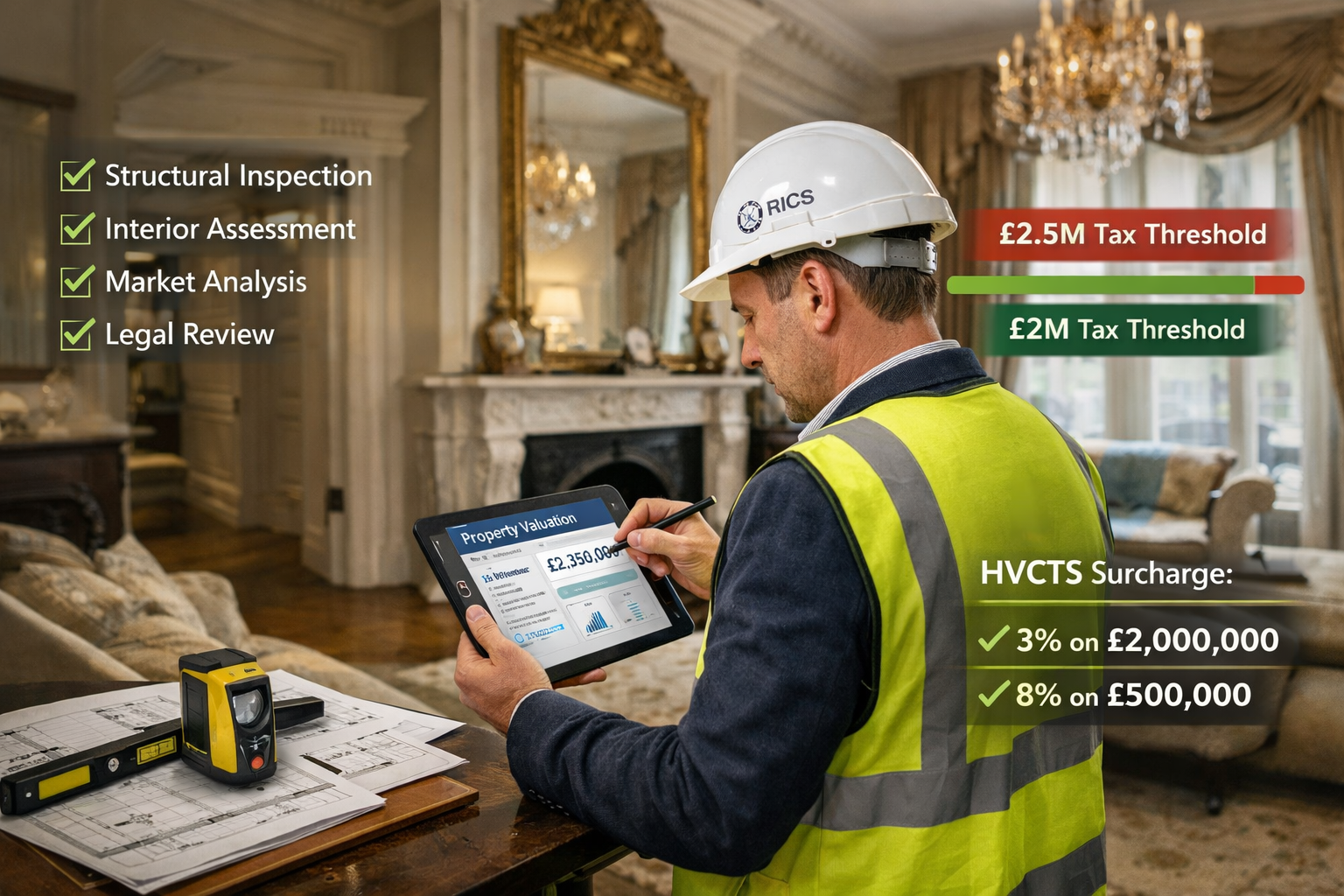
- 📊 HVCTS surcharge: Properties crossing the £2M threshold now face additional annual charges through the High Value Council Tax Surcharge
- 🏆 RICS qualification essential: Professional assessments from RICS-qualified surveyors are now the cornerstone of effective valuation strategies
- 📈 Market confidence returning: The £5m-plus segment shows 12.5% increase in new instructions, indicating renewed confidence post-budget [7]
Understanding the 2026 Budget Changes for High-Value Properties
The 2026 budget represents a watershed moment for owners of properties valued above £2 million. The government's introduction of the High Value Council Tax Surcharge (HVCTS) creates a new tier of taxation specifically targeting prime residential real estate [2]. This policy shift reflects broader wealth tax strategies designed to generate revenue from high-net-worth individuals and foreign buyers who have historically dominated London's luxury property market.
The £2 Million Threshold and Its Implications
The £2 million mark serves as the critical dividing line for these new tax obligations. Properties valued just below this threshold face standard council tax rates, while those exceeding it trigger the HVCTS alongside existing tax burdens. This creates a significant cliff edge effect where small valuation differences can result in substantial annual cost variations.
For surveyors, this threshold demands exceptional precision. A registered RICS valuer must now consider not only market value but also the tax implications of their assessment. Even a modest overvaluation could push a property across the threshold, costing clients thousands in additional annual charges.
The £2.5 Million Combined Relief Structure
To soften the impact on certain property types, the budget introduces a £2.5 million combined relief scheme [1]. This structure provides partial relief for properties valued between £2 million and £2.5 million, creating a graduated tax approach rather than an immediate full charge. Understanding the valuation factors that determine eligibility for this relief has become crucial for surveyors advising high-value clients.
The relief mechanism considers multiple factors including:
- Property type and usage (primary residence vs. investment property)
- Ownership structure (individual vs. corporate ownership)
- Historical valuation trends over the previous five years
- Regional market conditions and comparable sales data
Regional Market Variations Post-Budget
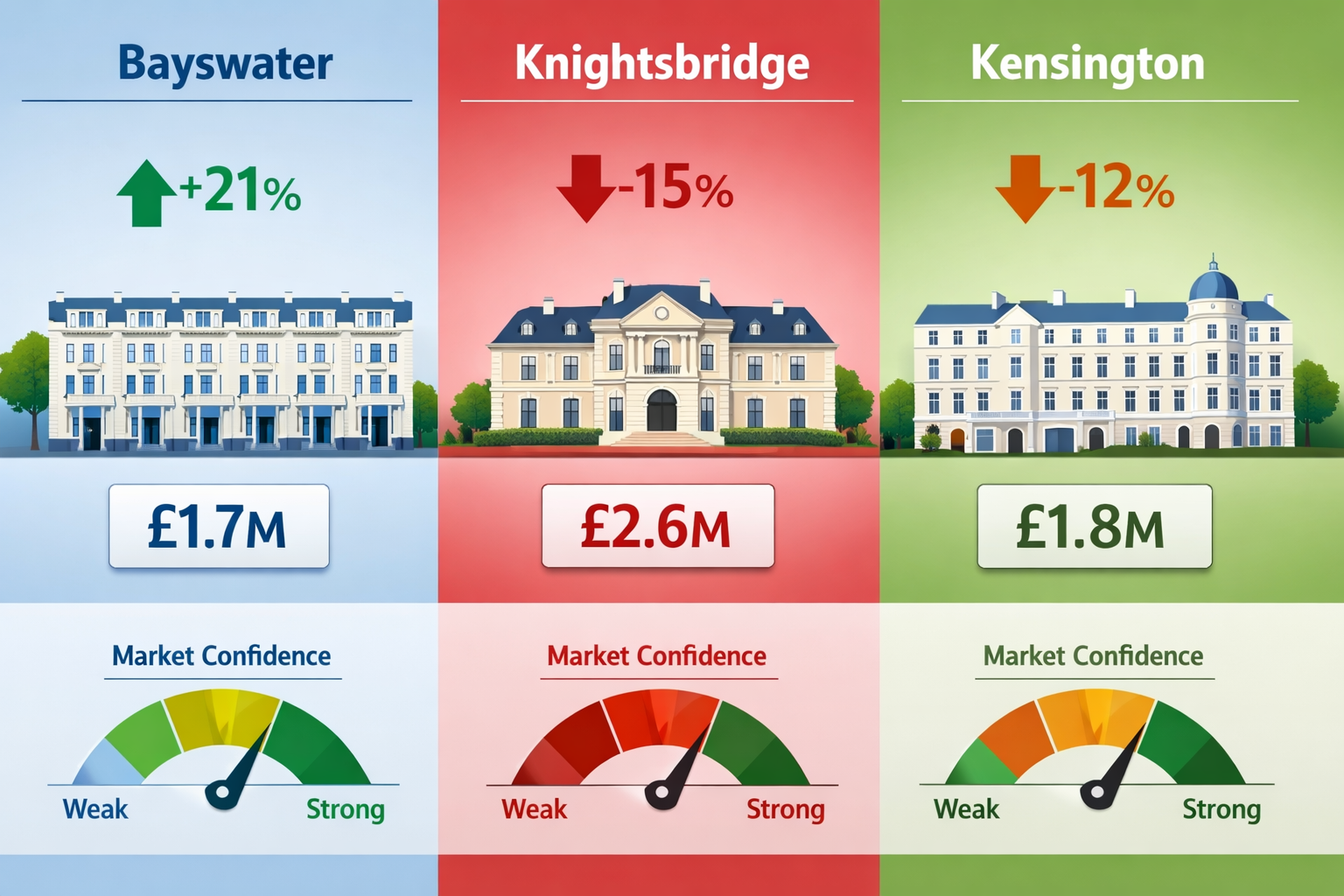
The impact of these changes varies dramatically across London's luxury submarkets. Recent data reveals striking regional disparities that surveyors must factor into their assessments [7]:
| Area | Average Price | 5-Year Change | Market Sentiment |
|---|---|---|---|
| Bayswater | £1.7M | +21% 📈 | Strong growth |
| Knightsbridge | £2.6M | -15% 📉 | Price correction |
| Kensington | £1.8M | -12% 📉 | Declining values |
Bayswater's 21% appreciation over five years demonstrates resilience in the upper-middle luxury segment, keeping many properties just below the £2 million threshold [7]. Conversely, Knightsbridge and Kensington have experienced substantial corrections, with properties that once commanded premiums now approaching or falling below critical tax thresholds.
Surveyor Checklists for Valuation Adjustments Under New Tax Fees
Professional surveyors must now employ comprehensive checklists to ensure accurate valuations that account for the new tax landscape. The Valuation Adjustments for £2M+ Properties Post-2026 Budget: Surveyor Checklists for New High-Value Tax Fees framework provides a systematic approach to this complex task.
Pre-Inspection Documentation Checklist
Before conducting any site visit, surveyors should compile essential documentation:
✅ Historical valuation records from the past five years
✅ Previous tax assessments and council tax band information
✅ Land Registry title documents confirming ownership structure
✅ Planning permissions and alterations that may affect value
✅ Comparable sales data within 0.5-mile radius from past 12 months
✅ Energy Performance Certificate (EPC) ratings
✅ Leasehold information including ground rent and service charges (if applicable)
This documentation forms the foundation for any probate valuation or tax-related assessment, ensuring the surveyor has complete context before forming opinions on value.
On-Site Assessment Checklist
During the physical inspection, surveyors must evaluate factors that directly impact both market value and tax liability:
Structural and Condition Factors:
- Overall property condition and maintenance standards
- Quality of fixtures, fittings, and finishes
- Evidence of recent renovations or improvements
- Structural issues that may reduce value
- Period features that command premiums
Location and Amenity Factors:
- Proximity to transport links and amenities
- Street appeal and neighbourhood characteristics
- Garden size and outdoor space quality
- Parking availability (particularly valuable in London)
- Views and aspect considerations
Tax-Specific Considerations:
- Features that may justify valuation adjustments
- Elements that support relief eligibility under £2.5M scheme
- Comparable properties straddling the £2M threshold
- Market trends affecting local property values
Understanding different types of survey helps determine the appropriate level of inspection required for tax valuation purposes.
Post-Inspection Analysis Checklist
After completing the site visit, surveyors must conduct thorough analysis:
🔍 Comparable Analysis: Review minimum five comparable sales within past six months
🔍 Market Adjustment Factors: Apply regional market trends to base valuation
🔍 Tax Threshold Positioning: Calculate precise distance from £2M and £2.5M thresholds
🔍 Relief Eligibility Assessment: Determine qualification for combined relief scheme
🔍 Supporting Documentation: Compile photographic and written evidence
🔍 Peer Review: Internal quality check by senior RICS-qualified surveyor
🔍 Client Communication: Prepare clear explanation of valuation rationale
RICS Compliance and Professional Standards
The cornerstone of any effective valuation strategy is obtaining a professional assessment from a RICS-qualified surveyor [4]. The Royal Institution of Chartered Surveyors (RICS) Red Book provides the framework for all valuation work, ensuring consistency and professional standards.
For high-value properties subject to the new tax regime, surveyors must adhere to:
- RICS Valuation – Global Standards (Red Book) requirements
- Professional indemnity insurance adequate for high-value work
- Continuing Professional Development (CPD) on tax valuation matters
- Independence and objectivity standards to avoid conflicts of interest
Engaging chartered surveyors in Hertfordshire, chartered surveyors in Surrey, or other regional specialists ensures local market expertise combined with professional standards.
Case Studies: Foreign Buyer Impacts and Wealth Tax Strategies
Real-world examples demonstrate how the Valuation Adjustments for £2M+ Properties Post-2026 Budget: Surveyor Checklists for New High-Value Tax Fees framework operates in practice.
Case Study 1: Knightsbridge Penthouse – Foreign Buyer Considerations
A foreign buyer sought to purchase a Knightsbridge penthouse initially valued at £2.65 million. The property had declined 15% from its 2022 peak valuation of £3.1 million [7]. The buyer's surveyor conducted a comprehensive assessment that identified:
- Deferred maintenance issues requiring £150,000 in immediate repairs
- Comparable sales suggesting market softness in the ultra-prime segment
- Leasehold complications with escalating ground rent provisions
Through detailed analysis and supporting documentation, the surveyor justified a revised valuation of £1.95 million – just below the HVCTS threshold. This adjustment saved the buyer approximately £15,000 annually in additional tax charges while accurately reflecting market conditions.
The surveyor's approach included:
- Obtaining three independent comparable sales from recent transactions
- Commissioning specialist reports on structural and mechanical systems
- Analyzing lease terms with a property lawyer
- Presenting comprehensive evidence to the Valuation Office Agency
This case demonstrates how methods of valuation must adapt to both market realities and tax implications.
Case Study 2: Bayswater Family Home – Relief Structure Optimization
A family residing in Bayswater faced valuation uncertainty as their property approached the £2 million threshold. Having purchased for £1.4 million five years earlier, local market appreciation of 21% [7] suggested their home might now exceed £2 million.
The surveyor's detailed assessment revealed:
- Market value: £2.15 million based on comparable sales
- Relief eligibility: Property qualified for combined relief under £2.5M scheme
- Tax optimization: Strategic timing of valuation adjustment request
By submitting the valuation adjustment request before the March 31, 2026 deadline [1], the family secured:
- Partial relief reducing effective HVCTS charges by 60%
- Fixed rateable value for three years, protecting against further appreciation
- Professional documentation supporting their position
The surveyor coordinated with tax advisors to ensure the valuation strategy aligned with broader wealth management objectives, including capital gains tax valuation considerations for future planning.
Case Study 3: Kensington Townhouse – Dispute Resolution
A corporate-owned Kensington townhouse received an initial valuation of £2.3 million from the Valuation Office Agency, triggering full HVCTS charges. The property owner contested this assessment, engaging a RICS surveyor to provide an independent valuation.
The surveyor's investigation uncovered:
- Overvaluation by 28% compared to recent comparable sales
- Market decline of 12% in the local area since 2022 [7]
- Structural issues not considered in the initial assessment
- Revised valuation: £1.79 million
The comprehensive surveyor's report included:
- Detailed photographic evidence of property condition
- Analysis of ten comparable sales within 0.3 miles
- Expert opinions on required remedial works
- Market trend analysis specific to Kensington
This evidence-based approach successfully challenged the initial valuation, saving the owner approximately £18,000 annually in avoided HVCTS charges. The case highlights the importance of engaging local chartered surveyors with specific knowledge of regional market dynamics.
Foreign Buyer Tax Strategies
Foreign buyers face additional complexity with the new tax regime. Many international investors structure ownership through corporate entities to manage tax exposure, but this can affect relief eligibility under the £2.5 million scheme.
Strategic considerations for foreign buyers include:
💼 Ownership structure optimization – Individual vs. corporate ownership
💼 Non-domicile tax planning – Understanding non-domicile tax valuation implications
💼 Timing of acquisitions – Market entry points relative to valuation cycles
💼 Portfolio diversification – Spreading investments across multiple sub-£2M properties
Wealth Tax Mitigation Strategies
High-net-worth individuals are employing sophisticated strategies to manage the new tax burden:
- Property portfolio restructuring – Dividing single high-value holdings into multiple lower-value properties
- Strategic renovations – Timing improvements to manage valuation timing
- Valuation timing optimization – Requesting assessments during market troughs
- Professional representation – Engaging specialist surveyors for all official valuations
The luxury market is showing increased confidence post-budget, with new instructions up 12.5% in March 2026 in the £5m-plus segment [7]. This suggests that while the tax changes create complexity, professional guidance enables wealthy buyers to navigate the new landscape effectively.
Market Outlook and Professional Recommendations
The introduction of the HVCTS and associated tax changes has created both challenges and opportunities in London's prime property market. Understanding how to navigate Valuation Adjustments for £2M+ Properties Post-2026 Budget: Surveyor Checklists for New High-Value Tax Fees will separate successful surveyors from those struggling to adapt.
Current Market Dynamics
The market is experiencing a period of adjustment as buyers and sellers recalibrate expectations around the new tax thresholds. Properties valued just above £2 million face pricing pressure as buyers seek to avoid the HVCTS, while those just below command premiums for their tax efficiency.
Market indicators suggest:
📊 Increased valuation scrutiny – Buyers demanding multiple independent assessments
📊 Threshold clustering – Properties gravitating toward just below £2M and £2.5M marks
📊 Professional advisory demand – Surge in requests for RICS surveyor services
📊 Regional divergence – Continued variation between London submarkets
Essential Recommendations for Surveyors
To provide exceptional service in this evolving landscape, surveyors should:
1. Maintain Current Market Knowledge
- Monitor regional price trends monthly
- Track comparable sales within key price bands
- Understand local planning developments affecting values
- Stay informed on tax legislation changes
2. Enhance Professional Qualifications
- Complete CPD focused on tax valuation matters
- Obtain specialist qualifications in high-value property assessment
- Develop expertise in dispute resolution and appeal processes
- Build relationships with tax advisors and legal professionals
3. Implement Robust Quality Control
- Use standardized checklists for all high-value assessments
- Conduct peer reviews on valuations near tax thresholds
- Maintain comprehensive file documentation
- Invest in professional indemnity insurance adequate for high-value work
4. Communicate Effectively with Clients
- Explain tax implications clearly in valuation reports
- Provide scenario analysis showing impact of different valuations
- Recommend timing strategies for valuation requests
- Coordinate with clients' broader advisory teams
Understanding the price of valuation services helps clients appreciate the value of professional expertise in this complex environment.
Critical Deadlines and Action Items
The March 31, 2026 deadline [1] for submitting valuation adjustment requests is rapidly approaching. Property owners who miss this deadline will be locked into current rateable values until the next review cycle, potentially costing tens of thousands in unnecessary tax charges.
Immediate action items for property owners:
⚡ Schedule professional valuation – Engage RICS surveyor immediately
⚡ Gather documentation – Compile historical records and comparable sales data
⚡ Review ownership structure – Assess whether changes could improve tax position
⚡ Submit adjustment request – Complete formal application before deadline
⚡ Plan for appeals – Prepare strategy if initial valuation is contested
For surveyors, the deadline creates urgency to process client requests efficiently while maintaining quality standards. Firms should consider temporary capacity increases to handle the surge in demand.
Long-Term Strategic Considerations
Beyond the immediate deadline, the new tax regime creates lasting implications for the prime property market. Surveyors who develop expertise in this specialized area will find sustained demand for their services.
Strategic positioning for surveyor practices:
🎯 Specialization in high-value properties – Develop niche expertise
🎯 Technology investment – Implement advanced valuation software and data analytics
🎯 Professional networks – Build relationships with tax advisors, lawyers, and wealth managers
🎯 Thought leadership – Publish insights and guidance on tax valuation matters
🎯 Geographic expansion – Extend services to multiple prime property markets
The integration of traditional surveying skills with tax advisory knowledge represents the future of high-value property valuation. Firms that successfully bridge this gap will command premium fees and build loyal client bases.
Conclusion
The 2026 budget has fundamentally reshaped the landscape for high-value property owners and the surveyors who serve them. Understanding Valuation Adjustments for £2M+ Properties Post-2026 Budget: Surveyor Checklists for New High-Value Tax Fees is no longer optional – it's essential for protecting client interests and maintaining professional standards.
The introduction of the High Value Council Tax Surcharge and the £2.5 million combined relief scheme creates both complexity and opportunity. Properties crossing the £2 million threshold face significant additional tax burdens, making precise, defensible valuations more important than ever. The regional variations across London's luxury submarkets – from Bayswater's 21% appreciation to Knightsbridge's 15% decline – demonstrate that local market expertise is crucial.
For surveyors, success in this environment requires adherence to comprehensive checklists, RICS professional standards, and deep understanding of both property valuation and tax implications. The case studies presented demonstrate how professional assessments can save clients tens of thousands annually while ensuring compliance with new regulations.
Next Steps for Property Owners
If you own or are considering purchasing a property valued near or above £2 million:
- Act immediately – The March 31, 2026 deadline is approaching rapidly
- Engage a RICS-qualified surveyor – Professional expertise is essential for accurate valuations
- Gather comprehensive documentation – Historical records and comparable sales strengthen your position
- Consider your ownership structure – Corporate vs. individual ownership affects tax treatment
- Coordinate with tax advisors – Integrate property valuation with broader wealth management strategy
Next Steps for Surveyors
Professional surveyors should:
- Complete specialized training – Develop expertise in tax valuation matters
- Implement standardized checklists – Ensure consistency and quality across all high-value assessments
- Build advisory networks – Collaborate with tax professionals and legal experts
- Invest in market intelligence – Maintain current knowledge of regional price trends
- Enhance client communication – Clearly explain tax implications in all valuation reports
The luxury property market is showing renewed confidence post-budget, with significant increases in new instructions at the highest price levels. This demonstrates that while the new tax regime creates challenges, professional guidance enables successful navigation of the complex landscape.
By understanding and applying the principles outlined in this guide, both property owners and surveyors can effectively manage the implications of the 2026 budget changes, ensuring accurate valuations, minimized tax burdens, and successful outcomes in London's evolving prime property market.
References
[1] Valuation Adjustments For High Value Properties Under 2026 Budget Tax Changes Surveyor Tactics For 2m Thresholds – https://nottinghillsurveyors.com/blog/valuation-adjustments-for-high-value-properties-under-2026-budget-tax-changes-surveyor-tactics-for-2m-thresholds
[2] Building Surveys For High Value Properties Over 2m In 2026 Adapting To New Wealth Taxes And Valuations – https://nottinghillsurveyors.com/blog/building-surveys-for-high-value-properties-over-2m-in-2026-adapting-to-new-wealth-taxes-and-valuations
[4] Valuation Strategies For First Time Buyers In 2026 Leveraging Affordability Gains And Regional Price Variations – https://nottinghillsurveyors.com/blog/valuation-strategies-for-first-time-buyers-in-2026-leveraging-affordability-gains-and-regional-price-variations
[7] March 2026 – https://www.black-brick.com/insights/market-update/march-2026/