
Town Planning Surveyor: Your Complete Guide to This Essential Urban Development Career
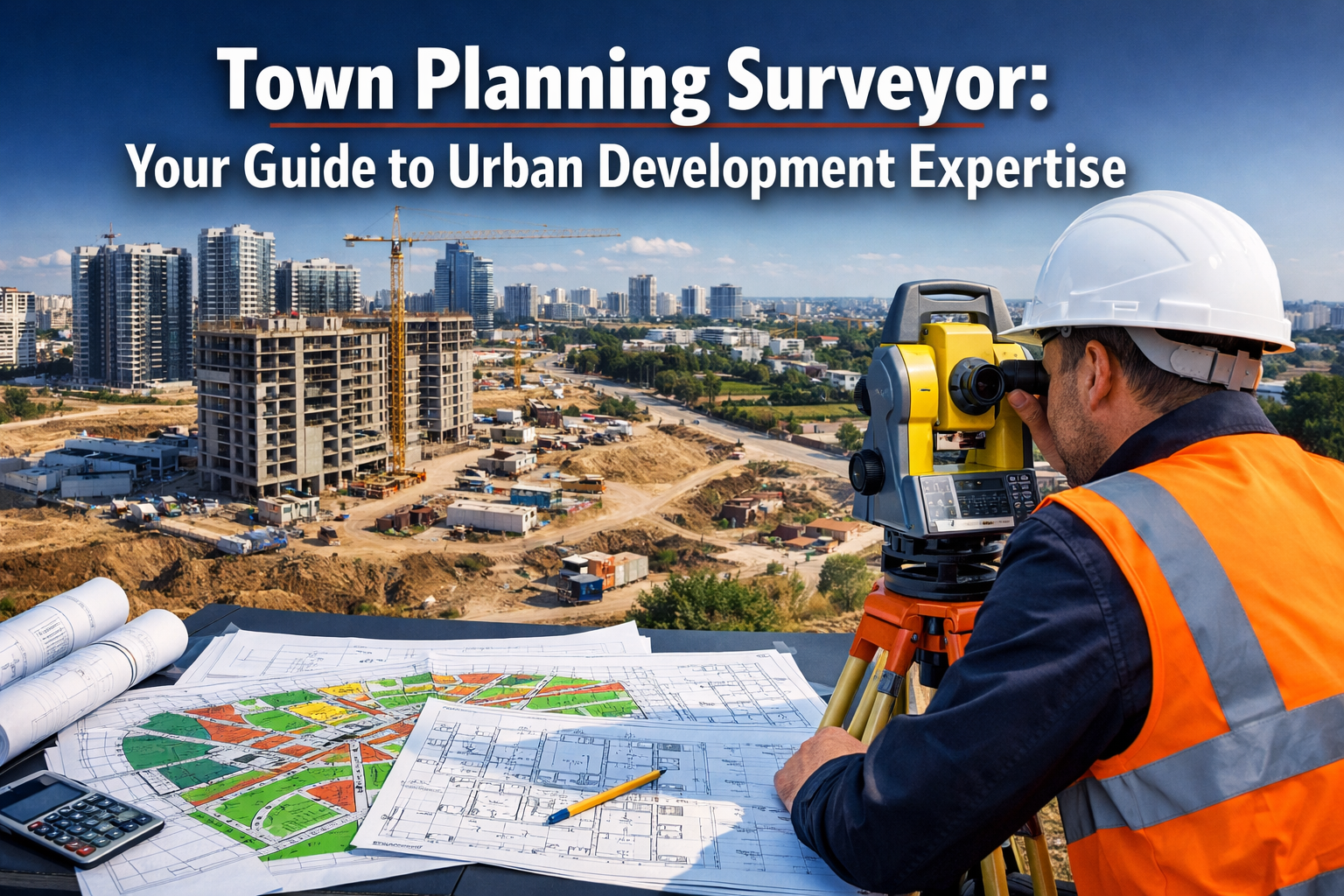
Imagine standing at the intersection where community vision meets concrete reality, where environmental protection shakes hands with economic growth, and where the future shape of our cities is carefully mapped out. This is the world of the town planning surveyor—a professional who doesn’t just measure land but shapes the very fabric of how we live, work, and thrive in our communities. As urban populations continue to surge and sustainable development becomes increasingly critical in 2026, these specialists have never been more vital to creating livable, functional, and forward-thinking spaces.
Key Takeaways
- Town planning surveyors combine technical surveying expertise with urban planning knowledge to guide development projects through regulatory frameworks and ensure sustainable community growth
- These professionals typically earn between £25,000-£65,000 annually depending on experience, with senior consultants commanding higher salaries in competitive markets
- Qualifications require a relevant degree (planning, geography, surveying, or environmental studies) plus RICS or RTPI accreditation for chartered status
- Daily responsibilities include site assessments, planning application preparation, stakeholder consultation, policy analysis, and regulatory compliance verification
- Career opportunities span local government, private consultancies, property development firms, and infrastructure organizations across the UK
What Is a Town Planning Surveyor?
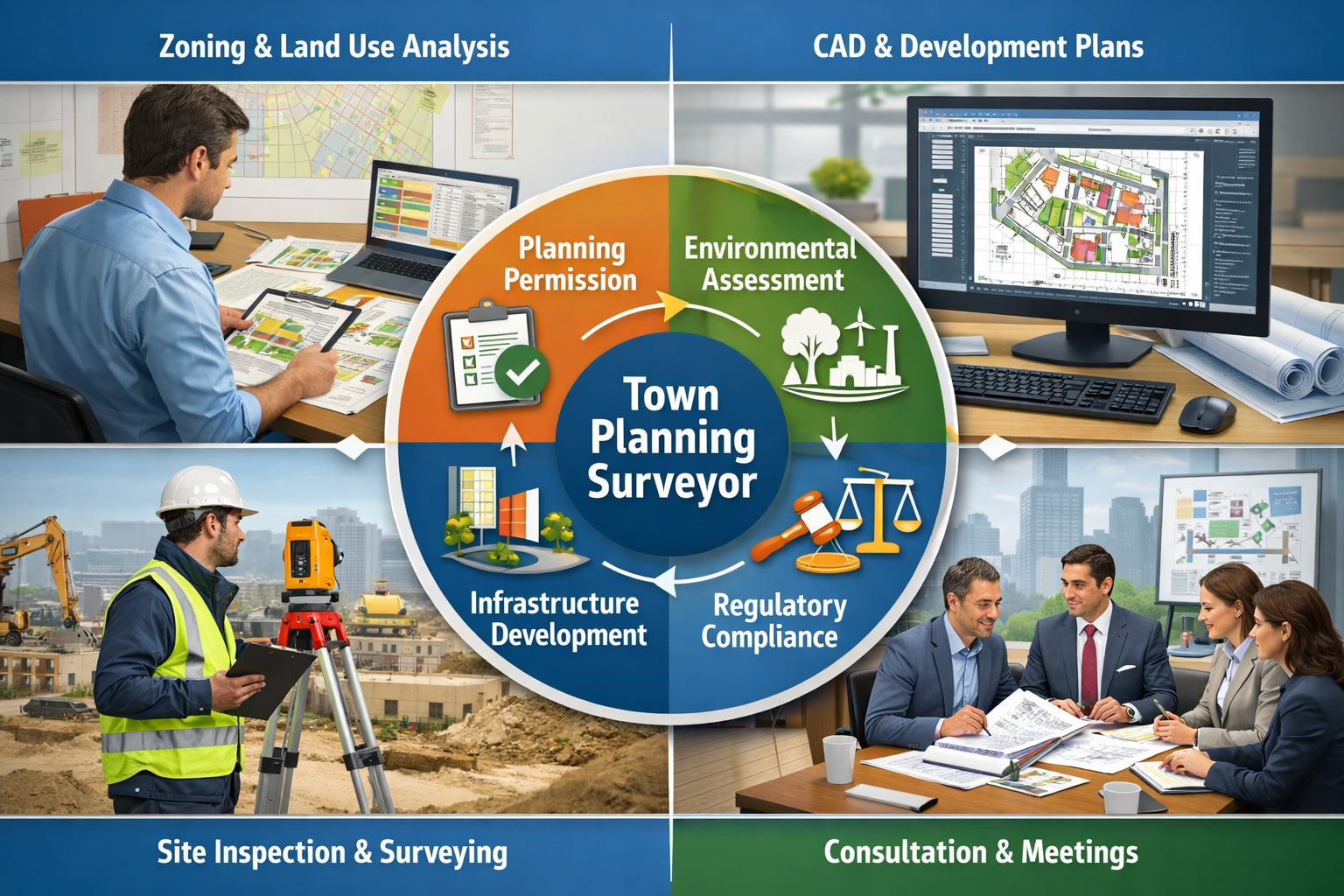
A town planning surveyor is a specialized professional who bridges the gap between land surveying and urban planning. Unlike traditional surveyors who primarily focus on measuring and mapping land, these experts apply their technical knowledge to the broader context of community development, zoning regulations, and sustainable growth strategies.
These professionals work at the crucial intersection of property development, environmental protection, and public policy. They assess land suitability for proposed developments, evaluate compliance with local and national planning policies, and provide expert guidance on how projects can meet regulatory requirements while serving community needs.
The Dual Expertise Advantage
What sets town planning surveyors apart is their dual competency:
- Technical surveying skills: Precise measurement, boundary determination, topographical analysis, and spatial data interpretation
- Planning knowledge: Understanding of zoning laws, development frameworks, environmental regulations, and community impact assessment
This combination makes them invaluable to developers, local authorities, and communities alike. When you need to understand not just what the land looks like, but what can be done with it within the complex web of planning regulations, a town planning surveyor is your essential guide.
For those interested in understanding the broader context of surveying services, town planning represents one of the most dynamic and impactful specializations available.
Core Responsibilities of a Town Planning Surveyor
The role of a town planning surveyor encompasses a diverse range of activities that require both analytical thinking and creative problem-solving. Here’s what these professionals do on a regular basis:
📋 Planning Application Preparation and Review
Town planning surveyors play a critical role in preparing comprehensive planning applications that stand up to scrutiny. This involves:
- Conducting detailed site assessments to identify constraints and opportunities
- Preparing technical reports on land use, access, drainage, and environmental impact
- Creating supporting documentation that demonstrates compliance with planning policies
- Liaising with architects, engineers, and environmental consultants to ensure cohesive applications
🏗️ Development Feasibility Studies
Before any project breaks ground, town planning surveyors evaluate whether it’s actually viable:
| Assessment Area | Key Considerations |
|---|---|
| Regulatory Compliance | Zoning restrictions, conservation areas, listed buildings |
| Physical Constraints | Topography, flood risk, contamination, access limitations |
| Infrastructure Capacity | Utilities, transport links, community facilities |
| Market Viability | Demand analysis, comparable developments, timing |
🤝 Stakeholder Consultation and Engagement
Successful development requires buy-in from multiple parties. Town planning surveyors facilitate:
- Pre-application discussions with local planning authorities
- Community consultation sessions to address resident concerns
- Coordination with statutory consultees (highways, environment agencies, utilities)
- Negotiation of planning conditions and Section 106 agreements
📊 Policy Analysis and Compliance Verification
Staying current with evolving planning policy is essential. These professionals:
- Monitor changes to the National Planning Policy Framework (NPPF)
- Interpret local development plans and supplementary planning documents
- Assess how proposed developments align with strategic objectives
- Advise clients on policy-compliant design approaches
🔍 Site Inspections and Monitoring
Regular site visits ensure that:
- Development proceeds according to approved plans
- Planning conditions are being met
- Any variations are identified and addressed promptly
- Completion certificates can be issued with confidence
Those working with commercial property surveyors will find that town planning expertise often complements building survey work, particularly for complex development projects.
Qualifications and Career Path for Town Planning Surveyors
Breaking into the town planning surveying profession requires a strategic combination of education, practical experience, and professional accreditation.
🎓 Educational Requirements
Undergraduate Degrees (typically 3-4 years):
- Town and Country Planning
- Urban Planning and Development
- Geography with Planning
- Surveying (with planning specialization)
- Environmental Planning
- Real Estate and Planning
Postgraduate Options (1-2 years):
- MSc Urban Planning
- MSc Spatial Planning
- MSc Real Estate Planning and Development
- Conversion courses for those from non-planning backgrounds
🏆 Professional Accreditation
To achieve chartered status and enhance career prospects, town planning surveyors typically pursue membership with:
Royal Institution of Chartered Surveyors (RICS)
- Accredited degree + Assessment of Professional Competence (APC)
- Typically 24 months of structured training
- Final assessment interview demonstrating competence
Royal Town Planning Institute (RTPI)
- Accredited planning degree or postgraduate qualification
- Assessment of Planning Competence (APC)
- Licentiate (MRTPI) or Chartered (MRTPI) membership
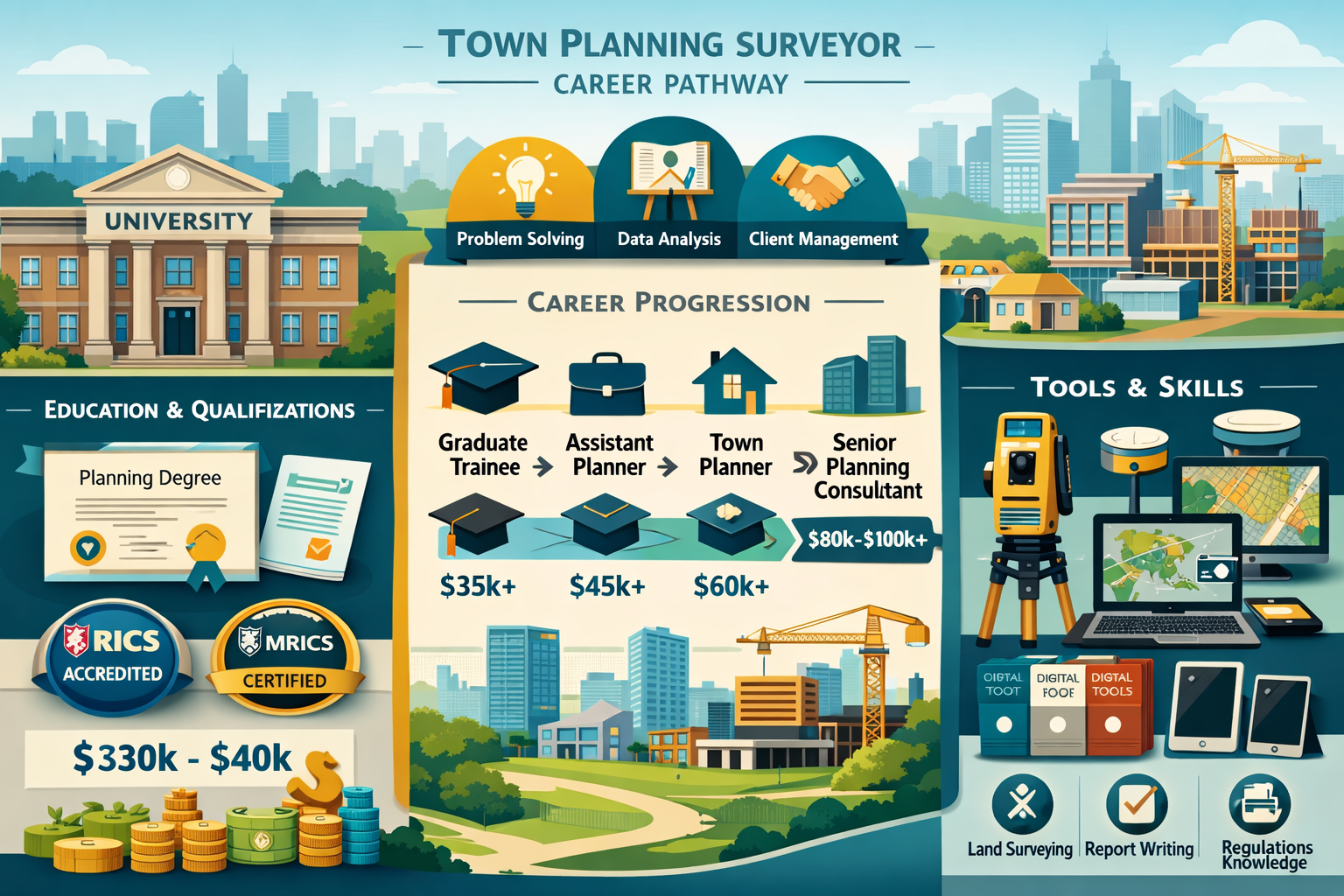
💼 Career Progression Timeline
Graduate Planner (£25,000-£32,000)
- 0-2 years experience
- Supporting senior colleagues on applications
- Conducting research and site assessments
- Learning regulatory frameworks
Planning Consultant (£32,000-£45,000)
- 2-5 years experience
- Managing own caseload of applications
- Client relationship management
- Specialist area development
Senior Planning Consultant (£45,000-£60,000)
- 5-10 years experience
- Complex project leadership
- Team supervision and mentoring
- Strategic planning advice
Principal/Director (£60,000-£85,000+)
- 10+ years experience
- Business development and client acquisition
- Expert witness testimony
- Practice leadership
Understanding surveyor pricing can help both aspiring professionals and clients appreciate the value these specialists bring to development projects.
Where Town Planning Surveyors Work
The versatility of town planning surveying skills opens doors across multiple sectors:
🏛️ Local Government Planning Departments
Roles: Development control officers, policy planners, enforcement officers
Focus:
- Processing and determining planning applications
- Developing local development frameworks
- Enforcing planning regulations
- Community engagement and consultation
Advantages: Job security, pension benefits, public service impact
Challenges: Bureaucratic processes, political pressures, resource constraints
🏢 Private Planning Consultancies
Roles: Planning consultants, development advisors, project managers
Focus:
- Representing clients through the planning process
- Preparing planning applications and appeals
- Providing strategic development advice
- Navigating complex regulatory environments
Advantages: Varied work, higher earning potential, entrepreneurial opportunities
Challenges: Client demands, commercial pressures, competitive marketplace
🏗️ Property Development Companies
Roles: In-house planning managers, development coordinators
Focus:
- Identifying development opportunities
- Managing planning risk
- Coordinating professional teams
- Ensuring project viability
Advantages: Direct involvement in project delivery, commercial insight
Challenges: Profit-driven timelines, market volatility
🌳 Environmental and Conservation Organizations
Roles: Conservation planners, sustainability consultants
Focus:
- Protecting heritage assets and natural environments
- Promoting sustainable development practices
- Advising on environmental impact
- Influencing planning policy
Advantages: Values-driven work, environmental impact
Challenges: Limited resources, advocacy challenges
🚇 Infrastructure and Utilities Providers
Roles: Infrastructure planners, utilities development officers
Focus:
- Planning major infrastructure projects
- Securing development consent orders
- Coordinating with multiple stakeholders
- Ensuring regulatory compliance
Advantages: Large-scale impact, technical complexity
Challenges: Long project timelines, political scrutiny
For those working across different regions, chartered surveyors in London and Surrey offer specialized local knowledge that’s invaluable for navigating regional planning variations.
Essential Skills for Success as a Town Planning Surveyor
Excellence in town planning surveying demands a multifaceted skill set that combines technical proficiency with interpersonal abilities.
🧠 Technical Competencies
Regulatory Knowledge
- Comprehensive understanding of planning law and policy
- Familiarity with building regulations and technical standards
- Awareness of environmental legislation
- Knowledge of compulsory purchase and land assembly procedures
Analytical Abilities
- Site assessment and constraint analysis
- Development viability evaluation
- Impact assessment (traffic, environmental, social)
- Data interpretation and evidence-based decision making
Technology Proficiency
- Geographic Information Systems (GIS) software
- Computer-Aided Design (CAD) applications
- Planning portal and application systems
- Document management and collaboration tools
💬 Interpersonal Skills
Communication Excellence
- Clear written reports and planning statements
- Persuasive presentations to committees and stakeholders
- Active listening during consultations
- Ability to explain complex concepts to non-specialists
Negotiation and Diplomacy
- Finding mutually acceptable solutions
- Managing conflicting stakeholder interests
- Securing planning permissions through compromise
- Building consensus across diverse groups
Project Management
- Coordinating multidisciplinary teams
- Managing timelines and deadlines
- Budgeting and resource allocation
- Risk identification and mitigation
🎯 Professional Attributes
✅ Attention to detail – Planning applications succeed or fail on specifics
✅ Ethical judgment – Balancing client interests with public good
✅ Resilience – Handling rejection, appeals, and setbacks
✅ Continuous learning – Keeping pace with policy changes and best practices
✅ Commercial awareness – Understanding development economics and market dynamics
The Planning Application Process: A Town Planning Surveyor’s Journey
Understanding how town planning surveyors navigate the planning application process reveals the true value they bring to development projects.
Phase 1: Pre-Application Stage 🔍
Initial Assessment
- Site visit and constraint identification
- Desktop research on planning history
- Policy review and compliance check
- Preliminary discussions with planning officers
Feasibility Analysis
- Development options appraisal
- Viability testing
- Risk assessment
- Strategic recommendations to client
Phase 2: Application Preparation 📝
Technical Documentation
- Planning statement justifying the proposal
- Design and access statement
- Supporting technical reports (transport, ecology, heritage, etc.)
- Site plans and elevations
- Community consultation summary
Stakeholder Engagement
- Pre-application meetings with local authority
- Consultation with statutory bodies
- Community engagement events
- Addressing preliminary concerns
Phase 3: Submission and Determination ⚖️
Formal Submission
- Completing application forms
- Uploading supporting documents
- Paying application fees
- Validation by planning authority
Case Management
- Responding to officer queries
- Providing additional information
- Negotiating amendments
- Addressing consultee comments
Decision Outcomes:
- ✅ Approval – Permission granted (possibly with conditions)
- ⚠️ Approval with conditions – Permission subject to specific requirements
- ❌ Refusal – Permission denied (appeal options available)
- 🔄 Withdrawal – Application pulled for revision
Phase 4: Post-Decision Actions 🏗️
If Approved:
- Discharging pre-commencement conditions
- Monitoring compliance during construction
- Securing final sign-offs
If Refused:
- Analyzing reasons for refusal
- Evaluating appeal prospects
- Preparing appeal documentation
- Representing client at hearings or inquiries
For complex projects requiring additional expertise, town planning surveyors often work alongside specialists in commercial building surveys to ensure comprehensive project assessment.
Current Trends Shaping Town Planning Surveying in 2026
The profession continues to evolve in response to societal, technological, and environmental changes:
🌱 Sustainability and Climate Resilience
Net Zero Development
- Carbon-neutral building standards
- Renewable energy integration
- Sustainable transport infrastructure
- Green space preservation and enhancement
Climate Adaptation
- Flood risk management
- Heat island mitigation
- Water-sensitive urban design
- Biodiversity net gain requirements
🏘️ Housing Delivery and Affordability
Government Initiatives
- Streamlined planning processes for housing
- Permitted development rights expansion
- Affordable housing requirements
- Build-to-rent and co-living schemes
Innovative Solutions
- Modular and modern methods of construction
- Brownfield site regeneration
- Vertical densification
- Mixed-use developments
💻 Digital Transformation
Planning Technology
- Digital planning portals and e-consultation
- 3D visualization and virtual reality presentations
- AI-assisted policy analysis
- Blockchain for land registry and planning records
Data-Driven Decision Making
- Big data analytics for planning insights
- Real-time monitoring of development impacts
- Predictive modeling for infrastructure needs
- Evidence-based policy development
🚶 Health and Wellbeing Focus
Healthy Place-Making
- Active travel infrastructure (walking, cycling)
- Access to green spaces and nature
- Community facility provision
- Air quality considerations
15-Minute Cities
- Localized services and amenities
- Reduced car dependency
- Enhanced community cohesion
- Sustainable neighborhood design
🏛️ Heritage and Character Protection
Balancing Old and New
- Sensitive development in conservation areas
- Adaptive reuse of historic buildings
- Character assessment methodologies
- Design codes for local distinctiveness
Challenges Facing Town Planning Surveyors
Despite the rewarding nature of the profession, town planning surveyors navigate several significant challenges:
⏰ Resource Constraints and Delays
Planning Authority Capacity
- Understaffed planning departments
- Extended determination periods
- Backlog of applications
- Limited pre-application advice availability
Impact: Projects face uncertainty, increased holding costs, and frustrated stakeholders
📜 Regulatory Complexity
Evolving Policy Landscape
- Frequent changes to national planning policy
- Variation across local planning authorities
- Interpretation inconsistencies
- Cumulative impact of multiple regulations
Impact: Increased compliance burden, need for continuous professional development
⚖️ Balancing Competing Interests
Stakeholder Conflicts
- Developer profitability vs. community concerns
- Economic growth vs. environmental protection
- Housing need vs. infrastructure capacity
- Design ambition vs. local character
Impact: Lengthy negotiations, compromise solutions, potential appeals
💰 Development Viability Pressures
Economic Constraints
- Affordable housing requirements
- Infrastructure contributions (CIL, Section 106)
- Sustainability standards
- Material and labor costs
Impact: Marginal schemes becoming unviable, reduced developer appetite
🌍 Climate Emergency Response
Urgent Transformation
- Retrofitting existing built environment
- Accelerating sustainable development
- Adapting to climate impacts
- Balancing speed with quality
Impact: Pressure to innovate, risk of greenwashing, need for new expertise
How to Choose the Right Town Planning Surveyor
Whether you’re a developer, landowner, or community organization, selecting the right town planning professional is crucial to project success.
🔑 Key Selection Criteria
Qualifications and Accreditation
- RICS or RTPI chartered status
- Relevant degree and continuing professional development
- Specialist certifications (heritage, environmental, etc.)
Experience and Track Record
- Successful applications in similar contexts
- Knowledge of the local planning authority
- Complexity of projects handled
- Appeal success rates
Local Knowledge
- Understanding of regional planning policies
- Relationships with local planning officers
- Awareness of political and community dynamics
- Track record in the specific area
Service Offering
- Scope of services (pre-app to appeal)
- Multidisciplinary team access
- Project management capabilities
- Communication and reporting standards
Commercial Terms
- Fee structure (fixed, hourly, percentage)
- Payment milestones
- Additional cost transparency
- Value for money assessment
📞 Questions to Ask Prospective Surveyors
- How many similar projects have you successfully delivered?
- What’s your success rate with this local planning authority?
- How will you handle potential objections or refusal?
- What’s your typical timeline for application preparation?
- Who will be my main point of contact throughout?
- How do you charge, and what’s included in your fee?
- Can you provide client references from comparable projects?
For comprehensive surveying services that include planning expertise, Canterbury Surveyors offers experienced professionals across multiple specializations.
The Future of Town Planning Surveying
As we look ahead, the town planning surveying profession is poised for significant transformation:
🚀 Emerging Opportunities
Urban Regeneration
- Repurposing retail and office spaces
- Industrial site conversion
- Infrastructure-led development
- Urban greening initiatives
Technology Integration
- Smart city planning
- IoT-enabled infrastructure
- Digital twin modeling
- Automated planning assessments
Specialized Niches
- Later living and care home development
- Data center and logistics facilities
- Renewable energy projects
- Blue-green infrastructure
📚 Continuous Professional Development
Successful town planning surveyors will need to:
- Embrace digital tools and data analytics
- Develop sustainability expertise beyond basic compliance
- Cultivate collaborative working across disciplines
- Enhance commercial acumen and business development skills
- Strengthen advocacy and communication abilities
🌟 Career Satisfaction
Despite challenges, town planning surveyors consistently report high job satisfaction due to:
- Tangible impact on communities and environments
- Intellectual variety across diverse projects
- Problem-solving opportunities requiring creativity
- Relationship building with interesting stakeholders
- Professional recognition and respect
Conclusion: The Indispensable Role of Town Planning Surveyors
Town planning surveyors stand at the critical juncture where vision meets reality, where development aspirations encounter regulatory frameworks, and where community needs intersect with economic viability. These professionals don’t simply process applications or measure land—they shape the future of our built environment, ensuring that growth is sustainable, inclusive, and aligned with both local character and national priorities.
In 2026 and beyond, as urbanization accelerates, climate pressures intensify, and housing needs grow more urgent, the expertise of town planning surveyors becomes ever more valuable. They are the translators who help developers understand what’s possible, the advocates who represent community interests, and the problem-solvers who find pathways through complex regulatory landscapes.
Take Action Today
If you’re considering a career in town planning surveying:
- Research accredited degree programs and entry requirements
- Seek work experience with planning consultancies or local authorities
- Join student membership of RICS or RTPI
- Build knowledge of current planning issues and policy debates
If you need town planning surveying services:
- Engage professionals early in your project development
- Invest time in selecting the right expertise for your context
- Maintain open communication throughout the process
- View planning as an opportunity to enhance your project, not just a hurdle
If you’re a planning professional:
- Commit to continuous learning in this rapidly evolving field
- Develop both technical and interpersonal skills
- Build networks across the development industry
- Embrace technology while maintaining the human touch
The built environment we create today will serve communities for generations to come. Town planning surveyors ensure that this legacy is one of quality, sustainability, and thoughtful integration of development with place. Whether you’re embarking on this career path or seeking expert guidance for your project, understanding the vital role these professionals play is the first step toward successful, responsible development.
For expert surveying guidance tailored to your specific needs, contact our team to discuss how professional town planning expertise can support your development ambitions while navigating the complexities of the UK planning system.