{"cover":"Professional landscape format (1536×1024) hero image featuring bold text overlay 'Thermal Imaging in Level 3 Building Surveys: Detecting Hidden Defects in UK Homes' in extra large 72pt white sans-serif font with dark shadow and semi-transparent navy overlay box, positioned in upper third center. Background shows dramatic split-screen composition: left side displays traditional brick UK home exterior with Victorian features, right side shows same building in vibrant thermal imaging colors (purple, blue, orange, red heat signature). Modern professional aesthetic with high contrast, magazine cover quality, editorial style with subtle grid overlay suggesting technical precision and RICS professional standards.","content":["Detailed landscape format (1536×1024) technical diagram showing thermal imaging camera equipment setup for BS EN 13187 compliant building survey. Scene features professional Level 3 thermographer in high-visibility vest holding calibrated infrared camera aimed at UK residential property wall section during early morning inspection. Split-screen composition shows normal photograph on left and corresponding thermal image on right revealing hidden moisture penetration (cool blue areas) and insulation gaps (warm red/orange zones). Include temperature scale bar, timestamp overlay showing 10°C differential requirement, and annotation labels pointing to specific defect areas. Clean technical aesthetic with white background borders and professional surveying equipment visible including tripod and measurement tools.","Comprehensive landscape format (1536×1024) infographic-style illustration demonstrating multiple hidden building defects detected through thermal imaging technology. Central image shows cutaway cross-section of typical UK home wall construction with four distinct thermal anomaly examples highlighted in separate circular callout bubbles: 1) moisture intrusion behind plasterwork shown in cool blue tones, 2) missing cavity wall insulation depicted in warm orange gradient, 3) thermal bridging at wall junction in red hotspot, 4) air leakage around window frame in purple cold zone. Each callout includes temperature readings and brief defect description. Modern clean design with white space, professional color coding system, and small icons representing damp surveys, insulation assessment, and structural integrity. Technical blueprint aesthetic with measurement annotations.","Professional landscape format (1536×1024) composite image showing RICS Level 3 building survey report integration process. Main visual features open professional survey report document on desk with thermal imaging photographs embedded within typed assessment sections. Surrounding the central report are supporting elements: tablet displaying digital thermal images with temperature analysis software interface, printed thermal photographs with handwritten surveyor notes, BREEAM compliance checklist partially visible, and Level 3 thermographer certification card. Background shows blurred UK property exterior through window. Warm professional lighting, shallow depth of field focusing on report details, business professional aesthetic with navy blue and white color scheme suggesting trust and expertise. Include visible RICS logo and thermal camera equipment edge in composition."]
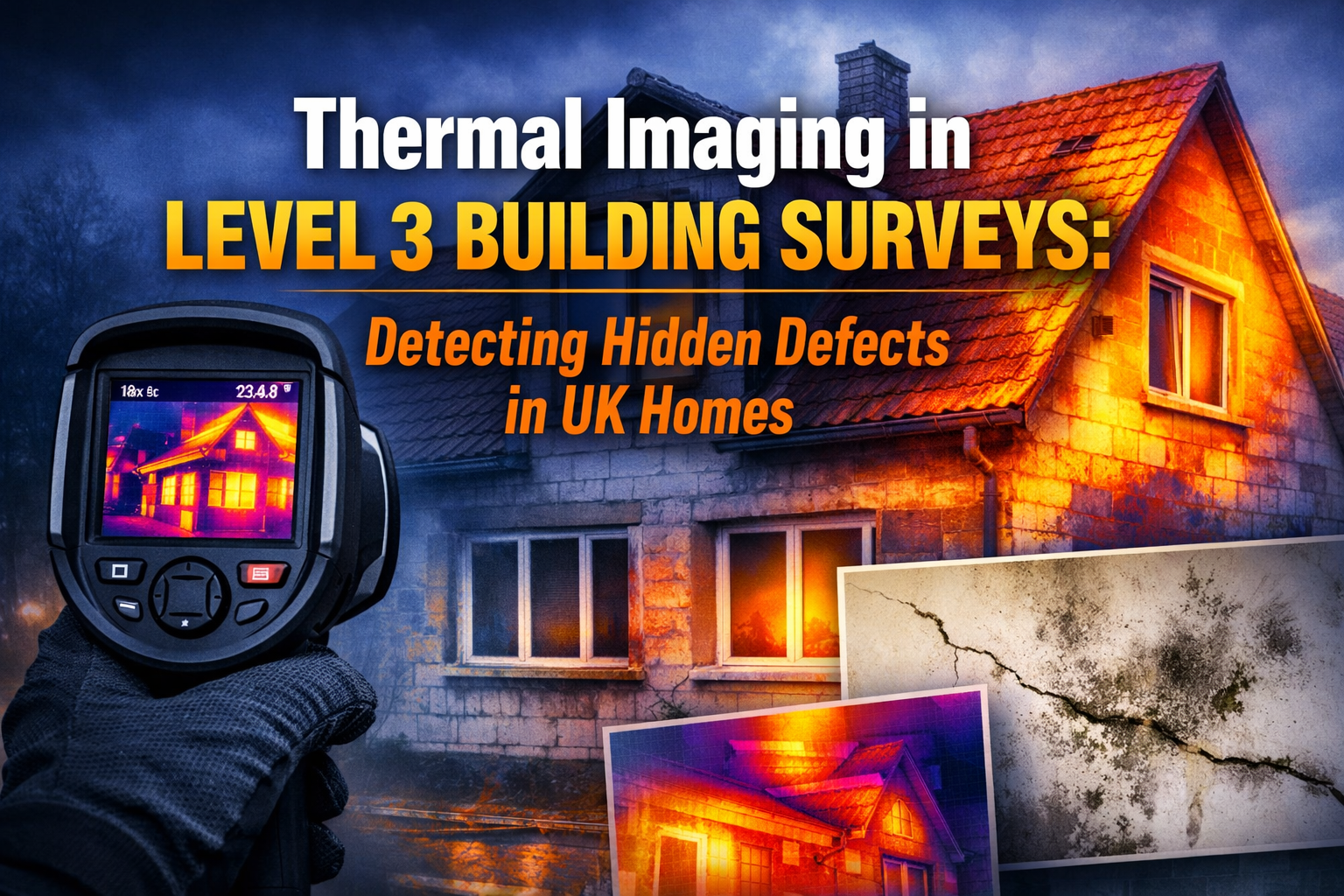
A staggering 40% of building defects in UK properties remain completely invisible during standard visual inspections, costing homeowners thousands in unexpected repairs after purchase. Thermal Imaging in Level 3 Building Surveys: Detecting Hidden Defects in UK Homes has emerged as the definitive solution for uncovering these concealed problems before they escalate into costly disasters.
Traditional surveying methods rely heavily on visual assessment and accessible areas, but moisture penetration, insulation failures, and structural anomalies often hide behind finished surfaces. Modern thermal imaging technology transforms RICS Building Surveys Level 3 by revealing temperature differentials that indicate hidden defects invisible to the naked eye. This non-invasive diagnostic approach provides quantifiable evidence of building performance issues, ensuring buyers and property owners receive comprehensive intelligence about their investment.
In 2026, as energy efficiency regulations tighten and building standards evolve, thermal imaging has transitioned from optional enhancement to essential component of thorough property assessment. This technology bridges the gap between surface-level inspection and deep structural analysis, offering unprecedented insight into building envelope integrity.
Key Takeaways
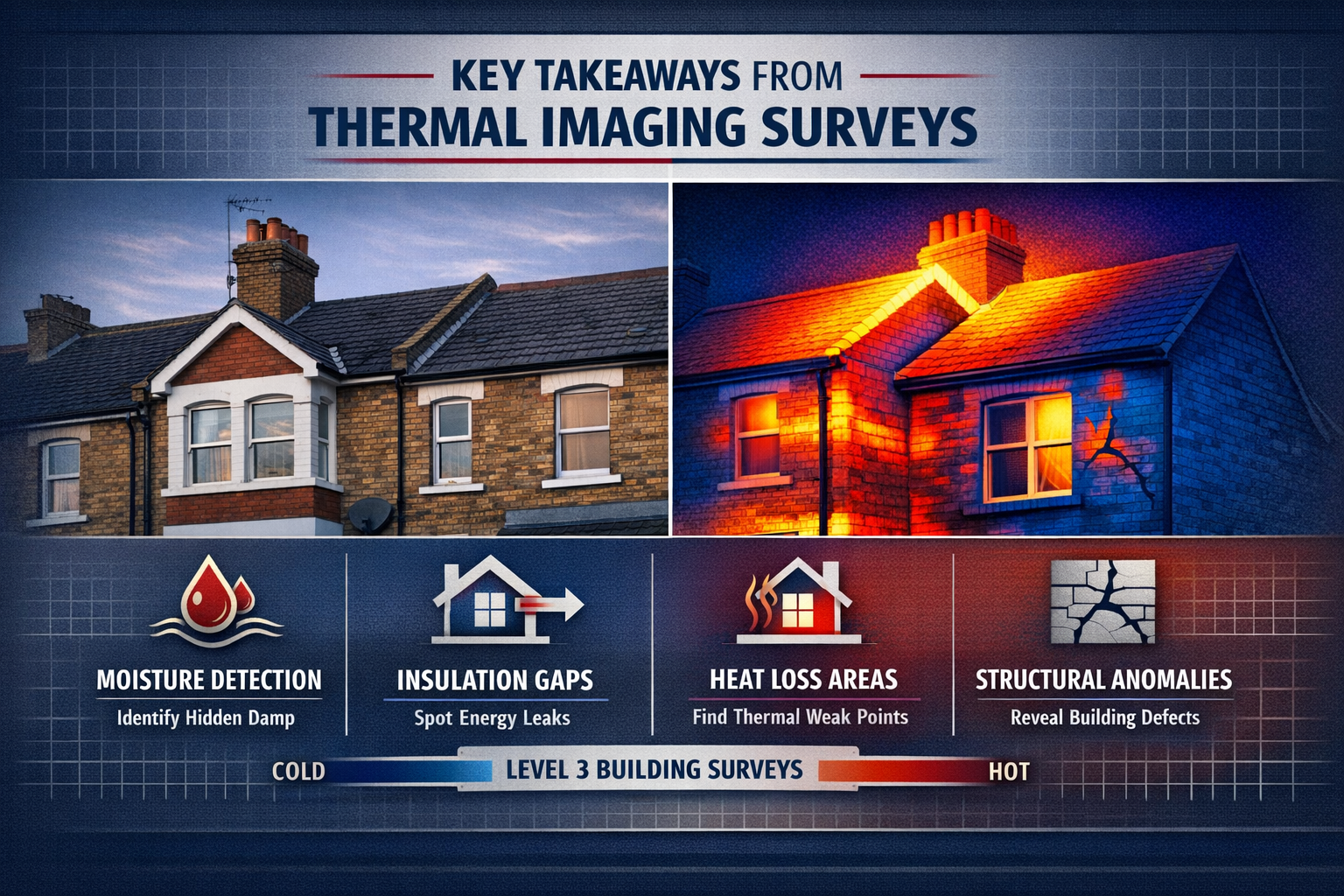
- 🌡️ BS EN 13187 Compliance: Thermal surveys require minimum 10°C temperature differential and Level 3 certified thermographers for accurate defect detection
- 💧 Hidden Moisture Detection: Infrared cameras identify damp behind plasterwork and under floors by revealing cooler areas where moisture affects material temperatures
- ⚡ Multi-Defect Capability: Single thermal survey detects insulation gaps, air leakage, thermal bridges, and electrical faults simultaneously
- 🏠 Ideal for Older Properties: Particularly valuable for historic buildings, non-standard construction, and properties showing visible deterioration signs
- 📊 Quantitative Analysis: Level 3 thermographers provide precise temperature measurements and severity assessments for regulatory compliance
Understanding Thermal Imaging Technology in Building Surveys
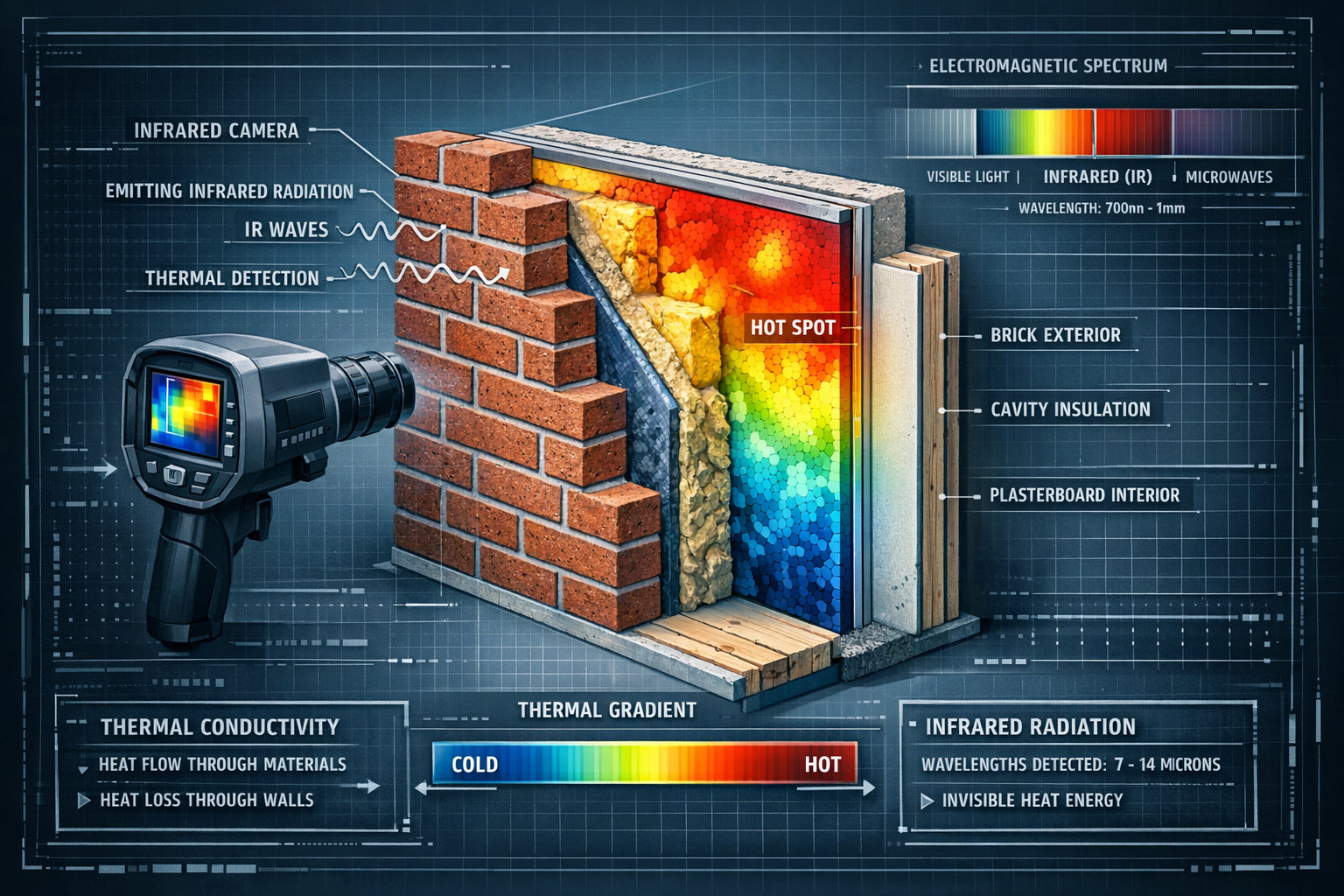
Thermal imaging, also known as thermography or infrared inspection, captures invisible heat signatures emitted by building materials and converts them into visible images. Every object with a temperature above absolute zero emits infrared radiation, and specialized cameras detect these emissions to create thermal maps showing temperature variations across surfaces.
How Infrared Cameras Reveal Building Defects
Infrared cameras work by detecting long-wave infrared radiation (heat) and converting it into electronic signals that generate thermal images called thermograms. These images display temperature differences using color palettes—typically showing cooler areas in blue and purple tones, while warmer zones appear in red, orange, and yellow hues.
When integrated into Level 3 building surveys, thermal imaging reveals defects through temperature anomalies:
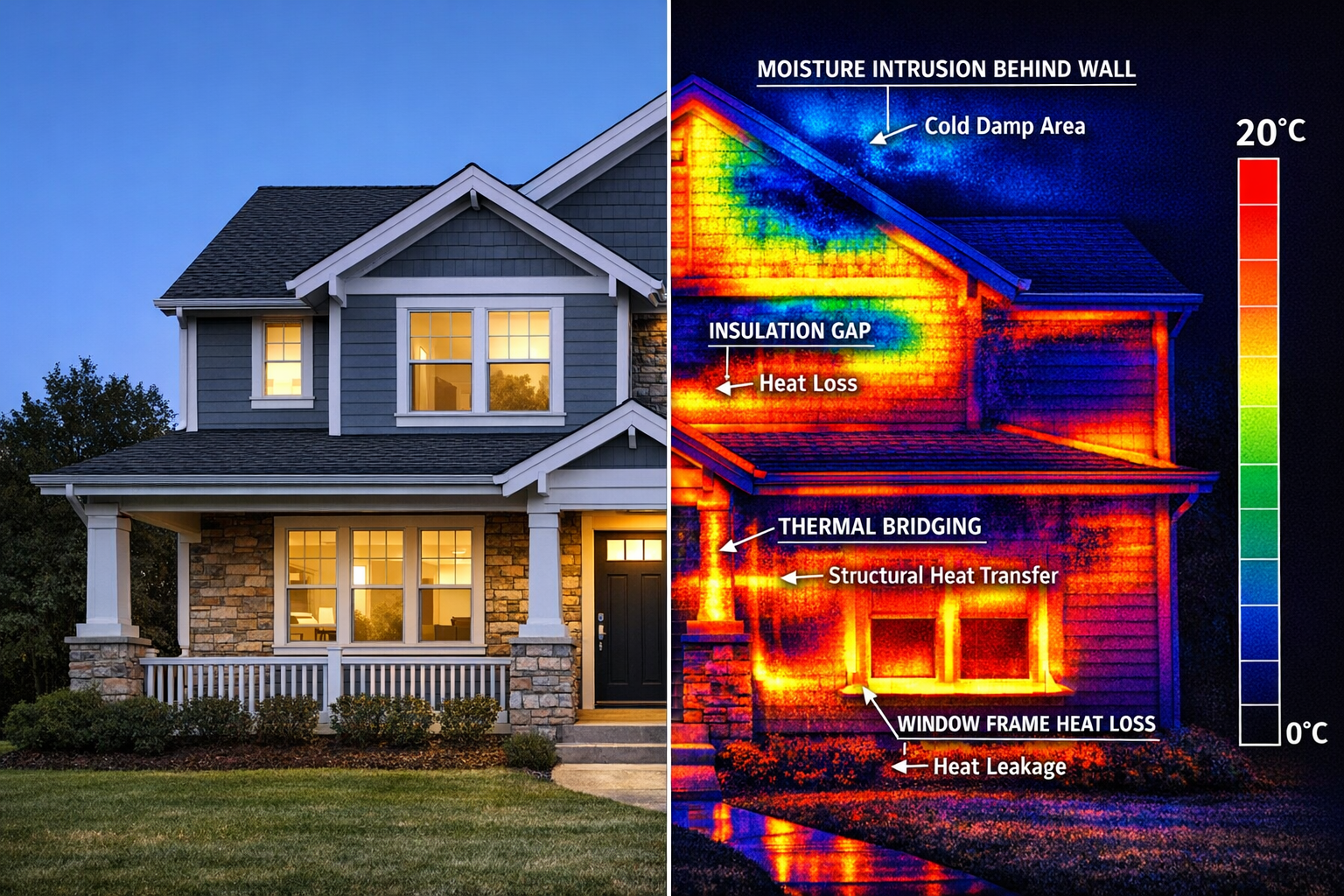
- Moisture intrusion appears cooler than surrounding dry materials due to evaporative cooling
- Missing insulation shows as warmer areas where heat escapes more readily
- Air leakage creates distinct thermal patterns at penetration points
- Thermal bridges display as continuous warm or cool paths through building fabric
BS EN 13187 Standard Requirements
Professional thermal imaging surveys in the UK must comply with BS EN 13187, the European Standard governing thermal performance assessment of buildings[3]. This standard establishes rigorous protocols ensuring consistent, reliable results:
Environmental Conditions:
- Minimum 10°C temperature differential between internal and external environments[3]
- Inspections conducted at night or early morning to minimize solar radiation effects[3]
- Stable weather conditions with minimal wind to prevent false readings
Equipment Standards:
- Calibrated infrared cameras with appropriate resolution and sensitivity
- Regular equipment calibration verification
- Documented camera specifications and settings
Operator Qualifications:
- Level 3 Certified Thermographers or Level 3 Master Thermographers[3]
- Comprehensive training in building physics and heat transfer
- Experience interpreting thermal patterns in building contexts
These stringent requirements ensure thermal imaging data integrated into RICS specialist defect surveys meets professional standards for accuracy and reliability.
Hidden Defects Detected Through Thermal Imaging
The true value of Thermal Imaging in Level 3 Building Surveys: Detecting Hidden Defects in UK Homes lies in its ability to identify problems that traditional inspection methods miss entirely. This non-destructive assessment technique reveals critical issues before they cause extensive damage.
Moisture and Damp Penetration
Water ingress represents one of the most damaging yet difficult-to-detect building defects. Thermal imaging excels at identifying moisture problems by detecting the cooling effect water has on building materials[4].
Moisture detection capabilities include:
- Hidden damp behind plasterwork where visual signs haven't yet appeared
- Water penetration under floors affecting joists and substructure
- Roof leaks tracking moisture paths through insulation and timbers
- Rising damp showing characteristic thermal patterns at wall bases
- Condensation problems revealing cold spots prone to moisture accumulation
The technology works because wet materials have different thermal properties than dry ones. Water conducts heat more efficiently than air, and evaporation creates cooling effects that appear distinctly on thermal images. This allows surveyors to pinpoint moisture sources and extent without invasive opening-up works.
For properties requiring detailed moisture investigation, thermal imaging often complements comprehensive damp surveys by identifying areas requiring further investigation with moisture meters or hygrometers.
Insulation Defects and Thermal Bridges
Energy efficiency failures cost UK homeowners hundreds of pounds annually in wasted heating. Thermal imaging provides definitive evidence of insulation performance issues[1]:
Common Insulation Problems Detected:
| Defect Type | Thermal Signature | Impact |
|---|---|---|
| Missing cavity wall insulation | Uniform warm areas on external walls | 35% heat loss through walls |
| Compressed loft insulation | Patchy warm zones in ceiling | Reduced R-value effectiveness |
| Gaps around insulation batts | Distinct warm streaks | Convective heat loss pathways |
| Thermal bridges at junctions | Continuous warm lines | Cold spots and condensation risk |
| Poorly fitted window reveals | Warm halos around openings | Air infiltration and heat loss |
Thermal bridges occur where continuous materials with high thermal conductivity create preferential heat flow paths through the building envelope. Common examples include:
- Steel lintels above windows and doors
- Concrete floor slabs penetrating wall insulation
- Uninsulated wall ties in cavity construction
- Structural connections at balconies and canopies
Level 3 thermographers can quantify the severity of these defects through temperature differential measurements, providing data for energy performance calculations and BREEAM certification requirements[1][2].
Air Leakage and Infiltration
Uncontrolled air movement through the building envelope accounts for significant heat loss and creates uncomfortable drafts. Thermal imaging detects air leakage by identifying temperature anomalies at penetration points[1]:
- Window and door frames showing thermal halos
- Service penetrations for pipes and cables
- Loft hatches with inadequate sealing
- Skirting board gaps at floor junctions
- Electrical socket outlets on external walls
When combined with blower door testing, thermal imaging provides visual evidence of air leakage locations, enabling targeted sealing measures. This diagnostic approach proves particularly valuable for properties pursuing energy efficiency improvements or investigating high heating costs.
Electrical System Faults
Beyond building fabric assessment, thermal imaging identifies electrical safety hazards that pose fire risks[4]:
- Overheating circuits indicating excessive load or poor connections
- Hot spots at consumer units suggesting loose terminals
- Overloaded wiring showing elevated temperatures
- Faulty electrical components before catastrophic failure
Electrical faults often develop gradually, with increasing resistance at poor connections generating heat. Thermal imaging detects these problems during the early stages, allowing remedial action before dangerous situations develop.
This capability makes Thermal Imaging in Level 3 Building Surveys: Detecting Hidden Defects in UK Homes particularly valuable for older properties with aging electrical installations or buildings that have undergone multiple modifications.
Structural Anomalies
Thermal imaging can also reveal structural issues through their thermal signatures:
- Delaminated render or cladding showing different thermal patterns than sound areas
- Voids behind finishes appearing as distinct temperature zones
- Structural movement affecting insulation continuity
- Bridged cavity walls where debris blocks the insulation gap
While thermal imaging doesn't replace invasive structural investigation, it guides surveyors to areas requiring detailed examination and helps prioritize opening-up works for maximum diagnostic value.
Integrating Thermal Imaging into RICS Level 3 Survey Reports
The effectiveness of thermal imaging depends not just on capturing quality images, but on proper integration into comprehensive RICS building survey reports. Professional surveyors follow established protocols to ensure thermal data enhances rather than confuses survey findings.
Survey Planning and Methodology
Pre-survey preparation ensures thermal imaging delivers maximum diagnostic value:
Timing Considerations:
- Schedule surveys during heating season (October-March) for optimal temperature differentials
- Conduct inspections at night or early morning to minimize solar gain effects[3]
- Allow building heating system to operate for several hours before inspection
- Check weather forecasts to avoid rain, strong winds, or extreme conditions
Client Communication:
- Explain thermal imaging capabilities and limitations
- Request building plans showing construction details and alterations
- Obtain heating system operation history
- Identify specific concerns requiring thermal investigation
Equipment Verification:
- Confirm camera calibration status
- Check battery levels and spare equipment availability
- Prepare appropriate lenses for building scale and access constraints
- Load reference images and templates for consistent reporting
Survey Execution Standards
Level 3 Certified Thermographers follow systematic inspection protocols[3]:
-
External Envelope Assessment
- Complete thermal scan of all external walls
- Detailed inspection around windows, doors, and penetrations
- Roof and eaves examination where accessible
- Foundation and ground floor junction analysis
-
Internal Thermal Mapping
- Room-by-room systematic coverage
- Ceiling and floor thermal patterns
- Service penetrations and electrical installations
- Areas of visible deterioration or client concern
-
Quantitative Measurements
- Temperature readings at anomaly locations
- Reference measurements at normal areas for comparison
- Ambient temperature and humidity recording
- Documentation of environmental conditions[2]
-
Photographic Documentation
- Paired visible and thermal images of each defect
- Wide-angle context shots showing location
- Detail images of specific anomalies
- Reference markers for report integration
Report Integration Best Practices
Professional survey reports incorporate thermal imaging evidence systematically:
Image Presentation:
- Side-by-side visible and thermal photographs for each defect
- Clear temperature scales and measurement annotations
- Descriptive captions explaining thermal patterns
- Location plans showing thermal image positions
Defect Analysis:
- Thermal evidence supporting defect identification
- Temperature differential quantification
- Severity assessment based on thermal data
- Correlation with visual inspection findings
Recommendations:
- Prioritized action items based on thermal severity
- Further investigation requirements for ambiguous findings
- Remedial specifications addressing root causes
- Cost implications and urgency classifications
Regulatory and Certification Compliance
Thermal imaging supports various regulatory requirements and certification schemes:
BREEAM Compliance:
- Thermal envelope performance verification[1][2]
- Air tightness assessment supporting blower door testing
- Quality assurance for new construction and refurbishment
- Evidence for energy efficiency credits
EPC Enhancement:
- Identification of cost-effective improvement measures
- Quantification of insulation deficiencies
- Air leakage evidence supporting recommendations
- Validation of existing energy performance assumptions
Building Regulations:
- Part L compliance verification for alterations
- Thermal bridge assessment for new extensions
- Quality control for insulation installations
- Evidence for building control submissions
This regulatory integration makes thermal imaging particularly valuable for properties undergoing significant works or requiring certification for sale or letting purposes.
Property Types Benefiting Most from Thermal Surveys
While any property can benefit from thermal assessment, certain building types show particularly high returns from Thermal Imaging in Level 3 Building Surveys: Detecting Hidden Defects in UK Homes[4]:
Priority Property Categories:
🏛️ Historic and Period Properties
- Complex construction with multiple alteration phases
- Hidden structural elements and voids
- Moisture vulnerability in traditional materials
- Concealed defects behind historic finishes
🔨 Non-Standard Construction
- Unfamiliar building systems requiring investigation
- Potential performance issues with alternative materials
- Limited visual inspection access
- Uncertainty about construction details
🏗️ Extended or Altered Buildings
- Junction details between old and new work
- Insulation continuity at interfaces
- Potential for concealed defects at alterations
- Verification of previous work quality
⚠️ Properties Showing Defect Signs
- Visible damp staining requiring extent determination
- High heating costs suggesting performance issues
- Cold spots or drafts indicating envelope failures
- Previous repair history suggesting ongoing problems
For properties in these categories, the additional investment in thermal imaging often prevents costly post-purchase surprises and provides negotiating leverage based on objective evidence.
Cost-Benefit Analysis and Practical Considerations
Understanding the investment required for thermal imaging integration helps property buyers and owners make informed decisions about survey specifications.
Survey Costs and Value Proposition
Thermal imaging additions to standard Level 3 surveys typically cost £200-£500 depending on property size and complexity. This represents approximately 15-25% premium over standard structural survey pricing.
Value Delivered:
- Early detection preventing £5,000-£20,000 remedial costs
- Negotiating leverage averaging £8,000-£15,000 price reductions
- Energy efficiency improvements saving £300-£800 annually
- Insurance against hidden defects post-purchase
- Objective evidence for dispute resolution
The return on investment typically exceeds 10:1 for properties where significant defects are discovered, making thermal imaging one of the most cost-effective risk mitigation tools available.
Limitations and Complementary Investigations
While powerful, thermal imaging has important limitations:
Technology Constraints:
- Requires temperature differentials to function effectively
- Cannot see through metal, foil-backed materials, or thick concrete
- Surface conditions only—doesn't reveal depth or internal structure
- Affected by reflective surfaces and environmental conditions
Interpretation Requirements:
- Thermal anomalies require expert analysis for accurate diagnosis
- Some patterns have multiple possible causes
- Confirmation often requires complementary testing
- Experience essential for distinguishing defects from normal variations
Complementary Investigation Methods:
- Moisture meters for quantifying water content
- Borescope inspection for cavity investigation
- Opening-up works for structural verification
- Specialist defect surveys for detailed analysis
Professional surveyors integrate thermal imaging within comprehensive diagnostic strategies, using infrared evidence to guide targeted invasive investigation where necessary.
Selecting Qualified Thermography Professionals
Choosing the right surveyor ensures thermal imaging delivers maximum value:
Essential Qualifications:
- ✅ Level 3 Thermographer certification or equivalent
- ✅ RICS Chartered Surveyor status for building survey work
- ✅ Professional indemnity insurance covering thermal imaging
- ✅ Portfolio demonstrating building thermography experience
Questions to Ask:
- What thermal imaging certification do you hold?
- How many building surveys with thermal imaging have you completed?
- What camera equipment and specifications do you use?
- How do you ensure BS EN 13187 compliance?
- Can you provide sample thermal imaging reports?
Engaging local chartered surveyors with thermal imaging capabilities ensures both local building knowledge and technical thermography expertise.
Future Developments in Building Thermography
Emerging technologies continue enhancing thermal imaging capabilities:
2026 Innovations:
- Higher resolution cameras revealing finer detail
- Drone-mounted thermal imaging for difficult-to-access areas
- AI-powered defect recognition and classification
- Real-time thermal modeling and performance prediction
- Integration with Building Information Modeling (BIM) systems
These advances will further cement thermal imaging as standard practice in comprehensive property assessment, particularly as energy efficiency regulations tighten and building performance standards evolve.
Conclusion
Thermal Imaging in Level 3 Building Surveys: Detecting Hidden Defects in UK Homes represents a paradigm shift in property assessment, transforming invisible problems into quantifiable, actionable intelligence. By revealing moisture penetration, insulation failures, air leakage, and electrical faults that traditional methods miss entirely, thermal imaging protects buyers from costly surprises and provides property owners with comprehensive understanding of building performance.
The technology's non-invasive nature, combined with BS EN 13187 compliance protocols and Level 3 thermographer expertise, delivers professional-grade diagnostic capability without damaging building fabric. For older properties, non-standard construction, and buildings showing defect signs, thermal imaging often proves the difference between informed investment decisions and expensive post-purchase discoveries.
Next Steps for Property Buyers and Owners
If you're considering a property purchase:
- Request thermal imaging integration when commissioning your RICS Level 3 building survey
- Verify your surveyor holds Level 3 thermographer certification
- Schedule surveys during heating season for optimal conditions
- Use thermal evidence for price negotiations or remedial planning
For existing property owners:
- Commission thermal surveys to identify energy efficiency improvements
- Investigate unexplained damp, cold spots, or high heating costs
- Verify insulation installation quality after retrofit works
- Obtain thermal evidence for insurance claims or dispute resolution
Working with professionals:
- Choose chartered surveyors combining RICS qualifications with thermal imaging certification
- Request detailed methodology confirming BS EN 13187 compliance
- Ensure reports integrate thermal evidence with comprehensive building assessment
- Follow up thermal findings with specialist investigations where recommended
The modest additional investment in thermal imaging capability typically returns 10-20 times its cost through defect discovery, negotiating leverage, and preventive maintenance guidance. As building standards evolve and energy efficiency becomes increasingly critical, thermal imaging transitions from optional enhancement to essential component of thorough property due diligence.
Don't let hidden defects remain invisible until they become expensive problems. Thermal imaging brings them into focus while solutions remain manageable and cost-effective.
References
[1] Level 3 Thermography Benefits For Heat And Insulation Surveys – https://www.dronemediaimaging.co.uk/level-3-thermography-benefits-for-heat-and-insulation-surveys/
[2] Apt Breeam Thermal Imaging Survey – https://soundtestingservicesuk.co.uk/apt-breeam-thermal-imaging-survey/
[3] Breeam Thermographic Surveys Ensure Compliance Energy Efficiency – https://thermographyservices.co.uk/breeam-thermographic-surveys-ensure-compliance-energy-efficiency/
[4] The Role Of Thermal Imaging In Daw Building Surveys – https://www.dawsurveyors.co.uk/home-survey-blog/the-role-of-thermal-imaging-in-daw-building-surveys