

The Party Wall Act: Your Complete Guide to Understanding Your Rights and Obligations in 2025
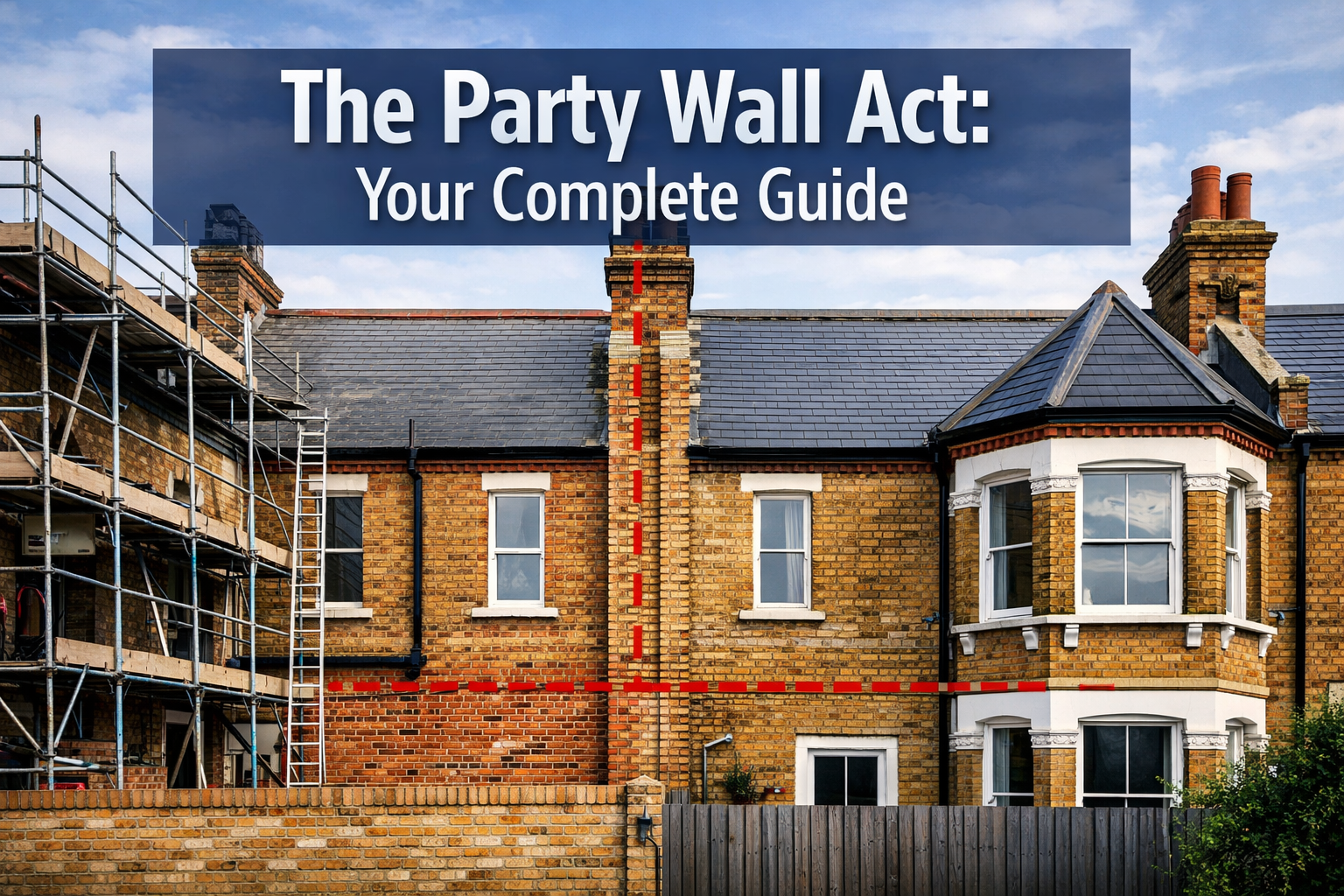
Imagine starting your dream home renovation project only to receive a legal notice from your neighbor, halting all construction work. This scenario happens more often than you might think, and it’s precisely why understanding the party wall act is crucial for any property owner planning building work. Whether you’re adding an extension, converting a loft, or simply repairing a shared wall, the Party Wall etc. Act 1996 governs how you must proceed when your work affects adjoining properties.
The party wall act exists to prevent disputes between neighbors and ensure that building work is carried out fairly and safely. This legislation protects both the building owner (the person carrying out the work) and the adjoining owner (the neighbor whose property may be affected). In 2025, with property development and home improvements continuing to surge across England and Wales, knowing your rights and responsibilities under this act has never been more important.
Key Takeaways
- 📋 The party wall act requires you to serve formal notice on your neighbors 2 months before starting work on party walls or 1 month for excavations
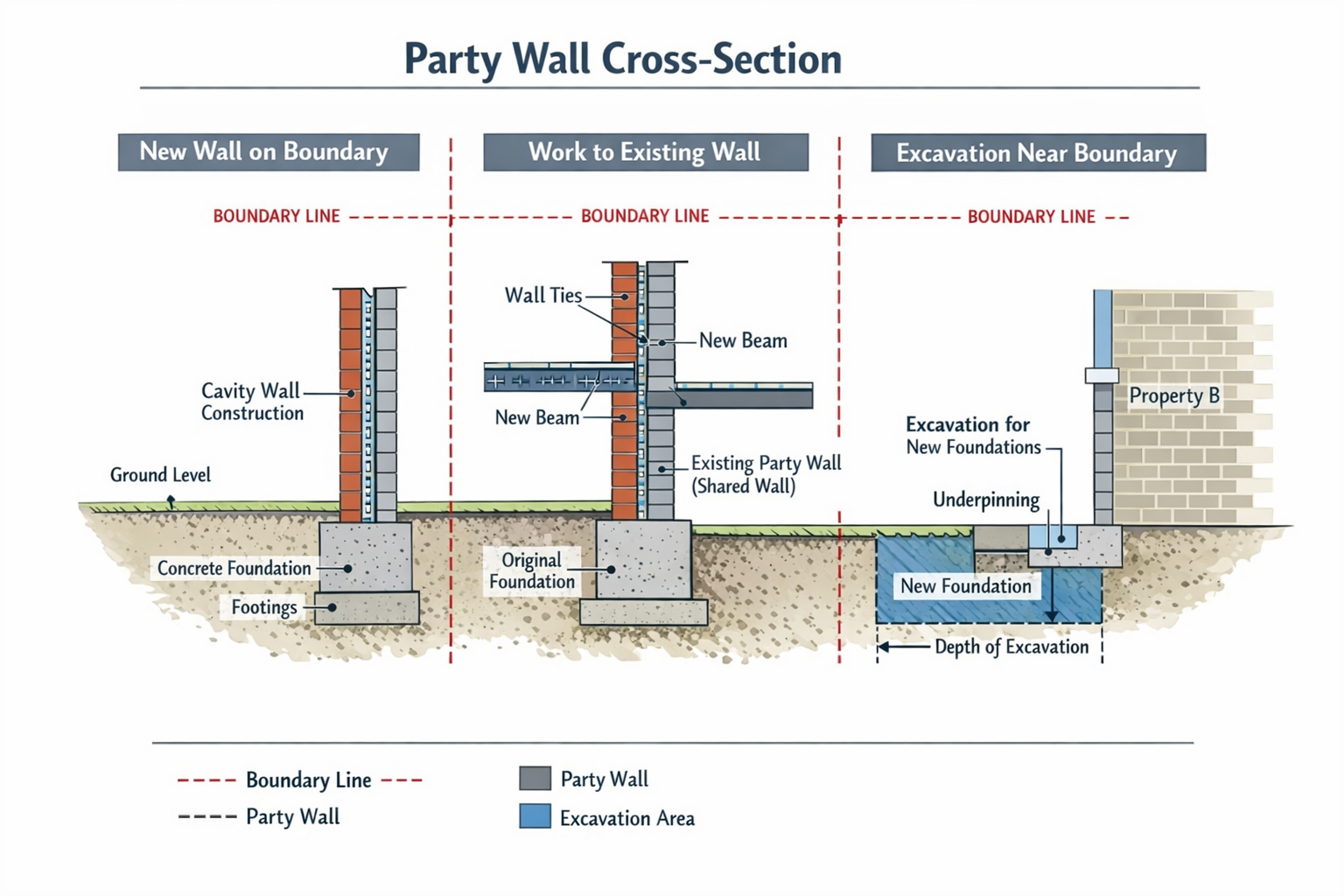
- 🏗️ Three main types of work are covered: building on boundary lines, alterations to existing party walls, and excavations within 3-6 meters of neighboring structures
- 👥 Party wall surveyors play a crucial role in resolving disputes and creating legally binding awards that protect all parties involved
- ⚖️ The building owner typically pays all costs associated with the party wall process, including surveyor fees for both parties
- 🛡️ Proper compliance protects you from legal action and ensures your neighbor cannot stop your legitimate building work through injunctions
What Is the Party Wall Act?
The Party Wall etc. Act 1996 is a piece of legislation that applies to England and Wales, providing a framework for preventing and resolving disputes in relation to party walls, boundary walls, and excavations near neighboring buildings. The act came into force on July 1, 1997, replacing various local acts that previously governed party wall matters in different areas.
A party wall is a wall or structure that stands on the land of two or more owners and forms part of a building. This can include:
- The wall between two semi-detached houses
- The wall between terraced properties
- A garden wall built along a boundary
- A floor partition between flats in converted buildings
The legislation recognizes that when properties share structures, work on one property can significantly impact another. Therefore, the party wall act establishes a clear process that building owners must follow, ensuring that adjoining owners are properly notified and that appropriate safeguards are put in place.
Why Was the Party Wall Act Introduced?
Before 1997, party wall matters were governed by a patchwork of local legislation, primarily the London Building Acts. This created confusion and inconsistency, particularly for property owners outside London who had no clear legal framework for managing party wall issues.
The party wall act was introduced to:
✅ Create a uniform system across England and Wales
✅ Provide a clear dispute resolution mechanism that doesn’t require court proceedings
✅ Protect the rights of both building and adjoining owners
✅ Ensure building work is carried out safely and with proper safeguards
✅ Reduce the number of neighbor disputes ending up in expensive litigation
Understanding the Party Wall Act: Key Definitions and Terms
To navigate the party wall act effectively, it’s essential to understand the specific terminology used within the legislation. These terms have precise legal meanings that determine your rights and obligations.
Building Owner vs. Adjoining Owner
The building owner is the person or entity planning to carry out the building work. This could be a homeowner, a developer, or a contractor acting on behalf of the property owner.
The adjoining owner is the owner of the property that shares the party wall or is near enough to the proposed excavation to be affected by the work.
Types of Party Structures
| Structure Type | Definition | Common Examples |
|---|---|---|
| Party Wall | A wall standing on the lands of two owners, forming part of a building | Wall between semi-detached houses, terraced properties |
| Party Fence Wall | A wall standing on the boundary but not part of a building | Garden walls, boundary walls between properties |
| Party Structure | A wall, floor, or other structure separating buildings belonging to different owners | Floor between flats, structural beams shared between properties |
| External Wall | A wall belonging to one owner but positioned on or near a boundary | Wall of a detached house near the property line |
The Three Types of Work Covered
The party wall act covers three distinct categories of work, each with different notice requirements and procedures:
Section 1: New Building on the Boundary Line
This section covers building a new wall astride the boundary line or entirely on your own land but up against the boundary. This is common when building extensions or new structures.
Section 2: Work to Existing Party Walls
This is the most commonly used section and covers various works to existing party structures, including:
- Cutting into the wall to insert beams or joists
- Raising, underpinning, or demolishing and rebuilding the wall
- Removing chimney breasts
- Cutting away projecting foundations or external walls
Section 6: Excavation Near Neighboring Buildings
This section applies when you plan to excavate within 3 meters of a neighboring building and go deeper than its foundations, or within 6 meters and within a 45-degree plane from the bottom of their foundations.
Professional chartered surveyors can help you determine which sections of the party wall act apply to your specific project and ensure you follow the correct procedures.
The Party Wall Act Notice Process: Step-by-Step Guide
Compliance with the party wall act begins with serving the correct notices on your neighbors. This formal notification process is a legal requirement, and failure to comply can result in your work being stopped through an injunction.
Step 1: Determine If You Need to Serve Notice
Not all building work requires party wall notices. You need to serve notice if your work involves:
🔨 Building a new wall on or astride the boundary
🔨 Altering, underpinning, or demolishing an existing party wall
🔨 Excavating within 3-6 meters of a neighboring structure
🔨 Cutting into a party wall to insert beams or damp-proof courses
🔨 Raising a party wall or adding weathering
Minor repairs and maintenance that don’t affect the structure typically don’t require notice.
Step 2: Prepare and Serve the Appropriate Notice
The party wall act requires specific notice periods:
- Two months’ notice for work under Section 2 (work to existing party walls)
- One month’s notice for work under Section 6 (excavations)
- One month’s notice for work under Section 1 (new walls on the boundary)
The notice must include:
📄 Your name and address
📄 The address of the property where work will take place
📄 Details of the proposed work
📄 The proposed start date
📄 Drawings or plans showing the work
Notices must be served in writing, and it’s advisable to send them via recorded delivery to prove receipt.
Step 3: Await Your Neighbor’s Response
Once you’ve served notice, your adjoining owner has 14 days to respond. They have three options:
Option 1: Consent
If they consent in writing, you can proceed with the work as described. However, this doesn’t prevent them from claiming compensation later if damage occurs.
Option 2: Dissent or No Response
If they dissent (formally disagree) or don’t respond within 14 days, a dispute is deemed to have arisen. This isn’t necessarily adversarial—it simply triggers the formal surveyor appointment process.
Option 3: Request Additional Information
They may ask for more details about the proposed work before making a decision.
Step 4: Appoint Party Wall Surveyors
When a dispute arises, the party wall act provides a structured resolution mechanism through surveyors. There are two approaches:
Agreed Surveyor Approach:
Both parties can agree to appoint a single surveyor (called the “agreed surveyor”) to act impartially for both sides. This is often more cost-effective and quicker.
Two Surveyor Approach:
Each party appoints their own surveyor. These two surveyors then work together and may appoint a third surveyor to resolve any disagreements between them.
It’s important to note that the building owner typically pays all surveyor fees, including the costs of the adjoining owner’s surveyor. This is a fundamental principle of the party wall act.
For guidance on surveyor pricing and rates, property owners should research typical costs in their area before commencing the process.
Step 5: The Party Wall Award
The appointed surveyor(s) will inspect both properties, review the proposed work, and prepare a document called a party wall award. This legally binding document sets out:
✍️ Details of the work to be carried out
✍️ When and how the work will be executed
✍️ A schedule of condition recording the current state of the adjoining property
✍️ How disputes will be resolved
✍️ Access rights for inspections
✍️ How costs will be allocated
The award must be served on both parties, who then have 14 days to appeal to the county court if they disagree with its terms.
Step 6: Carry Out the Work
Once the award is in place, work can commence. The building owner must:
- Follow the conditions set out in the award
- Allow the adjoining owner’s surveyor reasonable access for inspections
- Take all necessary precautions to prevent damage
- Notify the surveyor(s) when specific stages of work are complete
Common Scenarios Where the Party Wall Act Applies
Understanding real-world applications of the party wall act helps clarify when you need to follow the formal process. Here are the most common scenarios homeowners encounter:
Loft Conversions
Loft conversions frequently trigger party wall requirements, particularly in semi-detached and terraced properties. If your conversion involves:
- Cutting into the party wall to insert steel beams
- Raising the party wall to create additional headroom
- Underpinning the party wall for structural support
You’ll need to serve notice under Section 2 of the act. Even if the roof itself isn’t shared, work affecting the party wall structure requires compliance.
Basement Excavations and Extensions
Digging below ground level often falls under Section 6 of the party wall act. If you’re excavating within 3 meters of your neighbor’s building and going deeper than their foundations, or within 6 meters on a 45-degree plane, you must serve notice.
This commonly applies to:
- Basement conversions
- Underground extensions
- Deep foundation work for new buildings
- Swimming pool installations
Rear and Side Extensions
Single or double-story extensions that involve party walls require notices under Section 2. This includes:
- Cutting into the party wall to tie in the new structure
- Building up to or along the boundary line
- Underpinning party walls to support the extension
- Removing or altering chimney breasts on the party wall
Removing Chimney Breasts
Removing a chimney breast that forms part of a party wall is one of the most common triggers for party wall procedures. Even if the chimney is no longer in use, removing it affects the party structure and requires formal notice.
Garden Walls and Boundary Structures
Building or repairing garden walls that sit on the boundary line requires notice under Section 1. This includes:
- Constructing new boundary walls
- Raising existing party fence walls
- Rebuilding damaged boundary structures
When planning any significant property work, consulting with professional surveyors can help you identify all party wall implications early in the planning process.
Your Rights and Responsibilities Under the Party Wall Act
The party wall act creates a balanced framework of rights and responsibilities for both building owners and adjoining owners. Understanding these helps ensure smooth compliance and maintains good neighbor relations.
Rights of the Building Owner
As the person carrying out the work, you have the right to:
🏗️ Proceed with legitimate building work once proper notices are served and awards are in place
🏗️ Enter the adjoining property (with reasonable notice) to carry out work described in the award
🏗️ Expect cooperation from the adjoining owner in the party wall process
🏗️ Appoint a surveyor to represent your interests if a dispute arises
Responsibilities of the Building Owner
Your obligations include:
📌 Serving proper notice within the required timeframes
📌 Paying all reasonable costs associated with the party wall process
📌 Making good any damage caused by the works
📌 Following the conditions set out in the party wall award
📌 Maintaining adequate insurance to cover potential damage
📌 Providing access for inspections by surveyors
“The building owner’s obligation to pay costs is absolute and includes the adjoining owner’s surveyor fees, even if the adjoining owner is being unreasonable.” – Party Wall Surveyors’ Guidance
Rights of the Adjoining Owner
If you’re the neighbor affected by building work, you have the right to:
✅ Receive proper notice before work begins
✅ Appoint your own surveyor at the building owner’s expense
✅ Have your property protected through a schedule of condition
✅ Receive compensation for any damage caused
✅ Refuse consent and trigger the dispute resolution process
✅ Request additional safeguards through the award
Responsibilities of the Adjoining Owner
Your obligations include:
- Responding to notices within 14 days
- Allowing reasonable access for inspections and work
- Cooperating with surveyors during the process
- Acting reasonably and not obstructing legitimate work
Costs Associated with the Party Wall Act
One of the most significant aspects of the party wall act is the allocation of costs. Understanding who pays for what can help both parties budget appropriately and avoid surprises.
Who Pays for Party Wall Procedures?
The fundamental principle is straightforward: the building owner pays. This includes:
💰 All surveyor fees – including the adjoining owner’s surveyor
💰 The agreed surveyor’s fees if using the single surveyor approach
💰 The third surveyor’s fees if one is appointed
💰 Cost of preparing the award
💰 Schedule of condition preparation and photography
💰 Any necessary inspections during the work
Typical Party Wall Surveyor Fees in 2025
Surveyor fees vary depending on the complexity of the work and the location of the property. As a general guide:
| Type of Work | Agreed Surveyor Fee | Two Surveyor Approach (Total) |
|---|---|---|
| Simple extension or loft conversion | £700 – £1,200 | £1,400 – £2,400 |
| Complex structural work | £1,200 – £2,000 | £2,400 – £4,000 |
| Large-scale development | £2,000 – £5,000+ | £4,000 – £10,000+ |
These costs are in addition to your construction costs and should be factored into your project budget from the outset. For more detailed information about structural survey costs and other surveying expenses, property owners should obtain quotes specific to their project.
Hidden Costs to Consider
Beyond surveyor fees, consider these potential additional costs:
- Delays to your project if the party wall process isn’t started early enough
- Making good damage to the adjoining property
- Additional structural work required by the award
- Enhanced insurance premiums for the construction period
- Legal fees if disputes escalate (rare but possible)
Can You Reduce Party Wall Costs?
While the building owner must pay, there are legitimate ways to minimize expenses:
✂️ Use an agreed surveyor rather than two separate surveyors
✂️ Start the process early to avoid rushed fees
✂️ Provide comprehensive information upfront to reduce back-and-forth
✂️ Maintain good communication with your neighbor to prevent disputes
✂️ Choose experienced surveyors who work efficiently
What Happens If You Don’t Comply with the Party Wall Act?
Ignoring the party wall act can have serious consequences. Some property owners mistakenly believe the legislation is optional or that they can simply apologize to neighbors after completing work. This approach can be costly and legally problematic.
Legal Consequences of Non-Compliance
If you proceed with notifiable work without following the party wall act procedures:
⚠️ Your neighbor can obtain an injunction to stop the work immediately
⚠️ You may be liable for all damage without the protection of an award
⚠️ Legal costs can escalate dramatically, far exceeding surveyor fees
⚠️ Your project timeline can be significantly delayed
⚠️ Mortgage lenders may refuse to lend on the property
⚠️ Future buyers may struggle to obtain mortgages if non-compliance is discovered
The Injunction Risk
An injunction is a court order that can halt your building work immediately. If your neighbor discovers you’ve started work without serving proper notice, they can apply to the county court for an injunction. The court will typically grant this if you’ve clearly breached the act.
Defending against an injunction is expensive and rarely successful when you haven’t complied with basic notice requirements. The legal costs alone can run into tens of thousands of pounds.
Insurance and Indemnity Issues
Non-compliance with the party wall act can create insurance problems:
- Your building insurance may not cover damage claims
- Indemnity insurance becomes necessary for future sales
- Premiums for indemnity policies can be substantial
- Some mortgage lenders refuse properties with party wall indemnity policies
Impact on Property Sales
When selling a property, conveyancing solicitors routinely ask about party wall compliance. If you’ve carried out notifiable work without following the act:
- Buyers may withdraw from the purchase
- Property value may be reduced
- You may need to obtain retrospective awards
- Indemnity insurance may be required
- The sale process can be significantly delayed
The message is clear: compliance with the party wall act is not optional, and attempting to avoid the process typically costs far more in the long run than following the proper procedures from the outset.
Party Wall Disputes: Resolution and Appeals

Despite the party wall act’s framework for preventing disputes, disagreements can still arise. Understanding how these are resolved helps both building and adjoining owners navigate conflicts effectively.
Common Sources of Party Wall Disputes
Disputes typically arise from:
🔴 Inadequate notice or missing information
🔴 Concerns about the scope of proposed work
🔴 Timing and hours of construction
🔴 Access requirements to the adjoining property
🔴 Disagreement over surveyor appointments
🔴 Disputes about the award terms
🔴 Damage claims during or after work
The Role of Party Wall Surveyors in Dispute Resolution
Party wall surveyors are specifically trained to resolve disputes without court involvement. Their role includes:
- Impartial assessment of the proposed work
- Mediating between parties to find acceptable solutions
- Creating binding awards that both parties must follow
- Determining reasonable timeframes and working methods
- Assessing damage claims objectively
The surveyor acts in a quasi-judicial capacity, meaning their decisions have legal weight similar to a judge’s ruling, but without the expense and formality of court proceedings.
Appealing a Party Wall Award
If either party disagrees with the award, they have 14 days from the date of service to appeal to the county court. Grounds for appeal are limited to:
- The surveyor(s) exceeded their jurisdiction
- The award is unclear or ambiguous
- There are procedural irregularities
- The surveyor(s) failed to consider relevant matters
Appeals are relatively rare because experienced surveyors generally produce comprehensive, well-reasoned awards. However, the appeal mechanism provides an important safeguard against unreasonable decisions.
Alternative Dispute Resolution
Before escalating to court appeals, parties can consider:
Negotiation: Direct discussion between neighbors, potentially with surveyor mediation
Third Surveyor: If two surveyors disagree, they appoint a third surveyor whose decision is binding
Mediation: Formal mediation services can help resolve disputes about the process itself
“In my 20 years as a party wall surveyor, I’ve found that 95% of disputes arise from poor communication rather than genuine conflicts of interest. Clear, early dialogue prevents most problems.” – Experienced Party Wall Surveyor
The Party Wall Act and Different Property Types
The application of the party wall act varies depending on the type of property involved. Understanding these nuances helps property owners comply correctly.
Terraced Houses
Terraced properties are the most common scenario for party wall matters because they share walls on both sides. Key considerations:
- Work affecting either party wall requires separate notices to both neighbors
- Loft conversions typically affect both party walls
- Rear extensions often require notices to multiple adjoining owners
- Front extensions may affect the street-facing party walls
Semi-Detached Properties
Semi-detached houses share one party wall. Common issues include:
- Single-story extensions along the shared wall
- Loft conversions cutting into the party wall for structural support
- Removal of chimney breasts on the party wall
- Underpinning work affecting the shared foundations
Flats and Apartments
Party wall matters in flats can be complex because multiple owners may be affected:
- The party structure includes floors and ceilings between flats
- Work in one flat may affect multiple neighbors (above, below, and beside)
- Freeholders, leaseholders, and management companies may all have interests
- Common areas and structural elements require careful consideration
When dealing with leasehold properties, additional permissions beyond the party wall act may be required from freeholders or management companies.
Commercial Properties
The party wall act applies equally to commercial properties. Special considerations include:
- Business interruption concerns during construction
- Access requirements outside normal working hours
- Enhanced insurance requirements
- Complex ownership structures
Professional commercial property surveyors can navigate the additional complexities of party wall matters in commercial contexts.
Detached Properties
Even detached properties can trigger party wall requirements:
- Excavations within 3-6 meters of neighboring buildings (Section 6)
- Building new boundary walls (Section 1)
- Work affecting boundary structures
Practical Tips for Smooth Party Wall Compliance
Successfully navigating the party wall act requires more than just legal compliance—it demands good communication, planning, and professionalism. These practical tips help ensure a smooth process.
Before Starting Your Project
1. Research Early
Identify party wall requirements during the planning stage, not after obtaining building regulations approval. This allows adequate time for the notice period.
2. Budget Appropriately
Include party wall surveyor fees (typically £1,500-£4,000 total) in your project budget from the outset.
3. Choose Experienced Professionals
Select builders and surveyors with proven party wall experience. Their expertise prevents costly mistakes.
4. Communicate with Neighbors
Before serving formal notices, have an informal conversation with your neighbors. Explain your plans, show drawings, and address concerns. This goodwill often prevents disputes.
During the Notice Period
5. Serve Complete Notices
Ensure notices include all required information: detailed descriptions of work, accurate drawings, and realistic timescales. Incomplete notices delay the process.
6. Keep Records
Maintain copies of all correspondence, notices, and proof of delivery. These records are invaluable if disputes arise.
7. Be Responsive
Answer questions promptly and provide additional information when requested. Delays in communication extend the overall timeline.
8. Respect the Process
Don’t pressure neighbors to consent quickly or try to bypass the formal procedures. Patience and professionalism yield better results.
During Construction
9. Follow the Award
Adhere strictly to conditions set out in the party wall award, including working hours, access arrangements, and protective measures.
10. Document Everything
Take photographs before, during, and after work. This documentation protects you from unfounded damage claims.
11. Maintain Communication
Keep neighbors informed about progress, particularly before noisy or disruptive phases. Courtesy prevents complaints.
12. Allow Inspections
Facilitate surveyor inspections as required by the award. These protect both parties and ensure compliance.
After Completion
13. Complete Making Good
Promptly repair any damage to the adjoining property as specified in the award.
14. Obtain Final Sign-Off
Request that surveyors confirm completion and compliance with the award. This documentation is valuable for future property sales.
15. Maintain Records
Keep all party wall documentation permanently with your property deeds. Future owners will need this information.
The Party Wall Act: Regional Variations and Exceptions
While the Party Wall etc. Act 1996 applies uniformly across England and Wales, there are important geographical and situational exceptions to understand.
England and Wales
The party wall act applies throughout England and Wales with no regional variations in the legislation itself. However, practical application can vary:
- Urban areas see more frequent use due to higher density housing
- London has the longest history of party wall procedures, predating the 1996 act
- Rural areas may have fewer party wall situations but still require compliance when applicable
Scotland
Scotland is not covered by the Party Wall etc. Act 1996. Instead, Scottish property law relies on:
- Common law principles of property rights
- The Title Conditions (Scotland) Act 2003
- Individual property titles and servitude rights
- Court proceedings to resolve disputes (no surveyor-led process)
Property owners in Scotland planning work affecting shared structures should consult Scottish solicitors specializing in property law.
Northern Ireland
Northern Ireland also operates under different legislation:
- The Access to Neighbouring Land Act (Northern Ireland) 2006 provides some similar provisions
- Common law principles govern most party wall matters
- No equivalent comprehensive party wall legislation exists
- Legal advice is essential for work affecting shared structures
Crown Property and Exceptions
Certain properties are exempt from the party wall act:
- Crown property (though the Crown often voluntarily complies)
- Some ecclesiastical properties
- Certain historic buildings with special designations
However, these exceptions are narrow, and most property owners cannot claim exemption.
Future Developments and the Party Wall Act in 2025
As we progress through 2025, several trends and potential developments affect how the party wall act operates in practice.
Technological Advances
Modern technology is streamlining party wall procedures:
📱 Digital Notices: Electronic service of notices is becoming more common, though proper proof of receipt remains essential
📱 Virtual Inspections: Some surveyors now conduct initial assessments via video calls, reducing costs
📱 3D Modeling: Advanced imaging helps surveyors assess structural implications more accurately
📱 Drone Surveys: Aerial photography assists with external wall and roof assessments
Increased Awareness
Property owners are becoming more aware of party wall requirements:
- Conveyancing solicitors routinely ask about compliance
- Mortgage lenders increasingly require party wall documentation
- Online resources and guidance have improved accessibility
- Building control officers commonly remind applicants about party wall obligations
Case Law Development
Court decisions continue to refine interpretation of the party wall act:
- Recent cases have clarified notice requirements
- Judgments have addressed surveyor conduct and duties
- Precedents guide dispute resolution approaches
- Appeals have established boundaries of surveyor authority
Proposed Reforms
While no major legislative changes are imminent in 2025, industry discussions focus on:
- Simplifying procedures for minor works
- Standardizing surveyor fee structures
- Improving accessibility for non-professional users
- Enhancing enforcement mechanisms
Climate Change Adaptations
Environmental concerns are influencing party wall considerations:
- Flood resilience work may trigger party wall requirements
- Energy efficiency improvements (like external wall insulation) often affect party structures
- Sustainable building methods require surveyor understanding of new materials and techniques
- Green roofs and solar installations on shared structures need careful assessment
Frequently Asked Questions About the Party Wall Act
Do I need to use the party wall act for internal renovations?
Internal renovations that don’t affect party walls or structures don’t require party wall notices. However, if your internal work involves cutting into a party wall (like removing a chimney breast or inserting beams), you must follow the act.
Can my neighbor refuse consent and stop my building work?
Your neighbor can refuse consent (dissent), but this doesn’t stop your work—it triggers the surveyor appointment process. Once a party wall award is in place, your neighbor cannot prevent legitimate building work that complies with the award.
How long does the party wall process take?
The minimum timeline is:
- 2 months for party wall work (Section 2)
- 1 month for excavations (Section 6)
- Plus additional time for surveyor appointments and award preparation
In practice, allow 3-4 months from initial notice to starting work, particularly if using the two-surveyor approach.
What if my neighbor won’t appoint a surveyor?
If your neighbor doesn’t appoint a surveyor within 10 days of dissenting or being deemed to dissent, you can appoint a surveyor on their behalf. This surveyor must act impartially despite being appointed by you, and you still pay their fees.
Can I do the party wall process myself without a surveyor?
If your neighbor consents in writing to your notice, no surveyor is needed. However, if they dissent or don’t respond, the act requires surveyor involvement. While you can theoretically act as your own surveyor, this is strongly discouraged as it creates conflicts of interest and potential legal issues.
Does building regulations approval mean I don’t need party wall consent?
No. Building regulations approval and party wall procedures are completely separate processes. You need both. Building regulations ensure your work meets safety standards; the party wall act protects neighboring property rights.
What happens if damage occurs despite following the party wall act?
The party wall award typically includes a schedule of condition documenting the adjoining property’s state before work begins. If damage occurs, the building owner must make good the damage. The surveyor can assess whether damage was caused by the works and determine appropriate remediation.
For comprehensive guidance on property surveys and assessments, including understanding the difference between Level 2 and Level 3 surveys, consult experienced professionals.
Conclusion: Navigating the Party Wall Act Successfully in 2025
The party wall act remains a crucial piece of legislation for anyone planning building work that affects shared structures or neighboring properties. While the formal procedures may seem daunting initially, they exist to protect both building owners and adjoining owners, ensuring that legitimate construction work proceeds safely and fairly.
Understanding the party wall act empowers property owners to:
✨ Plan projects realistically with accurate timelines and budgets
✨ Maintain positive neighbor relationships through proper communication
✨ Avoid costly legal disputes and injunctions
✨ Protect property values by ensuring compliance
✨ Proceed with confidence knowing rights and obligations
The key to successful party wall compliance lies in early action, clear communication, and professional guidance. Starting the process during project planning—rather than treating it as an afterthought—prevents delays and reduces costs.
Your Next Steps
If you’re planning building work that may trigger party wall requirements:
- Assess your project against the three types of notifiable work (new walls on boundaries, work to existing party walls, and excavations near neighbors)
- Consult professionals early to determine your specific obligations and timeline requirements
- Budget appropriately for surveyor fees, typically £1,500-£4,000 depending on project complexity
- Communicate with neighbors before serving formal notices to build goodwill and address concerns
- Serve proper notices with complete information and adequate lead time
- Engage experienced party wall surveyors who understand both the technical and interpersonal aspects of the process
- Follow the award conditions meticulously during construction to avoid disputes
- Document everything with photographs, correspondence records, and completion certificates
For professional assistance with party wall matters, expert surveyors can guide you through every stage of the process, from initial assessment through to final completion. Their experience ensures compliance while minimizing costs and maintaining positive neighbor relationships.
The party wall act doesn’t have to be a source of stress or conflict. With proper understanding, timely action, and professional support, navigating party wall requirements becomes a straightforward part of your building project—protecting your investment while respecting your neighbors’ rights.
Whether you’re planning a modest loft conversion or a major development, taking the party wall act seriously from the outset sets the foundation for a successful project. In 2025’s active property market, this knowledge is more valuable than ever for homeowners, developers, and property professionals alike.
For additional guidance on party wall procedures, including obtaining consent for party wall work and understanding damage to property in party wall situations, professional resources provide detailed, situation-specific advice.
Remember: the party wall act is not an obstacle to your building ambitions—it’s a framework that enables those ambitions to be realized fairly, safely, and legally. Embrace the process, follow the procedures, and your project will proceed smoothly with all parties’ interests protected.