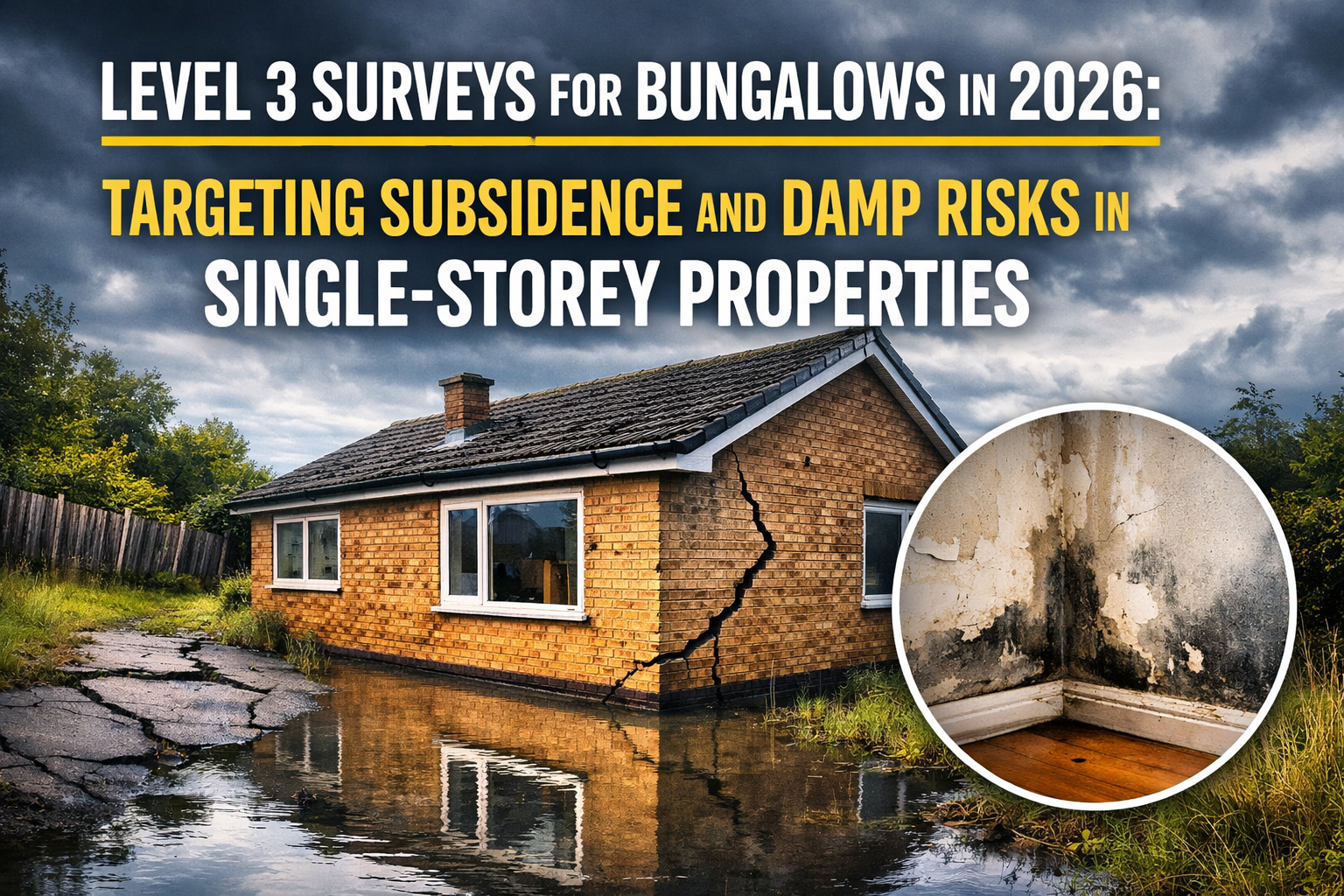
Surveyor Social Housing: The Complete Guide to Building Inspection and Career Opportunities in 2026
When thousands of families depend on safe, well-maintained homes, the role of a surveyor social housing professional becomes absolutely critical. These specialized building experts stand between potential disasters and secure living conditions, conducting detailed inspections that protect vulnerable communities across the UK. With over 4 million social housing properties requiring ongoing assessment and maintenance, the demand for qualified surveyors in this sector has never been higher.
Key Takeaways
- Surveyor social housing professionals specialize in inspecting and maintaining affordable housing stock, ensuring properties meet safety standards and regulatory requirements
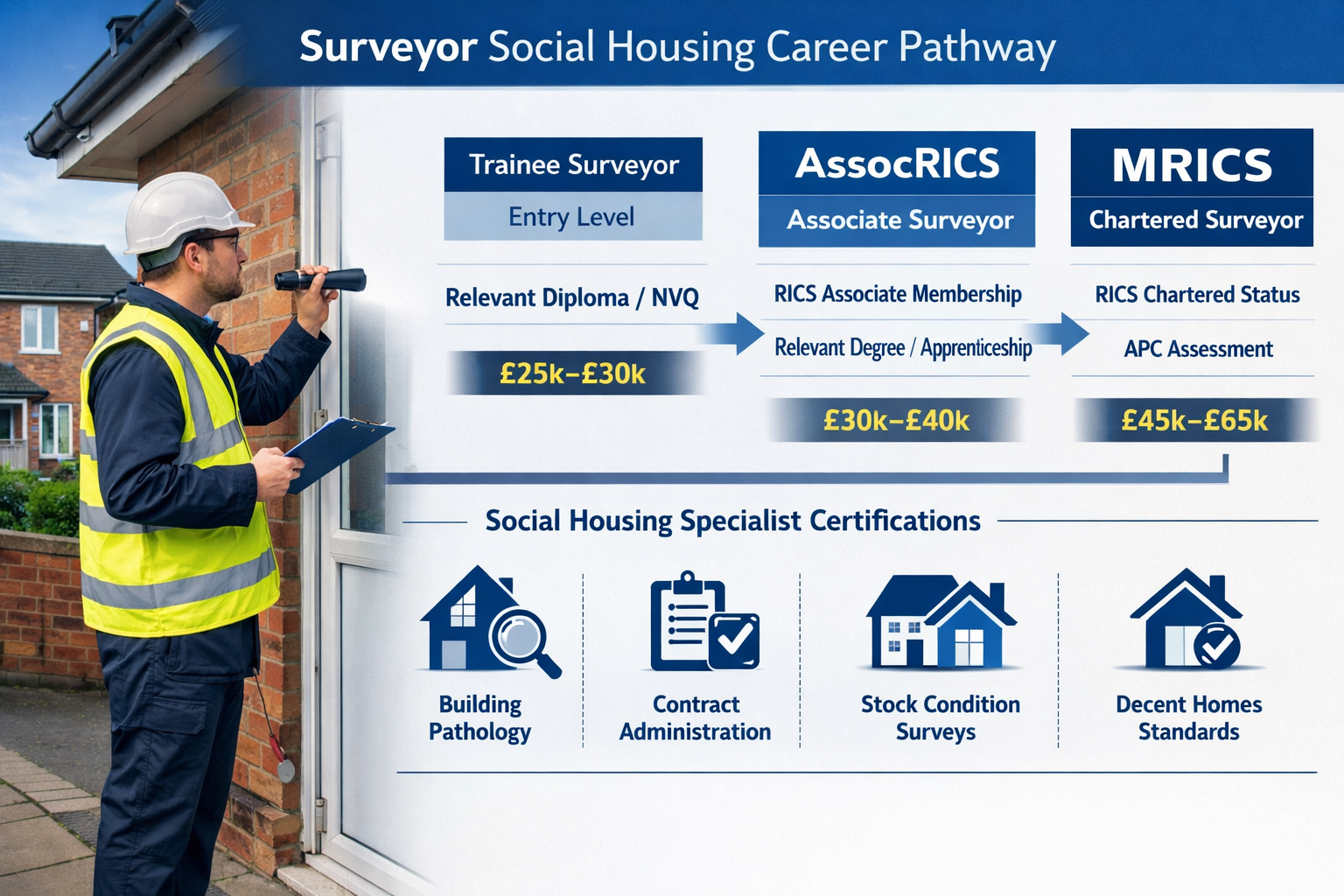
- Career opportunities in social housing surveying offer competitive salaries ranging from £25,000 for trainees to £65,000+ for chartered professionals with specialized expertise
- Essential qualifications include RICS accreditation, building pathology knowledge, and understanding of Decent Homes Standards and Housing Health and Safety Rating System (HHSRS)
- Social housing surveyors conduct stock condition surveys, planned maintenance inspections, disrepair investigations, and compliance assessments for housing associations and local authorities
- The sector faces growing demand due to building safety reforms, decarbonization targets, and an aging housing stock requiring specialist assessment
What Is a Surveyor Social Housing Specialist?
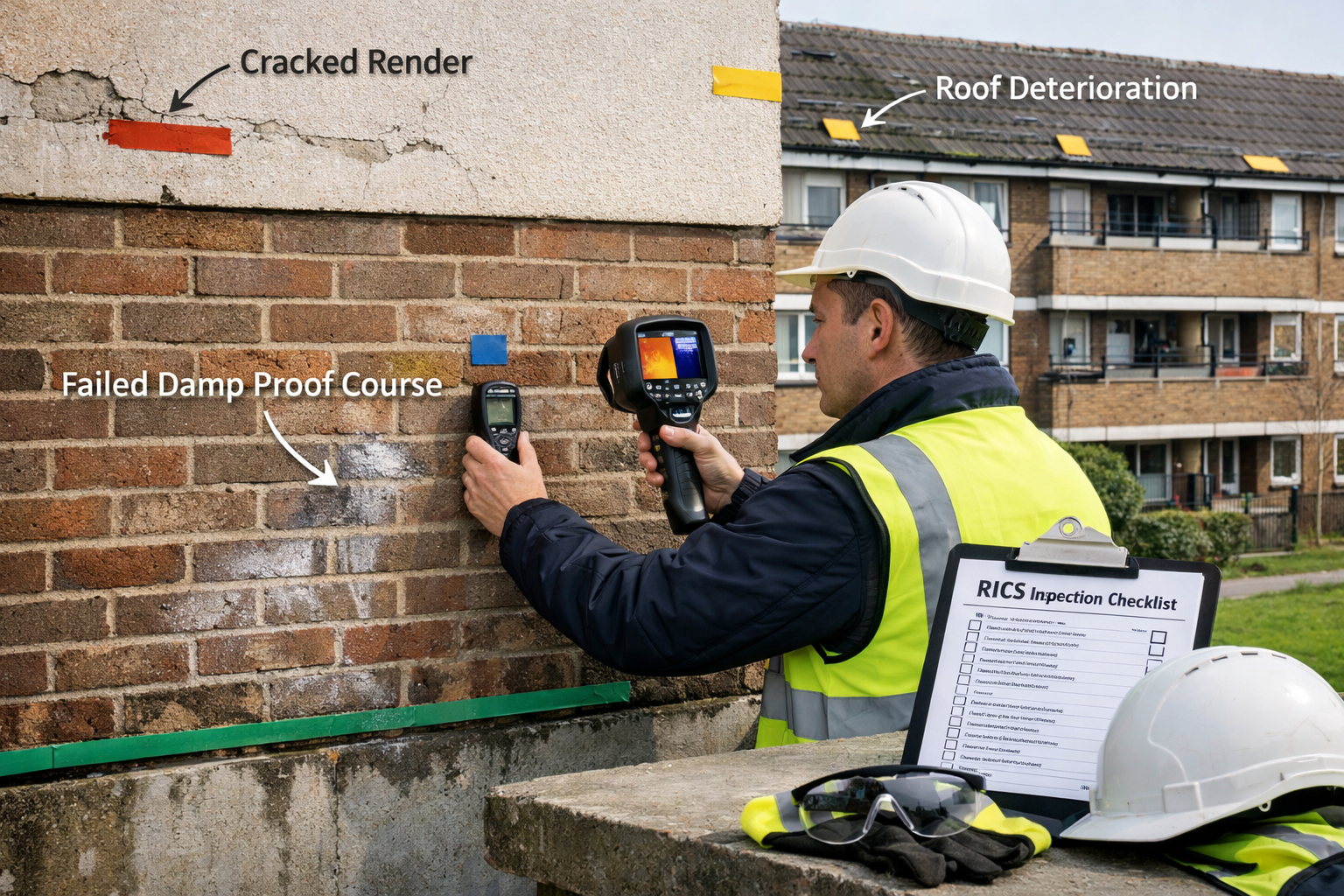
A surveyor social housing professional is a qualified building expert who specializes in assessing, maintaining, and improving affordable housing properties owned by local authorities, housing associations, and registered social landlords. Unlike general practice surveyors who work primarily in the private sector, these specialists focus exclusively on the unique challenges of social housing stock.
Core Responsibilities
Social housing surveyors perform a wide range of critical functions:
- Stock condition surveys that assess the overall state of housing portfolios
- Planned maintenance programs to prevent costly emergency repairs
- Disrepair investigations when tenants report property defects
- Compliance inspections ensuring properties meet regulatory standards
- Decent Homes assessments verifying properties meet minimum quality requirements
- Energy efficiency evaluations supporting decarbonization initiatives
- Fire safety assessments following updated building regulations
These professionals work closely with chartered surveyors across London and surrounding regions to ensure comprehensive property coverage.
The Social Housing Context
Social housing properties present unique challenges that require specialized knowledge:
🏘️ Diverse building types: From Victorian terraces to 1960s tower blocks and modern developments
🔧 Higher usage rates: Social housing experiences more intensive wear and tear than private properties
📊 Limited budgets: Surveyors must prioritize repairs and maintenance within constrained financial resources
⚖️ Regulatory complexity: Multiple compliance frameworks including HHSRS, Decent Homes, and building safety legislation
👥 Vulnerable occupants: Many tenants have additional needs requiring sensitive property management
Career Pathways for Surveyor Social Housing Professionals
The journey to becoming a qualified surveyor social housing expert involves structured education, practical experience, and professional accreditation. Understanding this pathway helps aspiring professionals plan their career development effectively.
Educational Requirements
Undergraduate Foundation
Most social housing surveyors begin with a degree in:
- Building Surveying
- Quantity Surveying
- Construction Management
- Real Estate Management
- Civil Engineering
RICS-accredited degree programs provide the fastest route to chartered status, incorporating the academic knowledge required for professional qualification.
Alternative Routes
For those without a surveying degree:
- Graduate conversion courses (typically 1-2 years)
- Apprenticeship programs combining work and study
- Technical qualifications through CIOB or similar bodies
Professional Qualifications
RICS Accreditation Pathway
| Level | Qualification | Typical Timeline | Key Requirements |
|---|---|---|---|
| Entry | Graduate Trainee | 0-2 years | Relevant degree or equivalent |
| Intermediate | AssocRICS | 2-3 years | Structured training, competency achievement |
| Professional | MRICS | 3-5 years | APC completion, professional interview |
| Advanced | FRICS | 10+ years | Significant contribution to profession |
The Assessment of Professional Competence (APC) represents the critical gateway to chartered status. Social housing surveyors must demonstrate competencies in:
✅ Building pathology and defect diagnosis
✅ Contract administration
✅ Project management
✅ Legal and regulatory compliance
✅ Client care and professional ethics
Specialist Certifications
Beyond core RICS qualifications, social housing surveyors benefit from additional expertise:
- Domestic Energy Assessor (DEA) certification for EPC assessments
- HHSRS assessment training for housing health and safety evaluations
- Asbestos awareness and management qualifications
- Fire safety specialist certifications
- Damp and timber specialist knowledge (relevant resources available through damp survey expertise)
Career Progression and Salary Expectations
Entry Level (Graduate Surveyor)
- Salary range: £25,000 – £32,000
- Focus: Learning fundamentals, supporting senior surveyors
- Typical employers: Housing associations, local authorities
Mid-Level (Qualified Surveyor)
- Salary range: £35,000 – £48,000
- Focus: Independent assessments, managing small projects
- Responsibilities: Stock condition surveys, disrepair cases
Senior Level (Senior/Principal Surveyor)
- Salary range: £50,000 – £65,000+
- Focus: Team leadership, strategic planning, complex projects
- Responsibilities: Portfolio management, policy development
Specialist Roles
- Building Safety Manager: £55,000 – £75,000
- Head of Asset Management: £65,000 – £85,000
- Technical Director: £75,000 – £100,000+
Many experienced professionals also establish consultancy practices, providing expert surveying services to multiple social housing providers.
Essential Skills and Knowledge for Social Housing Surveyors
Success as a surveyor social housing professional requires a diverse skill set combining technical expertise, regulatory knowledge, and interpersonal abilities.
Technical Competencies
Building Pathology Expertise
Social housing surveyors must accurately diagnose:
- Structural defects (subsidence, settlement, wall tie failure)
- Damp and condensation issues (penetrating damp, rising damp, condensation)
- Roof defects (tile slippage, felt failure, gutter problems)
- Timber decay (wet rot, dry rot, woodworm)
- Render and external wall failures
Understanding structural survey requirements helps professionals deliver comprehensive assessments.
Construction Technology Knowledge
Proficiency in various construction methods:
- Traditional masonry construction
- Concrete frame and panel systems
- Timber frame buildings
- Modern methods of construction (MMC)
- Retrofit and renovation techniques
Regulatory and Legal Framework
Key Legislation and Standards
📋 Housing Act 2004: Establishes HHSRS framework for property standards
📋 Decent Homes Standard: Defines minimum quality requirements
📋 Building Safety Act 2022: Introduces new safety requirements post-Grenfell
📋 Homes (Fitness for Human Habitation) Act 2018: Strengthens tenant protections
📋 Landlord and Tenant Act 1985: Defines repair obligations
Compliance Frameworks
Social housing surveyors must navigate:
- HHSRS assessments: Evaluating 29 potential hazards across four categories
- Decent Homes compliance: Ensuring properties meet thermal comfort, repair, and facility standards
- Fire safety regulations: Particularly for high-rise and complex buildings
- Energy performance requirements: Meeting EPC standards and future decarbonization targets
- Asbestos management: Complying with Control of Asbestos Regulations 2012
Technology and Tools
Modern social housing surveyors utilize:
🔧 Diagnostic equipment: Moisture meters, thermal imaging cameras, endoscopes
📱 Mobile survey apps: Digital data capture and reporting systems
🖥️ Asset management software: Stock condition databases and maintenance planning tools
📊 BIM and CAD: Building information modeling for complex projects
🚁 Drone technology: Roof and high-level inspections without scaffolding
Interpersonal and Professional Skills
Communication Excellence
Effective surveyors must:
- Explain technical issues clearly to non-specialist audiences
- Write comprehensive yet accessible reports
- Present findings to boards and committees
- Negotiate with contractors and consultants
Empathy and Sensitivity
Working with social housing tenants requires:
- Understanding diverse backgrounds and needs
- Showing respect for occupied homes during inspections
- Addressing tenant concerns professionally
- Recognizing vulnerability and safeguarding issues
Project and Financial Management
Essential capabilities include:
- Budget preparation and cost control
- Prioritizing works within financial constraints
- Managing multiple concurrent projects
- Understanding procurement processes
Types of Surveys and Inspections in Social Housing
Surveyor social housing professionals conduct various assessment types, each serving specific purposes within the asset management cycle.
Stock Condition Surveys
Purpose and Scope
Stock condition surveys provide comprehensive assessments of entire housing portfolios, typically conducted on 5-10 year cycles. These surveys:
- Assess overall property condition across all building elements
- Identify required repairs and replacements over 30-year planning horizons
- Estimate lifecycle costs for major components
- Inform long-term investment planning and budget allocation
- Support business planning and financial modeling
Methodology
Surveyors inspect representative samples or entire portfolios, recording:
- Element condition (roof, walls, windows, services, etc.)
- Remaining useful life for major components
- Repair priorities and urgency categories
- Compliance with regulatory standards
- Energy efficiency characteristics
Disrepair and Responsive Inspections
When tenants report property defects, surveyors conduct targeted inspections to:
✓ Verify reported issues and identify underlying causes
✓ Determine landlord repair responsibilities under tenancy agreements
✓ Specify appropriate remedial works
✓ Assess urgency and prioritize responses
✓ Provide evidence for potential legal proceedings
These inspections often involve detailed damp and timber assessments when moisture-related issues are reported.
Pre-Acquisition Surveys
Before purchasing properties for social housing stock, surveyors conduct thorough assessments evaluating:
- Structural integrity and major defects
- Compliance with Decent Homes Standards
- Required investment to bring properties to standard
- Suitability for intended tenant groups
- Long-term maintenance liabilities
These surveys inform purchase decisions and budget planning, similar to commercial building surveys in scope and detail.
Planned Maintenance Inspections
Regular cyclical inspections support preventative maintenance programs:
- Annual inspections: Gas safety, electrical testing, fire equipment
- Quinquennial inspections: Roof condition, external decorations, drainage
- Specialist surveys: Asbestos management, legionella risk assessments
Compliance and Regulatory Assessments
HHSRS Assessments
Housing Health and Safety Rating System evaluations examine 29 potential hazards:
- Damp and mould growth
- Excess cold
- Excess heat
- Asbestos and manufactured mineral fibres
- Biocides
- Carbon monoxide and fuel combustion products
- Lead
- Radiation
- Uncombusted fuel gas
- Volatile organic compounds
… and 19 additional hazards
Surveyors rate hazards as Category 1 (serious and immediate) or Category 2 (less serious), triggering enforcement obligations.
Fire Safety Assessments
Following the Building Safety Act 2022, surveyors conduct enhanced fire safety evaluations, particularly for buildings over 11 meters or 5 stories, assessing:
- Fire detection and alarm systems
- Means of escape
- Compartmentation and fire stopping
- External wall systems and cladding
- Fire door integrity
- Emergency lighting and signage
Energy Performance and Decarbonization Surveys
With social housing required to achieve EPC C ratings by 2030, surveyors assess:
- Current energy performance and EPC ratings
- Retrofit opportunities (insulation, heating, glazing)
- Renewable energy potential (solar PV, heat pumps)
- Cost-benefit analysis of improvement measures
- Compliance with Future Homes Standard
Challenges Facing Surveyor Social Housing Professionals in 2026
The social housing sector faces unprecedented challenges requiring skilled surveyor expertise and innovative solutions.
Building Safety and Compliance Burden
Post-Grenfell Regulatory Landscape
The Building Safety Act 2022 has fundamentally transformed requirements for higher-risk buildings:
⚠️ Enhanced inspection regimes for buildings over 18 meters
⚠️ Building Safety Case requirements demonstrating ongoing safety management
⚠️ Resident engagement obligations including mandatory consultation
⚠️ Accountable person roles with personal liability
Social housing surveyors must navigate these complex requirements while managing existing responsibilities.
Cladding and External Wall Systems
Thousands of social housing properties require external wall assessments and potential remediation:
- EWS1 form completion for buildings requiring mortgage lending
- Intrusive investigations of external wall construction
- Fire engineering assessments and modeling
- Remediation project management
- Resident communication during works
Aging Housing Stock
Much of the UK’s social housing stock was built during post-war construction booms:
📅 1950s-1970s system-built housing: Concrete panel and frame construction with inherent defects
📅 Non-traditional construction: Properties built with experimental methods now failing
📅 End-of-life components: Original building elements reaching failure points simultaneously
Surveyors must assess these properties realistically, balancing repair viability against demolition and redevelopment options.
Decarbonization Pressure
The UK’s net-zero commitments create significant challenges:
2030 EPC C Target
All social housing must achieve minimum EPC C ratings within four years, requiring:
- Comprehensive retrofit programs
- Significant capital investment (estimated £10-15 billion sector-wide)
- Technical solutions for hard-to-treat properties
- Resident cooperation and behavior change
Retrofit Complications
Surveyors encounter complex issues:
- Unintended consequences (condensation from improved airtightness)
- Listed building and conservation area constraints
- Resident disruption during works
- Technology selection (heat pumps vs. hydrogen-ready boilers)
Resource and Capacity Constraints
Social housing providers face competing demands:
💰 Limited budgets: Balancing safety, compliance, and improvement works
👷 Skills shortages: Insufficient qualified surveyors and contractors
⏰ Time pressures: Regulatory deadlines and tenant expectations
📊 Data challenges: Incomplete or inaccurate stock information
Tenant Expectations and Legal Action
Residents increasingly assert their rights:
- Rising disrepair claims and litigation
- Social media campaigns highlighting poor conditions
- Regulatory intervention from Housing Ombudsman and Regulator of Social Housing
- Reputational damage from high-profile failures
Surveyors must provide robust evidence and professional opinions that withstand legal scrutiny, similar to expert witness surveyor requirements.
Best Practices for Surveyor Social Housing Excellence
Leading professionals adopt proven approaches to deliver exceptional service in challenging circumstances.
Comprehensive Inspection Methodology
Systematic Approach
Effective surveyors follow structured inspection processes:
- Pre-inspection preparation: Review property records, previous surveys, tenant reports
- Comprehensive site assessment: Examine all accessible areas methodically
- Diagnostic testing: Use appropriate equipment to verify observations
- Photographic documentation: Create detailed visual records
- Tenant liaison: Gather occupant insights and concerns
- Post-inspection analysis: Research defect causes and appropriate solutions
Quality Assurance
Maintain professional standards through:
- Peer review of complex assessments
- Continuing professional development (CPD)
- Regular calibration of diagnostic equipment
- Adherence to RICS guidance and practice statements
Effective Communication and Reporting
Clear Written Reports
Excellent survey reports feature:
✍️ Executive summaries: Key findings accessible to non-technical readers
✍️ Prioritized recommendations: Urgent, essential, and desirable works clearly distinguished
✍️ Cost estimates: Realistic budget guidance for repair works
✍️ Visual evidence: Annotated photographs illustrating defects
✍️ Technical accuracy: Precise descriptions and specifications
Understanding different survey levels helps professionals tailor reporting to specific needs.
Stakeholder Engagement
Successful surveyors communicate effectively with:
- Tenants (explaining findings sensitively)
- Asset managers (providing actionable intelligence)
- Contractors (specifying clear requirements)
- Board members (translating technical issues to strategic decisions)
Technology Integration
Digital Survey Tools
Modern surveyors leverage technology:
📱 Mobile survey applications with offline capability
☁️ Cloud-based data storage and collaboration platforms
🤖 Automated report generation from survey data
📊 Dashboard analytics for portfolio-level insights
🔗 Integration with asset management systems
Predictive Maintenance
Advanced practitioners implement:
- Condition-based monitoring for critical components
- Predictive modeling of component failures
- Risk-based prioritization algorithms
- Lifecycle cost optimization
Collaborative Working
Multi-Disciplinary Teams
Complex projects require collaboration with:
- Structural engineers for stability concerns
- M&E consultants for services assessments
- Environmental specialists for contamination issues
- Fire engineers for complex safety evaluations
- Architects for design solutions
Contractor Partnerships
Effective surveyors build relationships with:
- Specialist contractors for diagnostic investigations
- Repair contractors for realistic cost feedback
- Material suppliers for product specifications
Resident-Centered Approach
Tenant Engagement
Best practice includes:
- Advance notice and appointment flexibility
- Respectful conduct during home visits
- Clear explanation of findings and next steps
- Follow-up communication on action taken
- Feedback mechanisms for service improvement
Vulnerability Awareness
Recognize and respond to:
- Safeguarding concerns (child or adult protection)
- Mental health considerations
- Physical disabilities affecting property use
- Language barriers requiring interpretation
- Financial hardship impacting property condition
Future Trends in Social Housing Surveying
The surveyor social housing profession continues evolving in response to technological innovation, regulatory change, and societal expectations.
Digital Transformation
Building Information Modeling (BIM)
Social housing increasingly adopts BIM for:
- Digital twin creation of existing stock
- Lifecycle information management
- Coordinated retrofit planning
- Facilities management integration
Surveyors must develop BIM competencies to remain relevant.
Artificial Intelligence and Machine Learning
Emerging applications include:
- Automated defect detection from photographs
- Predictive failure modeling
- Optimal maintenance scheduling
- Natural language processing for report generation
Climate Adaptation
Resilience Planning
Beyond decarbonization, surveyors must assess:
- Flood risk and mitigation measures
- Overheating vulnerability
- Climate-related deterioration (increased rainfall, temperature extremes)
- Sustainable drainage systems
Circular Economy Principles
Future-focused surveyors promote:
- Material reuse and recycling
- Design for disassembly
- Whole-life carbon assessment
- Local material sourcing
Regulatory Evolution
Building Safety Regime Expansion
Expect extension of enhanced requirements to:
- Lower-rise buildings
- Existing building stock
- Non-residential social infrastructure
Performance-Based Standards
Movement toward outcome-focused regulation:
- Actual energy performance vs. modeled predictions
- Indoor air quality monitoring
- Resident satisfaction metrics
- Health and wellbeing outcomes
Professional Development
Continuous Learning Requirements
Surveyors must maintain expertise through:
- Regular CPD in emerging technologies
- Regulatory update training
- Specialist certifications
- Cross-sector knowledge exchange
Career Diversification
Opportunities expanding into:
- Building safety manager roles
- Decarbonization specialists
- Data analytics and business intelligence
- Policy and strategy development
Professional resources and industry insights help surveyors stay current with sector developments.
Finding and Working with Social Housing Surveyors
Whether you’re a housing provider seeking surveyor services or an aspiring professional looking for opportunities, understanding how to navigate the market proves valuable.
For Housing Providers
Selecting Surveyor Services
When choosing surveyor support, consider:
🔍 Relevant experience: Social housing sector knowledge and track record
🔍 Qualifications: RICS chartered status and specialist certifications
🔍 Capacity: Ability to deliver within required timescales
🔍 Technology: Digital tools and reporting capabilities
🔍 References: Testimonials from similar organizations
🔍 Value: Competitive pricing balanced with quality
In-House vs. Consultancy
Housing providers must decide between:
In-House Teams
- Advantages: Organizational knowledge, immediate availability, cultural alignment
- Disadvantages: Fixed costs, capacity limitations, potential skill gaps
External Consultants
- Advantages: Flexibility, specialist expertise, scalability
- Disadvantages: Higher hourly rates, learning curve, relationship management
Many organizations adopt hybrid models, maintaining core in-house capability supplemented by specialist consultancy support.
Service Level Expectations
Define clear requirements:
- Response times for emergency inspections
- Turnaround times for routine surveys
- Report formats and content
- Quality assurance processes
- Communication protocols
Understanding typical surveyor pricing helps establish realistic budgets.
For Aspiring Surveyors
Finding Opportunities
Social housing surveyor positions advertised through:
- Housing association and local authority websites
- Professional bodies (RICS, CIOB)
- Specialist recruitment agencies
- LinkedIn and professional networks
- Graduate recruitment schemes
Application Success
Strengthen applications by:
- Demonstrating social purpose motivation
- Highlighting relevant technical knowledge
- Showcasing communication skills
- Evidencing problem-solving abilities
- Expressing commitment to professional development
Interview Preparation
Expect questions covering:
- Technical competence (building pathology scenarios)
- Regulatory knowledge (HHSRS, Decent Homes)
- Interpersonal skills (difficult tenant situations)
- Professional ethics (conflicts of interest)
- Sector awareness (current challenges and trends)
Professional Networks
Industry Organizations
Connect with peers through:
- RICS Social Housing Professional Group: Networking and knowledge sharing
- Chartered Institute of Housing (CIH): Cross-disciplinary housing professionals
- UK Collaborative Centre for Housing Evidence: Research and best practice
- Local authority building control networks: Technical collaboration
Continuing Development
Access learning through:
- RICS CPD programs and webinars
- Housing association technical forums
- Industry conferences and exhibitions
- Academic partnerships and research projects
Conclusion: The Vital Role of Surveyor Social Housing Professionals
The surveyor social housing profession stands at a critical juncture in 2026. With unprecedented regulatory demands, aging building stock, ambitious decarbonization targets, and heightened tenant expectations, the need for skilled, dedicated professionals has never been greater.
These specialists do far more than inspect buildings—they protect vulnerable communities, ensure safe living conditions, optimize limited resources, and enable sustainable futures for millions of residents. Their technical expertise, regulatory knowledge, and professional judgment directly impact quality of life for social housing tenants across the UK.
Key Success Factors
Excellence in social housing surveying requires:
✅ Robust technical competence in building pathology and construction technology
✅ Comprehensive regulatory knowledge spanning multiple compliance frameworks
✅ Effective communication skills for diverse stakeholder engagement
✅ Professional integrity and ethical practice
✅ Continuous learning to keep pace with sector evolution
✅ Resident-centered approach balancing technical requirements with human needs
Actionable Next Steps
For Housing Providers:
- Review your current surveying capability and identify gaps
- Invest in staff development and professional qualifications
- Implement digital tools to enhance survey efficiency
- Establish clear quality standards and performance metrics
- Contact experienced surveyors for specialist support where needed
For Aspiring Surveyors:
- Research educational pathways and select appropriate qualifications
- Seek work experience or apprenticeships in social housing organizations
- Join professional bodies and engage with sector networks
- Develop both technical and interpersonal skills
- Stay informed about regulatory changes and sector challenges
For Experienced Professionals:
- Pursue specialist certifications in emerging areas (building safety, retrofit)
- Mentor junior colleagues and support sector knowledge transfer
- Contribute to professional development of the discipline
- Explore consultancy or advisory opportunities
- Engage with policy development and sector advocacy
The Path Forward
The social housing sector faces formidable challenges, but also presents extraordinary opportunities for surveyors committed to making a tangible difference. Whether ensuring fire safety in high-rise buildings, diagnosing complex defects in aging stock, planning decarbonization pathways, or simply helping a family live in a safe, warm home, social housing surveyors perform work of genuine social value.
As the profession evolves with new technologies, regulations, and expectations, those who combine technical excellence with genuine commitment to social purpose will find rewarding, impactful careers. The buildings may be diverse, the challenges complex, and the resources constrained, but the fundamental mission remains constant: ensuring everyone has access to a decent, safe home.
For those ready to embrace this vital profession, the opportunity to shape the future of social housing—and improve countless lives—awaits. The sector needs skilled, dedicated surveyor social housing professionals now more than ever.