Surveyor Marina: Your Complete Guide to Marine Property Inspections in 2026
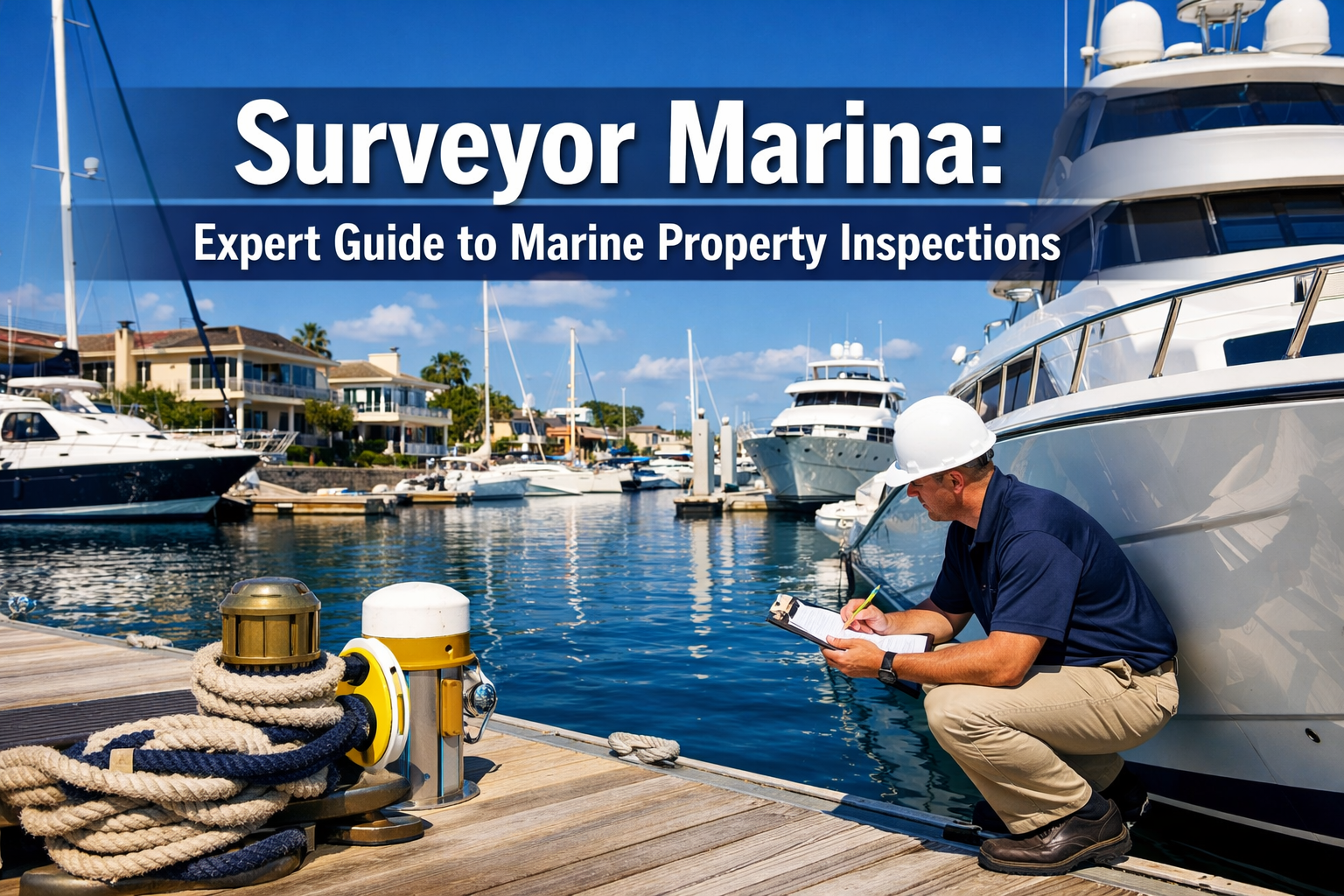
Picture this: you’re standing on the dock of your dream marina property, waves gently lapping against pristine vessels, when suddenly you notice a crack in the pier’s foundation. What seemed like a perfect investment now raises serious questions about structural integrity, safety compliance, and long-term value. This is precisely where a surveyor marina specialist becomes your most valuable ally. Whether you’re purchasing waterfront property, investing in marina facilities, or managing existing marine infrastructure, understanding the critical role of professional marine surveying can save you from costly mistakes and ensure your investment remains secure for decades to come.
Key Takeaways
- 🚤 Surveyor marina professionals provide specialized inspections for waterfront properties, marina facilities, and marine vessels, combining traditional property surveying with maritime expertise
- 💰 Marine property surveys typically cost between £800-£3,500 depending on complexity, property size, and the extent of specialized assessments required
- 📋 Different survey types serve distinct purposes: pre-purchase surveys protect buyers, condition surveys help owners maintain assets, and valuation surveys establish accurate market values
- ⚓ Marina surveys examine unique elements including dock structures, mooring systems, underwater foundations, tidal impacts, and environmental compliance
- 🔍 Hiring qualified surveyors with marine specialization ensures comprehensive assessments that address both terrestrial and aquatic property challenges
Understanding Surveyor Marina Services
A surveyor marina specialist represents a unique intersection of traditional property surveying and specialized maritime knowledge. These professionals possess the technical expertise to assess both land-based structures and water-related infrastructure that characterizes marina properties and waterfront developments.
What Makes Marina Surveying Different?
Marina surveying extends far beyond conventional property inspections. While standard surveyors focus primarily on buildings and land, marina specialists must evaluate:
- Dock and pier structural integrity including wood rot, concrete deterioration, and metal corrosion
- Underwater foundation systems that support floating docks and fixed piers
- Mooring equipment and hardware such as cleats, pilings, and anchor systems
- Tidal and water level impacts on structures and access points
- Environmental compliance with coastal regulations and marine protection laws
- Utility infrastructure delivering water, electricity, and sewage services to vessels
The complexity of these assessments requires surveyors to understand marine engineering principles, coastal environmental factors, and specialized building codes that apply to waterfront construction. Professional surveyors with marina expertise often hold additional certifications in marine surveying alongside their chartered surveyor qualifications.
Types of Marina Properties Requiring Surveys
Surveyor marina services apply to various waterfront property categories:
| Property Type | Survey Focus Areas | Typical Buyers/Owners |
|---|---|---|
| Residential Marina Berths | Individual mooring spaces, access rights, shared facilities | Boat owners, investors |
| Commercial Marina Facilities | Multiple berths, fuel docks, repair facilities, retail spaces | Business investors, developers |
| Waterfront Residential Properties | Private docks, seawalls, riparian rights, flood risk | Homebuyers, property owners |
| Marina-Adjacent Commercial Buildings | Restaurants, shops, offices with water access | Commercial property investors |
| Marina Infrastructure | Breakwaters, jetties, harbor facilities | Local authorities, developers |
Each property type presents unique surveying challenges that demand specialized knowledge and assessment techniques. Understanding the difference between survey levels becomes particularly important when dealing with complex marina properties.
Why You Need a Surveyor Marina Expert
The decision to hire a specialized surveyor marina professional rather than a general property surveyor can mean the difference between a sound investment and a financial disaster. Marina properties present hidden risks that only trained eyes can identify.
Hidden Risks in Marina Properties
Marina and waterfront properties harbor unique vulnerabilities that standard building surveys often overlook:
Structural Deterioration from Water Exposure
Constant exposure to moisture, salt water, and humidity accelerates material degradation. Wood components suffer from rot and marine borer damage, metal fixtures corrode rapidly, and concrete experiences spalling and reinforcement corrosion. A specialized surveyor understands these marine-specific deterioration patterns and knows where to look for early warning signs.
Tidal and Wave Action Damage
Properties in tidal zones experience constant stress from water movement. Foundations may shift, seawalls can undermine, and dock structures face repeated impact forces. Marina surveyors assess whether existing structures adequately withstand these forces and identify necessary reinforcements.
Environmental Compliance Issues
Marina properties must comply with numerous environmental regulations protecting water quality, marine habitats, and coastal ecosystems. Non-compliance can result in expensive remediation requirements, fines, or restrictions on property use. Experienced surveyors identify potential compliance gaps before they become legal liabilities.
Access and Rights Complications
Waterfront properties often involve complex legal arrangements regarding water access, riparian rights, mooring permissions, and shared facility usage. A thorough survey examines these legal aspects alongside physical conditions, ensuring buyers understand exactly what they’re purchasing.
Financial Protection Through Professional Surveys
Investing in a comprehensive surveyor marina inspection provides substantial financial protection:
- Negotiating Power: Survey findings often justify price reductions of 5-15% or more when significant issues are discovered
- Repair Cost Planning: Detailed condition assessments allow accurate budgeting for necessary repairs and maintenance
- Insurance Requirements: Many marine property insurers require professional surveys before issuing policies
- Future Resale Value: Documented survey history demonstrates responsible ownership and facilitates smoother future sales
Understanding surveyor pricing helps property buyers budget appropriately for these essential services while recognizing the value they provide in risk mitigation.
Types of Surveyor Marina Inspections
Surveyor marina professionals offer several inspection types, each serving specific purposes in the property transaction or ownership lifecycle. Selecting the appropriate survey type ensures you receive the information needed for informed decision-making.
Pre-Purchase Marina Surveys
The most common survey type for prospective buyers, pre-purchase inspections provide comprehensive assessments of property condition before completing a transaction.
Level 2 RICS Home Survey (Formerly Homebuyer’s Report)
This mid-level survey suits relatively modern marina properties (typically less than 50 years old) in reasonable condition. The surveyor conducts a visual inspection of accessible areas, identifying visible defects and potential problems requiring further investigation.
Key elements include:
- Overall condition assessment of buildings and structures
- Identification of urgent defects requiring immediate attention
- Recommendations for further specialist inspections
- Market valuation and insurance reinstatement costs
- Legal issues affecting the property
For marina properties, surveyors pay particular attention to water-facing structures, dock conditions, and moisture-related issues in buildings.
Level 3 RICS Building Survey (Formerly Structural Survey)
This comprehensive survey suits older properties, those in poor condition, or complex marina facilities with extensive infrastructure. The surveyor conducts detailed examinations of all accessible areas, providing in-depth analysis of construction, condition, and defects.
Additional coverage includes:
- Detailed descriptions of construction methods and materials
- Comprehensive defect analysis with severity ratings
- Extensive advice on repairs and ongoing maintenance
- Detailed cost implications for identified issues
- Recommendations for specialist investigations (marine engineering, environmental assessments)
Structural survey pricing varies based on property complexity, but marina properties typically require Level 3 surveys due to their specialized nature and exposure to harsh environmental conditions.
Condition Surveys for Existing Owners
Property owners benefit from periodic condition surveys to monitor deterioration, plan maintenance, and ensure safety compliance.
Routine Maintenance Surveys
Regular inspections (typically every 3-5 years) help marina property owners:
- Track deterioration patterns over time
- Prioritize maintenance expenditures effectively
- Identify emerging problems before they become critical
- Maintain insurance coverage requirements
- Document property condition for future sales
Pre-Renovation Surveys
Before undertaking significant renovation or expansion projects, detailed condition surveys establish baseline conditions, identify constraints, and inform design decisions. These surveys prove particularly valuable when planning dock expansions, seawall repairs, or building modifications in coastal locations.
Valuation Surveys for Marina Properties
Surveyor marina specialists provide valuation services for various purposes including mortgage applications, tax assessments, estate planning, and partnership dissolutions.
Marina property valuations require specialized knowledge because:
- Comparable sales data may be limited for unique waterfront properties
- Berth licenses and mooring rights add complex value components
- Environmental restrictions and compliance costs affect market values
- Tidal access limitations impact usability and desirability
- Maintenance costs for marine infrastructure significantly affect net value
Commercial property surveyors with marina expertise apply specialized valuation methodologies that account for these unique factors, ensuring accurate assessments that reflect true market conditions.
The Surveyor Marina Inspection Process
Understanding what happens during a surveyor marina inspection helps property buyers and owners prepare effectively and maximize the value received from professional services.
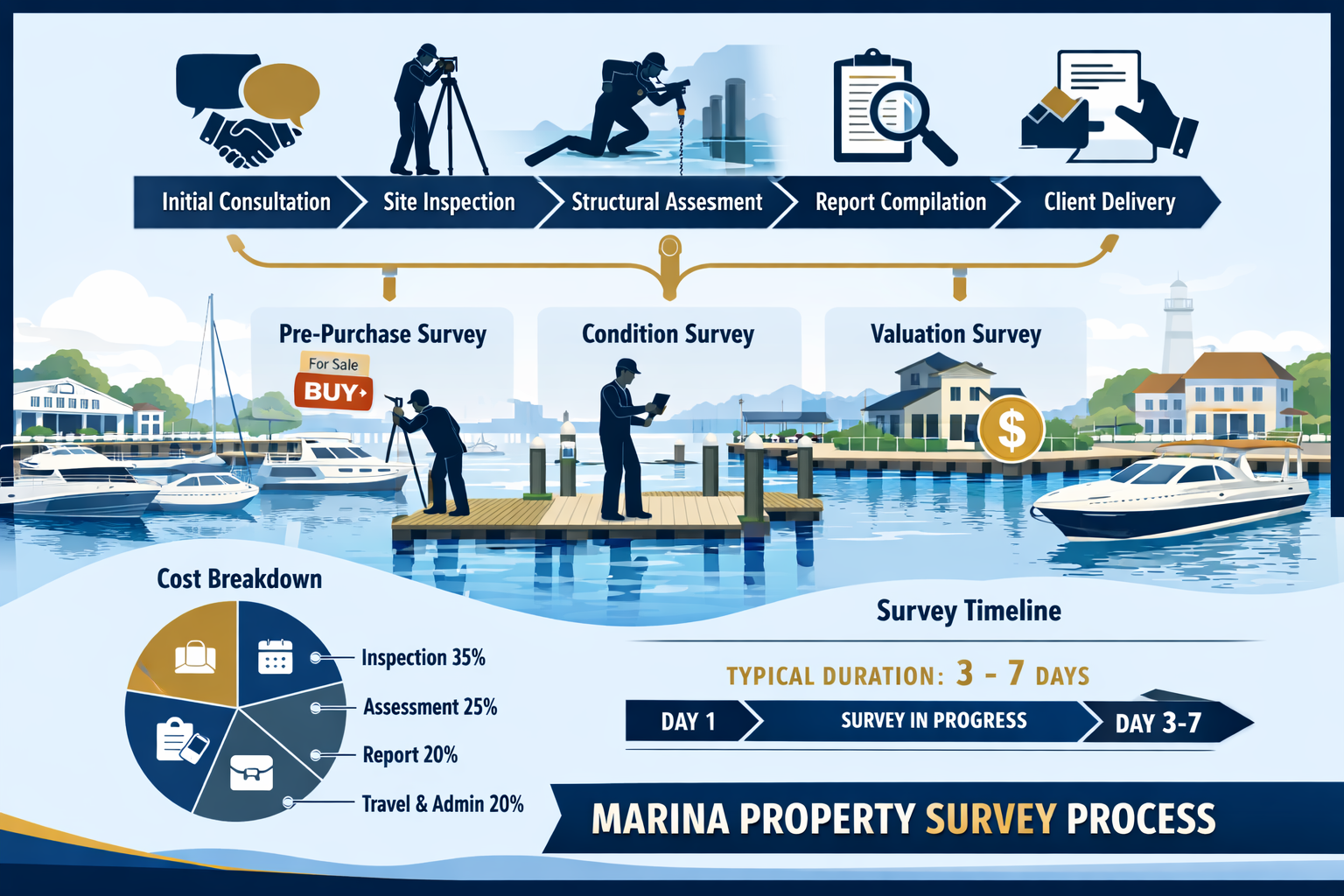
Initial Consultation and Documentation Review
Before conducting physical inspections, surveyors gather essential information:
Property Documentation
- Title deeds and ownership records
- Planning permissions and building regulations approvals
- Previous survey reports and maintenance records
- Berth licenses, mooring agreements, and harbor authority permissions
- Environmental compliance certificates
- Insurance policies and claims history
Client Briefing
The surveyor discusses specific concerns, intended property use, and any known issues. This conversation helps tailor the inspection to address client priorities while ensuring comprehensive coverage of standard assessment areas.
On-Site Physical Inspection
The physical inspection represents the core of the surveying process. For marina properties, this typically requires 4-8 hours depending on property size and complexity.
Above-Water Assessments
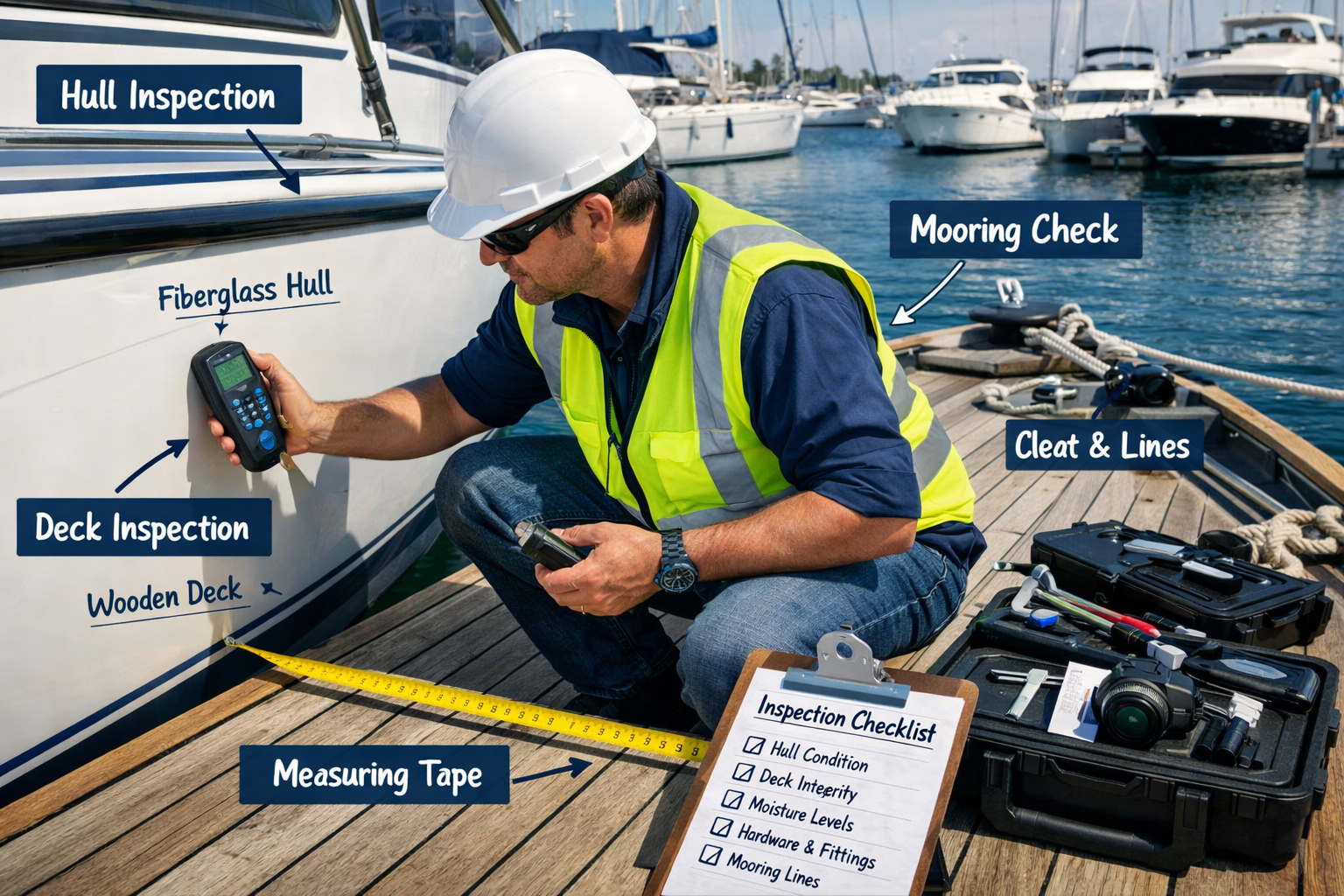
Surveyors systematically examine:
- Buildings and structures: Foundations, walls, roofs, windows, doors, and internal spaces
- Dock and pier surfaces: Decking condition, structural supports, safety railings, and access points
- Utility systems: Electrical pedestals, water supply lines, sewage pump-out facilities
- Mooring hardware: Cleats, bollards, pilings, and anchor systems
- Access infrastructure: Gangways, ramps, and pedestrian walkways
- Safety equipment: Fire extinguishers, life rings, emergency lighting
Below-Water Assessments
When necessary, surveyors arrange for underwater inspections using:
- Diving surveys: Professional divers examine submerged foundations, pilings, and structural supports
- Remote operated vehicles (ROVs): Cameras capture video footage of underwater conditions
- Sonar scanning: Technology maps underwater topography and identifies submerged objects or damage
These specialized assessments add to survey costs but provide critical information about hidden structural elements.
Specialized Testing and Analysis
Surveyor marina inspections often include technical testing:
- Moisture meter readings: Detect hidden water penetration in wood and masonry
- Electrical safety testing: Verify proper grounding and protection in marine environments
- Timber probing: Identify rot and insect damage in wooden structures
- Concrete testing: Assess carbonation and reinforcement corrosion
- Water quality sampling: When environmental concerns exist
Damp survey specialists may be engaged when moisture issues appear significant, providing detailed analysis and remediation recommendations.
Report Compilation and Delivery
Following the inspection, surveyors compile comprehensive reports typically delivered within 5-10 working days. The duration of survey completion depends on property complexity and whether specialist testing was required.
Report Components:
- Executive Summary: Key findings and urgent issues requiring immediate attention
- Property Description: Detailed overview of construction, age, and configuration
- Condition Assessment: Systematic evaluation of all inspected elements with condition ratings
- Defects Analysis: Detailed descriptions of identified problems with severity classifications
- Recommendations: Prioritized advice on repairs, further investigations, and ongoing maintenance
- Cost Implications: Estimated repair costs and maintenance budgets
- Photographic Evidence: Annotated images documenting key findings
- Appendices: Technical data, test results, and reference documents
Costs and Investment Considerations
Understanding the financial aspects of surveyor marina services helps property buyers and owners budget appropriately while recognizing the value these professionals provide.
Survey Cost Factors
Marina survey pricing varies based on numerous factors:
Property Characteristics
- Size and complexity: Larger properties with multiple structures command higher fees
- Age and condition: Older properties requiring more detailed examination increase costs
- Location and accessibility: Remote locations or properties requiring boat access add expenses
- Survey level required: Level 3 surveys cost significantly more than Level 2 assessments
Specialized Requirements
- Underwater inspections: Diving surveys or ROV assessments add £500-£2,000
- Environmental testing: Water quality, soil contamination, or hazardous materials testing increases costs
- Structural engineering: Complex structural issues may require specialist engineering consultations
- Marine engineering: Dock and pier structural assessments by marine engineers add specialized fees
Typical Price Ranges in 2026
| Survey Type | Small Marina Property | Medium Marina Property | Large Marina Facility |
|---|---|---|---|
| Level 2 Survey | £800-£1,200 | £1,200-£1,800 | £1,800-£2,500 |
| Level 3 Survey | £1,200-£1,800 | £1,800-£2,800 | £2,800-£4,500 |
| Valuation Survey | £600-£1,000 | £1,000-£1,500 | £1,500-£2,500 |
| Condition Survey | £700-£1,100 | £1,100-£1,700 | £1,700-£2,800 |
These ranges represent baseline costs for standard surveys. Properties requiring specialized assessments, underwater inspections, or extensive testing may incur additional charges of 30-50% above these figures.
Return on Investment
While survey costs may seem substantial, the financial protection they provide typically far exceeds the investment:
Cost Avoidance Examples:
- Discovering £50,000 in dock repairs before purchase allows price renegotiation
- Identifying non-compliant environmental practices prevents £30,000+ in regulatory fines
- Detecting early-stage structural issues enables £5,000 preventive repairs instead of £40,000 emergency reconstruction
- Uncovering title restrictions prevents purchasing a property with limited development potential
Smart buyers recognize that comprehensive surveys represent insurance against far more expensive surprises after purchase completion.
Selecting the Right Surveyor Marina Professional
Choosing a qualified surveyor marina specialist ensures you receive accurate, comprehensive assessments that truly protect your interests.
Essential Qualifications and Credentials
RICS Chartered Status
The Royal Institution of Chartered Surveyors (RICS) sets professional standards for surveying practice in the UK. Look for surveyors with MRICS or FRICS designations, indicating full membership or fellowship status.
Marine Surveying Specialization
Beyond general surveying qualifications, marina specialists should demonstrate:
- Specific training in marine construction and coastal engineering
- Experience with waterfront property types similar to yours
- Knowledge of maritime regulations and environmental compliance requirements
- Membership in marine surveying professional organizations
- Continuing professional development in marine-specific topics
Professional Indemnity Insurance
Ensure your surveyor carries adequate professional indemnity insurance (typically £2 million minimum) protecting you if errors or omissions in the survey lead to financial losses.
Questions to Ask Prospective Surveyors
Before engaging a surveyor marina professional, ask:
- How many marina or waterfront properties have you surveyed in the past year?
- Do you have experience with properties similar to mine in terms of size, age, and complexity?
- Will you personally conduct the inspection, or will it be delegated to junior staff?
- What specialized testing or assessments do you include in your standard survey?
- Can you arrange underwater inspections if needed, and what additional costs apply?
- How long will the inspection take, and when will I receive the report?
- Will you be available to discuss findings and answer questions after report delivery?
- Can you provide references from recent marina property clients?
Experienced surveying firms welcome these questions and provide transparent, detailed answers demonstrating their expertise and commitment to client service.
Red Flags to Avoid
Certain warning signs suggest a surveyor may not provide the quality service you need:
- ❌ Unwillingness to provide proof of qualifications or insurance
- ❌ Significantly lower prices than competitors without clear explanation
- ❌ Reluctance to discuss specific marina experience or provide references
- ❌ Pressure to accept limited inspection scope to reduce costs
- ❌ Vague descriptions of what the survey will include
- ❌ No clear timeline for report delivery
- ❌ Poor communication or slow response to initial inquiries
Trust your instincts—if something feels wrong about a surveyor’s approach or professionalism, continue your search.
Common Issues Found in Marina Surveys
Understanding typical problems identified during surveyor marina inspections helps property buyers and owners recognize warning signs and appreciate the value of professional assessments.
Structural and Material Deterioration
Wood Rot and Marine Borer Damage
Wooden dock structures face constant attack from moisture and marine organisms. Common issues include:
- Dry rot and wet rot in deck planking, support posts, and structural timbers
- Marine borer infestation (shipworms, gribbles) destroying submerged wooden components
- Fungal decay in inadequately treated or aged timber
- Joint failure where water penetration accelerates deterioration
Repair costs: £5,000-£50,000+ depending on extent and accessibility
Metal Corrosion
Marine environments accelerate metal deterioration through:
- Galvanic corrosion when dissimilar metals contact in saltwater
- Crevice corrosion in joints, fasteners, and overlapping components
- Stress corrosion cracking in structural supports under load
- Pitting corrosion creating holes in metal surfaces
Replacement of corroded metal components often requires specialized marine fabrication, increasing costs substantially.
Concrete Deterioration
Concrete structures in marine environments suffer from:
- Reinforcement corrosion causing concrete spalling and structural weakness
- Alkali-aggregate reaction creating internal cracking
- Freeze-thaw damage in tidal zones
- Sulfate attack from seawater exposure
Environmental and Compliance Issues
Contamination Problems
Marina properties may harbor environmental contamination from:
- Fuel and oil spills from vessel refueling or maintenance activities
- Antifouling paint residues containing toxic heavy metals
- Sewage system failures contaminating water and sediments
- Historical industrial activities on waterfront sites
Remediation costs: £10,000-£100,000+ depending on contamination extent
Regulatory Non-Compliance
Surveyors often identify:
- Unauthorized structures built without proper permits
- Non-compliant electrical installations lacking marine-grade protection
- Inadequate fire safety provisions in commercial marina facilities
- Missing environmental permits for waste disposal or water discharge
- Accessibility violations in public marina areas
Correcting compliance issues may require expensive retrofits or even structure removal in severe cases.
Access and Legal Complications
Riparian Rights Disputes
Waterfront properties involve complex legal rights regarding:
- Water access boundaries and their precise location
- Mooring permissions and their transferability with property sales
- Shared facility usage rights in multi-berth marinas
- Maintenance responsibilities for shared infrastructure
Tidal Access Limitations
Properties in tidal areas may experience:
- Limited usability during low tide periods
- Seasonal access restrictions affecting property value
- Navigational hazards requiring specialized local knowledge
- Storm surge vulnerability necessitating expensive flood protection
These issues significantly impact property usability and value, making their identification during surveys critically important.
Maintenance and Long-Term Property Care
Beyond initial purchase surveys, ongoing surveyor marina involvement helps property owners maintain assets, preserve value, and avoid expensive emergency repairs.
Developing a Marina Property Maintenance Plan
Professional surveyors help create comprehensive maintenance schedules addressing:
Annual Inspections
- Visual examination of all above-water structures
- Testing of electrical systems and safety equipment
- Inspection of mooring hardware and dock surfaces
- Assessment of drainage and water management systems
Periodic Deep Inspections (Every 3-5 Years)
- Underwater structural assessments
- Comprehensive condition surveys documenting deterioration patterns
- Environmental compliance audits
- Utility system testing and certification
Preventive Maintenance Activities
- Regular cleaning and protective coating applications
- Fastener tightening and replacement
- Drainage system clearing
- Timber treatment and preservation
- Metal corrosion protection
Budgeting for Marina Property Maintenance
Marina properties typically require maintenance budgets of 3-5% of property value annually, significantly higher than standard residential properties. This reflects the harsh marine environment and specialized materials required.
Typical Annual Costs:
- Routine maintenance: £2,000-£8,000 for residential marina berths
- Dock repairs: £5,000-£20,000 for periodic refurbishment
- Utility system maintenance: £1,000-£5,000 annually
- Environmental compliance: £1,000-£3,000 for testing and reporting
- Insurance: 1.5-3% of property value (higher than standard properties)
Establishing maintenance reserves prevents financial strain when major repairs become necessary.
When to Call for Emergency Surveys
Certain situations warrant immediate professional assessment:
- Storm damage affecting structural integrity or safety
- Sudden settlement or movement of docks, piers, or buildings
- Major water intrusion or flooding events
- Collision damage from vessels or debris
- Discovery of significant rot or corrosion during routine maintenance
- Regulatory notices regarding compliance violations
Quick professional response minimizes damage progression and often reduces ultimate repair costs by 30-50% compared to delayed action.
Marina Surveys for Different Property Types
Surveyor marina requirements vary significantly based on specific property categories and intended uses.
Residential Marina Berths
Individual boat owners purchasing marina berths need surveys addressing:
Physical Berth Condition
- Mooring cleats, bollards, and attachment points
- Finger pier or pontoon condition
- Electrical and water service pedestals
- Access gangways and safety features
Legal and Access Rights
- Berth license terms and transferability
- Shared facility usage rights (bathrooms, laundry, parking)
- Maintenance fee obligations and reserve fund status
- Restrictions on vessel size, type, or usage
Marina Facility Assessment
- Overall marina management and maintenance quality
- Security provisions and access control
- Storm protection and harbor configuration
- Amenity quality and availability
Berth surveys typically cost £600-£1,200, providing essential protection for investments often exceeding £50,000-£200,000.
Commercial Marina Facilities
Investors purchasing entire marina operations require comprehensive assessments covering:
Infrastructure Evaluation
- Dock and pier structural capacity and condition
- Utility distribution systems (power, water, sewage)
- Fuel dock facilities and environmental compliance
- Haul-out equipment and repair facilities
- Buildings (offices, shops, restaurants, storage)
Business Operations Analysis
- Berth occupancy rates and rental income
- Operating cost analysis and profitability
- Staff facilities and operational efficiency
- Customer amenities and competitive positioning
Regulatory Compliance
- Environmental permits and compliance history
- Safety certifications and inspection records
- Planning permissions for existing and potential expansion
- Harbor authority relationships and agreements
Commercial marina surveys typically cost £3,000-£10,000+ depending on facility size and complexity, but protect investments often worth millions of pounds.
Waterfront Residential Properties
Homes with private docks or water access require surveys examining:
Property-Specific Infrastructure
- Private dock or pier condition and capacity
- Seawalls, bulkheads, and shoreline protection
- Boat lifts, davits, and launching facilities
- Beach or shoreline access and condition
Building Considerations
- Flood risk and elevation compliance
- Foundation stability in coastal soils
- Moisture management and ventilation
- Specialized construction for coastal exposure
Environmental Factors
- Erosion patterns and shoreline stability
- Water quality and contamination risks
- Protected species or habitat restrictions
- Coastal zone management regulations
These comprehensive surveys typically cost £1,500-£3,500, reflecting the complexity of assessing both traditional residential structures and specialized marine infrastructure.
Legal and Regulatory Considerations
Surveyor marina professionals must navigate complex regulatory frameworks governing waterfront development and use.
Planning and Building Regulations
Marina properties face additional regulatory scrutiny:
Marine Licensing
Construction or modification of structures below the high water mark requires:
- Marine licenses from the Marine Management Organisation (MMO)
- Environmental impact assessments for significant projects
- Consultation with statutory nature conservation bodies
- Navigational safety approvals from harbor authorities
Coastal Protection
Properties in coastal areas must comply with:
- Shoreline Management Plans defining long-term coastal strategies
- Flood Risk Assessments demonstrating appropriate flood resilience
- Coastal erosion considerations affecting development permissions
- Climate change adaptation requirements for new construction
Environmental Protection Laws
Marina operations face stringent environmental regulations:
Water Quality Protection
- Discharge consents for any water released into marine environments
- Pollution prevention measures for fuel, oil, and chemical storage
- Sewage treatment and pump-out facility requirements
- Stormwater management and treatment systems
Habitat and Species Protection
- Restrictions in Marine Protected Areas or Sites of Special Scientific Interest
- Seasonal limitations protecting nesting birds or marine mammals
- Requirements to avoid or mitigate impacts on protected species
- Monitoring and reporting obligations
Waste Management
- Proper disposal systems for vessel waste (sewage, oil, garbage)
- Hazardous waste handling for antifouling paints and batteries
- Recycling provisions for marina operations
- Record-keeping and reporting requirements
Surveyors with marina expertise identify compliance gaps that could expose property owners to enforcement action, fines, or expensive remediation requirements.
Insurance and Liability Issues
Marina properties present unique insurance challenges:
Property Insurance
Standard policies often exclude or limit coverage for:
- Flood and storm surge damage
- Erosion and land movement
- Dock and pier structures
- Vessels and marine equipment
Specialized marine property insurance addresses these gaps but requires professional surveys documenting property condition and risk management measures.
Liability Insurance
Marina operators face liability exposure from:
- Slip and fall accidents on docks and walkways
- Vessel damage from inadequate facilities
- Environmental contamination incidents
- Fire spreading between vessels or to shore facilities
Adequate liability coverage (typically £5-10 million for commercial operations) often requires documented safety programs and regular professional inspections.
Future Trends in Marina Surveying
The surveyor marina profession continues evolving with technological advances and changing environmental conditions.
Technology Integration
Drone Surveying
Unmanned aerial vehicles enable:
- Rapid aerial photography documenting overall property conditions
- Thermal imaging identifying moisture intrusion and insulation defects
- 3D modeling creating detailed property records
- Access to difficult or dangerous inspection areas
Drone technology reduces survey time and costs while improving documentation quality.
Underwater ROV Technology
Remotely operated vehicles provide:
- High-definition video of submerged structures
- Sonar mapping of underwater topography
- Reduced costs compared to traditional diving surveys
- Safer inspections in poor visibility or hazardous conditions
Digital Reporting Platforms
Modern surveyors deliver reports through:
- Interactive digital platforms with embedded photos and videos
- Mobile-responsive formats accessible on any device
- Clickable navigation to specific sections and findings
- Integration with property management software
Climate Change Considerations
Surveyor marina professionals increasingly address climate-related risks:
Sea Level Rise
- Assessing long-term viability of low-lying marina properties
- Evaluating adaptation options (raising structures, improved flood protection)
- Considering climate projections in property valuations
- Advising on insurance availability and cost trends
Increased Storm Intensity
- Evaluating structural adequacy for more severe weather events
- Recommending enhanced storm protection measures
- Assessing harbor configuration and vessel protection
- Planning for more frequent damage and higher maintenance costs
Temperature and Ecosystem Changes
- Monitoring impacts of warming water on marine borers and fouling organisms
- Assessing changes in ice formation patterns affecting northern marinas
- Evaluating shifting species distributions affecting environmental compliance
- Considering ecosystem changes in long-term property planning
Forward-thinking surveyors help property owners understand and prepare for these evolving challenges, protecting long-term property values and usability.
Sustainability and Green Marina Initiatives
Modern marina properties increasingly incorporate sustainable practices:
Renewable Energy Integration
- Solar panel installations on dock structures and buildings
- Wind turbine opportunities in exposed locations
- Electric vehicle and vessel charging infrastructure
- Energy efficiency improvements reducing operating costs
Water Conservation
- Rainwater harvesting systems
- Greywater recycling for non-potable uses
- Low-flow fixtures and efficient irrigation
- Stormwater treatment and infiltration
Habitat Enhancement
- Artificial reef structures supporting marine life
- Native vegetation for shoreline stabilization
- Wildlife-friendly lighting reducing ecological impacts
- Floating wetlands improving water quality
Surveyors increasingly evaluate these features, recognizing their contribution to property value, regulatory compliance, and long-term sustainability.
Conclusion: Protecting Your Marina Investment
Navigating the complexities of marina property ownership requires specialized expertise that only qualified surveyor marina professionals provide. From initial pre-purchase assessments through ongoing maintenance planning, these specialists offer invaluable protection against the unique risks inherent in waterfront properties.
The investment in comprehensive surveying services—typically £800-£3,500 for residential properties and £3,000-£10,000+ for commercial facilities—represents insurance against far more expensive problems. Hidden structural deterioration, environmental compliance failures, and legal complications can easily cost tens or hundreds of thousands of pounds to resolve. Professional surveys identify these issues before they become your responsibility, providing negotiating leverage, accurate maintenance planning, and peace of mind.
Actionable Next Steps
For Prospective Buyers:
- Engage a qualified surveyor early in your property search, ideally before making offers
- Select the appropriate survey level based on property age, condition, and complexity
- Budget adequately for comprehensive assessments including specialized testing when needed
- Review survey reports carefully and ask questions about any unclear findings
- Use survey findings strategically in price negotiations and contingency planning
For Current Owners:
- Schedule periodic condition surveys every 3-5 years to monitor deterioration
- Develop comprehensive maintenance plans based on professional recommendations
- Budget 3-5% of property value annually for maintenance and repairs
- Address identified issues promptly to prevent minor problems from becoming major expenses
- Maintain detailed records of all surveys, maintenance, and repairs for future sales
For All Marina Property Stakeholders:
- Stay informed about regulatory changes affecting waterfront properties
- Consider climate change impacts in long-term planning and investment decisions
- Prioritize environmental compliance to avoid costly enforcement actions
- Invest in preventive maintenance rather than reactive emergency repairs
- Build relationships with qualified professionals including surveyors, marine engineers, and environmental consultants
The unique challenges of marina property ownership demand specialized expertise. By partnering with qualified surveyor marina professionals, you protect your investment, ensure safety and compliance, and position your property for long-term success in the dynamic waterfront property market.
Whether you’re purchasing your first marina berth, investing in a commercial waterfront facility, or managing existing marine infrastructure, professional surveying services provide the foundation for informed decision-making and successful property stewardship. Don’t navigate these complex waters alone—contact experienced surveying professionals who understand the specialized requirements of marina properties and can guide you toward sound investments and effective property management.
For more information about property surveying services and expert guidance, explore our comprehensive resources covering all aspects of property assessment, valuation, and maintenance planning.