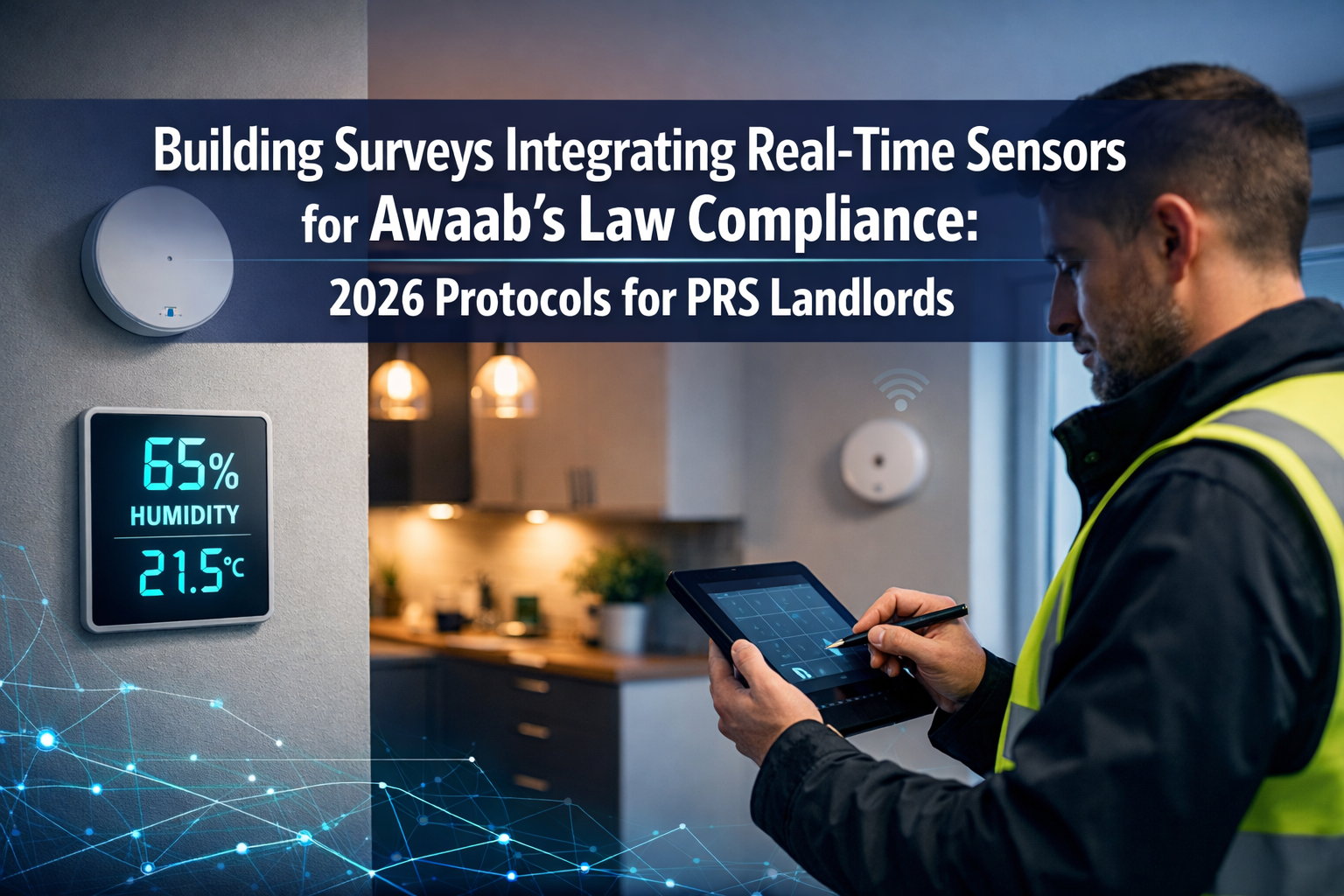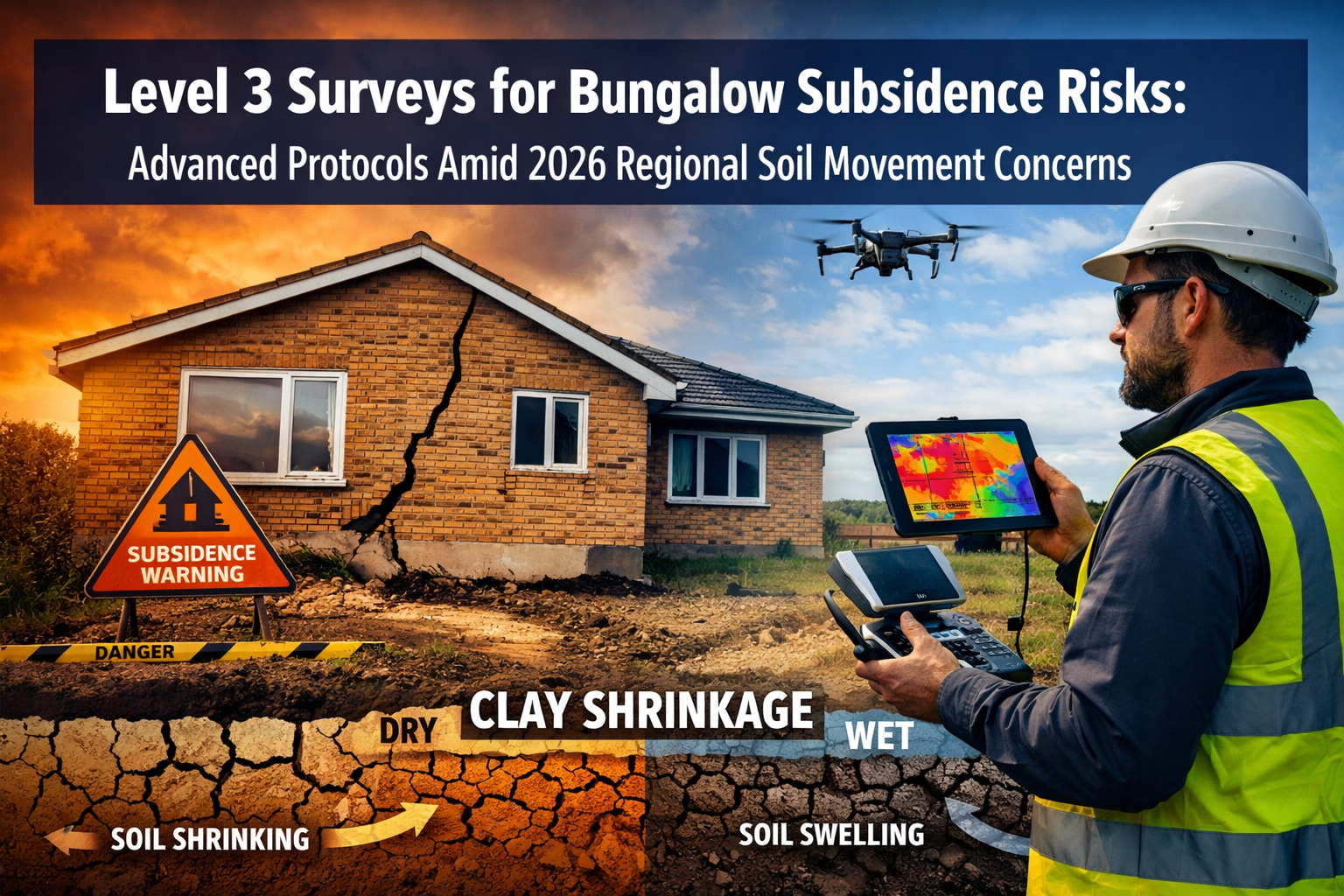

The tragic events at Grenfell Tower fundamentally changed how the construction industry approaches building safety. As we navigate through 2026, surveyors face an unprecedented wave of regulatory changes that demand more than routine inspections—they require structured risk assessments, comprehensive documentation, and clear legal guidance for property owners and managers. The landscape of Safety Compliance and Risk Assessment in Building Surveys: Fire Safety, Cladding, and Balcony Regulations for 2026 has evolved into a complex framework where professional surveyors serve as critical gatekeepers between regulatory compliance and resident safety.
For building surveyors, understanding these new requirements isn't optional—it's essential. The regulatory environment has shifted from reactive measures to proactive risk management, with substantial legal and financial consequences for non-compliance. Property owners, developers, and managers now depend on surveyors to identify high-risk features, document deficiencies according to new standards, and provide actionable recommendations that align with the latest legislation.
Key Takeaways
- 🔥 Expanded fire sprinkler mandates now cover all new residential buildings above 11 meters (approximately 4 stories) and all care homes regardless of height, requiring surveyors to verify installation compliance during inspections
- 📋 Personal Emergency Evacuation Plans (PEEPs) became mandatory on 6 April 2026 for buildings 11-18 meters housing residents with mobility or cognitive impairments, creating new documentation requirements for building assessments
- 🏗️ Major Approved Document B amendments take effect 30 September 2026, mandating second staircases in buildings above 18 meters and requiring surveyors to advise on compliance timelines for projects in progress
- 🔍 Building Safety Regulator transfer to a new arm's-length body (27 January 2026) introduces updated Building Assessment Certificate (BAC) requirements for high-risk residential buildings
- ⚖️ Building Safety Levy implementation from 1 October 2026 will impact development costs and requires surveyors to factor remediation funding into property valuations and risk assessments
Understanding the 2026 Regulatory Framework for Building Safety
The regulatory environment governing Safety Compliance and Risk Assessment in Building Surveys: Fire Safety, Cladding, and Balcony Regulations for 2026 represents the most comprehensive overhaul of building safety legislation in decades. These changes stem directly from recommendations made in the Grenfell Tower Inquiry and reflect a fundamental shift in how the industry approaches fire safety, structural integrity, and resident protection.
The Building Safety Regulator's New Structure
On 27 January 2026, a pivotal transition occurred when the Building Safety Regulator's functions transferred from the Health and Safety Executive (HSE) to a dedicated arm's-length body.[3] This organizational change signals the government's commitment to creating a focused, specialized regulatory authority exclusively dedicated to building safety oversight.
For surveyors conducting RICS building surveys, this transition means:
- New submission protocols for Building Assessment Certificates (BACs)
- Updated compliance verification procedures for high-risk residential buildings
- Enhanced scrutiny of fire safety documentation and risk assessments
- Streamlined communication channels for regulatory queries and guidance
The Building Safety Regulator continues to invite Principal Accountable Persons to submit BAC applications for specific building categories, including structures over 30 meters with more than 11 residential units, buildings 18-29.99 meters with over 378 units, and any building clad with combustible aluminium composite material (ACM).[2]
Key Legislative Milestones in 2026
Understanding the timeline of regulatory changes is crucial for surveyors planning inspections and advising clients:
| Effective Date | Regulation | Impact on Surveys |
|---|---|---|
| 6 April 2026 | Fire Safety (Residential Evacuation Plans) Regulations 2025 | Mandatory PEEPs assessment for 11-18m buildings |
| 30 September 2026 | Approved Document B Amendments | Second staircase requirements for 18m+ buildings |
| 1 October 2026 | Building Safety Levy | New tax on residential development applications |
| November 2026 | Electrical Installation Inspections | Social landlord compliance deadline |
These dates create critical compliance windows that surveyors must communicate to clients, particularly for projects currently in development or buildings requiring remediation work.
The Updated Fire Safety "Rulebook"
The 2026 regulatory framework incorporates updated NFPA Standards (2026 Edition) and revised British Standard BS 9991, which together form the primary drivers of the revised "rulebook" for fire safety.[1] Additionally, the UK is accelerating its transition away from BS 476 fire test standards toward European standards, including:
- BS EN 13501 for reaction to fire classification
- BS EN 1634-1 for fire resistance of doors and shutters[5][6]
This shift has significant implications for surveyors evaluating existing buildings and advising on remediation strategies. Products and materials certified under the old BS 476 standard may no longer meet current compliance requirements, necessitating careful documentation and replacement recommendations.
Fire Safety Compliance: Sprinklers, Evacuation Plans, and Documentation Requirements
Fire safety represents the most scrutinized aspect of Safety Compliance and Risk Assessment in Building Surveys: Fire Safety, Cladding, and Balcony Regulations for 2026. The expanded requirements for fire suppression systems and evacuation planning demand that surveyors develop new inspection protocols and documentation standards.
Mandatory Fire Sprinkler Systems: The 11-Meter Threshold
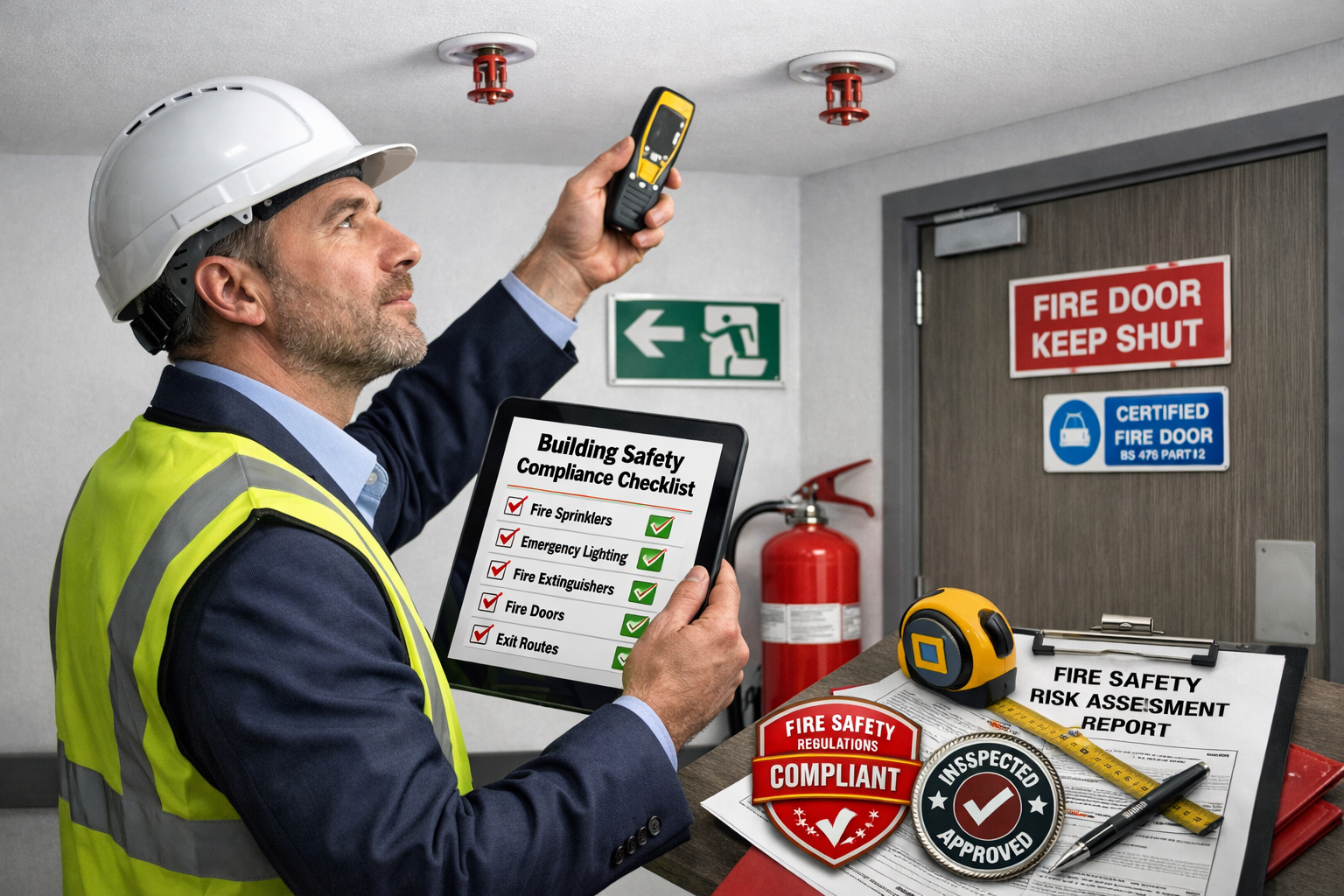
One of the most significant changes in 2026 is the lowered threshold for mandatory fire sprinkler installation. As of 2026, comprehensive fire sprinkler systems are required in all new residential blocks with ceilings exceeding 11 meters (approximately 4 stories)—a substantial decrease from previous thresholds that now captures medium-rise buildings previously exempt from this requirement.[1]
This expansion means surveyors must:
✅ Verify sprinkler system presence in all buildings above 11 meters during inspections
✅ Examine certified fire stopping seals around every sprinkler pipe penetration[1]
✅ Document system maintenance records and compliance certificates
✅ Assess water pressure and coverage adequacy for the building's layout
✅ Identify retrofitting requirements for existing buildings approaching the threshold
For care homes and facilities housing vulnerable populations, the requirements are even more stringent. All new care facilities must install fire sprinkler systems regardless of building height—a provision introduced in 2025 and formalized in the 2026 regulatory framework.[1][2]
"The lowered 11-meter threshold represents a fundamental recognition that fire safety cannot be compromised in medium-rise buildings. Surveyors must now treat sprinkler verification as a standard component of every residential building assessment."
When conducting structural surveys, surveyors should document:
- Sprinkler head locations and spacing throughout each floor
- Control valve accessibility and signage
- Water supply adequacy and backup systems
- Alarm integration with building fire detection systems
- Maintenance contracts and inspection frequency
Personal Emergency Evacuation Plans (PEEPs): New Documentation Standards
The Fire Safety (Residential Evacuation Plans) (England) Regulations 2025, which became effective 6 April 2026, introduce mandatory Personal Emergency Evacuation Plans (PEEPs) for residents in buildings between 11-18 meters whose evacuation ability is compromised due to cognitive or physical impairment.[2][3][6]
This regulation applies specifically in England and stems directly from Grenfell Inquiry recommendations. The Responsible Person—typically the building owner or property manager—must prepare these individualized plans.
Surveyor responsibilities under the PEEP requirements include:
- Identifying buildings within scope (11-18 meters with vulnerable residents)
- Assessing evacuation route adequacy for mobility-impaired residents
- Documenting refuge areas and their compliance with accessibility standards
- Evaluating communication systems for hearing or vision-impaired residents
- Reporting PEEP compliance status to building owners and managers
During a specific defect report focused on fire safety, surveyors should evaluate whether:
- Evacuation routes are sufficiently wide for wheelchair users
- Refuge areas provide adequate protection and communication capabilities
- Signage meets accessibility standards (tactile, high-contrast, multilingual)
- Emergency lighting covers all critical evacuation paths
- Door opening mechanisms are operable by persons with limited dexterity
Approved Document B Amendments: Second Staircases and Evacuation Lifts
Major amendments to Approved Document B will take effect on 30 September 2026, introducing significant structural requirements for new residential buildings.[2][6] The most impactful changes include:
Mandatory second staircases in all new residential buildings above 18 meters
Provisions for evacuation lifts in apartment blocks to support safe egress
These requirements create substantial implications for projects currently in the planning or early construction phases. Any project that has not sufficiently progressed by 30 September 2026 must be redesigned to comply with the new standards.
Surveyors advising on development projects or assessing buildings under construction should:
📌 Verify project timelines against the 30 September deadline
📌 Assess whether current designs include compliant secondary egress routes
📌 Evaluate structural capacity for additional staircase installation
📌 Review lift specifications for evacuation capability (power backup, communication systems)
📌 Document compliance gaps requiring design modifications
The addition of second staircases and evacuation lifts represents a fundamental shift in building design philosophy, moving from "stay put" strategies to "simultaneous evacuation" approaches for high-rise residential buildings.
Fire Door and Fire Stopping Certification
Building inspectors now examine certified fire stopping seals around every sprinkler pipe penetration as part of 2026 compliance standards.[1] This heightened scrutiny extends to all fire safety compartmentation measures, including:
- Fire door certification and installation quality
- Cavity barriers in wall and roof spaces
- Service penetrations through fire-rated walls and floors
- Ductwork fire dampers and their maintenance status
When conducting roof surveys or assessing building envelopes, surveyors must pay particular attention to fire stopping at roof level, where service penetrations are often numerous and compartmentation can be compromised.
Cladding and Balcony Risk Assessment: Identifying High-Risk Materials and Structures
Cladding safety has become one of the most critical aspects of Safety Compliance and Risk Assessment in Building Surveys: Fire Safety, Cladding, and Balcony Regulations for 2026. The identification and remediation of dangerous cladding systems continue to be a national priority, with significant legal and financial implications for building owners.
Identifying Combustible Cladding Systems
The Building Safety Regulator continues to prioritize buildings clad with combustible aluminium composite material (ACM) in its call-in process for Building Assessment Certificates.[2] However, surveyors must recognize that ACM is not the only problematic cladding type requiring assessment.
High-risk cladding systems that require detailed documentation include:
🔴 Aluminium Composite Material (ACM) with polyethylene core
🔴 High-Pressure Laminate (HPL) panels with combustible cores
🔴 Expanded Polystyrene (EPS) insulation systems
🔴 Phenolic foam insulation with inadequate fire barriers
🔴 Timber cladding without appropriate fire treatment
🔴 Metal composite panels with combustible insulation
During external inspections, surveyors should:
- Visually identify cladding types through material appearance and fixing methods
- Request original specifications and product certification from building owners
- Document cladding extent (percentage of facade coverage, floor levels)
- Assess cavity barriers and fire breaks within the cladding system
- Identify attachment methods and potential structural concerns
- Photograph evidence of cladding condition and configuration
For buildings where cladding type cannot be definitively identified through visual inspection, surveyors should recommend material sampling and laboratory testing to determine fire performance characteristics according to BS EN 13501 standards.[5]
Balcony Safety and Structural Integrity
Balconies represent another critical area of concern in 2026 building safety assessments. Recent failures and safety incidents have highlighted the importance of thorough balcony inspections, particularly in buildings constructed during specific periods or using certain construction methods.
Key balcony risk factors include:
- Cantilever design without adequate structural support
- Thermal bridging causing accelerated deterioration of connections
- Water ingress compromising structural elements
- Inadequate drainage leading to standing water and freeze-thaw damage
- Corrosion of reinforcement in concrete balconies
- Timber decay in balconies with wooden structural elements
- Inadequate balustrade fixings creating fall hazards
When assessing balcony safety, surveyors should conduct both visual inspections and non-destructive testing where appropriate. Drone surveys can be particularly valuable for examining balconies on upper floors without requiring expensive access equipment.
Large Panel Systems and Historical Construction Methods
The Building Safety Regulator specifically identifies large panel systems built between 1957-1973 with gas supply where reinforcement status is unclear as requiring Building Assessment Certificate applications.[2] These systems, commonly known as "system-built" or "industrialized" construction, present unique structural and fire safety challenges.
Surveyors assessing buildings from this era should:
✓ Research construction method through historical records and building plans
✓ Identify panel joints and their condition
✓ Assess gas installation routes and compartmentation
✓ Document any previous structural modifications that may have compromised integrity
✓ Recommend specialist structural assessment where concerns exist
For buildings with non-standard construction methods, collaboration with structural engineers is essential to properly evaluate safety and compliance.
The Building Safety Levy and Remediation Funding
The Building Safety Levy, implemented from 1 October 2026, will charge a new tax on new residential buildings across England, with expected revenue of £3.4 billion dedicated to remediation and building safety purposes.[2] The Levy was postponed from late 2025 to October 2026 to provide developers and local authorities additional preparation time.
This funding mechanism has several implications for surveyors:
- Valuation adjustments for properties requiring cladding remediation
- Development cost calculations for new builds subject to the Levy
- Remediation prioritization based on available funding streams
- Building Assessment Certificate requirements for accessing remediation support
Surveyors should be prepared to advise clients on:
- Eligibility for remediation funding under various government schemes
- Documentation requirements for funding applications
- Interim safety measures while awaiting full remediation
- Impact on property marketability and mortgage availability
- Insurance implications of identified cladding defects
Thermal Imaging and Advanced Inspection Techniques
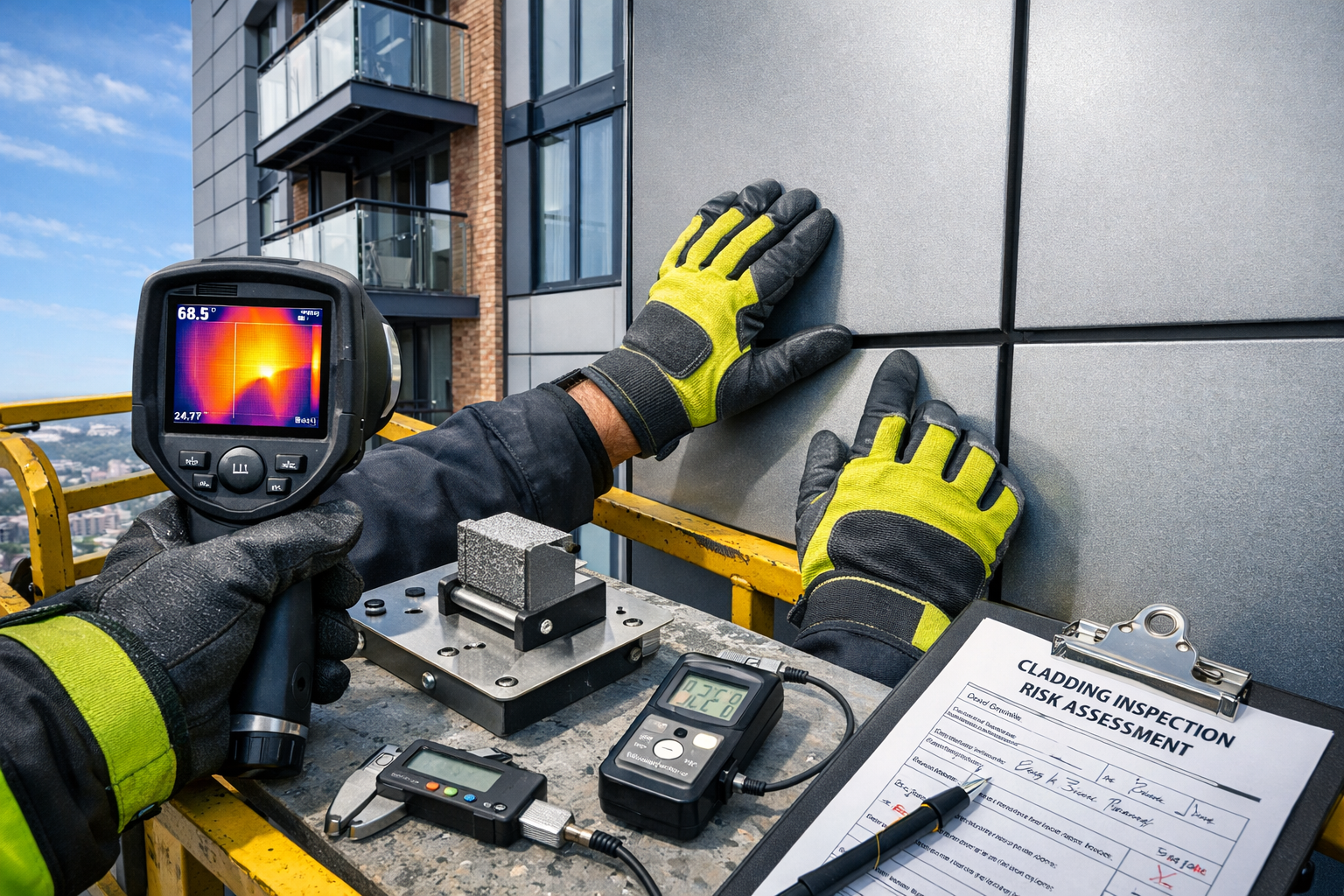
Modern surveying techniques have become essential for comprehensive cladding and balcony assessments. Thermal imaging cameras can identify:
- Moisture ingress behind cladding systems
- Missing or inadequate insulation
- Thermal bridging at structural connections
- Air leakage paths through the building envelope
Combined with visual inspection and material testing, these technologies enable surveyors to provide more accurate risk assessments and remediation recommendations. When conducting structural surveys, thermal imaging should be considered standard practice for buildings with suspected cladding or envelope defects.
Surveyor Responsibilities: Documentation, Reporting, and Legal Guidance
The evolving landscape of Safety Compliance and Risk Assessment in Building Surveys: Fire Safety, Cladding, and Balcony Regulations for 2026 has fundamentally transformed the surveyor's role from simple defect identification to comprehensive risk assessment and legal advisory. Surveyors now bear significant responsibility for ensuring clients understand their obligations and the potential consequences of non-compliance.
Structured Risk Assessment Frameworks
Modern building surveys require systematic risk assessment methodologies that go beyond traditional defect reporting. Surveyors should adopt structured frameworks that evaluate:
Likelihood of failure or incident
- Historical performance of similar systems
- Current condition and deterioration rate
- Maintenance history and quality
- Environmental exposure factors
Consequence severity
- Potential for injury or loss of life
- Property damage extent
- Legal and regulatory penalties
- Reputational impact
Risk prioritization matrix
- High risk (immediate action required)
- Medium risk (action within defined timeframe)
- Low risk (monitor and review)
- Negligible risk (no action required)
This approach enables clients to make informed decisions about remediation priorities and resource allocation. When preparing a specific defect report, surveyors should clearly categorize findings according to this risk framework.
Documentation Standards for 2026 Compliance
Comprehensive documentation has become essential for demonstrating due diligence and supporting regulatory compliance. Survey reports should include:
📄 Executive summary highlighting critical safety concerns
📄 Detailed findings organized by building system and risk level
📄 Photographic evidence with clear annotations and location references
📄 Regulatory compliance assessment against current 2026 standards
📄 Remediation recommendations with cost estimates and timelines
📄 Monitoring requirements for ongoing safety verification
For buildings requiring Building Assessment Certificates, surveyors should ensure their documentation aligns with the Building Safety Regulator's submission requirements, including:
- Building height verification (measured to highest occupied floor)
- Residential unit count and occupancy characteristics
- Cladding material identification and extent
- Fire safety system inventory (sprinklers, alarms, evacuation routes)
- Structural system description and any known defects
Electrical Safety Integration
From an unspecified date in 2026, social landlords must ensure electrical installations are inspected at least every five years in existing tenancies, with all checks to be completed by November 2026 and reports provided to residents and local authorities upon request.[2]
While electrical testing typically falls outside the scope of standard building surveys, surveyors should:
✓ Verify electrical inspection currency during property assessments
✓ Identify obvious electrical hazards requiring specialist attention
✓ Recommend electrical condition reports where none exist
✓ Document electrical system age and upgrade requirements
✓ Note compliance status in survey reports
This integrated approach ensures clients receive comprehensive safety guidance covering all regulated building systems.
Advising Clients on Legal Obligations and Next Steps
Perhaps the most critical evolution in surveyor responsibilities is the expectation to provide clear legal guidance on compliance obligations and remediation pathways. This requires surveyors to:
Understand regulatory frameworks
- Building Safety Act 2022 requirements
- Fire Safety (England) Regulations 2022
- Approved Document B standards
- Local authority additional requirements
Identify responsible parties
- Principal Accountable Person
- Building owner vs. leaseholder responsibilities
- Managing agent obligations
- Contractor and designer liabilities
Communicate compliance timelines
- Immediate safety concerns requiring urgent action
- Regulatory deadlines (e.g., 30 September 2026 for Approved Document B)
- Recommended remediation schedules
- Monitoring and re-inspection intervals
Recommend specialist consultants
- Fire safety engineers for complex assessments
- Structural engineers for balcony and cladding evaluations
- Quantity surveyors for remediation cost estimation
- Legal advisors for liability and funding questions
When conducting RICS building surveys, surveyors should provide clients with a clear action plan that prioritizes safety concerns and outlines the steps required to achieve full compliance.
Professional Indemnity and Liability Considerations
The heightened regulatory environment and increased scrutiny of building safety have significant implications for professional indemnity insurance and surveyor liability. Surveyors must:
🛡️ Maintain adequate professional indemnity coverage for building safety assessments
🛡️ Document scope of inspection and any limitations clearly
🛡️ Decline instructions where expertise or access is insufficient
🛡️ Recommend specialist consultants for matters beyond competence
🛡️ Keep detailed records of advice provided and client responses
The potential consequences of missed defects or inadequate advice have never been greater. Surveyors should consider whether their current insurance coverage adequately reflects the increased risks associated with cladding, fire safety, and structural assessments under the 2026 regulatory framework.
Collaboration with Other Professionals
Complex building safety assessments often require multidisciplinary teams to properly evaluate all risk factors. Surveyors should establish relationships with:
- Fire safety consultants for sprinkler design and evacuation strategy review
- Structural engineers for balcony, cladding, and large panel system assessments
- Building control professionals for regulatory interpretation
- Quantity surveyors for remediation cost estimation
- Legal specialists in building safety and construction law
This collaborative approach ensures clients receive comprehensive, coordinated advice that addresses all aspects of Safety Compliance and Risk Assessment in Building Surveys: Fire Safety, Cladding, and Balcony Regulations for 2026.
Regional Variations: Wales and England Regulatory Differences
While much of the building safety reform has been coordinated across the UK, important regional variations exist that surveyors must understand when operating in different jurisdictions.
The Building Safety (Wales) Bill
First drafted in 2025, the Building Safety (Wales) Bill—a direct response to the Grenfell Tower tragedy—is expected to become law in 2026, with the new regime fully operational by summer.[2] The Bill focuses on three core principles:
- Safety – Enhanced building standards and oversight
- Accountability – Clear responsibility chains for building safety
- Residents' voices – Meaningful engagement in safety decisions
While the Welsh legislation mirrors many aspects of the English Building Safety Act 2022, surveyors working in Wales should be aware of potential differences in:
- Implementation timelines for specific requirements
- Building height thresholds for enhanced regulation
- Enforcement mechanisms and regulatory body structure
- Remediation funding availability and eligibility criteria
Surveyors operating across the England-Wales border should ensure their assessment protocols and reporting templates accommodate these jurisdictional differences.
Scotland and Northern Ireland Approaches
Scotland and Northern Ireland have developed their own building safety reform programs, with different regulatory structures and timelines. Surveyors working in these regions should familiarize themselves with:
- Scottish Building Standards and their fire safety provisions
- Northern Ireland Building Regulations and compliance requirements
- Regional building control processes and approval mechanisms
- Local enforcement practices and inspection protocols
The fundamental principles of fire safety, cladding assessment, and structural integrity remain consistent across the UK, but the specific regulatory requirements and compliance pathways vary significantly.
Future Developments and Ongoing Regulatory Evolution
The regulatory landscape for Safety Compliance and Risk Assessment in Building Surveys: Fire Safety, Cladding, and Balcony Regulations for 2026 continues to evolve as new evidence emerges and lessons are learned from implementation challenges.
Anticipated Regulatory Changes Beyond 2026
Several additional regulatory developments are anticipated in the coming years:
Enhanced competency requirements for building professionals
Digital building passports containing complete safety documentation
Mandatory building logbooks tracking all modifications and maintenance
Expanded retrofit requirements for existing building stock
Stricter enforcement and penalties for non-compliance
Surveyors should maintain continuing professional development in building safety topics and stay informed about regulatory consultations and proposed amendments.
Technology Integration and Innovation
Emerging technologies are transforming how building safety assessments are conducted:
- 3D laser scanning for precise dimensional verification
- Artificial intelligence for defect pattern recognition
- Digital twins for ongoing building performance monitoring
- Blockchain documentation for immutable compliance records
- IoT sensors for real-time structural and fire safety monitoring
Surveyors who embrace these technologies will be better positioned to provide comprehensive, evidence-based risk assessments that meet evolving client and regulatory expectations.
Industry Best Practices and Standards
Professional bodies including RICS (Royal Institution of Chartered Surveyors) continue to develop guidance documents and best practice standards for building safety assessments. Surveyors should regularly review:
- RICS professional standards and practice statements
- Building Safety Regulator guidance and technical notes
- Industry working group recommendations
- Case law developments affecting surveyor liability
- Insurance industry requirements and expectations
Participation in professional networks and industry forums helps surveyors stay current with evolving practices and share knowledge about effective assessment methodologies.
Conclusion: Navigating the New Safety Compliance Landscape
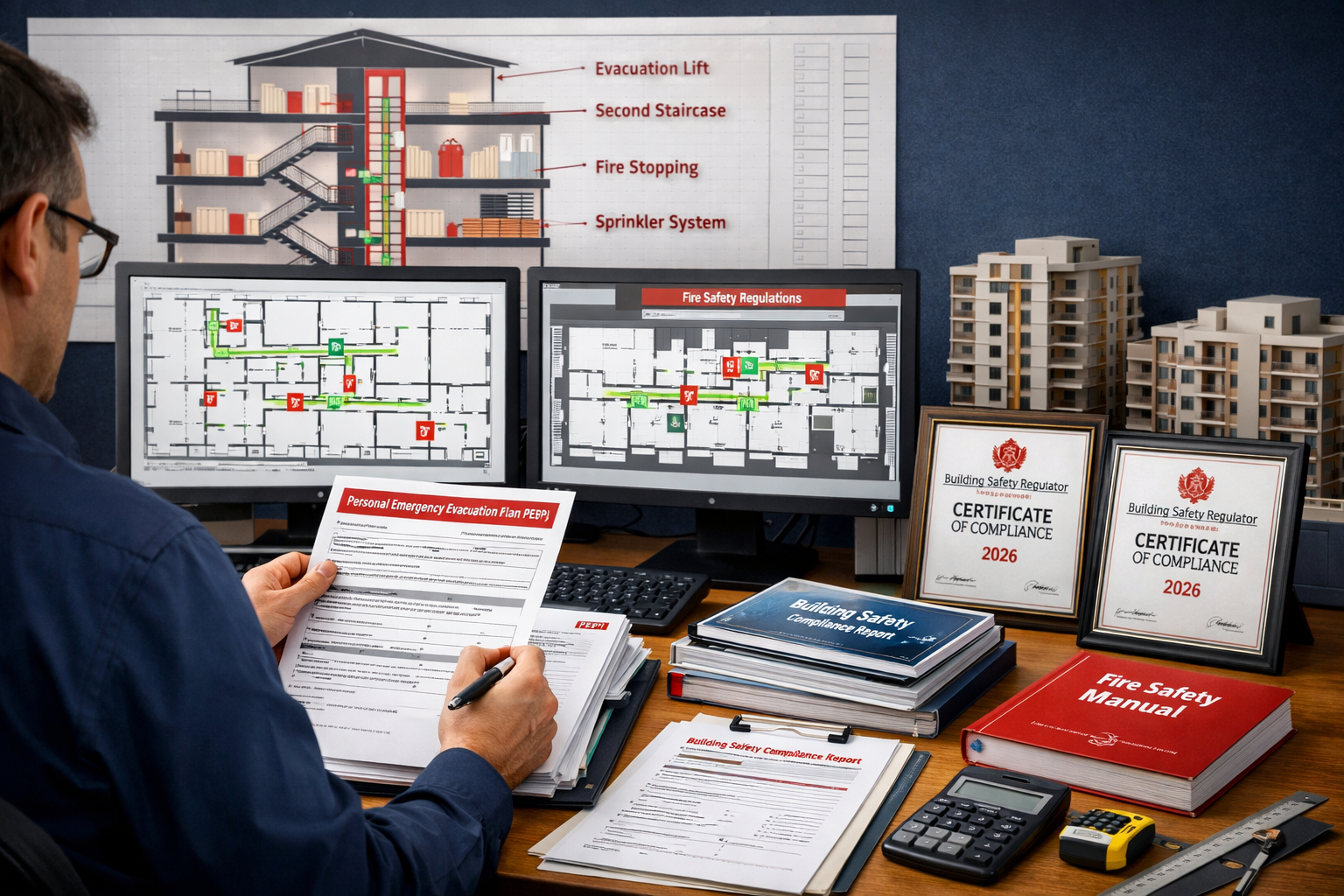
The transformation of Safety Compliance and Risk Assessment in Building Surveys: Fire Safety, Cladding, and Balcony Regulations for 2026 represents both a challenge and an opportunity for building surveyors. The expanded regulatory framework demands higher levels of expertise, more comprehensive documentation, and clearer communication of legal obligations to clients.
Key priorities for surveyors in 2026 and beyond:
✅ Master the regulatory timeline – Understand critical compliance dates including the 30 September 2026 Approved Document B amendments and 1 October 2026 Building Safety Levy implementation
✅ Develop systematic risk assessment protocols – Move beyond simple defect identification to structured risk evaluation that prioritizes safety concerns and guides remediation decisions
✅ Invest in inspection technology – Thermal imaging, drone surveys, and digital documentation tools enhance assessment quality and efficiency
✅ Build specialist networks – Establish relationships with fire safety consultants, structural engineers, and legal advisors to support comprehensive client service
✅ Maintain professional development – Stay current with evolving standards, emerging technologies, and regulatory interpretations through ongoing training
✅ Document thoroughly and clearly – Provide clients with detailed, well-organized reports that clearly explain findings, risks, and recommended actions
Actionable Next Steps for Property Professionals
For building surveyors:
- Review and update inspection checklists to incorporate all 2026 regulatory requirements
- Assess professional indemnity insurance coverage for building safety work
- Schedule training on thermal imaging, cladding identification, and fire safety systems
- Develop client communication templates explaining common compliance issues
For property owners and managers:
- Commission comprehensive building surveys addressing fire safety, cladding, and balcony conditions
- Verify Building Assessment Certificate status for qualifying buildings
- Review Personal Emergency Evacuation Plan requirements for buildings 11-18 meters
- Establish maintenance and inspection schedules for fire safety systems
For developers and architects:
- Confirm project timelines against the 30 September 2026 Approved Document B deadline
- Incorporate second staircase and evacuation lift requirements into designs for buildings above 18 meters
- Budget for Building Safety Levy charges on applications from 1 October 2026
- Specify compliant cladding systems meeting BS EN 13501 standards
For social landlords:
- Complete electrical installation inspections by November 2026 deadline
- Implement five-year electrical testing cycles for all properties
- Assess sprinkler installation requirements for buildings above 11 meters
- Develop PEEP protocols for vulnerable residents in qualifying buildings
The path forward requires diligence, expertise, and commitment to safety above all other considerations. By embracing these responsibilities and investing in the knowledge and tools necessary to meet them, surveyors can fulfill their critical role in protecting building occupants and ensuring regulatory compliance.
For comprehensive building safety assessments that address all aspects of the 2026 regulatory framework, consider engaging local chartered surveyors with expertise in fire safety, cladding evaluation, and structural integrity. The complexity of modern building safety compliance demands professional guidance—the stakes are simply too high for anything less than excellence.
References
[1] Fire Sprinkler Systems 2026 Guide – https://cafireprotection.co.uk/fire-sprinkler-systems-2026-guide/
[2] 2026 Building Safety Landscape Regulation Industry Updates – https://blackboots.uk/2026-building-safety-landscape-regulation-industry-updates/
[3] Building Safety Update New Rules Regulations And Guidance – https://www.dacbeachcroft.com/en/What-we-think/Building-safety-update-new-rules-regulations-and-guidance
[4] Fire Safety Approved Document B – https://www.gov.uk/government/publications/fire-safety-approved-document-b
[5] Fire Safety In Construction – https://www.ajg.com/uk/news-and-insights/fire-safety-in-construction/
[6] Preparing For 2026 The Future Of Fire Safety Legislation And What It Means For You – https://www.totalfiregroup.org/preparing-for-2026-the-future-of-fire-safety-legislation-and-what-it-means-for-you/
[7] buildingsafetyevent.co.uk – https://buildingsafetyevent.co.uk
[8] New Fire Safety Rules For Residential Buildings What Owners And Managers Need To Know – https://www.lighthouseriskservices.com/new-fire-safety-rules-for-residential-buildings-what-owners-and-managers-need-to-know/