
The property surveying landscape is undergoing its most significant transformation in over a decade. As 2026 unfolds, building surveyors across the UK face the challenge of preparing for the RICS Home Survey Standard 2nd Edition Implementation: Building Surveyor Training and Client Communication for 2026—a comprehensive update that promises to reshape how residential surveys are conducted, reported, and understood by clients. With over 1,000 consultation comments analyzed and implementation targeted for late 2027, the time to prepare is now.
This comprehensive guide explores the practical strategies surveyors need to master the upcoming changes, from understanding the new three-tier survey structure to leveraging technology and communicating enhanced value to increasingly informed homebuyers.
Key Takeaways
- 📋 Three redefined survey levels ('basic', 'intermediate', 'advanced') replace the current system, providing clearer client choices and differentiated inspection requirements
- 🎓 Comprehensive training requirements are essential for surveyors to implement enhanced scope definitions, technology integration, and updated regulatory practices by late 2027
- 💬 Client communication strategies must evolve to explain the value proposition of each survey level and justify pricing in a competitive market
- 🤖 Technology integration including AI, drone inspections, and retrofit assessments becomes formally recognized within the standard framework
- ⚖️ Independent oversight through the Standards and Regulation Board ensures rigorous professional standards while addressing SME viability concerns
Understanding the RICS Home Survey Standard 2nd Edition Changes
The Royal Institution of Chartered Surveyors (RICS) has embarked on the most substantial revision of residential survey standards since the original Home Survey Standard was introduced. Currently in the detailed analysis phase as of February 2026, the organization is methodically working through more than 1,000 consultation comments received during the eight-week public consultation period that concluded in October 2025 [2].
The Timeline and Development Process
The RICS Home Survey Standard 2nd Edition Implementation: Building Surveyor Training and Client Communication for 2026 follows a carefully structured timeline:
| Phase | Timeline | Key Activities |
|---|---|---|
| Public Consultation | Aug-Oct 2025 | 1,000+ comments received from industry [2] |
| Detailed Analysis | Feb-Jun 2026 | Line-by-line review of feedback [2] |
| Multi-Stage Review | Jul-Dec 2026 | Editorial, panel, and committee approvals [2] |
| Publication | March 2026 (target) | Final standard released [1] |
| Implementation | End of 2027 | Full industry adoption required [1] |
In December 2025, RICS appointed Leigh Chaney MRICS as Senior Specialist for Residential Survey to lead the project through its critical review phase. With 20 years of property and construction industry experience, Chaney brings essential expertise to navigate the complex feedback and ensure the standard meets both professional and consumer needs [2].
The Three-Tier Survey Structure
The most visible change in the new standard is the redefinition of survey levels from the current system to 'basic', 'intermediate', and 'advanced' classifications [3]. This terminology shift aims to provide consumers with immediately understandable choices based on their property type and specific needs.
Key differences between levels:
- Basic Level: Entry-point inspection suitable for newer properties in good condition
- Intermediate Level: Enhanced inspection including 'checking' services (e.g., operating a gas hob to verify connection) without full testing [3]
- Advanced Level: Comprehensive inspection with detailed investigation of defects and building pathology
The enhanced Section 4 of the standard now clearly demonstrates how reporting builds progressively from level to level, while Appendix A differentiates specific inspection requirements for each tier [3]. This structured approach addresses one of the most consistent themes from consultation feedback: the demand for greater clarity and conciseness [2].
For surveyors offering RICS home surveys, understanding these distinctions is crucial for proper service positioning and client education.
Building Surveyor Training Requirements for 2026 Implementation
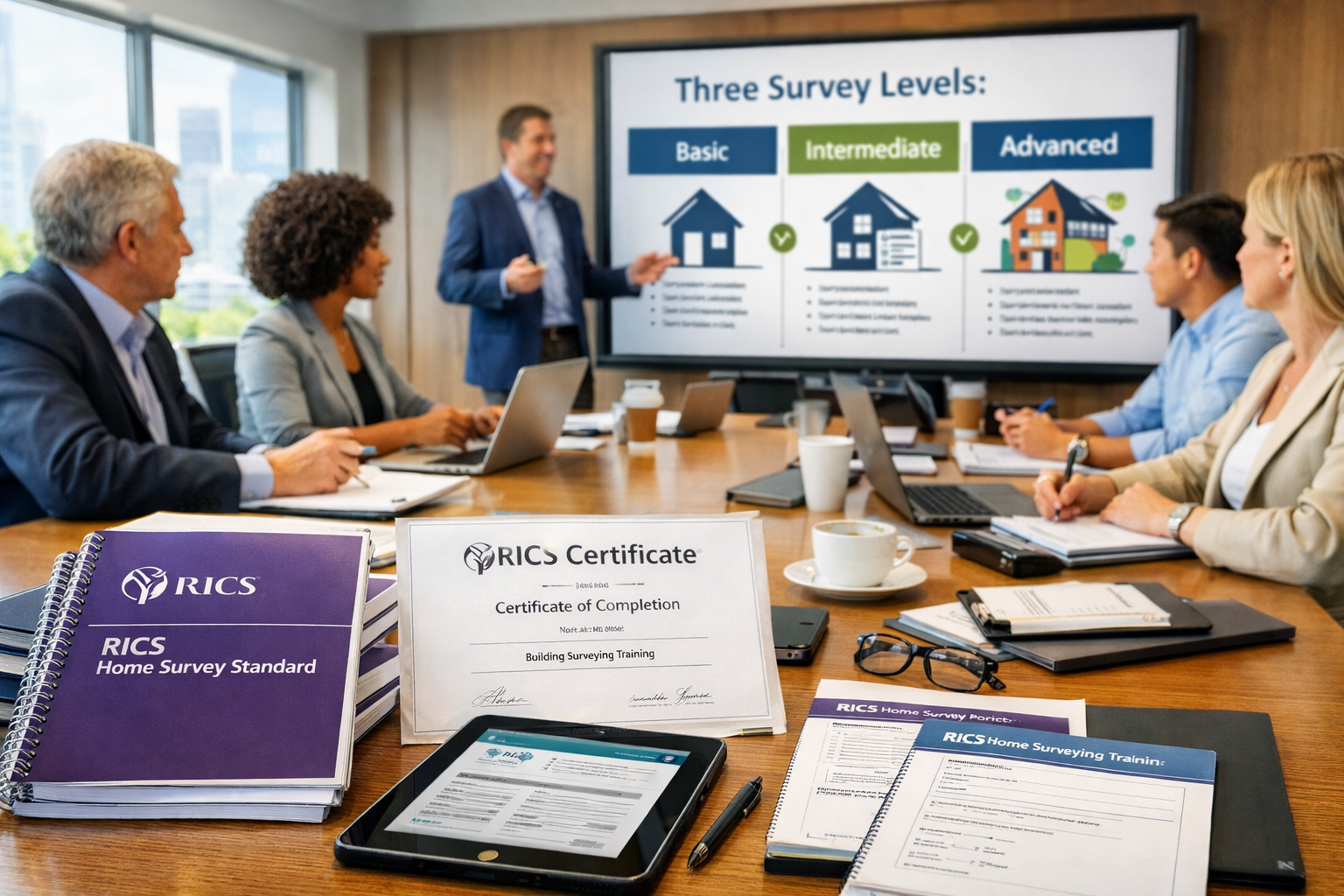
The successful implementation of the RICS Home Survey Standard 2nd Edition Implementation: Building Surveyor Training and Client Communication for 2026 hinges on comprehensive surveyor education and skill development. With publication targeted for March 2026 and full implementation by end of 2027, surveyors have a limited window to upskill and adapt their practices [1].
Core Competency Updates
Building surveyors must develop proficiency in several expanded areas:
1. Updated Legislation and Regulatory Practices 📚
The 2nd Edition incorporates recent changes in building regulations, energy performance requirements, and safety standards. Surveyors need training on:
- Current Building Regulations amendments
- Updated fire safety requirements post-Grenfell
- Energy Performance Certificate (EPC) implications
- Electrical safety standards (18th Edition Wiring Regulations)
- Water efficiency regulations
2. Technology Integration and AI Applications 🤖
For the first time, the standard formally recognizes technology-enhanced surveying methods [4]. Training must cover:
- Drone inspection techniques for roof and chimney surveys
- Thermal imaging interpretation and reporting
- AI-assisted defect identification tools
- Digital reporting platforms and client portals
- 3D scanning and modeling for complex properties
These technological additions complement traditional building survey methodologies while improving accuracy and client understanding.
3. Retrofit Building Assessments 🏡
With the UK's net-zero carbon targets, the standard introduces guidance for retrofit assessments [4]. Surveyors require training in:
- Energy efficiency improvement recommendations
- Insulation upgrade feasibility
- Renewable energy system integration
- Traditional building retrofit considerations
- Cost-benefit analysis for sustainability improvements
4. Additional Risk Dwelling Guidance ⚠️
The new standard provides specific guidance for properties presenting additional surveying challenges:
- Listed buildings and conservation areas
- Properties with known defects (subsidence, flooding history)
- Non-traditional construction methods
- Properties requiring specialist investigation
- High-value or complex architectural properties
Structured Training Pathways
RICS members should pursue training through multiple channels:
Formal CPD Programs:
- RICS-accredited training courses (minimum 20 hours recommended)
- Webinar series on specific standard sections
- Regional training workshops with practical case studies
Peer Learning:
- Residential Professional Group forums
- Mentorship programs pairing experienced and junior surveyors
- Case study review sessions
Self-Directed Learning:
- Detailed study of the published standard and appendices
- Review of consultation feedback summaries
- Practice report writing using new templates
For surveyors operating across multiple regions, understanding local market conditions remains essential. Whether providing services in chartered surveyors in Surrey or chartered surveyors in Hertfordshire, the standard's principles must be adapted to regional property characteristics.
Addressing SME Concerns
A significant theme from the consultation feedback centered on concerns from small and medium-sized enterprises (SMEs) about prescriptiveness and competitive viability [2]. Training programs must therefore address:
- Efficiency techniques to maintain profitability under enhanced requirements
- Scalable technology adoption suitable for smaller practices
- Template customization that meets standards while allowing firm differentiation
- Time management strategies for comprehensive inspections
The 325 RICS professionals surveyed during development, plus over 1,400 UK homeowners consulted, provided clear direction: clients want thoroughness, but surveyors need practical frameworks that don't compromise business sustainability [2].
Technology Integration: AI, Drones, and Digital Reporting
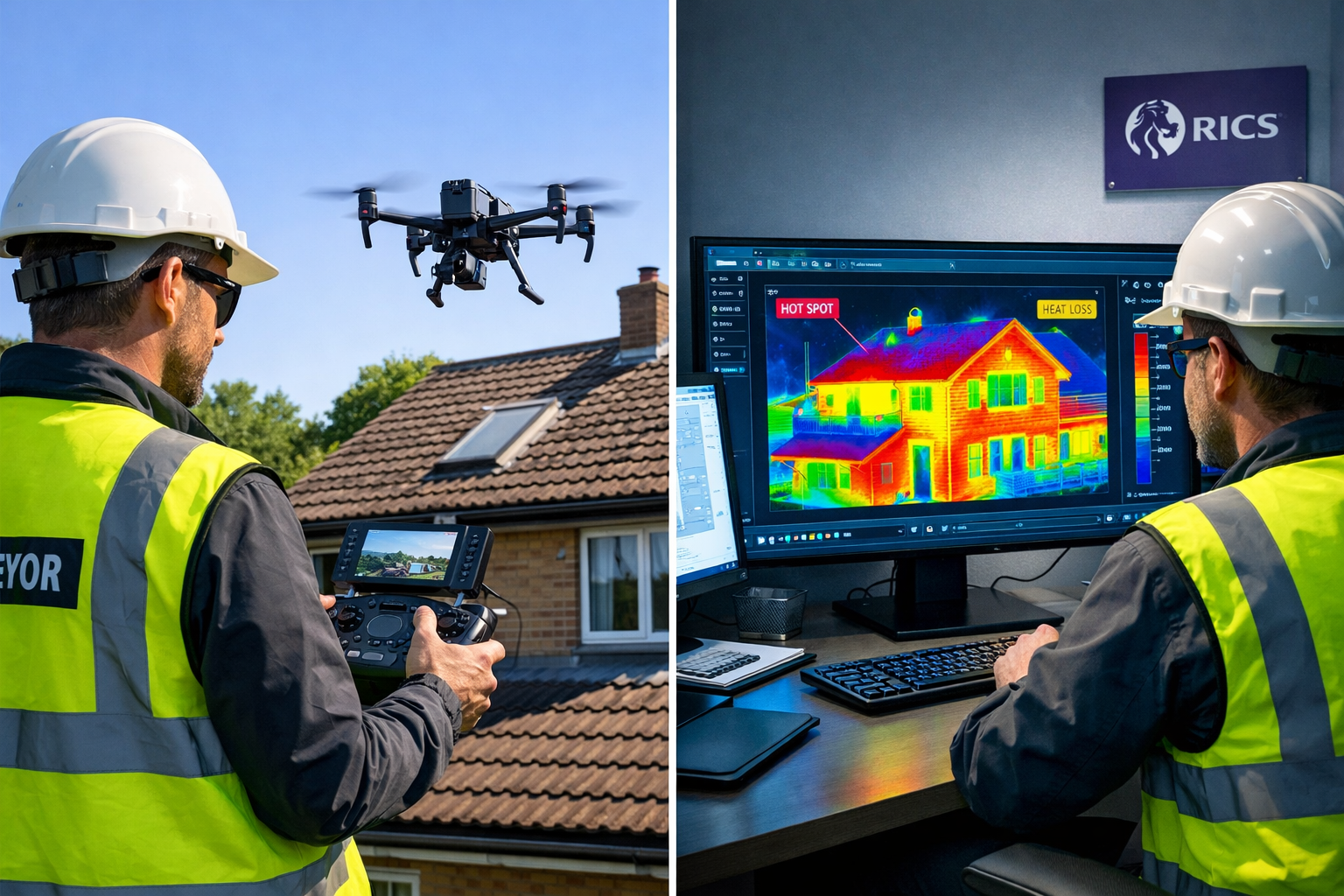
The RICS Home Survey Standard 2nd Edition Implementation: Building Surveyor Training and Client Communication for 2026 represents a watershed moment for technology adoption in residential surveying. The formal recognition of AI, drone inspections, and digital tools within the standard framework transforms these from optional enhancements to expected competencies [4].
Drone Inspection Integration
Unmanned Aerial Vehicle (UAV) surveys offer significant advantages for residential property inspection:
✅ Benefits:
- Safe inspection of high-level features (roofs, chimneys, tall buildings)
- High-resolution imagery capturing details invisible from ground level
- Reduced need for expensive access equipment
- Video documentation for client review
- Thermal imaging capability for heat loss detection
Implementation considerations:
- CAA (Civil Aviation Authority) registration and operator competency
- Insurance coverage for drone operations
- Weather and environmental limitations
- Privacy and neighbor notification protocols
- Integration with traditional inspection findings
For properties requiring comprehensive roof surveys, drone technology provides unprecedented detail while maintaining surveyor safety.
Artificial Intelligence Applications
AI-enhanced surveying tools are rapidly evolving from experimental to mainstream:
Current AI capabilities:
- Defect recognition algorithms that identify common issues (cracking patterns, dampness, structural movement)
- Comparative analysis drawing on databases of similar properties
- Risk assessment modeling predicting future maintenance requirements
- Report generation assistance with automated drafting of standard sections
- Image enhancement improving clarity of inspection photographs
"AI doesn't replace the surveyor's professional judgment—it augments it. The technology handles pattern recognition and data processing, freeing surveyors to focus on interpretation, client communication, and nuanced assessment." — Industry technology specialist
Critical limitations to communicate to clients:
- AI requires human verification and professional oversight
- Technology cannot replace physical inspection and tactile assessment
- Algorithms may not recognize unique or unusual defects
- Professional indemnity insurance typically requires human confirmation
Digital Reporting and Client Portals
The shift toward digital-first reporting addresses client expectations for immediate, accessible information:
Modern digital report features:
- Interactive elements allowing clients to click through to detailed explanations
- Embedded video from inspections showing key areas
- Photographic annotation with arrows and highlights
- Traffic light systems (red/amber/green) for quick condition assessment
- Hyperlinked recommendations to relevant guidance documents
- Cost estimation tools for identified repairs
- Mobile-responsive design for smartphone viewing
Understanding how long does a homebuyers survey take helps surveyors set realistic expectations while explaining how technology can accelerate report delivery without compromising quality.
Balancing Technology with Traditional Skills
The standard's technology provisions must be understood within proper context:
| Technology Enhances | Technology Cannot Replace |
|---|---|
| Visual documentation | Physical inspection and testing |
| Data analysis | Professional judgment |
| Client accessibility | Liability and accountability |
| Efficiency | Experience-based assessment |
| Consistency | Contextual understanding |
For practices offering different types of survey, technology integration should be scaled appropriately to each service level, with advanced tools reserved for comprehensive surveys where the investment is justified.
Client Communication Strategies for the New Standard
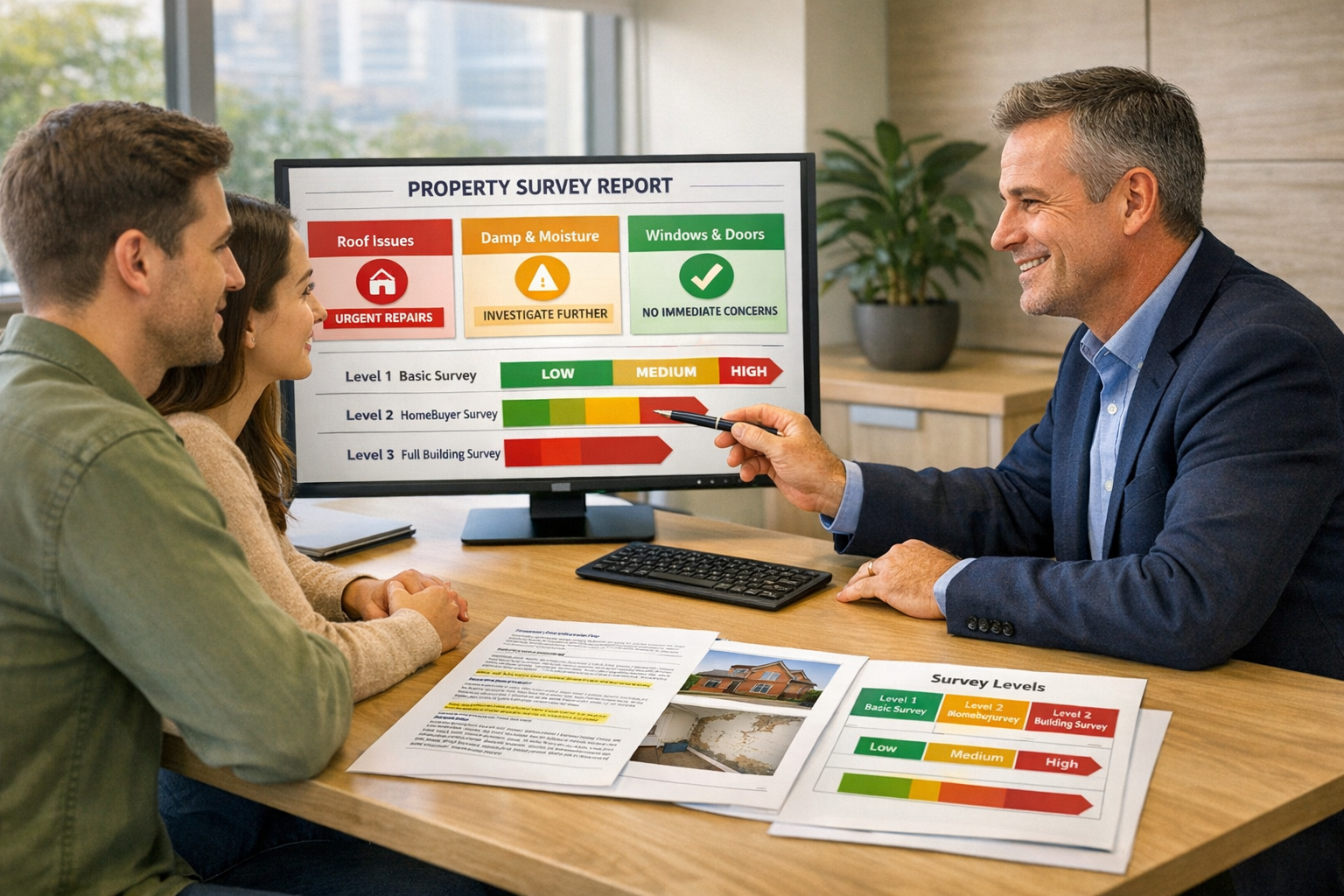
Perhaps the most challenging aspect of the RICS Home Survey Standard 2nd Edition Implementation: Building Surveyor Training and Client Communication for 2026 is effectively communicating changes to clients who may not understand—or care about—professional standards evolution. Success requires translating technical improvements into clear client benefits.
Explaining the Three Survey Levels
The new 'basic', 'intermediate', and 'advanced' terminology provides a foundation for clearer client conversations [3]:
Effective communication framework:
🏠 Basic Level Survey
- Best for: Newer properties (less than 10 years old), good condition, conventional construction
- Client benefit: "Cost-effective peace of mind for straightforward properties"
- What's included: Visual inspection of accessible areas, condition rating, essential defects identification
- What's excluded: Opening up, testing of services, detailed investigation
🏘️ Intermediate Level Survey
- Best for: Most residential transactions, properties up to 50 years old, standard construction
- Client benefit: "Comprehensive protection balancing thoroughness with value"
- What's included: Everything in Basic, plus checking of services (operating gas hobs, running taps), more detailed inspection, maintenance advice
- What's excluded: Full service testing, invasive investigation, specialist reports
🏛️ Advanced Level Survey
- Best for: Older properties, listed buildings, known defects, complex construction, high-value purchases
- Client benefit: "Maximum protection with detailed investigation and expert analysis"
- What's included: Everything in Intermediate, plus detailed defect investigation, building pathology assessment, comprehensive repair specifications
- May include: Specialist testing recommendations, access to concealed areas, detailed costings
This clear differentiation addresses the consultation feedback demanding greater clarity [2], while helping clients make informed decisions based on property characteristics and risk tolerance.
Communicating Value in a Competitive Market
With over 1,400 homeowners consulted during standard development [2], RICS understands client expectations. Surveyors must articulate value beyond price:
Value proposition strategies:
-
Qualification and experience emphasis
- RICS chartered status and professional indemnity insurance
- Years of experience and local market knowledge
- Continuing professional development commitment
-
Technology advantage explanation
- Drone footage providing comprehensive roof documentation
- Thermal imaging revealing hidden issues
- Digital reports with interactive features
-
Comparison with unregulated alternatives
- Professional standards compliance
- Independent regulatory oversight
- Recourse through RICS complaints procedure
-
Long-term cost savings demonstration
- Case studies of issues identified preventing costly surprises
- Negotiation leverage on purchase price
- Maintenance planning reducing emergency repairs
Understanding surveyor pricing helps clients contextualize fees within the broader property transaction costs.
Addressing Common Client Questions
"Why has the survey cost increased?"
- Enhanced inspection requirements under new standard
- Technology investment (drones, thermal imaging, digital platforms)
- Extended reporting with clearer explanations
- Updated regulatory compliance and insurance costs
"What's the difference between your survey and a cheaper alternative?"
- RICS professional standards compliance
- Chartered surveyor qualifications and experience
- Comprehensive professional indemnity insurance
- Independent regulatory oversight and complaints procedure
"Do I really need more than a basic survey?"
- Property age, condition, and construction type assessment
- Risk tolerance and budget for potential repairs
- Lender requirements and mortgage implications
- Long-term ownership plans and investment protection
"How long will my survey take?"
- Inspection duration varies by property size and survey level
- Report preparation typically 3-5 working days
- Rush services available for urgent transactions
- Quality cannot be compromised for speed
For clients seeking homebuyer survey services, clear communication about what's included at each level prevents misunderstandings and sets appropriate expectations.
Marketing the Enhanced Standard
Forward-thinking practices should position the new standard as a competitive advantage:
Marketing messages:
- "2026 RICS Standard Compliant—Enhanced Protection for Your Property Purchase"
- "Latest Technology Integration—Drone Surveys and AI-Enhanced Reporting"
- "Clearer Reports, Better Decisions—New Three-Level Survey System"
- "Independently Regulated Professional Standards—Your Peace of Mind Guaranteed"
Communication channels:
- Updated website content explaining the new standard
- Client information sheets comparing survey levels
- Video content demonstrating technology in action
- Social media posts highlighting enhanced capabilities
- Estate agent liaison explaining improvements
Implementation Challenges and Solutions
The path to full implementation by end of 2027 [1] presents practical challenges that surveyors must navigate strategically.
Time and Resource Constraints
Challenge: Enhanced inspection and reporting requirements increase time per survey, potentially reducing throughput.
Solutions:
- Implement efficient workflow systems and checklists
- Invest in voice-recording technology for on-site note-taking
- Utilize report templates with customizable sections
- Consider selective service offering (focusing on profitable survey levels)
- Adjust pricing to reflect true time investment
Technology Investment Costs
Challenge: Drone equipment, thermal imaging cameras, and digital platforms require significant capital investment.
Solutions:
- Phased technology adoption prioritizing highest-impact tools
- Equipment sharing arrangements with other local practices
- Leasing options for expensive equipment
- Specialist subcontractor relationships for occasional requirements
- Client education justifying technology-enhanced pricing
Maintaining Competitive Pricing
Challenge: SME concerns about prescriptiveness affecting competitive viability [2].
Solutions:
- Clear differentiation between survey levels allowing varied pricing
- Efficiency gains through technology offsetting time increases
- Value-based pricing emphasizing quality over cost
- Niche specialization in specific property types or survey levels
- Regional market positioning (e.g., chartered surveyors in Essex focusing on local expertise)
Client Resistance to Change
Challenge: Established clients accustomed to current survey formats may resist changes.
Solutions:
- Proactive communication explaining benefits before implementation
- Transitional period offering both formats
- Visual comparisons demonstrating enhanced clarity
- Testimonials from early adopters
- Gradual introduction of new features
Multi-Stage Review and Approval Process
The rigorous development process for the RICS Home Survey Standard 2nd Edition Implementation: Building Surveyor Training and Client Communication for 2026 ensures professional credibility and practical applicability [2]:
Review stages:
- Editorial Review → Clarity, consistency, and readability assessment
- Residential Professional Group Panel Review → Practitioner feedback on practical implementation
- Knowledge and Practice Committee Review → Technical accuracy and professional standards alignment
- Standards and Regulation Board Approval → Independent oversight ensuring rigorous standards
This multi-layered approach, with independent regulatory oversight through the Standards and Regulation Board, addresses consultation concerns while maintaining professional integrity [2].
Preparing Your Practice for 2027 Implementation
Immediate actions (2026):
✅ Q2 2026:
- Register for RICS training programs on the new standard
- Audit current technology capabilities and identify gaps
- Review and update client communication materials
- Assess pricing structure against enhanced requirements
✅ Q3 2026:
- Attend regional workshops and peer learning sessions
- Invest in priority technology (drones, thermal imaging, digital platforms)
- Develop new report templates aligned with three-tier structure
- Train staff on client communication strategies
✅ Q4 2026:
- Pilot new survey approaches with selected clients
- Gather feedback and refine processes
- Update marketing materials and website content
- Establish relationships with specialist subcontractors
Implementation phase (2027):
✅ Q1-Q2 2027:
- Full adoption of new standard upon publication
- Comprehensive staff training completion
- Client education campaign launch
- Process refinement based on early implementation experience
✅ Q3-Q4 2027:
- Performance review against new standard requirements
- Client satisfaction assessment
- Technology effectiveness evaluation
- Continuous improvement implementation
Conclusion
The RICS Home Survey Standard 2nd Edition Implementation: Building Surveyor Training and Client Communication for 2026 represents both a challenge and an opportunity for the residential surveying profession. With publication targeted for March 2026 and full implementation by end of 2027, the window for preparation is rapidly closing [1].
The new three-tier survey structure ('basic', 'intermediate', 'advanced') provides clearer client choices while addressing the consistent consultation feedback demanding greater clarity and conciseness [2][3]. Technology integration—including AI, drone inspections, and retrofit assessments—formally recognizes the tools modern surveyors need to deliver enhanced value [4].
Success requires a three-pronged approach:
- Comprehensive training in updated legislation, technology, and expanded service offerings
- Strategic technology investment balanced with business sustainability
- Effective client communication translating technical improvements into understandable benefits
The 1,000+ consultation comments analyzed by RICS, combined with input from 325 professionals and 1,400 homeowners, ensure the standard reflects real-world needs [2]. The independent oversight through the Standards and Regulation Board provides credibility while addressing SME viability concerns.
For building surveyors committed to professional excellence, the 2nd Edition offers a framework to differentiate services, justify pricing, and deliver enhanced client value. Those who embrace the changes proactively—investing in training, technology, and communication—will position their practices for sustained success in an evolving market.
Next Steps:
- Monitor RICS announcements for final publication date
- Register for accredited training programs as they become available
- Assess your practice's readiness across training, technology, and communication
- Engage with the Residential Professional Group for peer support
- Begin client education now to prepare your market for enhanced services
The future of residential surveying is clearer, more technologically advanced, and more client-focused. The time to prepare is now.
References
[1] 250922 The Home Survey Standard And Regulatory Scheme A Guide To The Rics Consultations – https://hqnetwork.co.uk/wp-content/uploads/2025/09/250922-The-Home-Survey-Standard-and-regulatory-scheme-A-guide-to-the-RICS-consultations.pdf
[2] Home Survey Standard 2nd Edition A Progress Update – https://www.rics.org/news-insights/home-survey-standard-2nd-edition-a-progress-update
[3] Understanding The Rics Home Survey Standard Proposal – https://www.rics.org/news-insights/understanding-the-rics-home-survey-standard-proposal
[4] Home Survey Standards – https://www.rics.org/profession-standards/rics-standards-and-guidance/sector-standards/building-surveying-standards/home-surveys/home-survey-standards