Energy bills are climbing, climate concerns are mounting, and property owners are searching for solutions. In 2026, the answer lies not in guesswork but in data-driven precision. Retrofitting Strategies Uncovered by Building Surveys: Maximizing ROI on Energy Efficiency Upgrades in 2026 represents a revolutionary approach that combines cutting-edge diagnostic technology with financial intelligence to transform buildings into energy-efficient assets.
Modern building surveys have evolved far beyond simple visual inspections. Today's RICS building surveys employ thermal imaging cameras, 3D modeling software, and AI-powered analytics to reveal hidden energy inefficiencies that traditional assessments miss. These advanced surveys don't just identify problems—they quantify them, providing homeowners and property managers with precise cost-benefit analyses and clear pathways to maximum return on investment.
With energy prices continuing their upward trajectory and government incentives making energy efficiency upgrades more attractive than ever, understanding how to leverage professional building surveys for retrofit planning has become essential for property owners who want to reduce costs, increase property values, and contribute to environmental sustainability.
Key Takeaways
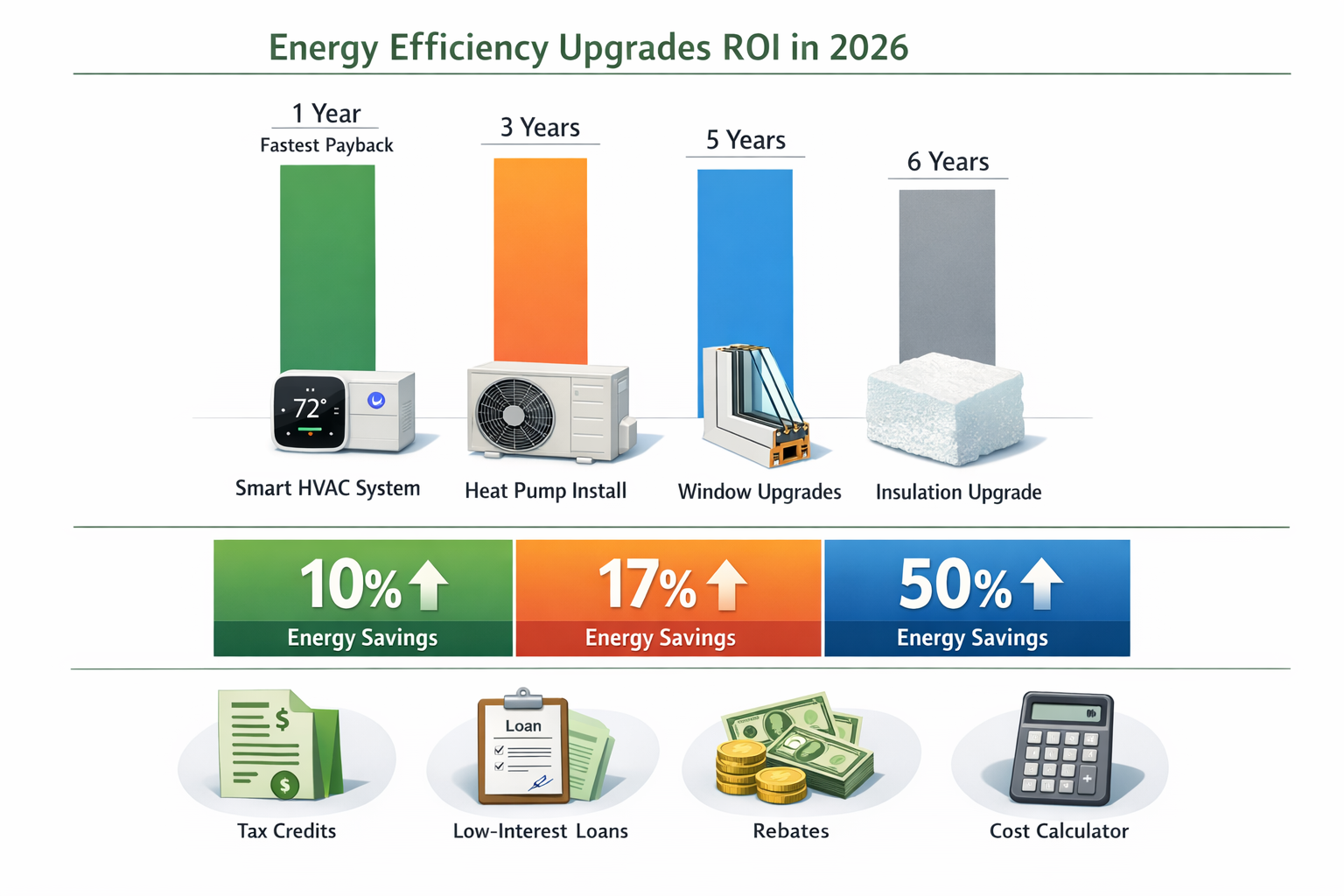
✅ Advanced building surveys using thermal imaging and 3D modeling can identify energy efficiency opportunities that deliver ROI within 1-3 years, with smart HVAC systems often paying for themselves within the first year of deployment.
✅ Heat pump conversions offer substantial returns, reducing energy consumption by 10-50% depending on the existing heating system, with buildings transitioning from fuel oil or propane achieving the highest savings.
✅ Comprehensive retrofit strategies that combine insulation upgrades, window improvements, and smart building technologies deliver compounding benefits that exceed the sum of individual improvements.
✅ Professional survey data enables access to financing options including tax credits, green mortgages, and energy efficiency loans that can offset upfront costs and accelerate payback periods.
✅ AI-driven building management systems integrated during retrofits enable continuous optimization, allowing properties to self-diagnose inefficiencies and correct them in real-time for ongoing savings.
How Modern Building Surveys Revolutionize Retrofit Planning
The Technology Behind Today's Energy Audits
The building survey industry has undergone a dramatic transformation in recent years. Gone are the days when surveyors relied solely on visual observations and basic measurements. In 2026, professional commercial building surveys and residential assessments incorporate sophisticated diagnostic tools that provide unprecedented insight into building performance.
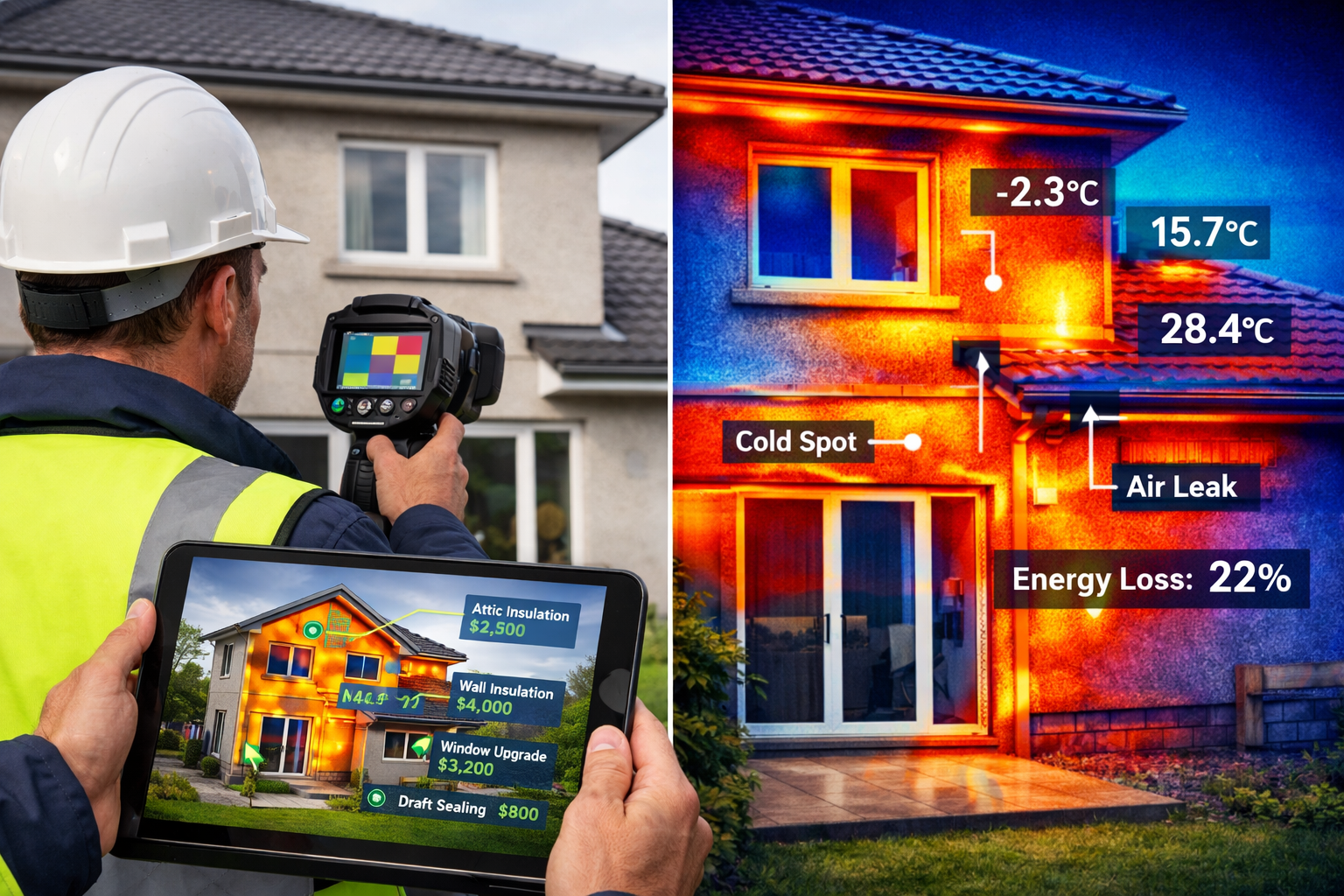
Thermal imaging technology stands at the forefront of this revolution. High-resolution infrared cameras detect temperature variations across building surfaces, revealing:
- 🔍 Air leakage points around windows, doors, and structural joints
- 🏠 Insulation gaps within walls, roofs, and floors
- 💨 HVAC duct inefficiencies that waste conditioned air
- 💧 Moisture intrusion that compromises insulation effectiveness
- ⚡ Electrical hotspots indicating energy waste and potential hazards
These thermal surveys create detailed heat maps that quantify energy loss in specific building zones, allowing retrofit planners to prioritize improvements based on actual performance data rather than assumptions.
3D modeling and digital twin technology take survey accuracy even further. Laser scanning equipment creates precise three-dimensional models of buildings, capturing every architectural detail down to the millimeter. These digital representations serve multiple purposes:
- Accurate volume calculations for heating and cooling load assessments
- Retrofit visualization showing how improvements will look before installation
- Integration planning for new systems within existing structures
- Performance simulation predicting energy savings from proposed upgrades
When combined with building information modeling (BIM) software, these 3D surveys enable engineers to test multiple retrofit scenarios virtually, identifying the optimal combination of improvements for maximum ROI before spending a single dollar on construction.
From Data to Dollars: Understanding Cost-Benefit Analysis
The true value of modern building surveys lies not just in identifying problems but in translating technical findings into financial intelligence. Professional surveyors in 2026 provide comprehensive cost-benefit analyses that include:
Energy Savings Projections: Using baseline consumption data and thermal performance measurements, surveyors calculate expected energy reductions for each proposed improvement. These projections account for local climate conditions, utility rates, and building usage patterns to provide realistic savings estimates.
Payback Period Calculations: Each retrofit option receives a detailed payback analysis showing how long it will take for energy savings to offset the initial investment. This critical metric allows property owners to prioritize improvements based on their financial goals and available capital.
Lifecycle Cost Analysis: Beyond simple payback periods, comprehensive surveys examine the total cost of ownership over the expected lifespan of each improvement, including maintenance requirements, replacement schedules, and performance degradation over time.
Property Value Enhancement: Energy-efficient buildings command premium prices in today's market. Survey reports quantify the expected increase in property value resulting from efficiency improvements, providing an additional return beyond utility savings.
For example, a typical RICS home survey might reveal that upgrading to a modern heat pump system requires an initial investment of £12,000 but will reduce heating costs by £2,400 annually, providing a five-year payback period while increasing property value by £15,000—a compelling financial case that few property owners would discover without professional assessment.
Accessing Financing Through Survey Documentation
One often-overlooked benefit of professional building surveys is their role in securing financing for energy efficiency upgrades. In 2026, numerous funding mechanisms exist to help property owners implement retrofit strategies, but most require documented evidence of potential savings and professional recommendations.
Government Tax Credits and Incentives: The Inflation Reduction Act and similar programs offer substantial tax credits for qualifying energy efficiency improvements. Professional survey documentation provides the technical justification needed to claim these credits, particularly for heat pump installations, insulation upgrades, and renewable energy integration.
Green Mortgages and Energy Efficiency Loans: Financial institutions increasingly offer specialized loan products for energy improvements, often at favorable interest rates. Lenders require professional assessments to verify that proposed improvements will deliver sufficient savings to justify the additional debt.
Utility Company Rebate Programs: Many utility providers offer rebates for efficiency upgrades that reduce peak demand. Survey documentation helps property owners identify qualifying improvements and provides the technical data utilities need to approve rebate applications.
Property Assessed Clean Energy (PACE) Financing: This innovative financing mechanism allows property owners to repay improvement costs through property tax assessments over extended periods. PACE programs require professional energy audits to determine eligible improvements and establish appropriate financing amounts.
By investing in a comprehensive building survey upfront, property owners gain access to financing options that can dramatically reduce out-of-pocket costs and accelerate the implementation of efficiency improvements that might otherwise remain unaffordable.
Retrofitting Strategies Uncovered by Building Surveys: Top ROI Opportunities in 2026
Smart HVAC Systems: The Fastest Path to Positive Returns
Space heating and cooling account for approximately 70% of total energy consumption in most residential and commercial buildings[3], making HVAC systems the logical starting point for efficiency improvements. Building surveys consistently identify HVAC optimization as the highest-ROI retrofit opportunity, with many properties achieving payback within the first year of deployment[3].
Smart Thermostat Integration: Modern smart thermostats go far beyond simple programmable models. Today's systems integrate with occupancy sensors, weather forecasting data, and utility demand response programs to optimize heating and cooling schedules automatically. Building surveys identify optimal placement locations for these devices and calculate expected savings based on current usage patterns.
Key benefits include:
- ⚙️ Automated temperature adjustments based on occupancy patterns
- 📊 Real-time energy consumption monitoring with detailed analytics
- 💰 Demand response participation earning credits during peak pricing periods
- 🌡️ Zone-based climate control eliminating waste in unused spaces
- 📱 Remote management capabilities allowing adjustments from anywhere
Heat Pump Conversion: The transition from traditional fossil fuel heating systems to electric heat pumps represents one of the most impactful retrofit strategies available in 2026. Research shows that converting from gas-fired or electric resistance systems to air-source heat pumps can reduce average energy consumption by 10% and greenhouse gas emissions by 9% across commercial real estate sectors[2].
The savings become even more dramatic when replacing older systems:
| Existing System Type | Average Energy Savings | GHG Emission Reduction |
|---|---|---|
| Natural Gas Heating | 17% | 15% |
| Fuel Oil Systems | 50% | 45% |
| Propane Heating | 50% | 43% |
| Electric Resistance | 10% | 9% |
Building surveys using thermal imaging can identify whether existing ductwork is suitable for heat pump integration or if modifications are needed, preventing costly surprises during installation. Advanced surveys also assess electrical service capacity to determine if panel upgrades are necessary to support heat pump operation.
Geothermal Heat Pump Technology: For properties with adequate land area, geothermal systems offer even greater efficiency than air-source alternatives. Thanks to favorable treatment in recent legislation, operators can claim tax credits for geothermal projects starting as late as 2034[2], making this technology increasingly accessible.
Building surveys for geothermal feasibility include:
- Soil composition analysis
- Ground temperature assessments
- Available land area calculations
- Drilling feasibility evaluations
- System sizing recommendations
Building Automation System (BAS) Integration: Advanced surveys identify opportunities to integrate HVAC controls with comprehensive building automation platforms. These systems use AI-driven analytics and predictive algorithms to optimize performance continuously, enabling buildings to "self-diagnose inefficiencies and correct them in real time, reducing energy consumption and extending asset life"[2].
Modern BAS platforms can:
- Predict equipment failures before they occur
- Optimize maintenance schedules based on actual usage
- Adjust settings automatically based on weather forecasts
- Integrate with renewable energy systems for maximum efficiency
- Provide detailed performance reports for ongoing optimization
Building Envelope Improvements: Insulation and Window Upgrades
While HVAC systems control energy consumption, the building envelope determines how much heating and cooling is actually needed. Structural surveys using thermal imaging consistently reveal that inadequate insulation and inefficient windows represent massive energy waste in older buildings.
Advanced Insulation Materials: The insulation industry has evolved dramatically, with new materials offering superior performance in minimal space. Building surveys help property owners select the optimal insulation strategy based on their specific building characteristics:
Aerogel Insulation: This remarkable material offers R-values up to R-10 per inch—nearly double that of traditional fiberglass. While more expensive initially, aerogel's superior performance makes it ideal for situations where space is limited or maximum efficiency is required[1].
Vacuum Insulation Panels (VIPs): These ultra-high-performance panels achieve R-values exceeding R-30 per inch by maintaining a near-vacuum between sealed layers. Building surveys identify locations where VIPs deliver maximum value, such as:
- Thin wall assemblies where traditional insulation is inadequate
- Roof systems with height restrictions
- Foundation walls with limited interior space
- Historic buildings requiring minimal visual impact
Spray Foam Solutions: Modern closed-cell spray foam provides both insulation and air sealing in a single application. Thermal imaging surveys reveal air leakage paths that spray foam can seal while simultaneously boosting R-values, delivering compounding benefits.
Strategic Insulation Placement: Not all insulation improvements deliver equal returns. Professional surveys use thermal imaging to identify the specific areas where additional insulation will have the greatest impact:
- Attic spaces (often the largest source of heat loss)
- Basement and foundation walls
- Exterior wall cavities
- Garage ceilings adjacent to living spaces
- Rim joists and band boards
Window and Glazing Upgrades: Windows represent a significant thermal weak point in most buildings, but modern glazing technology has transformed their performance potential. Building surveys assess current window efficiency and recommend targeted upgrades:
Low-Emissivity (Low-E) Coatings: These microscopically thin metallic layers control radiant heat transfer while allowing visible light to pass through. Different Low-E formulations optimize for either heat retention (cold climates) or heat rejection (warm climates)[5].
Insulated Glass Units (IGUs): Modern IGUs seal multiple panes with argon or krypton gas between them to slow heat transfer[5]. The denser molecular structure of these gases provides superior insulation compared to air-filled units.
Triple-Pane Technology: While double-pane windows remain standard, triple-pane units offer exceptional performance in extreme climates. Building surveys calculate whether the additional cost of triple-pane windows justifies the incremental energy savings based on local climate conditions.
Window Frame Materials: The frame contributes significantly to overall window performance. Surveys compare options including:
- Vinyl frames (excellent insulation, low maintenance)
- Fiberglass frames (superior strength and insulation)
- Wood frames (traditional aesthetics with good thermal performance)
- Aluminum frames with thermal breaks (durability with improved efficiency)
A comprehensive specific defect report focusing on thermal performance can identify which windows should be prioritized for replacement based on their current condition, thermal performance, and contribution to overall energy loss.
Distributed Energy Resources and Renewable Integration
The most forward-thinking retrofit strategies in 2026 go beyond reducing energy consumption to include on-site energy generation and storage. Building surveys now assess a property's potential for distributed energy resources (DERs) including solar panels, battery storage, and microgrid integration[2].
Rooftop Solar Assessment: Modern surveys evaluate multiple factors affecting solar viability:
- Available roof area and orientation
- Shading analysis throughout the year
- Structural capacity for panel weight
- Electrical system compatibility
- Grid connection requirements
- Expected energy production and financial returns
Professional surveyors use specialized software to model solar production based on actual roof geometry and local weather patterns, providing accurate projections of energy generation and cost savings.
Battery Storage Integration: Energy storage systems enable properties to:
- Store excess solar production for use during peak-rate periods
- Provide backup power during outages
- Participate in grid services programs for additional revenue
- Optimize energy costs through time-of-use arbitrage
Building surveys assess electrical infrastructure requirements for battery installation and calculate optimal storage capacity based on consumption patterns and utility rate structures.
Microgrid Capabilities: For larger properties or campus settings, surveys may evaluate microgrid potential—the ability to operate independently from the main electrical grid during outages while optimizing energy use across multiple buildings.
Electric Vehicle (EV) Charging Infrastructure: Forward-thinking surveys include EV charging readiness assessments, identifying optimal locations for charging stations and evaluating electrical capacity for future expansion as EV adoption accelerates.
Implementation Strategies: From Survey Results to Completed Retrofits
Prioritizing Improvements Based on Survey Findings
Professional building surveys typically identify numerous improvement opportunities, often more than property owners can address simultaneously. The key to maximizing ROI lies in strategic prioritization based on multiple factors:
Financial Criteria:
- Shortest payback period improvements implemented first
- Available capital matched to project costs
- Financing availability for larger projects
- Tax credit deadlines that create time-sensitive opportunities
Technical Dependencies:
- Foundational improvements completed before dependent upgrades
- System integration requirements addressed systematically
- Building access considerations minimizing disruption
- Seasonal timing for weather-dependent work
Occupancy Impact:
- Minimal disruption projects during occupied periods
- Major renovations scheduled during vacancies
- Phased implementation maintaining building functionality
- Tenant communication managing expectations
A typical prioritization strategy might follow this sequence:
- Quick wins with minimal cost and immediate savings (smart thermostats, LED lighting, air sealing)
- HVAC optimization delivering substantial ongoing savings
- Building envelope improvements reducing heating/cooling loads
- Renewable energy integration maximizing long-term value
- Advanced systems like AI-driven building automation
Working with Qualified Contractors and Specialists
Survey results are only valuable when properly implemented. Choosing the right property survey is the first step, but selecting qualified contractors to execute retrofit work is equally critical.
Contractor Selection Criteria:
✅ Relevant certifications (BPI, RESNET, manufacturer-specific credentials)
✅ Demonstrated experience with similar retrofit projects
✅ Insurance coverage including professional liability
✅ References from recent comparable projects
✅ Warranty offerings for materials and workmanship
✅ Quality control processes ensuring proper installation
Specialist Requirements: Different retrofit components require different expertise:
- HVAC contractors with heat pump installation experience
- Insulation specialists certified in advanced materials
- Window installers trained in high-performance glazing
- Electrical contractors qualified for solar and battery systems
- Building automation experts for smart system integration
Project Management: For comprehensive retrofits involving multiple trades, professional project management ensures:
- Coordinated scheduling minimizing delays
- Quality control across all work phases
- Budget management preventing cost overruns
- Communication between trades and property owners
- Compliance with building codes and permits
Monitoring and Verification: Ensuring Projected Savings Materialize
The final critical component of successful retrofitting strategies involves measurement and verification (M&V) to confirm that improvements deliver expected results. Advanced building surveys establish baseline performance metrics that enable accurate post-retrofit comparisons.
Performance Monitoring Systems:
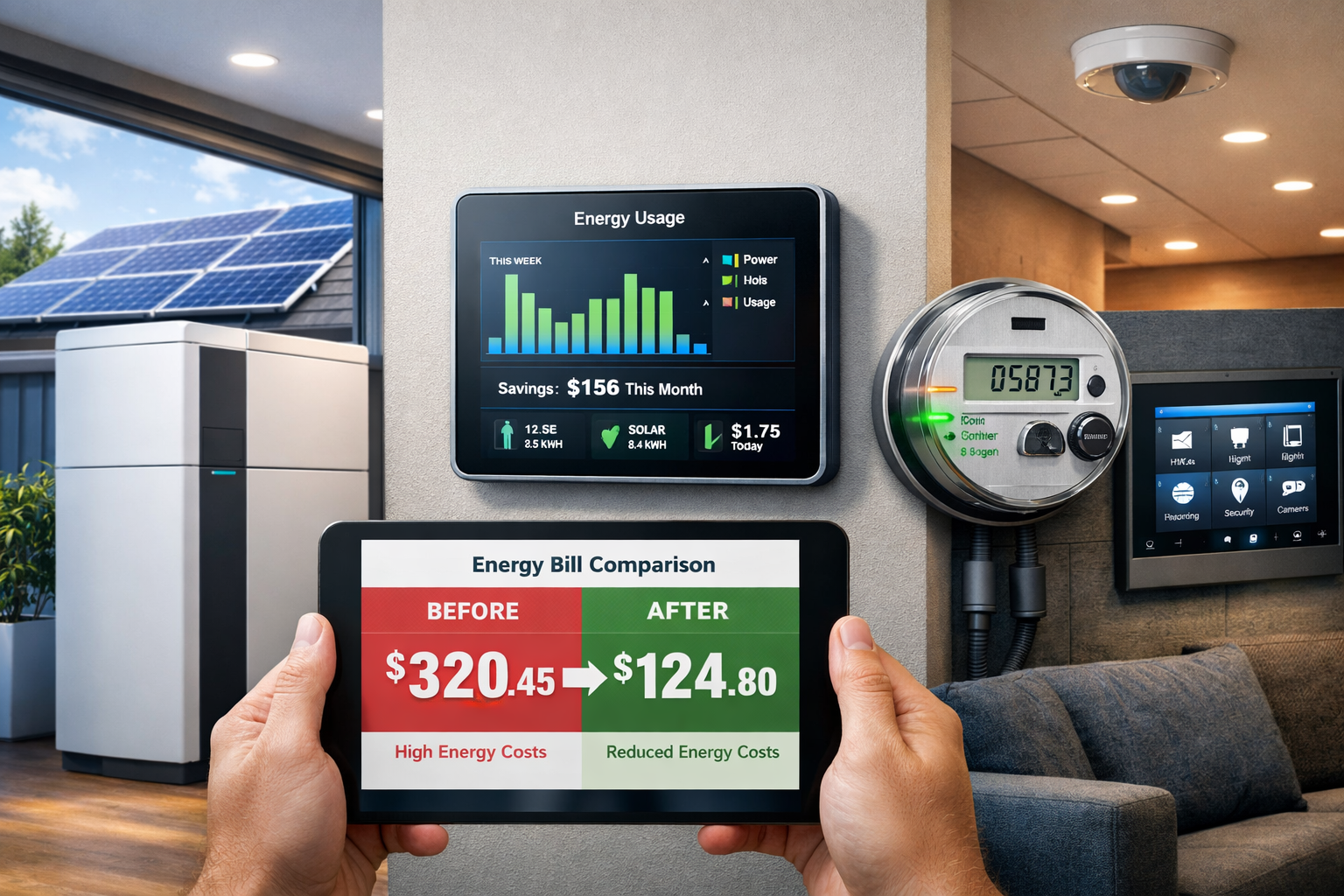
Modern retrofit projects incorporate real-time energy management systems with smart metering and sensor technology allowing continuous monitoring and adjustment of energy use[1]. These systems provide:
- Granular consumption data by system and time period
- Automated alerts when performance deviates from expectations
- Trend analysis identifying seasonal patterns and anomalies
- Benchmarking tools comparing performance to similar buildings
- Reporting dashboards visualizing savings and ROI progress
Commissioning and Optimization:
Post-installation commissioning ensures all systems operate as designed:
- Functional testing of all equipment and controls
- Calibration of sensors and monitoring devices
- Training for building operators and occupants
- Documentation of system settings and maintenance requirements
- Performance verification against design specifications
Ongoing Optimization:
Energy efficiency isn't a one-time achievement but an ongoing process. AI-driven platforms enable buildings to continuously optimize performance by:
- Learning occupancy patterns and adjusting accordingly
- Predicting equipment maintenance needs before failures occur
- Adapting to changing weather conditions automatically
- Identifying new efficiency opportunities as they emerge
- Providing data for future retrofit planning
ROI Tracking and Reporting:
Comprehensive tracking systems document actual financial returns:
| Metric | Pre-Retrofit | Post-Retrofit | Improvement |
|---|---|---|---|
| Monthly Energy Cost | £450 | £290 | 36% reduction |
| Annual kWh Consumption | 18,500 | 12,100 | 35% reduction |
| Carbon Emissions (tonnes) | 4.2 | 2.1 | 50% reduction |
| Property Value | £385,000 | £410,000 | £25,000 increase |
This data not only validates the initial investment but also informs future retrofit decisions and provides documentation for tax credits, rebates, and property valuations.
Financial Mechanisms and Funding Strategies for 2026 Retrofits
Government Incentives and Tax Credits
The financial landscape for energy efficiency improvements has never been more favorable. In 2026, multiple government programs provide substantial financial support for retrofit projects identified through professional building surveys.
Federal Tax Credits:
The Inflation Reduction Act extended and expanded tax credits for energy efficiency improvements, including:
- Heat pump installations: Up to 30% of project costs
- Insulation and air sealing: Up to £1,200 annually
- High-efficiency windows and doors: Up to £600 annually
- Home energy audits: Up to £150 credit
- Solar panel systems: 30% of total system cost
- Battery storage: 30% when installed with solar
These credits apply to both residential and commercial properties, with some programs allowing credits to be claimed for projects starting as late as 2034[2].
State and Local Programs:
Many jurisdictions offer additional incentives stacking with federal programs:
- Additional tax credits for efficiency improvements
- Property tax exemptions for renewable energy systems
- Expedited permitting for qualifying projects
- Grants for low-income property owners
- Performance-based incentives rewarding actual energy savings
Utility Company Rebates:
Electric and gas utilities offer rebates for improvements that reduce peak demand:
- HVAC system upgrades: £500-£2,000 depending on efficiency
- Insulation improvements: £0.50-£1.50 per square foot
- Smart thermostat installation: £50-£150 per device
- Window replacements: £50-£100 per window
- Heat pump water heaters: £300-£600 per unit
Professional survey documentation is essential for accessing these rebates, as utilities require verification that improvements meet minimum efficiency standards.
Green Financing Options
Beyond incentives and rebates, specialized financing products make comprehensive retrofits accessible even for property owners with limited available capital.
Energy Efficiency Mortgages (EEMs):
These specialized mortgages allow homebuyers to finance energy improvements as part of their home purchase:
- Higher loan amounts accounting for improvement costs
- Favorable terms recognizing reduced operating costs
- Streamlined approval for surveyor-recommended improvements
- No additional down payment required for efficiency upgrades
Property Assessed Clean Energy (PACE) Financing:
PACE programs offer unique advantages:
- Long repayment terms (10-25 years) matching improvement lifespans
- Repayment through property taxes simplifying administration
- Transferable to new owners if property is sold
- No credit score requirements for many programs
- 100% financing available for qualifying improvements
Green Home Improvement Loans:
Specialized lenders offer unsecured loans for efficiency improvements:
- Competitive interest rates for energy projects
- Flexible terms from 3-15 years
- Quick approval based on survey documentation
- No home equity requirement preserving borrowing capacity
Commercial Energy Efficiency Loans:
Business property owners can access:
- SBA-backed loans for efficiency improvements
- Commercial PACE programs for larger projects
- Equipment financing for HVAC and renewable systems
- Energy savings agreements where third parties finance improvements in exchange for a share of savings
Calculating True ROI: Beyond Simple Payback
While payback period provides a useful initial metric, sophisticated property owners in 2026 evaluate retrofits using more comprehensive financial analysis:
Net Present Value (NPV):
NPV calculations account for the time value of money, discounting future savings to present-day value. This approach reveals whether retrofit investments outperform alternative uses of capital.
Internal Rate of Return (IRR):
IRR expresses the annualized return on retrofit investments, enabling direct comparison with other investment opportunities. Energy efficiency improvements often deliver IRRs of 15-30%, competitive with many traditional investments while carrying lower risk.
Total Cost of Ownership (TCO):
TCO analysis examines all costs over the improvement's lifespan:
- Initial purchase and installation
- Operating and maintenance costs
- Energy consumption
- Expected replacement timing
- Disposal or recycling costs
This comprehensive view often reveals that higher-efficiency options with greater upfront costs deliver superior value over their lifetime.
Property Value Enhancement:
Energy-efficient buildings command premium prices in today's market. Studies consistently show that:
- Energy-efficient homes sell for 3-5% more than comparable properties
- Green certifications (LEED, Energy Star) add 7-10% to property values
- Solar installations increase home values by approximately the cost of the system
- Modern HVAC systems recover 60-80% of their cost in property value
When factoring property value enhancement into ROI calculations, many retrofits become financially compelling even before considering energy savings.
Emerging Technologies Shaping Retrofit Strategies in 2026
AI and Machine Learning in Building Performance
Artificial intelligence has transformed how buildings operate and how retrofit strategies are developed. In 2026, AI-driven platforms enable unprecedented levels of optimization and prediction[1].
Predictive Maintenance:
Machine learning algorithms analyze equipment performance data to predict failures before they occur:
- HVAC systems: Identifying degrading components weeks before failure
- Building envelope: Detecting developing air leaks or insulation issues
- Electrical systems: Monitoring for anomalies indicating potential problems
- Plumbing systems: Identifying leak risks and inefficient fixtures
This predictive capability prevents costly emergency repairs while ensuring systems operate at peak efficiency.
Automated Optimization:
AI systems continuously adjust building operations based on:
- Weather forecasts: Pre-cooling or pre-heating before temperature changes
- Occupancy predictions: Adjusting systems based on expected usage patterns
- Utility rate structures: Shifting consumption to lower-rate periods
- Equipment performance: Compensating for degrading efficiency automatically
These systems enable buildings to "self-diagnose inefficiencies and correct them in real time, reducing energy consumption and extending asset life"[2].
Retrofit Planning Intelligence:
Advanced AI platforms analyze building survey data to:
- Identify optimal improvement combinations
- Predict actual energy savings with greater accuracy
- Recommend implementation sequencing
- Adjust recommendations based on changing energy prices
- Simulate multiple scenarios for comparison
Advanced Materials and Construction Techniques
Material science innovations continue to expand retrofit possibilities:
Phase-Change Materials (PCMs):
These materials absorb and release thermal energy as they change state, effectively storing heating or cooling:
- Wall integration: Reducing temperature swings and HVAC loads
- Ceiling applications: Moderating peak temperatures
- Underfloor systems: Storing overnight cooling for daytime use
Smart Glass Technology:
Electrochromic windows automatically adjust their tint based on sunlight intensity:
- Glare reduction without blinds or shades
- Solar heat gain control reducing cooling loads
- Daylight optimization improving occupant comfort
- Integration with building automation for coordinated operation
Graphene-Enhanced Insulation:
This revolutionary material offers exceptional thermal performance in minimal thickness:
- Ultra-thin profiles ideal for space-constrained applications
- Superior R-values exceeding traditional materials
- Moisture resistance preventing degradation
- Long-term stability maintaining performance for decades
Integration of Renewable Energy and Storage
The convergence of efficiency improvements and renewable energy creates synergistic benefits:
Solar + Storage Systems:
Modern retrofit strategies increasingly combine solar generation with battery storage:
- Peak shaving: Using stored energy during high-rate periods
- Backup power: Maintaining critical systems during outages
- Grid services: Earning revenue through demand response participation
- Optimized self-consumption: Maximizing use of solar production
Vehicle-to-Building (V2B) Technology:
Electric vehicles are evolving into mobile energy storage:
- Bidirectional charging: Using EV batteries to power buildings during peak periods
- Emergency backup: Providing days of backup power from vehicle batteries
- Load balancing: Charging vehicles during low-rate periods, discharging during peaks
- Grid stabilization: Participating in utility programs for additional revenue
Community Solar and Shared Resources:
For properties unsuitable for on-site solar, community programs offer alternatives:
- Virtual net metering: Receiving credits for off-site solar production
- Shared storage: Accessing battery systems without on-site installation
- Microgrid participation: Joining neighborhood energy networks
- Collective purchasing: Reducing costs through group procurement
Case Studies: Real-World Retrofit Success Stories
Residential Retrofit: Victorian Home Transformation
A 1890s Victorian home in Southeast England underwent comprehensive retrofitting following a detailed RICS home survey that identified multiple efficiency opportunities.
Survey Findings:
- Minimal loft insulation (50mm original)
- Single-pane sash windows throughout
- Aging gas boiler (62% efficiency)
- Significant air leakage around doors and floors
- Solid wall construction with no cavity insulation
Implemented Improvements:
- Loft insulation upgrade to 300mm (£1,800)
- Secondary glazing preserving historic windows (£8,500)
- Air-source heat pump replacing gas boiler (£11,000)
- External wall insulation with breathable render (£14,500)
- Smart heating controls with zone management (£1,200)
Total Investment: £37,000
Annual Energy Savings: £2,850
Simple Payback: 13 years
With Incentives: £11,200 in grants and tax credits
Adjusted Payback: 9 years
Property Value Increase: £45,000
True ROI: 121% including property value enhancement
Commercial Property: Office Building Modernization
A 1970s office building underwent retrofit planning based on comprehensive thermal imaging and energy modeling.
Survey Findings:
- Inefficient packaged HVAC units (original 1975 equipment)
- Minimal roof insulation
- Aluminum-frame single-pane windows
- No building automation or controls
- Flat roof suitable for solar installation
Implemented Strategy:
- VRF heat pump system replacing packaged units (£145,000)
- Roof insulation and membrane upgrade (£65,000)
- Window replacement with high-performance glazing (£180,000)
- Building automation system with AI optimization (£45,000)
- 100kW solar array with battery storage (£180,000)
Total Investment: £615,000
Annual Energy Savings: £89,500
Annual Solar Revenue: £12,800
Combined Annual Benefit: £102,300
Simple Payback: 6 years
Tenant Retention Improvement: 40% reduction in turnover
Rental Rate Premium: 12% above comparable buildings
Multi-Family Building: Apartment Complex Upgrade
A 48-unit apartment building implemented smart HVAC retrofits following survey recommendations.
Survey Findings:
- Individual electric resistance heating in units
- No central controls or monitoring
- Poor building envelope performance
- Outdated domestic hot water system
Phased Implementation:
Phase 1 (Year 1):
- Smart thermostats in all units (£7,200)
- Central monitoring system (£12,000)
- Air sealing and weatherization (£18,500)
Phase 2 (Year 2):
- Central heat pump system (£185,000)
- Domestic hot water heat pump (£35,000)
- Common area LED lighting (£8,500)
Results:
- Phase 1 ROI: 11 months
- Overall Payback: 4.2 years
- Tenant Satisfaction: 35% improvement
- Operating Cost Reduction: 42%
- Property Value Increase: £325,000
These case studies demonstrate how professional building surveys enable data-driven retrofit decisions that deliver measurable financial returns while improving comfort, sustainability, and property values.
Common Pitfalls and How to Avoid Them
Insufficient Initial Assessment
The Problem: Property owners sometimes attempt retrofits without comprehensive surveys, relying on contractor recommendations or generic advice.
The Consequence: Improvements address symptoms rather than root causes, delivering disappointing results and wasting capital on low-impact upgrades.
The Solution: Invest in thorough structural surveys using thermal imaging and performance modeling before committing to improvements. The survey cost typically represents 1-3% of total retrofit investment but ensures the remaining 97-99% is spent effectively.
Ignoring System Interactions
The Problem: Treating building systems as independent rather than interconnected components.
The Consequence: Installing a high-efficiency HVAC system in a building with poor envelope performance forces the equipment to work harder than necessary, negating much of the efficiency gain.
The Solution: Follow survey recommendations that address improvements in optimal sequence:
- Envelope first: Reduce loads through insulation and air sealing
- Systems second: Right-size and install efficient equipment for reduced loads
- Controls third: Optimize operation of efficient systems
- Generation last: Add renewable energy after minimizing consumption
Overlooking Maintenance Requirements
The Problem: Focusing solely on installation costs without considering ongoing maintenance needs.
The Consequence: Advanced systems deteriorate rapidly without proper maintenance, losing efficiency and requiring premature replacement.
The Solution: Include maintenance planning in retrofit strategies:
- Budget for annual professional servicing
- Train building operators on system requirements
- Implement preventive maintenance schedules
- Monitor performance to detect degradation early
Inadequate Contractor Selection
The Problem: Choosing contractors based primarily on lowest bid rather than qualifications and experience.
The Consequence: Poor installation quality undermines equipment performance, voiding warranties and failing to deliver projected savings.
The Solution: Evaluate contractors on:
- Relevant certifications and training
- Demonstrated experience with similar projects
- Quality of references from recent clients
- Warranty offerings and post-installation support
- Understanding of survey recommendations
Failing to Monitor and Verify
The Problem: Assuming improvements will automatically deliver projected savings without verification.
The Consequence: Underperforming systems go undetected, leaving money on the table and failing to identify installation defects during warranty periods.
The Solution: Implement measurement and verification protocols:
- Establish baseline consumption before retrofits
- Install monitoring equipment during improvements
- Compare actual to projected performance monthly
- Address discrepancies promptly
- Document results for future planning
Conclusion: Taking Action on Retrofitting Strategies in 2026
The convergence of advanced building survey technology, favorable financing mechanisms, and proven retrofit strategies has created an unprecedented opportunity for property owners in 2026. Retrofitting Strategies Uncovered by Building Surveys: Maximizing ROI on Energy Efficiency Upgrades in 2026 represents not just a pathway to reduced energy costs but a comprehensive approach to enhancing property values, improving occupant comfort, and contributing to environmental sustainability.
The evidence is clear: properties that undergo professional surveys followed by strategic retrofits consistently outperform those that don't. Smart HVAC systems deliver payback within the first year[3]. Heat pump conversions reduce energy consumption by 10-50% depending on existing systems[2]. Advanced insulation and window upgrades eliminate thermal waste that no HVAC system can overcome[1][5]. AI-driven building automation enables continuous optimization that compounds savings year after year[2].
Yet success requires more than simply implementing the latest technologies. The most effective retrofit strategies begin with comprehensive building surveys that employ thermal imaging, 3D modeling, and performance analysis to identify specific opportunities tailored to each property's unique characteristics. These surveys provide the cost-benefit analyses and technical documentation needed to access financing, prioritize improvements, and ensure maximum return on investment.
Your Next Steps
For Homeowners:
- Schedule a comprehensive building survey using thermal imaging to identify efficiency opportunities specific to your property
- Request detailed cost-benefit analysis for recommended improvements including payback periods and available incentives
- Explore financing options including green mortgages, PACE programs, and utility rebates to minimize upfront costs
- Prioritize improvements based on ROI, starting with quick wins like smart thermostats before major investments
- Implement monitoring systems to verify that improvements deliver projected savings
For Commercial Property Owners:
- Commission professional energy audits for all properties in your portfolio
- Develop multi-year retrofit plans that phase improvements to minimize disruption while maximizing returns
- Investigate commercial financing including PACE programs and energy savings agreements
- Integrate retrofit planning with capital improvement schedules to leverage synergies
- Market efficiency improvements to attract and retain quality tenants willing to pay premium rates
For Property Managers:
- Advocate for professional surveys demonstrating ROI potential to property owners
- Build relationships with qualified contractors experienced in efficiency retrofits
- Educate tenants about efficiency features and optimal system operation
- Monitor performance continuously to identify optimization opportunities
- Document results to justify future improvement investments
The retrofitting strategies uncovered by modern building surveys offer proven pathways to substantial financial returns, enhanced property values, and reduced environmental impact. In 2026's environment of rising energy costs and increasing climate awareness, property owners who leverage professional surveys to guide strategic efficiency improvements will gain competitive advantages that compound over time.
The question isn't whether to invest in energy efficiency retrofits—the financial case is overwhelming. The question is whether to proceed strategically, guided by professional survey data and comprehensive planning, or to stumble forward with piecemeal improvements that deliver disappointing results.
Professional building surveys provide the roadmap. Proven technologies provide the tools. Favorable financing provides the means. The only missing element is action.
Begin your retrofit journey today by scheduling a comprehensive building survey that will reveal your property's hidden potential for energy savings, enhanced comfort, and maximized return on investment. The technology exists. The financing is available. The returns are proven. The time to act is now.
References
[1] Construction Industry Trends For 2026 Include Smart Buildings And Ai Applications – https://nawic.org/construction-industry-trends-for-2026-include-smart-buildings-and-ai-applications/
[2] facilitiesdive – https://www.facilitiesdive.com/news/electrification-outlook-trends-heat-pumps-ev-/810541/
[3] 10 Energy Efficiency Trends Multifamily Buildings 2026 – https://verdant.copeland.com/blog/10-energy-efficiency-trends-multifamily-buildings-2026
[4] Top Home Building Trends For 2026 What Homeowners Are Asking For Now – https://www.blackrockhomebuilders.com/2026/01/21/top-home-building-trends-for-2026-what-homeowners-are-asking-for-now/
[5] 4 Sustainable Construction Trends 2026 – https://trellis.net/article/4-sustainable-construction-trends-2026/
[6] 165810 Six Trends Reshaping Building Performance In 2026 – https://www.achrnews.com/articles/165810-six-trends-reshaping-building-performance-in-2026
[7] 2026 Trends And Predictions For Smart Sustainable Spaces – https://www.johnsoncontrols.com/building-insights/2026/thought-leadership/2026-trends-and-predictions-for-smart-sustainable-spaces
[8] Smart Building Technology 2026 Outlook – https://www.cohesionib.com/post/smart-building-technology-2026-outlook
[9] Five Energy Trends That Will Shape 2026 – https://www.reccessary.com/en/insight/five-energy-trends-that-will-shape-2026