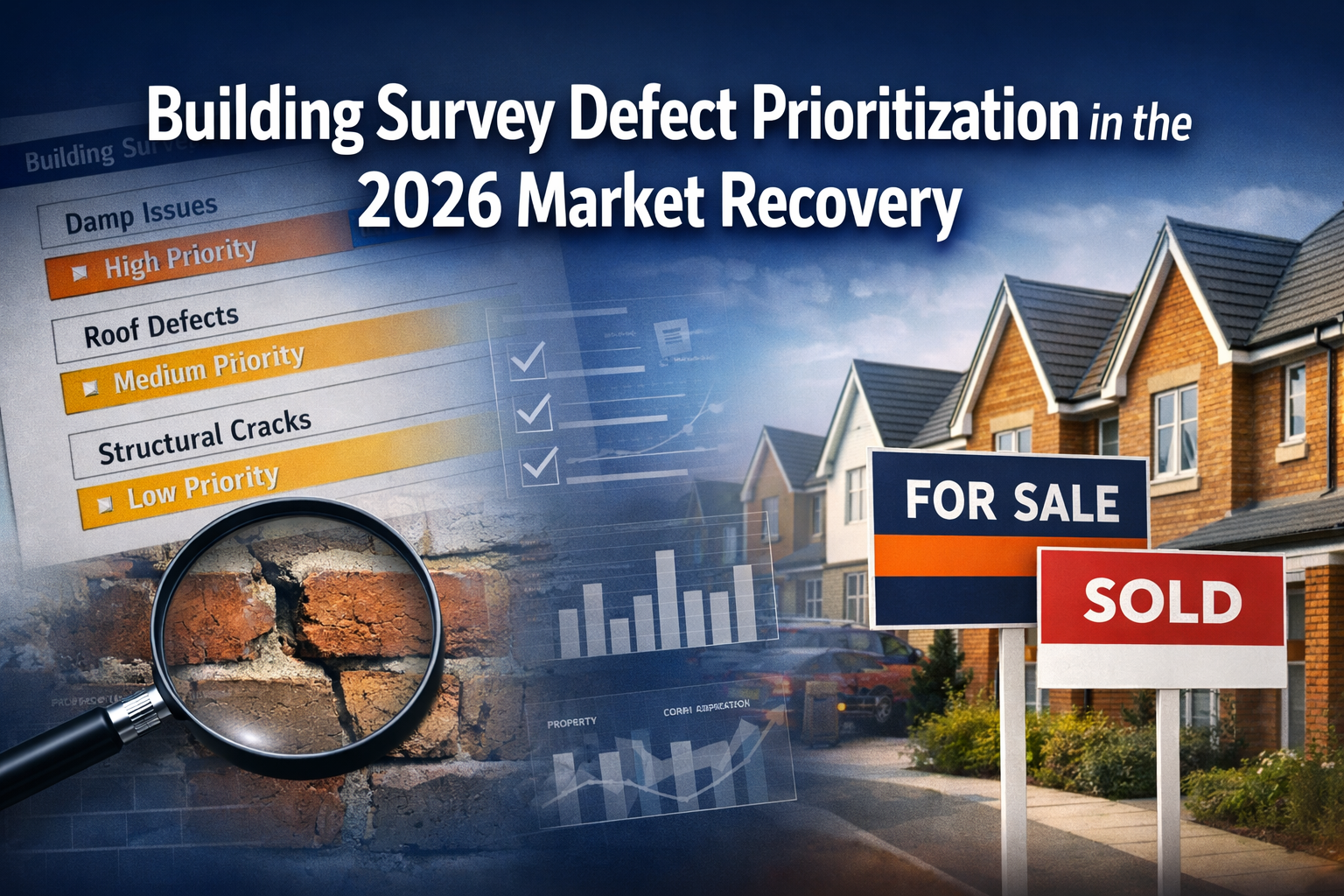

The landscape of property surveying has undergone a seismic shift in 2026. At the start of this year, the RICS Quality in Retrofit Summit brought together industry leaders, members, and stakeholders to address one of the most pressing challenges facing property professionals: how to integrate comprehensive retrofit guidance into building surveys while maintaining the highest quality standards.[3] This watershed moment signals a fundamental transformation in how surveyors approach their work, moving beyond traditional structural assessments to become trusted advisors on energy efficiency upgrades and sustainability.
For property buyers navigating an increasingly complex market, understanding Retrofit Assessment in Building Surveys: Guiding Buyers Through Energy Efficiency Upgrades as RICS Quality Standards Evolve has become essential. With new regulations tightening, energy costs rising, and buyer expectations shifting dramatically, the role of the chartered surveyor has expanded to encompass detailed retrofit planning, cost-benefit analysis, and strategic guidance on government incentive schemes.
Key Takeaways
✅ RICS strengthened home survey standards in 2026 following the Quality in Retrofit Summit, requiring surveyors to provide comprehensive retrofit guidance including EPC band analysis, cost-benefit assessments, and government incentive information.[3]
✅ Energy efficiency directly impacts property values, with EPC A-rated properties commanding a 2.9% premium per square meter, while regulatory pressures like UK MEES and France's LOI Climate resilience law create significant risks for poorly performing buildings.[3]
✅ 88% of occupiers prioritize high energy efficiency in buildings, making retrofit assessments a critical differentiator for surveying practices and essential information for informed buyer decisions.[2]
✅ New ESG sustainability standards for commercial valuations became effective April 30, 2026, requiring all RICS members to reflect environmental, social, and governance factors in their assessments.[1]
✅ Significant gaps remain between policy and practice, with only 16% of construction professionals reporting that carbon measurement significantly affects material choices, despite widespread recognition of the importance of operational and embodied carbon reduction.[2]
Understanding the Evolution of RICS Quality Standards for Retrofit Assessment
The 2026 RICS Quality in Retrofit Summit: A Turning Point
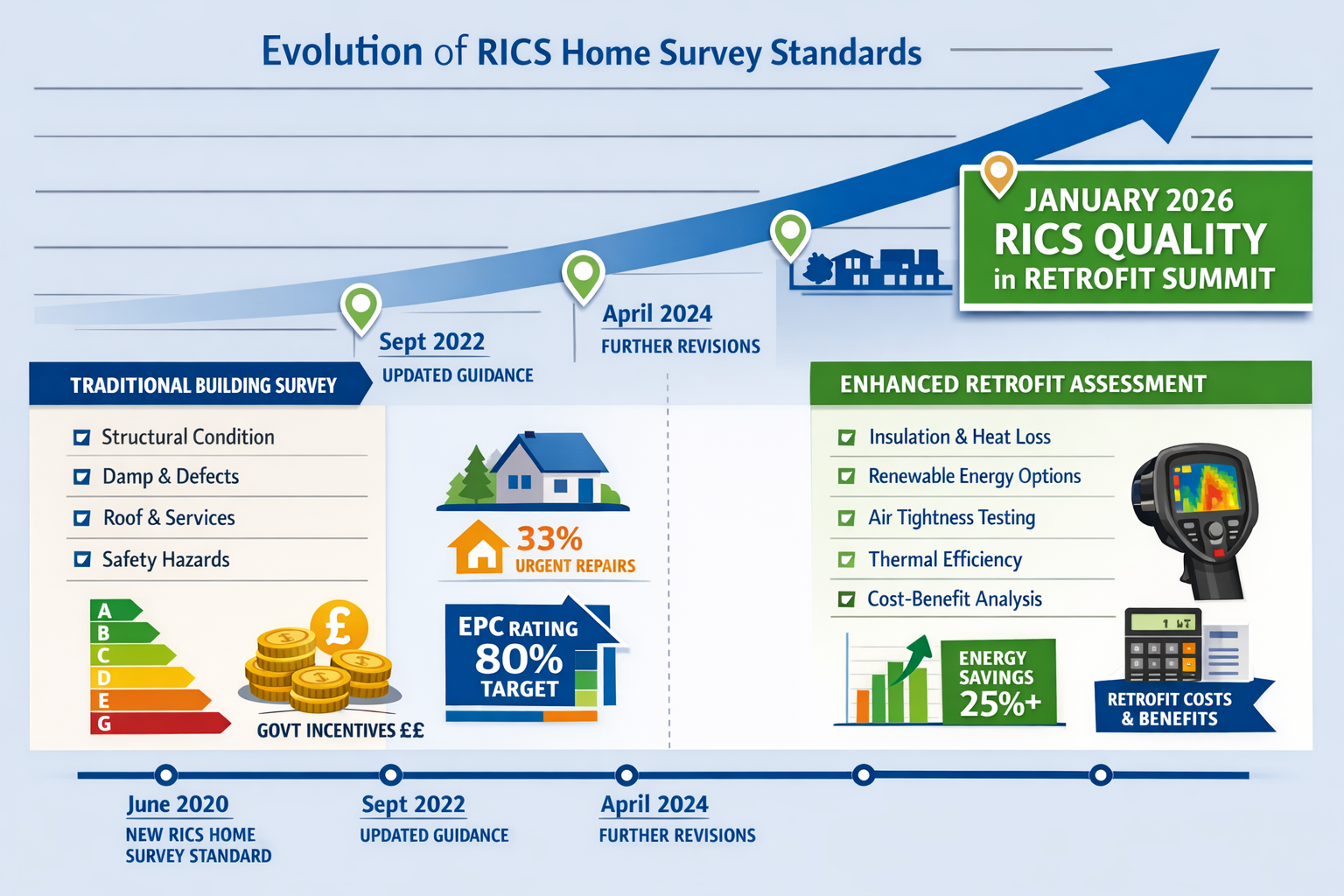
The RICS Quality in Retrofit Summit held in January 2026 marked a pivotal moment for the surveying profession. Organized in partnership with the Retrofit Academy, this gathering addressed the urgent need to standardize retrofit quality and integrate energy efficiency considerations into mainstream building survey practice.[3] The summit responded to mounting pressure from multiple stakeholders—homebuyers demanding transparency, lenders requiring risk assessment, and regulators enforcing increasingly stringent energy performance standards.
RICS membership feedback had already prompted the organization to strengthen home survey standards, with updates developed to provide further clarification reflecting consumer insights and technological changes.[1][3] These enhanced standards recognize that modern property buyers require far more than traditional structural assessments; they need actionable intelligence on energy efficiency upgrades, retrofit costs, and long-term sustainability planning.
Key Changes in RICS Home Survey Standards
The updated RICS home survey standards now explicitly require chartered surveyors to:
📋 Evaluate current EPC ratings and identify specific deficiencies affecting energy performance
📋 Provide retrofit recommendations tailored to the property's construction type, age, and current condition
📋 Estimate costs and payback periods for recommended energy efficiency upgrades
📋 Identify applicable government incentive schemes including ECO4, Boiler Upgrade Scheme, and regional grant programs
📋 Assess regulatory compliance risks related to MEES and future performance standards
📋 Prioritize interventions based on cost-effectiveness, technical feasibility, and buyer objectives
These requirements represent a significant expansion of the surveyor's traditional role. Where previously a Level 2 Homebuyer Survey might have noted "poor insulation" as an observation, the 2026 standards demand detailed analysis of insulation types, thermal bridging, recommended upgrades, estimated costs, and projected energy savings.
The Commercial Property ESG Standard
Complementing the residential survey updates, RICS introduced a new ESG and sustainability standard for commercial property valuations that became effective April 30, 2026.[1] This standard requires all RICS members and firms undertaking commercial property valuations globally to reflect environmental, social, and governance factors where these are significant to valuation.
The commercial standard creates important precedents for residential practice:
- Mandatory consideration of energy performance in valuation methodology
- Disclosure requirements for sustainability risks and opportunities
- Standardized reporting frameworks for ESG factors
- Professional competence requirements for assessing retrofit potential
Retrofit Assessment in Building Surveys: Guiding Buyers Through Energy Efficiency Upgrades as RICS Quality Standards Evolve in Practice
The Comprehensive Retrofit Assessment Framework
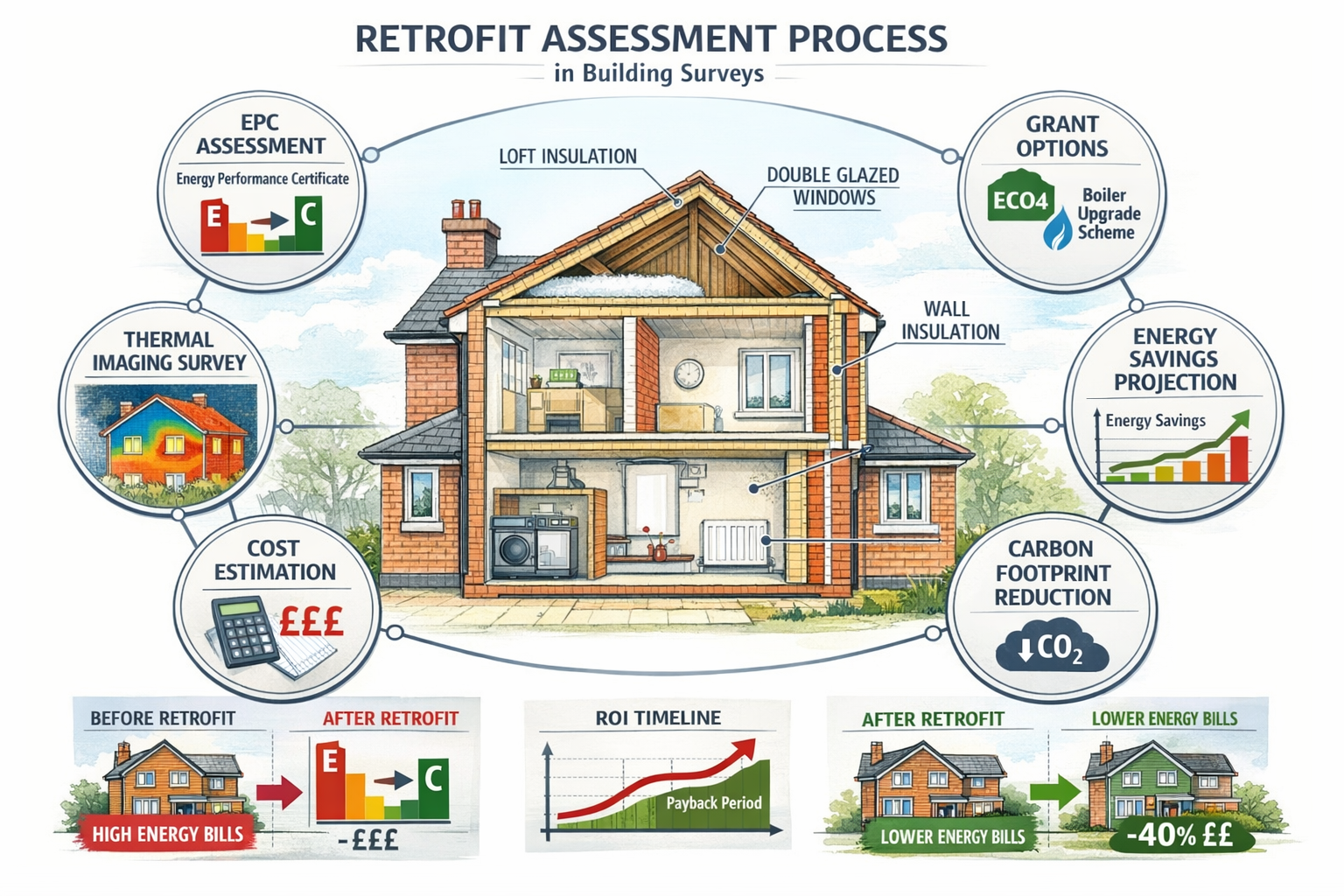
Modern building surveys incorporating retrofit assessment follow a structured framework that integrates seamlessly with traditional survey methodologies. When conducting a building survey, chartered surveyors now systematically evaluate:
1. Thermal Performance Analysis
The surveyor examines the building envelope comprehensively, identifying heat loss pathways and thermal bridging. This includes:
- Wall construction and insulation: Assessing cavity wall fill, solid wall insulation potential, and thermal bridging at junctions
- Roof and loft insulation: Measuring existing insulation depth, identifying compression or gaps, and recommending upgrades to current standards (typically 270-300mm for loft insulation)
- Floor insulation: Evaluating suspended timber floors, solid concrete floors, and basement spaces
- Windows and doors: Assessing glazing type (single, double, triple), frame materials, air tightness, and thermal performance
- Thermal imaging opportunities: Recommending infrared surveys to identify hidden defects and heat loss patterns
2. Heating and Hot Water Systems
Energy-efficient heating represents one of the most impactful retrofit interventions. Surveyors evaluate:
- Boiler age, efficiency rating, and replacement recommendations (including heat pump feasibility)
- Heating controls and zoning capabilities for optimized energy use
- Hot water cylinder insulation and potential for solar thermal integration
- Radiator sizing and distribution efficiency throughout the property
- Alternative heating technologies such as air source heat pumps, ground source heat pumps, or infrared heating panels
3. Ventilation and Air Quality
Modern retrofit assessment balances energy efficiency with healthy indoor air quality:
- Existing ventilation adequacy and compliance with current Building Regulations
- Mechanical ventilation with heat recovery (MVHR) suitability and costs
- Condensation and moisture management strategies post-retrofit
- Air tightness testing recommendations to quantify improvement potential
4. Renewable Energy Integration
Surveyors assess the property's suitability for renewable energy generation:
- Solar photovoltaic (PV) panel potential: Roof orientation, structural capacity, shading analysis, and estimated generation
- Solar thermal hot water systems: Suitability and integration with existing systems
- Battery storage opportunities for maximizing self-consumption of generated electricity
- Structural calculations requirements for solar panel roof installations
Cost-Benefit Analysis: The Surveyor's New Skillset
One of the most valuable aspects of retrofit assessment within building surveys is the detailed cost-benefit analysis that helps buyers make informed decisions. This analysis typically includes:
| Retrofit Measure | Typical Cost Range | Annual Energy Savings | Payback Period | EPC Impact |
|---|---|---|---|---|
| Loft Insulation (270mm) | £400-£800 | £200-£350 | 2-3 years | +1 to +2 bands |
| Cavity Wall Insulation | £1,000-£2,500 | £300-£450 | 3-5 years | +1 band |
| External Wall Insulation | £8,000-£15,000 | £400-£600 | 15-25 years | +2 to +3 bands |
| Double to Triple Glazing | £5,000-£12,000 | £100-£200 | 25-50 years | +1 band |
| Air Source Heat Pump | £7,000-£13,000 | £400-£800 | 10-15 years | +2 to +3 bands |
| Solar PV (4kW system) | £5,000-£8,000 | £500-£800 | 7-12 years | +1 band |
These figures vary significantly based on property size, location, existing condition, and energy prices, but they provide buyers with realistic expectations for investment requirements and returns.
Government Incentive Navigation
A critical component of retrofit assessment guidance involves identifying applicable government support schemes. In 2026, surveyors must be familiar with:
ECO4 (Energy Company Obligation) 💷
- Available for low-income households and properties with EPC ratings D-G
- Covers insulation, heating upgrades, and renewable technologies
- Administered through energy suppliers
- Can cover 100% of costs for eligible households
Boiler Upgrade Scheme 🔥
- £7,500 grant for air source heat pumps
- £7,500 grant for ground source heat pumps
- £5,000 grant for biomass boilers
- Available for homeowners replacing fossil fuel heating systems
Local Authority Schemes 🏛️
- Variable regional programs offering additional support
- Often focused on specific property types or conservation areas
- May include interest-free loans or additional grants
Green Mortgages and Incentives 🏦
- Preferential lending rates for energy-efficient properties
- Cashback or reduced fees for properties achieving high EPC ratings
- Specialized products for properties undergoing retrofit
Surveyors incorporating this information into their reports provide immense value, transforming the survey from a diagnostic tool into a strategic planning document.
The Market Impact: How Energy Efficiency Affects Property Values and Buyer Decisions
The EPC Premium Paradox
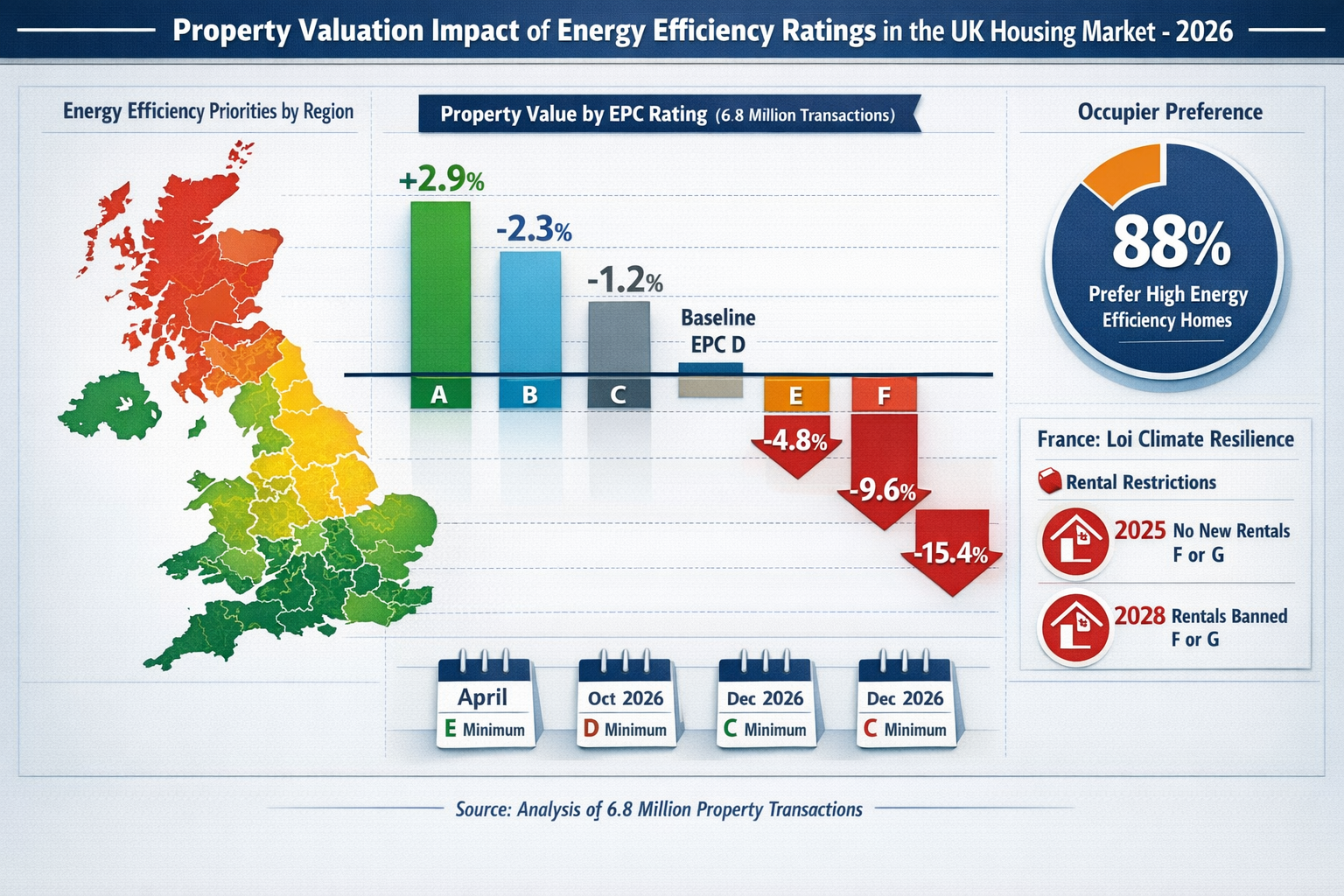
Research analyzing 6.8 million housing transactions in England and Wales from 2014 to 2024 reveals fascinating—and sometimes counterintuitive—patterns in how energy efficiency affects property values.[3]
Properties with EPC A ratings achieve an average 2.9% price premium per square meter relative to the baseline EPC D rated properties. This premium reflects buyer recognition of lower running costs, superior comfort, and reduced regulatory risk.[3]
However, the data reveals a surprising paradox: properties rated EPC B and C actually transact at modest discounts (–2.3% and –1.2% respectively) compared to EPC D baseline.[3] This seemingly irrational market behavior suggests several important dynamics:
🔍 Buyer perception challenges: Many buyers struggle to differentiate between EPC bands or understand the practical implications of different ratings
🔍 Cost-benefit uncertainty: Properties requiring minor upgrades to reach EPC A may be discounted due to buyer uncertainty about renovation costs and disruption
🔍 Market inefficiency: The residential property market has not yet fully capitalized energy efficiency into pricing, creating opportunities for informed buyers
🔍 Premium concentration: The significant premium for EPC A properties suggests a "tipping point" where energy efficiency becomes a genuine differentiator
This pricing paradox underscores the critical importance of comprehensive retrofit assessment within building surveys. Buyers equipped with detailed cost-benefit analysis can identify properties where modest investments in energy efficiency upgrades can deliver substantial value enhancement.
Regulatory Pressure and Liquidity Risk
Beyond market premiums, regulatory frameworks increasingly create hard financial consequences for poor energy performance:
UK MEES (Minimum Energy Efficiency Standards) ⚖️
The UK requires properties to meet at least EPC rating E to be eligible for rental.[3] Properties failing to meet this standard face:
- Prohibition on new tenancies or lease renewals
- Fines up to £5,000 for non-compliance
- Significant liquidity risk (inability to let the property)
- Reduced capital values reflecting restricted use
- Increased operational costs for any permitted occupancy
France's LOI Climate et resilience 🇫🇷
France has implemented even stricter regulations, prohibiting rent increases for residential properties with poor energy performance (EPC ratings F or G).[3] This creates cascading financial impacts:
- Frozen rental income despite inflation and market growth
- Reduced investment returns and property valuations
- Forced retrofit expenditure to maintain competitiveness
- Potential mandatory disclosure requirements affecting marketability
These regulatory frameworks are expanding globally, with similar initiatives under consideration or implementation across Europe, North America, and Asia-Pacific markets. For buyers, understanding retrofit requirements and costs has become essential due diligence.
Occupier Preferences Driving Demand
Market research reveals that 88% of occupiers prioritize high energy efficiency in buildings.[2] This overwhelming preference reflects multiple factors:
💰 Operational cost management: Energy represents a significant and visible component of household budgets, with efficient homes delivering immediate monthly savings
🌡️ Comfort and wellbeing: Well-insulated, efficiently heated homes provide superior thermal comfort, reduced drafts, and better indoor air quality
🌍 Environmental values: Growing environmental consciousness makes energy efficiency a priority for many buyers, particularly younger demographics
📈 Future-proofing: Buyers recognize that energy efficiency standards will continue tightening, making efficient properties more resilient to regulatory change
This strong occupier preference creates market dynamics favoring properties with high energy performance or clear retrofit pathways. Surveyors providing detailed retrofit assessment help buyers identify properties that align with these priorities or can be cost-effectively upgraded to meet them.
Retrofit Assessment in Building Surveys: Guiding Buyers Through Energy Efficiency Upgrades as RICS Quality Standards Evolve—Practical Implementation
Integrating Retrofit Assessment into Different Survey Types
The depth and detail of retrofit assessment varies across different RICS survey levels:
Level 2 Homebuyer Surveys (RICS Home Survey Level 2)
For Level 2 Homebuyer Surveys, retrofit assessment typically includes:
- Current EPC rating review and commentary
- Identification of obvious energy efficiency deficiencies
- High-level recommendations for priority upgrades
- Estimated cost ranges for common interventions
- Signposting to government incentive schemes
- Recommendations for specialist assessments where appropriate
The Level 2 survey provides sufficient detail for most conventional properties in reasonable condition, offering buyers practical guidance without the extensive analysis of a full building survey.
Level 3 Building Surveys (Full Structural Surveys)
For comprehensive building surveys, retrofit assessment becomes more detailed:
- Detailed thermal performance analysis of all building elements
- Specific recommendations for insulation upgrades with technical specifications
- Heating system replacement options with comparative analysis
- Renewable energy feasibility assessment
- Ventilation strategy recommendations
- Detailed cost estimates for all recommended interventions
- Prioritized implementation roadmap
- Projected EPC rating improvements for each intervention
- ROI calculations and payback period analysis
Understanding the difference between Level 2 and Level 3 surveys helps buyers select the appropriate survey type for their needs and property characteristics.
Commercial Building Surveys
For commercial building surveys, retrofit assessment addresses business-specific considerations:
- Operational carbon reduction strategies aligned with corporate sustainability commitments
- Tenant attraction and retention benefits of energy-efficient premises
- BREEAM or similar certification pathways
- Compliance with commercial MEES regulations
- Capital allowances and tax benefits of energy efficiency investments
- Impact on investment yields and capital values
Case Study: Victorian Terrace Retrofit Assessment
To illustrate practical application, consider a typical Victorian mid-terrace property in Southeast England:
Property Characteristics:
- 1890s construction, solid brick walls (225mm)
- Original sash windows (single glazed)
- Suspended timber ground floor
- Loft with 50mm insulation
- Gas combi boiler (15 years old, 78% efficiency)
- Current EPC rating: E (48 points)
Surveyor's Retrofit Assessment:
Priority 1: Loft Insulation Upgrade
- Current: 50mm mineral wool
- Recommended: 270mm mineral wool
- Cost: £600-£800
- Annual saving: £280
- Payback: 2.5 years
- EPC impact: +8 points
Priority 2: Internal Wall Insulation (Rear Wall)
- Current: Uninsulated solid brick
- Recommended: 60mm insulated plasterboard to rear wall (less visible)
- Cost: £2,500-£3,500
- Annual saving: £200
- Payback: 14 years
- EPC impact: +6 points
Priority 3: Secondary Glazing
- Current: Single glazed sash windows
- Recommended: Slim-profile secondary glazing (preserves character)
- Cost: £3,000-£4,500
- Annual saving: £150
- Payback: 23 years
- EPC impact: +4 points
Priority 4: Boiler Replacement
- Current: 15-year-old combi boiler (78% efficiency)
- Recommended: A-rated condensing combi (94% efficiency)
- Cost: £2,200-£2,800
- Annual saving: £180
- Payback: 13 years
- EPC impact: +5 points
Combined Impact:
- Total investment: £8,300-£11,600
- Annual savings: £810
- Payback: 11-14 years
- EPC improvement: E (48) to C (71)
- Property value impact: Potential 1-2% premium based on market analysis
Available Incentives:
- ECO4: Potentially eligible for loft insulation grant (subject to income assessment)
- Green mortgage: 0.25% rate reduction worth approximately £1,200 over 5 years
This detailed analysis empowers the buyer to make informed decisions, negotiate purchase price adjustments, or plan post-purchase improvements strategically.
Technology Integration in Retrofit Assessment
Modern surveyors increasingly leverage technology to enhance retrofit assessment accuracy and presentation:
Thermal Imaging 📸
- Identifies hidden heat loss pathways
- Reveals insulation defects and gaps
- Documents thermal bridging at junctions
- Provides compelling visual evidence for recommendations
Energy Modeling Software 💻
- Calculates precise energy savings for different interventions
- Models combined effects of multiple upgrades
- Generates EPC rating projections
- Produces professional cost-benefit reports
Drone Surveys 🚁
- Assesses roof condition for solar panel suitability
- Identifies roof defects requiring repair before retrofit
- Documents property orientation and shading for renewable energy assessment
- Provides detailed imagery for roof surveys without access equipment
Digital Reporting Platforms 📱
- Delivers interactive reports with embedded cost calculators
- Links directly to government incentive application portals
- Provides video explanations of complex retrofit concepts
- Enables buyers to explore different upgrade scenarios
Bridging the Gap: Addressing the Implementation Challenge
The Carbon Measurement Disconnect
Despite widespread recognition of energy efficiency importance, significant gaps remain between policy intent and practical implementation. The 2025 RICS Sustainability Report, surveying over 3,500 professionals across 36 countries, revealed concerning disconnects:[2]
⚠️ Only 16% of construction professionals report that carbon measurement significantly affects their choice of materials and components
⚠️ 46% of professionals state they do not measure embodied carbon on projects at all
⚠️ 46% identify reducing waste and using low-carbon materials as a top sustainability concern, yet measurement and implementation lag significantly
⚠️ 42% cite reducing embodied and operational carbon emissions as a priority, but practical tools and methodologies remain underdeveloped
This disconnect between stated priorities and actual practice creates challenges for surveyors attempting to provide comprehensive retrofit guidance. Buyers may receive recommendations based on incomplete data or inconsistent methodologies, undermining confidence in retrofit investments.
Skills Development for Surveyors
The expanded scope of retrofit assessment demands new competencies from chartered surveyors:
Technical Knowledge Requirements:
- Building physics and thermal performance principles
- Heating system technologies including heat pumps and renewable systems
- Ventilation strategies and air quality management
- Renewable energy technologies and grid integration
- Building regulations Part L (Conservation of fuel and power)
- EPC assessment methodologies and calculation procedures
Financial Analysis Skills:
- Cost estimation for diverse retrofit interventions
- Payback period and ROI calculations
- Net present value analysis for long-term investments
- Government incentive scheme eligibility assessment
- Property valuation impact of energy efficiency upgrades
Communication Competencies:
- Explaining complex technical concepts to non-specialist buyers
- Presenting cost-benefit analysis clearly and accessibly
- Balancing competing priorities (cost, aesthetics, performance, heritage)
- Managing buyer expectations regarding payback periods and disruption
Professional development programs, continuing professional development (CPD) courses, and specialist certifications in retrofit assessment have become essential for surveyors seeking to differentiate their practices in 2026.
Quality Assurance and Professional Standards
The RICS Quality in Retrofit Summit emphasized the critical importance of quality assurance throughout the retrofit process.[3] For surveyors, this means:
✅ Recommending only appropriately qualified contractors with relevant certifications (TrustMark, PAS 2035, etc.)
✅ Specifying quality standards for materials and installation (BBA certification, manufacturer warranties, etc.)
✅ Advising on project management and quality monitoring during implementation
✅ Recommending post-installation verification including thermal imaging, air tightness testing, and EPC reassessment
✅ Highlighting risks of poor-quality retrofit including condensation, mold, thermal bridging, and system failures
Poor-quality retrofit can actually worsen building performance, creating moisture problems, reducing comfort, and failing to deliver projected energy savings. Surveyors play a crucial role in steering buyers toward quality outcomes.
Regional Variations and Special Considerations
Conservation Areas and Listed Buildings
Retrofit assessment for heritage properties requires specialized expertise balancing energy efficiency with conservation principles:
Special Considerations:
- Planning permission and listed building consent requirements
- Breathability of traditional construction and moisture management
- Reversibility of interventions
- Aesthetic impact of external insulation or solar panels
- Specialist materials and techniques (lime mortars, traditional glazing, etc.)
- Higher costs for heritage-appropriate solutions
Surveyors working with heritage properties must understand conservation philosophy and work within constraints that may limit retrofit options. Recommendations might prioritize:
- Internal insulation with breathable materials
- Secondary glazing rather than replacement windows
- Roof-integrated solar panels or ground-mounted arrays
- Efficient heating controls rather than building fabric changes
Non-Standard Construction
Properties of non-standard construction present unique retrofit challenges:
Concrete Construction (PRC, Airey, Wimpey, etc.):
- Existing insulation performance varies widely
- External insulation often most practical approach
- May require structural assessment before retrofit
- Mortgage and insurance implications
Timber Frame:
- Careful moisture management essential
- Cavity insulation requires specialist assessment
- Air tightness improvements particularly beneficial
Steel Frame:
- Thermal bridging through steel members
- May require specialized insulation strategies
Understanding construction type fundamentally shapes retrofit recommendations and cost estimates, making accurate identification during the survey critical.
Climate and Regional Variations
Retrofit priorities vary significantly across UK regions:
Scotland and Northern England:
- Heating efficiency paramount due to longer heating season
- Greater payback from insulation investments
- Heat pump performance considerations in colder climates
Southern England:
- Overheating risk management increasingly important
- Solar PV particularly cost-effective
- Ventilation and shading strategies
Coastal Locations:
- Wind exposure affects heat loss and air infiltration
- Salt air corrosion considerations for external equipment
- Renewable energy equipment durability
Regional energy price variations, climate conditions, and available incentive schemes all influence retrofit cost-benefit analysis, requiring surveyors to maintain local market knowledge.
The Future Trajectory: Emerging Trends and Evolving Standards
Anticipated Regulatory Developments
The regulatory landscape continues evolving rapidly, with several developments anticipated beyond 2026:
Residential MEES Tightening:
- Potential requirement for EPC C rating for rental properties by 2028-2030
- Extension to owner-occupied properties under consideration
- Increased enforcement and penalties for non-compliance
Future Homes Standard:
- New-build properties required to be zero-carbon ready
- Sets precedent for retrofit expectations
- Influences buyer expectations for existing properties
Building Safety Act Implications:
- Potential extension of safety regime to energy efficiency
- Quality assurance requirements for retrofit work
- Professional indemnity considerations for surveyors
Surveyors must stay informed about regulatory developments to provide forward-looking advice that protects buyer interests.
Technological Innovations
Emerging technologies will transform retrofit assessment and implementation:
AI and Machine Learning:
- Automated EPC prediction from property photographs
- Optimization algorithms for retrofit measure selection
- Predictive modeling of energy consumption patterns
Digital Twins:
- Virtual property models for retrofit scenario testing
- Real-time energy performance monitoring
- Continuous optimization of building systems
Advanced Materials:
- Aerogel insulation for ultra-thin, high-performance solutions
- Phase-change materials for thermal mass enhancement
- Smart glazing with variable thermal properties
Heat Pump Evolution:
- Higher efficiency models suitable for existing radiator systems
- Hybrid systems combining heat pumps with gas boilers
- Improved performance in cold climates
These innovations will expand retrofit possibilities while requiring surveyors to maintain current technical knowledge.
Market Evolution and Buyer Expectations
Buyer expectations continue evolving, with energy efficiency becoming a primary rather than secondary consideration:
📊 Energy performance as standard disclosure: Buyers increasingly expect detailed energy cost projections alongside traditional survey information
📊 Retrofit-ready properties commanding premiums: Properties with clear, cost-effective upgrade pathways valued more highly than those requiring complex interventions
📊 Whole-life cost analysis: Sophisticated buyers evaluating total cost of ownership including energy, maintenance, and future upgrade requirements
📊 Sustainability credentials: Environmental performance becoming a lifestyle and values consideration beyond pure financial analysis
Surveying practices that position themselves as retrofit specialists and energy efficiency advisors will differentiate themselves in an increasingly competitive market.
Conclusion: Embracing the Retrofit Assessment Opportunity
The evolution of Retrofit Assessment in Building Surveys: Guiding Buyers Through Energy Efficiency Upgrades as RICS Quality Standards Evolve represents both a challenge and a tremendous opportunity for the surveying profession. The RICS Quality in Retrofit Summit of January 2026 has catalyzed a fundamental transformation in how surveyors approach their work, expanding the traditional scope to encompass comprehensive energy efficiency guidance.[3]
For property buyers, this evolution delivers immense value. Modern building surveys equipped with detailed retrofit assessment provide:
✨ Informed decision-making based on comprehensive understanding of energy performance and upgrade potential
✨ Financial clarity through detailed cost-benefit analysis and government incentive identification
✨ Risk mitigation by highlighting regulatory compliance issues and future-proofing requirements
✨ Negotiation leverage with evidence-based cost estimates for necessary improvements
✨ Strategic planning with prioritized roadmaps for phased retrofit implementation
For surveyors, embracing retrofit assessment as a core competency differentiates practices in a competitive market. The skills required—technical knowledge, financial analysis, communication ability, and regulatory awareness—position surveyors as trusted advisors guiding buyers through one of the most significant financial decisions of their lives.
Actionable Next Steps
For Property Buyers:
- Request retrofit assessment when commissioning your building survey—ensure your surveyor provides EPC analysis, cost estimates, and incentive guidance
- Review the survey strategically—use retrofit recommendations to inform purchase negotiations or post-purchase planning
- Explore government incentives identified in your survey report before committing to self-funded upgrades
- Consider whole-life costs—evaluate properties based on total cost of ownership including energy expenses
- Seek specialist advice for complex properties, heritage buildings, or ambitious retrofit projects
For Surveyors:
- Invest in professional development—pursue CPD in building physics, energy efficiency technologies, and retrofit assessment methodologies
- Develop standardized frameworks—create consistent templates for retrofit assessment within survey reports
- Build specialist networks—establish relationships with energy assessors, retrofit contractors, and renewable energy specialists
- Leverage technology—adopt thermal imaging, energy modeling software, and digital reporting platforms
- Market your expertise—position your practice as a retrofit specialist to attract quality-conscious buyers
For Industry Stakeholders:
- Support skills development—provide accessible training programs for surveyors transitioning to enhanced retrofit assessment
- Standardize methodologies—develop consistent approaches to cost estimation, energy savings calculation, and EPC projection
- Improve data availability—create accessible databases of retrofit costs, performance data, and case studies
- Enhance incentive clarity—simplify government scheme eligibility and application processes
- Foster collaboration—encourage partnerships between surveyors, energy assessors, and retrofit specialists
The journey toward a more energy-efficient, sustainable built environment requires professional expertise, quality standards, and comprehensive guidance. As RICS quality standards evolve and retrofit assessment becomes integral to building surveys, the surveying profession stands at the forefront of this transformation—guiding buyers, protecting investments, and contributing to a more sustainable future.
The properties surveyed today will shape the built environment for decades to come. By providing comprehensive retrofit assessment, surveyors ensure that buyers make informed decisions, properties reach their performance potential, and the UK progresses toward its ambitious carbon reduction targets. This is the professional opportunity and responsibility of 2026 and beyond.
References
[1] Rics Publishes Updated Global Standard Esg Sustainability Commercial Property Valuation – https://www.rics.org/news-insights/rics-publishes-updated-global-standard-esg-sustainability-commercial-property-valuation
[2] Sustainability Report 2025 Royal Institution Chartered Surveyors – https://build-up.ec.europa.eu/en/resources-and-tools/publications/sustainability-report-2025-royal-institution-chartered-surveyors
[3] Future Property Valuation Influence Esg Criteria Residential Buildings – https://www.rics.org/news-insights/future-property-valuation-influence-esg-criteria-residential-buildings
[4] Home Survey Standards – https://www.rics.org/profession-standards/rics-standards-and-guidance/sector-standards/building-surveying-standards/home-surveys/home-survey-standards
[5] Building Surveys For Energy Performance Certificates In 2026 Navigating Epc Upgrades And Retrofit Mandates For Uk Buyers – https://nottinghillsurveyors.com/blog/building-surveys-for-energy-performance-certificates-in-2026-navigating-epc-upgrades-and-retrofit-mandates-for-uk-buyers