nn
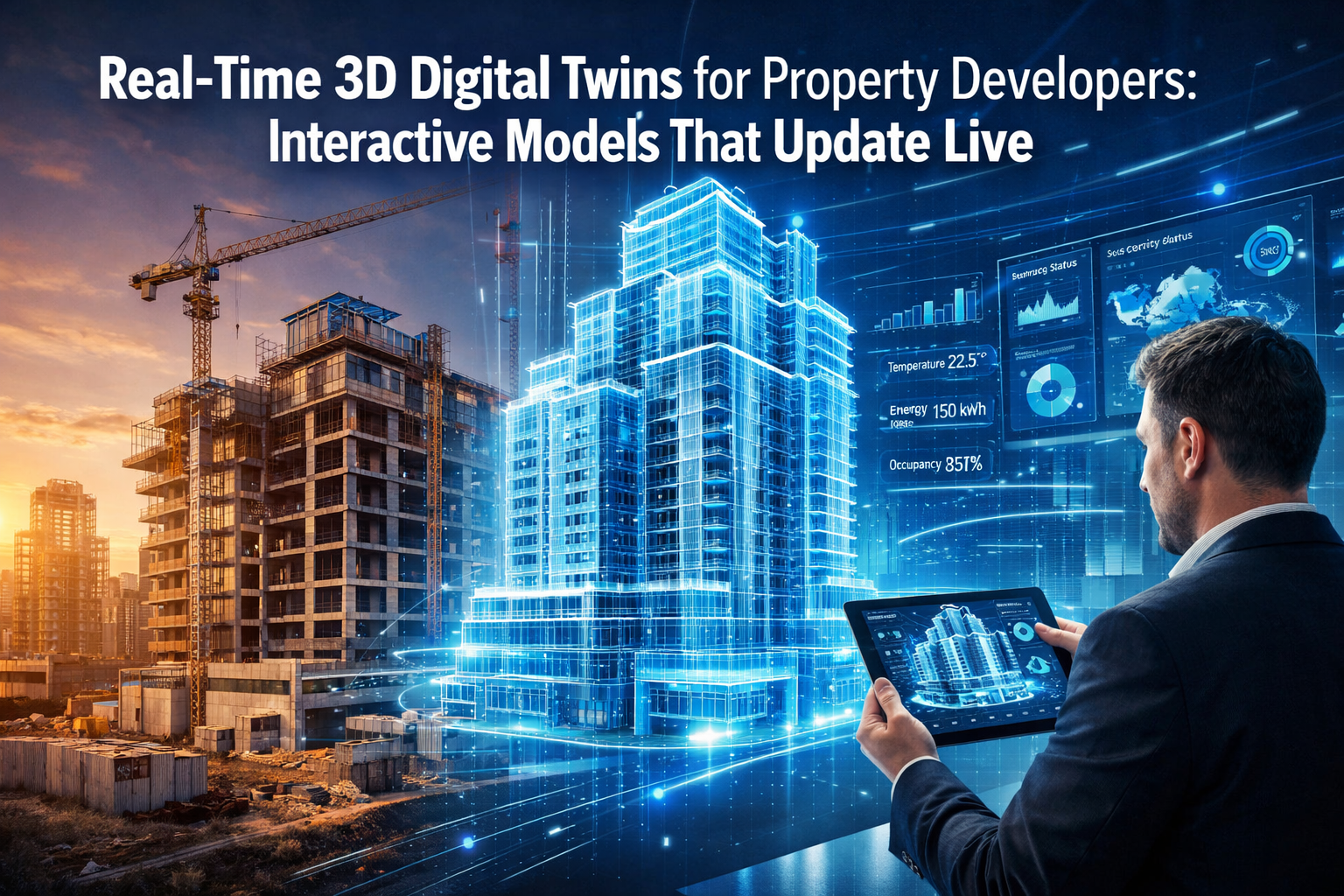
The property development landscape is experiencing a technological revolution that seemed like science fiction just a few years ago. Imagine standing in your office, viewing a complete virtual replica of a building that doesn't yet exist—watching as it responds to simulated weather patterns, occupancy levels, and energy demands in real time. This isn't a glimpse into the distant future; Real-Time 3D Digital Twins for Property Developers: Interactive Models That Update Live have arrived in 2026 as transformative tools that are fundamentally changing how properties are designed, built, and managed.
These continuously updating 3D replicas go far beyond traditional architectural renderings or static Building Information Models (BIM). They represent living, breathing digital ecosystems that mirror physical buildings through constant streams of data from embedded sensors, creating unprecedented opportunities for simulation, optimization, and decision-making. Property developers who embrace this technology are discovering they can test environmental conditions, predict maintenance needs, and visualize project scenarios before breaking ground—saving millions in costs while delivering superior outcomes.
Key Takeaways
- 🏗️ Real-time digital twins integrate IoT sensor data, AI analytics, and 3D visualization to create continuously updating virtual replicas of buildings that enable property developers to monitor conditions, predict failures, and optimize operations
- 💰 Significant cost reductions are achievable, with maintenance costs dropping up to 30% through predictive capabilities, labor costs decreasing by 10%, and energy consumption falling by 30% in documented implementations
- 🔮 Pre-construction visualization allows potential buyers and stakeholders to interact with high-fidelity virtual properties, testing different layouts, finishes, and environmental scenarios before physical construction begins
- 🤖 AI-powered scenario modeling enables "what if" simulations for climate adaptation, disaster planning, and infrastructure testing, allowing developers to make data-driven decisions with confidence
- 📊 2026 marks the mainstream adoption year, with digital twins transitioning from experimental technology to essential tools in mission-critical sectors including healthcare, education, social housing, and commercial real estate portfolios
Understanding Real-Time 3D Digital Twins for Property Developers
What Makes Digital Twins "Real-Time" and "Live"?
The term "digital twin" has evolved significantly over recent years. While early versions were essentially sophisticated 3D models or static BIM files, Real-Time 3D Digital Twins for Property Developers: Interactive Models That Update Live represent a quantum leap in functionality and utility.[1]
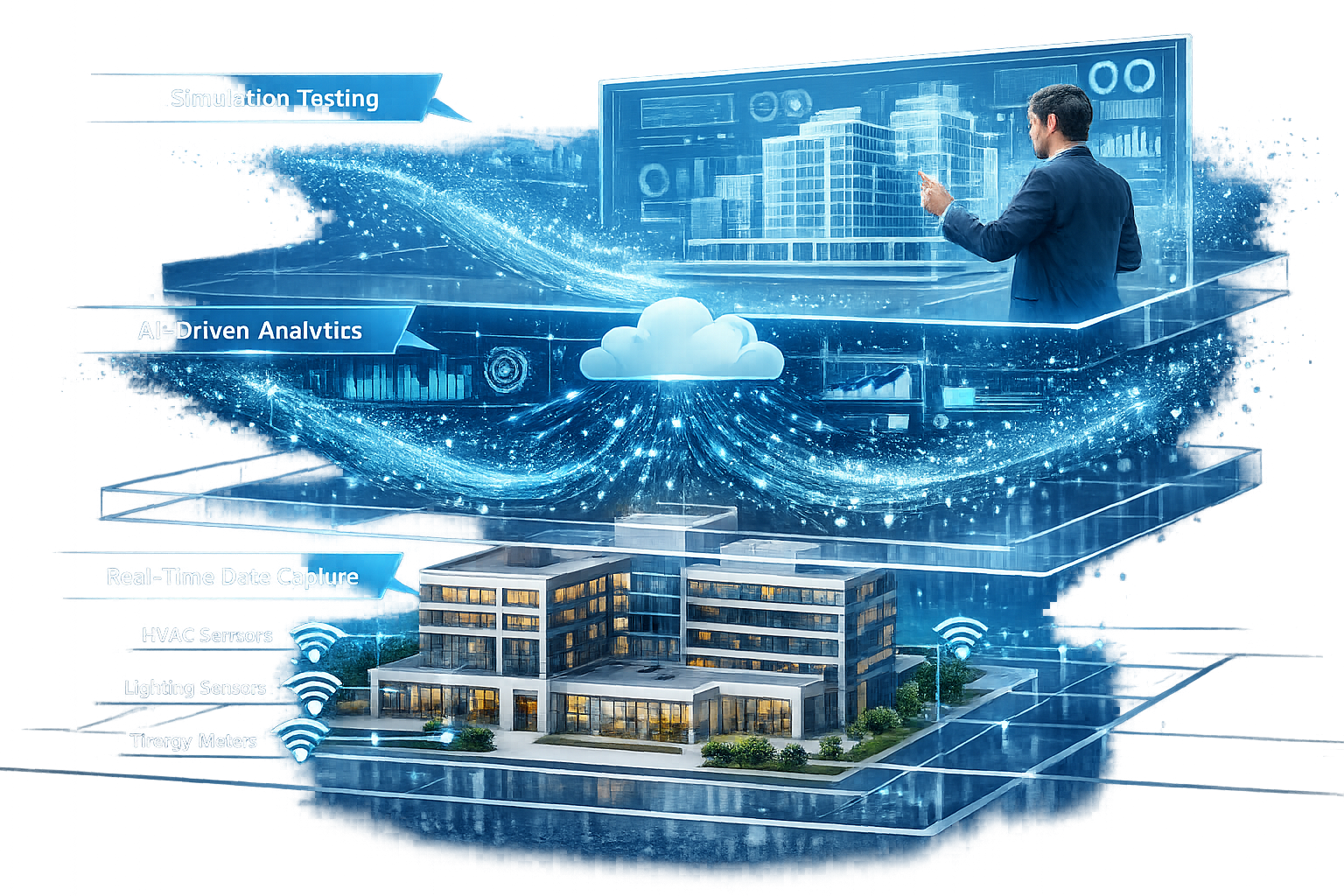
Real-time digital twins operate through continuous data synchronization between physical assets and their virtual counterparts. Embedded IoT sensors throughout a building—in HVAC systems, lighting fixtures, energy meters, structural components, and even door access points—constantly transmit information to the digital model. This creates a living representation that updates moment-by-moment, reflecting actual conditions rather than theoretical designs.[1]
The "live" aspect means these models don't just display current data; they actively process it through artificial intelligence algorithms that detect patterns, identify anomalies, and predict future states. When a sensor detects unusual vibration in a structural beam or inefficient energy consumption in a cooling system, the digital twin immediately reflects this change and can trigger alerts or recommendations.[3]
The Three Core Components of Digital Twin Architecture
Modern digital twin systems for property development operate on three fundamental technological pillars:[1]
| Component | Function | Key Technologies |
|---|---|---|
| Real-Time Data Capture | Continuous monitoring of physical building conditions | IoT sensors, LiDAR scanning, BIM integration, wireless networks |
| AI-Driven Analytics | Processing sensor data to detect inefficiencies and predict failures | Machine learning algorithms, pattern recognition, predictive modeling |
| Simulation & Scenario Testing | Testing modifications and changes before real-world implementation | Environmental modeling, structural analysis, occupancy simulation |
This three-layer architecture enables property developers to move beyond reactive management toward proactive optimization. Rather than waiting for equipment to fail or energy bills to spike, developers can identify issues weeks or months in advance and test solutions virtually before committing resources.[1]
How Digital Twins Differ from Traditional BIM
While Building Information Modeling (BIM) has been an industry standard for years, digital twins represent a fundamental evolution. Traditional BIM provides a comprehensive 3D model containing detailed information about building components, materials, and specifications—essentially a sophisticated digital blueprint.[6]
Digital twins, however, add the dimension of time and real-world data. They don't just show what a building should be; they show what it actually is at any given moment. This distinction becomes critical when managing existing properties or monitoring construction progress. For professionals familiar with choosing the right property survey, digital twins can be understood as continuous, automated surveys that never end.
The integration capabilities also differ dramatically. While BIM files typically exist as standalone models, digital twins connect seamlessly with enterprise resource planning (ERP) systems, project management software, energy management platforms, and maintenance scheduling tools—creating a unified ecosystem for property operations.[7]
Creating Real-Time 3D Digital Twins: The Development Process
Initial Data Capture and Model Creation
The journey to creating Real-Time 3D Digital Twins for Property Developers: Interactive Models That Update Live begins with comprehensive data capture of the physical asset—whether it's an existing building or a construction site.[5]
For existing properties, this process typically involves:
- 3D laser scanning (LiDAR technology) to capture precise spatial measurements and create point cloud data
- Photogrammetry using high-resolution cameras to capture visual details and textures
- Document digitization including as-built drawings, maintenance records, and equipment specifications
- IoT sensor installation throughout the building to enable ongoing data collection
Major commercial real estate firms have demonstrated the scalability of this approach. Cushman and Wakefield partnered with Matterport to create digital scans of over 1,000 properties within a single year, while ERA Singapore streamlined the creation of 3D virtual property tours across their portfolio.[5]
For properties under development, the process integrates with design workflows:
- BIM models from architectural firms serve as the foundation
- Construction progress is documented through regular drone surveys and site photography
- Sensors are embedded during construction to begin data collection immediately
- The digital twin evolves alongside physical construction, creating a documented timeline
Recent advances in AI-powered object recognition have dramatically reduced the cost and complexity of digital twin creation. LiDAR data processing algorithms can automatically categorize structural elements, mechanical systems, and building components—work that previously required extensive manual input from specialists.[3] This automation has made digital twins accessible beyond skyscrapers and major commercial developments to residential portfolios and mid-sized projects.
Integrating IoT Sensors and Data Streams
The true power of real-time digital twins emerges when continuous data streams begin flowing from physical assets. Property developers must strategically plan sensor deployment to balance comprehensive monitoring with cost-effectiveness.[1]
Essential sensor categories for property development include:
- 🌡️ Environmental sensors: Temperature, humidity, air quality, light levels
- ⚡ Energy monitoring: Electricity consumption, power quality, renewable generation
- 🔧 Equipment performance: HVAC efficiency, pump operation, elevator function
- 🏗️ Structural health: Vibration, settlement, stress, moisture intrusion
- 👥 Occupancy tracking: Space utilization, foot traffic, access patterns
The sensor data flows into cloud-based platforms where it's stored, processed, and synchronized with the 3D model. Modern digital twin platforms can handle thousands of data points per second, creating a comprehensive picture of building performance.[1]
Integration with existing building management systems (BMS) is crucial. Rather than creating isolated data silos, effective digital twins connect with HVAC controls, lighting systems, security platforms, and energy management tools. This interconnection enables automated responses—such as adjusting ventilation based on actual occupancy rather than fixed schedules.[1]
Connecting Digital Twins with Planning and Project Management Software
For property developers, the value of Real-Time 3D Digital Twins for Property Developers: Interactive Models That Update Live multiplies exponentially when integrated with planning and project management ecosystems.[6]
Key integration points include:
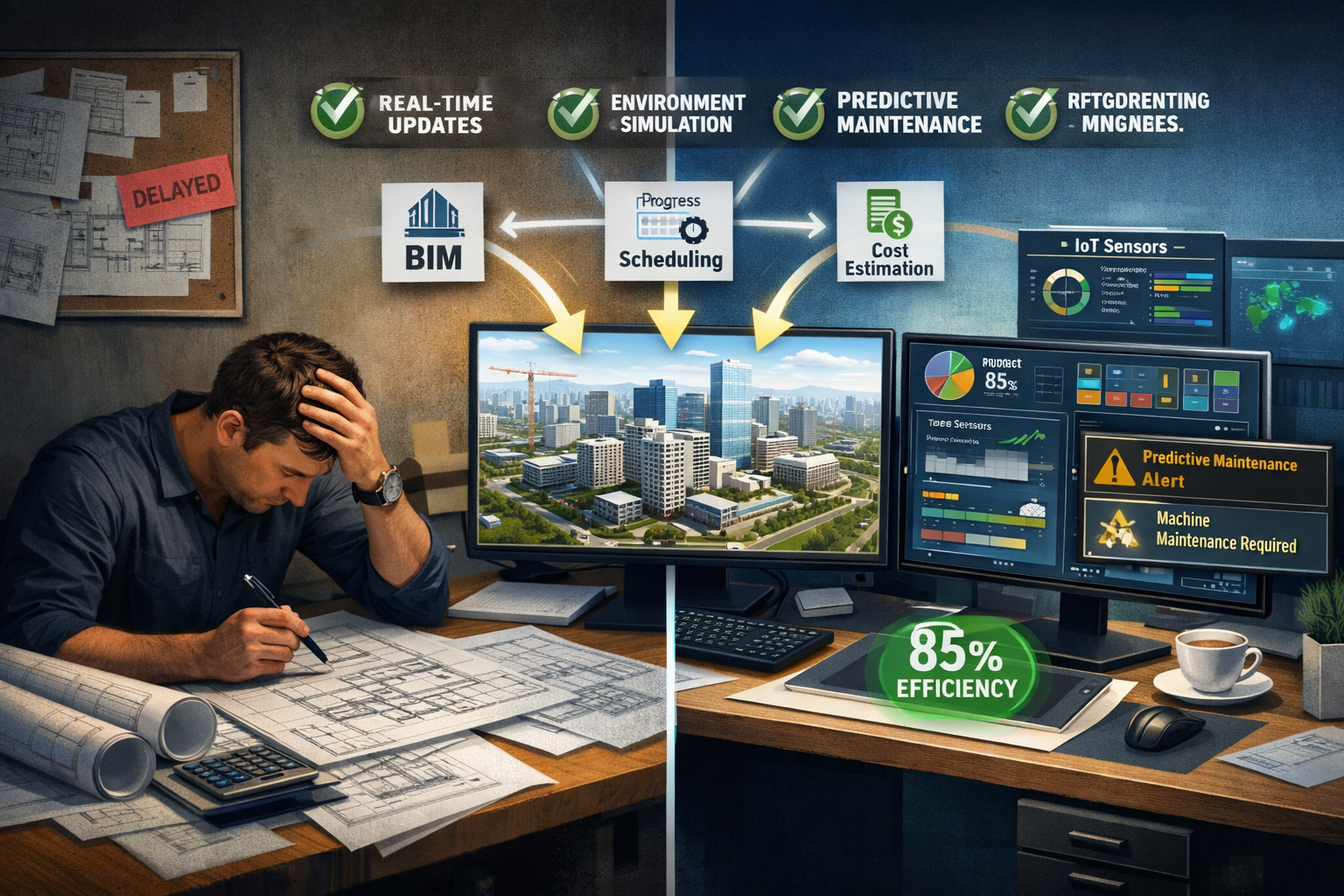
Project Scheduling Software: Digital twins can visualize construction progress against planned timelines, automatically highlighting delays or deviations. When sensors detect that concrete hasn't been poured in a scheduled area, the digital twin updates the model and flags the discrepancy in project management dashboards.
Cost Estimation and Budgeting Tools: Real-time material tracking and labor monitoring feed into cost models, providing accurate budget forecasts. If energy consumption during construction exceeds projections, financial models update immediately to reflect increased operating costs.
Design Collaboration Platforms: Architects, engineers, and contractors can review the digital twin simultaneously, testing design modifications in the virtual environment before implementing them physically. This collaborative approach mirrors the coordination needed for commercial property surveys but occurs in real-time throughout the development process.
Regulatory Compliance Systems: Digital twins can automatically document compliance with building codes, safety regulations, and sustainability standards. When combined with property certification processes, this creates auditable records that streamline approvals.
The integration architecture typically relies on Application Programming Interfaces (APIs) that allow different software systems to exchange data seamlessly. Leading digital twin platforms offer pre-built connectors for popular construction and property management tools, reducing implementation complexity.[7]
Practical Applications of Live-Updating Digital Twins in Property Development
Pre-Construction Visualization and Stakeholder Engagement
One of the most compelling applications of Real-Time 3D Digital Twins for Property Developers: Interactive Models That Update Live occurs before any physical construction begins. High-fidelity virtual replicas allow potential buyers, investors, and community stakeholders to experience properties that exist only as plans.[3]
Enhanced buyer engagement transforms the sales process. Rather than reviewing static renderings or trying to imagine spaces from blueprints, prospective purchasers can:
- Walk through virtual properties using VR headsets or interactive displays
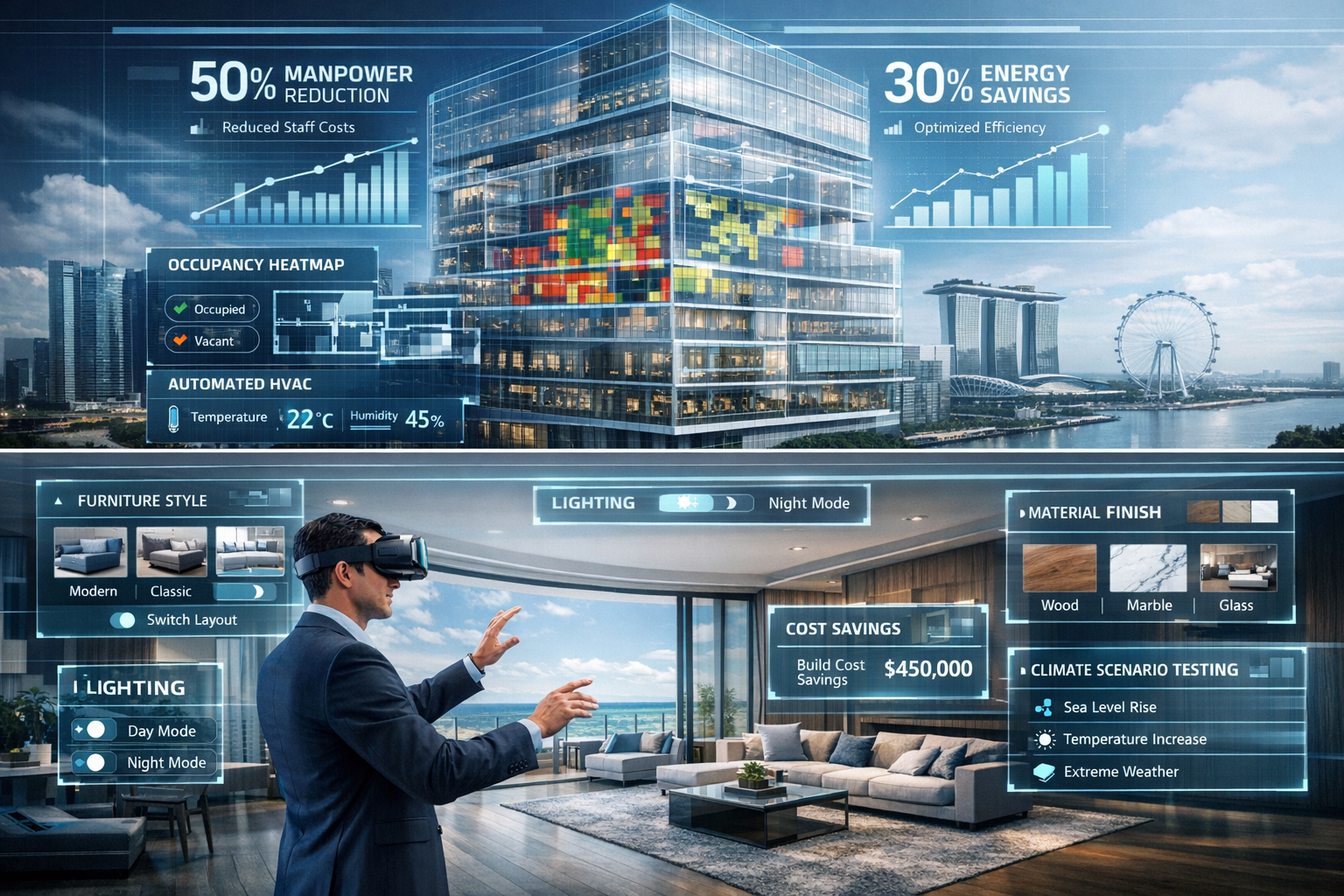
- Toggle between different furniture layouts and interior finishes in real-time
- Experience the property under various lighting conditions (morning, afternoon, evening)
- Visualize views from different floors and orientations
- Test acoustic properties and spatial relationships
This capability addresses what industry experts call the "imagination gap"—the difficulty many buyers face in visualizing completed spaces from traditional marketing materials. By closing this gap, developers report faster sales cycles and higher buyer confidence, particularly in luxury and high-end commercial developments.[3]
Investor presentations gain unprecedented clarity when digital twins demonstrate not just aesthetic appeal but operational performance. Developers can show projected energy efficiency, simulate occupancy scenarios, and model revenue potential based on different tenant configurations—all within the same interactive environment.
Community stakeholders benefit from transparent visualization of how proposed developments will impact neighborhoods. Digital twins can simulate shadow patterns throughout the year, traffic flow changes, and visual integration with existing architecture—addressing concerns before they become opposition.[2]
Environmental Simulation and Climate Adaptation Planning
The ability to model environmental conditions and test climate scenarios represents a transformative application of digital twin technology for forward-thinking property developers.[3]
Climate adaptation modeling enables "what if" scenario testing that was previously impossible or prohibitively expensive. Developers can simulate:
- Temperature increases: How would the building perform if local temperatures rise by 2 degrees Celsius over the next decade?
- Extreme weather events: What happens during record-breaking heatwaves, cold snaps, or precipitation?
- Sea level changes: For coastal properties, how do different flood scenarios impact structural integrity and operations?
- Wind pattern shifts: How do changing prevailing winds affect energy consumption and structural loads?
These simulations inform infrastructure investment decisions before construction begins. If modeling reveals that standard HVAC systems would struggle under projected 2030 climate conditions, developers can specify enhanced systems upfront—avoiding costly retrofits later.[3]
Singapore's Smart City initiative provides a compelling real-world example. The city-state deployed digital twin technology across commercial buildings, targeting a 50% reduction in manpower and a 30% decrease in energy consumption through automated, precision-driven energy optimizations based on occupancy levels, weather conditions, and historical usage patterns.[1] The results validated the technology's potential, with buildings achieving these targets through AI-driven adjustments that would be impossible to manage manually.
Sustainability certification becomes more achievable when developers can test and optimize building performance virtually. Digital twins enable precise calibration of energy systems, water management, and material efficiency—supporting applications for LEED, BREEAM, and other green building certifications with documented performance data rather than theoretical projections.
Predictive Maintenance and Operational Optimization
Once properties transition from construction to operation, Real-Time 3D Digital Twins for Property Developers: Interactive Models That Update Live deliver ongoing value through predictive maintenance and continuous optimization.[1]
Predictive maintenance represents one of the most financially impactful applications. Traditional maintenance follows either reactive approaches (fixing things when they break) or preventive schedules (servicing equipment at fixed intervals regardless of actual condition). Digital twins enable condition-based maintenance that responds to actual equipment health.[3]
The process works through continuous monitoring:
- Sensors track equipment performance metrics (vibration, temperature, energy consumption, output quality)
- AI algorithms compare current performance against historical baselines and manufacturer specifications
- Machine learning models detect degradation patterns that precede failures
- The system generates maintenance alerts weeks or months before critical failures occur
- Maintenance teams can plan interventions during convenient times rather than emergency responses
Research indicates that integrating digital twins with inspection software can reduce maintenance costs by up to 30% by preventing catastrophic failures through early detection and predictive capabilities.[3] For large commercial portfolios, this translates to millions in annual savings.
Energy optimization occurs continuously as digital twins analyze consumption patterns and identify inefficiencies. The system might detect that certain zones are being heated or cooled unnecessarily during low-occupancy periods, or that lighting systems aren't responding optimally to available natural light. These insights drive automated adjustments or inform manual interventions.[1]
Property developers managing multiple buildings benefit from portfolio-level analytics. Digital twins can compare performance across properties, identifying best practices and outliers. If one building achieves superior energy efficiency, the digital twin can analyze what's different and recommend similar configurations for other properties. This approach mirrors the comparative analysis used in property valuation methods but focuses on operational performance.
Construction Progress Monitoring and Quality Assurance
During the construction phase, live-updating digital twins provide unprecedented visibility into project progress and quality.[6]
Progress tracking becomes automated and objective. Rather than relying on contractor reports or periodic site visits, developers receive continuous updates:
- Drone surveys and site photography automatically update the digital twin with actual construction progress
- The system compares as-built conditions against planned schedules and specifications
- Deviations are highlighted immediately, allowing rapid response to delays or errors
- Stakeholders can view progress remotely, reducing the need for physical site visits
This transparency benefits all parties. General contractors can demonstrate progress objectively, subcontractors can coordinate work more effectively, and developers can identify issues before they cascade into major problems.
Quality assurance improves through continuous documentation. Every stage of construction is captured in the digital twin, creating an auditable record. If questions arise about whether work was completed to specification, the historical digital twin provides evidence. This documentation proves particularly valuable for monitoring surveys and resolving disputes.
The technology also supports safety management. Digital twins can model safe access routes, identify high-risk areas, and track worker locations in real-time. If someone enters a dangerous zone, the system can trigger immediate alerts—preventing accidents before they occur.
Integration Strategies: Maximizing Digital Twin Value
Selecting the Right Digital Twin Platform
The digital twin market has expanded rapidly, with numerous platforms offering varying capabilities, price points, and specializations. Property developers must carefully evaluate options to ensure alignment with their specific needs.[8]
Key evaluation criteria include:
Scalability: Can the platform handle your current portfolio and anticipated growth? Some solutions excel with individual buildings but struggle with enterprise-scale deployments across hundreds of properties.
Integration capabilities: Does the platform offer APIs and pre-built connectors for your existing software ecosystem? Seamless integration with project management, financial systems, and building management platforms is essential for maximizing value.
Data security and privacy: How does the platform protect sensitive building data and tenant information? Property developers must ensure compliance with data protection regulations and industry security standards.
AI and analytics sophistication: What level of predictive analytics does the platform provide? Basic digital twins offer visualization and data display, while advanced platforms include machine learning models that generate actionable insights automatically.
User interface and accessibility: Can stakeholders across your organization—from executives to facility managers—access and utilize the platform effectively? Overly complex interfaces limit adoption and reduce ROI.
Mobile capabilities: Can team members access digital twins from job sites, during property tours, or while traveling? Mobile access expands utility significantly.
Support and training: What implementation support, training resources, and ongoing technical assistance does the vendor provide? Digital twin adoption requires organizational change management, not just technology deployment.
Leading platforms in 2026 include specialized solutions for different market segments. Some focus on commercial real estate portfolios, others target residential development, and several serve niche markets like healthcare facilities or educational campuses.[8]
Building Internal Capabilities and Training Teams
Technology alone doesn't deliver value—organizations must develop internal capabilities to leverage Real-Time 3D Digital Twins for Property Developers: Interactive Models That Update Live effectively.[7]
Cross-functional training ensures that digital twins become embedded in workflows rather than isolated tools. Key stakeholder groups require different training approaches:
Executives and decision-makers need high-level understanding of digital twin capabilities, ROI potential, and strategic applications. Training should focus on interpreting analytics dashboards, understanding scenario modeling, and making data-driven investment decisions.
Project managers and developers require operational proficiency in using digital twins for construction monitoring, stakeholder communication, and quality assurance. Training should emphasize progress tracking, deviation detection, and integration with project management workflows.
Facility managers and operations teams need deep technical knowledge of sensor data interpretation, maintenance alert response, and optimization opportunities. Training should cover predictive analytics, equipment performance monitoring, and energy management.
Design and engineering teams benefit from understanding how digital twins inform design decisions, enable simulation testing, and support regulatory compliance. Training should focus on scenario modeling, performance optimization, and collaborative design workflows.
Creating digital twin champions within each department accelerates adoption. These individuals receive advanced training and serve as internal resources, helping colleagues leverage the technology effectively and identifying new use cases.
Establishing Data Governance and Quality Standards
The value of digital twins depends entirely on data quality. Property developers must establish robust governance frameworks to ensure accuracy, consistency, and reliability.[7]
Data quality standards should address:
- Sensor calibration protocols: How frequently are sensors calibrated, and what accuracy thresholds must they meet?
- Data validation rules: What automated checks verify that sensor readings are plausible and consistent?
- Update frequencies: How often should different data types refresh (real-time for critical systems, hourly for environmental data, daily for occupancy patterns)?
- Historical data retention: How long is data stored, and in what format for long-term analysis?
Access controls and permissions protect sensitive information while enabling appropriate access. Different stakeholders require different permission levels:
- Executives might access portfolio-wide analytics but not individual sensor data
- Facility managers need full access to their buildings' operational data
- Contractors might receive limited access to construction progress information
- External auditors could access compliance documentation without operational control
Data integration standards ensure consistency when combining information from multiple sources. Digital twins aggregate data from IoT sensors, BIM models, financial systems, and external sources (weather data, utility rates, market trends). Standardized formats and protocols prevent integration challenges.
Overcoming Implementation Challenges
Addressing Cost and ROI Concerns
The initial investment in Real-Time 3D Digital Twins for Property Developers: Interactive Models That Update Live can seem substantial, particularly for organizations new to the technology. However, comprehensive ROI analysis reveals compelling financial justification.[2]
Initial costs typically include:
- Digital twin platform licensing (subscription or perpetual)
- IoT sensor hardware and installation
- Initial 3D scanning and model creation
- Integration with existing software systems
- Training and change management
- Ongoing data storage and processing
Documented returns from early adopters demonstrate multiple value streams:
Maintenance cost reduction: The 30% reduction in maintenance costs through predictive capabilities alone often justifies the investment, particularly for large commercial properties where maintenance represents a significant operating expense.[3]
Labor cost optimization: McKinsey & Company research confirms that digital twins can help companies cut labor costs by up to 10 percent through improved efficiency and automation.[2]
Revenue growth: The same research indicates potential revenue increases of up to 5 percent through improved customer satisfaction, faster sales cycles, and premium pricing for technology-enabled properties.[2]
Energy savings: Singapore's Smart City implementation achieved 30% energy consumption reductions—translating to substantial ongoing savings that compound annually.[1]
Risk mitigation: Preventing a single catastrophic equipment failure or avoiding construction delays can save more than the entire digital twin investment.
Phased implementation strategies make adoption more financially accessible. Rather than deploying digital twins across an entire portfolio simultaneously, developers can:
- Start with a pilot project on a single property
- Document results and refine processes
- Expand to additional properties based on demonstrated ROI
- Scale to portfolio-wide deployment as capabilities mature
This approach reduces initial capital requirements while building internal expertise progressively. Similar to how property developers might approach commercial property valuations strategically, digital twin adoption benefits from thoughtful staging.
Managing Data Privacy and Security
As digital twins collect and process vast amounts of building data—including potentially sensitive information about occupants, operations, and security systems—robust privacy and security measures become essential.[7]
Cybersecurity considerations include:
Network segmentation: IoT sensors and digital twin systems should operate on isolated networks, preventing unauthorized access to broader corporate systems if sensors are compromised.
Encryption protocols: All data transmission between sensors, cloud platforms, and user devices must use industry-standard encryption to prevent interception.
Access authentication: Multi-factor authentication and role-based access controls ensure only authorized personnel can view or modify digital twin data.
Regular security audits: Penetration testing and vulnerability assessments identify potential weaknesses before they're exploited.
Privacy compliance requires attention to regulations including GDPR, CCPA, and industry-specific requirements. Digital twins that track occupancy patterns or individual space usage must:
- Anonymize personal data where possible
- Obtain appropriate consents for data collection
- Provide transparency about what data is collected and how it's used
- Enable data subject rights (access, correction, deletion)
- Implement data minimization principles (collecting only necessary information)
Vendor security practices warrant careful evaluation. Property developers should assess digital twin platform providers' security certifications, data handling practices, and incident response capabilities. Questions to address include:
- Where is data physically stored, and under what jurisdiction?
- What backup and disaster recovery capabilities exist?
- How does the vendor respond to security incidents?
- What insurance coverage protects against data breaches?
Ensuring Interoperability with Legacy Systems
Most property developers operate with existing technology ecosystems—building management systems, financial software, project management tools—that predate digital twin adoption. Ensuring interoperability prevents creating isolated data silos.[7]
Integration approaches vary based on system capabilities:
API-based integration: Modern systems typically offer Application Programming Interfaces that enable direct data exchange. Digital twin platforms can pull data from building management systems, push updates to project management tools, and synchronize with financial platforms through these standardized interfaces.
Middleware solutions: When direct integration isn't feasible, middleware platforms can translate data between incompatible systems. These tools map data fields, convert formats, and orchestrate information flow across the technology ecosystem.
Manual data bridges: For legacy systems without integration capabilities, periodic manual data exports and imports may be necessary initially. While less elegant than automated integration, this approach enables digital twin adoption without replacing functional existing systems.
Gradual system modernization often accompanies digital twin implementation. As legacy systems reach end-of-life, replacements can be selected specifically for digital twin compatibility. This transforms technology refresh cycles from mere maintenance into strategic capability enhancement.
The integration challenges mirror those faced in comprehensive property surveys where multiple data sources must be reconciled into coherent assessments. Success requires patience, technical expertise, and realistic expectations about timelines.
Future Trends and Emerging Capabilities
The 2026 Inflection Point: From Experimentation to Mainstream Adoption
Industry analysts identify 2026 as a pivotal year where digital twins transition from experimental technology into mainstream building operations. This shift is driven by converging factors that have matured simultaneously.[4]
Mission-critical sector adoption is leading the transformation. The strongest adoption is expected in:
- Higher education: Universities deploying digital twins across campus facilities to optimize energy use, improve maintenance, and enhance student experiences
- Healthcare: Hospitals using digital twins for critical infrastructure monitoring, patient flow optimization, and regulatory compliance
- Social housing: Public housing authorities leveraging digital twins to maximize limited maintenance budgets and improve resident services
- Large commercial portfolios: Real estate investment trusts (REITs) and institutional investors deploying digital twins across hundreds of properties for portfolio optimization
This mainstream adoption creates network effects that benefit all participants. As more properties implement digital twins, more data becomes available for AI training, more integration tools emerge, and costs decline through economies of scale.[4]
Technology maturation has reached the point where digital twins deliver reliable value rather than experimental potential. Early implementations faced challenges with sensor reliability, data integration complexity, and AI accuracy. By 2026, these technologies have matured to enterprise-grade stability.[4]
AI and Machine Learning Enhancements
The next generation of Real-Time 3D Digital Twins for Property Developers: Interactive Models That Update Live will feature dramatically enhanced artificial intelligence capabilities that move beyond pattern recognition toward autonomous optimization.[3]
Autonomous building management represents the frontier. Rather than simply alerting facility managers to inefficiencies or potential failures, AI-enhanced digital twins will:
- Automatically adjust building systems to optimize performance
- Self-schedule maintenance based on actual equipment condition
- Dynamically reconfigure space utilization based on occupancy patterns
- Negotiate energy purchases based on real-time demand and pricing
Generative design integration will enable digital twins to propose design modifications that improve performance. If a building consistently experiences temperature imbalances, the AI might suggest specific HVAC modifications, window treatments, or insulation improvements—complete with cost-benefit analysis and implementation timelines.
Natural language interfaces will democratize access to digital twin insights. Rather than requiring technical expertise to query databases or interpret dashboards, stakeholders will simply ask questions: "Why did energy costs increase last month?" or "What would happen if we converted the third floor to co-working space?" The AI will analyze relevant data and provide clear, actionable answers.
Extended Reality (XR) Integration
The convergence of digital twins with virtual reality (VR), augmented reality (AR), and mixed reality (MR) technologies will transform how stakeholders interact with properties.[3]
Virtual property tours will become indistinguishable from physical visits. Potential buyers or tenants will don VR headsets and experience properties with photorealistic fidelity, including:
- Accurate lighting conditions at different times of day
- Realistic acoustic properties and ambient sounds
- Interactive elements (opening doors, adjusting window shades, testing appliances)
- Real-time modifications (changing finishes, furniture, or layouts instantly)
Augmented reality maintenance will overlay digital twin data onto physical environments. Facility managers wearing AR glasses will see equipment performance data, maintenance histories, and repair instructions superimposed on actual machinery. This reduces diagnostic time and improves repair accuracy.
Mixed reality collaboration will enable distributed teams to interact with digital twins simultaneously. Architects in one city, engineers in another, and developers in a third can gather in a shared virtual environment, examining the same digital twin and making collaborative decisions in real-time.
Blockchain and Digital Twin Integration
Emerging applications combine blockchain technology with digital twins to create immutable records of building history, ownership, and compliance.[7]
Smart contracts can automate property transactions and maintenance agreements. When a digital twin detects that preventive maintenance is due, a blockchain-based smart contract could automatically schedule service, verify completion, release payment, and update building records—all without manual intervention.
Provenance tracking creates permanent records of building materials, construction methods, and modifications. This proves particularly valuable for sustainability certifications, historical preservation, and quality assurance. If questions arise about whether specific materials were used or standards were met, the blockchain-secured digital twin provides indisputable evidence.
Tokenization of real estate assets enables fractional ownership and investment opportunities tied directly to digital twin performance data. Investors can purchase tokens representing shares in specific properties, with returns tied to operational performance metrics tracked by the digital twin.
Case Studies: Digital Twins in Action
Singapore Smart City Initiative
Singapore's government-led Smart City initiative provides one of the most comprehensive real-world validations of digital twin technology at scale.[1]
Implementation scope: The initiative deployed digital twins across multiple commercial buildings, integrating IoT sensors throughout HVAC systems, lighting, energy infrastructure, and occupancy monitoring systems.
Optimization approach: AI algorithms analyzed real-time data streams to identify optimization opportunities:
- HVAC systems adjusted automatically based on actual occupancy rather than fixed schedules
- Lighting responded to available natural light and space utilization
- Energy consumption was optimized based on weather conditions and historical usage patterns
- Maintenance was scheduled based on equipment condition rather than calendar intervals
Documented results:
- 50% reduction in manpower requirements through automation of routine monitoring and adjustment tasks
- 30% decrease in energy consumption through precision-driven optimizations
- Improved occupant comfort through more responsive environmental controls
- Enhanced sustainability credentials supporting Singapore's climate goals
Lessons learned: The initiative demonstrated that digital twin value increases with scale. Individual optimizations might save modest amounts, but comprehensive deployment across all building systems delivers transformative results. The success has inspired similar initiatives in other cities globally.[1]
Major Commercial Real Estate Deployments
Cushman and Wakefield's partnership with Matterport illustrates how large commercial real estate firms are deploying digital twins at portfolio scale.[5]
Project scope: Creation of digital scans for over 1,000 properties within a single year, representing one of the largest commercial digital twin deployments globally.
Business objectives:
- Accelerate property marketing through immersive virtual tours
- Reduce physical showing requirements, saving time and travel costs
- Provide remote access for international investors and tenants
- Create comprehensive property documentation for asset management
Implementation approach: Standardized scanning protocols enabled rapid deployment across diverse property types. Teams used consistent equipment and methodologies, ensuring quality and comparability across the portfolio.
Outcomes:
- Faster lease cycles as prospective tenants could evaluate properties remotely
- Expanded market reach to international investors who could tour properties without traveling
- Improved asset management through comprehensive visual documentation
- Enhanced due diligence capabilities for acquisitions and dispositions
Scalability insights: The project demonstrated that digital twin creation can be industrialized through standardized processes and specialized teams. What initially seemed like a custom, property-specific undertaking became a repeatable, efficient workflow.[5]
Actionable Implementation Roadmap
Phase 1: Assessment and Planning (Months 1-2)
Define objectives: Clearly articulate what you want to achieve with digital twins. Objectives might include:
- Reducing operational costs by a specific percentage
- Improving tenant satisfaction scores
- Accelerating construction timelines
- Enhancing sustainability credentials
- Supporting sales and marketing efforts
Conduct technology audit: Inventory existing systems, data sources, and technical capabilities. Identify integration requirements and potential compatibility challenges.
Select pilot property: Choose a property for initial implementation that:
- Represents typical portfolio characteristics (not an outlier)
- Has engaged stakeholders willing to participate actively
- Offers measurable baseline metrics for comparison
- Presents clear opportunities for improvement
Develop budget: Create comprehensive financial projections including initial investment, ongoing costs, and expected returns across multiple years.
Phase 2: Pilot Implementation (Months 3-8)
Vendor selection: Evaluate digital twin platforms against your specific requirements. Request demonstrations, reference checks, and pilot proposals from multiple vendors.
Initial data capture: Conduct 3D scanning, document digitization, and baseline data collection for the pilot property. This process resembles comprehensive building surveys but with digital twin-specific requirements.
Sensor deployment: Install IoT sensors strategically throughout the property, focusing on systems most likely to deliver quick wins (typically HVAC and energy monitoring).
Platform configuration: Set up the digital twin platform, configure integrations with existing systems, and establish data flows.
Team training: Provide comprehensive training to all stakeholders who will interact with the digital twin, from executives to facility managers.
Phase 3: Optimization and Validation (Months 9-12)
Monitor performance: Track key metrics against baseline measurements. Document cost savings, efficiency improvements, and operational benefits.
Refine processes: Adjust workflows, alert thresholds, and integration configurations based on real-world experience.
Collect stakeholder feedback: Gather input from all users about what's working well and what needs improvement.
Document lessons learned: Create comprehensive documentation of implementation challenges, solutions, and best practices for future deployments.
Calculate ROI: Develop detailed financial analysis comparing actual costs and benefits against projections.
Phase 4: Scaled Deployment (Year 2+)
Expand to additional properties: Based on pilot results, develop rollout plans for broader portfolio deployment.
Standardize processes: Create repeatable workflows, templates, and procedures that enable efficient implementation across multiple properties.
Develop internal expertise: Build specialized teams with deep digital twin capabilities who can support ongoing operations and continuous improvement.
Explore advanced applications: Once basic digital twin capabilities are established, investigate advanced use cases like predictive analytics, scenario modeling, and AI-driven optimization.
Share knowledge: Contribute to industry knowledge sharing through case studies, conference presentations, or peer networks. The digital twin ecosystem benefits from collective learning.
Conclusion
Real-Time 3D Digital Twins for Property Developers: Interactive Models That Update Live represent far more than technological novelty—they constitute a fundamental transformation in how properties are designed, built, operated, and valued. The convergence of IoT sensors, artificial intelligence, and 3D visualization has created capabilities that seemed impossible just a few years ago, yet are becoming essential competitive advantages in 2026.
The documented benefits speak for themselves: 30% reductions in maintenance costs, 50% decreases in manpower requirements, 30% energy savings, and 10% labor cost reductions. These aren't theoretical projections—they're actual results from implementations by forward-thinking organizations ranging from Singapore's government to major commercial real estate firms like Cushman and Wakefield.
Beyond the financial returns, digital twins enable entirely new approaches to property development challenges. The ability to simulate climate scenarios, test design modifications virtually, predict equipment failures months in advance, and provide immersive experiences of properties that don't yet exist fundamentally changes what's possible. Property developers who embrace these capabilities position themselves to deliver superior outcomes while managing risks more effectively than competitors relying on traditional approaches.
The technology has reached an inflection point where it's transitioning from experimental to essential. The question is no longer whether to adopt digital twins, but how quickly and comprehensively to implement them. Organizations that move decisively in 2026 will establish competitive advantages that compound over time through accumulated data, refined processes, and organizational capabilities.
Next Steps
For property developers ready to begin their digital twin journey:
- Educate stakeholders: Share this information with executives, investors, and team members to build organizational alignment around digital twin adoption
- Identify a pilot property: Select a specific property where digital twin implementation can demonstrate value quickly and inform broader deployment
- Request platform demonstrations: Contact leading digital twin vendors to see capabilities firsthand and understand how solutions address your specific needs
- Connect with early adopters: Learn from organizations that have already implemented digital twins, understanding both successes and challenges
- Develop an implementation roadmap: Create a phased plan that balances ambition with realistic resource constraints and risk management
- Start small, think big: Begin with focused applications that deliver clear value, while maintaining vision for comprehensive digital twin integration across your portfolio
The future of property development is digital, data-driven, and continuously optimizing. Real-Time 3D Digital Twins for Property Developers: Interactive Models That Update Live provide the foundation for this future—and that future is arriving now in 2026.
References
[1] Digital Twin For Real Estate – https://www.attinc.com/news/digital-twin-for-real-estate/
[2] Digital Twins Are Changing The Game In Real Estate – https://trerc.tamu.edu/blog/digital-twins-are-changing-the-game-in-real-estate/
[3] Digital Twin Technology Why The Future Of Real Estate Is A Virtual Replica – https://nerdbot.com/2026/01/27/digital-twin-technology-why-the-future-of-real-estate-is-a-virtual-replica/
[4] What Do Digital Twins Hold For 2026 From Visualisation To Smart Building Operations – https://www.twinview.com/insights/what-do-digital-twins-hold-for-2026-from-visualisation-to-smart-building-operations
[5] Real Estate – https://matterport.com/learn/digital-twin/real-estate
[6] Real Time 3d Digital Twins For Property Development Interactive Models That Update Live – https://nottinghillsurveyors.com/blog/real-time-3d-digital-twins-for-property-development-interactive-models-that-update-live
[7] Digital Twin Technology Corporate Real Estate – https://www.deloitte.com/us/en/services/consulting/articles/digital-twin-technology-corporate-real-estate.html
[8] Top Digital Twin Development Companies – https://treeview.studio/blog/top-digital-twin-development-companies