
{"cover":"Professional landscape format (1536×1024) hero image featuring bold text overlay 'Building Surveyor Checklist for 2026 Property Assessment Reforms' in extra large 72pt white sans-serif font with dark shadow and semi-transparent navy overlay box, positioned in upper third. Background shows modern building surveyor in hard hat and high-visibility vest examining multi-story residential building with digital tablet, detailed architectural facade visible, construction scaffolding, professional inspection equipment. Color scheme: navy blue, safety orange, white accents. High contrast, magazine cover quality, editorial style with rule of thirds composition, sharp focus on surveyor and building detail.","content":["Landscape format (1536×1024) detailed illustration showing comprehensive property condition assessment workflow diagram with interconnected stages: pre-inspection planning, structural evaluation, mechanical systems review, compliance documentation, and reporting phases. Visual includes clipboard with detailed checklist items, building cross-section showing key inspection areas (roof, walls, foundation, services), magnifying glass highlighting defect areas, digital assessment tools, calendar marking April 2026 deadline. Color-coded workflow arrows in blue and orange, clean infographic style with icons representing different assessment categories, professional surveying aesthetic with measurement tools and documentation visible.","Landscape format (1536×1024) close-up scene of building surveyor conducting detailed structural inspection inside multi-level strata building, examining wall cracks with moisture meter and thermal imaging camera, taking detailed notes on digital tablet. Visible elements include exposed building services, concrete structural elements, waterproofing membranes, building defects marked with colored tags, professional measurement equipment, safety gear. Background shows common property areas including corridors, mechanical rooms, and building envelope details. Warm professional lighting, technical documentation visible, emphasis on thorough assessment methodology and modern surveying technology.","Landscape format (1536×1024) professional office setting showing building surveyor team reviewing comprehensive condition assessment reports with building owners and strata committee members around large conference table. Visible elements include detailed assessment documents with building photos and defect schedules, laptop displaying 10-year capital works plan spreadsheet, building floor plans with highlighted areas, cost estimate charts, compliance checklists for 2026 reforms. Large wall-mounted screen showing building condition summary dashboard with traffic light rating system. Modern corporate meeting room, professional attire, collaborative discussion atmosphere, documentation and planning materials spread across table, emphasis on strategic planning and regulatory compliance preparation."]"}
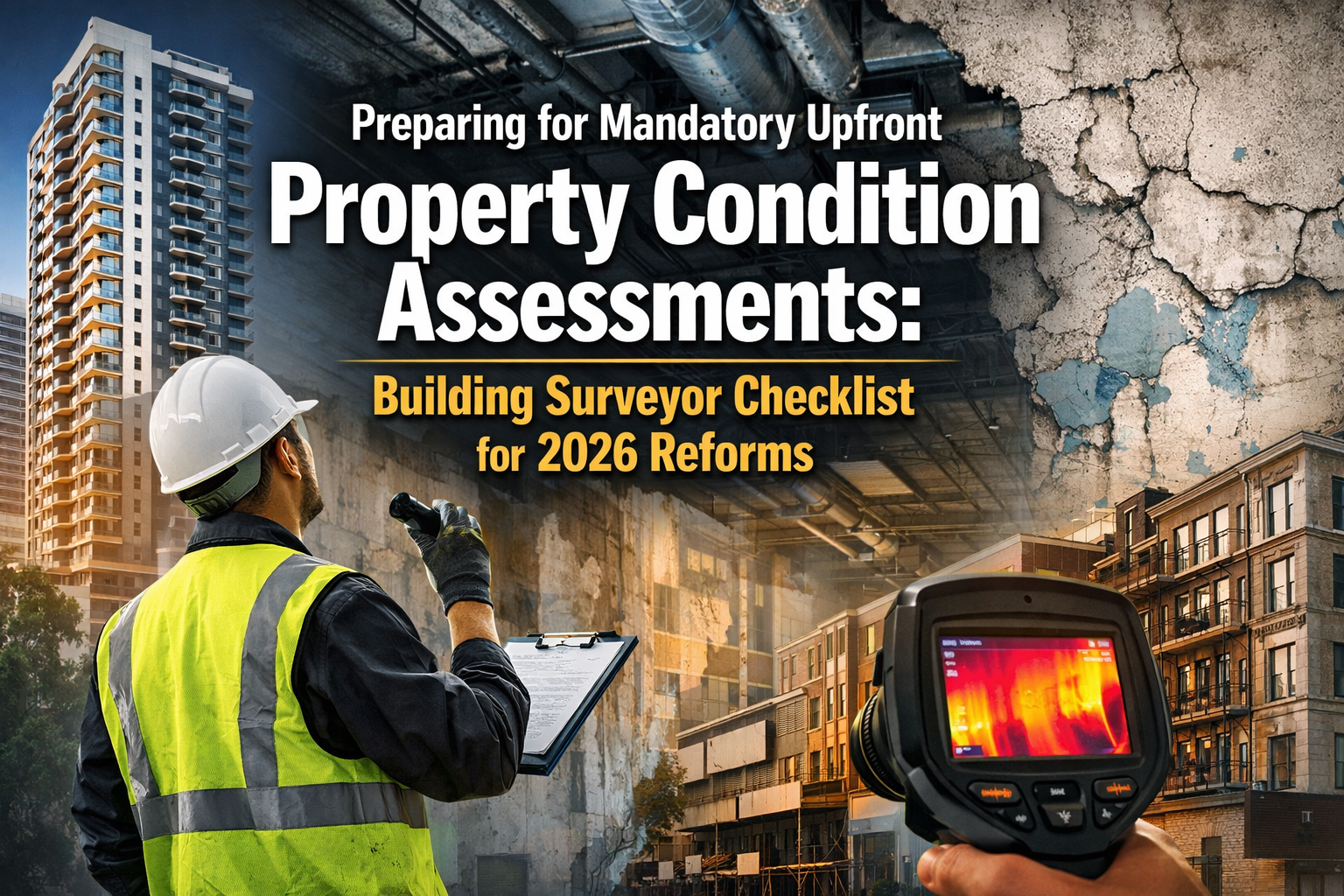
The property assessment landscape is undergoing its most significant transformation in decades. As 2026 approaches, building surveyors face a fundamental shift in how condition assessments are conducted, documented, and integrated into property management frameworks. The introduction of mandatory upfront property condition assessments represents more than a regulatory checkbox—it signals a new era of proactive building maintenance and heightened professional accountability. For surveyors preparing for mandatory upfront property condition assessments, understanding the building surveyor checklist for 2026 reforms is no longer optional; it's essential for professional survival and client service excellence.
Key Takeaways
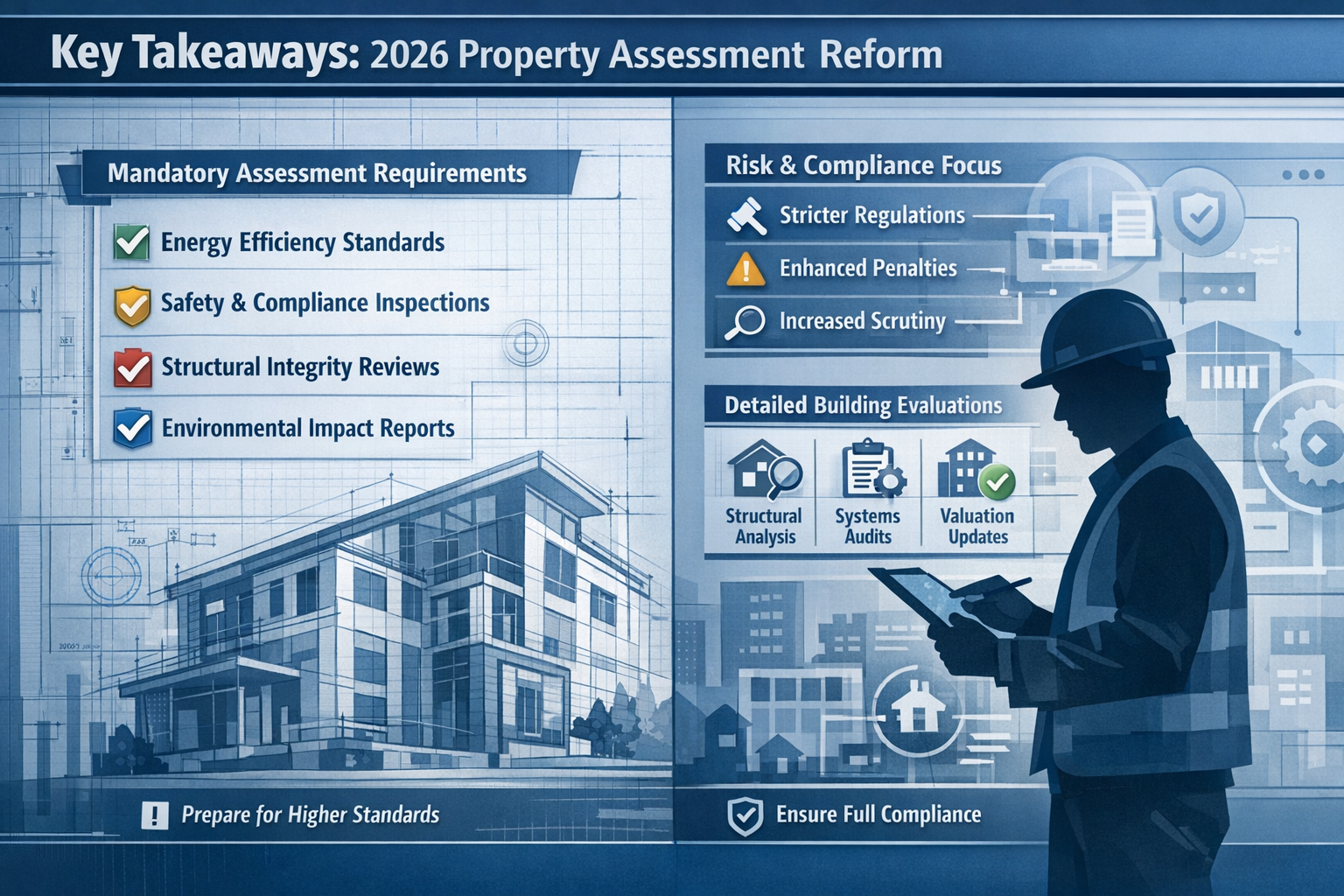
- 🏢 Mandatory Assessments: From April 2026, condition assessments become compulsory for capital works planning in buildings over ten years old, fundamentally changing surveyor workflows
- 📋 Enhanced Documentation: Cost estimates must be based on actual building condition assessments, requiring more detailed inspection protocols and reporting standards
- ⚡ Valuation Impact: Properties with comprehensive assessment histories and resolved defects secure more favorable valuations, making surveyor reports increasingly influential in property transactions
- 🔄 Increased Demand: More frequent assessment cycles create expanded opportunities for surveyors who adapt their services to meet new compliance requirements
- ✅ Proactive Compliance: Early adoption of enhanced assessment protocols positions surveyors as trusted advisors during the transition period
Understanding the 2026 Property Assessment Reforms
The regulatory landscape governing property condition assessments has evolved dramatically. The 2026 reforms introduce stringent requirements that fundamentally alter how building surveyors approach their work, particularly within strata and multi-unit residential contexts.
Legislative Framework and Timeline
When owners corporations prepare or review 10-year capital works plans from April 2026, cost estimates must be "based on actual building condition assessments."[1] This requirement represents a significant departure from previous practices where capital planning often relied on desktop reviews or limited visual inspections.
The legislation specifically targets buildings older than ten years, mandating "more regular condition assessments" alongside long-term maintenance forecasts and clear responsibility frameworks for identifying and rectifying defects.[2] This creates a cascading effect across the property sector, with implications for:
- Strata schemes requiring comprehensive common property assessments
- Commercial property owners needing detailed building condition reports
- Property managers coordinating assessment schedules and compliance documentation
- Building surveyors adapting methodologies to meet enhanced standards
Impact on Property Valuations
The connection between condition assessments and property valuations has strengthened considerably under the new framework. Buildings with recent or undetected defects identified through assessments may yield lower valuations, while schemes demonstrating a clear history of defect resolution generally secure more favorable valuation outcomes.[2]
This direct correlation means surveyors must now consider the downstream valuation implications of their findings. A thorough stock condition survey that identifies issues early can actually protect property values by enabling timely remediation, whereas superficial assessments that miss critical defects may expose clients to significant financial risk.
For those working with commercial building surveys, the reforms create additional complexity as commercial properties face similar scrutiny regarding maintenance standards and capital planning adequacy.
Preparing for Mandatory Upfront Property Condition Assessments: Essential Checklist Components
Building surveyors must develop comprehensive assessment protocols that satisfy regulatory requirements while providing genuine value to clients. The building surveyor checklist for 2026 reforms encompasses several critical domains.
Pre-Assessment Planning and Documentation
Client Brief and Scope Definition
- Clarify assessment purpose (capital planning, compliance, pre-purchase, valuation support)
- Define property boundaries and common property extent
- Identify specific areas of concern or known defects
- Establish reporting timeline and format requirements
- Confirm access arrangements and occupier coordination
Historical Record Review
- Obtain previous condition reports and maintenance records
- Review original building plans and specifications
- Examine modification and renovation documentation
- Analyze past defect rectification work
- Assess capital works fund history and expenditure patterns
Regulatory Compliance Verification
- Confirm building age and applicable assessment requirements
- Identify relevant building codes and standards
- Check fire safety compliance obligations
- Review accessibility requirements
- Verify environmental and sustainability obligations
Structural and Building Envelope Assessment
The physical inspection forms the cornerstone of any condition assessment. Surveyors preparing for mandatory upfront property condition assessments must adopt systematic approaches covering:
Foundation and Substructure
- Foundation type, condition, and settlement indicators
- Basement or sub-floor moisture ingress
- Ground movement or subsidence evidence
- Drainage adequacy around building perimeter
- Retaining wall stability and condition
For properties showing signs of movement, specialized surveys for subsidence may be necessary to establish causation and remediation requirements.
External Envelope
- Roof covering condition, age, and remaining service life
- Rainwater goods functionality and capacity
- External wall cladding integrity
- Window and door condition, sealing, and operation
- Balcony waterproofing and structural adequacy
- Façade attachment security
Internal Structure
- Load-bearing wall and column condition
- Floor slab integrity and levelness
- Ceiling condition and attachment
- Internal moisture penetration indicators
- Structural crack patterns and severity
Buildings with non-standard construction methods require particular attention, as these may present unique assessment challenges and potential financing implications for buyers.
Building Services and Mechanical Systems
Modern buildings rely on complex services infrastructure that requires specialized assessment:
Electrical Systems
- Distribution board condition and capacity
- Wiring age and compliance with current standards
- Emergency lighting functionality
- Common area lighting adequacy
- Electrical safety switch presence and operation
Plumbing and Drainage
- Water supply system condition and pressure
- Hot water system age, capacity, and efficiency
- Drainage functionality and blockage indicators
- Sewer line condition (where accessible)
- Water leak evidence and moisture damage
HVAC and Ventilation
- Heating and cooling system condition
- Ventilation adequacy in common areas
- Mechanical ventilation operation
- Air conditioning system age and efficiency
- Maintenance record review
Fire Safety Systems
- Fire alarm and detection system functionality
- Sprinkler system operation (where installed)
- Fire hose reel and extinguisher condition
- Emergency exit lighting and signage
- Fire door operation and sealing
Defect Identification and Categorization
The 2026 reforms place heightened emphasis on defect identification and prioritization. Surveyors must categorize findings according to urgency and impact:
| Priority Level | Description | Timeframe | Examples |
|---|---|---|---|
| Critical | Immediate safety risk or rapid deterioration | 0-3 months | Structural instability, electrical hazards, water ingress causing damage |
| High | Significant defects requiring prompt attention | 3-12 months | Roof leaks, failed waterproofing, non-compliant fire systems |
| Medium | Maintenance items affecting longevity | 1-3 years | Aging mechanical systems, deteriorating paintwork, minor drainage issues |
| Low | Cosmetic or minor functional issues | 3-5 years | Aesthetic improvements, minor repairs, efficiency upgrades |
This categorization directly informs capital works planning and helps owners corporations prioritize expenditure in alignment with regulatory expectations.
Building Surveyor Checklist for 2026 Reforms: Workflow Adaptations
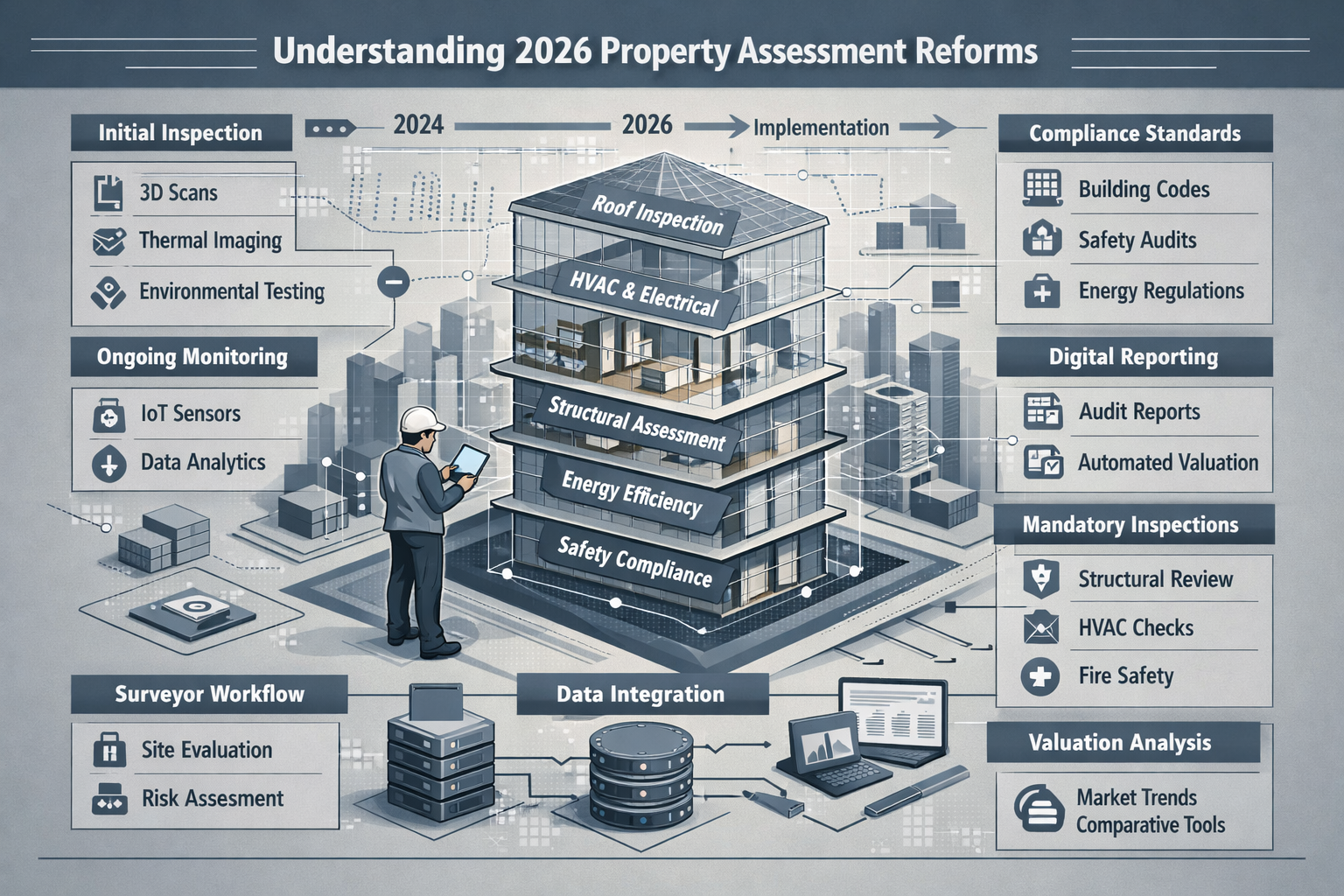
The introduction of mandatory assessments creates operational challenges for surveying practices. Successful adaptation requires strategic workflow modifications and capacity planning.
Enhanced Inspection Protocols
Technology Integration
- Digital inspection tools and mobile reporting platforms
- Thermal imaging for moisture detection and insulation assessment
- Drone surveys for roof and high-level facade inspection
- 3D scanning for complex building documentation
- Moisture meters and non-destructive testing equipment
Professional drone surveys have become increasingly valuable for comprehensive building envelope assessment, particularly for multi-story buildings where traditional access methods prove costly or impractical.
Quality Assurance Measures
- Standardized inspection checklists aligned with reform requirements
- Peer review processes for complex assessments
- Photographic documentation standards
- Consistent defect categorization methodology
- Regular calibration of testing equipment
Reporting Standards and Client Communication
The value of a condition assessment lies not just in thorough inspection but in clear, actionable reporting. The building surveyor checklist for 2026 reforms must include enhanced reporting elements:
Essential Report Components
- Executive summary with key findings and priority actions
- Detailed condition assessment by building element
- Photographic evidence with clear annotations
- Defect schedule with categorization and cost estimates
- Capital works recommendations with timeframes
- Compliance status against relevant standards
- Limitations and assumptions clearly stated
Cost Estimation Requirements
Since cost estimates must be based on actual condition assessments[1], surveyors must develop robust costing methodologies:
- Detailed measurement and quantification of remedial works
- Current market rates for materials and labor
- Allowances for contingencies and professional fees
- Staged implementation options where appropriate
- Cost escalation factors for multi-year programs
Understanding surveyor pricing helps surveyors communicate their own value proposition while providing realistic cost guidance for recommended works.
Managing Increased Demand
The mandatory nature of assessments from April 2026 creates significant demand surge risks. Practices must prepare through:
Capacity Planning
- Workforce expansion or contractor engagement
- Training programs for existing staff on enhanced protocols
- Scheduling systems to manage assessment cycles
- Geographic service area optimization
- Specialization in particular property types or assessment categories
Client Education and Advisory Services
Property owners are advised to "conduct a current building condition assessment" as part of preparing for 2026 compliance.[2] This creates opportunities for surveyors to position themselves as strategic advisors:
- Educational workshops for strata committees and owners corporations
- Pre-compliance health checks and gap analysis
- Ongoing assessment scheduling and compliance monitoring
- Integration with capital works planning processes
- Liaison with property managers and valuers
Complex Property Considerations
Not all properties present equal assessment challenges. Schemes with complex common property infrastructure require more detailed planning and assessment protocols than simpler arrangements.[1]
High-Complexity Properties
Characteristics Requiring Enhanced Assessment:
- Mixed-use developments with residential and commercial components
- High-rise buildings with sophisticated building management systems
- Properties with extensive recreational facilities (pools, gyms, common rooms)
- Buildings with complex waterproofing or structural systems
- Heritage or architecturally significant properties
- Properties with known defect histories or ongoing remediation
For these properties, surveyors may need to engage specialist consultants for particular building elements, coordinate multi-disciplinary assessment teams, and develop staged inspection approaches.
Simplified Assessment Approaches
Conversely, simpler property arrangements such as townhouse complexes with minimal common property may permit streamlined assessment protocols while still satisfying regulatory requirements. The key is ensuring the assessment scope and methodology match the property's complexity and risk profile.
Compliance Timeline and Proactive Preparation
The April 2026 implementation date creates urgency for both property owners and surveyors. A strategic approach to compliance preparation includes:
2026 Q1 (January-March)
- Final review of assessment protocols and reporting templates
- Staff training completion on reform requirements
- Client communication regarding upcoming obligations
- Scheduling systems optimization for anticipated demand
2026 Q2 (April-June)
- Reform implementation begins
- Priority assessments for properties approaching capital works review dates
- Monitoring of regulatory guidance and interpretation
- Adjustment of processes based on early implementation experience
2026 Q3-Q4 (July-December)
- Full-scale operation under new framework
- Review and refinement of workflows
- Client feedback integration
- Capacity assessment for ongoing demand levels
Property owners benefit from early action rather than waiting for the April deadline. Conducting assessments in late 2025 or early 2026 allows time to address identified defects before they impact valuations or capital planning processes.
Professional Development and Expertise Enhancement
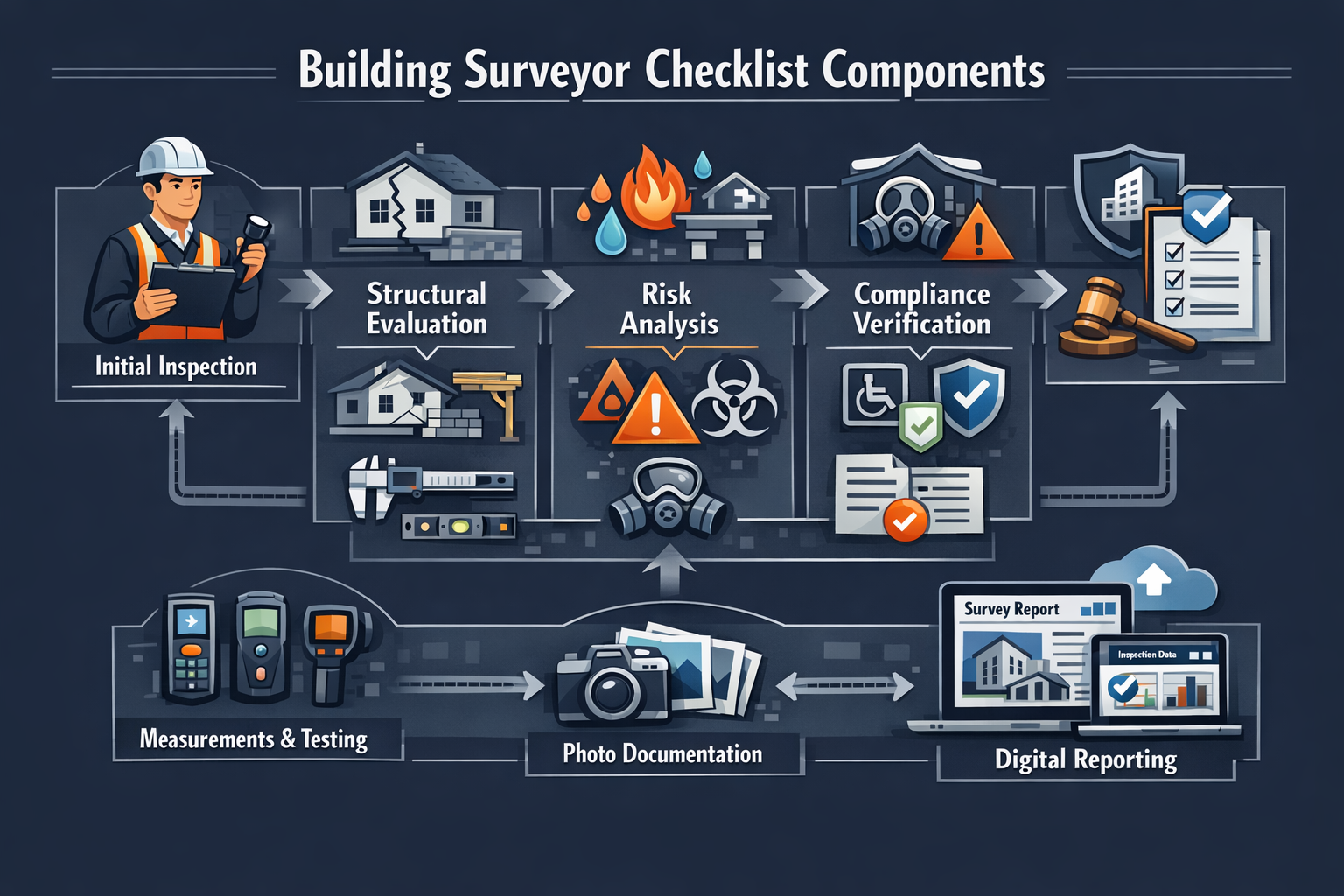
Preparing for mandatory upfront property condition assessments requires ongoing professional development:
Technical Competencies
- Building pathology and defect diagnosis
- Modern construction methods and materials
- Building services and mechanical systems knowledge
- Cost estimation and quantity surveying principles
- Regulatory frameworks and compliance requirements
Professional Accreditation
Maintaining relevant professional credentials becomes increasingly important as assessment standards rise. Chartered surveyors with appropriate qualifications and experience are best positioned to meet the enhanced demands of the 2026 reforms.
For complex cases requiring expert opinion, surveyors may need to provide expert witness services, supporting dispute resolution or litigation related to building defects and condition assessment findings.
Continuing Education
- Regulatory update seminars and workshops
- Building technology and materials courses
- Assessment methodology training
- Report writing and communication skills
- Technology and software proficiency
Integration with Broader Property Services
Condition assessments rarely exist in isolation. Surveyors should consider how their assessment services integrate with:
Pre-Purchase Inspections
Buyers increasingly request comprehensive condition assessments as part of due diligence. Understanding the difference between Level 2 and Level 3 surveys helps surveyors recommend appropriate assessment levels for different client needs.
Valuation Support
Given the direct impact of condition assessments on valuations[2], surveyors should develop collaborative relationships with valuers, ensuring assessment reports provide the information valuers need for accurate property appraisal.
Maintenance Planning
Condition assessments form the foundation for effective maintenance planning. Surveyors can add value by helping clients translate assessment findings into prioritized maintenance schedules and capital works programs.
Defect Rectification Oversight
Following assessment and defect identification, property owners often require ongoing professional support to oversee remediation works, verify completion, and confirm compliance with specifications.
Risk Management and Professional Liability
The mandatory nature of assessments and their direct impact on valuations and capital planning elevates professional liability considerations:
Documentation Standards
- Comprehensive file notes and inspection records
- Clear scope of work agreements
- Explicit limitation clauses where appropriate
- Photographic evidence with metadata
- Retention policies compliant with professional requirements
Professional Indemnity Insurance
Surveyors should review their professional indemnity coverage in light of:
- Increased assessment volumes and fee income
- Enhanced reporting standards and client reliance
- Potential valuation impact claims
- Defect identification disputes
- Regulatory compliance obligations
Quality Control Processes
- Systematic peer review for complex assessments
- Regular template and checklist updates
- Staff competency verification
- Client feedback mechanisms
- Continuous improvement protocols
Conclusion
The introduction of mandatory upfront property condition assessments from April 2026 represents a watershed moment for building surveyors. The reforms create both challenges and opportunities—challenges in adapting workflows, managing increased demand, and meeting enhanced standards; opportunities in expanded service offerings, deeper client relationships, and professional differentiation.
Success in this new regulatory environment requires proactive preparation. Surveyors must develop comprehensive assessment protocols, invest in technology and training, refine reporting standards, and position themselves as strategic advisors rather than mere compliance facilitators.
The building surveyor checklist for 2026 reforms outlined in this guide provides a foundation for this preparation, covering pre-assessment planning, inspection methodologies, defect categorization, reporting requirements, and workflow adaptations. However, each practice must tailor these principles to their specific circumstances, client base, and service offerings.
Actionable Next Steps
-
Audit Current Capabilities: Review existing assessment protocols against the requirements outlined in this checklist, identifying gaps and enhancement opportunities.
-
Invest in Technology: Evaluate digital inspection tools, reporting platforms, and assessment technologies that improve efficiency and quality.
-
Develop Training Programs: Ensure all staff understand the 2026 reforms and can execute assessments to the required standard.
-
Engage Clients Proactively: Communicate with existing clients about upcoming requirements and position your practice as their compliance partner.
-
Build Strategic Relationships: Develop referral networks with property managers, valuers, and legal advisors who will direct assessment work to qualified surveyors.
-
Monitor Regulatory Developments: Stay informed about implementation guidance, interpretation issues, and any regulatory clarifications as the April 2026 deadline approaches.
The surveyors who thrive under the 2026 reforms will be those who recognize that mandatory assessments represent more than a compliance burden—they're an opportunity to demonstrate professional value, protect client interests, and contribute to higher building standards across the property sector. By preparing thoroughly and adapting strategically, building surveyors can position themselves at the forefront of this important industry evolution.
References
[1] NSW Strata Law Reforms April 2026: What Property Owners Need to Know – https://lexalia.au/insight/nsw-strata-law-reforms-april-2026-what-property-owners-need-to-know
[2] New Strata Legislation: How It Affects Your Valuation – https://keenproperty.com.au/new-strata-legislation-how-it-affects-your-valuation/