The landscape of luxury property ownership in the UK is shifting dramatically in 2026. As government taxation policies increasingly target high-value properties valued over £2 million, homeowners undertaking building work face a complex intersection of party wall legislation and enhanced tax obligations. Understanding how Party Wall Surveys for High-Value Property Tax Changes: Navigating Awards When Homes Over £2M Face New Fees affects your renovation plans is crucial for protecting both your investment and your legal position.
Whether planning a basement conversion in Chelsea or a rear extension in Hampstead, owners of premium properties must now navigate not only traditional party wall procedures but also heightened scrutiny from tax authorities and increased surveyor liability considerations. This comprehensive guide explores how these changes reshape party wall agreements, dispute resolution, and cost structures in the premium residential market.

Key Takeaways
- Property owners undertaking building work on homes valued over £2M face enhanced tax reporting requirements that intersect with party wall procedures, requiring careful coordination between surveyors and tax advisors
- Party wall surveyor fees remain based on project complexity rather than property value, with standard residential projects costing £800–£1,500 and complex basement conversions reaching £5,000–£10,000+ in 2026[1][2]
- The building owner pays all reasonable surveyor costs under Section 11(1) of the Party Wall etc. Act 1996, regardless of property valuation or tax status[1]
- New government taxation on £2M+ properties increases surveyor liability exposure, requiring more detailed documentation and potentially higher professional indemnity insurance costs
- Dispute resolution in premium markets now involves additional tax considerations, particularly regarding property valuations and improvement assessments that affect both party wall awards and tax obligations
Understanding the £2M Property Tax Threshold and Party Wall Implications
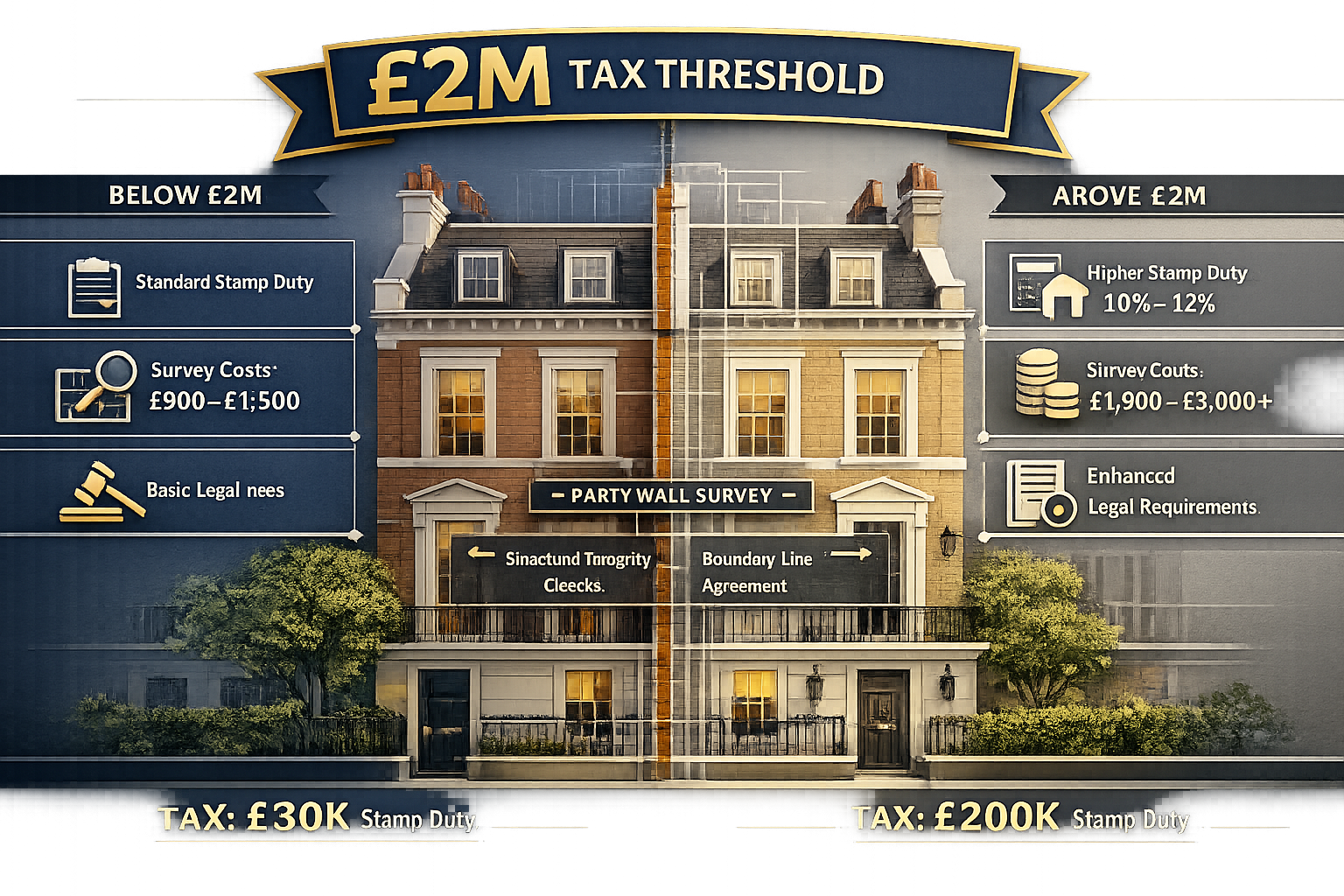
The UK government's focus on high-value residential properties has intensified in 2026, with multiple tax mechanisms specifically targeting homes valued above £2 million. These include Annual Tax on Enveloped Dwellings (ATED), enhanced Stamp Duty Land Tax (SDLT) rates, and stricter Capital Gains Tax (CGT) reporting requirements.
How Tax Changes Intersect with Party Wall Procedures
When undertaking building work that triggers the Party Wall etc. Act 1996, property owners must now consider how improvements affect their tax position. Any structural work that increases property value—whether a loft conversion, basement excavation, or rear extension—has dual implications:
- Party Wall Award Documentation: Surveyors must prepare detailed awards describing the work, which become permanent records attached to the property
- Tax Valuation Evidence: These same documents may be scrutinized by HMRC to assess property value increases for tax purposes
The intersection creates new challenges for surveyors working on premium properties. Traditional party wall surveyor responsibilities now extend beyond structural protection to include awareness of tax implications.
Enhanced Scrutiny for High-Value Properties
Properties exceeding the £2M threshold face additional reporting requirements that affect party wall procedures:
- Detailed valuation records before and after building work
- Comprehensive photographic documentation of existing conditions
- Itemized cost breakdowns for all improvement works
- Professional certification of completed works and their impact on property value
These requirements align closely with proper party wall procedures, particularly the importance of a thorough schedule of condition before work commences.
Party Wall Survey Costs for High-Value Properties in 2026
A common misconception among owners of premium properties is that party wall surveyor fees scale with property value. In reality, fees are determined by project complexity, not the property's market price. However, several factors specific to high-value properties can affect overall costs.
Standard Fee Structures
According to industry data for 2026, party wall surveyor costs follow these general ranges:
| Project Type | Agreed Surveyor Cost | Two Separate Surveyors |
|---|---|---|
| Basic works (single wall) | £800–£1,200 + VAT | £1,500–£2,500 + VAT |
| Standard extensions | £1,000–£1,500 + VAT | £2,000–£3,500 + VAT |
| Loft conversions | £1,200–£1,800 + VAT | £2,500–£4,000 + VAT |
| Basement conversions | £3,000–£6,000 + VAT | £5,000–£10,000+ + VAT |
These figures apply regardless of whether the property is valued at £500,000 or £5 million[1][2]. The building owner bears all reasonable surveyor costs under the Party Wall etc. Act 1996, including fees for both the building owner's surveyor and the adjoining owner's surveyor[1].
London Premium and Hourly Rates
In premium London markets where most £2M+ properties are concentrated, surveyors typically charge £190–£350 per hour plus VAT in 2026[2]. The higher end of this range applies to:
- ⚡ Complex structural projects requiring extensive calculations
- 🏛️ Listed buildings or conservation areas with special requirements
- 📋 Multiple adjoining properties requiring coordination across several neighbors
- 🔍 Dispute resolution involving contentious issues
Why Costs May Be Higher for Premium Properties
While property value itself doesn't dictate fees, several factors common to high-value properties can increase surveyor costs:
Enhanced Documentation Requirements: Owners of £2M+ properties often request more comprehensive reports for their own records and tax planning purposes, adding to surveyor workload.
Higher Stakes: With more valuable properties, the potential cost of errors increases, requiring surveyors to carry higher professional indemnity insurance and conduct more thorough investigations.
Complex Architecture: Premium properties frequently feature intricate structural systems, period details, or previous alterations requiring additional analysis.
Multiple Professionals: High-value projects typically involve architects, structural engineers, tax advisors, and legal counsel, requiring more coordination and communication from the party wall surveyor.
"Modest fee increases are expected in 2026 due to inflation and rising operational costs, though fees remain variable by project complexity rather than property value."[5]
For detailed cost breakdowns and factors affecting party wall expenses, see our comprehensive guide on party wall costs.
Navigating Party Wall Awards When Tax Changes Apply
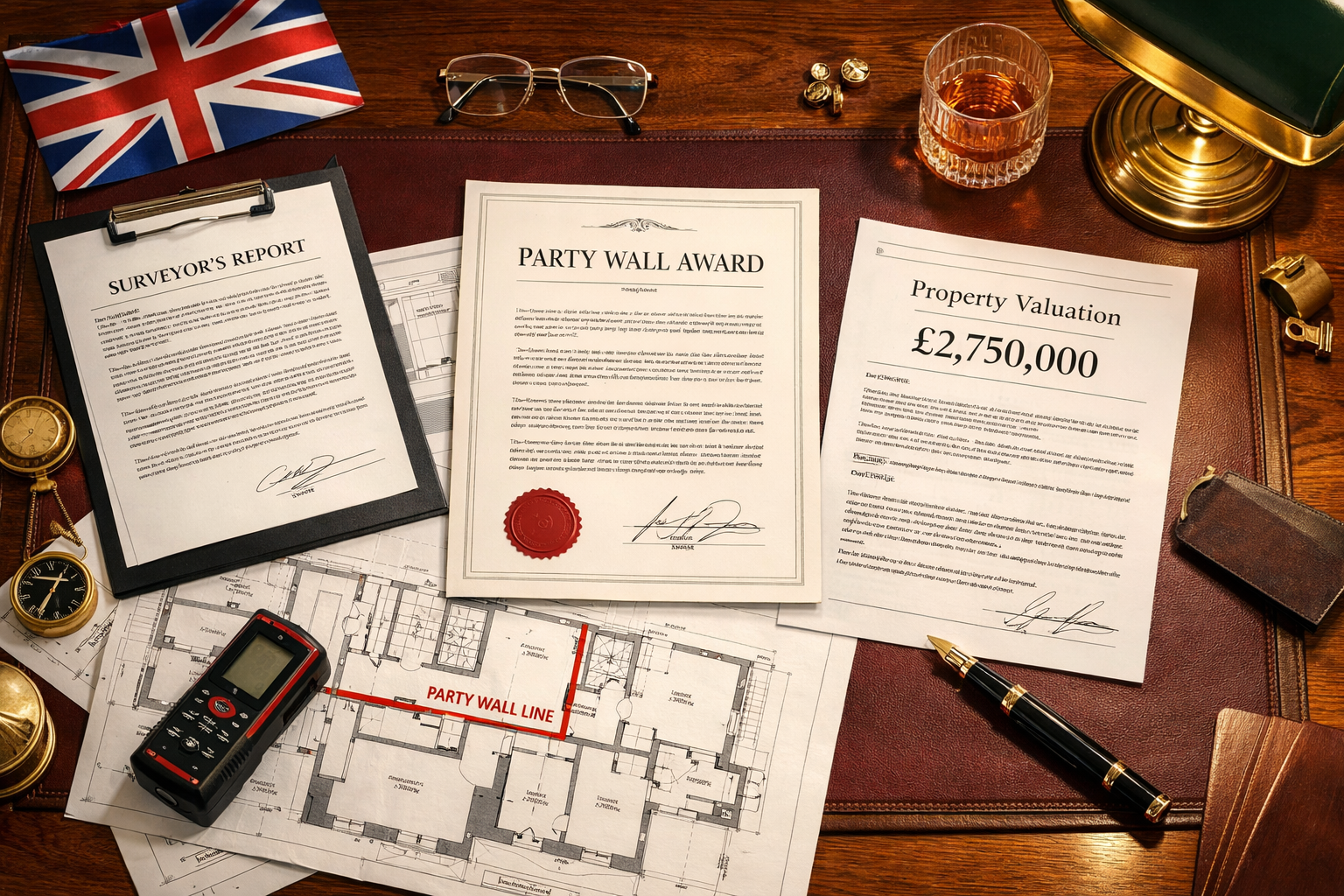
The Party Wall Award is the formal document that records the agreed-upon terms for building work affecting party structures. For properties valued over £2M, these awards take on additional significance due to their potential use as evidence in tax assessments.
Essential Components of Awards for High-Value Properties
A properly drafted Party Wall Award for premium properties should include:
Detailed Work Descriptions: Precise specifications of all proposed works, including materials, methods, and timelines. This documentation serves both party wall compliance and potential tax valuation purposes.
Comprehensive Schedules of Condition: Thorough photographic and written records of the existing state of adjoining properties. These protect all parties and provide baseline documentation for future valuations.
Clear Cost Allocations: Transparent breakdown of who pays for what, particularly important when work benefits multiple properties or involves shared structures like shared chimneys.
Dispute Resolution Mechanisms: Procedures for handling disagreements, which may now involve tax-related complications in addition to structural concerns.
Tax Considerations in Award Preparation
Surveyors working on high-value properties must be aware of how their awards might be interpreted by tax authorities:
- Valuation Impact Statements: While not traditionally required, some surveyors now include commentary on how proposed works might affect property values
- Improvement vs. Repair Distinctions: Clear categorization helps property owners understand tax implications of different work types
- Cost Documentation: Detailed records support both party wall compliance and tax reporting requirements
Special Regulations for Premium Residential Properties
Properties in certain premium London boroughs or conservation areas face additional regulatory layers:
- Planning restrictions that may limit the scope of permissible work
- Conservation area consent requirements affecting external alterations
- Listed building consent for properties of historical significance
- Local authority party wall services that may scrutinize high-value projects more closely
Understanding the three-meter rule for excavation near neighboring properties becomes particularly important for basement conversions in dense urban areas where £2M+ properties are concentrated.
Tax-Related Party Wall Adjustments and Surveyor Liability
The intersection of enhanced taxation and party wall procedures creates new liability considerations for surveyors working on premium properties. In 2026, surveyors must balance their traditional role protecting structural integrity with awareness of the broader financial implications of their work.
Increased Professional Indemnity Requirements
Surveyors working regularly on £2M+ properties may need to:
- Increase professional indemnity insurance coverage to reflect higher potential claims values
- Implement enhanced quality control procedures for documentation and reporting
- Maintain detailed records of all communications and decisions
- Seek legal advice on complex cases involving significant tax implications
Coordination with Tax Advisors
Best practice for Party Wall Surveys for High-Value Property Tax Changes: Navigating Awards When Homes Over £2M Face New Fees now includes:
Early Consultation: Encouraging building owners to involve tax advisors before finalizing party wall awards, ensuring consistency between structural documentation and tax planning.
Information Sharing: With client consent, facilitating communication between surveyors, tax advisors, and legal counsel to ensure all parties understand the full implications of proposed work.
Valuation Awareness: While party wall surveyors are not valuers, understanding how building work affects property values helps inform better decisions. For formal valuations, property owners should consult specialists in property valuation.
Common Pitfalls to Avoid
When navigating Party Wall Surveys for High-Value Property Tax Changes: Navigating Awards When Homes Over £2M Face New Fees, several mistakes can prove costly:
❌ Inadequate initial documentation: Failing to prepare comprehensive schedules of condition before work begins
❌ Underestimating project complexity: Assuming standard procedures apply without considering tax implications
❌ Poor communication: Not keeping all parties informed of changes or issues that arise during work
❌ Ignoring notice requirements: Failing to serve proper notice for excavation work, particularly important for notice for excavation near a neighbour
❌ Proceeding without agreement: Starting work without a proper party wall agreement or award in place—see the risks of no party wall agreement
Dispute Resolution in Premium Property Markets
When disagreements arise regarding party wall matters on high-value properties, the stakes are considerably higher than in standard residential cases. The combination of substantial property values, complex tax implications, and often contentious neighbor relationships creates a challenging environment for dispute resolution.
Enhanced Dispute Resolution Procedures
For properties over £2M, dispute resolution often involves:
Independent Expert Determination: Appointing a third surveyor with specific expertise in premium properties and awareness of tax implications.
Mediation Services: Engaging professional mediators before disputes escalate to formal legal proceedings.
Detailed Technical Reports: Commissioning specialist reports from structural engineers or other experts to support positions. Our RICS building surveys provide comprehensive technical assessments.
Legal Representation: Involving property solicitors experienced in both party wall matters and high-value property taxation.
Tax Considerations in Disputes
Disputes involving £2M+ properties may include tax-related elements:
- Disagreement over property valuations and how proposed work affects them
- Disputes regarding cost allocations and their tax treatment
- Conflicts over improvement vs. maintenance classifications
- Arguments about shared benefit from works and corresponding tax implications
Case Study: Basement Conversion Dispute
Consider a typical scenario in 2026: A property owner in Kensington plans a basement conversion on their £3.5M townhouse. The project requires underpinning the party wall and excavation within three meters of the adjoining property.
Initial Issues:
- Adjoining owner concerned about structural damage to their £3M property
- Building owner worried about tax implications of significant improvement
- Disagreement over surveyor fee allocation
- Dispute regarding temporary access requirements
Resolution Approach:
- Appointed agreed surveyor with experience in premium basements
- Commissioned detailed structural assessment and schedule of condition
- Coordinated with tax advisors for both parties
- Drafted comprehensive Party Wall Award addressing all concerns
- Established monitoring protocols throughout construction
Outcome: Work proceeded smoothly with regular inspections, no structural damage occurred, and both parties had clear documentation for their tax records.
Working with Professional Surveyors on High-Value Properties
Selecting the right surveyor for Party Wall Surveys for High-Value Property Tax Changes: Navigating Awards When Homes Over £2M Face New Fees is crucial for successful project outcomes.
Essential Qualifications and Experience
When choosing a party wall surveyor for premium properties, look for:
✅ RICS Chartered Status: Membership in the Royal Institution of Chartered Surveyors ensures professional standards
✅ Specialist Experience: Track record working on high-value properties and complex projects
✅ Local Knowledge: Familiarity with the specific area, local authorities, and common issues
✅ Tax Awareness: Understanding of how party wall matters intersect with property taxation
✅ Professional Indemnity Insurance: Adequate coverage for high-value property work
✅ Strong Communication Skills: Ability to explain complex issues clearly to all parties
Questions to Ask Potential Surveyors
Before appointing a surveyor for your £2M+ property project:
- How many party wall projects have you handled on properties valued over £2M?
- What is your experience with [specific project type: basement conversions, extensions, etc.]?
- How do you coordinate with tax advisors and other professionals?
- What is your fee structure and what does it include?
- Can you provide references from recent high-value property clients?
- What is your approach to dispute resolution if disagreements arise?
- How do you ensure compliance with both party wall legislation and relevant tax reporting requirements?
The Value of Comprehensive Building Surveys
Beyond party wall matters, owners of high-value properties benefit from comprehensive building assessments. Our Level 3 RICS building surveys provide detailed analysis of property condition, essential for both renovation planning and accurate tax valuations.
Future Outlook: Party Wall Procedures and Tax Policy
Looking ahead, the relationship between party wall procedures and property taxation is likely to strengthen further. Several trends are emerging in 2026:
Increased Integration: Tax authorities and local planning departments are sharing more information about high-value property improvements.
Digital Documentation: Electronic party wall awards and digital schedules of condition are becoming standard, facilitating easier sharing with tax advisors and authorities.
Enhanced Transparency: Government initiatives aimed at tracking property improvements and ensuring accurate tax assessments are expanding.
Professional Specialization: More surveyors are developing expertise specifically in the intersection of party wall work and high-value property taxation.
Regulatory Evolution: Potential future legislation may formalize the connection between party wall documentation and tax reporting requirements.
Preparing for Changes
Property owners planning significant building work on £2M+ properties should:
- Engage professionals early in the planning process
- Budget appropriately for comprehensive surveyor services
- Maintain meticulous records of all work and associated costs
- Coordinate between advisors to ensure consistency across party wall, planning, and tax matters
- Stay informed about regulatory changes affecting high-value properties
Conclusion
Party Wall Surveys for High-Value Property Tax Changes: Navigating Awards When Homes Over £2M Face New Fees represents a complex but manageable challenge for property owners in 2026. While the intersection of enhanced taxation and traditional party wall procedures adds layers of complexity, proper planning and professional guidance ensure successful outcomes.
Key actions for property owners:
- Engage qualified surveyors with specific experience in high-value properties and awareness of tax implications
- Coordinate early between party wall surveyors, tax advisors, architects, and legal counsel
- Document thoroughly with comprehensive schedules of condition and detailed party wall awards
- Budget realistically for surveyor fees based on project complexity rather than property value
- Communicate proactively with adjoining owners to prevent disputes before they arise
- Maintain compliance with both party wall legislation and tax reporting requirements
The fundamental principles of the Party Wall etc. Act 1996 remain unchanged—protecting the rights of both building owners and adjoining owners while facilitating necessary building work. However, the enhanced scrutiny and documentation requirements for £2M+ properties demand greater attention to detail and professional expertise.
By understanding how tax changes affect party wall procedures, selecting experienced professionals, and maintaining comprehensive documentation, owners of high-value properties can navigate these requirements successfully while protecting their investments and maintaining positive neighbor relationships.
For expert guidance on party wall matters for your premium property, consult with qualified chartered surveyors who understand both the technical requirements and the broader financial implications of building work in the high-value property market.
References
[1] Who Pays For Party Wall Surveyor – https://blackacresurveyors.com/2026/03/12/who-pays-for-party-wall-surveyor/
[2] Agreed Surveyor Cost London 2026 – https://www.partywallslimited.com/blog/agreed-surveyor-cost-london-2026
[3] Who Pays For A Party Wall Surveyor A Guide To Cost Responsibilities – https://nottinghillsurveyors.com/blog/who-pays-for-a-party-wall-surveyor-a-guide-to-cost-responsibilities
[4] Costs Party Wall Cost Comparison London Uk – https://www.surveyofpartywall.co.uk/costs-party-wall-cost-comparison-london-uk/
[5] Will Party Wall Surveyor Fees Go Up In 2026 – https://www.simplesurvey.co.uk/article/will-party-wall-surveyor-fees-go-up-in-2026/
[6] Party Wall Surveyor Cost And Fees – https://www.peterbarry.co.uk/blog/party-wall-surveyor-cost-and-fees/