}

The UK's digital infrastructure landscape is experiencing unprecedented transformation in 2026. With nearly 100 new data centres in the pipeline and tech giants committing billions in capital investment, the race to expand capacity has created a complex web of legal and structural challenges. Party Wall Surveys for Data Centre Expansions: Securing Agreements Amid UK's 2026 Infrastructure Investment Boom represents one of the most critical—yet often overlooked—aspects of these massive construction projects. When Google announces a £5 billion data centre programme or Microsoft begins building the UK's largest supercomputer facility, the success of these ventures often hinges on something far more mundane: securing proper agreements with neighbouring property owners through rigorous party wall procedures.
Key Takeaways
- 📊 Almost 100 new data centres are planned for the UK by 2030, creating unprecedented demand for party wall surveys in urban development zones where facilities border existing properties
- 🏗️ Major tech investments from Google (£5 billion), Microsoft ($15 billion), and Blackstone (£10 billion) require RICS-compliant party wall protocols to avoid costly construction delays
- ⚖️ Party Wall Act 1996 compliance is mandatory for excavations, structural work, and building on boundaries—failure to serve proper notices can result in injunctions halting multi-million-pound projects
- 🔍 Schedule of Condition surveys protect both data centre developers and adjoining owners by documenting pre-construction property states and preventing future disputes
- ⚡ Grid capacity constraints and tight construction timelines make efficient party wall agreement processes essential for meeting 2026-2030 infrastructure targets
Understanding the 2026 Data Centre Expansion Landscape

The UK has cemented its position as the world's third-largest data centre market, with 477 facilities already operational.[2] This infrastructure foundation is about to experience explosive growth driven by artificial intelligence, cloud computing, and digital transformation initiatives across both public and private sectors.
Investment Scale and Geographic Distribution
The numbers tell a compelling story. Google's £5 billion commitment, Microsoft's $15 billion capital expenditure including the Loughton supercomputer facility, and Blackstone Group's £10 billion AI campus in Blyth represent just the headline investments.[2] These projects are moving from planning stages into active construction, creating immediate demand for professional surveying services.
Key Investment Highlights:
| Investor | Investment Amount | Project Type | Construction Stage |
|---|---|---|---|
| £5 billion | Data centre programme | Advanced construction | |
| Microsoft | $15 billion | Supercomputer facility (Loughton) | Early operational |
| Blackstone | £10 billion | AI campus (Blyth) | Advanced construction |
The geographic spread of these developments presents unique challenges. With 28 planned sites in Thames Water service areas alone, many facilities are being constructed in dense urban environments where party wall considerations become unavoidable.[2]
Infrastructure Strain and Regulatory Pressure
The scale of expansion has created unprecedented strain on national infrastructure. Ofgem has received connection enquiries for approximately 140 new data centre projects seeking about 50 gigawatts of electricity capacity—exceeding Britain's entire recent peak electricity demand of 45 gigawatts.[3] The National Energy System Operator estimates data centres could drive up to 71 TWh of additional demand over the next 25 years.[2]
This infrastructure pressure translates directly into construction urgency. Developers face tight timelines to capitalize on AI boom opportunities while navigating complex regulatory frameworks. Party wall procedures cannot become bottlenecks in these high-stakes projects.
Party Wall Act 1996: Essential Framework for Data Centre Construction
The Party Wall etc. Act 1996 provides the legal framework governing construction work on or near boundaries between properties in England and Wales. For data centre developers, understanding and correctly implementing these requirements is non-negotiable.
When Party Wall Notices Are Required
Data centre expansion projects typically trigger party wall requirements in three scenarios:
1. Building on the Boundary Line
When constructing new data centre facilities or expanding existing ones directly on the boundary line with adjoining properties, developers must serve notice under Section 1 of the Act. This includes new walls, foundations, or structural elements.
2. Work to Existing Party Walls
Modifications to existing shared walls—common when repurposing industrial or commercial buildings for data centre use—require Section 2 notices. This covers structural alterations, underpinning, or cutting into party walls for service installations.
3. Excavation Near Neighbouring Properties
The three-meter rule is particularly relevant for data centre construction. When excavating within three meters of a neighbouring building's foundation, or within six meters if the excavation goes deeper than the neighbour's foundation, Section 6 notices are mandatory. Given the substantial foundation requirements for data centres housing heavy server equipment and cooling systems, excavation notices are almost always necessary.
Notice Periods and Response Timelines
⏰ Critical Timeline Requirements:
- Section 1 & 2 Notices: Must be served at least two months before work commences
- Section 6 (Excavation) Notices: Require one month's advance notice
- Neighbour Response Period: 14 days from receipt of notice
When no party wall agreement is reached within the statutory period, a dispute is deemed to exist, triggering the surveyor appointment process.
Surveyor Appointment and Award Process
The Party Wall Act establishes three surveyor appointment options:
- Agreed Surveyor: Both parties jointly appoint a single surveyor
- Two Surveyors: Each party appoints their own surveyor, who then select a third surveyor
- Three Surveyors: The appointed surveyors select a third surveyor to resolve disagreements
For data centre projects valued in the millions, the two-surveyor approach is most common, ensuring both parties have dedicated professional representation while maintaining project momentum.
The surveyors produce a Party Wall Award—a legally binding document that:
✅ Describes the proposed works in detail
✅ Records the condition of adjoining properties through a Schedule of Condition
✅ Specifies working hours and access arrangements
✅ Addresses security concerns for existing operations
✅ Establishes dispute resolution procedures
Party Wall Surveys for Data Centre Expansions: Securing Agreements Amid UK's 2026 Infrastructure Investment Boom—Practical Implementation
Successfully navigating party wall procedures for data centre projects requires specialized knowledge that goes beyond standard residential construction protocols. The scale, technical complexity, and commercial stakes demand a strategic approach.
Pre-Construction Due Diligence Checklist
Before breaking ground on any data centre expansion, developers should complete this comprehensive checklist:
📋 Initial Assessment Phase:
- Identify all properties within six meters of proposed excavation
- Determine ownership of all adjoining structures
- Review title deeds for existing easements or restrictions
- Assess whether existing buildings share party walls
- Evaluate potential for excavation near neighbour scenarios
- Calculate precise excavation depths and foundation requirements
- Document current condition of all neighbouring properties
📋 Stakeholder Engagement:
- Identify all building owners and occupiers
- Establish communication protocols with commercial tenants
- Brief security teams on access requirements
- Coordinate with existing data centre operations if expanding
- Engage RICS-qualified surveyors early in planning
📋 Technical Documentation:
- Prepare detailed architectural drawings showing boundary relationships
- Develop structural engineering specifications for foundation work
- Create excavation methodology statements
- Document vibration monitoring protocols
- Establish dust and noise mitigation strategies
Schedule of Condition: Protecting All Parties
The Schedule of Condition serves as crucial evidence documenting the pre-construction state of adjoining properties. For data centre projects, this survey must be exceptionally thorough given the potential for vibration, ground movement, and structural stress during construction.
Essential Elements of Data Centre Schedule of Condition:
🔍 Structural Elements:
- Foundation condition and visible settlement
- Wall integrity, including hairline cracks
- Floor levelness and substrate condition
- Ceiling and roof structure
- Load-bearing capacity indicators
🔍 Mechanical and Electrical Systems:
- HVAC equipment condition
- Electrical distribution systems
- Server room environmental controls
- Backup power systems
- Fire suppression equipment
🔍 External Factors:
- Boundary wall conditions
- Drainage systems
- Ground conditions
- Access routes
- Existing service penetrations
Professional photographers should document every aspect with date-stamped, high-resolution images. For operational data centres, thermal imaging can establish baseline temperature profiles, while vibration sensors can record normal operational levels before construction begins.
Managing Disputes and Objections
Despite best efforts, disputes arise—particularly when data centre construction impacts existing commercial operations. Understanding common objection patterns helps developers prepare effective responses.
Common Neighbour Concerns:
💼 Operational Disruption
Existing businesses, especially other tech facilities, may object to construction noise, vibration, or temporary power disruptions. Awards should specify:
- Restricted working hours during critical business periods
- Vibration limits with continuous monitoring
- Advance notice of any utility interruptions
- Compensation mechanisms for documented losses
🏢 Structural Integrity
Owners of older buildings adjacent to data centre sites often fear foundation work will cause settlement or cracking. Address concerns through:
- Independent structural assessments
- Enhanced monitoring during excavation
- Insurance-backed warranties
- Regular progress updates with photographic evidence
🔒 Security and Access
Data centres require stringent security protocols. When construction teams need access through or near secure facilities:
- Establish vetted contractor lists
- Implement escort procedures
- Install temporary security measures
- Schedule access during low-activity periods
- Provide adequate notice for all access requirements
For guidance on resolving conflicts, refer to our comprehensive Party Wall FAQs resource.
RICS Standards and Professional Compliance in High-Value Projects
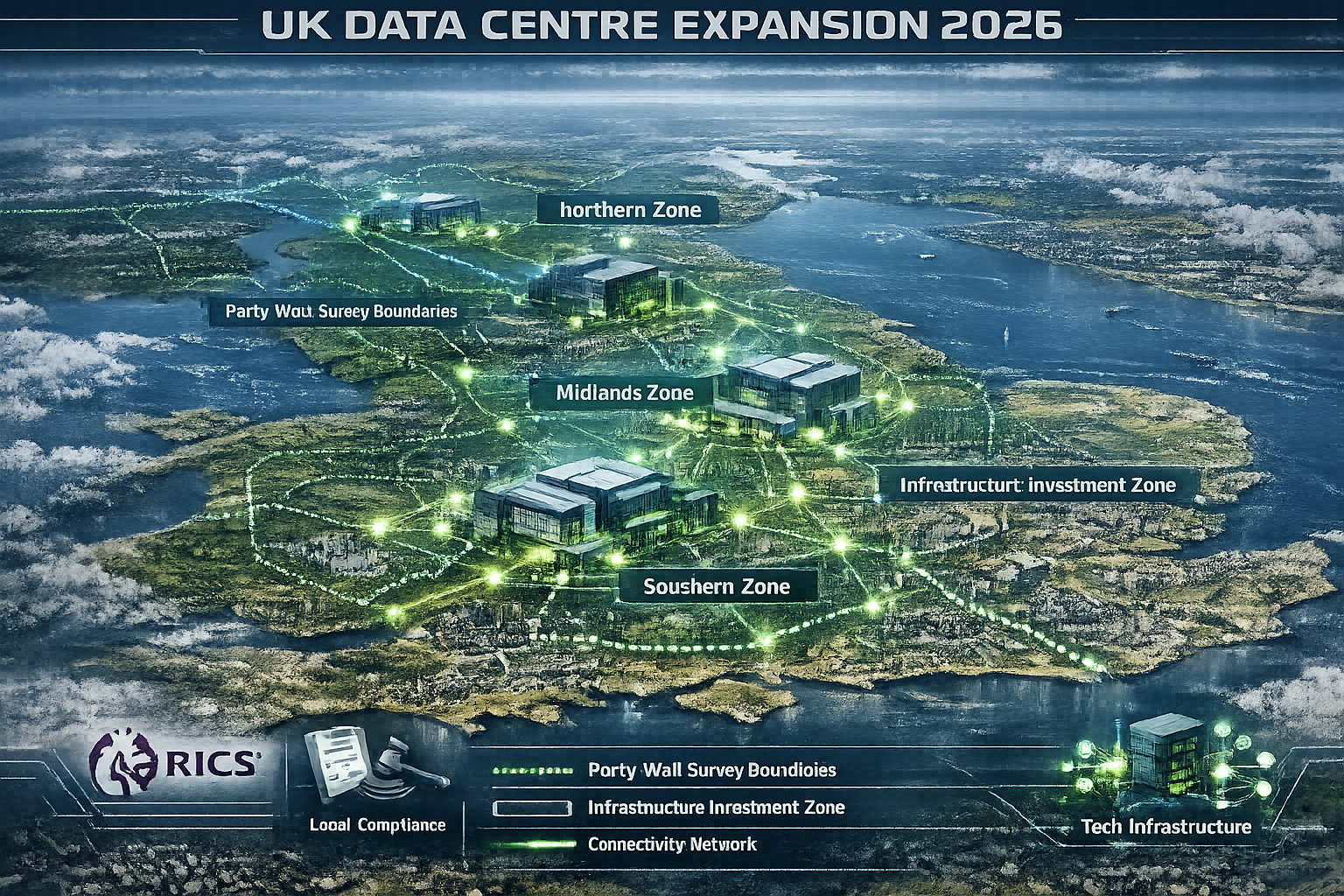
The Royal Institution of Chartered Surveyors (RICS) sets professional standards that govern party wall surveying practice. For data centre projects where construction values can exceed £100 million, adherence to RICS guidance is essential for legal defensibility and professional credibility.
RICS Guidance Note: Party Wall Legislation and Procedure
RICS publishes comprehensive guidance that party wall surveyors must follow. Key requirements include:
Professional Independence:
Surveyors must act impartially, even when appointed by one party. This is particularly important in data centre projects where commercial pressures may be intense.
Competence and Expertise:
Surveyors should possess specific knowledge of:
- Structural engineering principles relevant to deep excavations
- Data centre construction methodologies
- Commercial property valuation
- Construction project management
- Dispute resolution procedures
Documentation Standards:
All notices, awards, and correspondence must meet RICS documentation standards, including:
- Clear, unambiguous language
- Comprehensive technical specifications
- Proper service of documents
- Retention of complete records
- Transparent fee structures
Cost Considerations and Fee Structures
Party wall survey costs for data centre projects differ significantly from residential work due to complexity and scale. Understanding party wall costs helps developers budget appropriately.
Typical Fee Components:
| Service Element | Estimated Cost Range | Notes |
|---|---|---|
| Initial consultation | £500 – £1,500 | Site assessment and feasibility |
| Notice preparation | £750 – £2,000 | Per adjoining owner |
| Schedule of Condition | £1,500 – £5,000 | Per property, depending on size |
| Award preparation | £2,500 – £7,500 | Complex commercial awards |
| Monitoring visits | £500 – £1,500 | Per visit during construction |
| Dispute resolution | £150 – £300/hour | If required |
For projects affecting multiple adjoining owners—common in urban data centre developments—total party wall costs can reach £50,000-£150,000. While substantial, these costs represent a tiny fraction of overall project budgets and provide essential legal protection.
Insurance and Liability Considerations
Data centre developers should ensure their party wall surveyors carry:
✅ Professional Indemnity Insurance: Minimum £2 million coverage
✅ Public Liability Insurance: Appropriate for site access
✅ RICS Regulation: Membership and regulatory oversight
Additionally, developers should maintain:
- Construction All Risks insurance covering party wall damage
- Third-party liability coverage for adjoining properties
- Business interruption insurance for neighbouring operations
- Professional indemnity for design team errors
Case Study Applications: Lessons from 2026 Infrastructure Projects
While specific project details remain confidential, general patterns emerging from 2026 data centre developments offer valuable insights for party wall management.
Urban Density Challenges
One major hyperscale facility under construction in London's Docklands area faced party wall requirements affecting 17 separate adjoining owners, including:
- Active logistics warehouses
- Residential apartment blocks
- Listed heritage buildings
- Operating telecommunications facilities
Solution Approach:
The developer appointed a lead party wall surveyor to coordinate all proceedings, establishing:
- Standardized notice templates adapted for each property type
- Phased construction schedules minimizing simultaneous impacts
- Enhanced monitoring protocols for heritage structures
- Dedicated liaison officers for each adjoining owner category
- Weekly progress reports to all stakeholders
Outcome:
Despite initial objections from 8 of 17 owners, all awards were agreed within four months, allowing construction to proceed on schedule. The key success factor was early engagement—notices were served six months before the statutory minimum, allowing time for negotiation and relationship building.
Excavation Depth Considerations
A major AI campus development in the Midlands required excavation to 12 meters depth for cooling infrastructure and backup power systems. This triggered Section 6 notices for properties within the six-meter radius, affecting a neighboring office complex housing a regional data processing center.
Challenge:
The neighboring facility operated 24/7 critical infrastructure that could not tolerate vibration beyond strict limits. Standard excavation methods would have exceeded these thresholds.
Solution:
The party wall award specified:
- Continuous vibration monitoring with automatic alerts
- Modified excavation methodology using smaller equipment
- Phased excavation schedule avoiding peak processing times
- Standby structural engineering support
- Enhanced insurance provisions
Outcome:
Construction proceeded without operational disruption. The comprehensive award protected both parties and provided clear protocols when minor vibration exceedances occurred, allowing rapid remediation without formal disputes.
Preventing Damage Claims
Understanding potential damage to property in party wall scenarios helps developers implement preventive measures. Common damage types in data centre construction include:
🔧 Foundation Settlement: Deep excavations can cause neighboring buildings to settle
🔧 Vibration Damage: Pile driving and heavy machinery can crack plaster and masonry
🔧 Service Disruption: Accidental severance of utilities serving adjoining properties
🔧 Water Ingress: Groundwater diversion affecting neighboring basements
Prevention Strategies:
- Conduct detailed ground investigation surveys before excavation
- Implement real-time structural monitoring systems
- Use low-vibration construction techniques where possible
- Map all existing services before breaking ground
- Maintain comprehensive photographic records
- Establish rapid response protocols for incidents
Future-Proofing Party Wall Procedures for Continued Expansion
The 2026 infrastructure boom is not a one-time event. As AI capabilities expand and digital transformation accelerates, data centre construction will continue throughout the decade. Forward-thinking developers are establishing scalable party wall management frameworks.
Digital Documentation and BIM Integration
Building Information Modeling (BIM) is transforming how party wall surveyors document and communicate:
Digital Schedule of Condition:
- 360-degree photographic capture
- Laser scanning for precise measurements
- Drone surveys for roof and external elevations
- Thermal imaging for baseline conditions
- Integration with project management platforms
Award Management Systems:
- Cloud-based document repositories
- Automated notice tracking and deadline management
- Digital signature capabilities for remote agreement
- Version control for award amendments
- Stakeholder portals for transparent communication
Standardized Protocols for Repeat Developers
Organizations planning multiple data centre developments are creating standardized party wall protocols:
📝 Template Libraries:
- Pre-approved notice wording
- Standard award clauses for common scenarios
- Risk assessment frameworks
- Monitoring specification templates
📝 Preferred Surveyor Panels:
- Vetted professionals with data centre experience
- Established fee structures
- Consistent quality standards
- Rapid mobilization capabilities
📝 Stakeholder Communication Frameworks:
- Community engagement protocols
- Regular update schedules
- Transparent grievance procedures
- Post-construction follow-up systems
Regulatory Evolution and Policy Development
Industry bodies are calling for updated frameworks to support responsible expansion. AECOM has advocated for a "Sovereign Data Centre Framework" to streamline approval processes while maintaining robust protections.[4][5]
Potential regulatory developments that could affect party wall procedures include:
🏛️ Fast-Track Planning Processes: May compress party wall notice timelines
🏛️ National Infrastructure Designation: Could alter dispute resolution procedures
🏛️ Enhanced Environmental Standards: May require additional monitoring provisions
🏛️ Grid Connection Prioritization: Could affect construction sequencing and phasing
Surveyors and developers must stay informed about policy evolution to ensure compliance and capitalize on streamlined processes where available.
Actionable Recommendations for Stakeholders
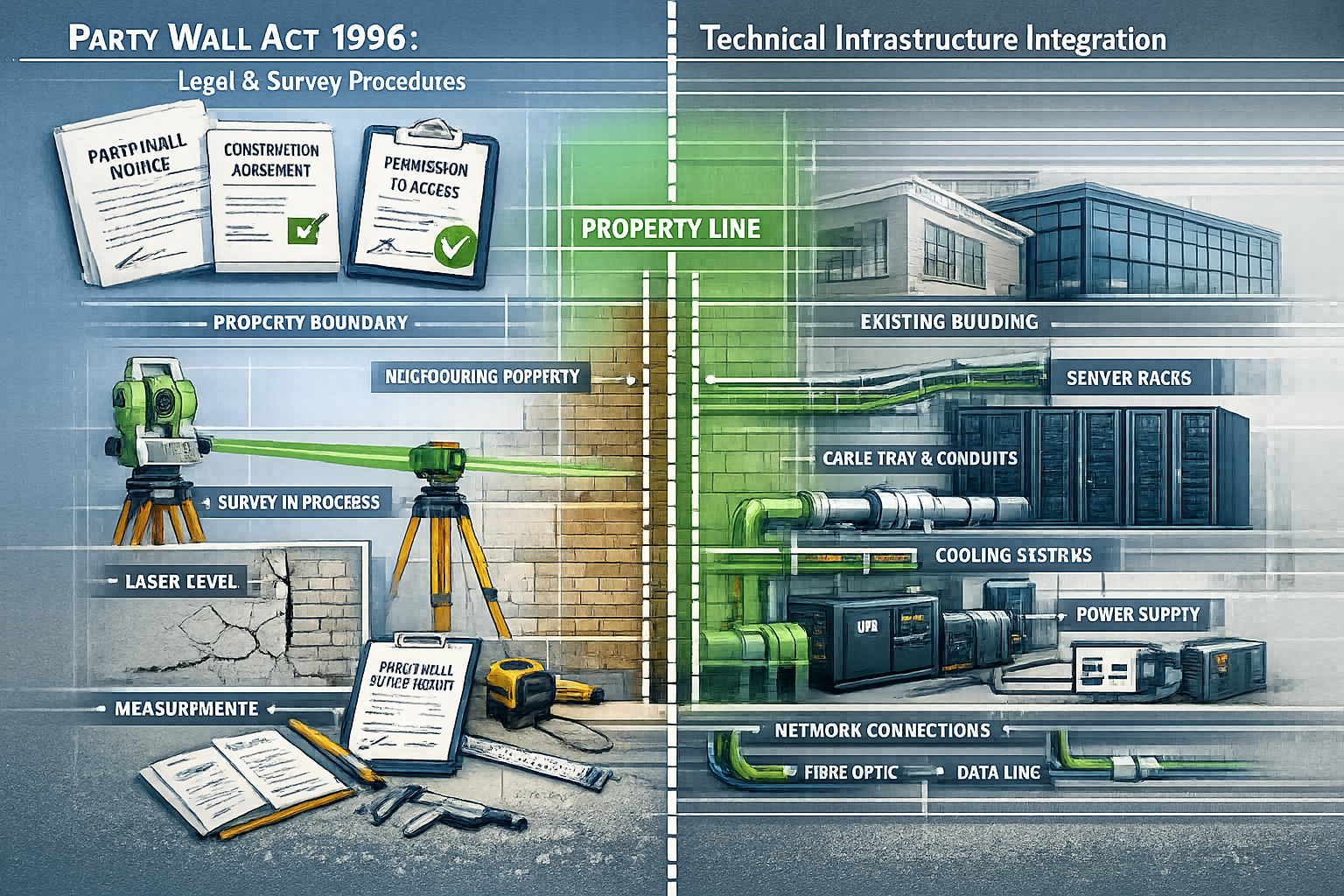
For Data Centre Developers
Strategic Planning:
- Engage party wall surveyors during site selection to assess boundary complexity
- Budget 0.5-1% of construction costs for comprehensive party wall procedures
- Build 6-month party wall timelines into project schedules
- Establish relationships with adjoining owners before formal notices
- Invest in enhanced monitoring systems to demonstrate responsible construction
Risk Mitigation:
- Obtain comprehensive insurance coverage before serving notices
- Conduct thorough Schedule of Condition surveys with independent witnesses
- Document all communications with adjoining owners and surveyors
- Establish contingency plans for potential injunctions or delays
- Maintain dedicated community liaison roles throughout construction
For Adjoining Property Owners
Protecting Your Interests:
- Respond to party wall notices within 14 days to preserve rights
- Appoint your own surveyor for projects exceeding £500,000 value
- Insist on comprehensive Schedule of Condition before work begins
- Establish clear communication channels with the building owner
- Document any concerns in writing immediately
Understanding Your Rights:
- You cannot prevent work that complies with the Party Wall Act
- You can influence working methods, hours, and protective measures
- You are entitled to compensation for proven damage
- You should not pay surveyor fees appointed on your behalf (building owner pays)
- You can appeal awards to county court within 14 days
For Party Wall Surveyors
Professional Excellence:
- Develop specialized knowledge of data centre construction techniques
- Maintain current RICS membership and continuing professional development
- Build relationships with structural engineers and construction specialists
- Invest in digital documentation tools for efficiency and accuracy
- Establish clear fee agreements before appointment
Quality Assurance:
- Conduct thorough site inspections before drafting awards
- Specify measurable performance criteria in award conditions
- Establish monitoring protocols appropriate to project scale
- Maintain detailed contemporaneous notes of all decisions
- Provide clear, jargon-free explanations to all parties
Conclusion
Party Wall Surveys for Data Centre Expansions: Securing Agreements Amid UK's 2026 Infrastructure Investment Boom represents a critical intersection of legal compliance, professional practice, and commercial necessity. As the UK races to establish itself as a global AI infrastructure leader, the humble party wall procedure has emerged as an essential enabler of billion-pound investments.
The nearly 100 new data centres planned for the coming years will create thousands of party wall scenarios requiring expert navigation. Developers who treat party wall compliance as a strategic priority—engaging qualified surveyors early, building comprehensive documentation, and fostering positive stakeholder relationships—will avoid costly delays and disputes that can derail even the most well-funded projects.
For adjoining property owners, understanding rights and responsibilities under the Party Wall Act 1996 ensures protection while allowing essential infrastructure development to proceed. The Act balances competing interests, providing a framework where both expansion and existing property rights can coexist.
Professional surveyors face unprecedented opportunity and responsibility. The technical complexity of data centre construction, combined with the commercial stakes involved, demands the highest standards of competence, independence, and documentation. Those who invest in specialized knowledge and digital tools will find themselves indispensable to the infrastructure revolution transforming the UK's digital landscape.
Next Steps
For immediate action:
-
Developers planning 2026-2027 data centre projects: Contact RICS-qualified party wall surveyors for preliminary site assessments at least 12 months before planned construction start dates
-
Property owners who have received party wall notices: Seek independent surveyor advice within 7 days of receipt to preserve all rights and options
-
Surveyors seeking to serve this market: Pursue specialized training in commercial party wall procedures, data centre construction methods, and digital documentation systems
-
All stakeholders: Bookmark our comprehensive party wall resource center for ongoing guidance, templates, and updates on regulatory developments
The 2026 infrastructure investment boom presents challenges and opportunities that will shape the UK's digital economy for decades. Proper party wall procedures ensure this transformation proceeds on solid legal and structural foundations, protecting investments worth billions while respecting the rights of existing property owners. Success requires expertise, planning, and commitment to professional excellence—qualities that define the best outcomes in this critical field.
References
[1] Scaling Responsibly For The Future Of Uk Ai Infrastructure At Data Centre World 2026 – https://electronics360.globalspec.com/article/23394/scaling-responsibly-for-the-future-of-uk-ai-infrastructure-at-data-centre-world-2026
[2] 2026 The Year The Uks Ai Infrastructure Moves Into Full Acceleration – https://datacentreinsight.co.uk/2025/12/29/2026-the-year-the-uks-ai-infrastructure-moves-into-full-acceleration/
[3] Rapid Growth In Number Of Proposed Data Centres Raises Huge Concerns For Uk Climate Targets – https://workplaceinsight.net/rapid-growth-in-number-of-proposed-data-centres-raises-huge-concerns-for-uk-climate-targets/
[4] Aecom Calls For Sovereign Data Centre Framework To Secure Uks Ai And Digital Infrastructure Future – https://aecom.com/press-releases/aecom-calls-for-sovereign-data-centre-framework-to-secure-uks-ai-and-digital-infrastructure-future
[5] Aecom Calls For Creation Of Sovereign Data Centre Framework To Safeguard Uks Ai Future – https://www.scottishconstructionnow.com/articles/aecom-calls-for-creation-of-sovereign-data-centre-framework-to-safeguard-uks-ai-future