

}

The rental market in 2026 is experiencing unprecedented growth. Tenant demand continues to edge higher while rental supply remains constrained, driving significant price increases across the UK. For institutional landlords, this presents a golden opportunity to expand portfolios through strategic property conversions and extensions. However, this expansion brings with it a surge in party wall agreement demand—a critical compliance requirement that can make or break your investment timeline and profitability.
Understanding Party Wall Surveys for 2026 Buy-to-Let Portfolio Expansion: Managing Agreements as Institutional Landlords Capitalize on Rising Rental Demand is no longer optional for serious property investors. As institutional players increasingly dominate the buy-to-let sector, managing party wall procedures efficiently has become a core competency that separates successful portfolio growth from costly delays and legal complications.
Key Takeaways
✅ Notice requirements are strict: Building owners must serve party wall notices at least two months before starting work on party walls, or one month for excavations near neighbouring properties[2]
✅ Surveyors aren't always mandatory: Professional surveyors are only legally required if neighbours dissent or ignore the notice within 14 days; written consent eliminates this requirement[1]
✅ Budget appropriately: Party wall awards typically cost around £1,000, with surveyors charging £150-£200 per hour—costs that must be factored into portfolio expansion budgets[3]
✅ Scope matters: Loft conversions, damp proof course insertion, and foundation digging require agreements, while minor works like plastering or electrical installations do not[3]
✅ Timing is critical: Proper party wall management can prevent delays that could cost thousands in lost rental income during peak demand periods
Understanding Party Wall Legislation in the 2026 Buy-to-Let Context
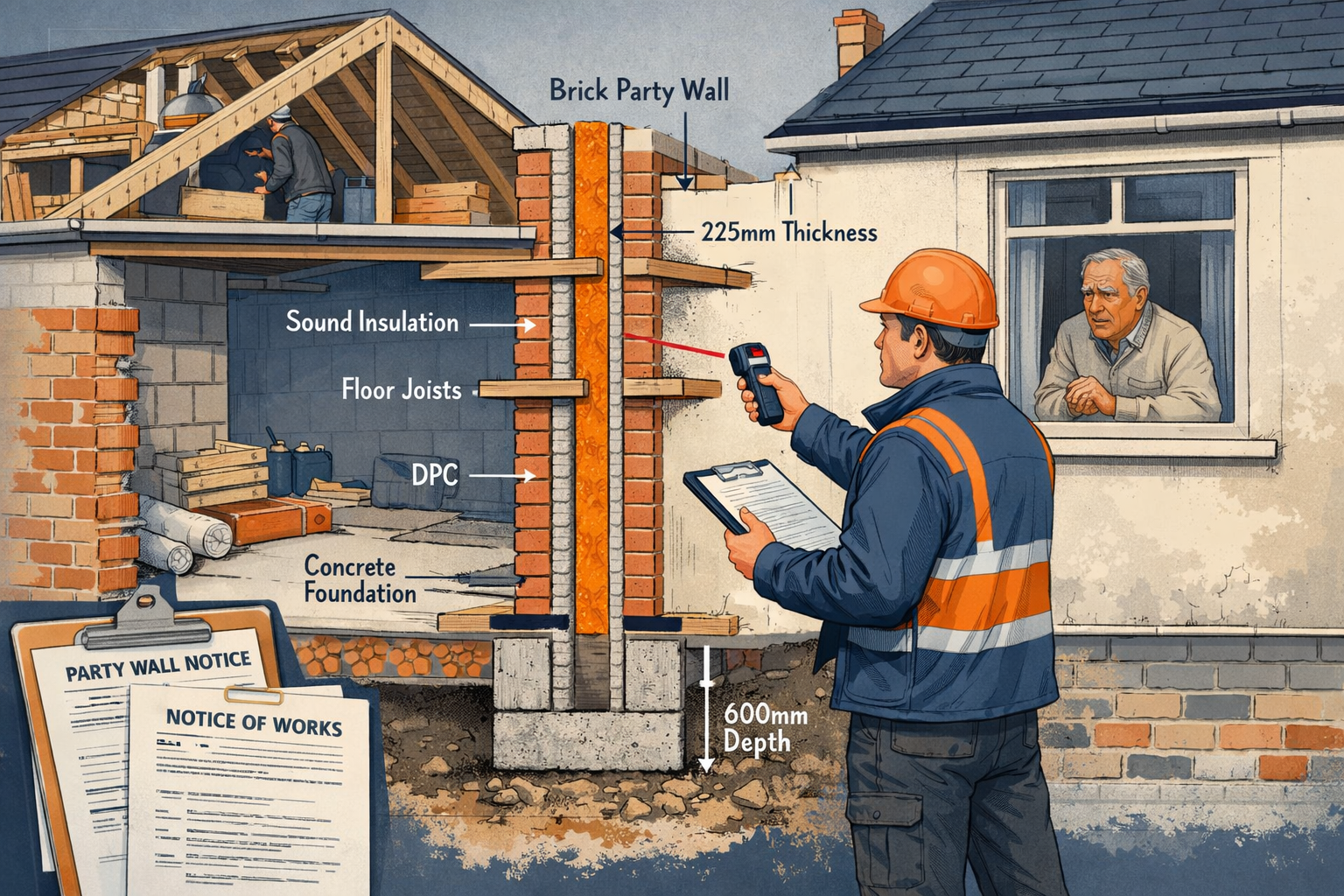
The Party Wall etc. Act 1996 governs all work affecting shared walls, boundaries, and excavations near neighbouring properties. For institutional landlords expanding their portfolios in 2026, this legislation has become increasingly relevant as conversion projects and property enhancements become the primary growth strategy.
What Qualifies as Party Wall Work?
Party wall work encompasses three main categories that institutional landlords frequently encounter:
- Work directly to an existing party wall – This includes structural alterations, inserting damp proof courses, raising walls, or cutting into walls for beams
- Building a new wall at or astride the boundary – Common when constructing new party fence walls between properties
- Excavating within three or six metres of a neighbouring building – Typical during basement conversions or foundation work for extensions
The most common scenarios for buy-to-let portfolio expansion include:
- 🏗️ Loft conversions to create additional bedrooms and maximize rental income
- 🔨 Rear or side extensions to increase property square footage
- 🏠 Basement conversions to add valuable living space
- 🧱 Structural alterations to modernize older properties
- 💧 Damp proofing installations that require cutting into party walls
Understanding what constitutes a party wall dispute before work begins can save institutional landlords significant time and money.
The Notice Requirements Institutional Landlords Must Follow
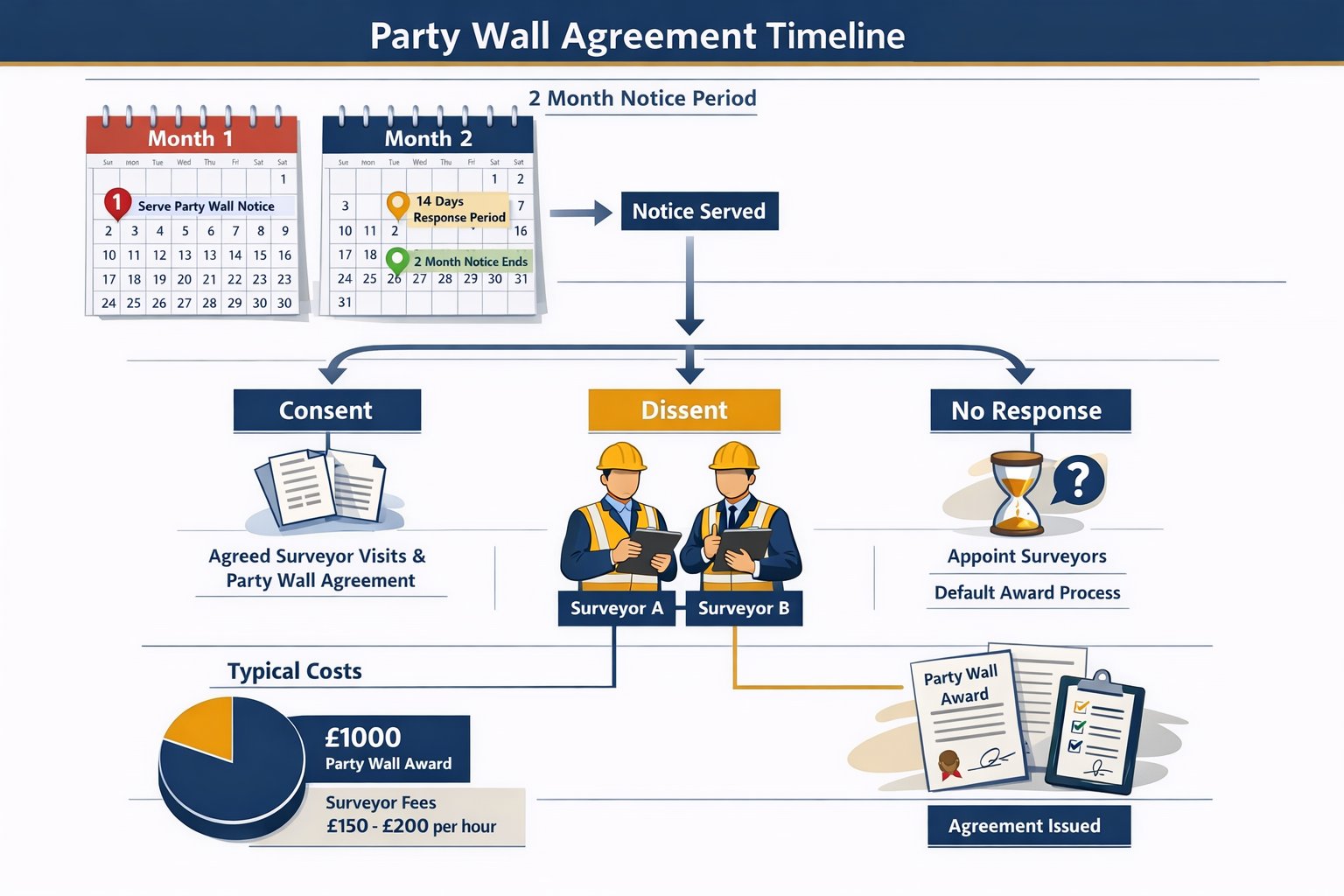
The Party Wall Act mandates specific notice periods that cannot be shortened, regardless of the urgency of your portfolio expansion timeline. Building owners must serve a Party Wall Notice at least two months before starting work on party walls, or one month for party fence walls or excavations near neighbour properties[2].
This creates a critical planning consideration for institutional landlords operating on tight development schedules. Missing these notice requirements can result in:
- ⚠️ Injunctions stopping work immediately
- 💰 Legal costs and damages
- ⏱️ Significant project delays during peak rental seasons
- 📉 Reputational damage with neighbouring property owners
For large-scale portfolio expansion, staggering notice periods across multiple properties can help maintain a steady pipeline of completed units entering the rental market.
Party Wall Surveys for 2026 Buy-to-Let Portfolio Expansion: The Surveyor Decision Matrix
One of the most misunderstood aspects of party wall procedures is when surveyors become necessary. This confusion often leads institutional landlords to either overspend on unnecessary professional fees or underestimate the complexity of the process.
When Surveyors Are Legally Required
Surveyors are only legally required if neighbours dissent or ignore the notice within the 14-day response period[1]. This is a crucial distinction that can significantly impact your party wall costs.
Three scenarios determine surveyor necessity:
| Neighbour Response | Surveyor Required? | Next Steps |
|---|---|---|
| Written consent within 14 days | ❌ No | Proceed with work as planned |
| Written dissent within 14 days | ✅ Yes | Appoint surveyor(s) to create Party Wall Award |
| No response after 14 days | ✅ Yes | Deemed dissent; surveyor appointment mandatory |
If written consent is obtained within 14 days, no surveyor is mandated[1], potentially saving institutional landlords thousands of pounds across large portfolios.
The Party Wall Award Process
When surveyors become necessary, they create a Party Wall Award—a legally binding document that outlines:
- 📋 Detailed description of the proposed works
- 🕐 Timing and schedule for construction
- 🏗️ Methods to minimize disruption and damage
- 📸 Condition survey of the neighbouring property
- 💷 Responsibility for costs and potential compensation
Party wall awards typically cost approximately £1,000, with surveyors charging £150-£200 per hour[3]. For institutional landlords managing multiple simultaneous conversions, these costs can accumulate quickly and must be factored into development budgets.
Appointing the Right Surveyor for Portfolio Work
Institutional landlords have three options for surveyor appointments:
- Agreed Surveyor – Both parties appoint a single surveyor (most cost-effective)
- Separate Surveyors – Each party appoints their own surveyor who then work together
- Third Surveyor – Appointed to resolve disputes between the two party-appointed surveyors
For portfolio expansion, establishing relationships with experienced party wall surveyors who understand buy-to-let objectives can streamline the process across multiple properties. Look for surveyors with:
- ✓ RICS accreditation and party wall specialization
- ✓ Experience with similar conversion projects
- ✓ Understanding of institutional landlord timelines
- ✓ Competitive fee structures for volume work
- ✓ Strong communication skills to manage neighbour relations
Conducting thorough structural surveys before initiating party wall procedures can identify potential issues early and inform more accurate party wall notices.
Managing Agreements as Institutional Landlords Capitalize on Rising Rental Demand
The 2026 rental market presents exceptional opportunities for institutional landlords, but capitalizing on rising demand requires efficient party wall management that doesn't delay project completion.
Strategic Planning for Portfolio-Scale Party Wall Management
Institutional landlords expanding multiple properties simultaneously need systematic approaches to party wall compliance:
1. Centralized Documentation Systems
Create a master database tracking:
- Notice service dates for each property
- Neighbour response deadlines
- Surveyor appointments and contact details
- Award completion timelines
- Cost allocations per property
2. Standardized Notice Templates
Develop comprehensive party wall notice templates that:
- Include all legally required information
- Use clear, accessible language (grade 7 readability)
- Incorporate detailed architectural drawings
- Specify exact work schedules and methodologies
- Provide multiple contact methods for queries
3. Proactive Neighbour Engagement
Rather than treating party wall notices as purely legal formalities, successful institutional landlords use them as relationship-building opportunities:
- 🤝 Host pre-notice meetings to explain proposed works
- 📞 Provide dedicated project manager contact details
- 📅 Share realistic timelines with buffer periods
- 💬 Address concerns before formal dissent occurs
- 🎁 Consider goodwill gestures for significant disruption
This approach significantly increases the likelihood of obtaining written consent within 14 days, eliminating surveyor requirements and associated costs[1].
Common Party Wall Works in Buy-to-Let Conversions
Understanding which specific works trigger party wall requirements helps institutional landlords plan more effectively:
Loft Conversions (High Frequency)
Loft conversions are among the most popular buy-to-let enhancement strategies in 2026, often requiring party wall agreements when:
- Raising party walls to accommodate new roof structures
- Installing steel beams that penetrate party walls
- Creating dormer windows affecting shared roof structures
- Strengthening floor joists that connect to party walls
Extensions and Structural Alterations
Rear and side extensions typically require party wall procedures for:
- Excavating foundations within three metres of neighbouring buildings
- Inserting damp proof courses into party walls
- Cutting into party walls for structural support beams
- Building new walls at property boundaries
Works That DON'T Require Party Wall Agreements
Institutional landlords can proceed without party wall notices for:
- ✅ Plastering or decorating party walls
- ✅ Electrical installations not requiring structural cutting
- ✅ Plumbing work that doesn't affect wall integrity
- ✅ Window replacements within existing openings
- ✅ Minor repairs and maintenance
Understanding these distinctions prevents unnecessary delays and costs across portfolio expansion projects.
Cost Management Strategies for Institutional Portfolios
With party wall awards costing approximately £1,000 per property[3], institutional landlords managing dozens of conversions need robust cost control:
Budget Allocation Framework:
- Base surveyor fees: £1,000-£1,500 per property
- Complex cases: £2,000-£3,000 (multiple neighbours, structural concerns)
- Contingency buffer: 20% for unexpected complications
- Neighbour damage claims: Variable reserve fund
Cost Reduction Tactics:
- Negotiate volume discounts with preferred surveyors for multiple properties
- Maximize consent rates through proactive neighbour engagement
- Bundle related properties for economies of scale
- Invest in detailed pre-work surveys to minimize disputes
- Use agreed surveyors rather than separate appointments where possible
For properties where no party wall agreement was obtained, the consequences can be severe, including injunctions and substantial legal costs that dwarf the original surveyor fees.
Timeline Integration with Rental Market Cycles
Smart institutional landlords align party wall procedures with rental market seasonality:
Optimal Planning Sequence:
- January-February: Serve party wall notices for spring/summer conversions
- March-April: Complete surveyor appointments and awards
- May-August: Execute construction during peak rental demand (units already let)
- September-October: Serve notices for winter conversions (lower demand period)
This strategic timing ensures minimal rental income loss while maintaining steady portfolio growth throughout the year.
Technology Solutions for Scaling Party Wall Management
Forward-thinking institutional landlords are leveraging technology to manage party wall compliance across growing portfolios:
- 📱 Digital notice service platforms with proof of delivery
- 🗓️ Automated deadline tracking and reminder systems
- 📊 Centralized document repositories accessible to all team members
- 💻 Surveyor collaboration portals for efficient award creation
- 📈 Cost tracking dashboards for budget management
These tools become increasingly valuable as portfolios scale beyond 10-20 simultaneous conversion projects.
Risk Mitigation and Dispute Resolution for Institutional Landlords
Even with meticulous planning, party wall disputes can arise. Institutional landlords need robust risk mitigation strategies to protect portfolio expansion timelines.
Identifying High-Risk Scenarios
Certain situations increase the likelihood of party wall complications:
🚨 Red Flags:
- Properties with previous neighbour disputes
- Extensive structural work in older buildings
- Multiple adjoining properties requiring coordination
- Neighbours who are also landlords (competing interests)
- Areas with active residents' associations
- Properties with existing structural issues
Conducting comprehensive homebuyer surveys before acquisition can identify properties likely to present party wall challenges.
Pre-emptive Damage Documentation
Condition surveys are critical protective measures that institutional landlords should implement before any party wall work begins:
- 📸 Professional photographic records of neighbouring properties
- 📝 Detailed written descriptions of existing defects
- 🎥 Video documentation of structural conditions
- 📊 Technical measurements of cracks, settlement, or movement
This documentation protects against unfounded damage claims and provides clear baseline conditions. Consider stock condition surveys for comprehensive property assessment across portfolios.
Dispute Resolution Mechanisms
When disagreements arise, institutional landlords have several escalation options:
Level 1: Direct Negotiation
- Project manager discussions with neighbours
- Clarification of work scope and timelines
- Addressing specific concerns with modified approaches
Level 2: Surveyor Mediation
- Third surveyor appointment to resolve technical disputes
- Independent assessment of proposed works
- Balanced recommendations protecting both parties
Level 3: Legal Proceedings
- County court applications (last resort)
- Injunction defenses
- Damages claims resolution
The vast majority of party wall matters (estimated 95%+) resolve at Level 1 or 2, making early professional surveyor involvement a worthwhile investment.
Insurance Considerations
Institutional landlords should ensure appropriate insurance coverage for party wall-related risks:
- Public liability insurance covering construction activities
- Professional indemnity for employed surveyors or consultants
- Legal expenses insurance for dispute resolution costs
- Contractor's all risks policies for building works
Review policy exclusions carefully, as some insurers limit coverage for party wall disputes or require specific notification procedures.
Best Practices for 2026 Buy-to-Let Portfolio Expansion
As institutional landlords continue capitalizing on rising rental demand through portfolio expansion, implementing these best practices for party wall management ensures smooth project execution:
1. Early Integration in Acquisition Due Diligence
Assess party wall implications before purchasing properties for conversion:
- Identify all shared walls and boundaries
- Evaluate neighbouring property types and owners
- Estimate party wall compliance costs
- Factor notice periods into development timelines
- Consider historical party wall issues at the property
2. Standardized Procedures Across Portfolio
Develop comprehensive party wall protocols that ensure consistency:
- Template notice documents reviewed by legal counsel
- Standard surveyor appointment procedures
- Defined escalation paths for disputes
- Clear cost authorization limits
- Regular team training on compliance requirements
3. Relationship Management Systems
Maintain detailed records of all neighbouring property owners:
- Contact information and communication preferences
- Previous interactions and concerns
- Response patterns to notices
- Special circumstances or sensitivities
- Preferred communication methods
4. Professional Team Assembly
Build a network of trusted professionals for party wall matters:
- Chartered surveyors with party wall specialization
- Structural engineers for complex technical assessments
- Legal advisors familiar with Party Wall Act procedures
- Construction managers experienced in minimizing disruption
- Insurance brokers understanding party wall risks
Utilizing local chartered surveyors who understand regional property characteristics can provide significant advantages.
5. Continuous Monitoring and Reporting
Implement systems to track party wall performance across the portfolio:
- Consent rate metrics (target: 70%+ written consent)
- Average time to award completion (benchmark against industry standards)
- Cost per property (identify outliers and trends)
- Dispute frequency (aim for <10% of projects)
- Neighbour satisfaction (post-completion surveys)
This data-driven approach enables continuous improvement and identifies problematic patterns early.
Future Trends: Party Wall Management in the Evolving Buy-to-Let Sector
Looking ahead, several trends will shape Party Wall Surveys for 2026 Buy-to-Let Portfolio Expansion: Managing Agreements as Institutional Landlords Capitalize on Rising Rental Demand:
Increased Regulatory Scrutiny
As institutional landlords grow their market share, expect:
- Stricter enforcement of party wall compliance
- Higher penalties for non-compliance
- Enhanced tenant protections during construction
- Mandatory professional qualifications for surveyors
- Digital notice service requirements
Sustainability-Driven Conversions
The push toward energy efficiency will drive party wall work through:
- External wall insulation affecting party walls
- Solar panel installations on shared roof structures
- Heat pump installations requiring structural modifications
- Retrofit projects in older terraced properties
Understanding party wall requirements for renewable energy retrofits becomes increasingly important[4].
Technology Integration
Digital transformation will revolutionize party wall procedures:
- AI-powered risk assessment for party wall requirements
- Blockchain-based notice service with immutable records
- Virtual condition surveys using drone and 3D scanning technology
- Automated award generation for standard scenarios
- Digital signature platforms for consent documentation
Professionalization of Institutional Landlord Operations
As buy-to-let portfolios consolidate among institutional players, expect:
- Dedicated party wall compliance teams
- Industry-wide best practice standards
- Collaborative approaches with neighbour landlords
- Proactive community engagement strategies
- Enhanced transparency and communication
Conclusion

Party Wall Surveys for 2026 Buy-to-Let Portfolio Expansion: Managing Agreements as Institutional Landlords Capitalize on Rising Rental Demand represents a critical competency for successful property investment in today's market. As rental demand continues rising and supply constraints persist, institutional landlords who master party wall compliance gain significant competitive advantages through faster project completion, reduced costs, and minimized legal risks.
The key principles for success include:
✅ Understanding legal requirements and serving notices with appropriate lead times (two months for party walls, one month for excavations)[2]
✅ Recognizing when surveyors are necessary versus when written neighbour consent eliminates this requirement[1]
✅ Budgeting appropriately for party wall awards (approximately £1,000) and surveyor fees (£150-£200 per hour)[3]
✅ Implementing systematic processes for portfolio-scale party wall management
✅ Investing in proactive neighbour relationships to maximize consent rates and minimize disputes
Actionable Next Steps
For institutional landlords planning 2026 portfolio expansion:
- Audit your current portfolio to identify properties suitable for conversion or extension
- Develop standardized party wall procedures aligned with the frameworks outlined in this guide
- Establish relationships with qualified party wall surveyors before beginning notice processes
- Create detailed project timelines that account for mandatory notice periods
- Implement tracking systems to monitor party wall compliance across multiple properties
- Train your team on party wall requirements and best practices
- Review insurance coverage to ensure adequate protection for construction-related risks
By treating party wall compliance as a strategic advantage rather than a bureaucratic obstacle, institutional landlords can capitalize on the exceptional opportunities presented by 2026's rising rental demand while maintaining positive relationships with neighbouring property owners and avoiding costly delays.
The rental market rewards those who can efficiently bring quality housing to market. Mastering party wall procedures ensures your portfolio expansion stays on schedule, on budget, and on the right side of the law.