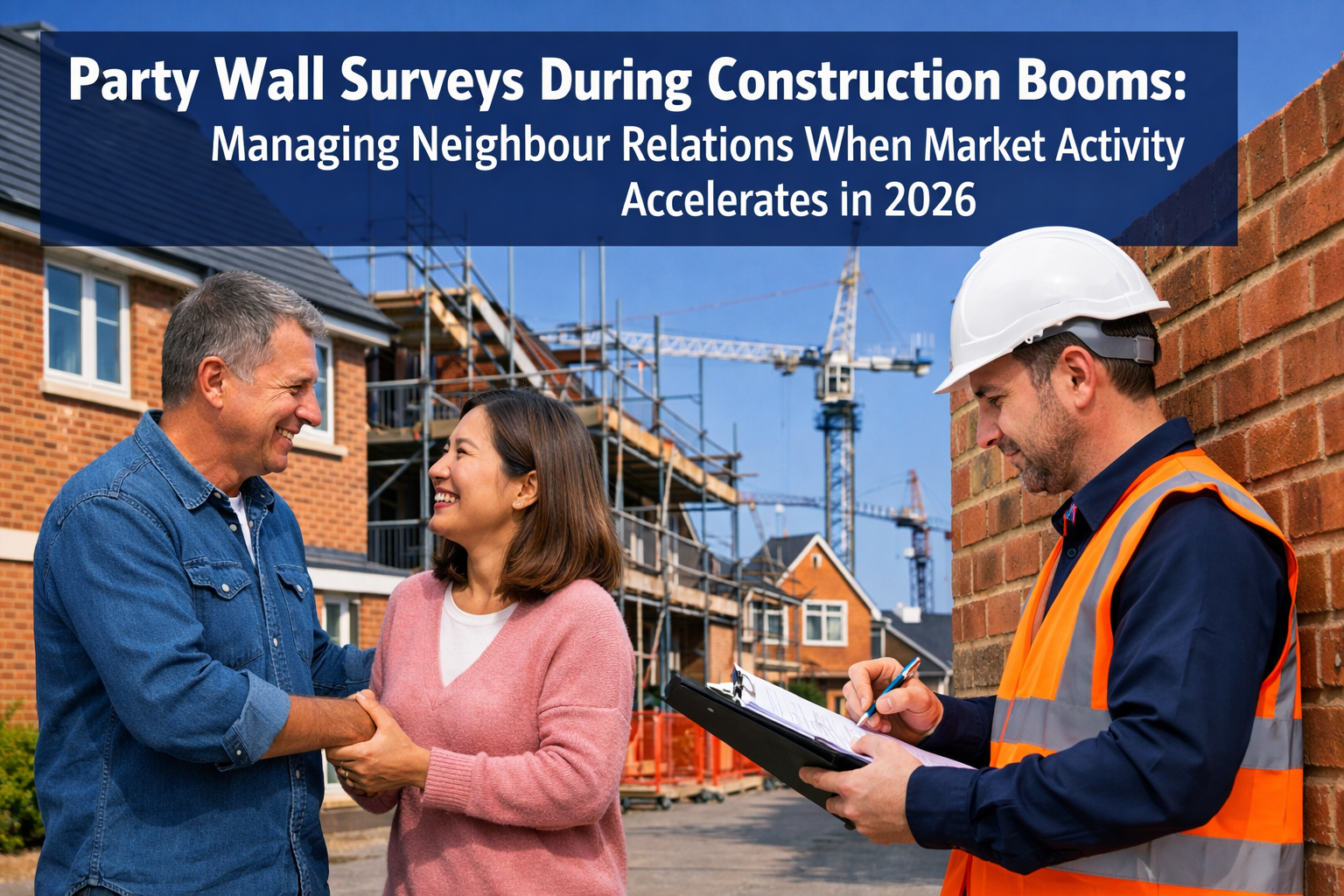

The construction industry in 2026 is experiencing a remarkable transformation. As market activity accelerates and building projects multiply across residential and commercial sectors, property owners and construction professionals face an increasingly complex challenge: managing party wall surveys and maintaining positive neighbour relations during periods of intense development activity. With RICS forecasting improved sales activity and construction momentum, the potential for party wall disputes has never been higher—making preventative surveying, robust documentation, and early dispute resolution more critical than ever.
Party Wall Surveys During Construction Booms: Managing Neighbour Relations When Market Activity Accelerates in 2026 requires a strategic approach that balances legal compliance, professional expertise, and diplomatic communication. The construction boom is bringing heightened scrutiny to party wall agreements and awards, with emphasis on robust documentation and professional surveying practices being essential.[1] This comprehensive guide explores how property owners, developers, and construction professionals can navigate the complexities of party wall procedures during this period of accelerated market activity.
Key Takeaways
✅ Construction boom conditions in 2026 are creating increased demand for party wall surveys, with targeted growth in specific sectors including single-family housing, institutional buildings, and renovation projects intensifying party wall requirements.[2]
✅ Workforce challenges affecting the construction industry—including insufficient supply of qualified surveyors and rising costs—mean early planning and professional engagement are more critical than ever for successful party wall management.
✅ Preventative surveying and comprehensive documentation serve as the foundation for avoiding disputes, protecting both building owners and adjoining owners during periods of heightened construction activity.
✅ Early dispute resolution mechanisms and professional party wall surveyor involvement can prevent costly legal battles and preserve neighbour relations even when construction activity accelerates.
✅ Strategic communication and transparency with neighbours throughout the party wall process significantly reduces conflict and creates smoother project timelines during construction booms.
Understanding the 2026 Construction Boom Context
Market Dynamics Driving Construction Activity
The construction landscape in 2026 presents a unique set of circumstances that directly impact party wall survey requirements. Rather than experiencing broad-based expansion across all sectors, 2026 is witnessing targeted growth in specific areas, including institutional and public buildings, manufacturing and industrial construction, single-family housing, and renovation and adaptive reuse projects.[2] This sectoral concentration means that certain geographic areas and property types are experiencing particularly intense construction activity, creating concentrated demand for party wall services.
This pattern of growth represents what industry analysts describe as "a year of adjustment rather than broad-based expansion," with demand shifting rather than disappearing entirely.[3] For property owners and construction professionals, this means understanding which sectors and regions are experiencing the most intense activity—and planning party wall procedures accordingly.
The remodeling market is also expected to continue growing through 2026 and beyond, with renovation and adaptive reuse projects becoming increasingly common.[4] These types of projects often involve more complex party wall considerations than new construction, as they frequently require work on existing shared structures, excavations near neighbouring properties, and modifications to established party walls.
Workforce Challenges Affecting Party Wall Services
One of the most significant factors affecting Party Wall Surveys During Construction Booms: Managing Neighbour Relations When Market Activity Accelerates in 2026 is the workforce shortage impacting the construction and surveying industries. Approximately 57% of contractors report insufficient supply of workers or subcontractors, 56% cite rising labor costs, and 53% report worker quality concerns.[3]
These workforce pressures have direct implications for party wall survey availability and timelines:
- Limited surveyor availability during peak construction periods
- Extended timelines for completing schedules of condition and party wall awards
- Increased costs for professional party wall surveying services
- Quality variations among available surveyors requiring careful selection
Property owners planning construction work during this boom period must account for these constraints by engaging local chartered surveyors well in advance of anticipated construction start dates.
Regulatory and Professional Standards Environment
The construction boom is bringing increased attention to party wall agreements and awards, with emphasis on robust documentation and professional surveying practices being essential.[1] Regulatory bodies and professional organizations are placing greater scrutiny on compliance with the Party Wall etc. Act 1996, particularly as the volume of construction activity increases the potential for disputes and claims.
This heightened regulatory environment means that cutting corners on party wall procedures carries greater risk in 2026 than in previous years. Professional standards for party wall surveyors are being reinforced, and property owners who fail to follow proper procedures may face more significant consequences, including:
- 🚫 Injunctions halting construction work
- 💰 Financial penalties for non-compliance
- ⚖️ Legal costs from neighbour disputes
- 📉 Project delays affecting overall timelines and budgets
Understanding what happens when party wall notice is not served is crucial for avoiding these negative outcomes.
Essential Party Wall Survey Procedures During Construction Booms
Early Identification of Party Wall Requirements
The foundation of successful Party Wall Surveys During Construction Booms: Managing Neighbour Relations When Market Activity Accelerates in 2026 begins with early and accurate identification of party wall requirements. Construction projects that trigger party wall procedures include:
| Type of Work | Party Wall Act Section | Notice Period Required |
|---|---|---|
| Building on or astride the boundary line | Section 1 | One month |
| Work to an existing party wall or party structure | Section 2 | Two months |
| Excavation within 3 or 6 meters of a neighbour's structure | Section 6 | Two months |
Understanding what is the three meter rule is particularly important for excavation projects, as this determines whether Section 6 notice requirements apply.
Common construction activities requiring party wall procedures include:
- 🏗️ Loft conversions affecting shared roof structures
- 🏠 Basement excavations within specified distances of neighbouring properties
- 🔨 Structural alterations to party walls
- 🧱 Building new walls on boundary lines
- 🏭 Commercial renovations affecting shared structures
- 🏘️ Residential extensions requiring foundation work near boundaries
For party wall loft conversions, early identification of requirements prevents costly delays once construction is scheduled to begin.
Serving Proper Party Wall Notices
During construction booms, the volume of party wall notices being served increases dramatically, making proper notice procedures even more critical. A valid party wall notice must include:
✔️ Clear description of the proposed works
✔️ Accurate drawings showing the scope and location of work
✔️ Proposed start date for the construction
✔️ Building owner's details and contact information
✔️ Specific reference to the relevant section of the Party Wall Act
The notice must be served at least two months before work begins for most party wall and excavation work, or one month for new boundary wall construction. During periods of accelerated market activity, these timelines become more challenging to manage due to:
- Increased demand for surveyor services
- Longer response times from neighbours
- Greater complexity in coordinating multiple projects
- Higher volume of notices being processed
Property owners should consider serving notices even earlier than the statutory minimum during construction booms to account for these delays. Understanding notice for excavation near a neighbour requirements is essential for foundation and basement projects.
Obtaining Neighbour Consent or Appointing Surveyors
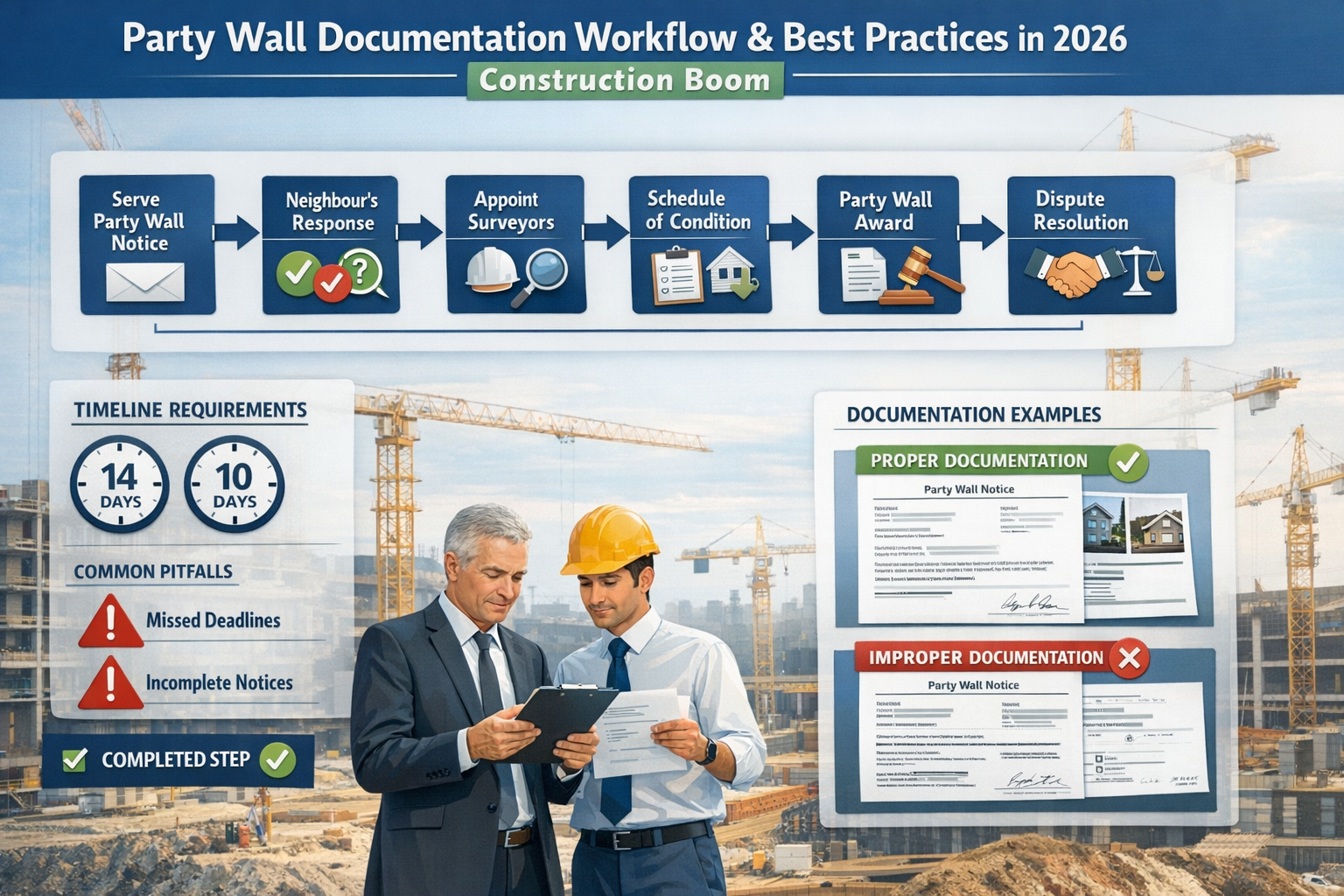
After serving a party wall notice, the adjoining owner has 14 days to respond. During construction booms, the response rate and nature of responses can differ from quieter market periods:
Consent Scenario:
If the neighbour provides written consent for party wall work, the building owner can proceed without a formal party wall award. However, even with consent, creating a comprehensive schedule of condition remains advisable to document the pre-construction state of neighbouring properties.
Dissent or Non-Response Scenario:
If the neighbour dissents or fails to respond within 14 days, a party wall surveyor must be appointed. The adjoining owner can either:
- Appoint their own surveyor to work alongside the building owner's surveyor
- Agree to the building owner's surveyor acting for both parties (agreed surveyor)
During construction booms, the appointment process can become more complex:
- Limited availability of qualified surveyors may delay appointments
- Neighbours may be more cautious due to increased construction activity in their area
- Higher costs for surveyor services may influence decision-making
- Greater awareness of party wall rights may lead to more formal procedures
Understanding what is a party wall dispute helps property owners recognize when professional surveyor involvement becomes necessary.
Creating Comprehensive Schedules of Condition
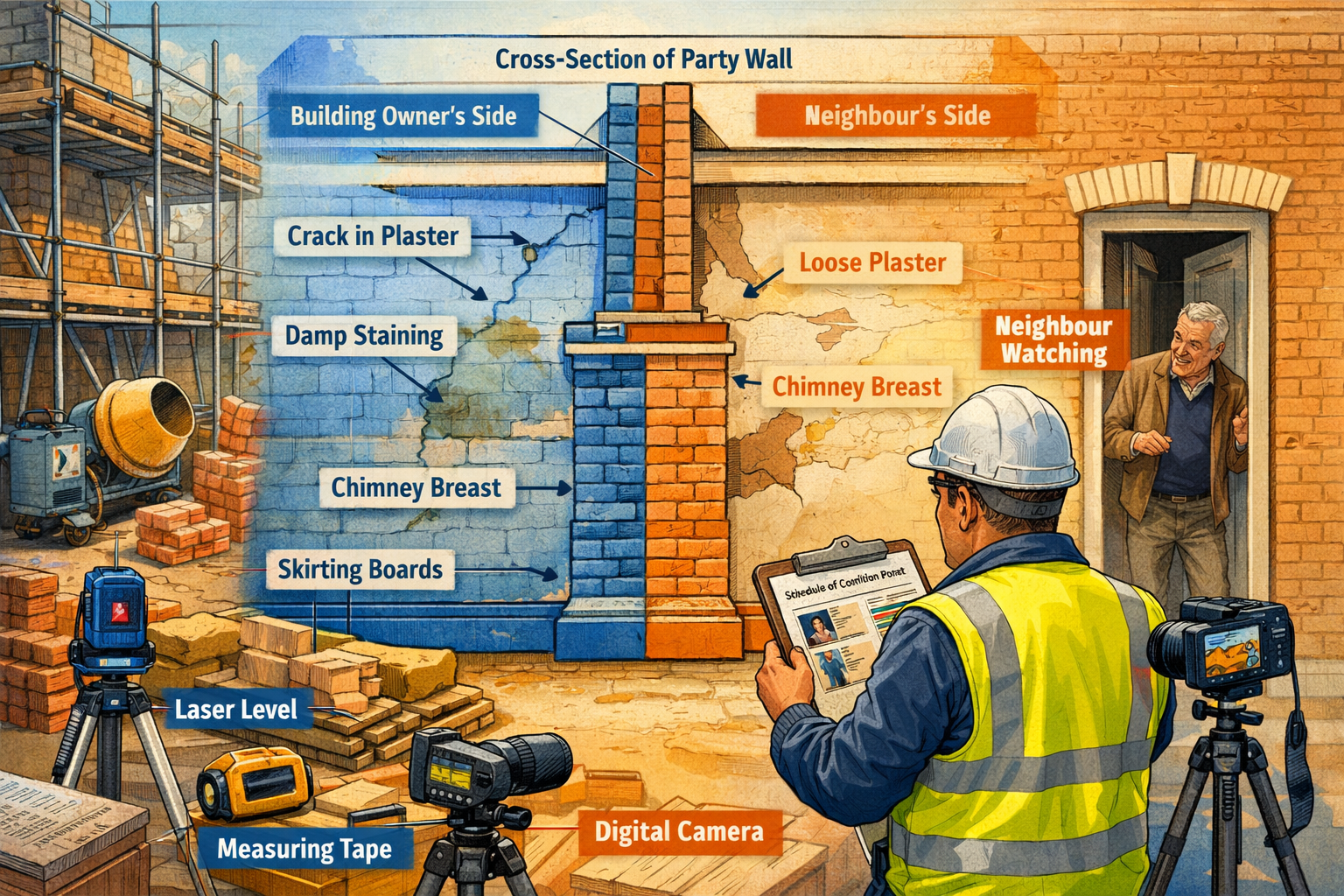
One of the most critical protective measures in Party Wall Surveys During Construction Booms: Managing Neighbour Relations When Market Activity Accelerates in 2026 is the creation of detailed schedules of condition. These documents provide photographic and written evidence of the pre-construction state of neighbouring properties, serving as the baseline for assessing any damage claims that may arise during or after construction.
Essential elements of a comprehensive schedule of condition:
📸 Detailed photography of all rooms, external walls, and structural elements
📝 Written descriptions of existing defects, cracks, and conditions
📏 Measurements of existing cracks and settlement
🗺️ Floor plans showing location of documented conditions
📅 Date-stamped evidence establishing pre-construction baseline
✍️ Signatures from both building owner and adjoining owner (when possible)
During construction booms, the importance of thorough schedules of condition increases significantly because:
- Higher construction volumes create more opportunities for vibration and settlement
- Multiple simultaneous projects in an area can make causation difficult to establish
- Increased construction activity may exacerbate pre-existing conditions
- Disputes over damage to property in party wall situations become more common
Professional schedule of condition party wall documentation provides essential protection for both building owners and adjoining owners.
Documentation Best Practices for Construction Boom Conditions
Establishing Robust Record-Keeping Systems
During periods of accelerated construction activity, maintaining comprehensive documentation becomes even more critical for protecting all parties involved. Best practice documentation systems should include:
Digital Document Management:
- Cloud-based storage for all party wall notices, awards, and correspondence
- Automated backup systems preventing document loss
- Version control tracking changes to agreements and schedules
- Secure sharing capabilities for authorized parties
- Mobile access for on-site reference
Physical Documentation:
- Hard copy files for critical legal documents
- On-site copies of party wall awards and schedules
- Signed original agreements in secure storage
- Photographic evidence in multiple formats
Communication Logs:
- Dated records of all neighbour communications
- Email correspondence archived systematically
- Phone call summaries documented in writing
- Meeting notes with attendee lists and decisions
- Response tracking for notices and requests
During construction booms, when multiple projects may be occurring simultaneously in a single area, this level of documentation becomes essential for demonstrating compliance and resolving any disputes that arise.
Party Wall Award Documentation Standards
The party wall award is the formal document that sets out the rights and responsibilities of both parties during construction work. During construction booms, awards must be particularly comprehensive to address the increased complexity and risk associated with high-volume construction activity.
Essential components of a robust party wall award:
- Detailed work description including scope, methods, and timelines
- Access arrangements specifying when and how building owner may enter neighbouring property
- Working hours appropriate for the construction type and location
- Security provisions for protecting neighbouring property during access
- Insurance requirements with adequate coverage levels for construction boom risks
- Dispute resolution procedures establishing clear escalation pathways
- Damage remediation protocols specifying response times and repair standards
- Monitoring arrangements for vibration, settlement, or other concerns
- Cost allocation clarifying who pays for what aspects of the process
- Completion procedures establishing how and when the award obligations end
Understanding party wall cost implications helps property owners budget appropriately for these professional services during boom periods when costs may be elevated.
Photographic and Video Evidence Standards
Visual documentation has become increasingly important in party wall procedures, particularly during construction booms when the volume of activity increases risk exposure. Professional photographic evidence should meet these standards:
Pre-Construction Photography:
- High-resolution images (minimum 12 megapixels)
- Date and time stamps embedded in metadata
- Comprehensive coverage of all rooms and external elevations
- Close-up detail of existing cracks, defects, and conditions
- Wide-angle context shots showing overall property condition
- Consistent lighting conditions for accurate color representation
During-Construction Monitoring:
- Regular photographic updates at agreed intervals
- Documentation of any changes or concerns as they emerge
- Comparative images showing progression or deterioration
- Evidence of construction methods and access compliance
Video Documentation:
- Walk-through videos providing comprehensive baseline records
- Narrated descriptions of observed conditions
- Smooth, steady footage with adequate lighting
- Multiple angles of critical areas
- Time-stamped files with secure storage
During construction booms, when damage to property in party wall claims may increase, this visual evidence becomes invaluable for establishing causation and liability.
Digital Tools and Technology Integration
Modern technology offers significant advantages for managing Party Wall Surveys During Construction Booms: Managing Neighbour Relations When Market Activity Accelerates in 2026. Professional surveyors and property owners are increasingly adopting:
Survey and Documentation Apps:
- Mobile applications for on-site schedule of condition creation
- Digital annotation tools for marking defects on photographs
- GPS tagging for precise location documentation
- Cloud synchronization for real-time access across teams
Project Management Platforms:
- Centralized dashboards tracking multiple party wall procedures
- Automated deadline reminders for notice periods and responses
- Collaboration tools for surveyor and client communication
- Document sharing with controlled access permissions
Monitoring Technology:
- Vibration monitoring equipment with digital data logging
- Crack monitoring gauges with photographic documentation
- Settlement monitoring systems with trend analysis
- Environmental sensors tracking dust, noise, and other impacts
These technological solutions become particularly valuable during construction booms when managing multiple projects or complex developments with numerous party wall interfaces.
Managing Neighbour Relations During Accelerated Construction Activity
Proactive Communication Strategies
The success of Party Wall Surveys During Construction Booms: Managing Neighbour Relations When Market Activity Accelerates in 2026 depends significantly on effective communication with neighbours. During periods of intense construction activity, neighbours may already be experiencing "construction fatigue" from multiple projects in their area, making proactive and considerate communication even more critical.
Effective communication strategies include:
🗣️ Early informal discussion before serving formal notices
📧 Regular updates on project timelines and milestones
📞 Accessible contact information for addressing concerns promptly
🤝 Face-to-face meetings to build rapport and trust
📋 Written summaries of verbal agreements and discussions
⏰ Advance notice of particularly disruptive work phases
🎯 Realistic expectations about noise, dust, and inconvenience
Communication timeline best practices:
| Project Phase | Communication Action | Timing |
|---|---|---|
| Pre-planning | Informal neighbour discussion | 3-4 months before construction |
| Notice period | Formal party wall notice service | 2 months before construction |
| Pre-construction | Schedule of condition appointment | 1 month before construction |
| Construction start | Work commencement notification | 1 week before start |
| During construction | Progress updates | Weekly or bi-weekly |
| Completion | Final inspection and sign-off | Within 1 week of completion |
During construction booms, maintaining these communication standards distinguishes professional projects from those that generate complaints and disputes.
Addressing Neighbour Concerns and Objections
Even with excellent communication, neighbours may raise concerns or objections during construction boom periods. Common concerns include:
Noise and Disruption:
- Extended working hours affecting quality of life
- Cumulative noise from multiple nearby projects
- Weekend and holiday work requests
- Early morning or late evening activity
Property Damage Fears:
- Concerns about structural damage from excavation or vibration
- Worry about cosmetic damage from construction access
- Anxiety about property value impacts
- Previous negative experiences with construction projects
Access and Privacy:
- Reluctance to allow access to private property
- Concerns about security during access periods
- Disruption to daily routines and activities
- Privacy concerns with workers on neighbouring property
Addressing these concerns effectively:
✅ Acknowledge concerns without dismissing or minimizing them
✅ Provide factual information about construction methods and safeguards
✅ Offer reasonable accommodations where possible
✅ Document agreements about working conditions and restrictions
✅ Involve professional surveyors to provide independent expertise
✅ Establish clear complaint procedures with responsive follow-up
Understanding what is a party wall dispute helps identify when concerns are escalating beyond normal objections into formal disputes requiring professional intervention.
Building Trust Through Transparency
Transparency throughout the party wall process builds trust and reduces the likelihood of disputes during construction booms. Transparency practices include:
Financial Transparency:
- Clear explanation of cost allocation for party wall procedures
- Upfront disclosure of surveyor fees and responsibilities
- Honest discussion of who pays for what aspects
- Documentation of all financial arrangements
Process Transparency:
- Explanation of party wall legal requirements and timelines
- Sharing of relevant documentation and reports
- Access to schedules of condition and party wall awards
- Regular updates on surveyor appointments and decisions
Construction Transparency:
- Detailed information about construction methods and equipment
- Realistic timelines with buffer for unexpected delays
- Honest assessment of potential impacts and risks
- Proactive disclosure of changes to original plans
During construction booms, when neighbours may be dealing with multiple construction projects simultaneously, this transparency helps your project stand out as professionally managed and considerate.
Dispute Prevention and Early Resolution
Despite best efforts, disputes may still arise during Party Wall Surveys During Construction Booms: Managing Neighbour Relations When Market Activity Accelerates in 2026. Early intervention and professional dispute resolution can prevent escalation into costly legal battles.
Early warning signs of potential disputes:
⚠️ Neighbour refusing to respond to communications
⚠️ Allegations of damage without factual basis
⚠️ Unreasonable demands or conditions
⚠️ Threats of legal action or injunctions
⚠️ Complaints to local authorities
⚠️ Social media posts about the construction project
⚠️ Involvement of solicitors before surveyor resolution attempted
Dispute prevention strategies:
- Immediate acknowledgment of complaints or concerns
- Professional surveyor involvement at first sign of disagreement
- Independent third-party assessment of disputed issues
- Mediation services before formal legal proceedings
- Documentation review to ensure compliance with awards
- Remediation offers for legitimate damage or impacts
- Adjustment of working practices to address reasonable concerns
Understanding no party wall agreement scenarios helps property owners recognize when they need to formalize arrangements that may have been proceeding informally.
Professional party wall surveyors play a crucial role in dispute resolution, providing independent expertise and facilitating communication between parties. During construction booms, their experience with multiple simultaneous projects becomes particularly valuable.
Professional Surveyor Selection and Management
Choosing Qualified Party Wall Surveyors
The selection of qualified party wall surveyors becomes even more critical during construction booms when demand for services is high and availability may be limited. Key qualifications and characteristics to seek:
Professional Credentials:
- Membership in Royal Institution of Chartered Surveyors (RICS)
- Specific party wall surveying experience and training
- Professional indemnity insurance with adequate coverage
- Continuing professional development in party wall matters
- Knowledge of local construction practices and conditions
Experience Factors:
- Track record with similar construction types
- Experience in your geographic area
- Familiarity with construction boom challenges
- References from previous clients
- Dispute resolution experience
Practical Capabilities:
- Availability to meet project timelines
- Responsive communication practices
- Technology adoption for efficient documentation
- Clear fee structures and cost transparency
- Professional network for complex situations
During construction booms, early engagement with local chartered surveyors ensures availability when needed and allows time for proper due diligence in surveyor selection.
Managing Surveyor Relationships and Expectations
Effective management of surveyor relationships contributes significantly to successful Party Wall Surveys During Construction Booms: Managing Neighbour Relations When Market Activity Accelerates in 2026. Best practices include:
Clear Scope Definition:
- Written agreement on surveyor's responsibilities
- Defined deliverables and timelines
- Agreed communication protocols
- Specified reporting requirements
- Clarified authority and decision-making boundaries
Regular Communication:
- Scheduled progress updates
- Prompt notification of issues or changes
- Accessible contact for urgent matters
- Documentation of all significant communications
- Collaborative problem-solving approach
Performance Monitoring:
- Tracking against agreed timelines
- Quality review of documentation and reports
- Responsiveness to queries and concerns
- Compliance with professional standards
- Cost management within agreed parameters
During construction booms, when surveyors may be managing multiple assignments simultaneously, maintaining these relationships ensures your project receives appropriate attention and priority.
Cost Management for Party Wall Services
Understanding and managing party wall cost becomes particularly important during construction booms when service costs may increase due to high demand. Typical cost components include:
Building Owner's Surveyor Fees:
- Initial consultation and advice
- Notice preparation and service
- Schedule of condition preparation
- Party wall award drafting
- Ongoing administration and correspondence
- Dispute resolution if required
Adjoining Owner's Surveyor Fees:
- Review of notices and proposed works
- Independent schedule of condition
- Award negotiation and agreement
- Monitoring during construction
- Damage assessment if required
Additional Costs:
- Specialist reports (structural, environmental)
- Monitoring equipment installation and analysis
- Legal fees if disputes escalate
- Remediation costs for any damage
- Administrative and documentation expenses
Cost management strategies:
💰 Obtain detailed fee proposals before engagement
💰 Negotiate fixed fees where possible for defined scopes
💰 Budget contingency for unexpected complications (15-20%)
💰 Compare multiple surveyor quotes while prioritizing quality
💰 Clarify cost allocation between building and adjoining owners
💰 Monitor costs against budget throughout the process
💰 Request itemized invoices for transparency
During construction booms, costs for party wall services typically increase by 20-30% compared to quieter market periods, making budget planning particularly important.
Sector-Specific Considerations for 2026 Construction Boom
Residential Development and Single-Family Housing
The 2026 construction boom includes significant activity in single-family housing,[2] creating particular party wall challenges in residential neighborhoods. Residential-specific considerations include:
Common Residential Party Wall Scenarios:
- Semi-detached property extensions and renovations
- Terraced housing loft conversions affecting shared roof structures
- Basement excavations in dense residential areas
- Boundary wall construction between properties
- Garage conversions affecting shared structures
Residential Neighbour Relations Factors:
- Occupants living in close proximity during construction
- Emotional attachment to family homes
- Varying levels of construction knowledge and sophistication
- Potential for long-term neighbour relationships
- Community dynamics and reputation concerns
Residential Best Practices:
- Extra consideration for working hours and noise
- Enhanced communication about disruption
- Particular attention to dust and debris control
- Respect for family routines and children's schedules
- Community-minded approach to construction management
For party wall loft conversions, residential considerations become especially important as work directly affects shared roof structures and living spaces below.
Commercial and Institutional Buildings
The 2026 construction boom includes targeted growth in institutional and public buildings,[2] creating unique party wall challenges in commercial contexts. Commercial-specific considerations include:
Commercial Party Wall Complexities:
- Multiple tenants and stakeholders in adjoining properties
- Business interruption concerns and liability
- Complex ownership structures (freeholds, leaseholds, management companies)
- Higher property values and damage exposure
- Professional reputation and public image concerns
Commercial Neighbour Relations Factors:
- Business operations requiring uninterrupted access
- Customer and client impacts from construction
- Corporate decision-making processes and approvals
- Professional communication expectations
- Potential for significant financial claims
Commercial Best Practices:
- Formal communication through appropriate business channels
- Consideration of business operating hours and peak periods
- Professional documentation and reporting standards
- Comprehensive insurance coverage
- Proactive business continuity planning
Manufacturing and Industrial Construction
Manufacturing and industrial construction represents another growth area in the 2026 construction boom,[2] with distinctive party wall considerations:
Industrial Party Wall Challenges:
- Heavy machinery and equipment installation
- Significant vibration and ground disturbance
- Environmental concerns (noise, dust, emissions)
- Specialized structural requirements
- 24-hour operations in some facilities
Industrial Best Practices:
- Specialized structural engineering input
- Enhanced monitoring for vibration and settlement
- Environmental impact assessments
- Coordination with operational requirements
- Regulatory compliance beyond party wall legislation
Renovation and Adaptive Reuse Projects
Renovation and adaptive reuse projects are experiencing growth in 2026,[2] often involving more complex party wall considerations than new construction:
Renovation-Specific Challenges:
- Work on existing party walls with unknown conditions
- Discovery of undocumented alterations or damage
- Structural uncertainties in older buildings
- Heritage and conservation considerations
- Coordination with occupied adjoining properties
Adaptive Reuse Considerations:
- Change of use implications for party wall structures
- Increased loading or structural demands
- Fire safety and sound insulation upgrades
- Building regulation compliance alongside party wall requirements
- Complex stakeholder management
For these projects, particularly thorough schedules of condition and professional surveyor involvement become essential due to the increased uncertainty and complexity.
Technology and Innovation in Party Wall Management
Digital Documentation and Cloud-Based Systems
The advancement of digital technology is transforming how professionals manage Party Wall Surveys During Construction Booms: Managing Neighbour Relations When Market Activity Accelerates in 2026. Digital innovations include:
Cloud-Based Documentation Platforms:
- Centralized storage accessible to all authorized parties
- Real-time updates visible to surveyors and clients
- Automated version control and audit trails
- Secure sharing with controlled permissions
- Mobile access for on-site reference and updates
Digital Schedule of Condition Tools:
- Tablet-based survey applications
- Integrated photography and annotation
- Automated report generation
- GPS location tagging
- Digital signature capture
Communication and Collaboration Platforms:
- Project-specific communication channels
- Document sharing and commenting
- Task assignment and tracking
- Automated deadline reminders
- Integration with calendar systems
These digital tools become particularly valuable during construction booms when managing multiple party wall procedures simultaneously.
Monitoring and Measurement Technology
Advanced monitoring technology provides objective data for managing party wall risks during construction:
Vibration Monitoring:
- Continuous vibration measurement during excavation and piling
- Automated alerts when thresholds are exceeded
- Data logging for evidence and analysis
- Compliance demonstration with party wall award conditions
Crack and Settlement Monitoring:
- Digital crack monitoring gauges
- Photographic comparison systems
- Settlement monitoring points with precise measurement
- Trend analysis identifying progressive movement
Environmental Monitoring:
- Dust level measurement
- Noise monitoring and logging
- Temperature and humidity tracking
- Air quality assessment
This technology provides objective evidence that protects both building owners and adjoining owners during construction booms when multiple projects may be affecting properties simultaneously.
Artificial Intelligence and Predictive Analytics
Emerging AI and analytics technologies are beginning to influence party wall management:
Risk Assessment Tools:
- AI analysis of construction plans to identify party wall triggers
- Predictive modeling of vibration and settlement risks
- Historical data analysis for similar projects
- Automated compliance checking
Document Analysis:
- AI review of party wall notices for completeness
- Automated extraction of key terms from awards
- Comparison of current conditions to baseline documentation
- Pattern recognition in damage claims
While these technologies are still emerging, they represent the future direction of professional party wall management, particularly valuable during high-volume construction periods.
Legal and Regulatory Compliance in 2026
Party Wall Act 1996 Core Requirements
Despite technological advances and market changes, the fundamental legal framework for Party Wall Surveys During Construction Booms: Managing Neighbour Relations When Market Activity Accelerates in 2026 remains the Party Wall etc. Act 1996. Core legal requirements include:
Statutory Notice Requirements:
- Proper service of notices within required timeframes
- Accurate description of proposed works
- Compliance with notice format requirements
- Proof of service documentation
Surveyor Appointment Procedures:
- Proper appointment of party wall surveyors
- Compliance with surveyor selection requirements
- Documentation of appointments
- Adherence to surveyor duties and responsibilities
Award Requirements:
- Preparation of comprehensive party wall awards
- Inclusion of all required terms and conditions
- Proper service of awards on all parties
- Compliance with award timescales
Access Rights:
- Lawful exercise of access rights under the Act
- Reasonable notice for access
- Minimization of inconvenience
- Security and making good requirements
Understanding party wall FAQs helps property owners navigate these legal requirements effectively.
Building Regulations and Planning Permission Interaction
Party wall procedures interact with other regulatory requirements during construction projects:
Building Regulations:
- Party wall awards do not replace building regulation approval
- Structural calculations may inform party wall procedures
- Fire safety and sound insulation requirements
- Coordination of inspection and approval processes
Planning Permission:
- Party wall procedures independent of planning permission
- Both may be required for the same project
- Different timelines and approval processes
- Separate notification and consent requirements
Other Regulatory Considerations:
- Environmental permits for certain activities
- Conservation area and listed building consents
- Licensing for highway access or scaffolding
- Health and safety regulations for construction sites
During construction booms, coordinating these multiple regulatory requirements becomes more complex, making professional project management and legal advice increasingly valuable.
Enforcement and Consequences of Non-Compliance
The consequences of failing to comply with party wall requirements can be severe, particularly during construction booms when regulatory scrutiny is heightened:
Potential Consequences:
- ⚖️ Injunctions stopping construction work
- 💰 Financial penalties and damage claims
- 📋 Retrospective compliance requirements at significant cost
- ⏱️ Project delays affecting overall timelines
- 🏛️ Legal costs for dispute resolution
- 📉 Reputation damage affecting future projects
Common Compliance Failures:
- Proceeding with work before notice periods expire
- Failing to serve notices when required
- Ignoring neighbour dissent or objections
- Causing damage without proper documentation
- Refusing reasonable access for inspections
- Non-compliance with party wall award terms
Understanding what happens with no party wall agreement helps property owners recognize the risks of non-compliance.
Case Studies and Practical Examples
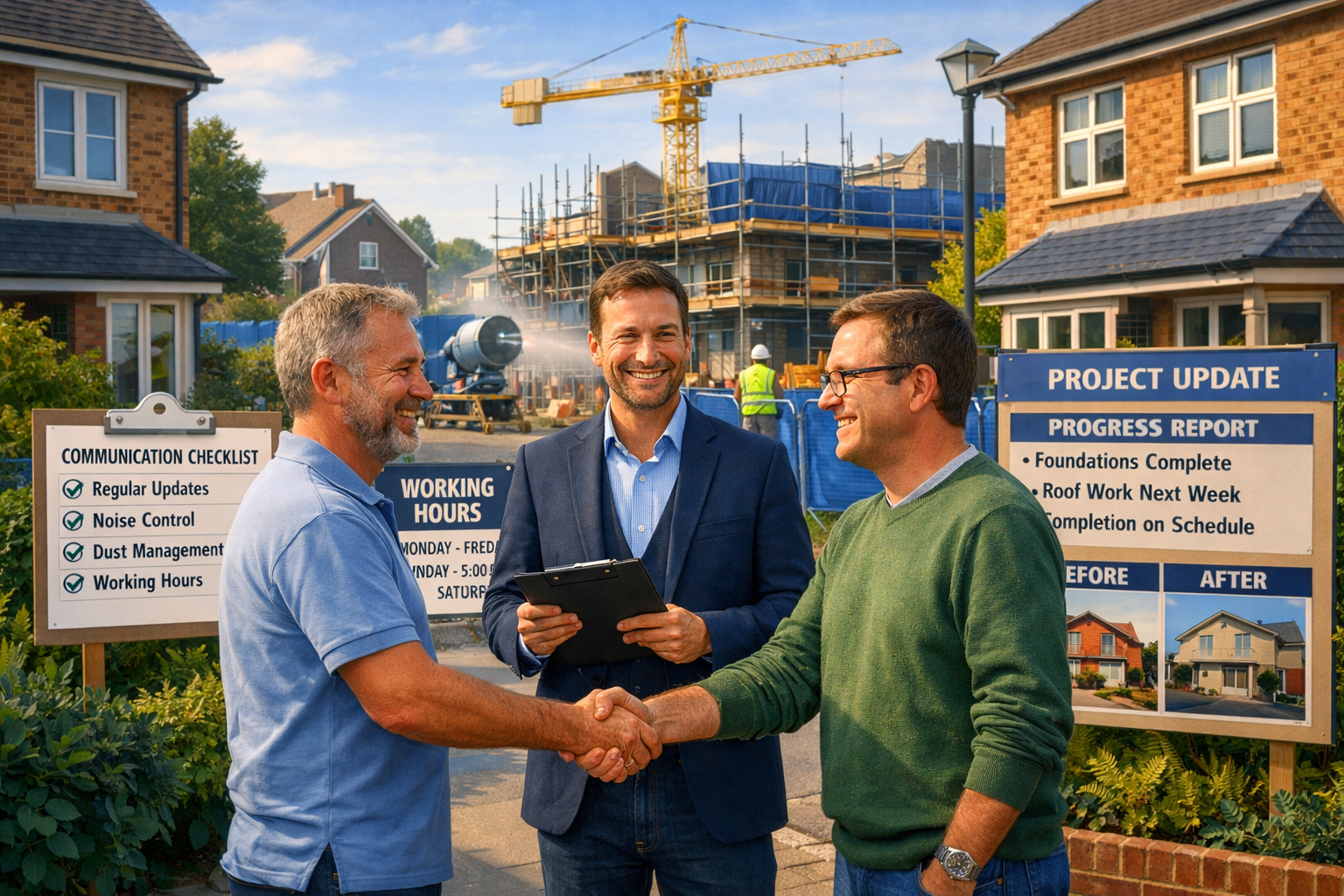
Successful Party Wall Management During Construction Boom
Case Study 1: Residential Loft Conversion in High-Density Area
A property owner in a terraced Victorian street planned a loft conversion during the 2026 construction boom. The project required work to the party wall and shared roof structure affecting both adjoining properties.
Success Factors:
- Early engagement with neighbours three months before formal notices
- Professional surveyor appointed at planning stage
- Comprehensive schedules of condition for both adjoining properties
- Agreed surveyor arrangement reducing costs for all parties
- Regular communication updates throughout construction
- Strict adherence to agreed working hours
- Prompt response to minor concerns during construction
Outcome:
The project completed on time without disputes, and the property owner maintained positive neighbour relations. Total party wall costs were within budget at approximately £2,500 including surveyor fees and documentation.
Case Study 2: Commercial Basement Excavation
A commercial property owner planned significant basement excavation for expanded retail space, requiring Section 6 notices to multiple adjoining commercial properties.
Success Factors:
- Specialist structural engineer input on excavation methodology
- Vibration monitoring equipment installed before work commenced
- Business continuity planning with adjoining commercial tenants
- Flexible working hours to minimize business disruption
- Professional project management coordinating all aspects
- Comprehensive insurance coverage for potential claims
Outcome:
Despite complex excavation work, no damage claims arose and all neighbouring businesses continued operating throughout construction. The objective monitoring data provided confidence and prevented disputes.
Lessons from Party Wall Disputes
Case Study 3: Dispute Arising from Inadequate Documentation
A residential extension project proceeded with neighbour consent but without a formal schedule of condition. When minor cracks appeared in the adjoining property during construction, disagreement arose about whether they were pre-existing or construction-related.
Key Lessons:
- Even with neighbour consent, comprehensive schedules of condition are essential
- Photographic evidence must be date-stamped and professionally prepared
- Verbal agreements should be documented in writing
- Professional surveyor involvement protects both parties
- Cost of prevention is far less than cost of dispute resolution
Resolution:
The dispute required retrospective surveyor appointment and mediation, costing approximately £8,000 and delaying project completion by six weeks. Proper initial documentation would have cost approximately £800 and prevented the dispute entirely.
Conclusion: Strategic Approach to Party Wall Management in 2026
As construction activity accelerates in 2026, the importance of professional, comprehensive, and proactive party wall management cannot be overstated. Party Wall Surveys During Construction Booms: Managing Neighbour Relations When Market Activity Accelerates in 2026 requires a strategic approach that combines legal compliance, professional expertise, advanced documentation, and diplomatic communication.
The construction boom is bringing heightened scrutiny to party wall agreements and awards, with emphasis on robust documentation and professional surveying practices being essential.[1] With targeted growth in specific sectors including single-family housing, institutional buildings, and renovation projects,[2] and workforce challenges affecting availability and costs,[3] property owners and construction professionals must plan earlier and more comprehensively than in previous market conditions.
Key Success Factors
✅ Early planning and professional engagement to account for surveyor availability constraints
✅ Comprehensive documentation including detailed schedules of condition and photographic evidence
✅ Proactive neighbour communication building trust and preventing disputes
✅ Professional surveyor selection based on qualifications, experience, and availability
✅ Technology adoption for efficient documentation and objective monitoring
✅ Compliance focus with Party Wall Act requirements and professional standards
✅ Cost management with realistic budgets accounting for construction boom conditions
Actionable Next Steps
For property owners and construction professionals planning work in 2026:
- Assess party wall requirements early in project planning using professional advice
- Engage qualified surveyors well in advance of construction start dates
- Serve proper notices with accurate descriptions and adequate lead time
- Create comprehensive schedules of condition with professional photography
- Establish communication protocols with neighbours from the outset
- Implement monitoring systems appropriate to project risks
- Document everything using digital tools and cloud-based systems
- Budget appropriately for party wall costs in construction boom conditions
- Maintain compliance with all party wall award terms and conditions
- Seek early resolution of any concerns or disputes that arise
Professional Support and Resources
Navigating Party Wall Surveys During Construction Booms: Managing Neighbour Relations When Market Activity Accelerates in 2026 successfully often requires professional support. Consider engaging:
- Party wall surveyors for notices, awards, and dispute resolution
- Structural engineers for complex excavation or structural work
- Project managers for coordinating multiple regulatory requirements
- Legal advisors for complex ownership structures or disputes
- Monitoring specialists for vibration and settlement tracking
The investment in professional services during the planning and early construction phases typically prevents far more costly disputes and delays later in projects.
Looking Forward
As the construction boom continues through 2026 and potentially beyond, the party wall landscape will continue evolving. Property owners and construction professionals who adopt best practices, embrace technology, prioritize neighbour relations, and maintain rigorous compliance will be best positioned for successful project outcomes.
The construction activity of 2026 represents both opportunity and challenge. With proper party wall management, property owners can realize their development ambitions while maintaining positive neighbour relations and protecting all parties' interests. The key is recognizing that party wall procedures are not merely legal obstacles to navigate, but rather protective frameworks that, when properly implemented, enable construction to proceed smoothly and fairly for everyone involved.
By following the strategies and best practices outlined in this guide, property owners and construction professionals can confidently navigate Party Wall Surveys During Construction Booms: Managing Neighbour Relations When Market Activity Accelerates in 2026, protecting their projects, their neighbours, and their professional reputations during this period of accelerated market activity.
References
[1] Party Wall Surveys Amid 2026 Construction Boom Handling Disputes In High Demand Uk Housing Markets – https://nottinghillsurveyors.com/blog/party-wall-surveys-amid-2026-construction-boom-handling-disputes-in-high-demand-uk-housing-markets
[2] 2026 Construction Outlook – https://sips.premierbuildingsystems.com/blog/2026-construction-outlook
[3] Watch – https://www.youtube.com/watch?v=Ds66v0_TuxI
[4] 107066 Remodeling Market Expected To Grow Through 2026 And Beyond – https://www.supplyht.com/articles/107066-remodeling-market-expected-to-grow-through-2026-and-beyond
[5] Trends To Watch – https://www.cushmanwakefield.com/en/united-states/insights/trends-to-watch