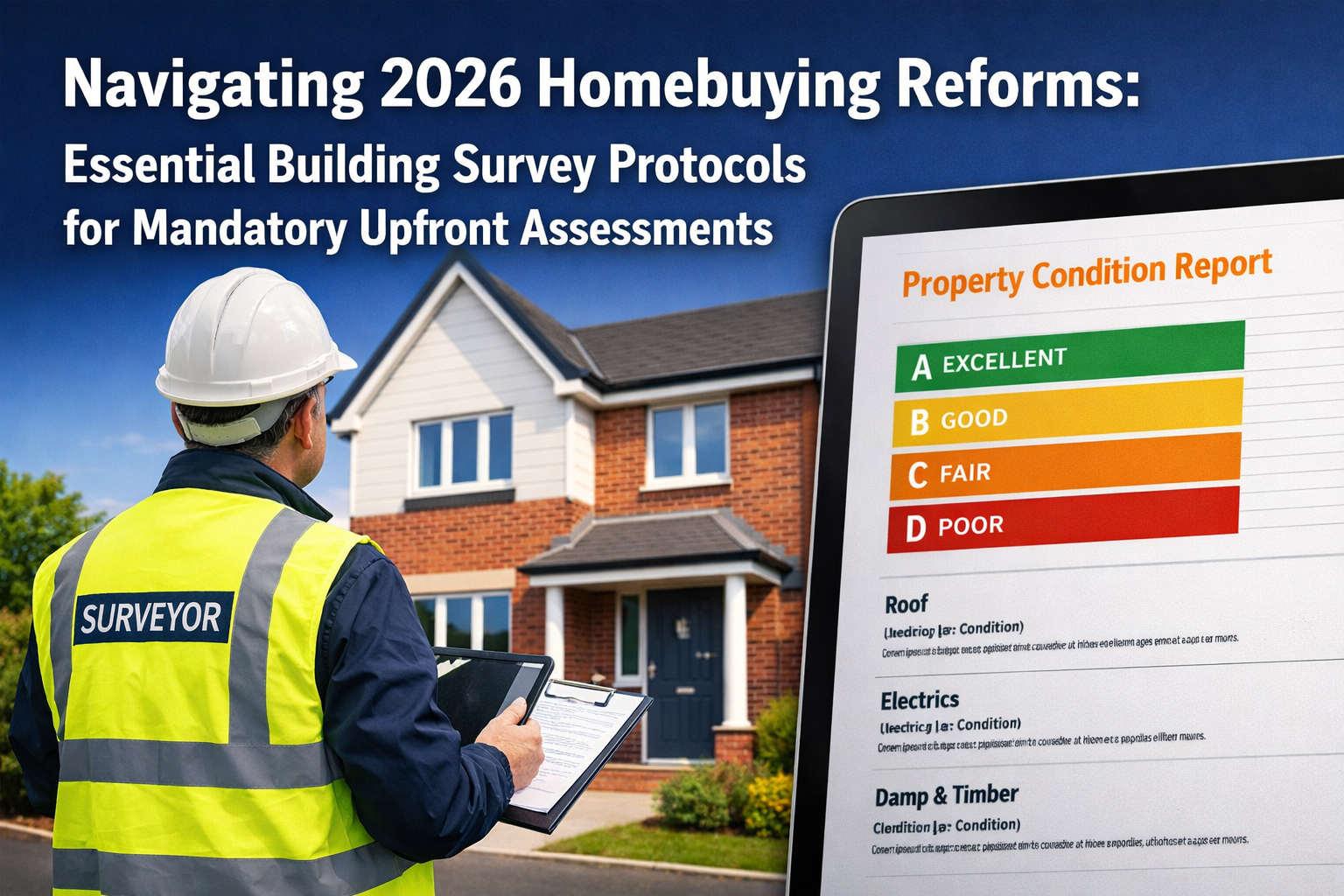
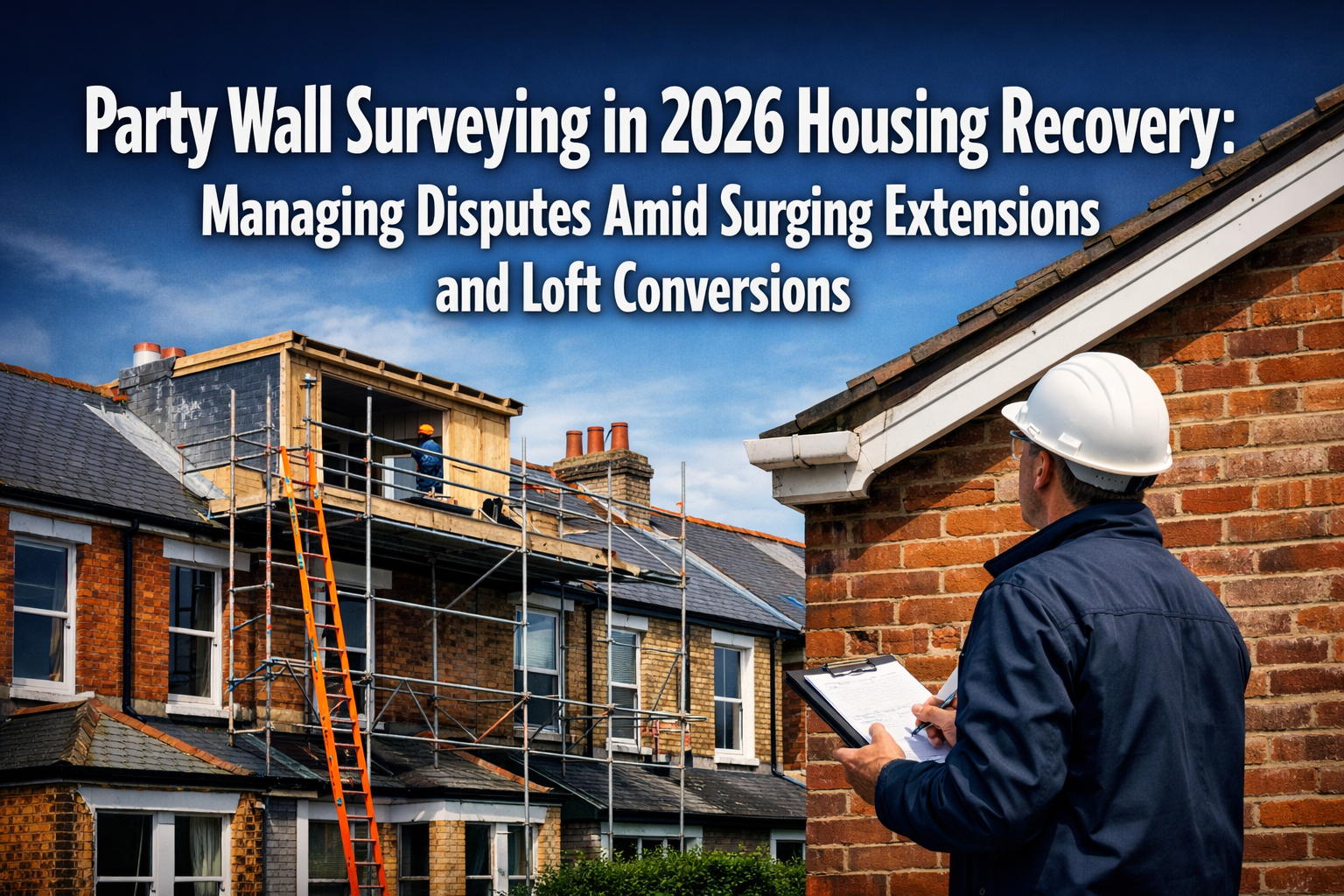
The UK housing market is experiencing a remarkable recovery in 2026, and with it comes an unprecedented surge in home improvement projects. As homeowners capitalize on renewed buyer confidence and rising property values, extensions and loft conversions are transforming neighborhoods across the country. However, this construction boom brings a critical challenge: managing the complex web of party wall regulations and neighbor disputes that inevitably arise when properties share structural boundaries.
Party Wall Surveying in 2026 Housing Recovery: Managing Disputes Amid Surging Extensions and Loft Conversions has become an essential consideration for anyone planning home improvements. The Party Wall etc. Act 1996 governs these shared boundaries, but understanding how to navigate RICS protocols, cost implications, and dispute resolution mechanisms can mean the difference between a smooth project and costly legal battles.
Key Takeaways
- 🏗️ Party wall surveying costs in 2026 range from £900-£1,200 for simple loft conversions to £1,800-£2,700 for complex basement projects, with building owners responsible for all fees [1]
- 📋 Professional surveyors following RICS protocols create detailed schedules of condition to prevent disputes by documenting pre-construction property states
- ⚖️ Dispute resolution through agreed surveyors significantly reduces costs compared to dual surveyor appointments, which approximately double expenses
- 📈 The 2026 housing recovery has created unprecedented demand for party wall services, requiring early engagement with qualified professionals
- 🤝 Proactive neighbor communication combined with proper statutory notices reduces conflict and ensures compliance with the Party Wall Act 1996
Understanding Party Wall Surveying in 2026 Housing Recovery
What Constitutes Party Wall Work?
Party wall surveying addresses construction activities that affect shared structural elements between neighboring properties. Under the Party Wall etc. Act 1996, specific types of work trigger statutory obligations:
Notifiable Works Include:
- Building new walls on or astride boundary lines
- Cutting into party walls for beam insertions
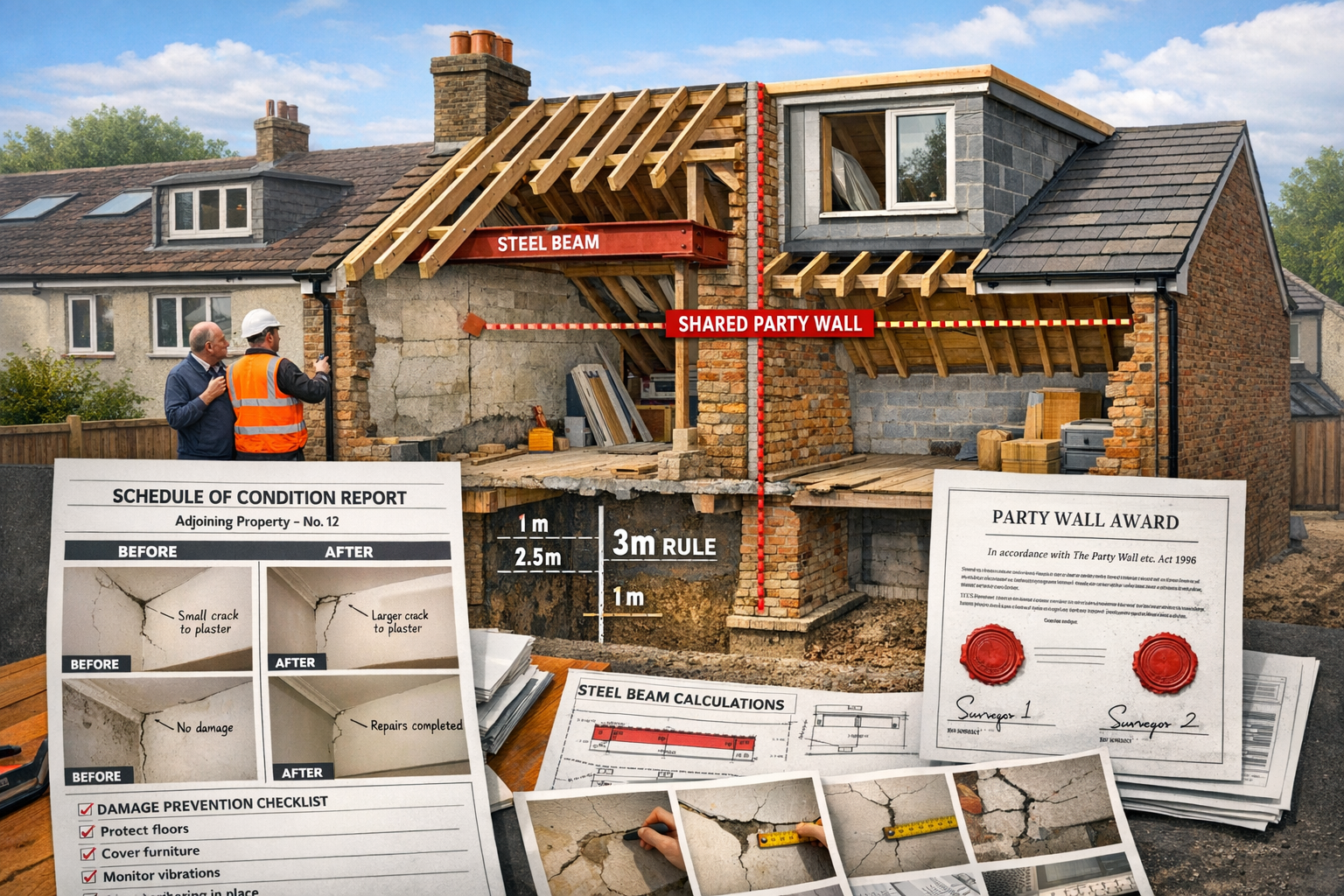
- Excavating within three meters of adjoining structures (when going deeper than neighbor's foundations)
- Underpinning existing party walls
- Raising party walls for loft conversions
- Demolishing and rebuilding party walls
The current housing recovery has intensified these activities dramatically. Homeowners seeking to maximize property values are undertaking ambitious renovation projects, particularly loft conversions and rear extensions that frequently involve party wall considerations [3].
The Role of RICS-Qualified Party Wall Surveyors
RICS (Royal Institution of Chartered Surveyors) protocols establish professional standards for party wall surveying. Qualified surveyors serve three critical functions:
- Impartial Assessment: Evaluating proposed works objectively regardless of who appoints them
- Award Preparation: Creating legally binding party wall awards that specify work parameters, timings, and protections
- Dispute Resolution: Mediating disagreements between building and adjoining owners
In the context of 2026's housing market activity, RICS surveyors have become essential gatekeepers ensuring that renovation enthusiasm doesn't compromise structural integrity or neighbor relations. Their expertise in managing party wall disputes protects all parties involved.
The Three-Meter Rule and Foundation Considerations
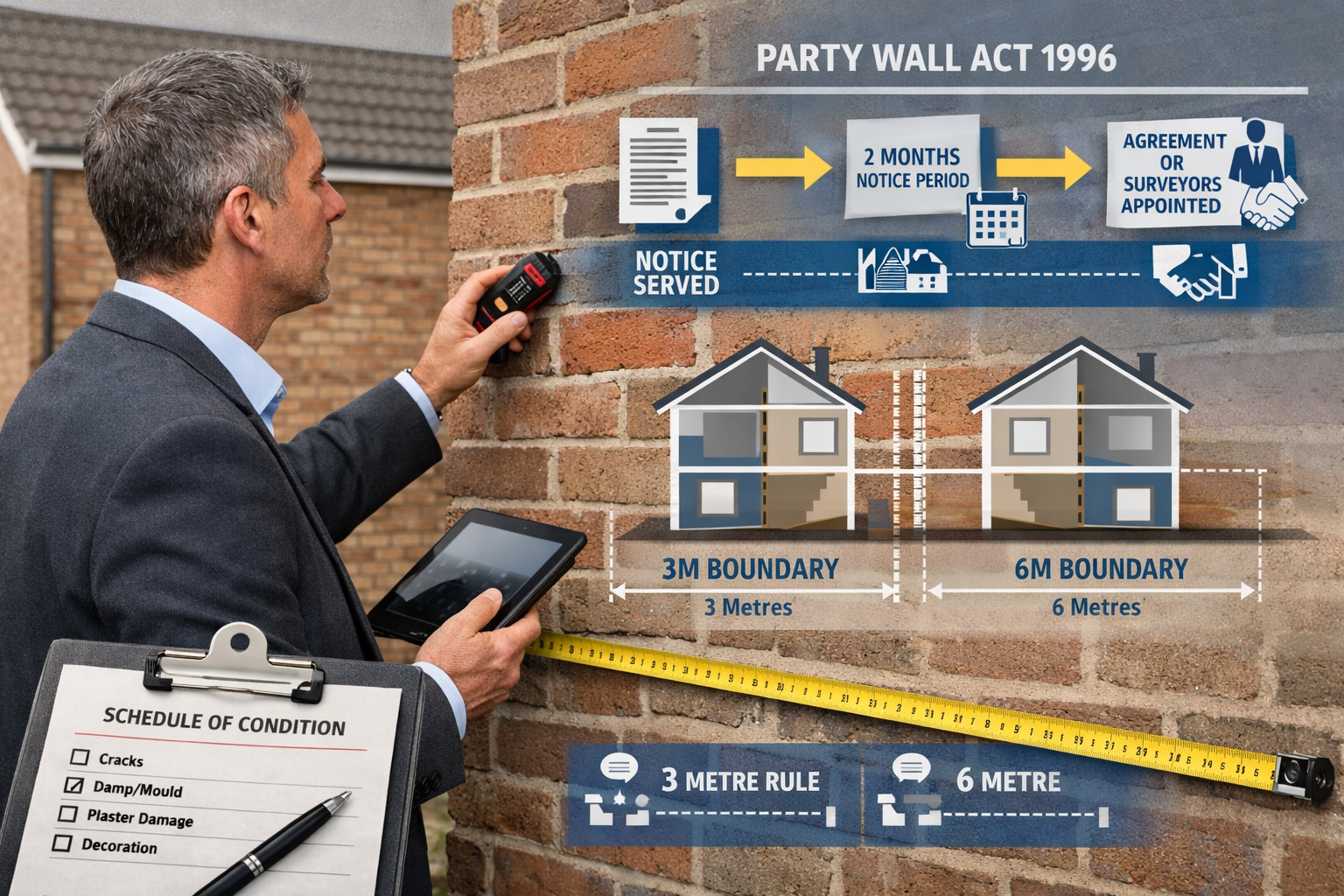
One frequently misunderstood aspect involves the three-meter rule. This statutory provision requires party wall notices when excavating within three meters of a neighboring building if the work will go deeper than the neighbor's foundations [1].
For 2026's popular basement conversions and deep foundation extensions, understanding the three-meter rule becomes paramount. Failure to comply can result in:
- Injunctions halting construction
- Costly retrospective agreements
- Damaged neighbor relationships
- Legal expenses exceeding original surveying costs
Managing Disputes Amid Surging Extensions and Loft Conversions
The 2026 Surge: Understanding Current Market Dynamics
The housing recovery of 2026 has created what industry professionals term the "Party Wall Surveying Surge" [3]. Several factors drive this phenomenon:
Market Drivers:
| Factor | Impact on Party Wall Activity |
|---|---|
| Improved Buyer Confidence | Homeowners investing in long-term property improvements |
| Rising Property Values | Extensions and loft conversions offering strong ROI |
| Limited Housing Stock | Existing homeowners expanding rather than relocating |
| Remote Work Trends | Demand for home offices and additional living space |
| Planning Permission Changes | Relaxed regulations encouraging development |
This surge has created capacity constraints within the surveying profession, making early appointment of qualified surveyors more critical than ever. Waiting until construction is imminent can result in project delays and rushed compliance processes.
Cost Implications in 2026
Understanding the financial landscape of party wall surveying helps homeowners budget appropriately. Current costs reflect both market demand and project complexity [1][2]:
Typical 2026 Party Wall Costs:
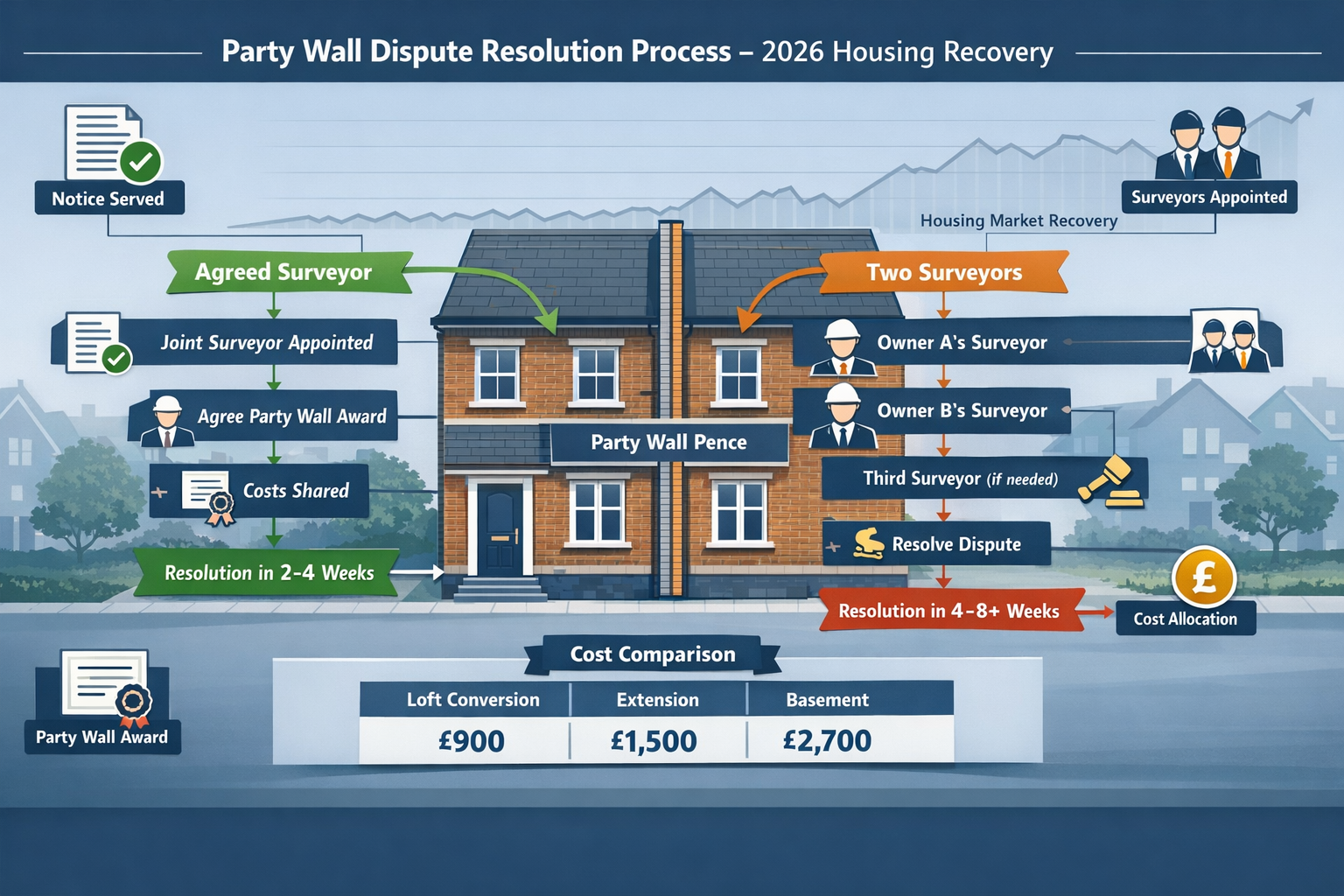
- Loft Conversions: £900–£1,200
- Single-Story Extensions: £1,200–£1,500
- Basement Excavations: £1,800–£2,700
- Hourly Surveyor Rates: £90–£450 per hour
Important: The building owner proposing the work bears all party wall surveying costs under standard circumstances [1]. This includes fees for both their own surveyor and any surveyor appointed by the adjoining owner.
Agreed Surveyor vs. Dual Surveyor Appointments
A critical cost decision involves surveyor appointment structures:
Agreed Surveyor Approach ✅
- Single surveyor acts for both parties
- Costs typically £900–£1,500 for standard projects
- Faster resolution timelines
- Reduced administrative complexity
Dual Surveyor Approach ⚠️
- Each party appoints their own surveyor
- Costs approximately double compared to agreed surveyor
- May require third surveyor for dispute resolution (additional costs)
- Extended timelines for award preparation
For straightforward projects during the 2026 housing recovery, the agreed surveyor route offers significant advantages. However, complex situations or existing neighbor tensions may warrant separate representation.
Preventing Disputes Through Schedules of Condition
The schedule of condition represents the most powerful dispute prevention tool available. This comprehensive photographic and written record documents the adjoining property's condition before construction begins [1].
Schedule of Condition Components:
📸 Photographic Evidence
- Detailed images of all rooms in adjoining property
- Close-ups of existing cracks, defects, or damage
- External wall conditions
- Dated and professionally annotated
📝 Written Descriptions
- Room-by-room condition assessments
- Existing defect cataloging
- Structural element evaluations
- Baseline measurements
This documentation becomes invaluable if damage to property occurs during construction. Without a schedule of condition, determining whether damage existed pre-construction or resulted from building work becomes contentious and expensive.
RICS Protocols for Party Wall Awards During High-Activity Renovation Projects
The Party Wall Notice Process
Proper statutory compliance begins with serving correct notices at appropriate times. The Party Wall Act 1996 specifies different notice types and timelines:
Notice Requirements:
| Work Type | Notice Period | Notice Type |
|---|---|---|
| New wall on boundary line | 1 month | Line of Junction Notice |
| Work to existing party wall | 2 months | Party Structure Notice |
| Excavation near boundaries | 1 month | Adjacent Excavation Notice |
During the 2026 housing recovery, timing becomes critical. With surveyor availability constrained and neighbor response times variable, starting the notice process 3-4 months before planned construction provides necessary buffer.
Neighbor Response Scenarios
Once notices are served, adjoining owners have 14 days to respond. Three scenarios emerge:
1. Consent Given ✅
- Neighbor agrees to proposed works in writing
- No party wall award required
- Work can proceed (though schedule of condition still recommended)
2. Dissent or No Response ⚖️
- Triggers formal party wall procedure
- Surveyor appointments required
- Party wall award must be prepared before work commences
3. Counter-Proposals 💬
- Neighbor suggests modifications
- Negotiation period begins
- May require design adjustments
Understanding what happens with no party wall agreement helps homeowners appreciate the importance of proper procedures. Proceeding without required agreements constitutes trespass and can result in injunctions.
Preparing Comprehensive Party Wall Awards
The party wall award serves as the legally binding document governing construction activities. RICS protocols require awards to address:
Essential Award Components:
🔨 Work Description
- Detailed specifications of proposed construction
- Structural calculations and engineering details
- Materials and methods to be employed
⏰ Timing and Access
- Construction schedule and working hours
- Access requirements to adjoining property
- Notice periods for different work phases
🛡️ Protective Measures
- Structural protection requirements
- Dust and noise mitigation strategies
- Security and safety protocols
💰 Cost Allocation
- Fee responsibility (typically building owner)
- Damage repair mechanisms
- Dispute resolution procedures
During the 2026 renovation surge, awards increasingly include enhanced protective provisions reflecting lessons learned from high-volume construction periods. These might address:
- Vibration monitoring for sensitive adjacent structures
- Enhanced insurance requirements
- Accelerated damage claim procedures
- Regular progress reporting to adjoining owners
Common Dispute Triggers and Resolution Strategies
Even with proper procedures, disputes can arise. Understanding common friction points helps parties address concerns proactively:
Frequent Dispute Sources:
⚠️ Working Hours and Noise
- Solution: Clearly defined hours in award, advance notice of noisy operations
⚠️ Access Requirements
- Solution: Scheduled access with reasonable notice, minimizing disruption
⚠️ Structural Concerns
- Solution: Independent structural engineer reports, enhanced monitoring
⚠️ Property Damage Claims
- Solution: Thorough schedule of condition, prompt damage assessment
⚠️ Project Delays
- Solution: Realistic timelines in award, regular communication updates
The RICS dispute resolution framework provides structured pathways when conflicts arise. This typically involves:
- Direct Negotiation: Surveyors mediating between parties
- Third Surveyor Appointment: Impartial professional resolving specific disagreements
- Award Amendments: Formal modifications addressing changed circumstances
- Appeals Process: County court appeals within 14 days of award service (rare)
For complex situations, consulting party wall FAQs or seeking specialized advice ensures compliance with evolving best practices.
Special Considerations for Loft Conversions
Loft conversions represent a particularly active segment of the 2026 housing recovery. These projects frequently involve multiple party wall considerations:
Loft Conversion Party Wall Issues:
- Party wall height increases: Raising walls to accommodate headroom
- Shared chimney stacks: Work affecting shared chimneys and chimney stacks
- Roof structure modifications: Beam insertions through party walls
- Dormer construction: Potential impact on adjoining roof structures
Professional surveyors experienced in loft conversion party wall work understand these unique challenges and can structure awards that protect all parties while enabling successful project completion.
Managing Multiple Adjoining Owners
Terraced properties and apartment buildings introduce complexity through multiple adjoining owners. A single extension might require agreements with:
- Neighbors on both sides
- Properties to the rear
- Upper or lower floor occupants (in flats)
Each relationship requires separate notices, potentially separate surveyors, and coordinated schedules of condition. The administrative burden multiplies, as does the potential for disagreement.
Best Practices for Multiple Owners:
✓ Serve all notices simultaneously
✓ Propose a single agreed surveyor for efficiency
✓ Schedule coordinated property inspections
✓ Maintain consistent communication with all parties
✓ Budget for increased complexity
Practical Guidance for Building Owners in 2026
Selecting the Right Party Wall Surveyor
Given the surge in demand, choosing a qualified surveyor requires due diligence:
Selection Criteria:
🎓 Qualifications
- RICS membership (MRICS or FRICS)
- Specific party wall expertise
- Local area knowledge
💼 Experience
- Track record with similar projects
- Dispute resolution success
- Current workload capacity
💷 Fee Structure
- Transparent pricing
- Detailed scope of services
- Payment terms and schedules
📞 Communication
- Responsiveness during initial contact
- Willingness to explain processes
- Availability throughout project
In 2026's competitive market, early engagement with surveyors—ideally 3-4 months before planned construction—ensures availability and allows adequate time for thorough procedures.
Proactive Neighbor Relations
Beyond statutory requirements, maintaining positive neighbor relationships significantly improves outcomes:
Communication Best Practices:
- Early Informal Discussion: Explain plans before formal notices
- Visual Aids: Share drawings and renderings showing proposed work
- Address Concerns: Listen to neighbor worries and modify plans where reasonable
- Regular Updates: Keep neighbors informed throughout construction
- Minimize Disruption: Respect working hours and manage contractor behavior
Many disputes arise not from the work itself but from poor communication and perceived disregard for neighbor impacts. Proactive engagement demonstrates respect and often prevents formal dissent.
Timeline Planning for Party Wall Compliance
Realistic project timelines must incorporate party wall procedures:
Typical Timeline (2026 Conditions):
| Phase | Duration | Key Activities |
|---|---|---|
| Surveyor Appointment | 2-4 weeks | Research, interviews, engagement |
| Notice Preparation | 1-2 weeks | Document drafting, technical details |
| Notice Period | 1-2 months | Statutory waiting period |
| Surveyor Appointments | 1-2 weeks | Neighbor surveyor selection (if dissent) |
| Schedule of Condition | 2-3 weeks | Property inspections, documentation |
| Award Preparation | 3-6 weeks | Negotiations, drafting, finalization |
| Award Service | 1 week | Formal delivery, appeal period |
| Construction Commencement | After appeal period | Work begins |
Total: 3-5 months from initial surveyor engagement to construction start for standard projects with professional surveyor involvement.
During the 2026 housing recovery, capacity constraints may extend these timelines. Building owners should avoid the temptation to rush procedures, as proceeding without proper agreements creates far greater delays and costs.
Insurance and Risk Management
Adequate insurance coverage protects against party wall-related risks:
Recommended Coverage:
- Public Liability Insurance: Covers injury or damage to third parties (minimum £5-10 million)
- Contractor's All Risks: Protects against construction damage
- Professional Indemnity: For surveyors and designers
- Legal Expenses: Covers dispute resolution costs
Building owners should verify that contractors carry appropriate insurance and that policies specifically cover party wall work. Some standard policies exclude party wall damage, requiring specific endorsements.
What to Do If Problems Arise
Despite best efforts, construction issues sometimes occur:
Problem Response Protocol:
- Immediate Communication: Notify surveyor and neighbor promptly
- Document Everything: Photographs, written records, witness statements
- Suspend Relevant Work: Stop activities potentially causing damage
- Professional Assessment: Independent evaluation of damage/concerns
- Follow Award Procedures: Utilize dispute mechanisms in party wall award
- Maintain Professionalism: Avoid emotional escalation
The party wall award should specify procedures for addressing problems. Following these structured approaches prevents minor issues from escalating into major disputes.
Future Outlook: Party Wall Surveying Beyond 2026
As the housing recovery continues, several trends will shape party wall surveying:
Emerging Developments:
🔬 Technology Integration
- Digital schedules of condition with 3D scanning
- Remote surveying capabilities
- Blockchain-based award recording
📊 Increased Professionalization
- Enhanced RICS training requirements
- Specialized party wall accreditations
- Quality assurance frameworks
⚖️ Regulatory Evolution
- Potential Party Wall Act amendments
- Standardized fee structures
- Enhanced consumer protections
🏘️ Urban Densification
- More complex multi-party scenarios
- Increased basement and upward extensions
- Greater scrutiny of structural impacts
The lessons learned during the 2026 surge will inform best practices for years to come, with emphasis on early engagement, thorough documentation, and professional dispute resolution.
Conclusion
Party Wall Surveying in 2026 Housing Recovery: Managing Disputes Amid Surging Extensions and Loft Conversions represents a critical intersection of property law, construction practice, and neighbor relations. As the UK housing market rebounds and homeowners invest in property improvements, understanding and properly navigating party wall procedures becomes essential for project success.
The key principles remain constant: early professional engagement, thorough documentation, transparent communication, and adherence to RICS protocols. While costs ranging from £900 to £2,700 may seem significant, they represent prudent investment compared to the expense and disruption of disputes, injunctions, or structural failures.
Actionable Next Steps
For homeowners planning extensions or loft conversions in 2026:
✅ Engage a RICS-qualified party wall surveyor 3-4 months before planned construction
✅ Initiate informal neighbor discussions before serving formal notices
✅ Budget appropriately for party wall costs as part of overall project expenses
✅ Insist on comprehensive schedules of condition to protect all parties
✅ Follow statutory timelines and resist pressure to rush procedures
✅ Maintain open communication throughout the process
✅ Verify insurance coverage addresses party wall-specific risks
The 2026 housing recovery offers tremendous opportunities for property enhancement, but success requires respecting the legal framework protecting shared boundaries. With professional guidance, proper procedures, and neighborly consideration, the surge in extensions and loft conversions can proceed smoothly, benefiting individual homeowners and communities alike.
For those embarking on renovation projects, the investment in proper party wall surveying delivers peace of mind, legal compliance, and preserved neighbor relationships—outcomes worth far more than the fees involved.
References
[1] Party Wall Surveyor Cost – https://hoa.org.uk/advice/guides-for-homeowners/i-am-improving/party-wall-surveyor-cost/
[2] Party Wall Surveying For Uk Home Extensions A Practical 2026 Guide For Loft Rear And Basement Projects – https://nottinghillsurveyors.com/blog/party-wall-surveying-for-uk-home-extensions-a-practical-2026-guide-for-loft-rear-and-basement-projects
[3] Party Wall Surveying Surge In 2026 Loft Conversions Navigating High Demand Compliance During Housing Uptick – https://nottinghillsurveyors.com/blog/party-wall-surveying-surge-in-2026-loft-conversions-navigating-high-demand-compliance-during-housing-uptick