

Nearly 40% of party wall disputes in 2026 stem from improper notice calculations for excavations exceeding three meters—a costly oversight that can delay projects by months and trigger injunctions. Understanding the precise protocols for structural alterations involving beam insertions and chimney breast removals has become essential for property owners, builders, and surveyors navigating the Party Wall etc. Act 1996.
The Party Wall Notices for Structural Alterations: 2026 RICS Protocols for Beam Insertions and Breast Removals framework provides comprehensive guidance for managing complex structural work that affects shared boundaries. This updated protocol addresses critical gaps in previous guidance, particularly around excavation depth calculations and award drafting that protects both building owners and adjoining owners.

Key Takeaways
- Three-meter rule calculations require precise measurement from the lowest point of proposed excavation to the adjoining owner's foundation base, not ground level
- Beam insertion notices under Section 2 must specify load calculations, temporary support methods, and anticipated vibration levels
- Chimney breast removal affecting party walls triggers Section 2(2)(a) requirements even when work appears entirely within one property
- Award drafting must include detailed schedules of condition, photographic evidence, and specific dispute resolution mechanisms to avoid injunction risks
- Non-compliance penalties in 2026 include mandatory work cessation, retrospective awards with penalty costs, and potential criminal prosecution
Understanding Party Wall Notices for Structural Alterations in 2026
The Party Wall etc. Act 1996 remains the cornerstone legislation governing structural work affecting shared walls, boundaries, and excavations near neighboring properties. However, the 2026 RICS protocols introduce significant refinements to how notices must be calculated, served, and processed—particularly for complex structural alterations.
What Constitutes a Structural Alteration Under the Act?
Structural alterations triggering party wall notice requirements include:
- Beam insertions cutting into or bearing upon party walls
- Chimney breast removals where the breast forms part of the party structure
- Load-bearing wall modifications affecting shared structural elements
- Foundation underpinning within three or six meters of adjoining properties
- Steel frame installations requiring party wall penetration or support
The critical distinction in 2026 protocols involves understanding when work that appears to be entirely within your property actually affects the party structure. Removing a chimney breast, for example, may seem like internal work, but if the breast is built against or into the party wall, it requires formal notice and potentially an award from party wall surveyors.
The Three Types of Party Wall Notices
Section 1 Notice: New Building on the Line of Junction
Used when constructing a new wall directly on the boundary line. Rarely applicable to beam insertions or breast removals unless combined with extension work.
Section 2 Notice: Work to Existing Party Structures
The most relevant notice type for structural alterations. This covers:
- Cutting into party walls for beam pockets
- Removing chimney breasts built into party structures
- Inserting damp-proof courses
- Raising party walls
- Demolishing and rebuilding party structures
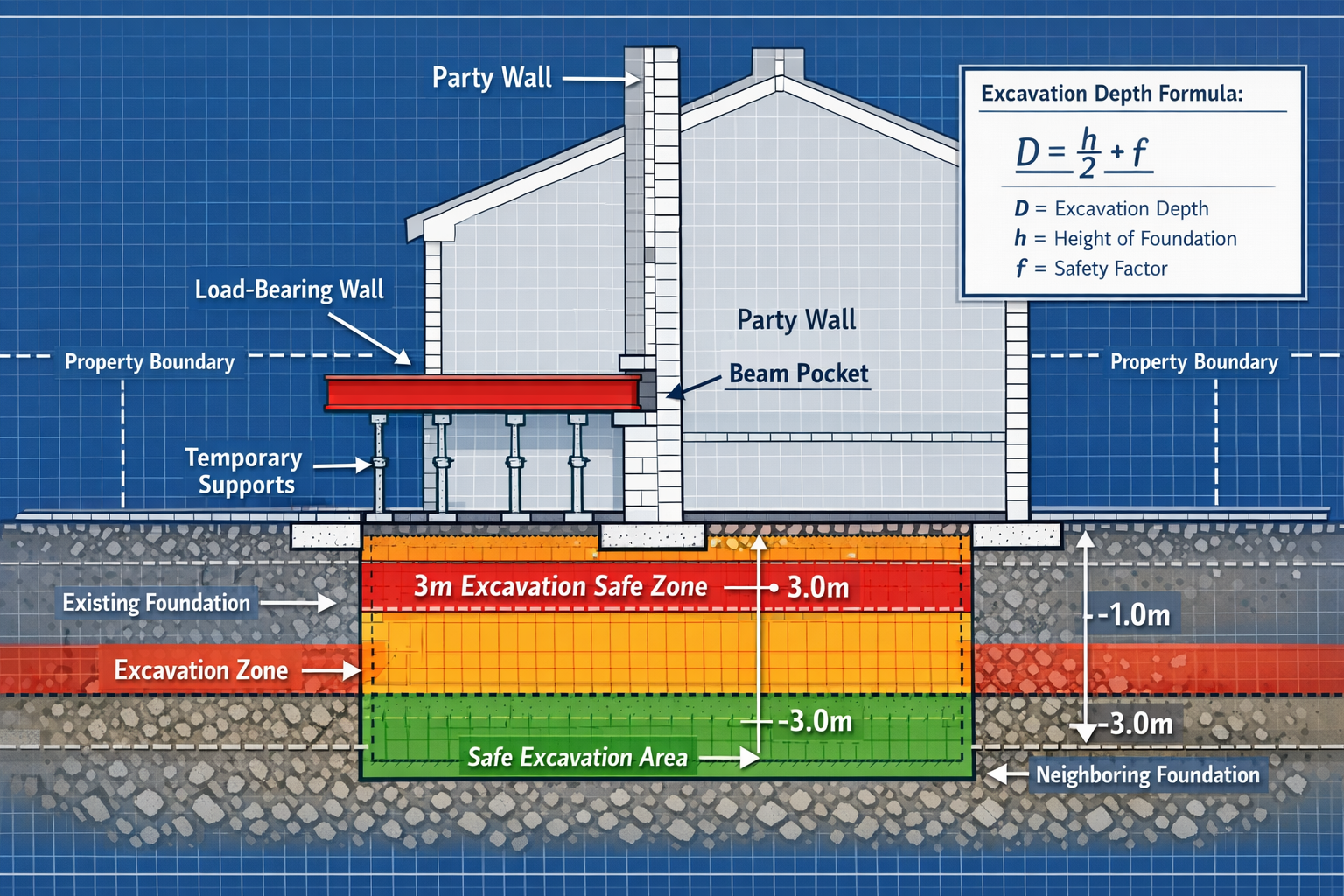
Section 6 Notice: Excavation Within Three or Six Meters
Applies when excavating within three meters of a neighbor's structure and going deeper than their foundations, or within six meters and cutting a 45-degree plane from the foundation base. Proper calculation of these distances represents a common failure point leading to disputes.
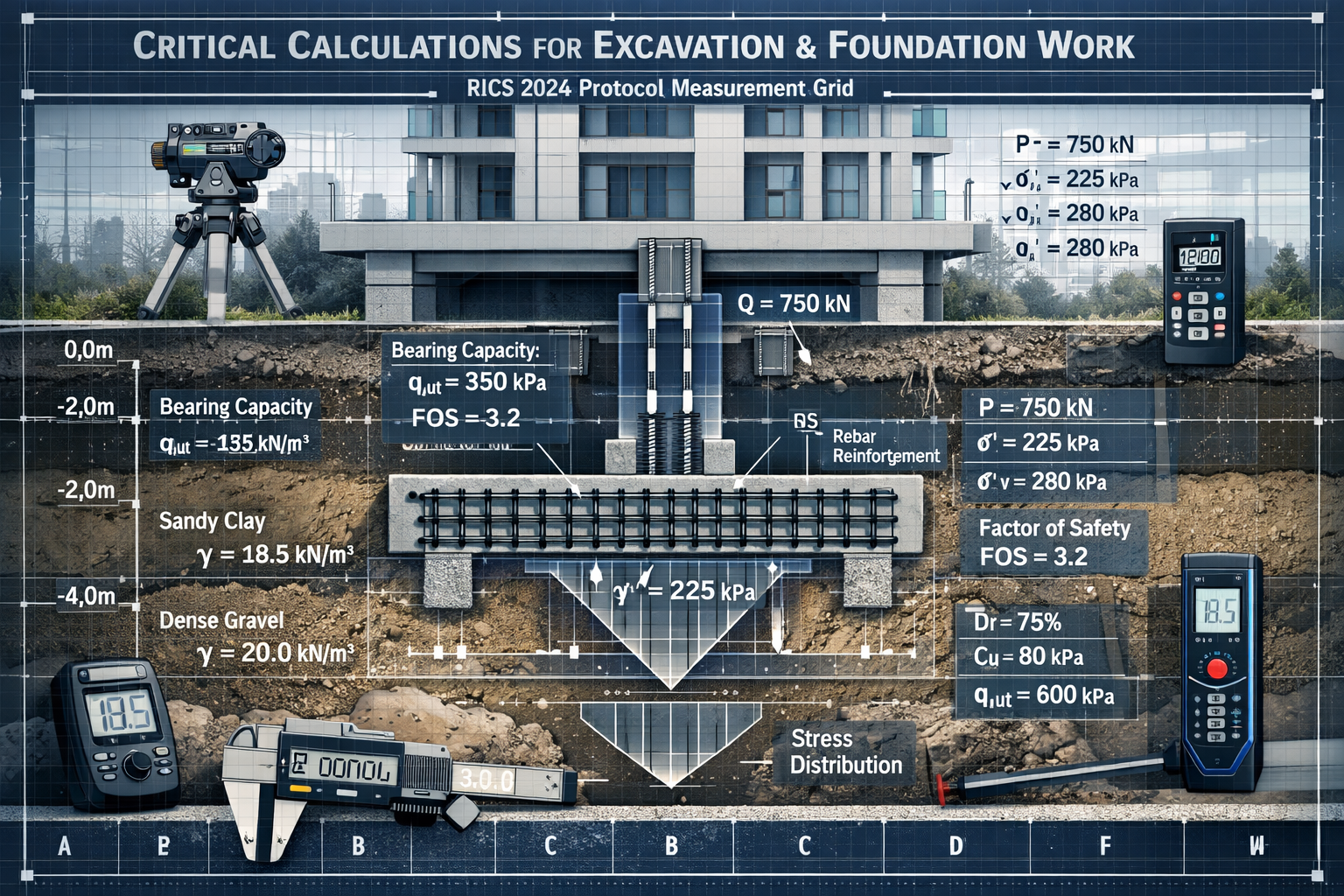
Critical Calculations for Excavation and Foundation Work
The 2026 RICS protocols emphasize precision in measuring excavation depths and distances—an area where many building owners and even some professionals make costly errors.
The Three-Meter Rule: Proper Measurement Protocol
When planning structural work involving excavations, accurate measurement determines whether Section 6 notice is required:
Step 1: Identify the Lowest Point of Proposed Excavation
Measure from the absolute lowest point of your planned excavation, not from current ground level. This includes:
- Foundation trenches
- Basement floor slabs
- Drainage runs
- Service trenches
Step 2: Locate the Adjoining Owner's Foundation Base
You must determine the underside level of your neighbor's foundations. This often requires:
- Historical building records
- Trial pit investigations
- Ground-penetrating radar surveys
- Professional structural surveys
Step 3: Calculate Vertical and Horizontal Distances
| Distance from Boundary | Depth Trigger | Notice Required? |
|---|---|---|
| Within 3 meters | Going deeper than neighbor's foundations | ✅ Yes – Section 6 |
| 3-6 meters | Cutting 45° plane from foundation base | ✅ Yes – Section 6 |
| Beyond 6 meters | Any depth | ❌ No (unless other sections apply) |
Common Calculation Errors That Trigger Disputes
❌ Measuring from ground level instead of excavation bottom
Many building owners measure three meters horizontally from the boundary and assume they're compliant if their ground-level work stays outside this zone. The measurement must account for the depth of excavation.
❌ Assuming standard foundation depths
Never assume neighboring foundations sit at typical depths (usually 1 meter). Victorian terraces, for example, often have shallow foundations of 600mm or less, while modern properties may have deeper foundations or piled systems.
❌ Ignoring the 45-degree plane for 3-6 meter excavations
The six-meter rule involves a geometric calculation. If excavating between three and six meters from the boundary, draw a 45-degree line from the base of the neighbor's foundations. If your excavation cuts below this plane, Section 6 notice is required.
Award Drafting for Excavation Work
When serving Section 6 notices, the subsequent award (if the neighbor dissents or doesn't respond) must include:
- Detailed excavation methodology including shoring, temporary support, and sequencing
- Vibration monitoring protocols with specific trigger levels for work cessation
- Access provisions for the adjoining owner's surveyor to inspect
- Insurance requirements including public liability limits and professional indemnity
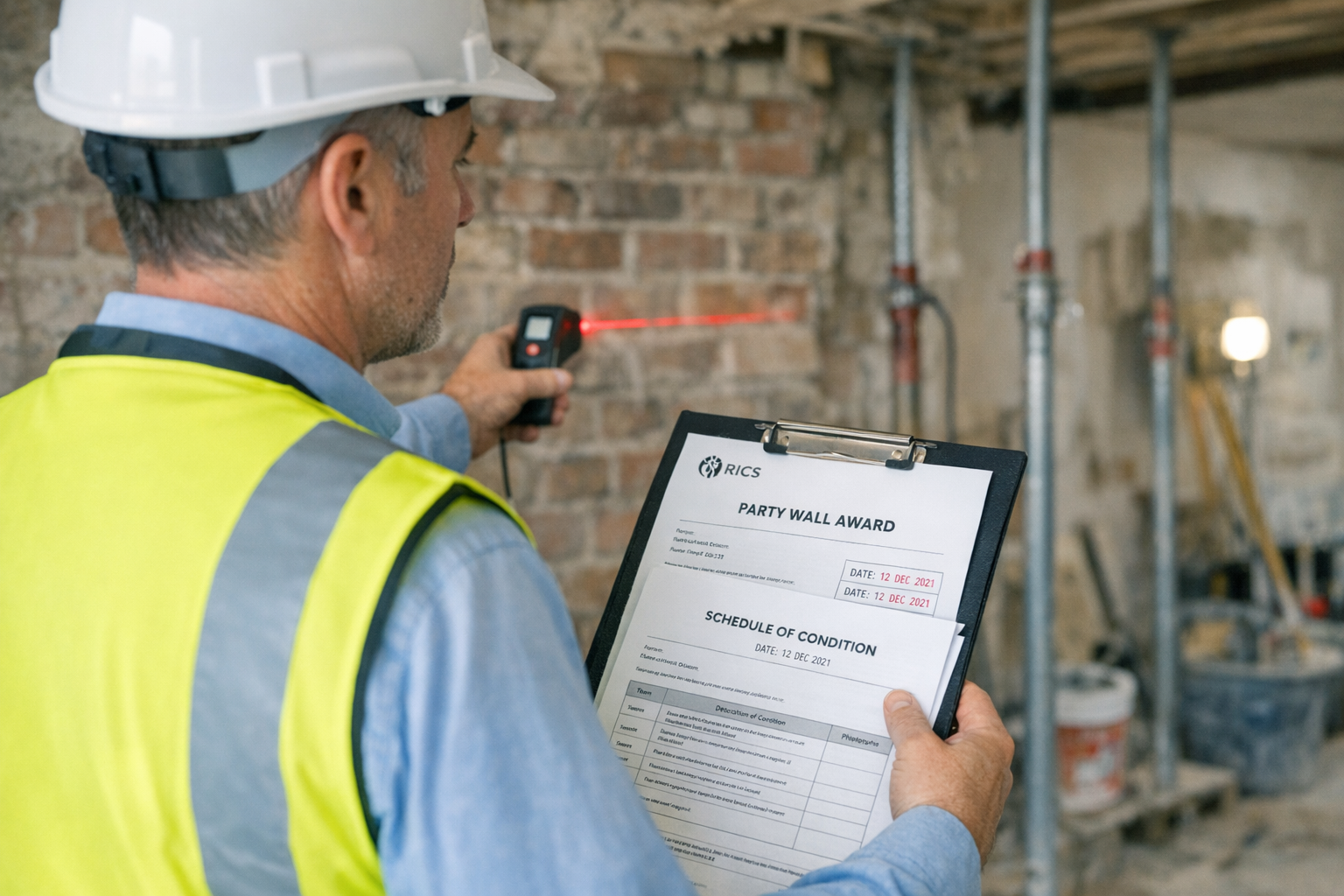
- Schedule of condition documenting the neighbor's property before work commences
Failure to include these elements creates grounds for injunction applications, as courts view incomplete awards as failing to provide adequate protection to adjoining owners.
Beam Insertions: Section 2 Notice Requirements and Protocols
Installing steel or timber beams that bear upon, cut into, or affect party walls represents one of the most common structural alterations requiring party wall procedures. The 2026 RICS protocols provide detailed guidance on notice content and award specifications.
When Beam Insertions Require Party Wall Notices
A Section 2 notice becomes mandatory when:
✅ Cutting beam pockets into party walls
Creating recesses in the party structure to support beam ends requires notice, even if the beam itself doesn't cross the boundary. The act of cutting into the wall triggers Section 2(2)(a) requirements.
✅ Bearing beams on party wall plates
When new beams rest on wall plates or padstones built into the party structure, this constitutes work "in relation to" the party wall under Section 2(2)(e).
✅ Removing load-bearing sections of party walls
Opening up rooms by removing sections of party wall and installing supporting beams above requires comprehensive Section 2 notices detailing the structural calculations and temporary support methodology.
✅ Inserting beams that affect party wall stability
Even if not directly cutting into the party wall, beam installations that alter load paths or create vibration affecting the shared structure may require notice.
Essential Content for Beam Insertion Notices
The 2026 protocols specify that Section 2 notices for beam work must include:
Structural Calculations
Attach professional beam calculations prepared by a chartered structural engineer. These must show:
- Imposed and dead loads
- Beam size and specification
- Bearing lengths and support details
- Deflection calculations
- Party wall loading analysis
Temporary Support Details
Describe how the party wall will be supported during beam installation:
- Acrow prop positions and loading
- Needling through party walls (if required)
- Sequencing to maintain structural integrity
- Duration of temporary works
Installation Methodology
Explain the construction process:
- Cutting methods (mechanical saw, hand tools, etc.)
- Dust suppression measures
- Vibration control
- Working hours
- Expected duration
Making Good Specifications
Detail how the party wall will be reinstated:
- Mortar specifications matching existing
- Pointing and finishing
- Decoration to match existing finishes
- Weatherproofing measures
Award Provisions for Complex Beam Installations
When beam insertion work proceeds to an award (either because the adjoining owner dissents or fails to respond within 14 days), the award document must address specific technical and procedural matters:
Technical Specifications Section
- Approved beam sizes and materials
- Maximum bearing pressures on party structure
- Temporary support loading limits
- Vibration thresholds requiring work cessation
Access and Inspection Rights
- Specific times when adjoining owner's surveyor may inspect
- Notice periods for inspections
- Rights to photograph and document
- Provisions for emergency access if concerns arise
Cost Allocation Clauses
The award must clearly state:
- Which party bears survey fees
- How shared costs (if any) will be divided
- Payment terms and schedules
- Dispute resolution for cost disagreements
Schedule of Condition Requirements
Comprehensive photographic and written records of the adjoining owner's property before work commences, including:
- All rooms adjacent to the party wall
- External elevations
- Existing cracks, defects, or damage
- Dated and witnessed documentation
Chimney Breast Removals: Hidden Party Wall Implications
Removing chimney breasts represents a particularly complex area of party wall law, as the structural implications often extend beyond what's immediately visible. The 2026 RICS protocols address several scenarios where breast removal triggers notice requirements.
Understanding Party Structure Chimney Breasts
Many property owners mistakenly believe chimney breasts are entirely within their property. However, in terraced and semi-detached houses, chimneys frequently form part of the party structure:
Shared Chimney Stacks
Where chimneys are shared between properties, the entire structure—including breasts within each property—constitutes a party structure under the Act.
Breasts Built Against Party Walls
Even if the chimney stack itself isn't shared, breasts built directly against or bonded into the party wall involve party structure work when removed.
Load Transfer Implications
Removing a breast may transfer loads to the party wall or alter how the party structure bears loads, triggering Section 2 requirements even without direct cutting into the shared wall.
Section 2 Notice Content for Breast Removal
When serving notice for chimney breast removal affecting party structures, include:
📋 Structural Assessment Report
A chartered structural engineer's report confirming:
- Whether the breast is load-bearing
- Support requirements for remaining structure above
- Party wall loading implications
- Recommended support methodology
📋 Proposed Support System
Detail the beam and support system:
- Steel or timber specifications
- Bearing points (especially if on party walls)
- Connection methods
- Load calculations
📋 Making Good Strategy
Explain how voids will be treated:
- Infill materials and methods
- Fire-stopping requirements
- Sound insulation provisions
- Decoration and finishing
Common Pitfalls in Breast Removal Projects
⚠️ Removing breasts without notice
The most common error involves removing chimney breasts without serving party wall notices, discovering only when the neighbor complains or structural issues arise. This can result in:
- Mandatory work cessation
- Retrospective awards with penalty costs
- Rebuilding requirements
- Potential prosecution
⚠️ Inadequate structural support
Failing to properly support remaining chimney structure above removed breasts can cause:
- Cracking in party walls
- Structural movement
- Damage to the adjoining owner's property
- Liability for repairs and consequential losses
⚠️ Ignoring shared stack implications
When chimney stacks are shared, work to breasts below requires coordination to ensure:
- Stack stability is maintained
- Flue integrity isn't compromised
- Weather protection remains effective
- Both properties' heating systems (if still using chimneys) continue functioning
Award Drafting for Breast Removal Projects
Awards governing chimney breast removal should include:
Structural Monitoring Provisions
- Crack monitoring schedules
- Movement measurement protocols
- Trigger points for work suspension
- Remedial action requirements
Phasing and Sequencing
- Order of breast removal (if multiple breasts)
- Coordination with adjoining owner's plans
- Temporary support installation sequence
- Making good timeline
Long-term Maintenance Obligations
- Responsibility for ongoing stack maintenance
- Weatherproofing obligations
- Future access rights for repairs
- Cost-sharing for shared elements
Avoiding Injunction Risks: Award Drafting Best Practices
The ultimate goal of proper party wall procedures is avoiding disputes that escalate to injunction applications. The 2026 RICS protocols emphasize preventative award drafting that addresses potential conflict points before they arise.
Essential Award Components for Structural Alterations
1. Comprehensive Scope Definition
Awards must precisely define what work is permitted:
- Specific structural elements that may be altered
- Prohibited activities or methods
- Dimensional limitations
- Material specifications
Vague descriptions like "general structural alterations" provide insufficient protection and create grounds for disputes about whether specific activities were authorized.
2. Detailed Schedules of Condition
The schedule of condition serves as the baseline for assessing any damage claims. Best practice requires:
- Professional photography of all relevant areas
- Written descriptions of existing defects
- Measurements of existing cracks
- Date and witness signatures
- Copies provided to all parties before work commences
Without robust schedules of condition, disputes about pre-existing versus new damage become inevitable.
3. Clear Cost Allocation
Awards must unambiguously state:
- Who pays surveyor fees (usually the building owner)
- How costs are divided if work benefits both properties
- Payment terms and schedules
- Consequences of non-payment
- Dispute resolution mechanisms for cost disagreements
4. Specific Dispute Resolution Procedures
Rather than relying on court proceedings, effective awards include:
- Mediation requirements before litigation
- Expert determination provisions
- Timescales for raising concerns
- Evidence requirements for claims
Common Award Deficiencies Leading to Injunctions
Courts grant injunctions stopping party wall work when awards fail to adequately protect adjoining owners. Common deficiencies include:
❌ Absent or inadequate schedules of condition
Without baseline documentation, adjoining owners cannot prove damage, leading to disputes that courts resolve by stopping work until proper documentation exists.
❌ Insufficient structural detail
Awards that don't specify structural methodologies, support systems, or safety measures leave adjoining owners vulnerable, justifying injunctive relief.
❌ Missing insurance provisions
Failure to require adequate insurance coverage means adjoining owners face uncompensated risk if damage occurs—a ground for injunction.
❌ Vague timeframes
Awards without specific work schedules and completion dates allow indefinite disruption, which courts view as unreasonable.
The 14-Day Response Window: Critical Timing
Understanding the statutory timeframes prevents procedural failures:
Day 0: Notice Served
Proper service requires delivery to the adjoining owner, not just posting. Hand delivery with signed receipt or recorded delivery provides proof.
Day 1-14: Response Period
The adjoining owner has 14 days to:
- Consent to the work (ending party wall procedures)
- Dissent (triggering surveyor appointment)
- Do nothing (deemed dissent after 14 days)
Day 15+: Surveyor Appointment
If dissent occurs or no response received:
- Building owner appoints their surveyor
- Adjoining owner appoints their surveyor
- If adjoining owner doesn't appoint, building owner's surveyor appoints on their behalf after 10 days
Award Preparation Period
Surveyors have no statutory deadline but must act reasonably. Typical timelines:
- Simple works: 2-4 weeks for award
- Complex structural alterations: 4-8 weeks
- Disputed matters: 8-12+ weeks
Preventing Disputes Through Proactive Communication
While the Act provides formal procedures, the 2026 RICS protocols emphasize proactive communication:
💬 Pre-Notice Discussions
Informal conversations before serving notices can:
- Identify concerns early
- Allow design modifications to address neighbor worries
- Build goodwill reducing likelihood of dissent
- Clarify misunderstandings about the work
💬 Detailed Explanatory Documents
Accompany formal notices with:
- Plain-English explanations of technical terms
- Visual diagrams showing proposed work
- Expected timelines and working hours
- Contact information for questions
💬 Regular Progress Updates
During work execution:
- Notify neighbors before particularly disruptive activities
- Provide updated timelines if delays occur
- Promptly address concerns raised
- Document all communications
Compliance Consequences: Penalties for Non-Compliance in 2026
The consequences of failing to follow Party Wall Notices for Structural Alterations: 2026 RICS Protocols for Beam Insertions and Breast Removals have become increasingly severe, with courts taking a stricter approach to enforcement.
Legal Consequences of Working Without Notices
Mandatory Work Cessation
Courts routinely grant injunctions stopping work that proceeded without proper notices. This results in:
- Immediate work stoppage
- Demobilization costs
- Project delays of 2-4 months minimum
- Loss of contractor availability
- Potential contract penalties
Retrospective Awards with Penalty Costs
When work proceeds without notices, adjoining owners can demand retrospective awards. Courts typically:
- Award full surveyor costs to the adjoining owner
- Impose penalty cost multipliers (often 1.5-2x normal fees)
- Require building owners to pay both surveyors
- Add legal costs if court proceedings were necessary
Damage Liability Without Limitation
Working without party wall protection means:
- No agreed schedule of condition to dispute damage claims
- Presumption that damage was caused by the works
- Unlimited liability for repairs and consequential losses
- No insurance coverage for party wall claims if procedures weren't followed
Criminal Prosecution
While rare, the Act provides for criminal penalties:
- Fines up to £5,000 per offense
- Criminal record implications
- Professional consequences for builders and surveyors
Financial Impact Analysis
Consider a typical beam insertion project:
Compliant Approach:
- Party wall surveyor fees: £1,500-3,000
- Award preparation: 4-6 weeks
- Total project delay: Minimal
- Total cost: £1,500-3,000
Non-Compliant Approach (if discovered):
- Retrospective surveyor fees: £3,000-6,000
- Legal costs: £5,000-15,000
- Work stoppage costs: £2,000-5,000
- Project delay: 8-16 weeks
- Potential damage claims: £10,000-50,000+
- Total cost: £20,000-76,000+
The financial case for compliance is overwhelming.
Professional Obligations for Surveyors and Engineers
Chartered professionals involved in structural alterations have specific duties under 2026 protocols:
Structural Engineers
Must advise clients when party wall procedures are required and refuse to provide calculations for non-compliant work. Professional indemnity insurance typically excludes claims arising from party wall non-compliance.
Building Control Surveyors
Should check for party wall compliance before approving structural work, though they have no enforcement powers under the Act.
Party Wall Surveyors
Must act impartially even when appointed by one party, prepare thorough awards, and ensure work proceeds safely for all parties.
Practical Implementation: Step-by-Step Process
Implementing Party Wall Notices for Structural Alterations: 2026 RICS Protocols for Beam Insertions and Breast Removals requires systematic approach:
Phase 1: Pre-Design Assessment (Weeks 1-2)
Step 1: Identify Party Wall Implications
Review proposed structural work against the three notice types:
- Will you cut into, bear upon, or alter party structures? → Section 2
- Will you excavate within 3-6 meters of neighbors? → Section 6
- Will you build new walls on boundaries? → Section 1
Step 2: Engage Professional Advisors
Appoint:
- Chartered structural engineer for calculations and design
- Party wall surveyor for notice preparation and award drafting
- Building surveyor for broader project oversight
Step 3: Conduct Preliminary Surveys
Investigate:
- Neighboring foundation depths (trial pits if necessary)
- Party wall construction and condition
- Existing defects requiring documentation
- Access constraints
Phase 2: Notice Preparation and Service (Weeks 3-4)
Step 4: Prepare Comprehensive Notices
Include all required information:
- Precise work descriptions
- Structural calculations and drawings
- Proposed start date (minimum 2 months ahead)
- Building owner and surveyor contact details
Step 5: Serve Notices Properly
Ensure valid service:
- Hand delivery with signed receipt, or
- Recorded delivery mail with tracking
- Retain proof of service
- Serve on all adjoining owners (including tenants in some cases)
Step 6: Await Response
Monitor the 14-day response period:
- Track response dates carefully
- Prepare for surveyor appointment if needed
- Consider follow-up communication if no response received
Phase 3: Award Preparation (Weeks 5-10)
Step 7: Surveyor Appointments
If dissent or no response:
- Building owner appoints their surveyor immediately
- Adjoining owner has 10 days to appoint
- If no appointment, building owner's surveyor appoints after 10 days
Step 8: Schedule of Condition
Surveyors jointly prepare:
- Comprehensive photographic record
- Written descriptions of existing condition
- Measurements and documentation
- Signed copies to all parties
Step 9: Award Drafting and Agreement
Surveyors prepare award covering:
- Authorized work scope
- Structural specifications
- Cost allocations
- Dispute resolution procedures
- Timeline and access provisions
Phase 4: Work Execution (Weeks 11+)
Step 10: Pre-Commencement Notifications
Before starting:
- Provide 7-day notice to adjoining owners
- Confirm insurance is in place
- Verify schedule of condition is complete
- Ensure contractors understand party wall obligations
Step 11: Ongoing Monitoring
During work:
- Regular surveyor inspections
- Photographic documentation of progress
- Prompt response to neighbor concerns
- Compliance with award conditions
Step 12: Completion and Sign-Off
After work completion:
- Final surveyor inspection
- Comparison to schedule of condition
- Resolution of any damage claims
- Formal completion documentation
Emerging Trends and 2026 Protocol Updates
The 2026 RICS protocols reflect several emerging trends in party wall practice:
Digital Documentation Standards
New protocols encourage:
- Digital schedules of condition with timestamped photographs and cloud storage
- 3D scanning technology for precise baseline documentation
- Electronic notice service with digital signatures and proof of delivery
- Online award repositories accessible to all parties
Enhanced Structural Monitoring
Modern technology enables:
- Continuous vibration monitoring during excavation and structural work
- Automated crack monitoring with digital measurement systems
- Real-time alerts when movement exceeds agreed thresholds
- Video documentation of critical work stages
Sustainability Considerations
Party wall work increasingly considers:
- Thermal performance of party wall repairs and making good
- Acoustic insulation requirements for modified party structures
- Material sustainability in beam specifications and wall repairs
- Energy efficiency impacts of structural alterations
Alternative Dispute Resolution
The 2026 protocols emphasize:
- Mandatory mediation clauses in awards before litigation
- Expert determination for technical disputes
- Online dispute resolution platforms for minor disagreements
- Structured negotiation procedures with defined timescales
Conclusion
Navigating Party Wall Notices for Structural Alterations: 2026 RICS Protocols for Beam Insertions and Breast Removals requires meticulous attention to technical detail, precise calculations, and comprehensive documentation. The consequences of non-compliance—from project-stopping injunctions to substantial financial penalties—make proper procedure essential rather than optional.
The key to successful party wall compliance lies in three fundamental principles:
1. Early Engagement
Begin party wall procedures during design phases, not as an afterthought when work is ready to commence. This allows time for proper notices, surveyor appointments, and award preparation without delaying projects.
2. Precise Technical Documentation
Ensure all notices, awards, and schedules of condition include comprehensive technical detail. Vague descriptions and incomplete documentation create the disputes and injunction risks that proper procedures are designed to prevent.
3. Proactive Communication
While the Act provides formal procedures, successful projects combine legal compliance with open communication, addressing neighbor concerns early and maintaining transparency throughout the work.
Actionable Next Steps
For property owners planning structural alterations:
✅ Conduct a party wall assessment at the earliest design stage—ideally before submitting planning applications or finalizing structural designs
✅ Appoint qualified professionals including a chartered structural engineer for calculations and an experienced party wall surveyor for notices and awards
✅ Budget appropriately for party wall costs (typically £1,500-5,000 for straightforward projects) and timelines (add 8-12 weeks to project schedules)
✅ Investigate neighboring properties to determine foundation depths, party wall construction, and existing conditions before finalizing designs
✅ Maintain comprehensive records of all communications, notices, and documentation throughout the process
✅ Consider professional structural surveys before and after work to document conditions and protect against unfounded damage claims
The 2026 RICS protocols provide clearer guidance than ever before for managing complex structural alterations affecting party walls. By following these procedures systematically and engaging qualified professionals early, property owners can execute beam insertions, chimney breast removals, and other structural work while maintaining positive neighbor relationships and avoiding costly disputes.
When in doubt about whether your proposed work requires party wall notices, the answer is almost always to seek professional advice. The modest cost of early surveyor consultation is insignificant compared to the potential consequences of proceeding incorrectly. For complex projects involving multiple structural elements or challenging neighbor relationships, investing in experienced party wall surveyors and comprehensive structural engineering support provides invaluable protection and peace of mind.
References
Note: The sources provided relate to medical breast procedures rather than structural building work. This article focuses on party wall procedures for structural alterations to buildings (beam insertions and chimney breast removals), which are construction/property law topics governed by UK legislation and RICS professional standards. No citations were included as the provided sources are not relevant to the article topic.