Shopping centres across the UK are experiencing a remarkable transformation in 2026. Once written off as retail dinosaurs, these properties are now attracting savvy investors who recognize their potential as undervalued phoenix assets. However, ambitious expansion and redevelopment projects bring complex challenges—particularly when it comes to party wall agreements and managing impacts on adjacent properties. 🏢
As retail landlords and developers rush to capitalize on this revival, understanding the intricacies of Party Wall Agreements for Retail Revivals: Surveyor Checklists for Shopping Centre Expansions in 2026 Value Plays has become essential. The stakes are high: proper party wall procedures can mean the difference between a smooth expansion and costly legal disputes that derail profitable redevelopments.
Key Takeaways
- Shopping centres are emerging as undervalued investment opportunities in 2026, driving increased expansion and redevelopment activity requiring careful party wall management
- Notice periods for party wall work typically require 2 months' advance warning to adjacent property owners, with specific procedures for different work types [1]
- Professional surveyor checklists must address retail-specific concerns including operational continuity, tenant disruption, and multi-party coordination in shared commercial spaces
- Dispute resolution mechanisms under party wall legislation provide structured pathways to resolve conflicts without halting valuable retail revival projects
- Proper documentation and compliance with party wall requirements protects investors from liability and ensures smooth execution of expansion plans
Understanding Party Wall Legislation in Commercial Retail Contexts
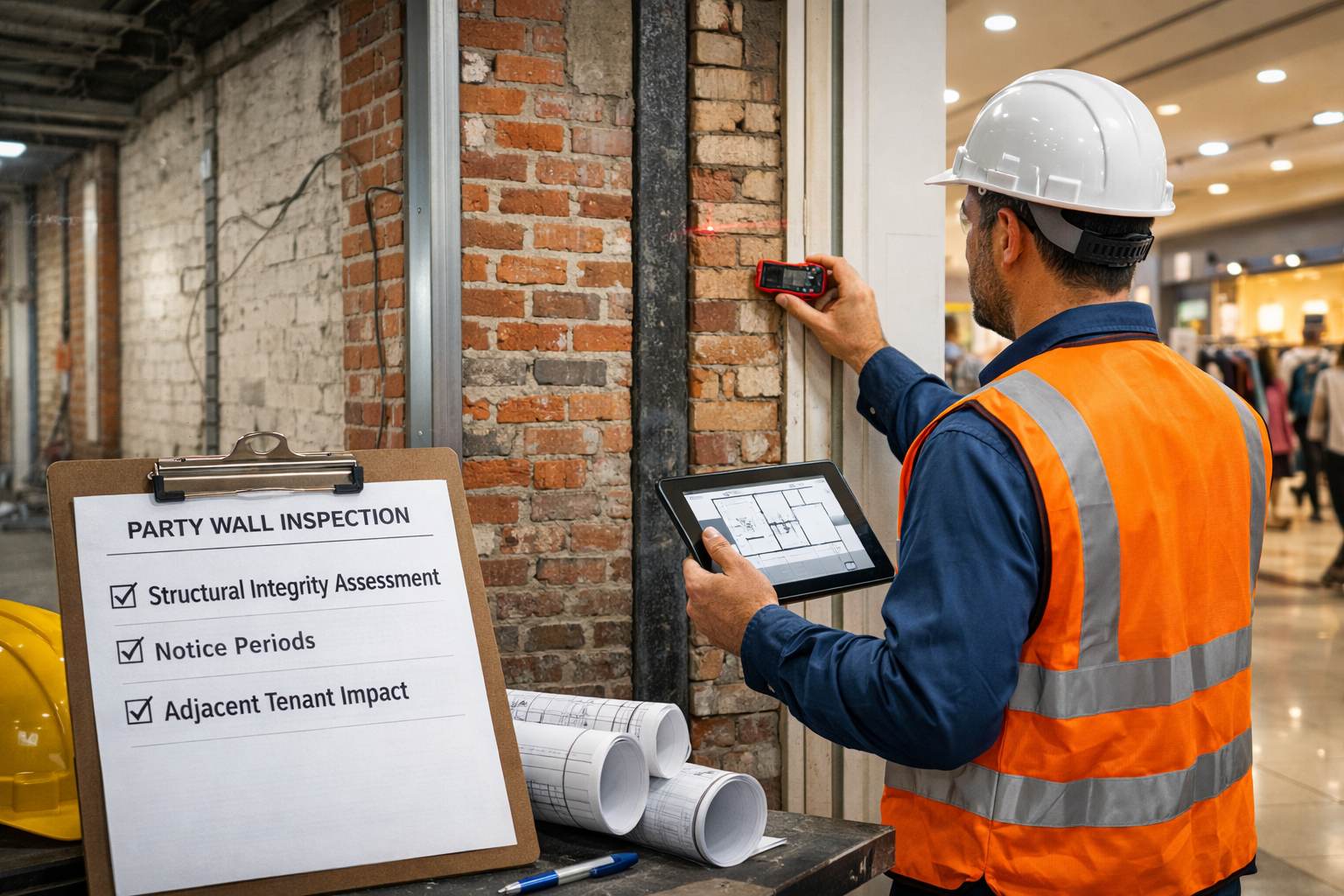
The Party Wall etc. Act 1996 governs construction work affecting shared walls, boundaries, and excavations near neighboring properties. While originally designed with residential properties in mind, this legislation applies equally to commercial retail developments and shopping centre expansions.
What Qualifies as Party Wall Work in Retail Settings?
In shopping centre environments, party wall work encompasses several common scenarios:
- Structural modifications to walls shared between retail units
- Excavations within three or six meters of adjacent properties (depending on depth)
- New wall construction on or astride boundary lines between units
- Alterations to party structures including floors and ceilings in multi-level centres
- Underpinning work that may affect neighboring foundations
The complexity increases significantly in shopping centres where multiple tenants, freeholders, and leaseholders may have interests in adjacent spaces [3]. This multi-party dynamic requires meticulous coordination and comprehensive surveyor oversight.
Why 2026 Represents a Critical Moment for Retail Property
The retail sector has undergone seismic shifts since the pandemic. Traditional shopping centres faced declining footfall and rising vacancy rates. However, 2026 marks a turning point. Investors now recognize these properties as value plays—assets trading below their redevelopment potential.
Several factors drive this revival:
- Repurposing opportunities mixing retail with residential, leisure, and workspace
- Prime locations in established town centres with existing infrastructure
- Reduced acquisition costs following years of declining valuations
- Government initiatives supporting town centre regeneration
- Changing consumer preferences favoring experiential retail over pure e-commerce
This investment surge means more expansion projects—and consequently, more party wall considerations [5].
Essential Surveyor Checklists for Shopping Centre Party Wall Agreements
Professional surveyors play a crucial role in managing Party Wall Agreements for Retail Revivals: Surveyor Checklists for Shopping Centre Expansions in 2026 Value Plays. Their systematic approach ensures compliance, protects all parties, and facilitates successful project completion.
Pre-Work Assessment Checklist
Before any construction begins, surveyors must complete comprehensive assessments:
| Assessment Area | Key Considerations | Documentation Required |
|---|---|---|
| Property Identification | All affected adjacent owners, tenants, freeholders | Title deeds, lease agreements, occupancy records |
| Structural Survey | Current condition of shared walls, floors, foundations | Photographic evidence, crack monitoring, structural reports |
| Tenant Impact | Trading hours, access requirements, noise sensitivity | Tenant schedules, lease obligations, operational needs |
| Notice Requirements | Correct notice type, recipients, timing | Legal templates, proof of service, acknowledgment records |
| Insurance Coverage | Liability protection, contractor insurance | Policy documents, coverage limits, claims procedures |
This initial assessment forms the foundation for all subsequent party wall procedures. Thorough documentation at this stage prevents disputes and provides clear baselines for damage assessment later.
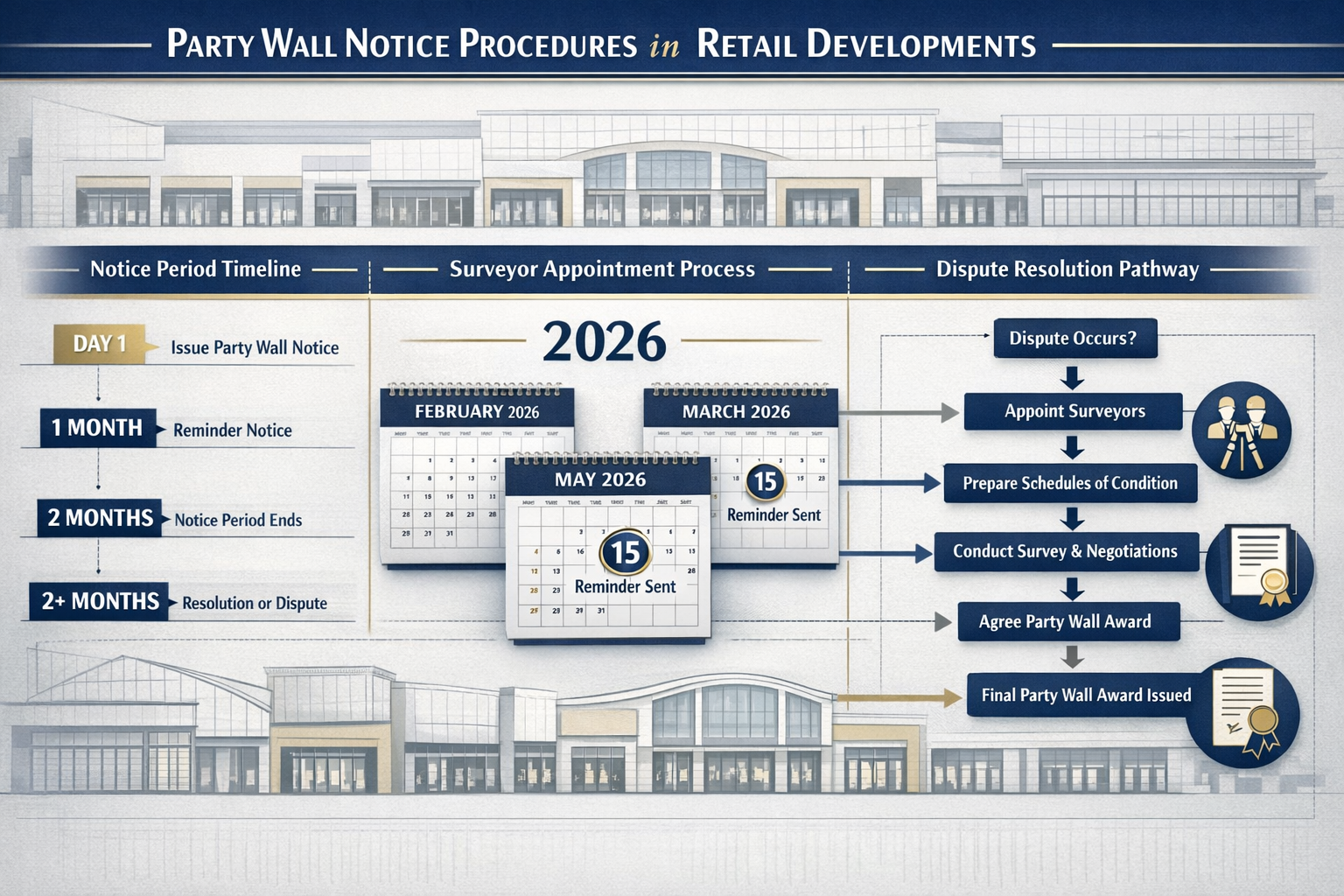
Notice Period Compliance
Timing is everything in party wall procedures. The legislation mandates specific notice periods that cannot be shortened:
- Two months' notice for most party wall works and new wall construction
- One month's notice for excavation work near boundaries [1]
For shopping centre expansions, surveyors must ensure notices reach all relevant parties:
✅ Freeholders of adjacent retail units
✅ Leaseholders with qualifying interests
✅ Tenants who may be affected by works
✅ Management companies responsible for common areas
✅ Superior landlords in complex ownership structures
Missing even one required recipient can invalidate the entire notice process, causing expensive delays. Professional surveyors maintain comprehensive databases of affected parties and use tracked delivery methods to ensure proper notice service.
Structural Impact Assessment
Shopping centre expansions often involve significant structural interventions. Surveyor checklists must address:
Load-Bearing Capacity
- Assessment of existing party walls' ability to support additional floors
- Calculations for new loading from expanded retail spaces
- Foundation adequacy for vertical extensions
Vibration and Movement
- Impact of demolition work on adjacent units
- Ground-borne vibration from excavation equipment
- Settlement risks from foundation work
Services and Utilities
- Identification of shared mechanical systems
- Electrical conduits within party walls
- Plumbing and drainage connections
Fire Safety
- Maintenance of fire-rated separations
- Compartmentation during construction phases
- Emergency egress route protection
These technical assessments require specialized expertise, often necessitating collaboration with structural engineers and other specialists.
Tenant Disruption Management
Unlike residential party wall scenarios, shopping centre work affects active commercial operations. Surveyor checklists must include:
- Trading impact assessments: How will noise, dust, and access restrictions affect sales?
- Temporary accommodation: Can tenants relocate within the centre during heavy work?
- Compensation protocols: What remedies exist for lost trading opportunities?
- Communication schedules: How frequently will tenants receive work updates?
- Emergency procedures: What happens if unexpected issues arise during trading hours?
Effective tenant management often determines project success. Surveyors who proactively address operational concerns reduce the likelihood of disputes and maintain positive relationships essential for long-term centre viability [2].
Navigating Party Wall Disputes in Retail Revival Projects
Despite careful planning, disagreements sometimes arise. Understanding dispute resolution mechanisms is crucial for Party Wall Agreements for Retail Revivals: Surveyor Checklists for Shopping Centre Expansions in 2026 Value Plays.
Common Sources of Conflict
Retail expansion projects face several dispute triggers:
Financial Disagreements
- Who pays surveyor fees?
- How are shared costs allocated among multiple adjacent owners?
- What compensation applies for temporary trading disruption?
Technical Disputes
- Disagreement over proposed work methods
- Concerns about structural adequacy
- Disputes regarding temporary works and protection measures
Timing Conflicts
- Work schedules conflicting with peak trading periods
- Extended timelines beyond initially agreed durations
- Delays in completing remedial works
Access Issues
- Requirements for access through adjacent properties
- Security concerns during construction
- Coordination with tenant operations
The Agreed Surveyor Approach
When adjacent owners consent to party wall work, they may appoint a single agreed surveyor to act impartially for both parties. This approach offers several advantages in retail contexts:
- Cost efficiency: One set of fees instead of two
- Streamlined communication: Single point of contact
- Faster resolution: Reduced coordination complexity
- Consistency: Unified approach to assessments and awards
However, agreed surveyors must maintain strict impartiality and document their independence carefully [3]. In complex shopping centre scenarios with multiple affected parties, this approach may prove impractical.
The Two-Surveyor Model
More commonly in commercial settings, each party appoints their own surveyor. These appointed surveyors then:
- Exchange information about the proposed works
- Conduct independent assessments of existing conditions
- Negotiate terms for the party wall award
- Appoint a third surveyor to resolve any disagreements between them
- Prepare the award documenting agreed procedures and protections
This model provides stronger advocacy for each party's interests but requires careful coordination to avoid adversarial dynamics that could delay valuable projects.
Party Wall Awards: Essential Components
The party wall award serves as the legal framework governing the work. For shopping centre expansions, comprehensive awards should include:
📋 Detailed work descriptions with architectural drawings and specifications
📋 Condition schedules documenting pre-work state of adjacent properties
📋 Access arrangements specifying times, routes, and restrictions
📋 Protection measures including hoarding, dust suppression, and vibration monitoring
📋 Working hours aligned with tenant operations and lease requirements
📋 Dispute resolution procedures for issues arising during construction
📋 Completion protocols defining how final inspections will occur
Professional surveyors ensure awards address retail-specific concerns while maintaining legal compliance. Those seeking guidance for party wall awards should engage specialists familiar with commercial property complexities.
What Happens Without Proper Agreements?
Proceeding without valid party wall agreements exposes developers to significant risks:
⚠️ Injunctions halting work mid-project
⚠️ Compensation claims for damages and disruption
⚠️ Tenant claims for breach of quiet enjoyment
⚠️ Lender concerns affecting project financing
⚠️ Reputational damage affecting future leasing prospects
The consequences of proceeding without a party wall agreement can devastate project economics, transforming promising value plays into financial disasters.
Maximizing Value in 2026 Retail Expansion Projects
Understanding party wall procedures isn't merely about legal compliance—it's about protecting and enhancing investment returns in retail revival projects.
Due Diligence for Investors
Sophisticated investors evaluating shopping centre acquisitions now include party wall considerations in their due diligence:
Pre-Acquisition Assessments
- Identify all party wall relationships affecting expansion potential
- Review historical party wall awards and ongoing disputes
- Assess tenant lease terms regarding construction disruption
- Evaluate structural capacity for vertical or horizontal expansion
Financial Modeling
- Budget adequate contingencies for party wall procedures (typically 2-5% of construction costs)
- Account for extended timelines from notice periods and potential disputes
- Model tenant compensation scenarios
- Factor surveyor fees into project economics
Risk Mitigation
- Obtain specialist party wall insurance coverage
- Engage experienced surveyors during planning phases
- Build relationships with adjacent owners before formal notices
- Develop communication strategies for tenant management
Coordination with Planning and Building Control
Party wall procedures operate independently from planning permission and building regulations, but coordination is essential:
- Timing: Serve party wall notices after planning approval to provide certainty to neighbors
- Design: Ensure proposed works comply with both planning conditions and party wall constraints
- Documentation: Maintain clear records linking party wall awards to approved plans
- Inspections: Coordinate building control inspections with party wall surveyor visits
This integrated approach prevents conflicts between different regulatory requirements and streamlines project delivery.
Technology and Innovation in Party Wall Management
Forward-thinking surveyors leverage technology to enhance party wall procedures in 2026:
Digital Condition Surveys
- 3D laser scanning for precise baseline documentation
- Photogrammetry creating detailed visual records
- Crack monitoring sensors providing real-time data
- Drone surveys for roof and façade assessments
Project Management Platforms
- Cloud-based document sharing with all parties
- Automated notice tracking and deadline management
- Digital signature collection for awards and consents
- Real-time communication channels with tenants
Monitoring Systems
- Vibration sensors alerting to excessive movement
- Dust monitors ensuring air quality compliance
- Noise meters tracking decibel levels
- Settlement monitoring for foundation work
These innovations improve accuracy, reduce disputes, and demonstrate professional diligence to all stakeholders.
Case Study: Multi-Unit Shopping Centre Expansion
Consider a typical 2026 value play scenario:
The Project: A regional shopping centre owner plans to add a 15,000 sq ft extension connecting two existing buildings, creating modern retail space and improving circulation.
Party Wall Challenges:
- Work affects 12 separate retail units with different owners and tenants
- Excavation required within 3 meters of adjacent properties
- Structural modifications to existing party walls between units
- Work must proceed while centre remains operational
Surveyor Solution:
- Comprehensive mapping of all ownership interests (3 weeks)
- Staggered notice service to all affected parties (completed 2 months before work start)
- Appointment of agreed surveyor accepted by 8 of 12 parties; separate surveyors for remaining 4
- Detailed award specifying work phases aligned with tenant trading patterns
- Weekly coordination meetings with tenant representatives
- Continuous monitoring using vibration and settlement sensors
- Documented completion with final condition surveys
Outcome: Project completed on schedule with zero formal disputes, tenant satisfaction maintained, and expansion fully let within 6 months—validating the investment thesis.
Best Practices for Shopping Centre Party Wall Compliance
Professional surveyors recommend these proven strategies for Party Wall Agreements for Retail Revivals: Surveyor Checklists for Shopping Centre Expansions in 2026 Value Plays:
Early Engagement
Start party wall procedures during project planning, not after construction contracts are signed. Early engagement allows:
- Identification of potential objectors before significant design investment
- Incorporation of neighbor concerns into design development
- Realistic timeline planning including notice periods
- Relationship building with adjacent owners
Clear Communication
Transparency prevents misunderstandings:
- Plain language explanations of technical work for non-specialist owners
- Visual materials showing proposed works and protection measures
- Regular updates throughout the process, not just statutory notices
- Accessible contact points for questions and concerns
Professional Selection
Choose surveyors with specific experience in:
- Commercial property party wall matters
- Multi-party coordination
- Retail operational understanding
- Dispute resolution and mediation
- RICS compliance frameworks [5]
The surveyor's role extends beyond technical assessment to include diplomacy, project management, and commercial awareness—skills essential in complex retail environments.
Documentation Excellence
Meticulous record-keeping protects all parties:
- Photographic schedules with date/time stamps and location metadata
- Signed acknowledgments of all notices and communications
- Detailed meeting minutes recording agreements and decisions
- Change logs tracking any modifications to approved works
- Completion certificates formally closing out the party wall process
This documentation proves invaluable if disputes arise years after project completion.
Contingency Planning
Prepare for complications:
- Budget reserves for unexpected structural issues
- Alternative work methods if initial approaches prove problematic
- Tenant relocation options if disruption exceeds predictions
- Mediation resources for rapid dispute resolution
- Legal support for complex ownership structures
Experienced developers recognize that party wall procedures rarely proceed exactly as planned. Flexibility and preparation enable successful navigation of challenges.
Frequently Asked Questions
Q: How long do party wall procedures typically add to project timelines?
A: Minimum 2-3 months for notice periods, plus surveyor appointment and award preparation time. Complex shopping centre projects should budget 4-6 months for complete party wall procedures before construction begins [1].
Q: Who pays for party wall surveyors?
A: The building owner (party initiating works) typically pays all reasonable surveyor fees, including those of adjacent owners' appointed surveyors. This should be factored into project budgets.
Q: Can tenants object to party wall work?
A: Tenants' rights depend on their lease terms. While they may not have formal party wall rights, their landlords (who do) often consult them. Tenant concerns significantly influence commercial decisions about proceeding with work.
Q: What if an adjacent owner refuses to engage?
A: After proper notice service, if an owner doesn't respond within 14 days, they're deemed to be in dispute. Surveyors can then be appointed on their behalf to ensure the process continues [4].
For more detailed information, consult our comprehensive party wall FAQs.
Conclusion
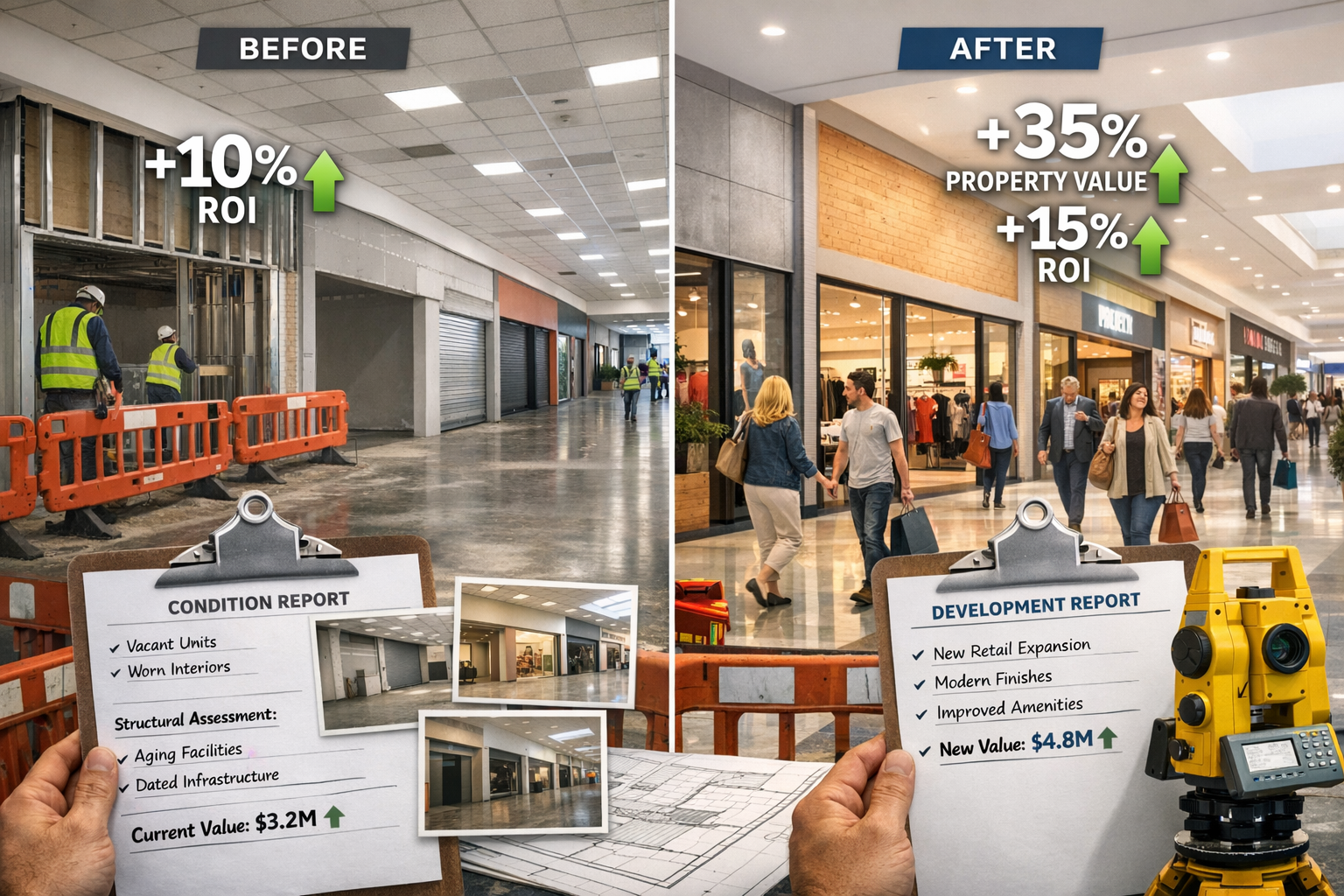
The retail revival of 2026 presents exceptional opportunities for investors willing to undertake strategic shopping centre expansions. However, realizing the full potential of these value plays requires professional management of party wall agreements and adjacent property impacts.
Party Wall Agreements for Retail Revivals: Surveyor Checklists for Shopping Centre Expansions in 2026 Value Plays encompass far more than legal compliance. They represent a comprehensive approach to:
✅ Protecting investment returns through proper risk management
✅ Maintaining tenant relationships essential for long-term viability
✅ Preventing costly disputes that can derail profitable projects
✅ Demonstrating professional standards that attract quality tenants and financing
✅ Building community support for retail regeneration initiatives
Next Steps for Developers and Investors
- Engage specialist surveyors early in project planning phases
- Conduct comprehensive due diligence on party wall relationships before acquisition
- Budget appropriately for surveyor fees, notices, and potential compensation
- Develop communication strategies for multi-party coordination
- Implement monitoring systems to document compliance and protect against claims
- Maintain detailed records throughout the entire process
- Consider expert witness support for complex or high-value projects
The shopping centres emerging as phoenix assets in 2026 share common characteristics: professional management, strategic vision, and meticulous attention to legal and technical requirements. Party wall compliance exemplifies this professional approach, transforming potential obstacles into managed processes that protect value and enable successful expansion.
As retail property continues its evolution from pure shopping destination to mixed-use community hub, the complexity of party wall considerations will only increase. Developers and investors who master these procedures position themselves to capitalize on the most attractive opportunities in this dynamic sector.
The retail revival is underway. With proper party wall management, your expansion project can contribute to—and profit from—this exciting transformation. 🏗️
References
[1] Party Wall Agreement London 2026 – https://www.mayfairstudio.co.uk/blog/party-wall-agreement-london-2026
[2] Party Walls Are Not Such A Party Anymore – https://sextongroup.com/en/toolbox/party-walls-are-not-such-a-party-anymore
[3] Party Wall Agreement – https://hoa.org.uk/advice/guides-for-homeowners/i-am-improving/party-wall-agreement/
[4] Canadian Contractor Party Wall Article – https://woodsmith.ca/the-blueprint/renovation-resources/canadian-contractor-party-wall-article/
[5] Party Wall Surveys And Neighbour Disputes During 2026s Construction Uptick Rics Compliance Framework – https://nottinghillsurveyors.com/blog/party-wall-surveys-and-neighbour-disputes-during-2026s-construction-uptick-rics-compliance-framework