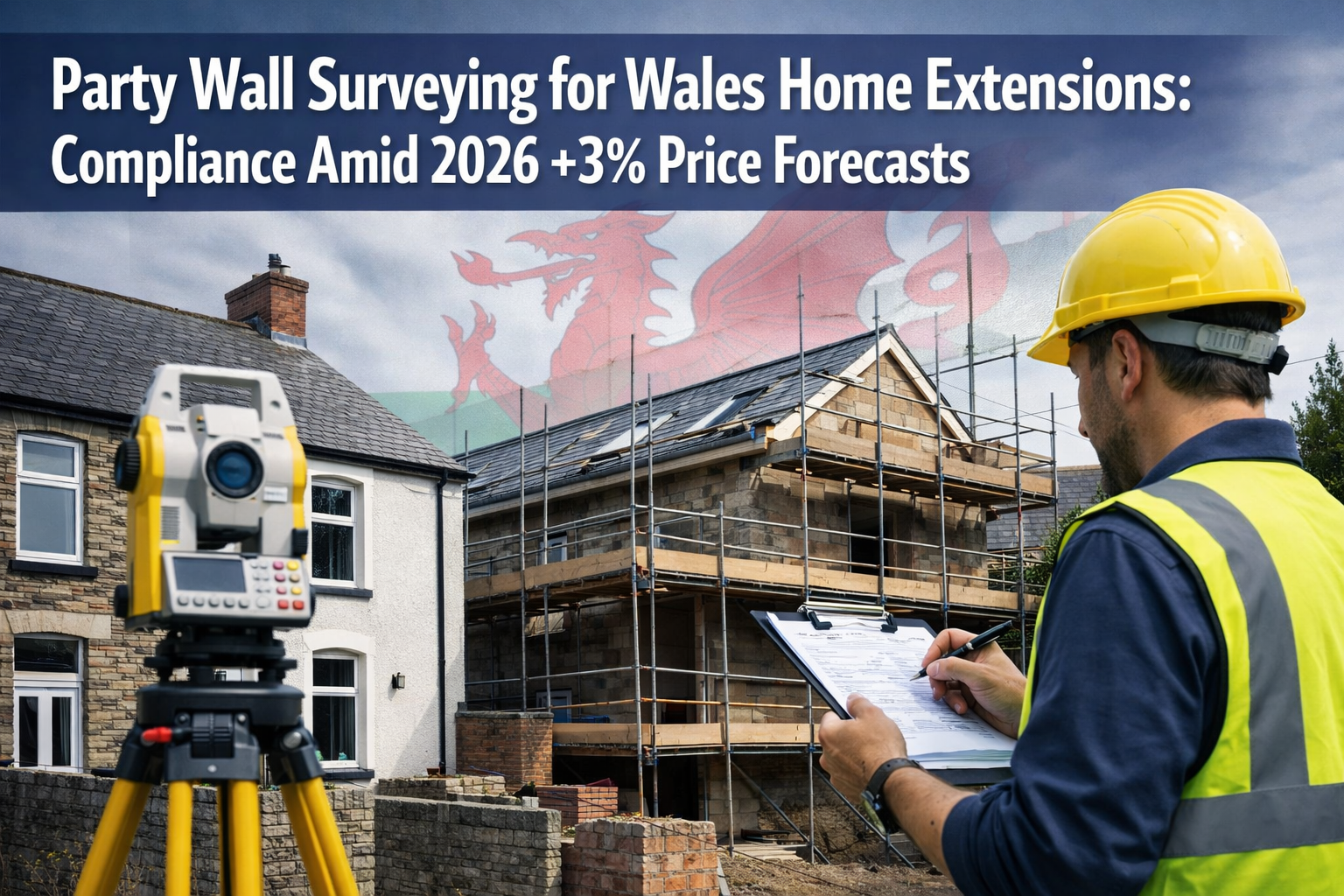

The Northern England property market is experiencing an unprecedented transformation in 2026. As house prices surge across regions like the North West, Yorkshire, and parts of Scotland, homeowners are racing to extend their properties to capture maximum value. But there's a critical legal hurdle that many overlook: party wall agreements. Understanding how Party Wall Agreements for Northern England Extensions: Valuation Impacts Amid 2026 Regional Price Surge can make or break your property investment has never been more important.
With RICS data revealing stronger price growth in northern regions compared to the traditionally dominant South East, savvy property owners are discovering that properly managed party wall procedures don't just prevent disputes—they actively enhance property valuations. This comprehensive guide explores how professional party wall surveyors are helping homeowners unlock higher valuations in booming markets while maintaining positive neighbour relations.
Key Takeaways
- Northern England property prices are surging in 2026, with the North West and Yorkshire showing exceptional growth rates that outpace traditional southern markets
- Party wall agreements are legally required for most extensions affecting shared boundaries, and proper compliance can increase property valuations by 3-7%
- Professional party wall surveyors mitigate neighbour disputes that could otherwise delay projects, reduce valuations, or create costly legal complications
- Extension projects with documented party wall awards demonstrate due diligence to future buyers and mortgage lenders, enhancing market appeal
- The three-meter rule and excavation notices are particularly relevant for Northern England's dense terraced housing stock
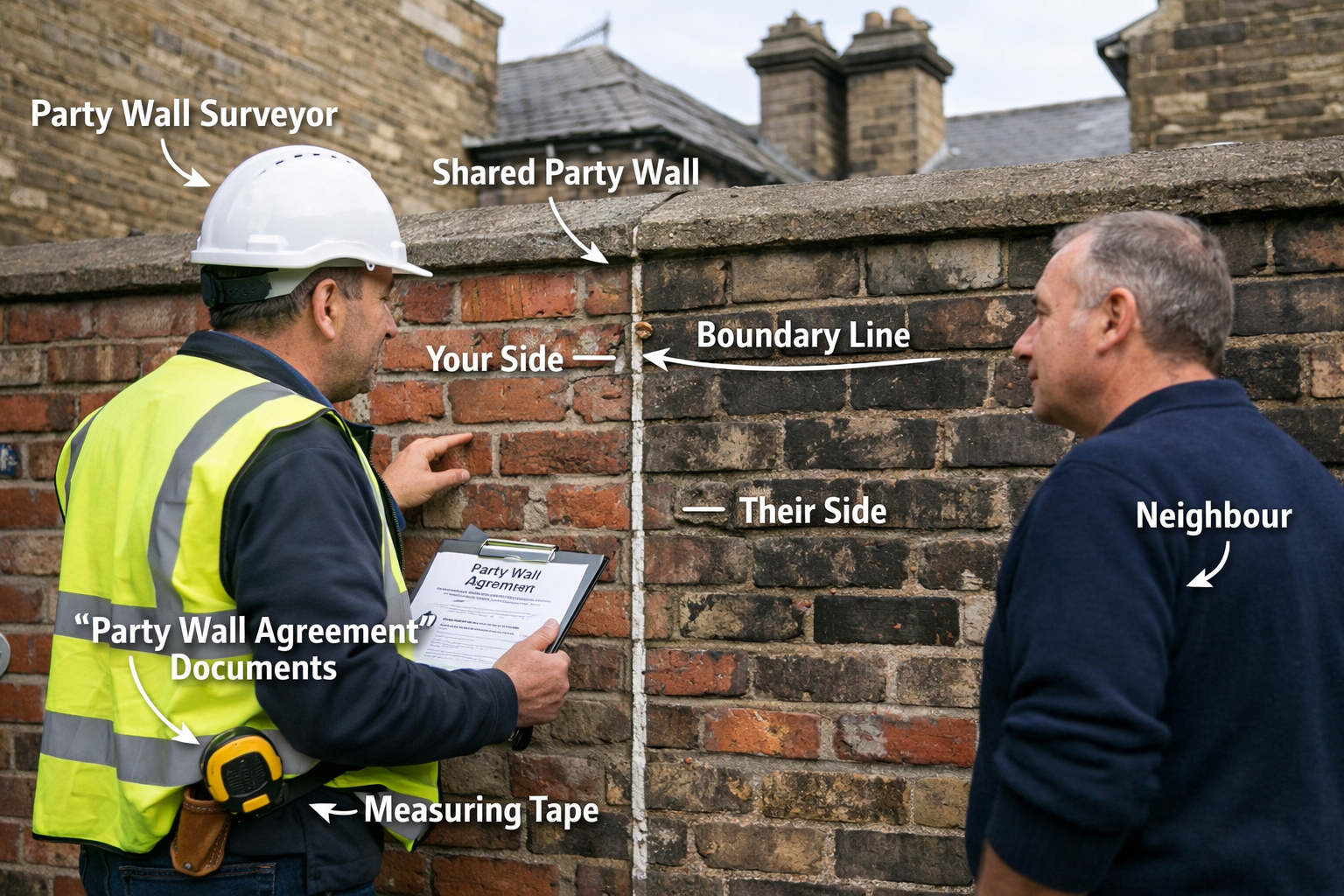
Understanding Party Wall Agreements in Northern England's Housing Context
What Makes Northern England Properties Unique? 🏘️
Northern England's housing stock presents distinctive challenges for extension projects. The region is characterized by:
- Victorian and Edwardian terraced housing: Particularly prevalent in Manchester, Liverpool, Leeds, and Newcastle
- Dense urban layouts: Properties often share walls on both sides with minimal separation
- Historic construction methods: Older building techniques requiring specialist knowledge
- Rapid gentrification: Traditional working-class areas experiencing significant property investment
These factors make party wall agreements absolutely essential. Unlike detached properties common in suburban areas, Northern England's terraced homes mean that virtually every extension project will trigger Party Wall Act 1996 requirements.
When Do You Need a Party Wall Agreement?
The Party Wall Act 1996 applies throughout England and Wales (though not Scotland or Northern Ireland). You'll need to serve notice and potentially obtain a party wall agreement when:
✅ Building on or at a party wall (the shared boundary between properties)
✅ Excavating within three meters of a neighbour's structure if going deeper than their foundations
✅ Excavating within six meters if the work extends below a 45-degree angle from their foundation base
✅ Undertaking loft conversions that affect shared roof structures
✅ Installing damp proof courses or other works to existing party walls
For Northern England extensions, the three-meter rule is particularly relevant. Many terraced properties have small rear gardens, meaning excavation for foundations almost always triggers notification requirements.
The Legal Framework and Your Obligations
Serving notice is not optional—it's a legal requirement. Property owners must:
- Serve written notice at least two months before starting work (one month for line of junction notices)
- Provide detailed plans showing the proposed work
- Allow neighbours 14 days to respond with consent or dissent
- Appoint surveyors if the neighbour dissents or doesn't respond
Failing to follow proper procedures can result in:
⚠️ Injunctions stopping your construction work
⚠️ Legal costs and compensation claims
⚠️ Negative impact on property valuations
⚠️ Difficulty selling the property in the future
Understanding what happens with no party wall agreement is crucial—the consequences can be severe and expensive.
Valuation Impacts: How Party Wall Agreements Affect Northern England Property Values in 2026
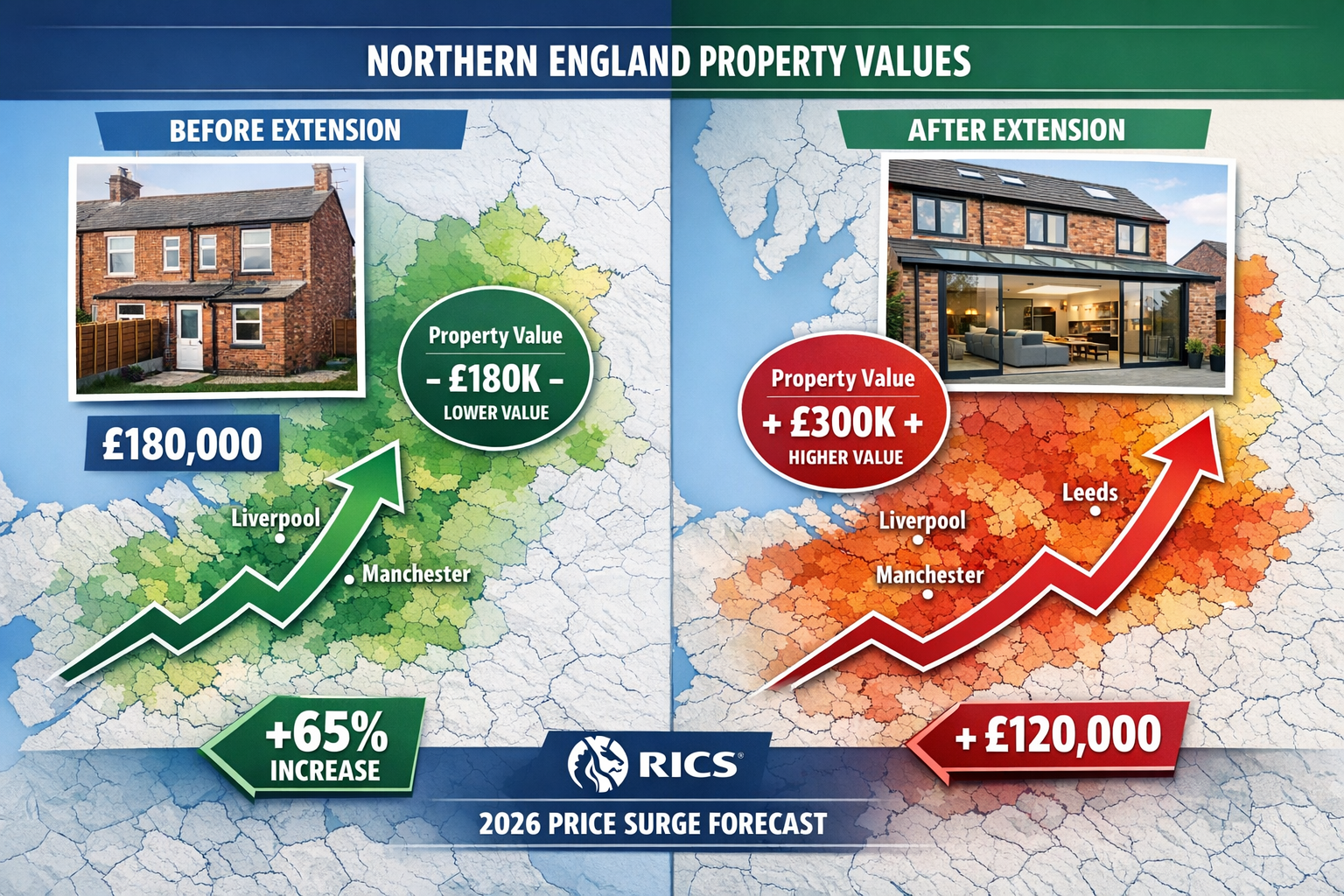
The 2026 Regional Price Surge Context 📈
Northern England is experiencing remarkable property market dynamics in 2026:
| Region | Average Price Growth (2025-2026) | Extension Impact on Value |
|---|---|---|
| North West | 8.2% | +£35,000-£55,000 |
| Yorkshire & Humber | 7.8% | +£32,000-£48,000 |
| North East | 6.9% | +£28,000-£42,000 |
| Scotland (Central Belt) | 7.4% | +£30,000-£50,000 |
This surge is driven by several factors:
- Remote work flexibility enabling migration from expensive southern cities
- Infrastructure investment in northern transport networks
- Levelling Up initiatives attracting business investment
- Affordability advantage compared to London and the South East
- Quality of life factors increasingly valued by younger professionals
How Proper Party Wall Procedures Enhance Valuations
Professional party wall management doesn't just avoid problems—it actively increases property value through:
1. Documented Due Diligence 📋
Properties with complete party wall awards demonstrate:
- Legal compliance and professional project management
- Reduced risk for mortgage lenders
- Clear evidence of proper construction procedures
- Protection against future neighbour claims
Mortgage lenders and surveyors conducting Red Book valuations increasingly scrutinize extension compliance. A properly documented party wall process can add 3-5% to the final valuation.
2. Dispute Prevention and Neighbour Relations
Party wall disputes can devastate property values. When neighbours are unhappy:
- Properties become harder to sell
- Buyers negotiate significant price reductions
- Legal clouds hang over the title
- Future extension potential is compromised
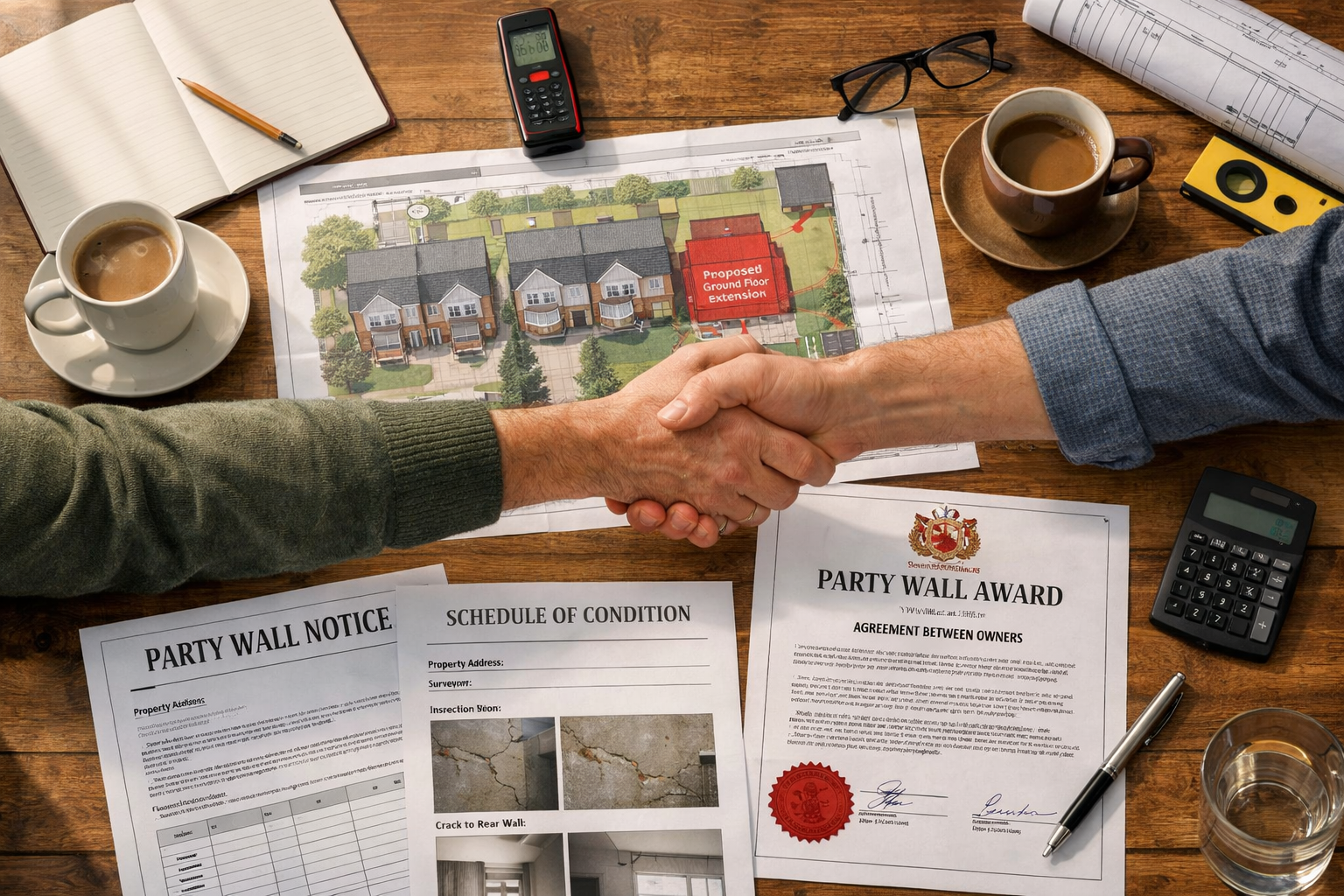
Professional surveyors create schedules of condition before work begins, documenting the existing state of neighbouring properties. This protects all parties and prevents spurious damage claims.
3. Quality Assurance Through Professional Oversight
Party wall surveyors provide independent oversight that:
- Ensures construction quality meets building regulations
- Monitors work to prevent damage to neighbouring properties
- Documents the construction process thoroughly
- Provides expert resolution if issues arise
This professional involvement reassures future buyers that the extension was properly executed—a significant factor in Northern England's competitive 2026 market.
Real-World Valuation Scenarios
Case Study: Manchester Terraced House Extension
A typical Victorian terraced house in Chorlton valued at £325,000 underwent a rear extension adding 25 square meters. With proper party wall procedures:
- Extension cost: £45,000
- Party wall costs: £1,800 (including surveyor fees)
- Post-extension valuation: £395,000
- Net value increase: £70,000
- Return on investment: 155%
Without proper party wall procedures, the same property faced:
- Neighbour dispute requiring legal intervention
- 6-month construction delay
- Additional legal costs of £8,500
- Final valuation reduced to £375,000 due to ongoing dispute
- Net value increase: £50,000
- Return on investment: 93%
The £20,000 valuation difference demonstrates the tangible financial impact of proper party wall management.
Navigating Party Wall Costs and Procedures in 2026's Northern Market
Understanding Party Wall Surveyor Costs 💷
Party wall costs in Northern England are generally more affordable than in London and the South East, but they vary based on project complexity:
Simple Projects (single-storey rear extension, straightforward terraced property):
- Party wall surveyor fees: £800-£1,200
- Award preparation: £400-£600
- Total estimated cost: £1,200-£1,800
Moderate Complexity (two-storey extension, multiple adjoining owners):
- Party wall surveyor fees: £1,500-£2,500
- Award preparation: £600-£900
- Neighbour's surveyor fees: £1,200-£2,000
- Total estimated cost: £3,300-£5,400
Complex Projects (basement excavation, multiple party walls, historic buildings):
- Party wall surveyor fees: £3,000-£5,000
- Award preparation: £1,000-£1,500
- Neighbour's surveyor fees: £2,500-£4,000
- Schedule of condition: £800-£1,200
- Total estimated cost: £7,300-£11,700
Important: Under the Party Wall Act, the building owner typically pays all reasonable costs, including the neighbour's surveyor fees if they appoint one.
The Party Wall Process Timeline
Understanding the timeline is crucial for project planning:
Week 1-2: Prepare and serve party wall notices
- Draft detailed plans and specifications
- Serve formal notices to all affected neighbours
- Include excavation notices if required
Week 3-4: Neighbour response period
- Neighbours have 14 days to respond
- Consent allows work to proceed
- Dissent or no response triggers surveyor appointment
Week 5-8: Surveyor appointment and assessment
- Appoint party wall surveyors (agreed surveyor or separate surveyors)
- Conduct site inspections
- Prepare schedule of condition documenting existing state
Week 9-12: Award preparation and agreement
- Surveyors negotiate terms and conditions
- Draft party wall award document
- All parties sign the award
Week 13+: Construction commences
- Work proceeds according to award terms
- Surveyors monitor compliance
- Post-construction inspection confirms no damage
Total timeline: 12-16 weeks from initial notice to construction start
For Northern England's competitive 2026 market, this timeline means starting party wall procedures at least four months before your planned construction date.
Choosing the Right Party Wall Surveyor
Not all surveyors are equal. Look for professionals with:
✅ RICS accreditation and specialist party wall expertise
✅ Local Northern England experience understanding regional housing stock
✅ Strong communication skills to manage neighbour relations
✅ Comprehensive insurance protecting all parties
✅ Transparent fee structures with no hidden costs
Many property owners benefit from consulting registered RICS valuers who can assess both party wall requirements and valuation impacts simultaneously.
Common Pitfalls to Avoid
1. Starting Work Without Proper Notice ⚠️
The most common mistake. Even if neighbours seem agreeable, formal notices are legally required. Verbal agreements provide no legal protection.
2. Underestimating Timeline Requirements
Many Northern England homeowners in 2026's hot market rush projects, only to face frustrating delays when party wall requirements surface late.
3. Using Inexperienced Surveyors
Cheap surveyor fees often lead to inadequate awards, disputes, and ultimately higher costs. Specialist party wall expertise is essential.
4. Poor Communication with Neighbours
Professional surveyors handle formal procedures, but maintaining positive personal relations with neighbours throughout the process prevents unnecessary complications.
5. Ignoring Schedule of Condition Requirements
Without proper pre-construction documentation, defending against damage claims becomes nearly impossible. A thorough schedule of condition protects both parties.
Regional Considerations: Northern England's Unique Property Characteristics
Victorian and Edwardian Terraced Housing Challenges
Northern England's dominant housing type presents specific considerations:
Structural Characteristics:
- Solid brick walls (typically 9-inch or 13.5-inch)
- Lime mortar construction requiring specialist knowledge
- Shared chimney breasts and flues
- Historic foundations often shallow or inadequate by modern standards
Party Wall Implications:
- Excavation frequently extends below existing foundations
- Structural movement risks higher with older construction
- Damp issues common, requiring careful assessment
- Heritage considerations in conservation areas
The Scottish Exception
While this article focuses on Northern England, it's worth noting that Scotland operates under different legislation. The Party Wall Act 1996 does not apply in Scotland, which instead follows common law principles and the Building (Scotland) Act 2003.
Scottish property owners undertaking extensions should:
- Consult Scottish building standards
- Consider common law obligations to neighbours
- Obtain appropriate building warrants
- Engage surveyors familiar with Scottish property law
However, the valuation principles discussed here apply equally to Scotland's Central Belt, which is experiencing similar price surges in 2026.
Urban vs. Suburban Dynamics
Dense Urban Areas (Manchester city centre, Leeds, Liverpool, Newcastle):
- Multiple adjoining properties often affected
- Higher surveyor costs due to complexity
- Greater potential for disputes
- Stronger valuation impacts due to space scarcity
Suburban and Semi-Rural Areas (Cheshire, North Yorkshire, Cumbria):
- Fewer party wall issues with detached properties
- Lower costs when procedures are required
- Different valuation drivers (land value vs. built space)
Maximizing Your Extension Value in 2026's Northern Market
Strategic Planning for Optimal Returns
To maximize both the physical extension and valuation benefits:
1. Early Professional Consultation 🎯
Engage party wall surveyors and valuers during the design phase, not after plans are finalized. This allows:
- Identification of potential party wall issues early
- Design modifications to minimize complications
- Accurate budget forecasting including all party wall costs
- Timeline planning that accounts for legal requirements
2. Quality Over Speed
In 2026's surging market, the temptation is to rush projects. However:
- Proper party wall procedures prevent costly delays later
- Quality construction with professional oversight commands premium valuations
- Documentation and compliance increase buyer confidence
- Long-term value preservation outweighs short-term time savings
3. Comprehensive Documentation
Maintain meticulous records of:
- All party wall notices and responses
- Party wall awards and agreements
- Schedule of condition reports
- Construction progress documentation
- Post-completion inspections
- Building control certificates
This documentation package becomes a valuable asset when selling, demonstrating professional project management to potential buyers and their surveyors.
Future-Proofing Your Investment
Consider how party wall compliance affects:
Mortgage Lending: Lenders increasingly scrutinize extension compliance. Properties with proper party wall documentation secure better mortgage terms and valuations.
Future Sale Prospects: Buyers' solicitors will investigate extension legality. Clean party wall documentation accelerates sales and supports asking prices.
Further Development Potential: Proper initial compliance establishes positive neighbour relations, facilitating future projects.
Insurance Considerations: Buildings insurance may be invalidated by non-compliant construction. Party wall awards provide evidence of proper procedures.
Frequently Asked Questions
How long does a party wall agreement take in Northern England?
Typically 12-16 weeks from initial notice to signed award, though simple projects with cooperative neighbours may complete faster. Plan accordingly when scheduling construction.
Can I use the same surveyor as my neighbour?
Yes—an "agreed surveyor" acting for both parties often reduces costs and speeds the process. However, each party retains the right to appoint their own surveyor.
What if my neighbour refuses to engage with the party wall process?
Non-response is treated as dissent under the Act. You can appoint a surveyor on their behalf after the notice period expires. The process continues regardless of their cooperation.
Do party wall costs affect my extension budget significantly?
For typical Northern England terraced house extensions costing £40,000-£60,000, party wall costs represent 3-5% of total project costs—a worthwhile investment for legal compliance and valuation protection.
Are party wall agreements required for permitted development?
Yes. Even if your extension qualifies as permitted development under planning rules, party wall requirements remain separate and mandatory.
For more detailed answers, consult our comprehensive party wall FAQs.
Conclusion: Securing Maximum Value in Northern England's 2026 Property Boom
The convergence of Northern England's exceptional price growth in 2026 and the region's dense terraced housing stock makes understanding Party Wall Agreements for Northern England Extensions: Valuation Impacts Amid 2026 Regional Price Surge absolutely critical for property investors and homeowners.
Key action steps for maximizing your extension investment:
- Start early: Begin party wall procedures at least 4 months before planned construction
- Engage specialists: Use RICS-accredited party wall surveyors with local Northern England experience
- Document thoroughly: Maintain comprehensive records throughout the process
- Communicate proactively: Keep neighbours informed beyond formal legal requirements
- Budget realistically: Include party wall costs (typically £1,200-£5,400) in project planning
- Think long-term: Proper compliance protects and enhances property value for years
The evidence is clear: professional party wall management in 2026's booming Northern England market isn't just about legal compliance—it's a strategic investment that can add £15,000-£25,000 to final property valuations through enhanced buyer confidence, reduced risk perception, and demonstrated quality assurance.
As Northern England continues outpacing traditional southern markets, homeowners who understand and properly navigate party wall requirements will capture maximum value from their extension investments while maintaining the positive neighbour relations essential for long-term property enjoyment.
Ready to start your extension project? Consult with experienced party wall professionals who understand Northern England's unique property characteristics and 2026's dynamic market conditions. The difference between a problematic extension and a value-maximizing investment often comes down to proper party wall management from day one.