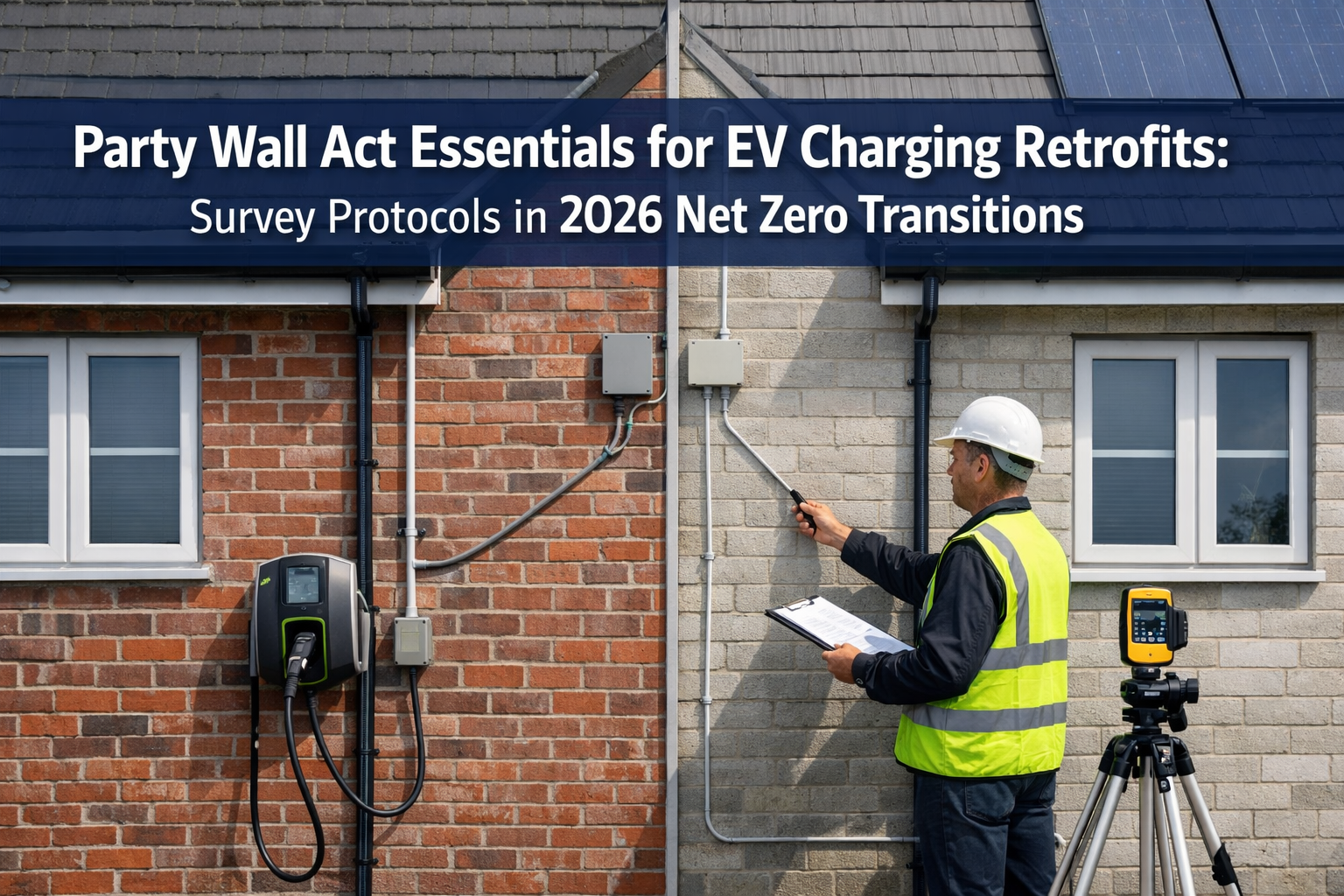

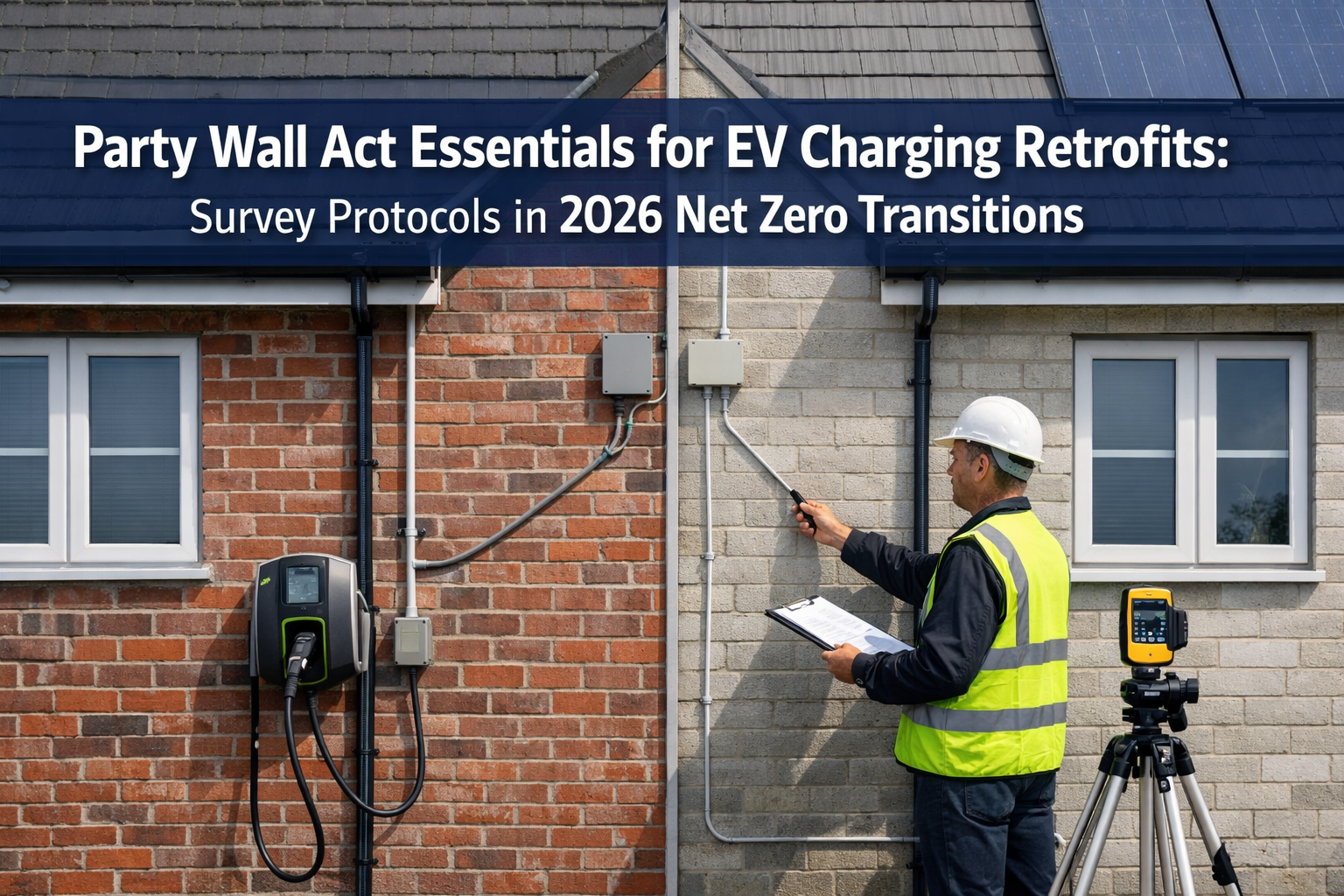
The race toward net zero has transformed how property owners approach electric vehicle (EV) charging installations, particularly in the UK's densely packed urban landscapes. As 2026 brings stricter environmental targets, thousands of homeowners are retrofitting EV charging points onto properties with shared walls—triggering complex legal obligations under the Party Wall Act 1996. Party Wall Act Essentials for EV Charging Retrofits: Survey Protocols in 2026 Net Zero Transitions have become critical knowledge for anyone planning to install charging infrastructure that affects neighbouring properties. Without proper party wall procedures, what seems like a straightforward green upgrade can quickly escalate into costly disputes, project delays, and legal complications.
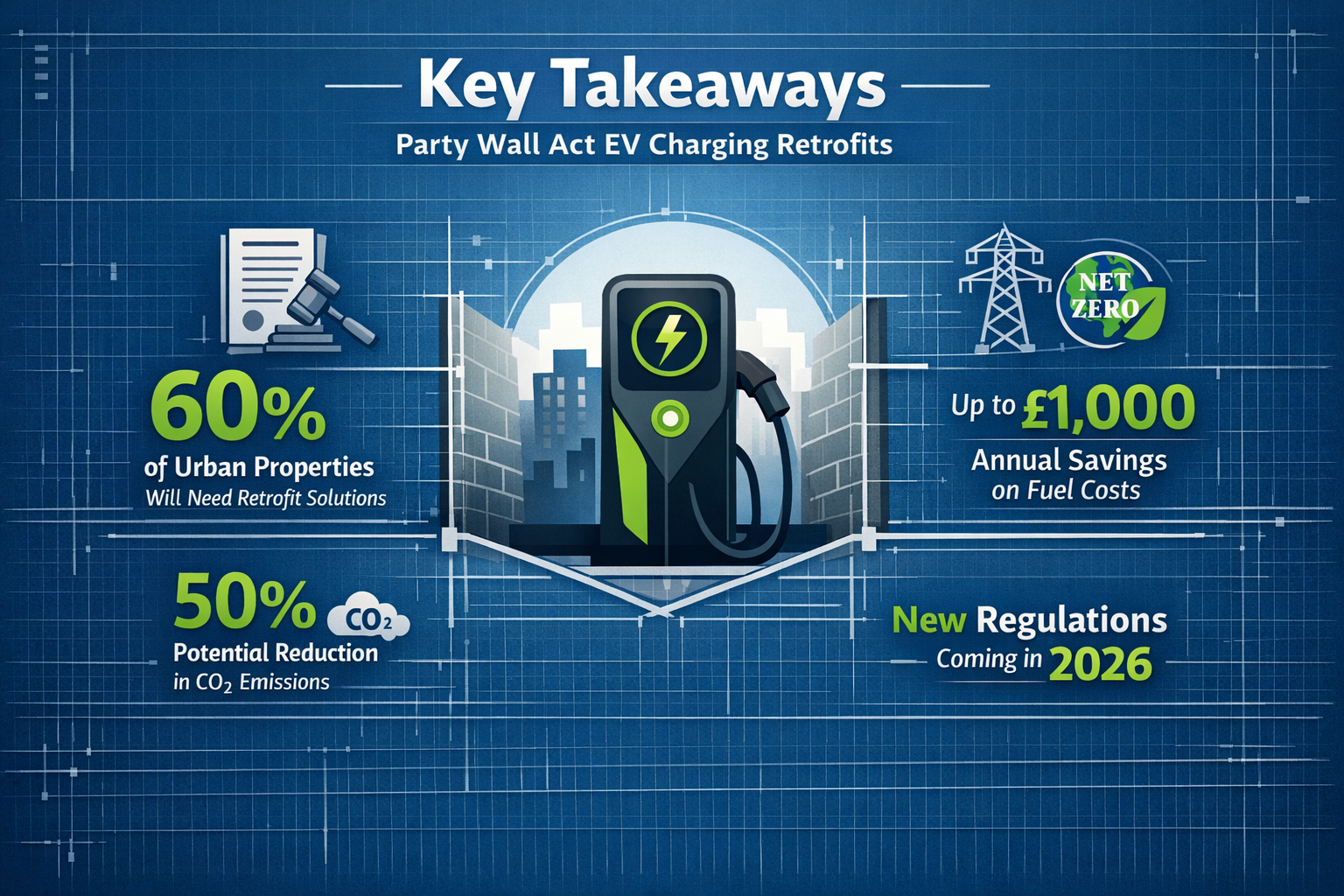
Key Takeaways
- 🔌 EV charging retrofits often trigger Party Wall Act requirements when installations involve work on shared walls, foundations within three meters of boundaries, or excavations affecting neighbouring structures
- 📋 Proper survey protocols and condition schedules are mandatory before commencing any party wall work to protect both property owners from disputes over structural damage
- ⚖️ Serving correct notices 2-6 months before work begins is legally required, with specific timelines depending on the type of party wall work involved
- 🏗️ Appointed party wall surveyors must follow 2026 compliance standards that integrate net zero retrofit considerations with traditional structural assessment protocols
- 🤝 Early neighbour engagement and professional surveyor involvement dramatically reduce the risk of disputes and project delays in EV charging installations
Understanding the Party Wall Act Framework for EV Charging Projects
The Party Wall Act 1996 governs construction work on shared walls, boundaries, and excavations near neighbouring properties throughout England and Wales. While originally designed for traditional building work, this legislation now applies extensively to modern net zero retrofits, including EV charging installations.
When Does the Party Wall Act Apply to EV Charging?
EV charging point installations trigger Party Wall Act requirements in several common scenarios:
Section 1 Work involves building a new wall at the boundary line or astride the boundary between properties. This rarely applies to EV charging unless constructing a new boundary structure to house equipment.
Section 2 Work covers modifications to existing party walls—the most relevant category for EV retrofits. This includes:
- Cutting into party walls to install electrical conduits or cable channels
- Installing brackets, fixings, or support structures that penetrate the party wall
- Removing chimney breasts or internal structures to accommodate charging equipment
- Adding insulation or weatherproofing that affects the party wall structure
Section 6 Work addresses excavations within three or six meters of neighbouring buildings, depending on depth. This becomes relevant when:
- Installing underground cable runs from the charging point to the main electrical supply
- Excavating foundations for ground-mounted charging stations
- Creating trenches for protective conduit systems near boundary walls
According to recent guidance, commercial properties planning EV charger installations for 2026 must evaluate party wall implications early in the design phase [1]. The same principle applies to residential retrofits, where failure to comply can result in injunctions halting work entirely.
For detailed information about excavation requirements, review our guide on notice for excavation near a neighbour.
The Legal Notice Requirements
Property owners (the "building owner") must serve formal written notices on adjoining owners before commencing party wall work. The timing requirements are strict:
| Notice Type | Minimum Notice Period | Work Covered |
|---|---|---|
| Party Structure Notice | 2 months | Section 2 work on existing party walls |
| Line of Junction Notice | 1 month | Section 1 work building new walls |
| Notice of Adjacent Excavation | 1 month | Section 6 excavation work |
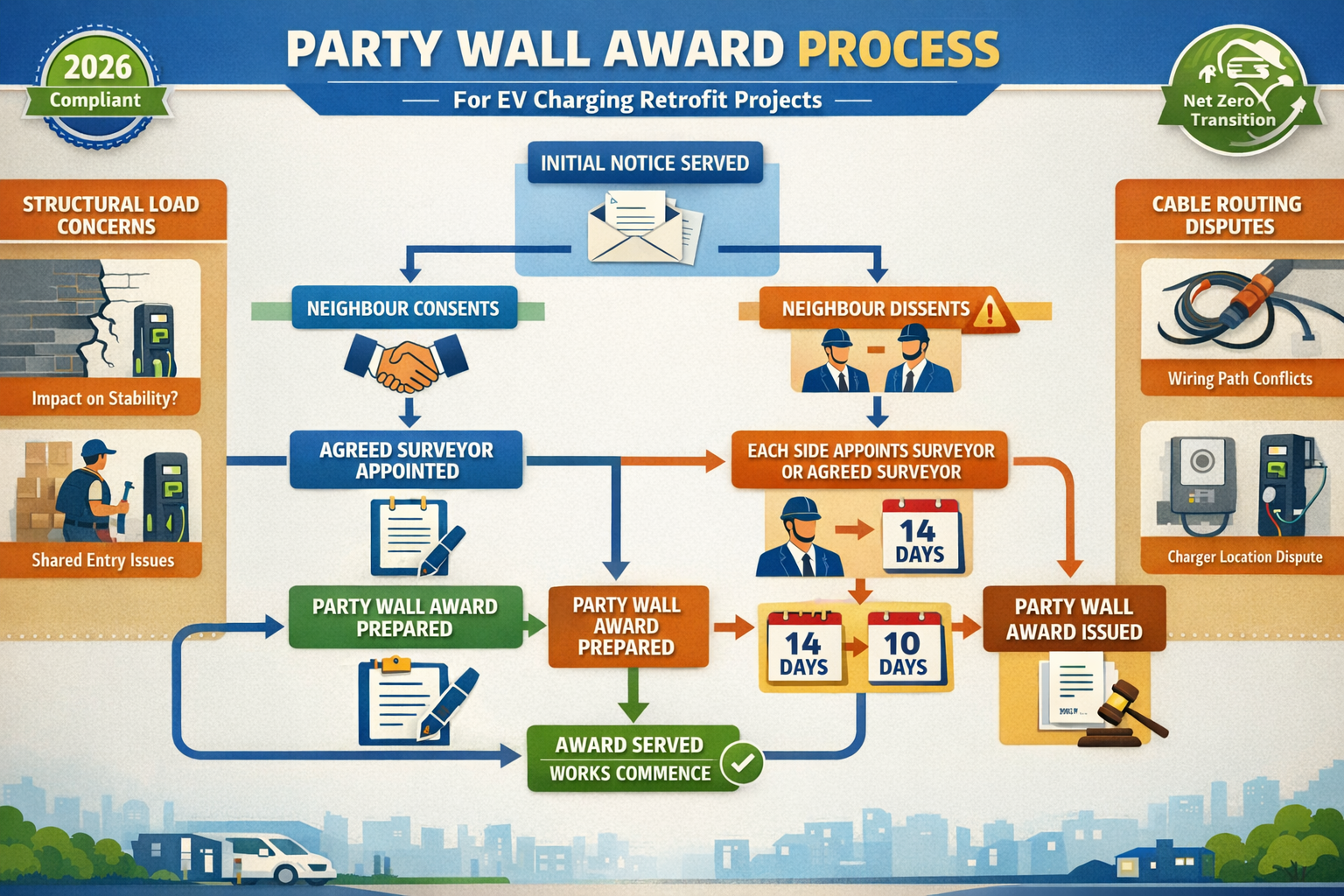
Neighbours have 14 days to respond to party wall notices. If they consent in writing, work can proceed without a formal party wall award. However, if they dissent or fail to respond, the dispute resolution process begins, requiring surveyor appointment.
Understanding consent for party wall work is essential for avoiding common pitfalls that delay EV charging projects.
Survey Protocols for EV Charging Retrofits in 2026
Professional surveying protocols have evolved significantly to address the unique challenges of net zero retrofits. Party Wall Act Essentials for EV Charging Retrofits: Survey Protocols in 2026 Net Zero Transitions now incorporate electrical safety considerations, structural load assessments, and environmental compliance checks alongside traditional party wall procedures.
Pre-Installation Condition Surveys
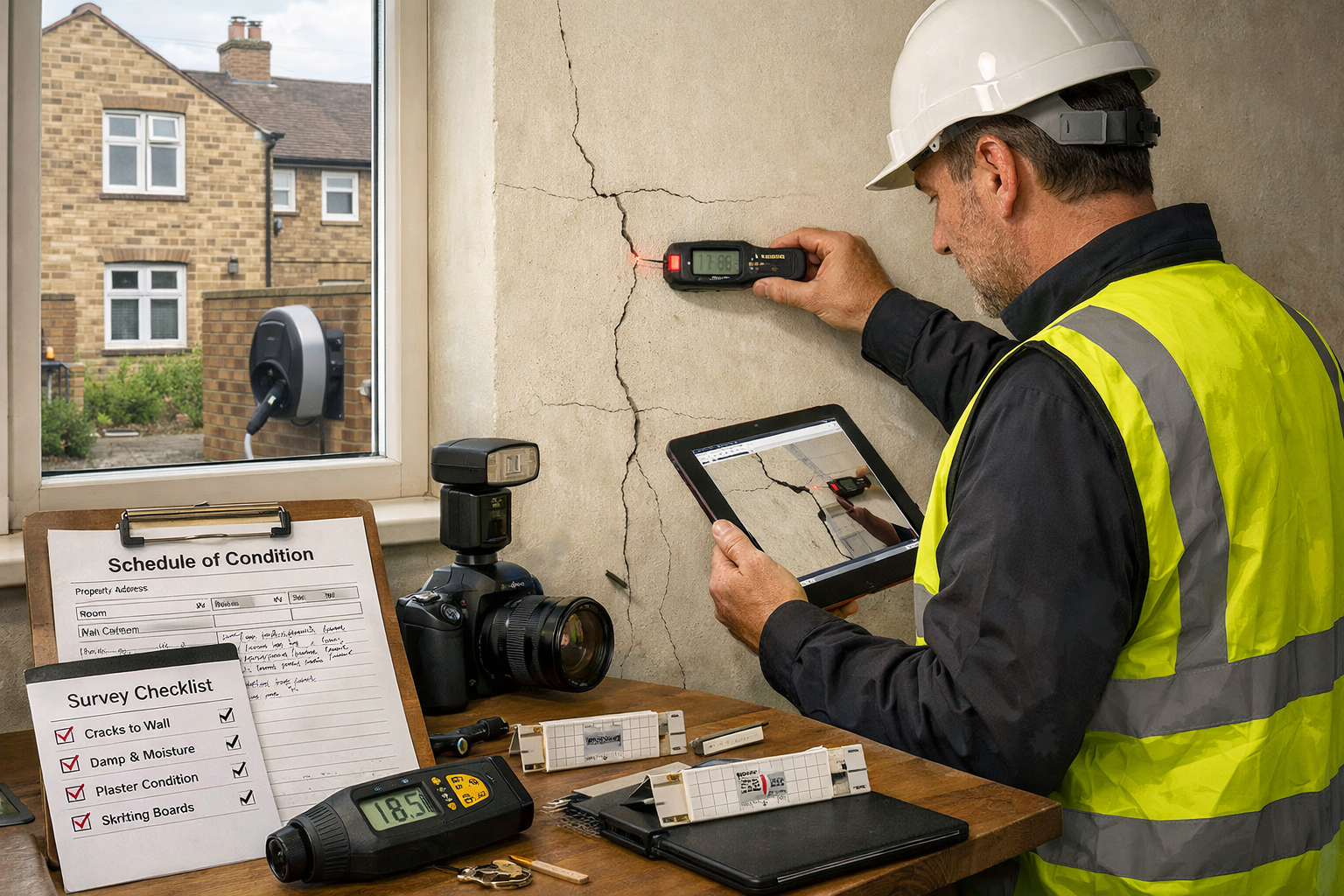
Before any EV charging work begins, a comprehensive schedule of condition must document the existing state of both properties. This photographic and written record serves as crucial evidence if disputes arise about damage caused during installation.
Essential elements of a pre-installation condition survey include:
- 📸 Comprehensive photographic documentation of all party wall surfaces, both internal and external
- 📏 Precise measurements and descriptions of existing cracks, defects, or structural issues
- 🔍 Detailed inspection of foundations in areas where excavation or cable installation will occur
- 🏠 Assessment of neighbouring property condition to establish baseline structural integrity
- 📊 Documentation of existing electrical installations and potential interference points
The schedule of condition should be prepared by an experienced party wall surveyor with understanding of both structural assessment and electrical installation requirements. In 2026, this increasingly means surveyors with specific training in net zero retrofit projects [4].
Learn more about comprehensive documentation in our article on schedule of condition party wall procedures.
Structural Assessment for Charging Point Installations
Modern EV charging installations require careful structural evaluation, particularly when mounting heavy charging units on party walls or creating new penetrations for cable routing.
Key structural considerations include:
-
Load-bearing capacity analysis – Wall-mounted charging units can weigh 15-25kg, requiring assessment of the party wall's ability to support additional loads without compromising structural integrity
-
Vibration impact assessment – While EV chargers don't generate significant vibration, the installation process (drilling, cutting) can affect party wall stability
-
Moisture and weatherproofing – External charging points create new penetration points that must be properly sealed to prevent water ingress affecting both properties
-
Cable routing pathways – Surveyors must map safe routes for electrical conduits that avoid structural elements, existing services, and protected areas
-
Foundation integrity – Underground cable installations require assessment of foundation depths and soil conditions to ensure excavation won't undermine neighbouring structures
The "three-meter rule" under Section 6 of the Party Wall Act becomes particularly relevant for underground cable installations. Any excavation within three meters of a neighbouring building that goes deeper than the neighbour's foundations requires formal notice and potentially a party wall award. For more details, see our explanation of what is the three meter rule.
2026 Compliance Standards for Net Zero Retrofits
Professional bodies including RICS (Royal Institution of Chartered Surveyors) have updated guidance for surveyors working on net zero compliance projects in 2026. These standards recognize that EV charging retrofits serve important environmental objectives while still requiring full party wall compliance [4].
Updated 2026 surveyor protocols emphasize:
- ⚡ Electrical safety integration – Party wall surveyors must coordinate with qualified electricians to ensure installations meet Building Regulations Part P
- 🌱 Sustainability assessment – Evaluating whether proposed installations align with broader net zero strategies without compromising party wall integrity
- 🔄 Future-proofing considerations – Assessing whether party wall modifications accommodate potential future upgrades to charging capacity
- 📱 Digital documentation standards – Using modern survey technology including laser measurement, 3D scanning, and digital condition reports
- 🤝 Enhanced neighbour communication protocols – Recognizing that net zero projects often benefit both parties, facilitating cooperative approaches
The Party Wall Award Process for EV Installations
When neighbours dissent to party wall notices or fail to respond within 14 days, the formal dispute resolution process begins. This results in a party wall award—a legally binding document that sets out how the work will proceed, what protections are in place, and how costs will be allocated.
Appointing Party Wall Surveyors
Three surveyor appointment options exist under the Party Wall Act:
- Agreed Surveyor – Both parties jointly appoint a single impartial surveyor (most cost-effective approach)
- Two Surveyors – Each party appoints their own surveyor, who then work together to prepare the award
- Third Surveyor – Appointed by the two surveyors to resolve any disagreements between them
For EV charging retrofits, using an agreed surveyor with specific experience in electrical installations and net zero projects often provides the most efficient resolution. However, neighbours concerned about potential impacts may prefer appointing their own surveyor for independent representation.
The building owner (person carrying out the work) bears the surveyor costs in most cases, including reasonable costs for the neighbour's surveyor if appointed separately.
What the Party Wall Award Must Cover
A comprehensive party wall award for EV charging installations should address:
Technical specifications:
- Exact location and dimensions of all party wall penetrations
- Cable routing pathways and protective measures
- Structural support requirements for wall-mounted equipment
- Weatherproofing and sealing specifications
Access arrangements:
- Rights of access to neighbouring property if required during installation
- Notice periods for access requests
- Working hours and restrictions to minimize disruption
Protection measures:
- Dust and debris control procedures
- Vibration monitoring if applicable
- Protection of neighbouring property finishes and fixtures
Condition documentation:
- Reference to the pre-installation schedule of condition
- Agreement on inspection procedures during and after work
- Process for addressing any damage that occurs
Dispute resolution:
- Procedures for raising concerns during the work
- Third surveyor appointment mechanism if needed
- Rights of appeal under the Party Wall Act
For comprehensive guidance on party wall awards, see our detailed article on guidance for party wall award preparation.
Timelines and Project Planning
Understanding party wall timelines is crucial for project planning. A typical EV charging retrofit following party wall procedures involves:
Weeks 1-2: Prepare and serve party wall notices to neighbours
Weeks 3-4: Neighbour response period (14 days from service of notice)
Weeks 5-8: If disputed, appoint surveyors and conduct pre-installation surveys
Weeks 9-12: Surveyors prepare and agree party wall award
Week 13+: Work can commence once award is in place
This 3-4 month timeline from initial notice to work commencement means property owners should begin party wall procedures well before their planned installation date. Commercial properties preparing for 2026 compliance deadlines need to factor these timelines into their planning [1].
Common Disputes and Resolution Strategies
Despite best intentions, EV charging retrofits can trigger party wall disputes. Understanding common issues and resolution strategies helps property owners navigate challenges effectively.
Typical EV Charging Party Wall Disputes
Structural damage concerns: Neighbours worry that drilling into party walls or excavating near foundations will cause cracks, subsidence, or other structural problems. This is where comprehensive pre-installation condition surveys prove invaluable—they establish the baseline condition and protect both parties.
Access objections: Some EV installations require temporary access to neighbouring property for safe installation or inspection. Neighbours may object to access requests, particularly if work schedules conflict with their occupancy patterns.
Aesthetic impacts: External charging points and visible conduit runs can affect property appearance. While the Party Wall Act doesn't directly address aesthetic concerns, they often complicate neighbour relations and party wall negotiations.
Noise and disruption: Installation work involving drilling, excavation, or construction generates temporary disruption. Disputes arise when neighbours feel working hours are unreasonable or the disruption exceeds what was communicated.
Future liability concerns: Neighbours may worry about ongoing maintenance responsibilities or liability if the charging installation causes future problems with the party wall.
For guidance on navigating these challenges, review our resource on what is a party wall dispute and resolution options.
Effective Resolution Strategies
Early engagement: Discussing EV charging plans with neighbours before serving formal notices often prevents disputes. Explaining the environmental benefits and addressing concerns proactively builds cooperation.
Professional surveyor involvement: Engaging experienced party wall surveyors early provides authoritative technical assessment that reassures concerned neighbours and establishes professional oversight.
Comprehensive documentation: Thorough schedules of condition, clear technical specifications, and detailed party wall awards leave little room for misunderstanding or future disagreement.
Reasonable accommodations: Flexibility on working hours, dust control measures, and communication protocols demonstrates good faith and often resolves neighbour objections.
Insurance protection: Ensuring adequate contractor insurance and explicit coverage for party wall work provides financial protection if damage occurs despite precautions.
Understanding what happens when no party wall agreement is reached helps property owners prepare for worst-case scenarios.
Integrating EV Charging with Broader Net Zero Retrofits
Many property owners undertake EV charging installations as part of comprehensive net zero retrofit programs that may include insulation upgrades, heat pump installations, solar panels, and other environmental improvements. This integrated approach requires careful coordination of party wall procedures.
Combined Party Wall Notices
When multiple retrofit measures affect party walls, property owners can serve combined party wall notices covering all proposed works. This approach:
- ✅ Reduces administrative burden and notice periods
- ✅ Provides neighbours with complete picture of planned improvements
- ✅ Allows single party wall award covering all works
- ✅ Streamlines surveyor appointments and condition surveys
However, combined notices require careful drafting to ensure all works are adequately described and legal requirements satisfied for each type of work.
Insulation and Party Wall Considerations
Adding insulation to party walls often accompanies EV charging retrofits as part of broader energy efficiency improvements. This work has specific party wall implications, as detailed in our guide on insulation in a party wall.
Key considerations include:
- Internal wall insulation may require party wall consent if it involves cutting into or modifying the party wall structure
- External wall insulation on party walls definitely requires party wall procedures
- Cavity wall insulation typically doesn't trigger Party Wall Act requirements unless structural modifications are needed
- Coordination between insulation contractors and electricians ensures EV charging conduits integrate properly with insulation systems
Multi-Unit and Commercial Property Complexities
Multifamily residential buildings and commercial properties face additional complexities when installing EV charging infrastructure. Multiple party walls, shared services, and complex ownership structures require sophisticated coordination [2].
Multifamily EV charging considerations:
- Strata or leasehold arrangements may require additional consents beyond party wall procedures
- Common area installations still need party wall compliance if affecting individual unit boundaries
- Shared electrical infrastructure requires careful load assessment and coordination
- Multiple neighbours may need party wall notices for single installation projects
Commercial properties preparing for 2026 compliance must integrate party wall procedures into broader EV infrastructure planning, particularly when retrofitting older buildings with shared walls [1].
Practical Checklist: Party Wall Act Essentials for EV Charging Retrofits
Use this comprehensive checklist to ensure Party Wall Act Essentials for EV Charging Retrofits: Survey Protocols in 2026 Net Zero Transitions compliance:
Pre-Planning Phase (3-4 months before installation)
- Identify all party walls and boundaries affected by proposed EV charging installation
- Determine which sections of Party Wall Act apply (Section 1, 2, or 6)
- Review property deeds and leasehold agreements for additional restrictions
- Consult with qualified electrician on installation requirements and party wall impacts
- Engage experienced party wall surveyor for initial assessment
- Prepare preliminary designs and specifications for party wall notices
Notice and Consent Phase (2-3 months before installation)
- Prepare formal party wall notices with complete technical descriptions
- Serve notices on all adjoining owners via recorded delivery
- Document service of notices with proof of delivery
- Wait for 14-day neighbour response period
- If consent received, proceed with planning (no award needed)
- If dissent or no response, initiate surveyor appointment process
Survey and Award Phase (1-2 months before installation)
- Appoint party wall surveyor(s) according to agreed approach
- Conduct comprehensive pre-installation condition survey of both properties
- Prepare detailed photographic and written schedule of condition
- Coordinate structural assessment of party walls and foundations
- Review and approve draft party wall award
- Ensure award covers all technical specifications and protection measures
- Obtain signed party wall award from all parties
Installation Phase
- Provide neighbours with advance notice of work commencement
- Ensure contractors understand party wall award requirements
- Implement all protection measures specified in award
- Maintain communication with neighbours during work
- Document any variations from planned work
- Conduct interim inspections if specified in award
Post-Installation Phase
- Complete final inspection with party wall surveyor
- Prepare post-installation condition survey
- Compare with pre-installation schedule to identify any damage
- Address any damage or defects promptly
- Obtain final sign-off from surveyors
- Retain all party wall documentation for future reference
For additional guidance on party wall procedures, explore our party wall FAQs covering common questions.
Future Outlook: EV Charging and Party Wall Act Evolution
As the UK accelerates toward net zero targets, the intersection of party wall law and environmental retrofits will continue evolving. Several trends are shaping the landscape in 2026 and beyond:
Regulatory developments: Government guidance increasingly recognizes the public interest in facilitating net zero retrofits while maintaining property rights protections. Future Party Wall Act amendments may streamline procedures for environmentally beneficial works like EV charging installations.
Technology integration: Digital party wall processes, including electronic notice service, online dispute resolution, and 3D condition surveys, are becoming standard practice. These innovations reduce timelines and costs while improving documentation quality [5].
Standardization efforts: Professional bodies are developing standardized templates and protocols specifically for EV charging party wall procedures, reducing variation and uncertainty in the process.
Increased prevalence: As EV adoption accelerates, party wall procedures for charging installations are becoming routine rather than exceptional. This familiarity is reducing neighbour resistance and streamlining surveyor processes.
Integrated planning: Local authorities and property developers are incorporating party wall considerations into EV charging infrastructure planning from the outset, particularly in new developments and major retrofits.
Property owners planning EV charging installations should stay informed about these developments while ensuring full compliance with current Party Wall Act requirements.
Conclusion
Party Wall Act Essentials for EV Charging Retrofits: Survey Protocols in 2026 Net Zero Transitions represent a critical knowledge area for property owners, surveyors, and contractors navigating the intersection of environmental compliance and property law. As the UK pursues ambitious net zero targets, thousands of EV charging installations on properties with shared walls will require careful attention to party wall procedures.
The key to successful EV charging retrofits lies in early planning, professional surveyor engagement, and proactive neighbour communication. By serving proper notices, conducting comprehensive condition surveys, and obtaining party wall awards when needed, property owners protect themselves from disputes while contributing to essential environmental objectives.
Next Steps for Property Owners
If you're planning an EV charging installation that may affect party walls:
- Assess your situation early – Identify potential party wall implications 3-4 months before your planned installation date
- Engage professional surveyors – Work with experienced party wall surveyors who understand both structural requirements and electrical installations
- Communicate with neighbours – Discuss your plans before serving formal notices to build cooperation and address concerns
- Follow proper procedures – Serve correct notices, conduct thorough surveys, and obtain party wall awards when required
- Document everything – Maintain comprehensive records of all party wall procedures, surveys, and communications
- Plan for timelines – Factor 3-4 months into your project schedule for party wall procedures if disputes arise
The transition to net zero requires millions of property owners to make environmental improvements, many of which will affect shared walls and boundaries. Understanding and following Party Wall Act procedures ensures these essential upgrades proceed smoothly while protecting the rights and properties of all parties involved.
For professional assistance with party wall procedures for your EV charging retrofit, contact experienced chartered surveyors who specialize in net zero compliance projects and understand the unique requirements of 2026 environmental standards.
References
[1] Planning Ev Charger Installations For 2026 What Commercial Properties Should Prepare Now – https://amtekconstruction.com/planning-ev-charger-installations-for-2026-what-commercial-properties-should-prepare-now/
[2] Multifamily Ev Charging Solutions Guide – https://www.ampup.io/blog/multifamily-ev-charging-solutions-guide
[4] Party Wall Essentials For 2026 Net Zero Compliance Projects Surveyor Checklists For Epc Retrofit Disputes – https://nottinghillsurveyors.com/blog/party-wall-essentials-for-2026-net-zero-compliance-projects-surveyor-checklists-for-epc-retrofit-disputes
[5] Ev Charging Infrastructure 2026 Trends – https://www.versinetic.com/news-blog/ev-charging-infrastructure-2026-trends/