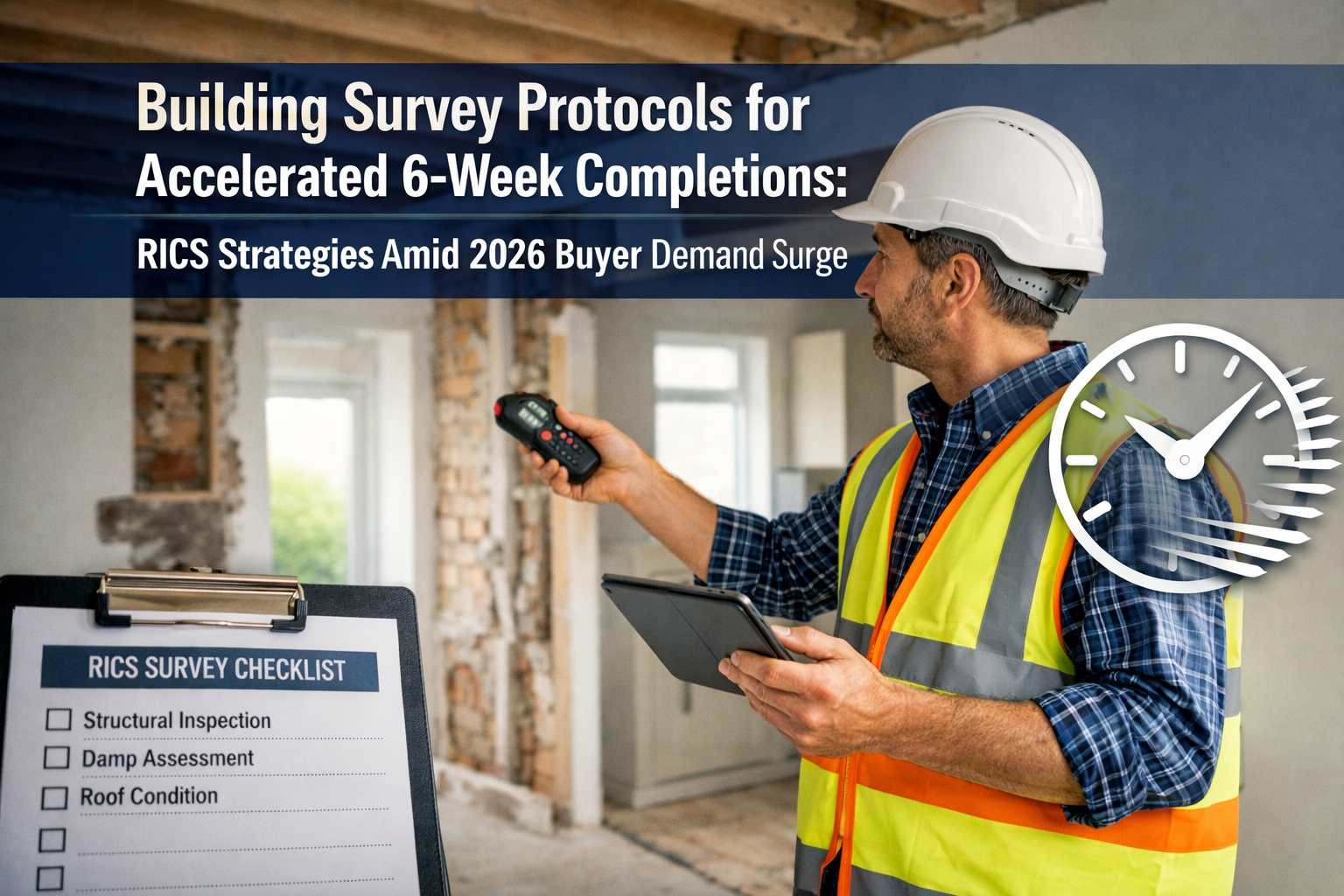
The United Kingdom's digital infrastructure boom is reshaping urban landscapes in 2026, with data centres sprouting up in unexpected locations—often right next to residential properties. As artificial intelligence and cloud computing demands skyrocket, developers are racing to secure sites in densely populated areas, creating a perfect storm of construction activity that directly impacts Party Wall Act Compliance for Data Centre Adjacencies: Survey Protocols in UK's 2026 Infrastructure Surge. This unprecedented wave of development brings complex legal obligations, technical challenges, and neighbour relations issues that require specialized surveying expertise to navigate successfully.
Key Takeaways
- 🏗️ Data centre developments near residential properties trigger multiple Party Wall Act provisions, particularly Section 6 excavation notices and Section 2 building work requirements
- 📋 Specialized survey protocols are essential for documenting pre-construction conditions, monitoring vibrations, and protecting adjoining owners' interests during intensive construction phases
- ⚖️ Party Wall Awards must address unique data centre considerations including continuous cooling system vibrations, emergency power testing schedules, and long-term structural monitoring requirements
- 🔍 Professional surveyors play a critical role in balancing infrastructure development needs with residential property protection throughout the 2026 construction surge
- 💼 Early engagement and comprehensive documentation significantly reduce disputes and ensure compliance with both Party Wall Act obligations and modern construction standards
Understanding the 2026 Data Centre Infrastructure Boom
The surge in data centre construction across the UK in 2026 represents one of the most significant infrastructure movements in recent decades. Driven by artificial intelligence workloads, increased cloud adoption, and digital transformation initiatives, developers are seeking sites with excellent connectivity and power supply—characteristics often found in established urban and suburban areas [1].
This development pattern creates an unusual scenario: industrial-scale facilities being constructed immediately adjacent to residential properties. Unlike traditional commercial developments that typically occupy dedicated business parks, modern data centres require proximity to fibre optic networks and electrical substations that frequently exist in mixed-use neighbourhoods.
Why Data Centres Trigger Party Wall Obligations
Data centre construction involves several activities that directly engage Party Wall Act provisions:
- Deep excavations for foundations and underground cooling systems
- Structural work affecting shared boundaries or walls
- Vibration-intensive activities from piling and heavy machinery
- Long-term operational impacts including cooling system vibrations and emergency generator testing
The scale and intensity of these works make party wall compliance absolutely essential for protecting both developers and neighbouring property owners.
Party Wall Act Compliance for Data Centre Adjacencies: Legal Framework and Notice Requirements

The Party Wall etc. Act 1996 provides the legal framework governing construction work that affects shared walls, boundaries, and excavations near neighbouring properties. For data centre developments in 2026, understanding which sections apply is crucial for compliance.
Section 6: Excavation Near Neighbouring Buildings
Section 6 notices are almost universally required for data centre projects due to their substantial foundation requirements. This provision applies when:
- Excavating within 3 metres of a neighbouring building's foundation and going deeper than that foundation
- Excavating within 6 metres of a neighbouring building and cutting a line drawn at 45 degrees from the bottom of the neighbour's foundation
Data centres typically require deep foundations to support heavy equipment loads and accommodate underground cooling infrastructure, making excavation notices a standard requirement [2].
Section 2: Building on or Astride the Boundary Line
When data centre developments involve constructing new walls directly on or at the boundary line with residential properties, Section 2 notices become necessary. This commonly occurs when:
- Building perimeter security walls
- Constructing equipment enclosures at property boundaries
- Installing boundary fencing with structural foundations
Section 1: Work to Existing Party Walls
In redevelopment scenarios where existing structures are being converted or extended, Section 1 may apply if works involve:
- Cutting into or removing parts of existing party walls
- Inserting damp-proof courses
- Raising party walls
Notice Timing and Service Requirements
Proper notice timing is critical for Party Wall Act compliance:
| Notice Type | Minimum Notice Period | When to Serve |
|---|---|---|
| Section 6 (Excavation) | 1 month | Before excavation begins |
| Section 2 (New Wall) | 1 month | Before construction starts |
| Section 1 (Party Wall Work) | 2 months | Before work commences |
Failure to serve proper notices can result in injunctions halting construction—a costly outcome for time-sensitive data centre projects [1]. Understanding the consequences of party wall notice not served scenarios helps developers avoid expensive delays.
Survey Protocols for Data Centre Adjacencies in 2026
Specialized survey protocols are essential for managing the unique challenges posed by data centre construction near residential properties. These protocols go beyond standard party wall surveys to address the intensity and duration of construction activities.
Pre-Construction Schedule of Condition
A comprehensive Schedule of Condition forms the foundation of party wall protection. For data centre adjacencies, this survey must be exceptionally detailed:
Interior Documentation:
- High-resolution photography of all rooms, particularly those sharing walls with the development site
- Crack mapping with precise measurements and photographic evidence
- Floor level surveys to establish baseline measurements
- Ceiling condition assessment, including plasterwork and cornices
- Documentation of existing defects, settlement, or structural issues
Exterior Documentation:
- Complete elevation photography from multiple angles
- Drainage system condition and functionality
- Foundation visibility where accessible
- Boundary wall integrity and alignment
- Garden structures, paving, and landscaping features
Professional surveyors conducting these assessments create detailed schedules of condition that serve as irrefutable evidence of pre-construction property status.
Vibration Monitoring Protocols
Data centre construction generates significant vibrations from:
- Piling operations for deep foundations
- Excavation machinery operating continuously
- Heavy goods vehicle movements delivering equipment
- Concrete pouring and compaction activities
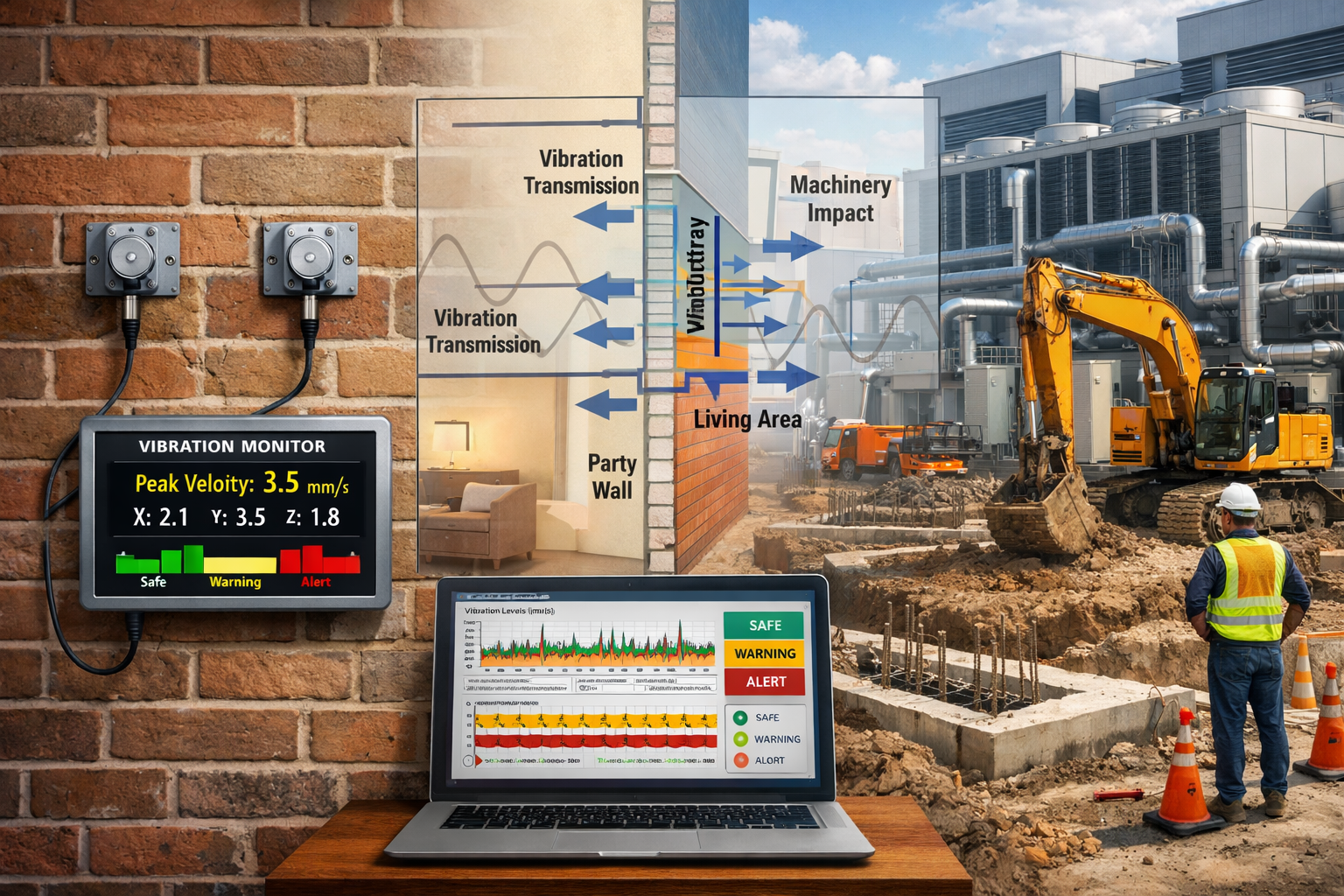
Continuous vibration monitoring should include:
- Baseline establishment: Recording ambient vibration levels before work begins
- Real-time monitoring: Installing accelerometers on adjoining properties to track vibration levels during construction
- Threshold alerts: Setting limits based on BS 7385-2:1993 standards for building damage prevention
- Data logging: Maintaining comprehensive records linking vibration events to specific construction activities
- Regular reporting: Providing adjoining owners with accessible summaries of monitoring results
Structural Movement Monitoring
Beyond vibrations, surveyors must monitor for actual structural movement:
- Crack monitoring gauges: Installed across existing cracks to detect widening
- Tilt sensors: Measuring any deviation from vertical in walls
- Settlement monitoring: Tracking level changes in floors and foundations
- Photographic comparison: Regular systematic photography to document any changes
Party Wall Act Compliance for Data Centre Adjacencies: Award Drafting and Dispute Resolution
When adjoining owners consent to proposed works or when surveyors are appointed following dissent, a Party Wall Award must be prepared. For data centre developments, these awards require specialized provisions addressing the unique nature of the works.
Essential Award Components for Data Centre Projects
1. Detailed Description of Works
The award must comprehensively describe:
- Excavation depths, methods, and shoring requirements
- Foundation types and construction methodology
- Construction sequencing and phasing
- Expected duration of each construction phase
- Hours of operation for noisy activities
2. Protective Measures
Specific provisions should address:
- Underpinning requirements if excavations undermine neighbouring foundations
- Temporary shoring and support systems
- Vibration mitigation measures and monitoring protocols
- Dust suppression and noise control procedures
- Emergency contact procedures and complaint resolution processes
3. Access Arrangements
Data centre construction may require access to adjoining properties for:
- Installing monitoring equipment
- Conducting interim condition surveys
- Implementing protective measures
- Emergency interventions if issues arise
Awards must clearly define access rights, notice requirements, and compensation for inconvenience.
4. Compensation Provisions
The award should address:
- Compensation for loss of amenity during construction
- Reimbursement for proven damage resulting from works
- Surveyor fee responsibilities
- Dispute resolution mechanisms
Managing Disputes During Construction
Despite careful planning, disputes may arise during intensive data centre construction. Common issues include:
Excessive Vibration Complaints
When monitoring reveals vibration levels approaching or exceeding safe thresholds, surveyors must:
- Immediately notify the building owner and contractor
- Recommend construction methodology adjustments
- Conduct interim structural inspections
- Document all communications and actions taken
Damage Claims
If damage to property occurs:
- Conduct immediate investigation to determine causation
- Compare current condition against pre-construction schedule
- Assess whether damage results from construction activities or pre-existing conditions
- Recommend appropriate remediation measures
- Determine responsibility for repair costs
Timeline Extensions
Construction delays affecting residential neighbours require:
- Formal notification of revised completion dates
- Assessment of additional compensation for extended disruption
- Review of ongoing monitoring requirements
- Adjustment of access arrangements if necessary
The Role of Independent Surveyors
The Party Wall Act provides for the appointment of surveyors to represent each party's interests. For complex data centre projects, this typically involves:
Building Owner's Surveyor: Represents the developer's interests while ensuring legal compliance and maintaining constructive neighbour relations.
Adjoining Owner's Surveyor: Protects residential property owners' rights, scrutinizes proposed works, and ensures adequate protective measures.
Agreed Surveyor: In some cases, both parties may consent to appointing a single surveyor to act impartially, though this is less common for major developments.
The collaborative yet protective dynamic between surveyors ensures that development proceeds while safeguarding residential properties—a delicate balance essential to the 2026 infrastructure surge.
Operational Considerations: Beyond Construction Phase
Unlike typical construction projects that conclude with completion, data centres create ongoing operational impacts that Party Wall Awards must address.
Continuous Vibration from Cooling Systems
Data centres operate 24/7 with substantial cooling requirements. Mechanical cooling systems generate continuous low-level vibrations that, while individually minor, can cause cumulative effects over time:
- Chiller units and cooling towers
- Large-scale HVAC systems
- Backup generator testing (typically monthly)
- Uninterruptible Power Supply (UPS) systems
Awards should specify:
- Acceptable vibration limits for operational equipment
- Ongoing monitoring requirements during the first year of operation
- Remediation obligations if operational vibrations exceed agreed thresholds
- Review mechanisms for addressing long-term concerns
Emergency Generator Testing
Data centres must regularly test backup generators to ensure reliability. These tests produce:
- Significant noise levels
- Exhaust emissions
- Vibrations from large diesel engines
Party Wall Awards can establish:
- Permitted testing schedules (times and frequency)
- Advance notification requirements
- Noise mitigation measures
- Complaint procedures for excessive disturbance
Long-Term Structural Monitoring
For the most intensive data centre developments, awards may require:
- Periodic structural inspections of adjoining properties
- Annual condition reports for the first 3-5 years of operation
- Retained responsibility for addressing settlement or damage that manifests after construction completion
Best Practices for Surveyors in 2026
The unprecedented scale of data centre development in 2026 demands that surveyors adopt enhanced protocols and maintain rigorous professional standards.
Early Engagement Strategy
Proactive communication significantly reduces disputes:
- Pre-notice consultation: Meeting with adjoining owners before formal notices are served to explain works and address concerns
- Visual presentations: Using 3D models and simulations to help residents understand proposed construction
- Timeline transparency: Providing realistic construction schedules with milestone updates
- Liaison appointments: Designating specific contacts for neighbour communications
Technology Integration
Modern surveying technology enhances accuracy and transparency:
- Building Information Modelling (BIM): Creating detailed 3D models showing proximity relationships and potential impacts
- Drone surveys: Capturing comprehensive aerial documentation of existing conditions
- Digital crack mapping: Using software to precisely measure and track crack development
- Cloud-based reporting: Providing adjoining owners with real-time access to monitoring data through secure portals
- Photogrammetry: Creating detailed 3D models of existing structures for precise condition documentation
Professional Standards and RICS Compliance
Surveyors must adhere to Royal Institution of Chartered Surveyors (RICS) guidance, which emphasizes:
- Independence and impartiality when acting as agreed surveyors
- Clear communication in plain language
- Transparent fee structures
- Timely responses to queries and concerns
- Comprehensive record-keeping
- Continuing professional development in party wall matters [2]
Understanding surveyor pricing structures helps clients budget appropriately for these essential services.
Risk Assessment and Mitigation
Comprehensive risk assessment should identify:
High-risk scenarios:
- Properties with existing structural issues that construction might exacerbate
- Historic buildings requiring special protective measures
- Properties with sensitive occupants (elderly, young children, health conditions)
- Difficult ground conditions increasing settlement risk
Mitigation strategies:
- Enhanced monitoring for high-risk properties
- Modified construction methodologies
- Additional protective measures beyond standard requirements
- Increased communication frequency
Regional Considerations Across the UK
The 2026 data centre surge affects various UK regions differently, with location-specific considerations:
London and Southeast England
The highest concentration of data centre development occurs in London and surrounding areas due to:
- Proximity to financial services requiring low-latency connections
- Established fibre optic infrastructure
- Available power grid capacity
Surveyors working in chartered surveyors locations across London face:
- Dense urban environments with complex boundary arrangements
- Historic properties requiring specialized assessment
- High property values increasing dispute stakes
- Multiple adjoining properties requiring coordination
Regional Data Centre Hubs
Emerging regional hubs in areas like Hertfordshire, Berkshire, and Surrey present different challenges:
- Larger development sites with fewer immediate neighbours
- Mixed agricultural and residential boundaries
- Variable soil conditions affecting foundation design
- Less established precedent for data centre party wall matters
Common Pitfalls and How to Avoid Them
Insufficient Notice Periods
Problem: Developers underestimate planning timelines and serve notices too late, creating pressure on adjoining owners to respond quickly.
Solution: Incorporate Party Wall Act requirements into project planning from the earliest stages, serving notices well in advance of required minimums.
Inadequate Pre-Construction Documentation
Problem: Rushed or superficial schedules of condition fail to capture existing defects, leading to disputes about causation when damage is claimed.
Solution: Allocate sufficient time and resources for comprehensive condition surveys, using professional photographers and detailed written descriptions.
Poor Communication During Construction
Problem: Neighbours feel ignored or dismissed when raising concerns, escalating minor issues into formal disputes.
Solution: Establish regular communication channels, provide progress updates, and respond promptly to concerns with substantive information.
Ignoring Pre-Existing Defects
Problem: Construction activities exacerbate pre-existing structural issues that weren't properly documented or disclosed.
Solution: Conduct thorough structural assessments before work begins, identifying vulnerable areas requiring enhanced monitoring or protective measures. When obstructions in party walls or other complications exist, address them proactively.
Inadequate Vibration Monitoring
Problem: Relying solely on contractor assurances without independent monitoring leaves no objective evidence if disputes arise.
Solution: Implement comprehensive third-party vibration monitoring from day one of construction, with data accessible to all parties.
The Future Beyond 2026
While 2026 represents a peak in data centre construction activity, the implications for party wall practice extend far beyond this year.
Evolving Legal Precedents
The intensive construction activity is generating new case law and establishing precedents for:
- Operational vibration responsibilities
- Long-term monitoring obligations
- Compensation calculations for extended construction periods
- Technology-assisted condition documentation standards
Enhanced Professional Standards
The complexity of data centre adjacencies is driving improvements in:
- Surveyor training and specialization
- Technology adoption for condition documentation
- Standardized monitoring protocols
- Industry best practice guidelines
Sustainability Considerations
Future data centre developments will increasingly incorporate:
- Net-zero construction methodologies
- Renewable energy integration
- Reduced operational vibration through advanced cooling technologies
- Community benefit provisions addressing neighbour concerns
These sustainability initiatives may create new party wall considerations, particularly regarding insulation in party walls and energy efficiency improvements.
Conclusion
Party Wall Act Compliance for Data Centre Adjacencies: Survey Protocols in UK's 2026 Infrastructure Surge represents a critical intersection of technological progress, legal obligation, and community protection. As the UK's digital infrastructure expands to meet unprecedented demand, the party wall surveying profession plays an essential role in ensuring this growth occurs responsibly and legally.
The specialized protocols outlined in this guide—from comprehensive pre-construction documentation to continuous vibration monitoring and carefully drafted awards—provide the framework for successful project delivery while protecting residential property owners' legitimate interests.
Actionable Next Steps
For Developers and Building Owners:
- Engage party wall surveyors early in project planning, ideally during site selection and feasibility stages
- Budget adequately for comprehensive surveying services, monitoring equipment, and potential protective measures
- Prioritize neighbour relations through proactive communication and transparent processes
- Implement robust monitoring from construction through the first year of operation
- Maintain comprehensive records of all party wall processes and communications
For Residential Property Owners:
- Respond promptly to party wall notices, seeking professional advice if uncertain about implications
- Consider appointing your own surveyor for significant developments to ensure your interests are protected
- Document concerns in writing and maintain copies of all correspondence
- Request access to monitoring data and interim condition reports
- Understand your rights under the Party Wall Act, including compensation entitlements
For Surveyors:
- Invest in continuing professional development specific to data centre and infrastructure projects
- Adopt advanced documentation technologies to enhance accuracy and transparency
- Develop standardized protocols for vibration monitoring and structural assessment
- Build collaborative relationships with contractors and engineers specializing in data centre construction
- Maintain RICS compliance and contribute to evolving best practice standards
The 2026 infrastructure surge presents both challenges and opportunities for the party wall profession. By applying rigorous protocols, embracing technology, and maintaining unwavering commitment to protecting all parties' interests, surveyors ensure that the UK's digital future is built on solid legal and structural foundations.
References
[1] Party Wall Agreements In Data Centre Developments 2026 Compliance Amid Ai Driven Uk Demand – https://nottinghillsurveyors.com/blog/party-wall-agreements-in-data-centre-developments-2026-compliance-amid-ai-driven-uk-demand
[2] Party Wall Surveys For Ai Data Centre Developments Rics Protocols Amid 2026 Infrastructure Demand – https://nottinghillsurveyors.com/blog/party-wall-surveys-for-ai-data-centre-developments-rics-protocols-amid-2026-infrastructure-demand
[3] Party Wall Essentials For 2026 Net Zero Compliance Projects Surveyor Checklists For Epc Retrofit Disputes – https://nottinghillsurveyors.com/blog/party-wall-essentials-for-2026-net-zero-compliance-projects-surveyor-checklists-for-epc-retrofit-disputes