With buyer confidence returning and property values stabilizing across England and Wales, 2026 has witnessed a remarkable surge in home improvement activity. Party Wall Act Compliance During the 2026 Housing Uptick: Managing Neighbor Disputes as Extension and Renovation Projects Surge has become a critical concern for homeowners, builders, and surveyors navigating the complex landscape of shared property boundaries. As extensions, loft conversions, and basement excavations accelerate in high-density urban areas, understanding the legal framework that governs work on party walls has never been more important.
The Party Wall etc. Act 1996 remains the cornerstone legislation protecting both building owners and their neighbors during construction work. Yet many homeowners embarking on renovation projects in 2026 remain unaware of their obligations—or the significant delays and costs that non-compliance can trigger. From surveyor fees that now range between £750 and £1,800 per affected neighbor to timelines that can stretch beyond nine months in disputed cases, proper party wall management has become essential to project success.[1]
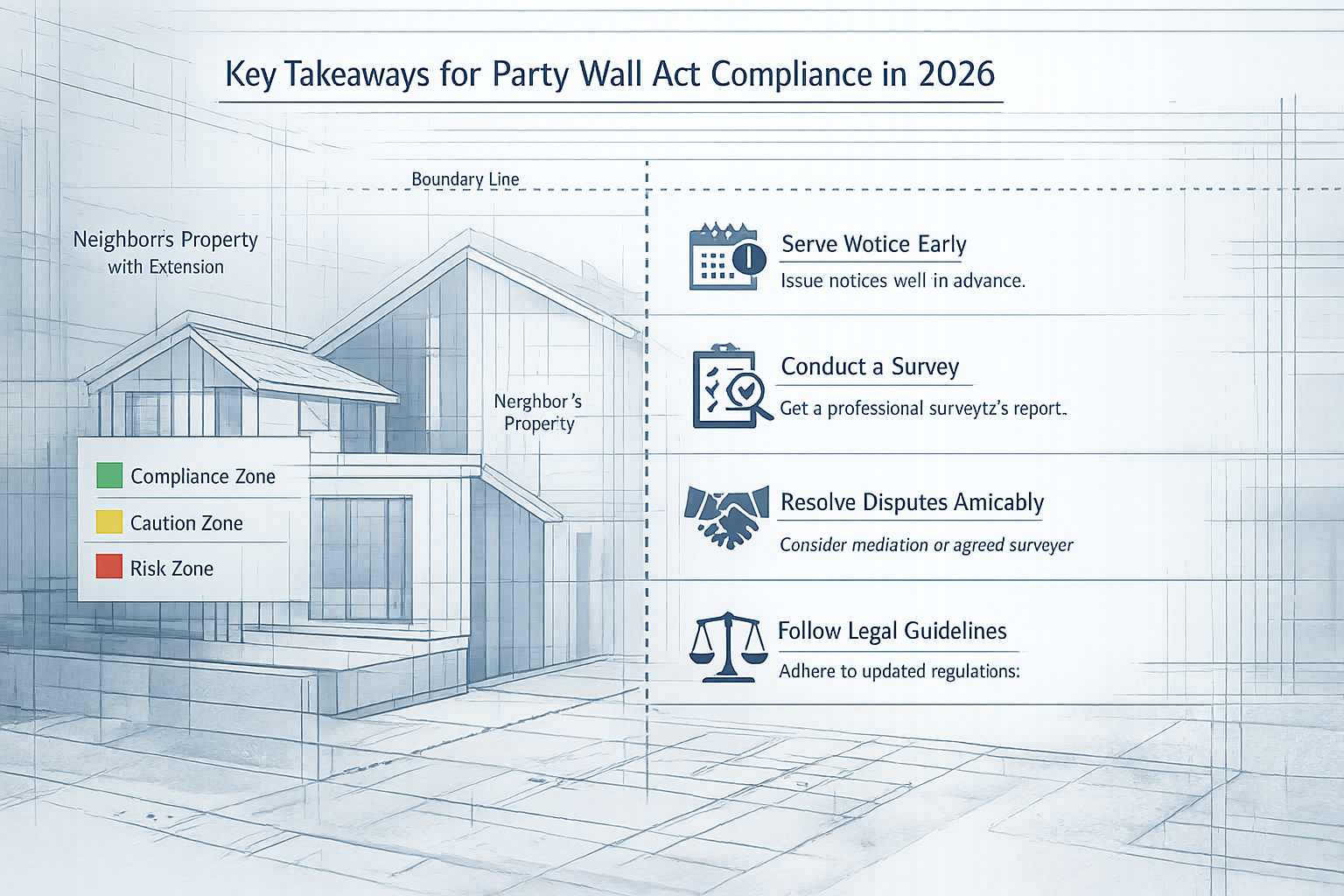
Key Takeaways
- 🏗️ Party wall agreements are legally separate from planning permission—Permitted Development doesn't exempt you from Party Wall Act requirements
- ⏱️ Timeline planning is critical—expect 2.5-3 months minimum from notice to work commencement, or 5-9+ months if disputes arise
- 💰 Budget for surveyor fees—building owners pay for both their own surveyor and the neighbor's, totaling £1,500-£3,600+ per affected property in 2026
- 📋 Neighbors cannot veto your project—dissent triggers the surveyor process but doesn't stop lawful construction
- ⚖️ Non-compliance carries serious consequences—neighbors can obtain injunctions to halt work immediately if proper notice wasn't served
Understanding the Party Wall Act Framework in 2026
The Party Wall etc. Act 1996 governs building work on or near shared walls, boundaries, and structures between properties throughout England and Wales. Despite being nearly three decades old, the legislation remains unchanged as of 2026, though its application has evolved significantly with the current housing market uptick.[1]
What Triggers Party Wall Requirements?
Three main categories of work require party wall notices:
Section 1 – New Building on the Boundary Line
- Constructing a new wall directly on the property boundary
- Building astride the boundary line (with neighbor agreement)
- Requires 2 months' notice before work begins[1]
Section 2 – Work to Existing Party Walls
- Cutting into party walls for beams or joists
- Raising party walls or adding chimneys
- Demolishing and rebuilding party structures
- Underpinning party walls
- Requires 1 month's notice[1]
Section 6 – Excavation Near Neighboring Buildings
- Digging within 3 meters of a neighbor's structure if going deeper than their foundations
- Excavating within 6 meters if the work extends below a 45-degree plane from the neighbor's foundation base
- Requires 1 month's notice[1]
"The Party Wall Act is entirely separate from planning permission. Even if your extension falls under Permitted Development, you still need to serve party wall notices if the work affects shared structures or boundaries."[1]
The Critical Notice Period Timeline
Understanding notice periods prevents costly project delays. When planning Party Wall Act Compliance During the 2026 Housing Uptick: Managing Neighbor Disputes as Extension and Renovation Projects Surge, homeowners must account for:
| Work Type | Notice Period | Neighbor Response Window | Best-Case Timeline |
|---|---|---|---|
| Boundary construction | 2 months | 14 days | 2.5-3 months |
| Party wall work | 1 month | 14 days | 1.5-2 months |
| Excavation | 1 month | 14 days | 1.5-2 months |
Neighbors have 14 days from receiving notice to respond with consent, dissent, or counter-proposals. Silence after 14 days constitutes deemed dissent, automatically triggering the surveyor appointment process.[2]
Managing Neighbor Disputes During the 2026 Housing Uptick
The surge in renovation activity across 2026 has inevitably increased party wall disputes. Understanding how to navigate disagreements professionally protects both project timelines and neighbor relationships.
When Neighbors Dissent: The Surveyor Process
Neighbors cannot veto extension projects by refusing consent or dissenting to party wall notices. The Act specifically grants building owners the right to proceed with lawful construction work.[1] However, dissent triggers a formal surveyor process:
Step 1: Surveyor Appointments
- Building owner appoints their surveyor
- Dissenting neighbor appoints their own surveyor (or the building owner's surveyor can act for both if agreed)
- If neighbor fails to appoint within 10 days, building owner can appoint on their behalf
Step 2: Party Wall Award Creation
The two surveyors (or single agreed surveyor) produce a legally binding Party Wall Award that specifies:
- Precise scope of permitted work
- Working hours and access arrangements
- Condition survey requirements
- Damage liability and resolution procedures
- Cost allocation for surveyor fees[1]
Step 3: Award Implementation
Once the Award is issued, work can proceed according to its terms. The Award protects both parties by documenting pre-existing conditions and establishing clear protocols.
2026 Surveyor Fee Landscape
Surveyor fees have increased significantly with market activity. Current rates in London and surrounding areas typically range from £750 to £1,800 per surveyor per affected neighbor.[1] Critical cost considerations include:
- Building owners pay for both surveyors—their own and the neighbor's
- Multiple affected neighbors multiply costs proportionally
- Complex projects (basements, significant excavation) command premium fees
- Professional project management can help coordinate surveyor selection and Award negotiation
Example Cost Scenario:
- Semi-detached rear extension affecting one neighbor
- Building owner's surveyor: £1,200
- Neighbor's surveyor: £1,200
- Total surveyor cost: £2,400
For terraced properties affecting neighbors on both sides, costs can easily exceed £5,000 before construction begins.
Timeline Expectations for Party Wall Act Compliance During the 2026 Housing Uptick
Project timelines vary dramatically based on neighbor cooperation:
Best-Case Scenario (Neighbor Consents Promptly)
- Timeline: 2.5-3 months from surveyor appointment to site start
- Neighbor signs consent within 14 days
- Condition survey completed quickly
- Minimal negotiation required[1]
Standard-Case Scenario (Neighbor Dissents, Award Required)
- Timeline: 3-4 months
- Dual surveyor appointments
- Award negotiation and drafting
- Condition survey scheduling
- Normal back-and-forth on terms[1]
Difficult-Case Scenario (Access Denied, Disputes, Third Surveyor)
- Timeline: 5-9 months or more
- Neighbor refuses access for condition survey
- Surveyors disagree, requiring Third Surveyor appointment
- Multiple Award revisions
- Potential legal challenges[1]
Understanding detailed guidance for party wall awards helps set realistic expectations and avoid common pitfalls.
Common Disputes and Resolution Strategies
As Party Wall Act Compliance During the 2026 Housing Uptick: Managing Neighbor Disputes as Extension and Renovation Projects Surge becomes increasingly complex, certain dispute patterns have emerged.
Access Denial Issues
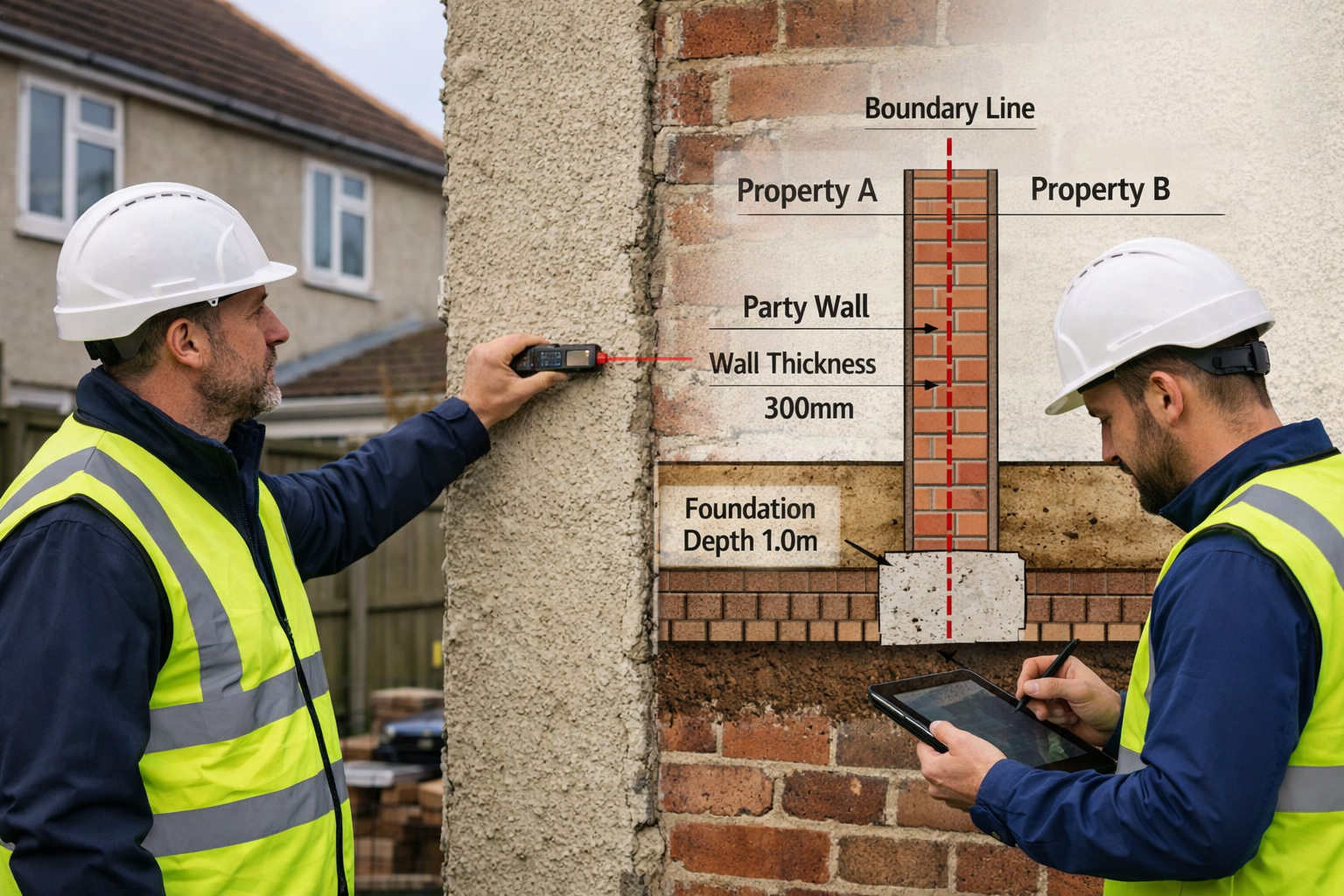
One of the most contentious areas involves access for condition surveys. The Party Wall Act grants surveyors reasonable access to neighboring properties to document pre-existing conditions, but some neighbors resist.
Resolution Approaches:
- Schedule access at convenient times with advance notice
- Offer to pay for professional cleaning if dusty inspections are required
- Explain that condition surveys protect the neighbor by documenting any future damage claims
- Consider whether obstruction in party wall issues require legal intervention
Damage Concerns and Liability
Neighbors frequently worry about potential damage to property in party wall scenarios. The Party Wall Award addresses this through:
Condition Surveys (Schedule of Condition)
- Detailed photographic and written documentation of neighbor's property before work begins
- Establishes baseline for any damage claims
- Similar to schedule of condition leasehold documentation
- Typically includes internal and external inspections
Damage Resolution Protocols
- Award specifies procedures for reporting damage
- Building owner responsible for making good any damage caused
- Surveyor mediation available for disputed damage claims
- Insurance requirements often specified in Award
Working Hours and Noise Disputes
Party Wall Awards typically restrict working hours to minimize neighbor disruption:
Standard Provisions:
- Monday-Friday: 8:00 AM – 6:00 PM
- Saturday: 8:00 AM – 1:00 PM
- No work on Sundays or bank holidays
- Special provisions for noisy operations (pile driving, demolition)
Violations of Award terms can result in enforcement actions or damages claims.
The "No Agreement" Scenario
What happens when proceeding with no party wall agreement? The consequences can be severe:
- Immediate injunctions—neighbors can apply to court to stop work
- Retrospective compliance—forced to serve notices and complete surveyor process mid-project
- Increased costs—emergency surveyor fees and legal costs
- Project delays—work stoppage until proper process completed
- Damage liability—weakened position on any damage disputes
County Court Appeals
Dissatisfied parties can appeal Party Wall Awards to County Court, though this is relatively rare. Appeal statistics for 2026 show:
- Cost range: £3,000-£12,000+ including legal fees and court costs
- Timeline: 3-6 months additional delay
- Success rate: Low—courts generally defer to surveyor expertise
- Most appeals involve procedural irregularities rather than substantive Award terms[1]
Best Practices for Party Wall Act Compliance During the 2026 Housing Uptick
Successfully navigating party wall requirements in 2026's active construction market requires proactive planning and professional guidance.
Early Engagement Strategy
3-4 Months Before Planned Start Date:
- Appoint qualified party wall surveyor
- Prepare detailed drawings and specifications
- Identify all potentially affected neighbors
- Budget for surveyor fees and potential delays
2-3 Months Before:
- Serve formal party wall notices
- Include clear drawings and work descriptions
- Provide contact information for questions
- Consider personal conversation before formal notice
1-2 Months Before:
- Follow up on neighbor responses
- Appoint neighbor's surveyor if dissent received
- Schedule condition surveys
- Finalize Award terms
Selecting the Right Surveyor
Professional surveyor selection significantly impacts project success. Key considerations include:
Qualifications and Experience:
- RICS accredited (Royal Institution of Chartered Surveyors)
- Specific party wall expertise
- Local knowledge of area construction patterns
- Track record with similar project types
Communication Skills:
- Ability to explain technical matters clearly
- Diplomatic approach to neighbor negotiations
- Responsive to queries and concerns
- Professional documentation standards
Many homeowners benefit from engaging local chartered surveyors with established reputations in their area, whether in chartered surveyors London, chartered surveyors Surrey, or chartered surveyors Essex.
Communication and Relationship Management
Maintaining positive neighbor relationships throughout the process reduces disputes and facilitates cooperation:
Proactive Communication:
- 🤝 Discuss plans informally before serving formal notices
- 📧 Provide regular project updates
- 🔔 Give advance warning of particularly disruptive phases
- 🎁 Consider goodwill gestures (flowers, gift cards) for significant inconvenience
Transparency:
- Share realistic timelines and potential impacts
- Explain Party Wall Act requirements clearly
- Provide surveyor contact information
- Address concerns promptly and honestly
Flexibility:
- Accommodate reasonable neighbor requests where possible
- Consider working hour adjustments for special circumstances
- Offer additional protective measures if concerns arise
- Maintain professional tone even if neighbor becomes difficult
Documentation and Record-Keeping
Comprehensive documentation protects all parties:
- Retain all correspondence—emails, letters, notices
- Photograph everything—before, during, and after work
- Maintain work logs—dates, activities, personnel
- Document any incidents—damage, complaints, resolutions
- Keep Award readily accessible—ensure contractors understand terms
Integration with Other Surveys and Assessments
Party wall compliance often intersects with other property assessments:
- Structural surveys may identify party wall issues requiring attention—consider structural surveys before major projects
- Subsidence concerns near party walls may require surveys for subsidence
- Building control inspections complement but don't replace party wall requirements
- Homebuyer surveys should identify potential party wall complications for purchasers planning renovations
Regional Variations and High-Activity Zones
While the Party Wall Act applies uniformly across England and Wales, practical application varies by region based on property density and construction activity levels.
London and High-Density Urban Areas
The 2026 housing uptick has particularly affected London boroughs, where:
- Terraced properties create multiple affected neighbors per project
- Basement excavations trigger complex Section 6 requirements
- Surveyor availability can become constrained during peak periods
- Costs run higher—£1,500-£1,800 per surveyor common in central areas
Specific boroughs experiencing high activity include those served by chartered surveyors Camden, chartered surveyors Islington, and chartered surveyors Hammersmith.
Suburban and Semi-Rural Areas
Areas like chartered surveyors Ealing, chartered surveyors Richmond, and chartered surveyors Kingston show different patterns:
- Fewer affected neighbors per project (typically one or two)
- Lower surveyor fees—£750-£1,200 range more common
- Greater property spacing reduces excavation complications
- Higher consent rates—less contentious neighbor relationships
Market Activity Hotspots in 2026
Certain areas have seen particularly intense renovation activity:
- West London (chartered surveyors West London)—strong demand for extensions and loft conversions
- North West London (chartered surveyors North West London)—basement projects increasing
- Surrey commuter belt (chartered surveyors Surrey)—family home improvements surging
- Essex growth corridors (chartered surveyors Essex)—new development driving party wall activity
Conclusion
Party Wall Act Compliance During the 2026 Housing Uptick: Managing Neighbor Disputes as Extension and Renovation Projects Surge represents both a legal obligation and an opportunity to protect your construction investment. As renovation activity continues accelerating across England and Wales, understanding the Party Wall etc. Act 1996 framework has become essential for homeowners, builders, and property professionals.
The key to successful party wall management lies in early planning, professional guidance, and proactive communication. By serving notices with appropriate lead times, appointing qualified surveyors, and maintaining positive neighbor relationships, building owners can navigate the process efficiently while minimizing delays and disputes.
Actionable Next Steps
✅ Assess your project scope—determine which Party Wall Act sections apply to your planned work
✅ Budget appropriately—allocate £1,500-£3,600+ for surveyor fees per affected neighbor and factor in 3-4 month timelines
✅ Appoint a qualified surveyor early—select an experienced RICS-accredited professional with local expertise
✅ Engage neighbors proactively—discuss plans informally before serving formal notices to build goodwill
✅ Document everything—maintain comprehensive records of all notices, correspondence, surveys, and work activities
✅ Consider professional support—engage chartered surveyors in your area for expert guidance through the entire process
The 2026 housing market uptick presents excellent opportunities for property improvement and value enhancement. With proper Party Wall Act compliance, these projects can proceed smoothly, protecting both your investment and your neighbor relationships for years to come.
References
[1] Party Wall Agreement London 2026 – https://www.mayfairstudio.co.uk/blog/party-wall-agreement-london-2026
[2] Party Wall Agreement – https://hoa.org.uk/advice/guides-for-homeowners/i-am-improving/party-wall-agreement/