nn

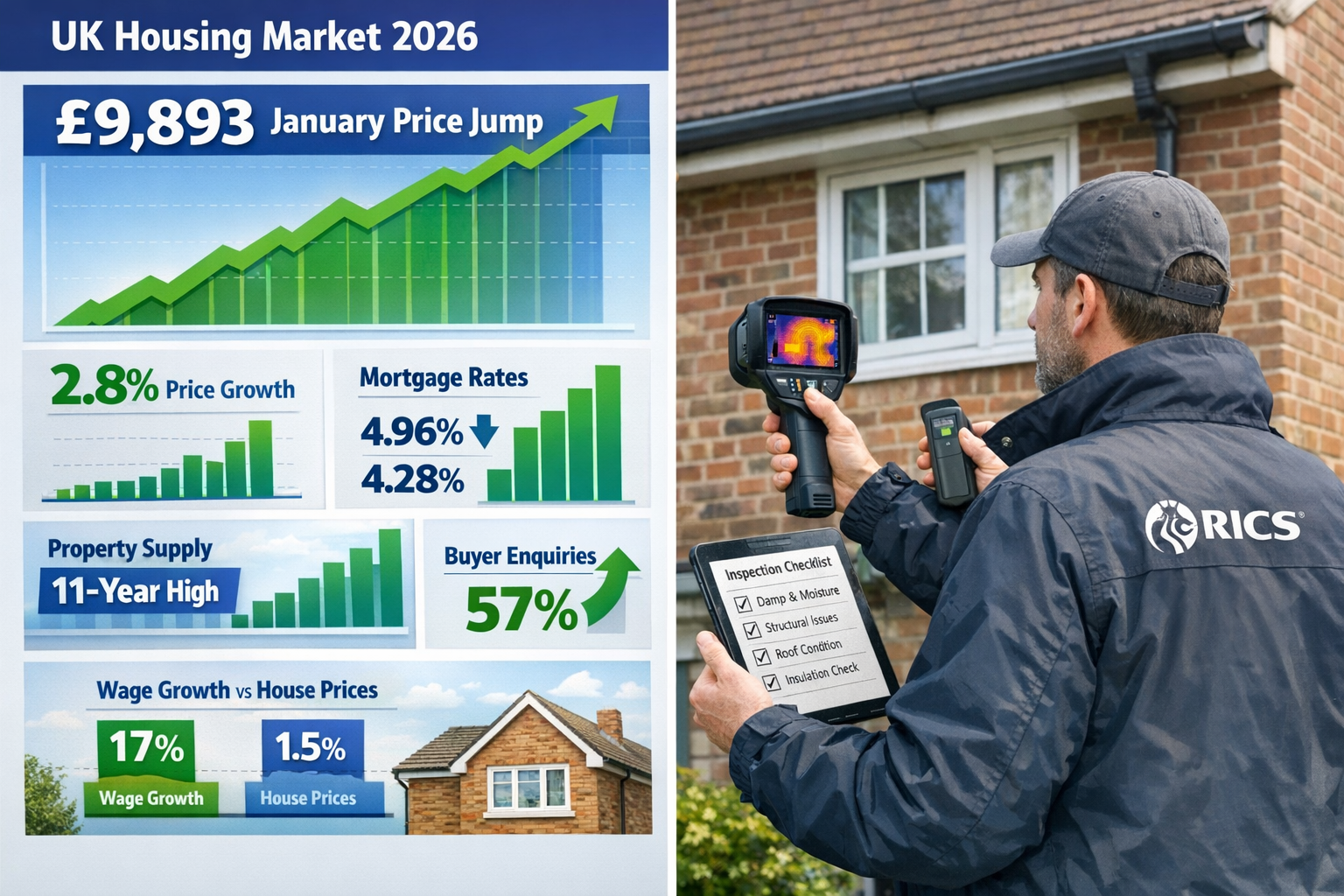
The UK housing market has roared back to life in 2026 with unprecedented force. After months of uncertainty following the autumn budget, January witnessed the largest single-month price increase in recorded history—a staggering £9,893 jump that sent shockwaves through the property sector[1]. For buyers entering this revitalized market, Navigating the 2026 UK Housing Market Rebound: Essential Building Surveys for Surging Buyer Demand has become more critical than ever. With buyer enquiries surging 57% and property listings reaching an 11-year high, the opportunity to secure a property is matched only by the risk of overlooking hidden defects in the rush to complete transactions.
This comprehensive guide explores how building surveys serve as essential protection mechanisms during this market rebound, helping buyers make informed decisions when competition intensifies and sellers hold stronger negotiating positions. Understanding which surveys to commission, what they reveal, and how to leverage findings can mean the difference between a sound investment and a costly mistake.
Key Takeaways
- 📈 Record market momentum: UK house prices jumped £9,893 in January 2026—the largest monthly increase in 25 years—before stabilizing in February at £368,019, creating urgency among buyers[1][3]
- 🏠 Buyer advantage persists: Despite price growth, property supply sits at an 11-year high while wage growth (17% over three years) significantly outpaces house price increases (1.5%), improving purchasing power[3][4]
- 🔍 Survey necessity intensifies: With 57% surge in buyer enquiries and faster transaction timelines, comprehensive building surveys protect against overlooking structural defects in competitive bidding situations
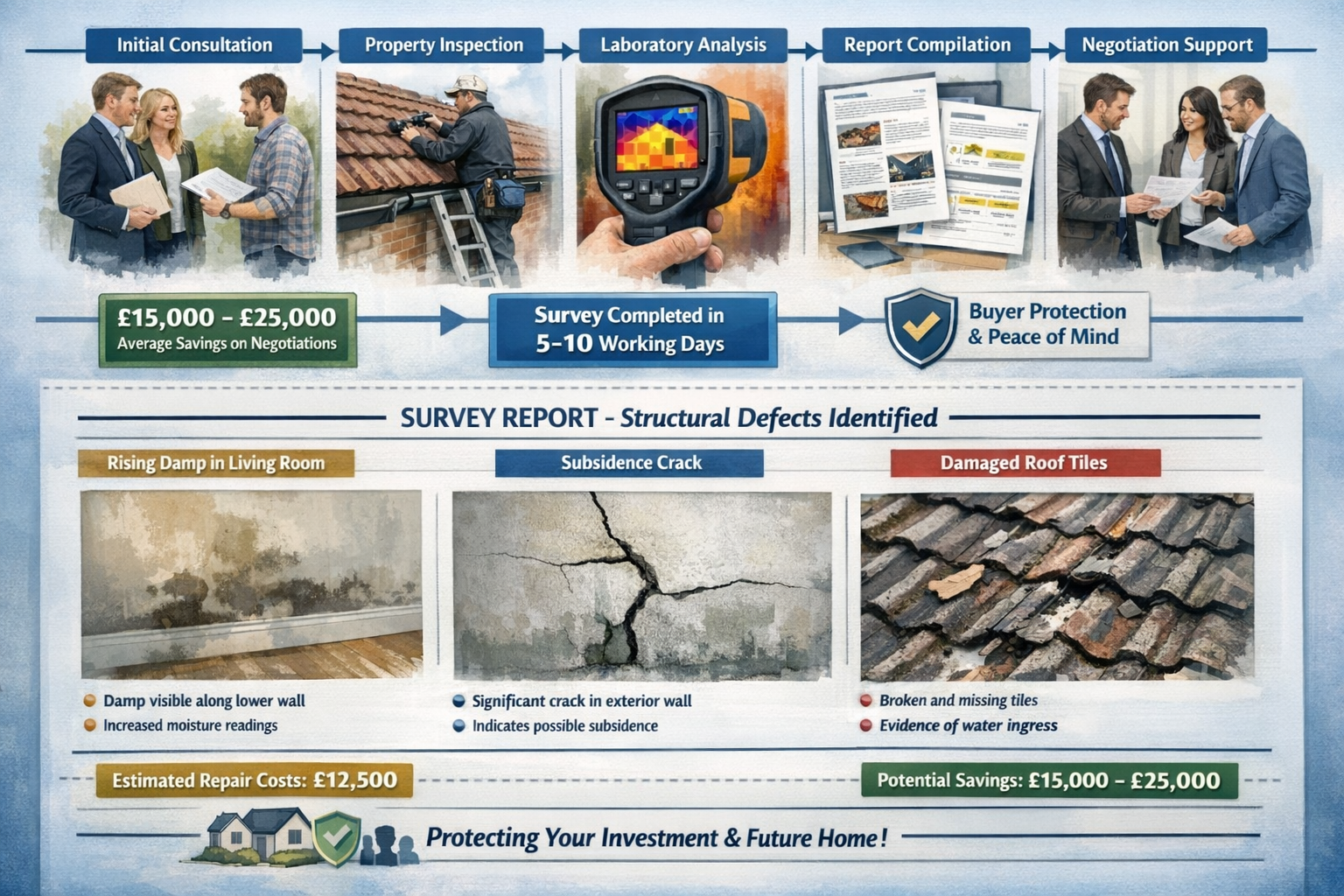
- 💰 Negotiation leverage: Professional surveys identify repair costs averaging £15,000-£25,000, providing documented evidence for price renegotiation even in seller-favorable conditions
- ⚡ Strategic timing matters: Commissioning surveys early in the buying process prevents wasted legal fees and survey costs on properties with undisclosed structural issues
Understanding the 2026 UK Housing Market Rebound Dynamics
The January Surge and February Stabilization
The opening months of 2026 have delivered a housing market performance unlike any seen in recent history. January's £9,893 price increase represented not only the largest monthly rise recorded in Rightmove's 25-year tracking history but also the strongest January performance on record[1]. This extraordinary growth followed a prolonged period of market hesitation during late 2025, when buyers delayed decisions amid autumn budget uncertainty and stamp duty speculation.
However, February brought a return to reality. Prices dipped marginally by just £12 to settle at £368,019, a virtually flat movement that contrasts sharply with the typical February pattern of 0.8% growth[1][4]. This stabilization suggests sellers adopted more cautious pricing strategies despite January's momentum, recognizing that sustained growth requires buyer confidence and affordability.
The combined January-February performance still marks the strongest start to any year since 2020, with prices sitting 2.8% higher than December 2025 levels[1][3]. This robust opening reflects pent-up demand finally releasing into the market as economic conditions aligned favorably for property transactions.
Economic Factors Driving Market Recovery
Several fundamental economic shifts have converged to create the 2026 rebound conditions:
Mortgage Rate Improvements 🏦
The average two-year UK mortgage rate has fallen to 4.28%, down from 4.96% year-on-year and representing the lowest level since September 2022[1]. This reduction translates to substantial monthly savings for borrowers and has reopened affordability windows for thousands of potential buyers who were previously priced out of the market.
Wage Growth Outpacing Property Prices 💷
Perhaps the most significant factor improving buyer positions is the wage-to-price ratio shift. Average wages have risen approximately 17% over the past three years, while house prices increased only 1.5%[3][4]. This dramatic reversal from the pre-2020 trend has substantially enhanced purchasing power, particularly for first-time buyers who previously struggled to accumulate deposits.
Enhanced Borrowing Capacity 📊
The Financial Conduct Authority's 2025 review of the loan-to-income cap, combined with flexibility reminders issued to lenders, has enabled typical buyers to borrow more relative to their incomes[3][4]. This regulatory adjustment acknowledges improved household financial resilience and removes artificial constraints that limited market participation.
Supply and Demand Rebalancing
The market dynamics of 2026 present a unique combination of factors that both empower and challenge buyers:
| Market Indicator | 2026 Status | Impact on Buyers |
|---|---|---|
| Property Supply | Highest in 11 years for this time of year[1][3] | ✅ More choice and negotiating power |
| New Listings | 11% higher than February 2024[3][4] | ✅ Increased inventory selection |
| Sales Agreed | 9% higher year-on-year[3][4] | ⚠️ Faster transaction pace |
| Buyer Activity | Below pre-January 2025 stamp duty increase levels[1][3] | ✅ Less intense competition |
| Asking Prices | £368,019 average (February 2026)[1] | ⚠️ Still elevated from historical norms |
This rebalancing creates opportunities for buyers who act strategically. The elevated supply levels mean buyers can be more selective, but the 57% surge in enquiries indicates competition remains significant for well-priced, quality properties. In this environment, Navigating the 2026 UK Housing Market Rebound: Essential Building Surveys for Surging Buyer Demand becomes a competitive advantage rather than merely a protective measure.
Why Building Surveys Are Critical During Market Rebounds
The Hidden Risks of Accelerated Transactions
Market rebounds create psychological pressure that can compromise buyer due diligence. When prices rise rapidly and properties receive multiple offers within days of listing, buyers often feel compelled to accelerate their decision-making processes. This urgency creates several dangerous scenarios:
Overlooking Red Flags 🚩
In competitive situations, buyers may minimize concerns identified during viewings, convincing themselves that minor cosmetic issues are acceptable trade-offs for securing a property. However, what appears as surface-level deterioration often signals deeper structural problems that only professional surveys can properly assess.
Waiving Survey Contingencies
Some buyers, desperate to strengthen their offers, consider proceeding without comprehensive surveys or accepting properties "as seen." This approach exposes purchasers to potentially catastrophic financial consequences when undisclosed defects emerge post-completion.
Insufficient Survey Scope
Even buyers who commission surveys may opt for basic valuations rather than thorough RICS Building Surveys to save time and money. This false economy frequently results in missed structural issues that cost tens of thousands to remedy.
Market Conditions That Amplify Survey Importance
The 2026 market rebound presents specific conditions that make building surveys particularly valuable:
Aging Property Stock
Many properties entering the market in 2026 haven't been comprehensively surveyed in years. Sellers who purchased during the 2020-2023 period may have deferred maintenance due to economic uncertainty, meaning properties harbor accumulated defects that aren't immediately visible during standard viewings.
Renovation Quality Concerns
The surge in property listings includes numerous homes that underwent cosmetic renovations during lockdown periods. While these updates improve visual appeal, they may conceal structural issues or represent substandard workmanship that doesn't comply with building regulations. Professional surveys identify whether attractive finishes mask underlying problems.
Climate-Related Deterioration 🌧️
The UK's increasingly severe weather patterns over recent years have accelerated property deterioration, particularly affecting roofing, drainage systems, and damp-proofing. Properties that appeared sound in 2023 may have developed significant moisture ingress or structural movement that only expert inspection reveals.
Financial Protection Through Professional Assessment
The financial case for comprehensive building surveys becomes compelling when examining typical defect costs:
"A £800-£1,500 investment in a Level 3 Building Survey can identify £15,000-£50,000 in repair requirements, providing documented evidence for price renegotiation or withdrawal without penalty."
Consider the common defects identified in 2026 surveys:
- Subsidence and structural movement: £10,000-£50,000+ repair costs
- Roof replacement: £5,000-£15,000 for typical properties
- Damp and timber decay: £3,000-£12,000 for treatment and repair
- Drainage system failures: £2,000-£8,000 for excavation and replacement
- Electrical rewiring: £3,000-£6,000 for full property updates
- Heating system replacement: £3,000-£8,000 for modern boiler systems
When surveys identify multiple defects, the cumulative repair costs often justify significant price reductions. In the current market, where asking prices average £368,019[1], even a 5% reduction negotiated based on survey findings represents £18,400 in savings—more than ten times the survey investment.
Essential Building Survey Types for 2026 Buyers
Understanding which survey type matches your property and circumstances is fundamental to effective due diligence. The Royal Institution of Chartered Surveyors (RICS) provides standardized survey levels that address different property conditions and buyer requirements.
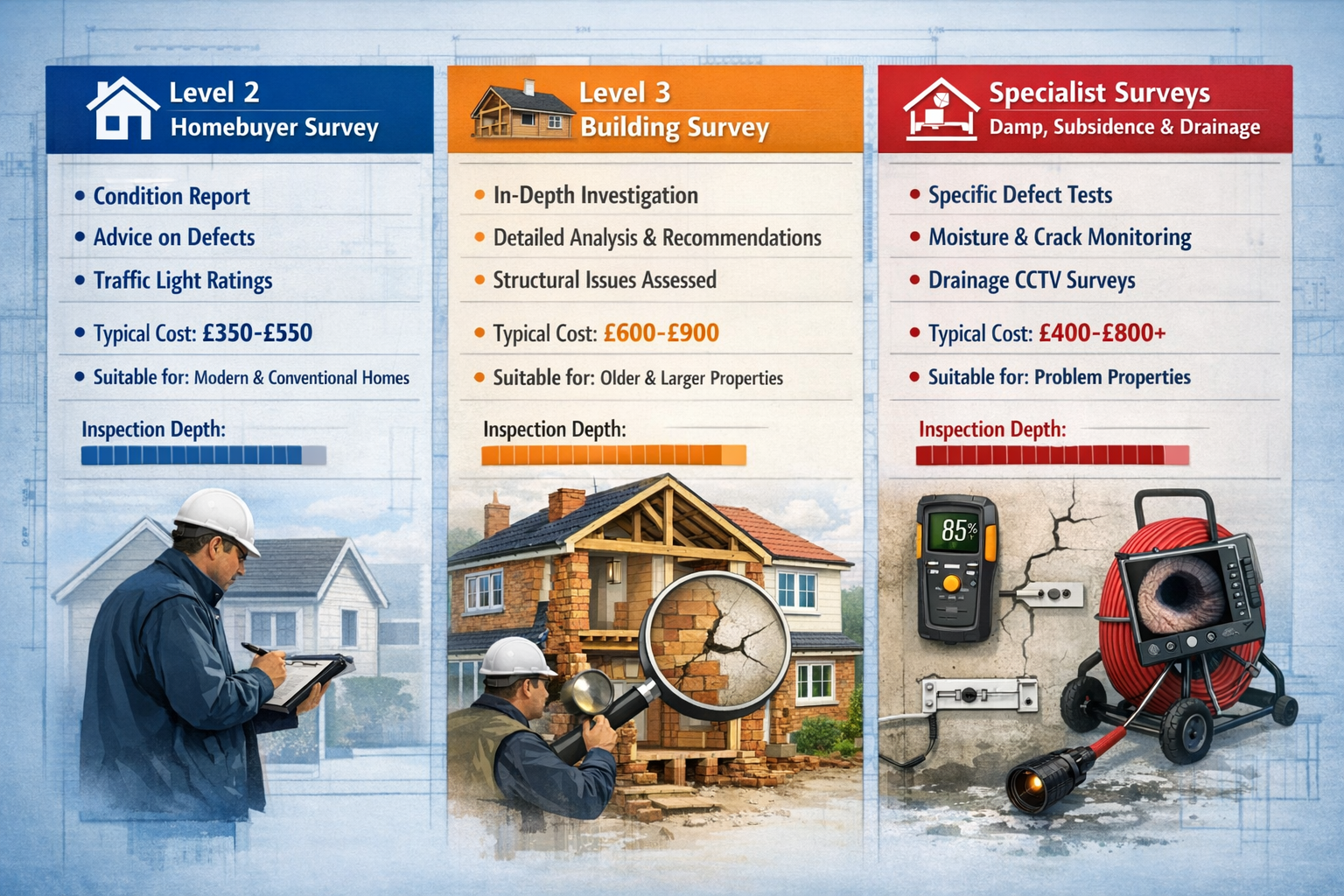
Level 2 Homebuyer Survey (RICS Home Survey Level 2)
The Homebuyer Survey represents the middle tier of property assessments, suitable for conventional properties in reasonable condition.
Ideal For:
- Properties built after 1900 using standard construction methods
- Homes in apparently good condition with no obvious major alterations
- Buyers seeking a cost-effective survey that covers essential elements
What's Included:
✅ Traffic light rating system (red/amber/green) for key property elements
✅ Assessment of visible defects and potential issues
✅ Guidance on necessary repairs and maintenance
✅ Market valuation (optional add-on)
✅ Identification of urgent defects requiring immediate attention
Limitations:
❌ No detailed inspection of concealed areas
❌ Limited assessment of structural elements
❌ Furniture and stored items not moved for inspection
❌ Minimal investigation of potential defects
Typical Cost (2026): £450-£900 depending on property value and location
Timeline: Results typically delivered within 5-7 working days after inspection. For more details on survey duration, see our guide on how long a homebuyers survey takes.
Level 3 Building Survey (RICS Home Survey Level 3)
The Level 3 Building Survey provides the most comprehensive property assessment available, offering detailed analysis of construction and condition.
Ideal For:
- Properties built before 1900 or of unusual construction
- Homes that have undergone significant alterations or extensions
- Properties in poor condition or requiring renovation
- Buyers planning major works or concerned about specific defects
- Listed buildings or properties in conservation areas
What's Included:
✅ Extensive inspection of accessible areas including roof spaces and cellars
✅ Detailed analysis of construction methods and materials
✅ Comprehensive defect identification with photographic evidence
✅ Repair cost estimates and prioritization
✅ Advice on maintenance and future problems
✅ Assessment of building regulation compliance for alterations
Advantages:
- Most thorough survey available for residential properties
- Identifies defects missed by less comprehensive inspections
- Provides detailed repair specifications for contractor quotations
- Supports informed negotiation with documented evidence
Typical Cost (2026): £800-£1,500+ depending on property size, age, and complexity
Timeline: Results typically delivered within 7-10 working days after inspection
Understanding the difference between Level 2 and Level 3 surveys helps buyers select the appropriate inspection depth for their circumstances.
Specialist Surveys for Specific Concerns
Beyond standard RICS surveys, certain properties or situations require targeted specialist assessments:
Damp and Timber Surveys 💧
Properties showing signs of moisture problems benefit from dedicated damp surveys that identify:
- Rising damp from failed damp-proof courses
- Penetrating damp through walls, roofs, or windows
- Condensation issues and ventilation deficiencies
- Timber decay, wet rot, and dry rot infestations
These surveys employ moisture meters, thermal imaging, and invasive testing to determine moisture sources and extent. Remediation costs vary significantly based on cause and severity, making accurate diagnosis essential.
Structural Surveys for Movement Concerns 🏗️
Properties exhibiting cracks, uneven floors, or door/window misalignment require structural surveys conducted by chartered structural engineers. These assessments determine whether movement is:
- Historic and stable (requiring monitoring only)
- Progressive and worsening (demanding immediate intervention)
- Caused by subsidence, heave, settlement, or other factors
Engineers may recommend monitoring surveys over 6-12 months to establish movement patterns before prescribing remedial works.
Drainage Surveys 🚰
Aging drainage systems represent one of the most expensive hidden defects. CCTV drainage surveys involve inserting cameras into underground pipes to identify:
- Collapsed or fractured pipes requiring excavation
- Tree root ingress causing blockages
- Incorrect falls preventing proper drainage
- Connections to main sewers and compliance issues
Given excavation and replacement costs of £2,000-£8,000+, drainage surveys provide valuable protection for properties built before 1970.
Roof Surveys 🏠
For properties with complex or aging roof structures, dedicated roof surveys assess:
- Tile or slate condition and remaining lifespan
- Roof timber integrity and load-bearing capacity
- Flashing, valley, and chimney weatherproofing
- Flat roof membrane condition and drainage
Roof replacement represents one of the largest single maintenance expenses (£5,000-£15,000+), making accurate condition assessment critical for budgeting.
Navigating the 2026 UK Housing Market Rebound: Survey Strategy for Competitive Situations
Timing Your Survey Commission
In the accelerated transaction environment of 2026, survey timing significantly impacts both costs and negotiating leverage:
Pre-Offer Survey Considerations
Some buyers commission surveys before making offers, particularly for properties with obvious concerns or in highly competitive areas. This approach offers several advantages:
- Enables informed offer pricing based on actual condition
- Demonstrates serious buyer intent to sellers
- Eliminates survey contingency period that might disadvantage your offer
- Prevents wasted legal and survey fees if major defects emerge
However, pre-offer surveys carry risks:
- Upfront cost without purchase guarantee
- Seller may accept another offer before survey completion
- Survey validity period (typically 3 months) may expire during prolonged negotiations
Post-Offer Survey Timing
The conventional approach involves commissioning surveys immediately after offer acceptance. This protects against unnecessary expense while maintaining negotiating leverage through survey contingencies.
Best Practice for 2026 Market:
Commission surveys within 48 hours of offer acceptance to minimize delays. Coordinate with solicitors to ensure survey results arrive before significant legal costs accumulate, typically within the first 2-3 weeks of the transaction process.
Leveraging Survey Findings in Negotiations
Survey reports provide documented evidence supporting price renegotiation, but effective leverage requires strategic approach:
Categorize Defects by Urgency 🎯
- Category 1 (Urgent): Defects requiring immediate action (structural instability, active water ingress, electrical hazards)
- Category 2 (Significant): Defects needing attention within 12 months (roof repairs, damp treatment, heating replacement)
- Category 3 (Minor): Routine maintenance and monitoring items (redecorating, gutter cleaning, minor repairs)
Focus negotiations on Categories 1 and 2, which represent genuine financial liabilities requiring immediate budgeting.
Obtain Repair Quotations
Strengthen negotiating position by securing contractor quotations for identified defects. Three competitive quotes for major works demonstrate market rates and prevent sellers dismissing survey findings as exaggerated.
Calculate Fair Adjustment
Rather than demanding pound-for-pound reduction matching repair costs, consider:
- Discount of 50-75% of estimated repair costs (recognizing buyer control over contractor selection and timing)
- Seller contribution toward specific works rather than price reduction
- Retention clauses where funds hold in escrow pending repair completion
Present Evidence Professionally
Submit survey findings with:
- Executive summary highlighting key defects
- Photographic evidence from survey report
- Contractor quotations for major works
- Proposed price adjustment with clear justification
This professional approach encourages constructive negotiation rather than defensive responses from sellers.
When to Walk Away
Not all defects justify proceeding with purchase, even at reduced prices. Consider withdrawal when surveys reveal:
Structural Integrity Compromises 🏚️
- Progressive subsidence requiring underpinning (£15,000-£50,000+ per affected wall)
- Major structural alterations without building regulation approval
- Significant structural timber decay affecting load-bearing elements
- Foundation failures or severe settlement issues
Uninsurable Conditions
- Japanese knotweed infestations within 7 meters of the property
- Severe flood risk not disclosed in searches
- Extensive fire damage or structural fire safety deficiencies
- Properties constructed with defective materials (certain concrete types, asbestos issues)
Repair Costs Exceeding Market Adjustment
When repair costs exceed 15-20% of the purchase price, particularly for properties at the upper end of your budget, the financial burden may compromise your long-term financial stability. Walking away preserves capital for properties in better condition.
The survey contingency clause in your offer protects against penalty when withdrawing based on professional survey findings, making this a cost-effective decision despite sunk survey costs.
Sector-Specific Survey Considerations for 2026
First-Time Buyer Segment (Average £226,050)
First-time buyers face unique pressures in the 2026 market, with average asking prices of £226,050 (down 0.4% year-on-year but up 0.2% monthly)[1]. This segment typically involves:
Budget-Conscious Survey Selection
With limited funds and maximum mortgage utilization, first-time buyers often question survey value. However, this demographic benefits most from comprehensive surveys because:
- Limited financial reserves mean unexpected repair costs cause severe hardship
- Less property experience increases vulnerability to cosmetic renovations hiding defects
- Smaller properties (flats, terraced houses) often have shared structural elements requiring specialist assessment
Leasehold Considerations 📋
Many first-time buyers purchase leasehold flats, requiring additional survey focus on:
- Building insurance adequacy and claims history
- Service charge reasonableness and reserve fund status
- Planned major works that may trigger significant additional charges
- Lease length and ground rent terms affecting future saleability
Shared Ownership Complexity
Shared ownership properties require surveys addressing both the specific unit and the overall building condition, as maintenance responsibilities may be split between owner and housing association.
Second-Stepper Market (Average £343,603)
Second-steppers represent the largest market segment, with average prices of £343,603 (up 0.8% year-on-year and 0.7% monthly)[1]. This group typically seeks:
Family-Sized Property Assessment
Larger properties require more comprehensive surveys due to:
- Increased roof areas and complexity
- Multiple bathrooms and plumbing systems
- Larger heating systems and higher energy consumption
- Gardens and outbuildings requiring assessment
- Potential for previous extensions and alterations
Future Alteration Planning
Second-steppers often plan renovations or extensions. Surveys should specifically address:
- Load-bearing wall identification for potential removal
- Roof structure capacity for loft conversions
- Foundation adequacy for extensions
- Drainage capacity for additional bathrooms or kitchens
Commissioning surveys that include structural engineering input provides valuable planning information beyond defect identification.
Premium Property Sector (Average £658,658)
Top-tier properties averaging £658,658 (down 0.2% both annually and monthly)[1] demand the most rigorous survey approaches:
Comprehensive Level 3 Surveys
Premium properties justify maximum survey investment due to:
- Complex architectural features requiring specialist assessment
- High-specification systems (integrated home automation, advanced HVAC, security)
- Listed building or conservation area constraints affecting alterations
- Larger plot sizes including landscaping, drainage, and boundary considerations
Specialist Consultants 👷
High-value properties often require multiple specialist surveys:
- Structural engineers for complex or historic construction
- Mechanical and electrical consultants for sophisticated systems
- Arboricultural surveys for mature trees affecting foundations
- Environmental consultants for contamination or flood risk assessment
Commercial Elements
Properties with ancillary commercial uses (home offices, holiday lets, agricultural buildings) require commercial building surveys addressing business use compliance and rating implications.
Regional Market Variations and Survey Implications
The 2026 market rebound affects different UK regions with varying intensity, influencing survey priorities:
London and Southeast England
The capital and surrounding counties experience the most competitive market conditions, with supply constraints driving rapid price movements. Survey considerations include:
Victorian and Edwardian Stock Prevalence
Older properties dominate London's housing stock, requiring Level 3 surveys addressing:
- Original timber floor condition and ventilation
- Roof structures often 100+ years old
- Period features (sash windows, ornate plasterwork) requiring specialist repair
- Basement conversions and damp management
Leasehold Complexity
London's predominant leasehold tenure demands careful survey attention to:
- Building-wide issues affecting service charges
- Cladding concerns following building safety legislation
- Shared structural elements (party walls, roofs, foundations)
Space Optimization Alterations
High property values drive extensive alterations. Surveys must verify:
- Building regulation compliance for loft and basement conversions
- Structural adequacy of removed walls and inserted steels
- Planning permission for extensions and changes of use
Regional Cities (Manchester, Birmingham, Leeds, Bristol)
Regional cities show strong price growth with improving affordability ratios. Survey focus includes:
Mixed Construction Types
Diverse property ages require flexible survey approaches:
- Post-war properties with non-standard construction (concrete, steel frame, prefabricated)
- New-build developments requiring snagging surveys
- Converted commercial buildings (mills, warehouses) with unique structural considerations
Regeneration Area Properties
Properties in regenerating districts may face:
- Contaminated land issues from previous industrial use
- Flood risk in former industrial zones near waterways
- Infrastructure development affecting future amenity
Rural and Coastal Areas
Properties outside urban centers present distinct survey challenges:
Septic Tanks and Private Drainage 🚽
Properties not connected to mains sewerage require specialized drainage surveys assessing:
- Septic tank capacity and condition
- Drainage field adequacy and compliance with environmental regulations
- Maintenance history and pumping requirements
Coastal Erosion and Flood Risk 🌊
Coastal properties demand environmental risk assessment beyond standard surveys:
- Coastal erosion rates and property proximity to cliff edges
- Sea flood defenses and insurance availability
- Salt weathering effects on building materials
Agricultural Buildings and Land
Rural properties with outbuildings require assessment of:
- Structural condition of barns, stables, and agricultural buildings
- Asbestos presence in older agricultural structures
- Land drainage and boundary responsibilities
Maximizing Survey Value: Preparation and Follow-Through
Pre-Survey Preparation
Buyers can significantly enhance survey effectiveness through proper preparation:
Compile Property Information 📄
Gather and share with surveyors:
- Estate agent particulars and floor plans
- Energy Performance Certificate (EPC)
- Any seller's property information forms
- Planning and building regulation documents for alterations
- Guarantees for previous works (damp-proofing, timber treatment, roofing)
Identify Specific Concerns
Communicate particular worries noticed during viewings:
- Visible cracks or movement
- Damp odors or staining
- Roof condition concerns
- Drainage or flooding issues
- Electrical or heating system age
Request Specialized Testing
If concerns warrant, request additional testing:
- Thermal imaging for heat loss and hidden moisture
- Electrical installation condition reports
- Boiler service and efficiency testing
- Radon testing in high-risk areas
During the Survey
While buyers don't typically attend surveys, attendance offers advantages:
Learning Opportunity
Observing surveyors provides education about:
- Property construction methods and materials
- Maintenance requirements and priorities
- Defect identification techniques
Immediate Clarification
On-site presence enables real-time questions about:
- Severity of identified defects
- Approximate repair costs
- Urgency of required works
Additional Access
Buyers can facilitate surveyor access to:
- Locked outbuildings or garages
- Loft spaces requiring ladder access
- Areas obscured by furniture (with seller permission)
Post-Survey Action Plan
Receiving the survey report initiates critical decision-making:
Immediate Review Priorities ⚡
Focus first on:
- Executive summary highlighting major defects
- Category 1 urgent items requiring immediate attention
- Estimated repair costs for significant issues
- Recommendations for specialist further investigation
Obtain Specialist Reports
If the survey recommends additional investigation:
- Commission specialist surveys within 5-7 days
- Coordinate with solicitors to extend exchange deadlines if necessary
- Request seller cooperation for invasive testing access
Develop Negotiation Strategy
Within 10-14 days of survey receipt:
- Obtain contractor quotations for major works
- Calculate fair price adjustment or alternative solutions
- Prepare professional presentation of findings for seller
- Determine walk-away threshold if negotiations fail
Plan Post-Purchase Works
For defects you accept:
- Prioritize repairs by urgency and budget
- Obtain multiple contractor quotations
- Schedule works for completion shortly after purchase
- Budget for contingency (typically 20% above estimates)
The Future-Proofing Value of Comprehensive Surveys
Beyond immediate defect identification, thorough building surveys provide long-term value through:
Maintenance Planning and Budgeting
Survey reports include maintenance recommendations that enable:
Lifecycle Budgeting 💰
Understanding component lifespans allows financial planning for:
- Roof replacement (25-50 years depending on materials)
- Boiler and heating system replacement (10-15 years)
- External decoration cycles (5-7 years for timber, 10-15 for masonry)
- Window replacement (20-30 years for modern units)
Preventative Maintenance
Surveys identify minor issues that, if addressed promptly, prevent major failures:
- Gutter cleaning preventing overflow and wall saturation
- Repointing preventing water ingress and masonry deterioration
- Roof tile replacement preventing progressive failure
- Drainage maintenance preventing blockages and backups
Energy Efficiency and Sustainability
Modern surveys increasingly address energy performance and environmental sustainability:
Insulation Assessment
Thermal imaging and visual inspection identify:
- Loft insulation depth and effectiveness
- Cavity wall insulation presence and condition
- Floor insulation in suspended timber floors
- Thermal bridging and heat loss points
Renewable Energy Potential ♻️
Surveys can assess suitability for:
- Solar photovoltaic panel installation (roof orientation, structural capacity, shading)
- Heat pump installation (space requirements, insulation adequacy)
- Rainwater harvesting systems
- Enhanced ventilation and air quality systems
Future-Proofing Recommendations
Forward-thinking surveys consider:
- Electric vehicle charging point installation requirements
- Smart home technology integration potential
- Flood resilience measures in at-risk areas
- Adaptation for aging-in-place accessibility
Insurance and Resale Implications
Comprehensive survey documentation provides valuable benefits beyond the initial purchase:
Insurance Claims Support
Detailed baseline property condition records assist with:
- Establishing pre-existing conditions versus new damage
- Supporting claims for storm, flood, or impact damage
- Demonstrating proper maintenance for policy compliance
Resale Documentation
When selling, previous survey reports demonstrate:
- Responsible ownership and maintenance
- Resolution of identified defects
- Property improvement investments
- Transparent disclosure to potential buyers
Mortgage and Remortgage Applications
Lenders value recent survey documentation showing:
- Property condition supporting valuation
- Absence of structural defects affecting security
- Compliance with lending criteria for property type and age
Common Survey Pitfalls to Avoid in 2026
Underestimating Survey Scope Requirements
The Pitfall: Commissioning basic valuations or Level 2 surveys for properties requiring Level 3 assessment.
The Consequence: Missing significant structural defects that emerge post-purchase, resulting in unexpected costs and potential safety hazards.
The Solution: Match survey type to property characteristics:
- Pre-1900 properties → Level 3 Building Survey
- Unusual construction → Level 3 Building Survey
- Visible defects or alterations → Level 3 Building Survey
- Standard post-1950 properties in good condition → Level 2 Homebuyer Survey
When uncertain, investing in the more comprehensive survey provides better protection than economizing on inadequate assessment.
Ignoring Specialist Survey Recommendations
The Pitfall: Dismissing surveyor recommendations for specialist investigations to avoid additional costs or delays.
The Consequence: Proceeding with purchases harboring serious defects (subsidence, structural instability, contamination) that cost tens of thousands to remedy.
The Solution: Always commission recommended specialist surveys, particularly for:
- Structural movement requiring engineer assessment
- Damp and timber issues requiring invasive testing
- Drainage concerns requiring CCTV surveys
- Electrical installations requiring condition reports
The £300-£800 cost of specialist surveys pales compared to the £10,000-£50,000+ costs of undiagnosed major defects.
Accepting Survey Limitations Without Question
The Pitfall: Assuming survey limitations (furniture blocking access, locked areas, weather preventing roof inspection) are unavoidable.
The Consequence: Critical areas remain uninspected, potentially concealing significant defects.
The Solution: Work proactively to minimize limitations:
- Request sellers move furniture blocking key areas
- Obtain keys for all outbuildings and access points
- Schedule surveys during favorable weather for roof access
- Return for follow-up inspection after initial limitations resolved
Most sellers cooperate with reasonable access requests when explained as standard survey requirements.
Misinterpreting Survey Report Urgency
The Pitfall: Treating all identified defects as equally important or dismissing serious issues as "typical for property age."
The Consequence: Prioritizing cosmetic repairs over critical structural works, or accepting dangerous conditions as normal.
The Solution: Understand the survey rating system:
- Red/Category 1: Urgent defects requiring immediate action—these should trigger serious negotiation or withdrawal
- Amber/Category 2: Significant defects requiring attention within 12 months—budget and plan for these works
- Green/Category 3: Routine maintenance—normal property ownership responsibilities
Focus negotiations on Categories 1 and 2, which represent genuine financial liabilities.
Proceeding Without Professional Survey Interpretation
The Pitfall: Reading survey reports without fully understanding technical terminology or implications.
The Consequence: Missing critical warnings or overreacting to minor issues, leading to poor negotiation outcomes.
The Solution: Schedule follow-up consultations with surveyors to:
- Clarify technical terms and findings
- Understand repair urgency and approximate costs
- Discuss negotiation strategies based on findings
- Identify which defects warrant specialist investigation
Most surveyors include telephone consultation as part of their service—utilize this valuable resource.
Conclusion: Strategic Survey Investment in the 2026 Market
Navigating the 2026 UK Housing Market Rebound: Essential Building Surveys for Surging Buyer Demand requires recognizing that comprehensive property assessment represents investment rather than expense. With house prices averaging £368,019 following January's record £9,893 monthly increase[1], and buyer enquiries surging 57% amid 11-year high property supply levels, the market presents both unprecedented opportunity and significant risk.
The economic fundamentals supporting the 2026 rebound—mortgage rates at 4.28% (lowest since September 2022), wage growth of 17% over three years outpacing 1.5% house price growth, and enhanced borrowing capacity—create favorable conditions for buyers with proper due diligence[1][3][4]. However, the accelerated transaction pace and competitive pressure can compromise careful property assessment unless buyers prioritize professional surveys.
Your Action Plan for Survey Success
Immediate Steps (Before Making Offers):
- Research survey requirements for your target property types using resources like our guide to choosing the right property survey
- Budget appropriately for surveys (£450-£1,500+ depending on property and survey type)
- Identify qualified surveyors in your target area through RICS directories and local recommendations
- Understand survey timelines to coordinate with mortgage and legal processes
Post-Offer Actions (Within 48 Hours of Acceptance):
- Commission surveys immediately to minimize transaction delays
- Provide comprehensive property information to surveyors
- Request specialist surveys for any visible concerns or unusual features
- Coordinate timing with solicitors to ensure results arrive before significant legal costs accumulate
Survey Result Response (Within 10-14 Days):
- Review findings thoroughly with particular focus on Category 1 and 2 defects
- Obtain contractor quotations for major identified works
- Consult with surveyors to clarify technical findings and implications
- Develop negotiation strategy or withdrawal decision based on documented evidence
- Plan post-purchase works for accepted defects with prioritized timeline and budget
The Competitive Advantage of Informed Buying
In a market where 11% more properties are listed compared to 2024, yet sales agreed are up only 9%[3][4], buyers who conduct thorough due diligence gain significant advantages. Comprehensive surveys provide:
✅ Negotiating leverage through documented defect evidence
✅ Purchase confidence knowing true property condition
✅ Budget certainty with repair costs quantified before commitment
✅ Risk mitigation identifying deal-breaker defects before legal costs accumulate
✅ Long-term planning information for maintenance and improvements
The £800-£1,500 investment in a comprehensive Level 3 Building Survey represents just 0.2-0.4% of the average UK house price, yet routinely identifies £15,000-£50,000 in repair requirements that justify price renegotiation or informed withdrawal.
Final Thoughts
The 2026 UK housing market rebound presents the most favorable buyer conditions in years, combining improved affordability through wage growth, reduced mortgage rates, and elevated property supply. However, market momentum creates pressure that can compromise due diligence. Buyers who resist this pressure and invest in comprehensive building surveys transform the rebound from a rushed scramble into a strategic opportunity.
Whether you're a first-time buyer stretching to the £226,050 average, a second-stepper navigating the £343,603 family home market, or a premium buyer considering properties averaging £658,658[1], professional surveys provide the foundation for informed decision-making that protects your most significant financial investment.
The market rebound will continue evolving throughout 2026, but the fundamental principle remains constant: knowledge is power, and professional building surveys deliver the knowledge that empowers confident, protected property purchases.
Take action today by commissioning the appropriate survey for your circumstances, and transform the 2026 market opportunity into long-term property ownership success.
References
[1] Uk House Prices Hold Steady In February After Bumper Start To 2026 – https://www.morningstar.com/news/alliance-news/1771200097476297000/uk-house-prices-hold-steady-in-february-after-bumper-start-to-2026
[2] Uk House Prices Flatline In February After Januarys Record Rise – https://www.property118.com/uk-house-prices-flatline-in-february-after-januarys-record-rise/
[3] February House Prices Fall Uk B2920773 – https://www.the-independent.com/news/uk/home-news/february-house-prices-fall-uk-b2920773.html
[4] Uk House Prices Stall In February After Record January Surge – https://www.cityam.com/uk-house-prices-stall-in-february-after-record-january-surge/
[5] Uk Real Estate Asking Prices Stay Stable But Is It Really A Good Time To Buy – https://www.euronews.com/business/2026/02/16/uk-real-estate-asking-prices-stay-stable-but-is-it-really-a-good-time-to-buy