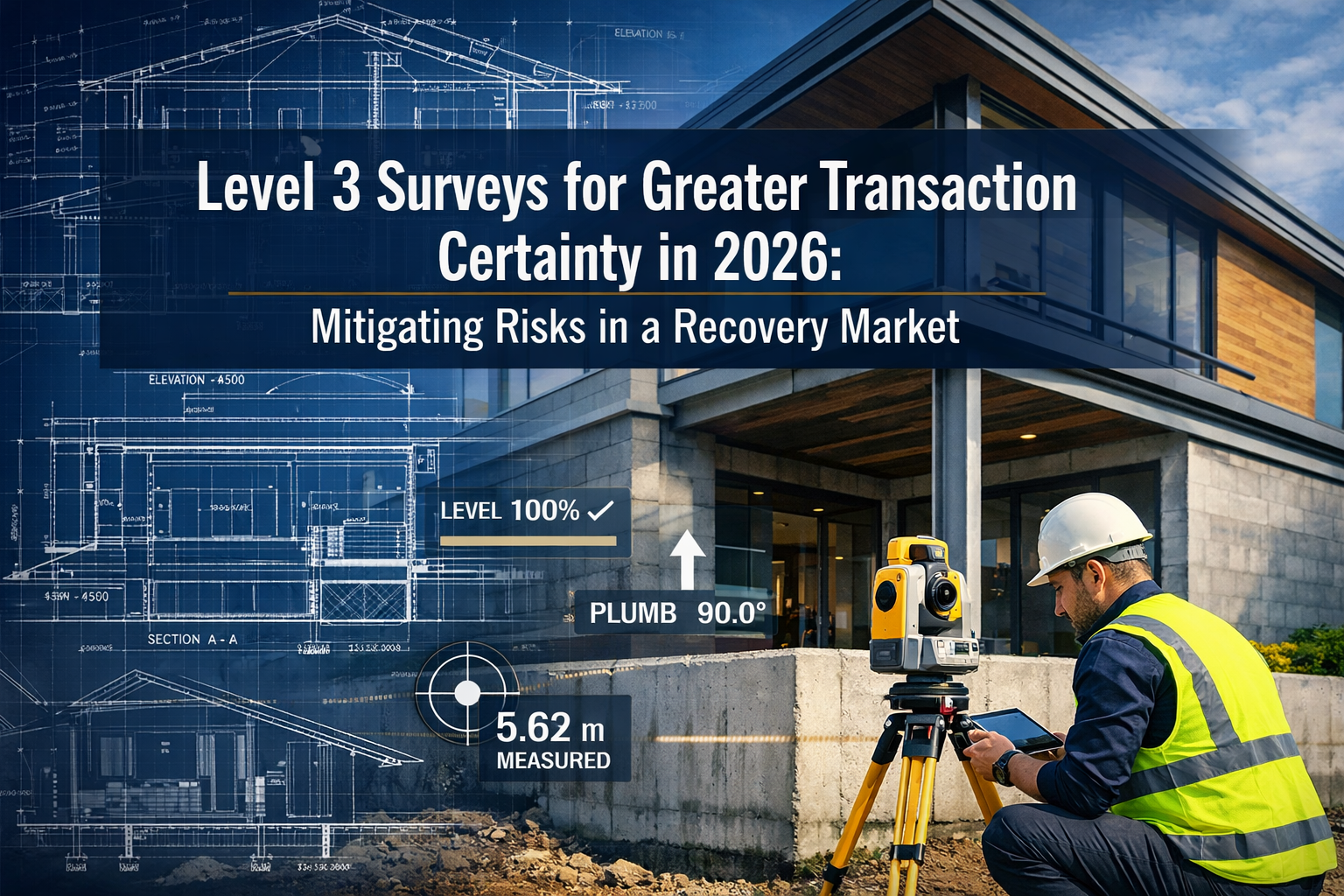

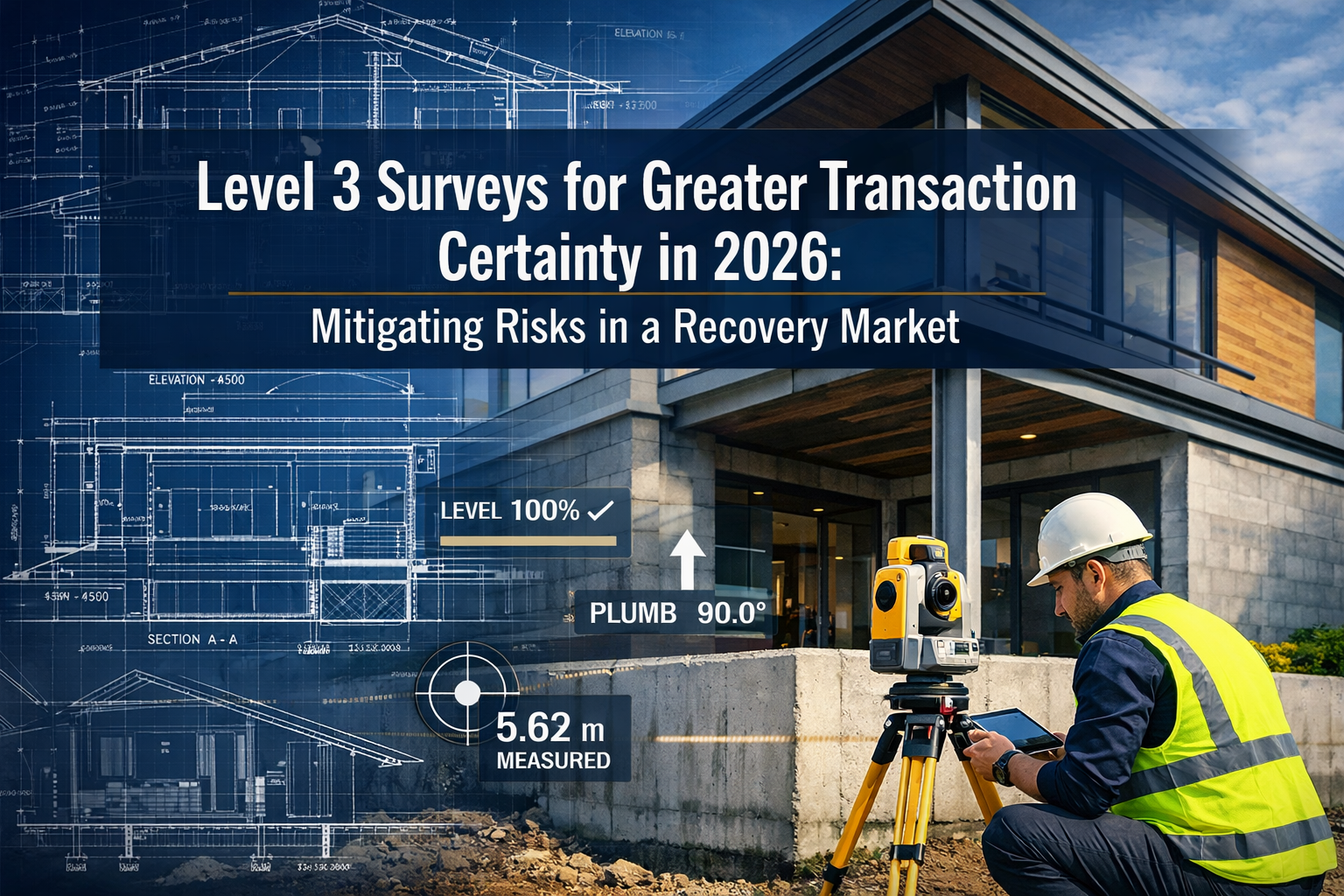
Commercial real estate transactions collapsed by 47% during the 2023-2024 downturn, but as markets stabilize in 2026, a critical shift is underway: buyers and lenders now demand unprecedented levels of due diligence before committing capital. The implementation of the 2026 ALTA/NSPS Minimum Standard Detail Requirements, effective February 23, 2026, signals an industry-wide push toward Level 3 Surveys for Greater Transaction Certainty in 2026: Mitigating Risks in a Recovery Market. These comprehensive building assessments have become essential tools for identifying hidden defects, quantifying repair costs, and providing the documentation necessary to secure financing in an increasingly cautious lending environment.
The convergence of enhanced survey standards, regulatory reforms, and market recovery dynamics has elevated the importance of thorough property investigations. As transaction volumes return, participants are learning hard lessons from previous cycles: superficial assessments create costly surprises, while comprehensive surveys protect investments and accelerate deal completion.
Key Takeaways
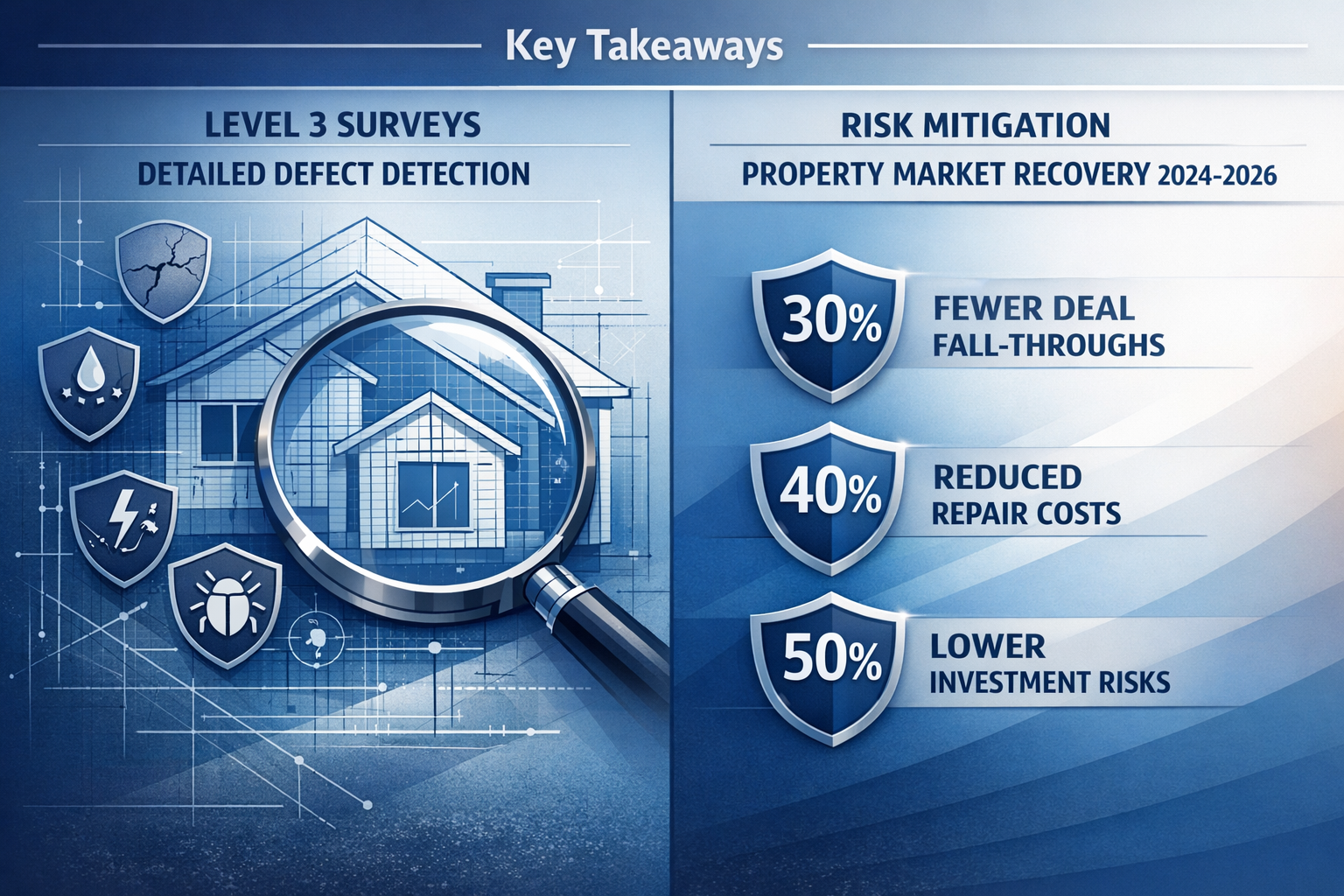
- 🔍 Enhanced Standards: The 2026 ALTA/NSPS requirements mandate greater transparency in boundary precision, expanded records research, and comprehensive documentation of property encumbrances
- 💰 Risk Mitigation: Level 3 surveys identify structural defects, environmental concerns, and boundary disputes before transaction completion, preventing costly post-purchase litigation
- 📊 Market Confidence: Comprehensive surveys accelerate financing approvals and reduce transaction timelines by providing lenders with detailed risk assessments
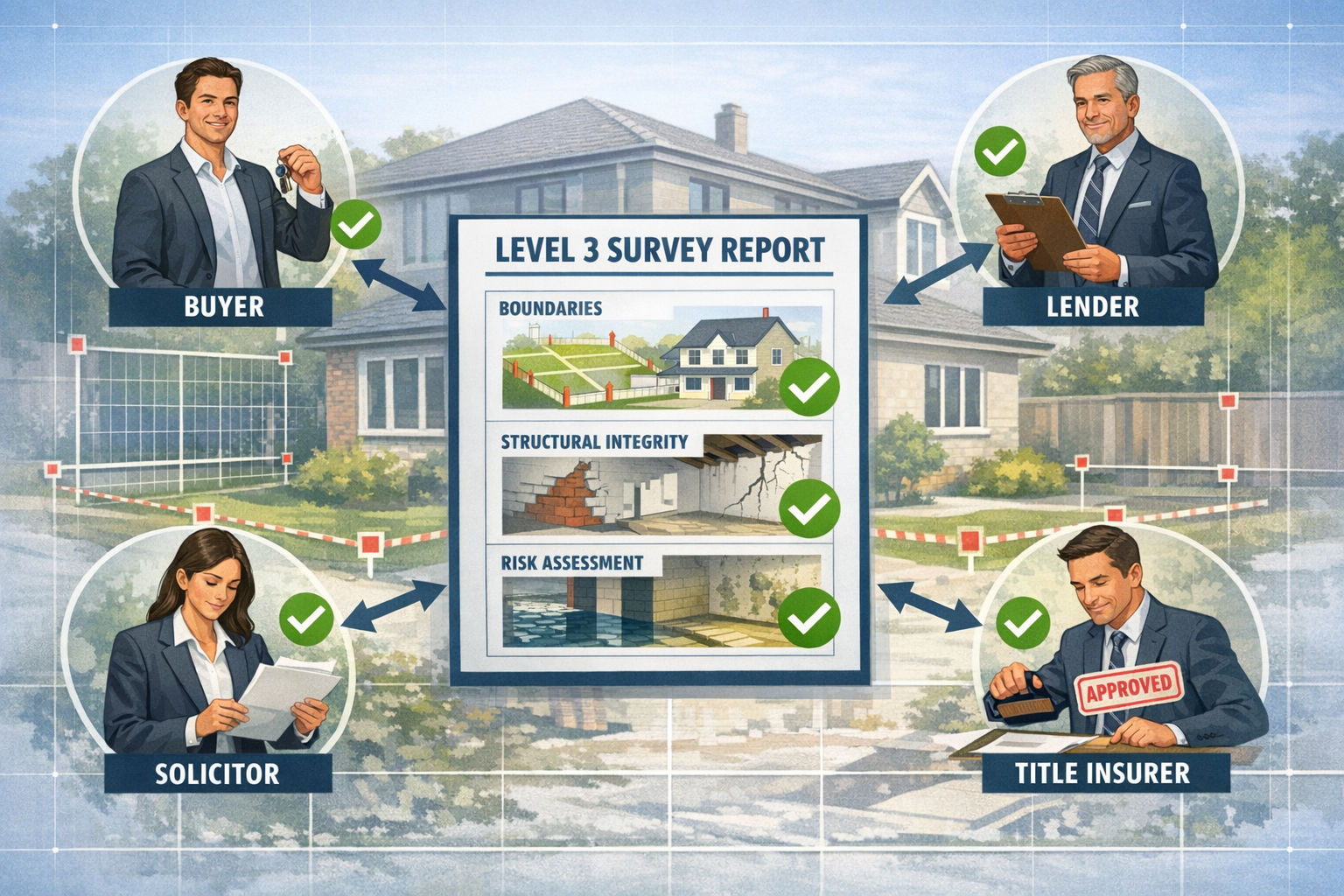
- ✅ Stakeholder Alignment: Early coordination between surveyors, title insurers, solicitors, and lenders ensures all parties work from consistent, reliable property information
- 🏗️ Defect Detection: Systematic inspection protocols reveal hidden issues including subsidence, damp penetration, structural movement, and non-compliant alterations that impact property valuation
Understanding Level 3 Surveys for Greater Transaction Certainty in 2026: Mitigating Risks in a Recovery Market
The property survey landscape has evolved significantly in response to market conditions and regulatory developments. Level 3 surveys, also known as building surveys or full structural surveys, represent the most comprehensive assessment available for property transactions. Unlike basic valuation inspections or Level 2 homebuyer surveys, Level 3 surveys provide exhaustive analysis of a property's condition, construction quality, and potential defects.
What Distinguishes Level 3 Surveys in 2026
The 2026 standards have raised expectations across the surveying profession. While the ALTA/NSPS requirements primarily govern land title surveys in the United States, parallel developments in building survey standards have created a global trend toward greater thoroughness and transparency.[1]
Core components of Level 3 surveys include:
- Comprehensive structural assessment of foundations, walls, roofs, and load-bearing elements
- Detailed defect identification with severity ratings and repair cost estimates
- Environmental investigations including damp, timber decay, and potential contamination
- Building regulations compliance review for alterations and extensions
- Access and boundary analysis aligned with enhanced title survey requirements
- Photographic documentation of all significant defects and areas of concern
- Prioritized recommendations for immediate, short-term, and long-term remedial works
The difference between Level 2 and Level 3 surveys has become more pronounced as transaction complexity increases. Level 3 surveys are particularly valuable for:
✅ Properties built before 1900 with period construction methods
✅ Buildings with visible structural defects or movement
✅ Properties requiring significant renovation or conversion
✅ Commercial acquisitions where operational continuity depends on building condition
✅ Transactions involving complex title issues or boundary disputes
The 2026 ALTA/NSPS Standards Impact
The revised ALTA/NSPS Minimum Standard Detail Requirements, effective February 23, 2026, have fundamentally changed how land title surveys support real estate transactions.[1][2] These changes complement comprehensive building surveys by ensuring boundary and encumbrance issues receive appropriate scrutiny.
Key changes affecting transaction certainty:
| Standard Area | Previous Requirement | 2026 Enhancement | Transaction Impact |
|---|---|---|---|
| Records Research | Basic title review | Mandatory copies of adjoining deeds and non-public documents | Identifies potential boundary conflicts earlier |
| Positional Precision | General accuracy statement | Refined Relative Positional Precision reporting | Quantifies boundary location confidence |
| Easement Documentation | Show recorded easements | Clarify termination mechanisms and status | Reduces title insurance exceptions |
| Survey Notes | Limited explanations | Comprehensive notes on discrepancies and limitations | Improves stakeholder understanding |
| Title Coordination | Informal communication | Mandatory receipt of current title commitment | Aligns survey scope with insurer requirements |
These enhanced requirements reflect lessons learned from transaction failures where inadequate due diligence led to disputes, financing delays, or unexpected costs.[4] The emphasis on supporting documentation and transparency mirrors the philosophy underlying comprehensive Level 3 building surveys.
Comprehensive Defect Detection: The Foundation of Level 3 Surveys for Greater Transaction Certainty in 2026
The primary value proposition of Level 3 surveys lies in their systematic approach to identifying property defects before financial commitment. In a recovery market where buyers exercise heightened caution, the ability to quantify risk and negotiate purchase terms based on objective evidence provides significant competitive advantage.
Systematic Inspection Methodology
Professional surveyors conducting Level 3 assessments follow rigorous protocols that ensure no element of the property escapes scrutiny. This methodical approach aligns with the 2026 standards' emphasis on thoroughness and documentation.[5]
Standard inspection sequence includes:
- External envelope assessment: Roof coverings, chimneys, rainwater goods, walls, windows, doors, and external joinery
- Structural framework evaluation: Foundations, load-bearing walls, floor structures, and roof timbers
- Internal condition review: Ceilings, walls, floors, staircases, and built-in fixtures
- Services inspection: Heating, electrical, plumbing, and drainage systems (visual assessment)
- Environmental investigations: Damp testing, timber inspection, and potential contamination indicators
- Boundary and access verification: Property extent, rights of way, and encroachments
For properties with specific concerns, specialist defect surveys may supplement the Level 3 assessment. Common specialist investigations include:
- Subsidence surveys with monitoring and structural engineering analysis
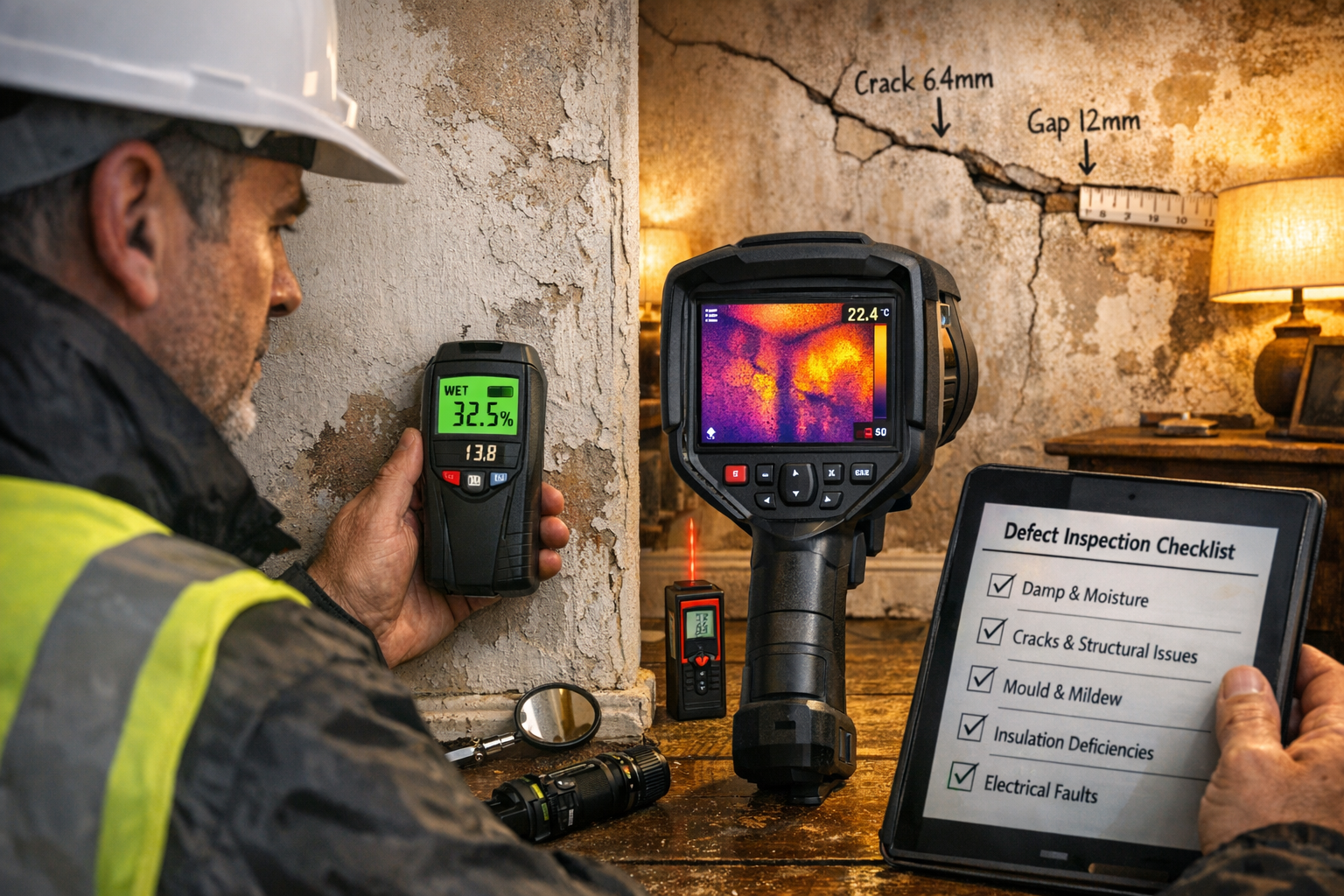
- Damp surveys using moisture meters and thermal imaging
- Drainage surveys with CCTV inspection of underground pipes
- Roof surveys for complex or inaccessible roof structures
- Asbestos surveys for pre-2000 buildings
Critical Defect Categories and Risk Assessment
Level 3 surveys categorize defects by severity, enabling buyers to prioritize remedial works and negotiate appropriate price adjustments. This risk-based approach provides the foundation for informed decision-making in uncertain markets.
Defect severity classification:
🔴 Category 1 (Urgent): Defects requiring immediate attention to prevent safety hazards or rapid deterioration
- Active structural movement or instability
- Significant water ingress causing progressive damage
- Unsafe electrical installations
- Hazardous materials requiring immediate remediation
🟡 Category 2 (Significant): Defects requiring repair or replacement but not immediately urgent
- Roof coverings nearing end of serviceable life
- Damp penetration requiring investigation and treatment
- Outdated heating or electrical systems
- Minor structural movement requiring monitoring
🟢 Category 3 (Minor): Maintenance items or cosmetic issues with minimal impact on property value
- Routine decoration requirements
- Minor drainage improvements
- Standard wear and tear items
- Aesthetic upgrades
This classification system, aligned with RICS guidelines, enables buyers to estimate repair costs accurately and assess whether a property represents good value. In the 2026 recovery market, properties with well-documented defects often sell faster than those with unknown conditions, as buyers appreciate transparency and can secure appropriate financing.[3]
The Surveyor's Checklist for Boosting Buyer Confidence
Professional surveyors following best practices in 2026 utilize comprehensive checklists that ensure consistency and thoroughness. These protocols have evolved to address the heightened expectations of lenders, insurers, and buyers in the post-downturn environment.
Essential checklist components:
Pre-Inspection Preparation ✓
- Review title documents and previous survey reports
- Obtain building control certificates and planning permissions
- Research local authority records for enforcement notices
- Coordinate with adjoining property owners for boundary verification
- Prepare specialist equipment (moisture meters, thermal cameras, endoscopes)
On-Site Investigation ✓
- Photograph all elevations and significant features
- Test representative areas for damp penetration
- Inspect roof spaces, basements, and underfloor areas where accessible
- Document all visible defects with measurements and locations
- Note any areas where access was restricted or inspection limited
Technical Analysis ✓
- Compare measured dimensions with title plans and deeds
- Assess structural adequacy for intended use
- Evaluate building regulations compliance for alterations
- Identify potential environmental concerns requiring specialist testing
- Calculate relative positional precision for boundary features (where applicable)[5]
Reporting and Documentation ✓
- Provide clear executive summary of critical findings
- Include annotated photographs and diagrams
- Estimate repair costs for significant defects
- Prioritize recommendations by urgency and cost
- Explain limitations and areas requiring further investigation
This systematic approach ensures that RICS building surveys meet professional standards while providing the detailed information buyers need to proceed with confidence.
Integrating Level 3 Surveys for Greater Transaction Certainty in 2026 with Reform Initiatives
The 2026 property market operates within a framework of regulatory reforms designed to increase transparency, reduce transaction failures, and protect consumer interests. Level 3 surveys play a crucial role in supporting these objectives by providing reliable information at critical decision points.
Coordination with Title Insurance and Legal Due Diligence
The 2026 ALTA/NSPS standards explicitly require surveyors to coordinate with title insurers and receive current title commitments before completing land surveys.[4] This integration principle extends to building surveys, where physical condition assessment must align with legal and title considerations.
Key coordination points include:
- Easement verification: Physical inspection confirms whether recorded easements are actively used and whether any unrecorded rights of way exist
- Boundary dispute identification: Survey findings may reveal encroachments, adverse possession claims, or discrepancies between physical and legal boundaries
- Access limitations: Surveyors document any restrictions that affect property inspection, which may indicate title or legal issues
- Building regulations compliance: Non-compliant alterations identified during surveys may require retrospective approval or remediation
The enhanced records research requirements in the 2026 standards mean surveyors now investigate "non-public or quasi-public documents" including railroad plans, highway department records, and utility easements.[4] This expanded scope reduces the likelihood of post-transaction surprises and supports more accurate property valuations.
Supporting Lender Requirements in a Cautious Financing Environment
Commercial and residential lenders have significantly tightened underwriting standards following recent market volatility. Comprehensive building surveys have become essential components of loan applications, particularly for properties with complexity or age-related concerns.
Lender-driven survey requirements typically include:
📋 Detailed structural condition assessment with engineer's opinion on stability
📋 Quantified repair cost estimates for significant defects
📋 Confirmation that property is suitable for intended use and occupation
📋 Environmental screening for contamination or hazardous materials
📋 Verification that property boundaries match title documents
📋 Assessment of whether property value supports requested loan amount
The shift toward greater lender scrutiny reflects broader regulatory trends. While specific regulatory changes vary by jurisdiction, the overall direction favors enhanced transparency and risk disclosure.[7][8] Level 3 surveys provide the documentation lenders need to satisfy internal risk management requirements and regulatory expectations.
For commercial properties, commercial building surveys often include additional elements such as:
- Compliance with disability access regulations
- Fire safety system adequacy
- Energy efficiency assessments
- Operational cost projections for major building systems
- Lease compliance for tenant improvements
Accelerating Transaction Timelines Through Early Survey Commissioning
One of the most significant benefits of Level 3 surveys in the 2026 market is their ability to accelerate transaction completion when commissioned early in the purchase process. Buyers who obtain comprehensive surveys before making offers can negotiate more effectively and avoid delays during the due diligence period.
Strategic timing considerations:
⏰ Pre-offer surveys: Enable informed bidding and reduce risk of post-offer renegotiation
⏰ Conditional offer surveys: Provide 14-21 day window for detailed investigation before commitment
⏰ Pre-exchange surveys: Ensure all parties have complete information before legal commitment
The trend toward earlier survey commissioning aligns with broader homebuying process reforms being discussed in various jurisdictions.[9] By front-loading due diligence, buyers reduce the risk of transaction failure and demonstrate seriousness to sellers, which can provide competitive advantage in multiple-offer situations.
The Role of Digital Technology in Enhancing Survey Quality
Modern surveying practice increasingly incorporates digital tools that improve accuracy, documentation quality, and stakeholder communication. These technological advances support the 2026 standards' emphasis on precision and transparency.
Key technologies enhancing Level 3 surveys:
- Thermal imaging cameras: Reveal hidden damp, insulation defects, and heat loss patterns
- Moisture meters: Provide quantitative data on dampness levels in building materials
- Laser distance measurers: Enable precise dimensional surveys for boundary verification
- Drone photography: Captures detailed roof and chimney imagery without scaffolding access
- 3D scanning: Creates detailed property models for complex commercial buildings
- Digital reporting platforms: Deliver interactive reports with embedded photographs and diagrams
These tools complement traditional surveying skills and enable more thorough investigations within practical time and cost constraints. The enhanced documentation they provide supports the detailed explanatory notes now required under the 2026 standards.[2]
Practical Considerations: Cost, Timing, and Selecting the Right Surveyor
While Level 3 surveys represent the most comprehensive assessment option, buyers must balance thoroughness against practical constraints including budget, timeline, and property characteristics. Understanding these factors enables informed decisions about survey scope and provider selection.
Survey Costs and Value Proposition
Structural survey pricing varies based on property size, age, complexity, and location. In 2026, typical Level 3 survey costs range from £600-£1,500 for residential properties, with commercial surveys commanding higher fees based on building size and intended use.
Cost factors include:
- Property size (floor area and number of rooms)
- Age and construction type
- Accessibility of roof spaces, basements, and external areas
- Geographic location and surveyor travel requirements
- Additional specialist investigations required
- Urgency and turnaround time expectations
While Level 3 surveys cost more than basic valuations or Level 2 assessments, the investment provides significant value through:
💷 Negotiating leverage: Defect identification enables price reduction requests averaging 5-15% of purchase price
💷 Risk mitigation: Avoiding properties with undisclosed major defects prevents catastrophic financial losses
💷 Financing facilitation: Comprehensive reports satisfy lender requirements and accelerate approval
💷 Maintenance planning: Detailed condition assessment enables buyers to budget for future repairs
For buyers considering whether to invest in a Level 3 survey, the decision often hinges on property characteristics. Choosing the right property survey depends on factors including building age, visible condition, and purchase price relative to buyer resources.
Survey Duration and Scheduling Considerations
The time required to complete a Level 3 survey depends on property size and complexity. Typical timelines include:
- On-site inspection: 3-6 hours for residential properties; full day or multiple days for large commercial buildings
- Report preparation: 5-10 working days for standard residential surveys; 2-4 weeks for complex commercial assessments
- Specialist investigations: Additional 1-2 weeks if subsidence monitoring, drainage surveys, or environmental testing required
Buyers should factor these timelines into transaction planning, particularly when working within conditional offer periods or coordinating with mortgage application deadlines. Many surveyors offer expedited services for urgent transactions, though premium fees typically apply.
Selecting Qualified Surveyors and Verifying Credentials
The quality of a Level 3 survey depends entirely on the surveyor's expertise, diligence, and professional standards. In 2026's recovery market, selecting appropriately qualified professionals is essential for transaction certainty.
Essential surveyor qualifications:
✅ RICS membership: Chartered surveyors (MRICS or FRICS) adhere to professional standards and carry mandatory insurance
✅ Relevant experience: Demonstrated expertise with similar property types and construction methods
✅ Local knowledge: Familiarity with regional building practices, environmental issues, and regulatory requirements
✅ Professional indemnity insurance: Minimum £1 million coverage (higher for commercial work)
✅ Clear reporting style: Sample reports demonstrating thorough analysis and accessible communication
Local chartered surveyors with established reputations often provide superior service compared to national chains, as they understand regional property characteristics and maintain relationships with local specialists for follow-up investigations.
Buyers should request references, review sample reports, and confirm that surveyors will personally conduct the inspection rather than delegating to junior staff. The surveyor's professional reputation and attention to detail directly impact the reliability of findings and the confidence all transaction parties can place in the assessment.
Conclusion
Level 3 Surveys for Greater Transaction Certainty in 2026: Mitigating Risks in a Recovery Market represent more than comprehensive property assessments—they embody a fundamental shift toward transparency, documentation, and risk mitigation in real estate transactions. The implementation of enhanced ALTA/NSPS standards, combined with evolving lender requirements and buyer expectations, has elevated these detailed surveys from optional due diligence to essential transaction components.
The 2026 market recovery proceeds cautiously, with participants demanding greater certainty before committing capital. Level 3 surveys provide this certainty through systematic defect identification, quantified repair cost estimates, and comprehensive documentation that satisfies lenders, insurers, and legal advisors. The integration of enhanced boundary precision requirements, expanded records research, and detailed explanatory notes creates a robust framework for informed decision-making.
For property buyers navigating the 2026 market, the path forward is clear:
🎯 Commission surveys early in the transaction process to enable informed negotiations and demonstrate commitment
🎯 Select qualified RICS chartered surveyors with relevant experience and local knowledge
🎯 Coordinate with all stakeholders including lenders, solicitors, and title insurers to ensure alignment
🎯 Budget appropriately for comprehensive assessments and potential specialist follow-up investigations
🎯 Use survey findings strategically to negotiate price adjustments, request repairs, or make informed decisions to withdraw
The investment in thorough due diligence pays dividends through reduced transaction risk, faster financing approvals, and greater confidence in property condition. As markets stabilize and transaction volumes increase, those who prioritize comprehensive surveys will navigate the recovery with greater certainty and better outcomes.
The convergence of regulatory reform, technological advancement, and market caution has created an environment where thoroughness wins. Level 3 surveys provide the foundation for successful transactions in 2026 and beyond, protecting investments while enabling confident participation in the property market recovery.
References
[1] Alta Nsps Key Changes And Updates In The 2026 Standards – https://www.beneschlaw.com/insight/alta-nsps-key-changes-and-updates-in-the-2026-standards/
[2] 2026 Alta Survey Standards Updates – https://www.hklaw.com/en/insights/publications/2026/03/2026-alta-survey-standards-updates
[3] Alta Surveys Revised 2026 – https://www.bvna.com/needs/alta-surveys-revised-2026
[4] Five Key Updates 2026 Altansps Land Title Survey Standards – https://westwoodps.com/recent-blog-posts/five-key-updates-2026-altansps-land-title-survey-standards
[5] New 2026 Alta Nsps Survey Standards What Developers And Counsel Should Know – https://hallrender.com/2026/02/23/new-2026-alta-nsps-survey-standards-what-developers-and-counsel-should-know/
[6] New Hsr Thresholds Filing Fees 2026 – https://www.ftc.gov/enforcement/competition-matters/2026/01/new-hsr-thresholds-filing-fees-2026
[7] 01 09 2026 – https://www.pwc.com/us/en/industries/financial-services/library/our-take/01-09-2026.html
[8] Update Prudential Regulators Rightsizing Regulation Promote American Opportunity – https://www.fdic.gov/news/speeches/2026/update-prudential-regulators-rightsizing-regulation-promote-american-opportunity
[9] Homebuying Process Reforms 2026 Impact On Early Building Surveys And Valuation Timing – https://nottinghillsurveyors.com/blog/homebuying-process-reforms-2026-impact-on-early-building-surveys-and-valuation-timing