
{"cover":"Professional landscape format (1536×1024) hero image featuring bold text overlay 'Level 3 Surveys for Bungalows in 2026: Targeting Subsidence and Damp Risks' in extra large 72pt white sans-serif font with dark shadow effect, positioned in upper third with perfect alignment. Background shows detailed architectural cross-section of a single-storey bungalow revealing foundation, ground moisture, wall cavities, and roof structure with subtle crack patterns indicating subsidence. Split-screen composition showing half exterior view of traditional bungalow and half technical diagram with measurement tools, moisture meters, and structural assessment markers. Color palette: deep navy blue, white, warning orange accents for problem areas. High contrast, magazine cover quality, editorial architectural style with professional surveying aesthetic. Technical blueprint grid overlay adds authority.","content":["Detailed landscape format (1536×1024) comparison infographic showing Level 2 vs Level 3 survey scope for bungalows. Split-screen layout with left side labeled 'Level 2 Homebuyers Survey' showing surface-level inspection icons (binoculars, checklist, basic tools) and right side labeled 'Level 3 Building Survey' displaying comprehensive investigation tools (moisture meters, foundation probes, structural analysis equipment). Center dividing line features bungalow silhouette with callout boxes highlighting unique vulnerabilities: flat roof section, ground-level moisture exposure, expansive clay soil layers beneath foundation. Color-coded severity indicators (green, amber, red) mark different risk zones. Professional architectural drawing style with clean typography, technical annotations, and measurement scales. Includes small icons representing common bungalow defects: subsidence cracks, damp patches, drainage issues.","Detailed landscape format (1536×1024) technical illustration showing cross-section cutaway view of bungalow foundation and wall structure revealing subsidence and damp problems. Underground view displays soil layers with expansive clay marked in brown, water table level indicated with blue gradient, tree roots extending toward foundation causing ground movement. Foundation shows stepped cracking pattern with red warning arrows. Wall cavity reveals rising damp moisture path traveling upward through brickwork (depicted with blue moisture gradient and directional arrows), failed damp-proof course highlighted in orange. Surface level shows moisture meter readings, crack width measurements with calipers, and surveyor inspection points marked with numbered flags. Includes detailed callout boxes explaining: soil shrinkage mechanics, capillary action in masonry, and settlement patterns. Professional engineering diagram aesthetic with precise labels, measurement annotations, and technical accuracy.","Detailed landscape format (1536×1024) professional surveyor inspection scene inside bungalow showing comprehensive Level 3 assessment in progress. Foreground features chartered surveyor using thermal imaging camera pointed at wall showing color-coded heat signature revealing hidden moisture (blue/purple cold spots indicating damp areas). Mid-ground displays inspection equipment laid out systematically: moisture meters with digital readouts, crack monitoring gauges, spirit level, laser measuring device, tablet showing floor plan with defect annotations. Background shows exposed floor section revealing timber joists with visible rot damage marked with red tags, and wall with removed plaster exposing cavity and insulation. Clipboard with detailed checklist visible on folding table. Natural lighting through bungalow window creates professional documentary photography style. Includes visible evidence markers, measurement tape on walls showing crack widths, and professional surveying aesthetic with RICS standards implied through equipment quality and methodical approach."]"}
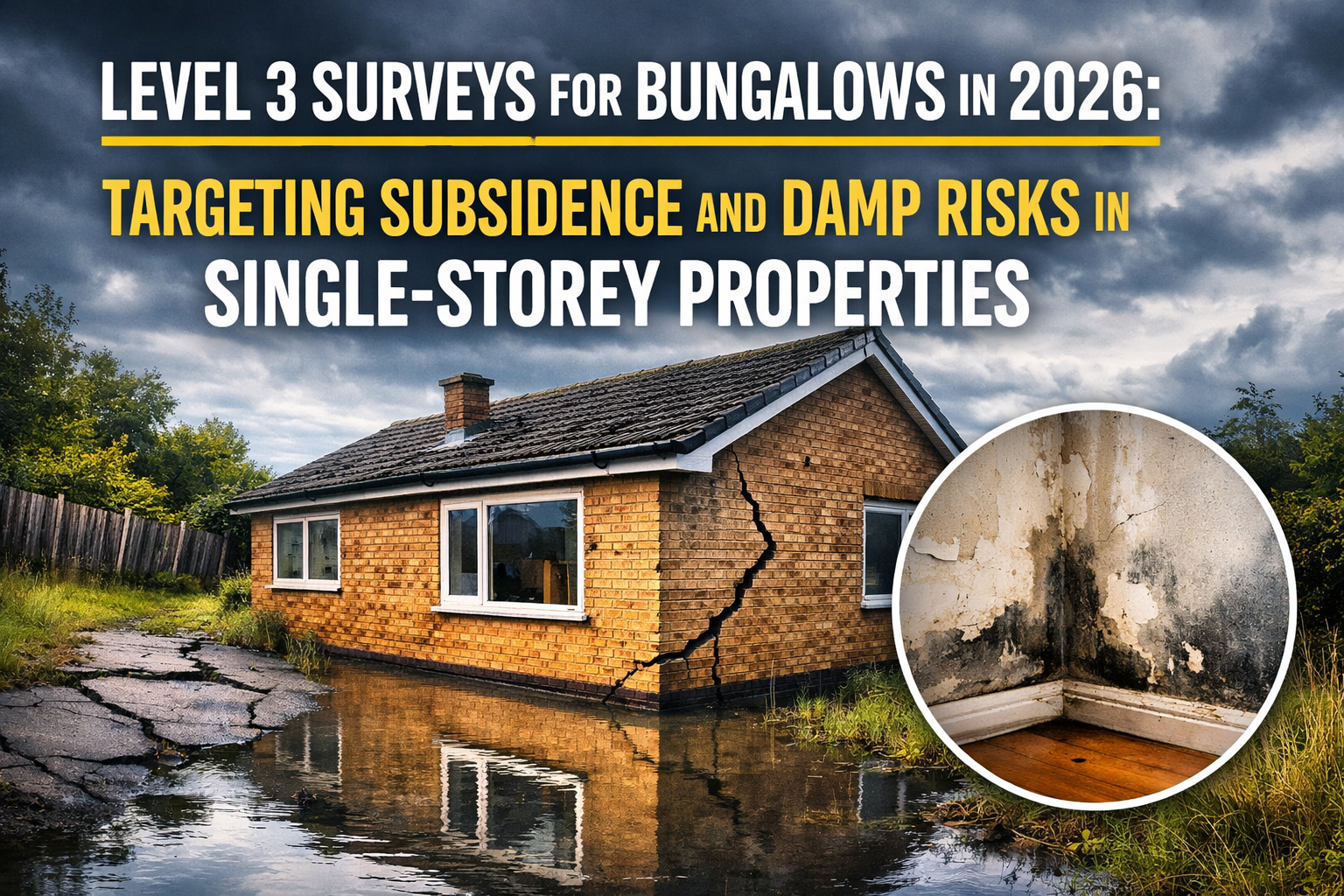
Single-storey properties account for over 2.1 million homes across the UK, yet bungalows face disproportionately higher risks of structural failure and moisture damage compared to multi-storey dwellings. The intimate relationship between ground-level construction and soil movement makes Level 3 Surveys for Bungalows in 2026: Targeting Subsidence and Damp Risks in Single-Storey Properties an essential investment for buyers, particularly in areas with expansive clay soils and aging housing stock.
Unlike two-storey homes where upper floors provide additional structural support and distance from ground moisture, bungalows remain vulnerable to foundation movement, rising damp, and drainage failures that can compromise the entire living space. In 2026, with property markets stabilizing and more buyers targeting retirement-friendly single-level homes, understanding the comprehensive protection offered by Level 3 building surveys has never been more critical.
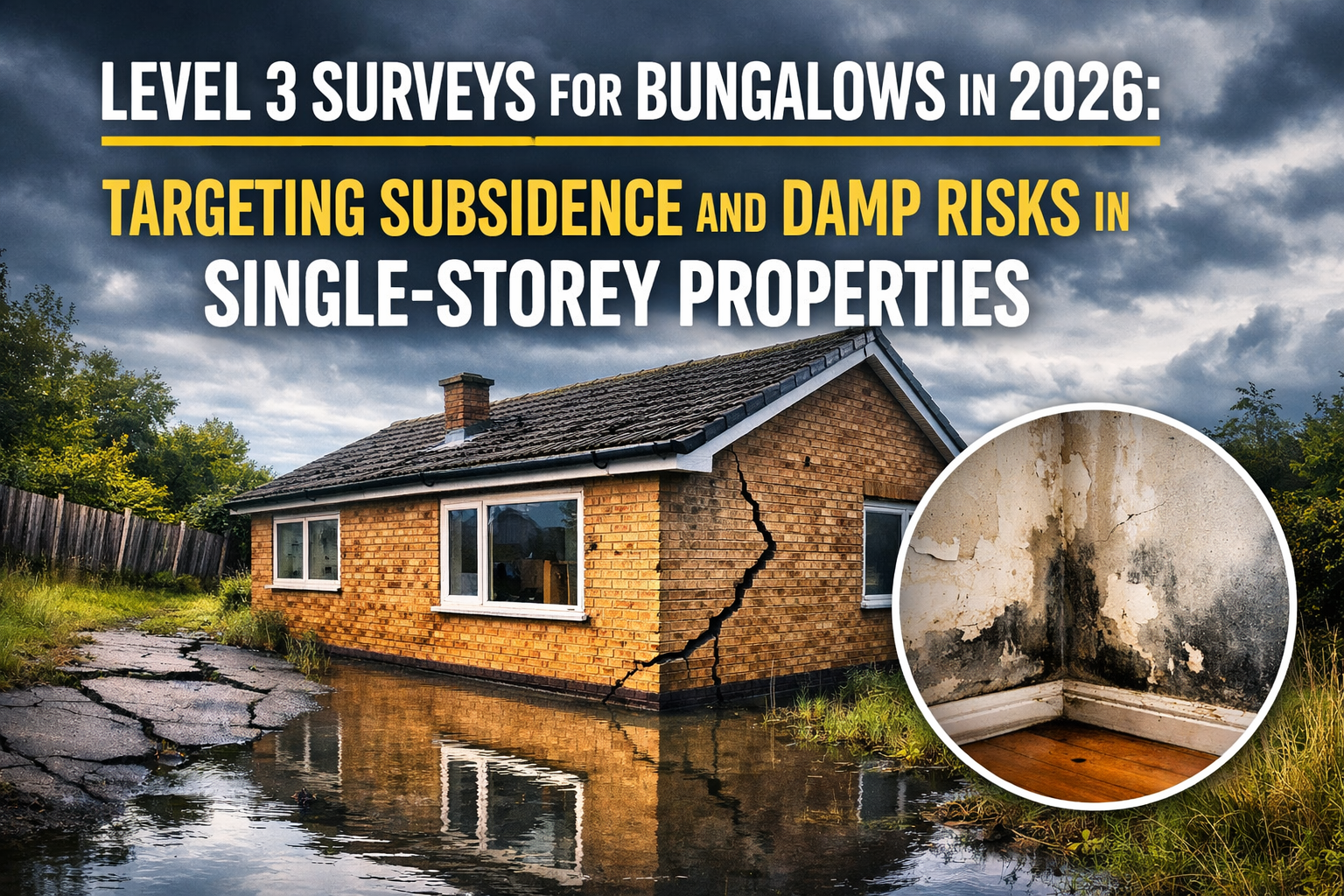
Key Takeaways
- Level 3 surveys provide comprehensive structural analysis specifically targeting subsidence, settlement, and heave—critical concerns for ground-level bungalow construction with direct soil exposure
- Moisture detection capabilities identify rising damp, penetrating damp, and condensation issues that disproportionately affect single-storey properties due to lower clearance from ground saturation
- Bungalows built before 1990 often lack modern damp-proof courses and foundations designed for expansive clay soils, making detailed surveys essential before purchase
- Comparative analysis shows Level 3 surveys examine concealed areas, structural timbers, and foundation integrity far beyond Level 2 scope—crucial for older bungalows with hidden defects
- Professional surveyor checklists in 2026 now incorporate thermal imaging, moisture mapping, and soil assessment protocols tailored to single-storey vulnerability profiles
Understanding Level 3 Building Surveys: Comprehensive Protection for Bungalow Buyers
A Level 3 building survey represents the most thorough property inspection available to homebuyers in 2026. Previously known as structural surveys, these comprehensive assessments provide detailed analysis of a property's condition, construction quality, and potential defects. For bungalows specifically, this level of scrutiny becomes indispensable due to unique structural vulnerabilities inherent in single-storey design.
What Makes Level 3 Surveys Different?
Level 3 surveys go far beyond the surface-level observations of basic valuations or Level 2 Homebuyers Reports. Surveyors conducting these inspections examine:
- Structural foundation integrity including subsidence indicators, settlement patterns, and heave evidence
- Concealed areas such as roof spaces, floor voids, and wall cavities where hidden defects often lurk
- Moisture penetration using specialized equipment to detect damp in walls, floors, and structural timbers
- Construction methods and materials to identify non-standard building techniques or aging components
- Drainage systems and their effectiveness in protecting foundations from water damage
According to professional surveying standards, Level 3 surveys are specifically recommended for properties built before 1900, those with unusual construction, or homes showing visible signs of structural movement or damp issues.[2] Bungalows frequently meet multiple criteria, particularly in established residential areas where single-storey homes were constructed during post-war building booms using methods now considered outdated.
The Bungalow Factor: Why Single-Storey Properties Need Enhanced Scrutiny
Bungalows present a unique risk profile that justifies the investment in comprehensive Level 3 surveys. Ground-level construction creates several vulnerability factors:
🏠 Direct ground contact means the entire living space sits immediately above foundation level, with no upper floors to provide structural redundancy or distance from soil-related issues.
💧 Enhanced moisture exposure occurs because all walls, floors, and living areas remain within the zone of ground moisture influence, increasing rising damp risks.
🌳 Foundation loading patterns differ from multi-storey homes, with weight distributed across a larger footprint but without the stabilizing mass of upper floors.
⚠️ Flat or low-pitched roofs common in mid-century bungalows create additional water ingress risks and reduced drainage efficiency compared to steep-pitched roofs.
The difference between Level 2 and Level 3 surveys becomes particularly significant when evaluating these single-storey characteristics. While Level 2 reports provide adequate assessment for conventional modern homes in good condition, they lack the investigative depth required to uncover hidden structural issues in bungalows.
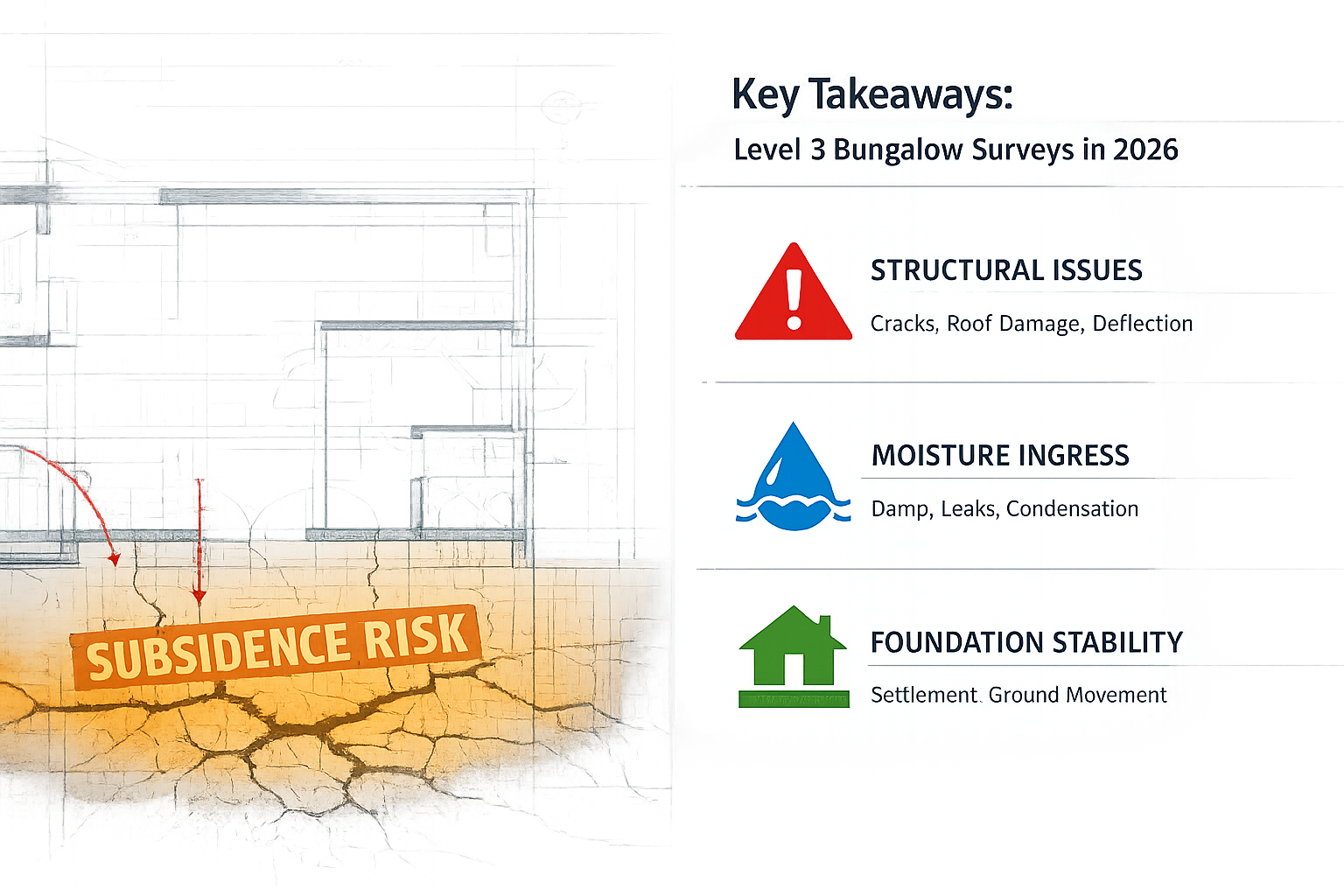
Level 3 Surveys for Bungalows in 2026: Subsidence Detection and Foundation Assessment
Subsidence represents one of the most serious structural threats to bungalow properties, potentially causing catastrophic damage and rendering homes unmortgageable. Level 3 Surveys for Bungalows in 2026: Targeting Subsidence and Damp Risks in Single-Storey Properties place particular emphasis on foundation integrity and ground movement indicators.
Understanding Subsidence in Single-Storey Construction
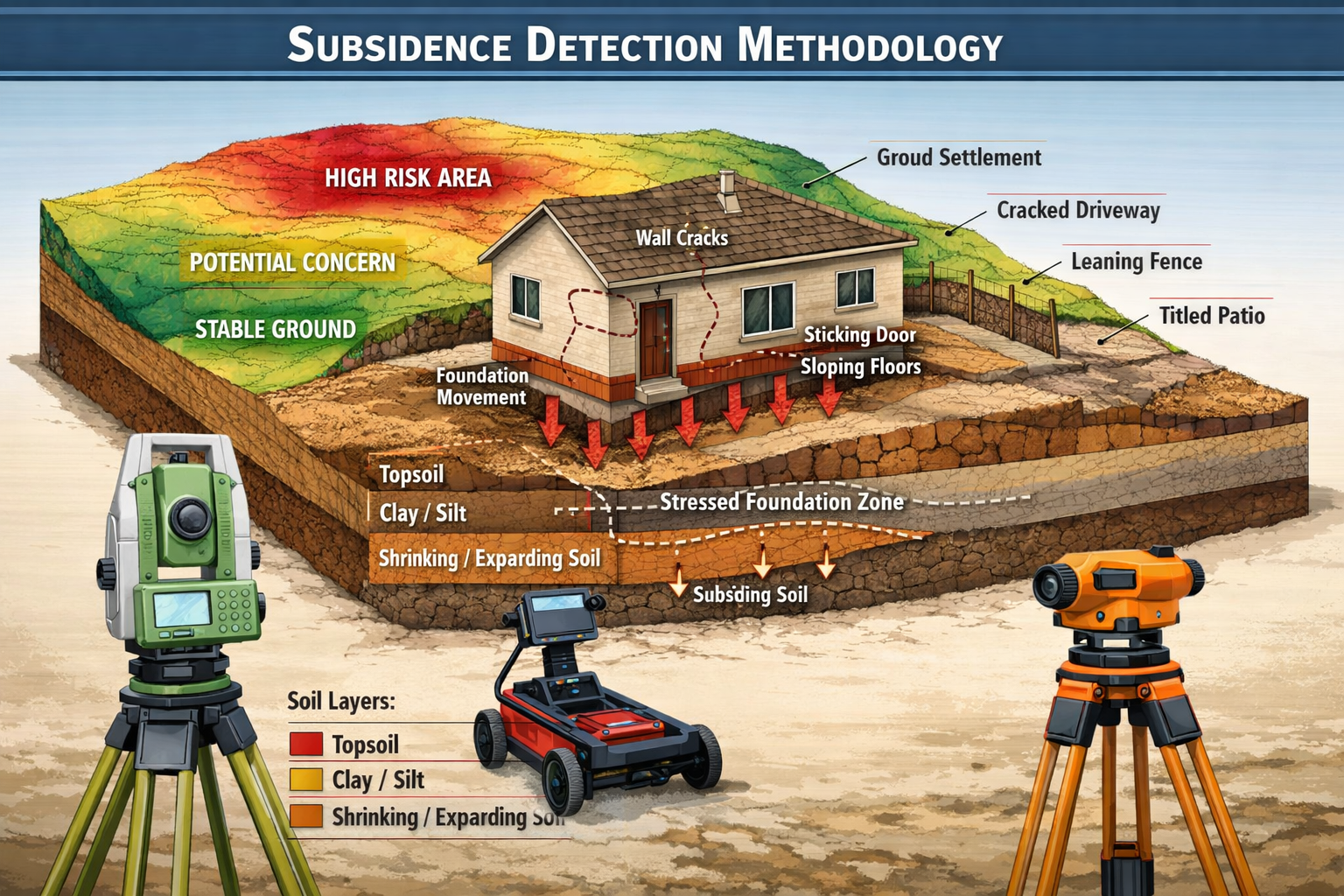
Subsidence occurs when ground beneath a property's foundations moves downward, causing the building to sink unevenly. For bungalows, this creates immediate problems throughout the entire structure since all rooms occupy the same level. When a two-storey home experiences localized subsidence, damage may concentrate in one area while upper floors remain relatively unaffected. In bungalows, foundation movement impacts every room simultaneously.
Common subsidence causes affecting bungalows include:
- Clay soil shrinkage during dry periods, particularly problematic in South East England where expansive London Clay predominates
- Tree root activity extracting moisture from soil, causing ground volume reduction beneath foundations
- Leaking drains washing away supporting soil particles and creating voids under foundation footings
- Mining subsidence in former coalfield areas where underground workings gradually collapse
- Inadequate foundation depth in older bungalows built before modern building regulations
Level 3 surveys include detailed inspection for subsidence indicators such as stepped cracking in brickwork, diagonal cracks wider than 3mm, doors and windows binding in frames, and gaps between walls and ceilings or floors.[1] Surveyors examine external elevations, internal walls, and foundation exposure points to assess movement severity and progression.
Heave and Settlement: Related Foundation Movements
Beyond subsidence, Level 3 surveys identify two additional foundation movement types particularly relevant to bungalows:
Settlement occurs when foundations compress soil beneath them due to building weight, typically stabilizing within the first decade after construction. However, older bungalows may experience renewed settlement if drainage changes or nearby excavation work alters ground conditions.
Heave represents the opposite problem—ground swelling that pushes foundations upward. This commonly affects bungalows built on clay soils after tree removal, when soil rehydrates and expands. Heave can prove even more damaging than subsidence, causing floor slabs to dome upward and walls to crack as they're forced apart.
A comprehensive structural survey examines foundation exposure points, crack patterns, and historical movement evidence to distinguish between these mechanisms and assess ongoing risk. For bungalows in high-risk areas, surveyors may recommend specialist monitoring or geotechnical investigation before purchase completion.
Expansive Soils and Bungalow Vulnerability
Certain soil types create elevated subsidence risk for single-storey properties. Expansive clay soils—particularly prevalent across London, the Thames Valley, and parts of the Midlands—undergo significant volume changes with moisture fluctuation. During dry summers, clay shrinks and cracks, removing support from shallow foundations. Winter rainfall causes re-expansion, but this seasonal cycle gradually damages foundation integrity.
Bungalows prove especially vulnerable because:
- Shallow foundations in pre-1950s construction often extend only 450-600mm deep, within the zone of seasonal moisture variation
- Wider footprints mean more foundation perimeter exposed to differential ground movement
- Lower structural mass provides less resistance to ground movement forces
- Single-level construction means foundation failure immediately affects habitability
Level 3 surveys in 2026 increasingly incorporate soil assessment recommendations, particularly for bungalows in known clay areas showing any subsidence indicators. Poor surface drainage that allows water to pond near foundations exacerbates these risks, as inadequate drainage increases foundation saturation and freeze-thaw damage to external masonry.[1]
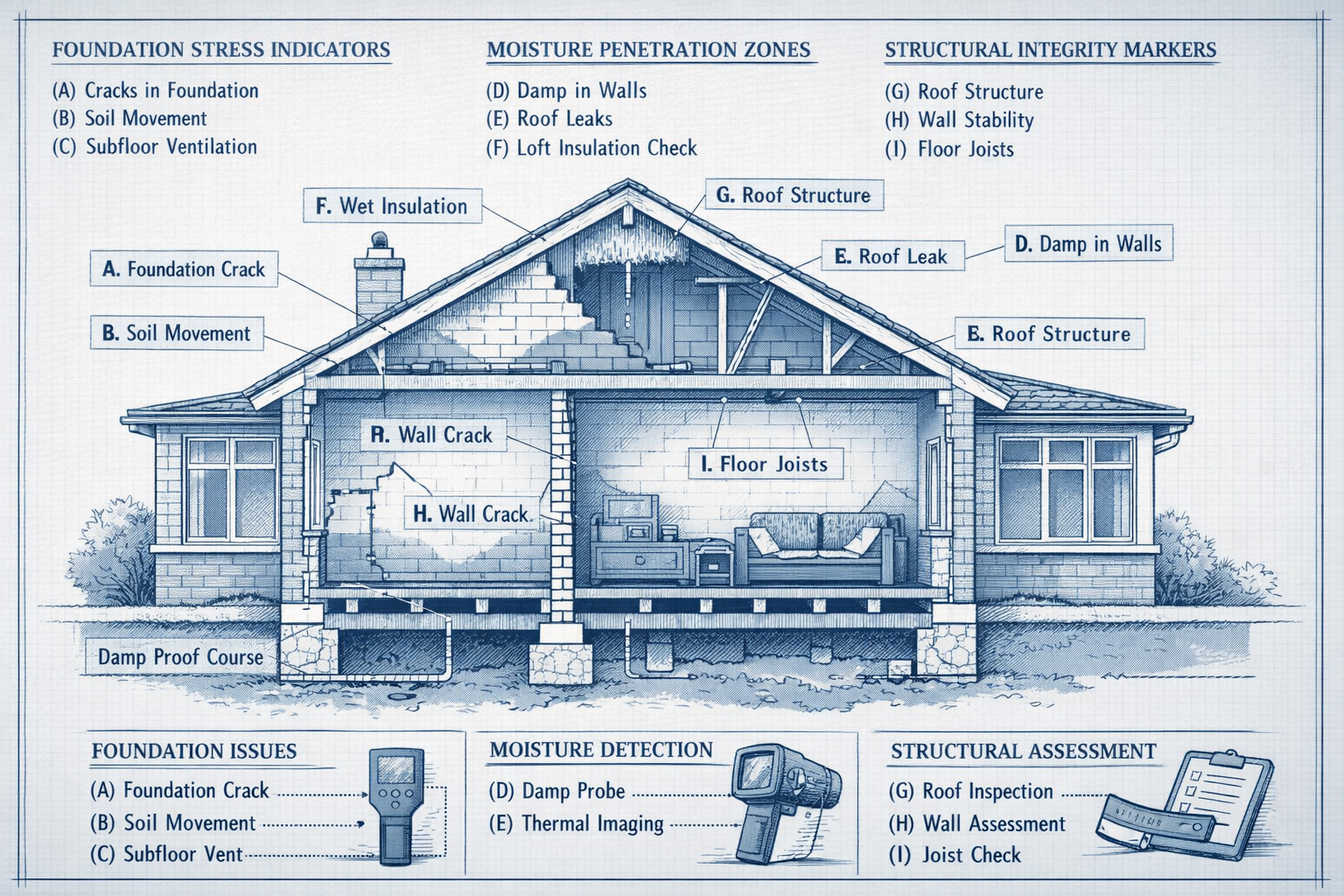
Level 3 Surveys for Bungalows in 2026: Comprehensive Damp Detection in Ground-Level Properties
Moisture-related defects represent the second major concern when conducting Level 3 Surveys for Bungalows in 2026: Targeting Subsidence and Damp Risks in Single-Storey Properties. The ground-level nature of bungalow construction creates multiple pathways for water ingress, making comprehensive damp surveys an integral component of Level 3 assessments.
Rising Damp: The Ground-Level Threat
Rising damp occurs when groundwater moves upward through porous masonry via capillary action, typically affecting walls up to one meter above ground level. For bungalows, this zone encompasses a significant portion of wall height, potentially damaging skirting boards, plaster, electrical outlets, and floor coverings throughout the property.
Modern construction incorporates damp-proof courses (DPCs)—impermeable barriers installed at ground level to prevent moisture rise. However, many bungalows built between 1945 and 1985 feature compromised or inadequate DPCs that no longer provide effective protection. Common DPC failures include:
- Bitumen felt deterioration in post-war construction where material has become brittle and cracked
- Bridged DPCs where external ground levels have risen above the damp-proof course, allowing water to bypass it
- Absent DPCs in some early bungalows built before regulations mandated their installation
- Damaged DPCs from settlement, subsidence, or inappropriate renovations
Level 3 surveyors use electronic moisture meters to detect rising damp, taking readings at multiple heights and locations across affected walls.[2] These measurements distinguish genuine rising damp from other moisture sources like condensation or penetrating damp, ensuring accurate diagnosis and appropriate remediation recommendations.
The cost of damp surveys forms a small fraction of potential repair expenses, making early detection through Level 3 assessment financially prudent for bungalow buyers.
Penetrating Damp: External Water Ingress
Penetrating damp describes moisture entering through external walls, roofs, or windows due to building fabric defects. Bungalows face elevated penetrating damp risk from several sources:
Roof-related ingress:
- Flat roof failures where membrane degradation allows water pooling and leakage
- Faulty gutters and downpipes directing water against walls rather than away from foundations
- Missing or damaged roof tiles in pitched roof sections
- Deteriorated flashing around chimneys, roof lights, or dormer windows
Wall penetration:
- Cracked or eroded pointing in brickwork allowing rain penetration
- Failed render coatings that trap moisture behind them
- Bridged wall cavities where mortar droppings create moisture paths
- Window frame deterioration permitting water entry around openings
Ground-level vulnerability:
- Splash-back from hard surfaces directing water against lower walls
- Inadequate ground clearance where paving or soil levels sit too high
- Absent or damaged airbricks reducing underfloor ventilation
Level 3 surveys examine these potential penetrating damp sources systematically, using moisture meters, visual inspection, and sometimes thermal imaging to identify active leaks.[2] For bungalows with flat roofs—a common feature in 1960s-70s construction—surveyors pay particular attention to membrane condition, drainage falls, and parapet wall weathering.
Condensation and Ventilation Issues
While not strictly a building defect, condensation creates significant moisture problems in bungalows, particularly those with solid wall construction or inadequate ventilation. Single-storey living concentrates moisture-generating activities (cooking, bathing, drying clothes) within a compact footprint, increasing humidity levels throughout the property.
Condensation manifests as:
- Mold growth on cold surfaces, particularly external wall corners and window reveals
- Water droplets on windows, especially single-glazed units
- Musty odors and deteriorating soft furnishings
- Peeling wallpaper and damaged plaster
Level 3 surveyors assess ventilation adequacy, identifying insufficient airbricks, blocked vents, or absent extractor fans that contribute to condensation problems. They distinguish condensation from rising or penetrating damp through moisture pattern analysis and environmental assessment.
Timber Decay and Moisture Damage
Prolonged moisture exposure causes serious timber decay in bungalow structures. Level 3 surveys specifically examine timber elements for:
Wet rot develops in constantly damp timber, causing softening, discoloration, and structural weakness. Common locations include:
- Window frames and sills exposed to weather
- Floor joists in areas affected by plumbing leaks or rising damp
- Roof timbers beneath failed flashings or damaged coverings
Dry rot represents a more serious fungal attack that spreads through masonry and can destroy extensive timber areas. Despite its name, dry rot requires initial moisture content above 20% to establish, after which the fungus generates its own moisture.[2]
Woodworm infestation attacks structural timbers, particularly in damp conditions. Active infestations require treatment, while historic damage needs assessment for structural significance.
For bungalows, timber decay in floor joists or roof structures affects the entire property's integrity. Level 3 surveys include roof space inspection and underfloor examination where accessible, using probes and moisture meters to detect hidden decay before it causes catastrophic failure.
Drainage Assessment and Foundation Protection
Effective drainage systems protect bungalow foundations from water damage and reduce damp risks. Level 3 surveys evaluate:
- Surface water drainage ensuring rainwater flows away from foundations rather than pooling against walls
- Gutter and downpipe condition checking for leaks, blockages, or inadequate capacity
- Soakaway functionality verifying that drainage systems disperse water effectively
- Underground drain integrity identifying leaks that could cause subsidence or foundation saturation
Poor drainage proves particularly problematic for bungalows on clay soils, where water accumulation near foundations exacerbates seasonal ground movement.[1] Surveyors may recommend CCTV drain surveys or specialist drainage assessment where concerns arise during Level 3 inspection.
Level 2 vs Level 3 Surveys: Making the Right Choice for Bungalow Purchases
Understanding when to commission a Level 3 building survey rather than a Level 2 Homebuyers Report significantly impacts purchase decisions for single-storey properties. The comparison reveals why Level 3 Surveys for Bungalows in 2026: Targeting Subsidence and Damp Risks in Single-Storey Properties provide superior protection for most single-storey home transactions.
Scope and Depth: Key Differences
Level 2 Homebuyers Survey:
- ✅ Suitable for conventional properties in reasonable condition
- ✅ Covers visible and accessible areas only
- ✅ Provides condition ratings (1-3) for major elements
- ✅ Identifies urgent defects and significant issues
- ❌ Limited investigation of concealed areas
- ❌ No detailed structural analysis
- ❌ Brief commentary on defects without extensive investigation
Level 3 Building Survey:
- ✅ Comprehensive inspection of all accessible areas
- ✅ Detailed examination of structure, fabric, and services
- ✅ Investigation of concealed spaces (roof voids, floor areas)
- ✅ Extensive use of specialist equipment (moisture meters, levels)
- ✅ Detailed defect analysis with repair guidance
- ✅ Suitable for older, altered, or unusual properties
- ✅ Comprehensive reporting with photographs and technical detail
For bungalows, several factors favor Level 3 surveys:
Age considerations: Most bungalows date from 1945-1980, placing them in the category where comprehensive surveys prove beneficial. Properties built before 1990 often lack modern damp-proofing, insulation, and foundation design.[2]
Construction type: Many bungalows feature non-standard construction including concrete frames, timber frames, or prefabricated systems requiring specialist assessment beyond Level 2 scope.
Alteration history: Single-storey properties frequently undergo extensions, loft conversions, or internal remodeling that may have compromised structural integrity or created hidden defects.
Visible concerns: Any bungalow showing cracks, damp patches, or structural movement warrants Level 3 investigation to determine cause and severity.
Cost-Benefit Analysis for Bungalow Buyers
While Level 3 surveys cost more than Level 2 reports—typically £800-£1,500 depending on property size and location versus £400-£900 for Level 2—the investment proves worthwhile for most bungalow purchases.
Consider this scenario: A buyer commissions a £500 Level 2 survey on a 1960s bungalow showing minor external cracking. The report notes the cracks but provides limited investigation. After purchase, structural engineers identify progressive subsidence requiring £35,000 of underpinning work. A Level 3 survey costing £1,200 would have identified the subsidence pre-purchase, allowing price renegotiation or withdrawal.
Financial protection includes:
- Negotiating purchase price reductions based on identified defects
- Avoiding properties with catastrophic hidden issues
- Planning renovation budgets accurately
- Securing appropriate building insurance
- Preventing post-purchase financial surprises
For bungalows in high-risk areas (expansive clay soils, mining subsidence zones, flood plains), Level 3 surveys provide essential due diligence that Level 2 reports cannot match.
When Level 2 Might Suffice
Limited scenarios exist where Level 2 surveys adequately serve bungalow buyers:
- Modern bungalows (post-2000) built to current regulations, in good condition, with no visible defects
- Recently renovated properties with building control certification and warranties
- Properties with recent Level 3 surveys available for review (within 2 years)
Even in these cases, buyers should carefully consider whether the modest additional cost of Level 3 assessment provides valuable peace of mind given bungalows' unique vulnerability profile.
Surveyor Checklist: Essential Elements of Level 3 Bungalow Surveys in 2026
Professional surveyors conducting Level 3 Surveys for Bungalows in 2026: Targeting Subsidence and Damp Risks in Single-Storey Properties follow comprehensive protocols ensuring thorough assessment of single-storey vulnerability factors.
Pre-Inspection Research and Planning
Before site attendance, surveyors review:
- Property age, construction type, and alteration history from Land Registry and planning records
- Local geology and soil types identifying subsidence risk areas
- Historical mining activity or natural ground instability
- Flood risk mapping and drainage infrastructure
- Previous survey reports if available
- Comparable properties in the area with known defects
This research informs inspection focus areas and specialist equipment requirements.
Foundation and Structural Assessment
External inspection includes:
- Crack pattern analysis measuring width, direction, and location of all visible cracks
- Foundation exposure examination at air bricks, inspection chambers, and accessible points
- Ground level assessment checking for adequate clearance and proper drainage falls
- Wall verticality checks using spirit levels to detect bulging or leaning
- Chimney stack condition examining stability, pointing, and weathering
- Roof structure evaluation assessing ridge lines, eaves alignment, and covering condition
Internal inspection covers:
- Floor level surveys using laser levels to detect differential settlement
- Wall crack examination internally correlating with external crack patterns
- Door and window operation testing for binding indicating structural movement
- Ceiling crack patterns identifying structural versus cosmetic issues
- Structural timber assessment in roof spaces and underfloor areas where accessible
Moisture Detection Protocol
Systematic damp assessment involves:
- Electronic moisture meter readings at multiple heights and locations across all external walls
- Visual inspection for staining, mold growth, salt deposits, and plaster deterioration
- Thermal imaging (increasingly standard in 2026) revealing hidden moisture patterns
- Ventilation assessment checking airbrick quantity, condition, and effectiveness
- Roof space examination for leaks, condensation, and insulation adequacy
- Drainage inspection testing gutters, downpipes, and surface water management
Surveyors distinguish between rising damp, penetrating damp, and condensation through moisture pattern analysis and environmental factors.[2]
Roof and Drainage Evaluation
Comprehensive roof assessment includes:
- Flat roof membrane condition checking for ponding, blistering, or degradation
- Pitched roof covering examining tiles, slates, or other materials for damage
- Roof timber inspection identifying rot, insect attack, or structural inadequacy
- Flashing and weathering around chimneys, valleys, and abutments
- Gutter and downpipe systems checking capacity, condition, and connections
- Roof space ventilation ensuring adequate airflow to prevent condensation
Services and Installations
While not the primary focus, Level 3 surveys assess:
- Heating system age, type, and condition
- Electrical installation safety and compliance
- Plumbing condition and potential leak sources
- Drainage system functionality
- Insulation adequacy for energy efficiency
Reporting Standards and Recommendations
Modern Level 3 survey reports include:
- Executive summary highlighting critical defects and urgent actions
- Detailed section-by-section analysis with photographs documenting conditions
- Defect prioritization categorizing issues as urgent, significant, or minor
- Repair guidance with indicative cost ranges for major works
- Specialist referrals recommending structural engineers, damp specialists, or other experts where needed
- Maintenance advice for ongoing property care
For bungalows showing subsidence or significant damp issues, surveyors typically recommend specialist investigation before purchase completion. This might include structural engineering assessment, geotechnical soil analysis, or detailed damp surveys with invasive investigation.
Market Context: Bungalow Demand and Survey Importance in 2026
The UK property market in 2026 shows sustained demand for single-storey properties driven by demographic trends and lifestyle preferences. Understanding this context emphasizes why comprehensive surveys prove essential for bungalow transactions.
Demographic Drivers
Aging population: As baby boomers reach retirement age, demand for accessible single-level living intensifies. Bungalows eliminate stair-related mobility challenges, making them premium properties for downsizers.
Accessibility requirements: Younger buyers with disabilities or long-term health conditions increasingly seek bungalow accommodation, expanding the market beyond traditional retiree demographics.
Multigenerational living: Some families purchase bungalows for elderly relatives, creating additional demand pressure.
Supply Constraints
Bungalow construction declined significantly from the 1980s onward as land values increased and planning policies favored higher-density development. This supply-demand imbalance creates:
- Premium pricing with bungalows often commanding 20-30% more per square foot than equivalent two-storey homes
- Competitive markets where buyers face pressure to move quickly
- Reduced negotiation leverage potentially discouraging comprehensive surveys
However, these market conditions make thorough pre-purchase assessment even more critical. Paying premium prices for properties with hidden structural or damp issues creates significant financial exposure that Level 3 surveys help mitigate.
RICS Standards and Professional Obligations
The Royal Institution of Chartered Surveyors (RICS) maintains rigorous standards for building surveys in 2026, ensuring professional competence and consumer protection. RICS-qualified surveyors conducting Level 3 assessments must:
- Maintain professional indemnity insurance
- Follow standardized inspection and reporting protocols
- Provide impartial, evidence-based assessments
- Recommend specialist investigation where appropriate
- Maintain continuing professional development
These standards ensure Level 3 surveys deliver reliable information for purchase decisions, particularly important for high-value bungalow transactions.[4]
Taking Action: Commissioning Your Level 3 Bungalow Survey
For buyers considering bungalow purchases in 2026, several practical steps ensure effective survey commissioning and utilization.
Selecting Qualified Surveyors
Essential criteria include:
- RICS membership (MRICS or FRICS) ensuring professional standards
- Local knowledge of area-specific issues like soil types and common defects
- Bungalow experience with single-storey construction and typical problems
- Comprehensive reporting providing detailed analysis rather than brief summaries
- Professional indemnity insurance protecting against negligent advice
Request sample reports before commissioning to assess thoroughness and clarity.
Timing and Logistics
Optimal survey timing:
- Commission surveys after offer acceptance but before exchange of contracts
- Allow 7-10 days for inspection scheduling and report preparation
- Schedule during dry weather when possible for accurate damp assessment
- Ensure property access for full inspection including roof spaces and underfloor areas
Understanding how long surveys take helps coordinate purchase timelines effectively.
Interpreting Results and Negotiating
When surveys identify defects:
- Prioritize issues focusing on structural and damp problems requiring immediate attention
- Obtain repair quotes from qualified contractors for significant defects
- Negotiate price reductions reflecting repair costs plus contingency
- Consider withdrawal if defects prove too severe or expensive
- Request specialist reports for complex issues before proceeding
Sellers often resist price reductions, but comprehensive Level 3 survey evidence provides strong negotiating leverage, particularly for subsidence or extensive damp issues.
Post-Purchase Planning
Survey reports inform:
- Immediate repair priorities addressing urgent defects
- Long-term maintenance planning scheduling future works
- Insurance arrangements ensuring adequate coverage for identified risks
- Renovation sequencing if improvements are planned
- Specialist monitoring for ongoing subsidence or structural concerns
Retaining survey reports provides valuable reference for future maintenance and potential resale.
Conclusion
Level 3 Surveys for Bungalows in 2026: Targeting Subsidence and Damp Risks in Single-Storey Properties represent essential due diligence for buyers navigating the competitive single-storey property market. The unique vulnerability profile of bungalows—with ground-level construction creating elevated subsidence and damp risks—demands comprehensive assessment beyond standard Level 2 Homebuyers Reports.
Subsidence threats from expansive clay soils, inadequate foundations, and tree root activity can cause catastrophic damage to single-storey structures where foundation movement immediately affects entire living spaces. Similarly, rising damp, penetrating moisture, and drainage failures disproportionately impact bungalows due to their intimate relationship with ground-level conditions. Level 3 surveys provide the investigative depth necessary to identify these issues before purchase completion, protecting buyers from expensive post-purchase surprises.
The modest additional cost of Level 3 assessment—typically £800-£1,500—proves insignificant compared to potential repair expenses for undetected structural or damp defects that can easily exceed £30,000-£50,000. For properties built before 1990, showing any visible defects, or located in high-risk areas, comprehensive surveys deliver essential financial protection and informed decision-making capability.
Next Steps for Bungalow Buyers
Take these actions to protect your purchase:
- Commission Level 3 surveys for any bungalow built before 1990 or showing visible defects
- Select RICS-qualified surveyors with local knowledge and bungalow experience
- Review reports thoroughly prioritizing structural and damp findings
- Obtain specialist assessments where surveyors recommend further investigation
- Negotiate confidently using survey evidence to secure fair pricing
- Plan maintenance strategically addressing identified issues systematically post-purchase
The single-storey property market in 2026 offers excellent opportunities for buyers seeking accessible, retirement-friendly accommodation. However, realizing these benefits requires thorough pre-purchase assessment that only comprehensive Level 3 surveys provide. By targeting subsidence and damp risks through professional inspection, buyers secure the foundation for successful bungalow ownership and long-term property enjoyment.
For expert guidance on choosing the right property survey for your specific circumstances, consult qualified chartered surveyors who can assess your property's unique characteristics and risk profile.
References
[1] When A Level 3 Home Survey Uncovers Serious Structural Defects – https://www.rectorysurveyors.co.uk/post/when-a-level-3-home-survey-uncovers-serious-structural-defects
[2] Scope Of Inspection Home Survey Level Three Building Survey – https://lmsurveyors.co.uk/scope-of-inspection-home-survey-level-three-building-survey/
[3] Level 3 Survey – https://surveymatch.co.uk/level-3-survey/
[4] Building Surveys For Bungalow Retrofits In 2026 Stable Markets Rics Standards And Risk Assessments – https://nottinghillsurveyors.com/blog/building-surveys-for-bungalow-retrofits-in-2026-stable-markets-rics-standards-and-risk-assessments
[5] Level 3 Building Surveys For First Time Buyers In 2026 Spotting Risks Amid Affordability Improvements – https://nottinghillsurveyors.com/blog/level-3-building-surveys-for-first-time-buyers-in-2026-spotting-risks-amid-affordability-improvements