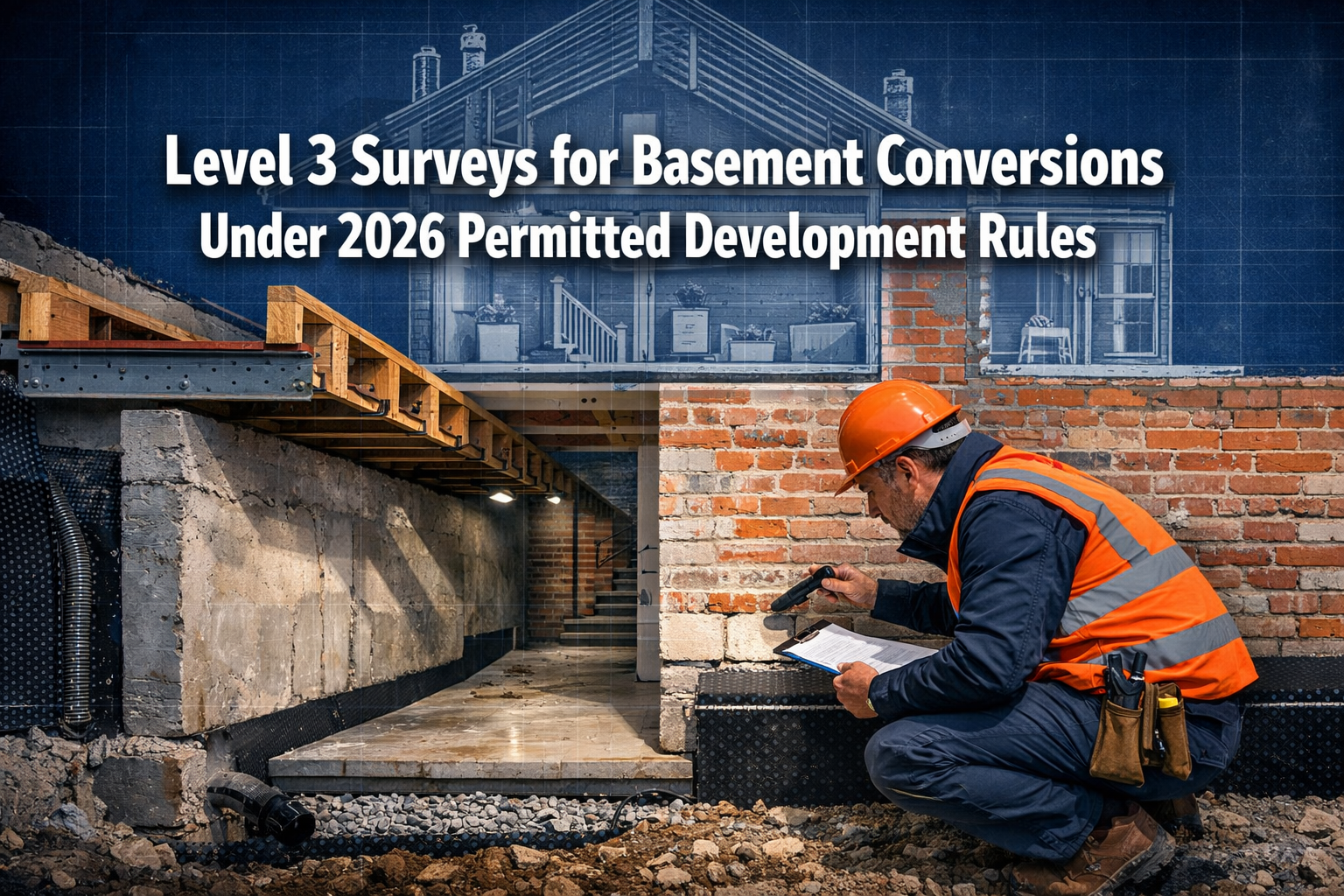
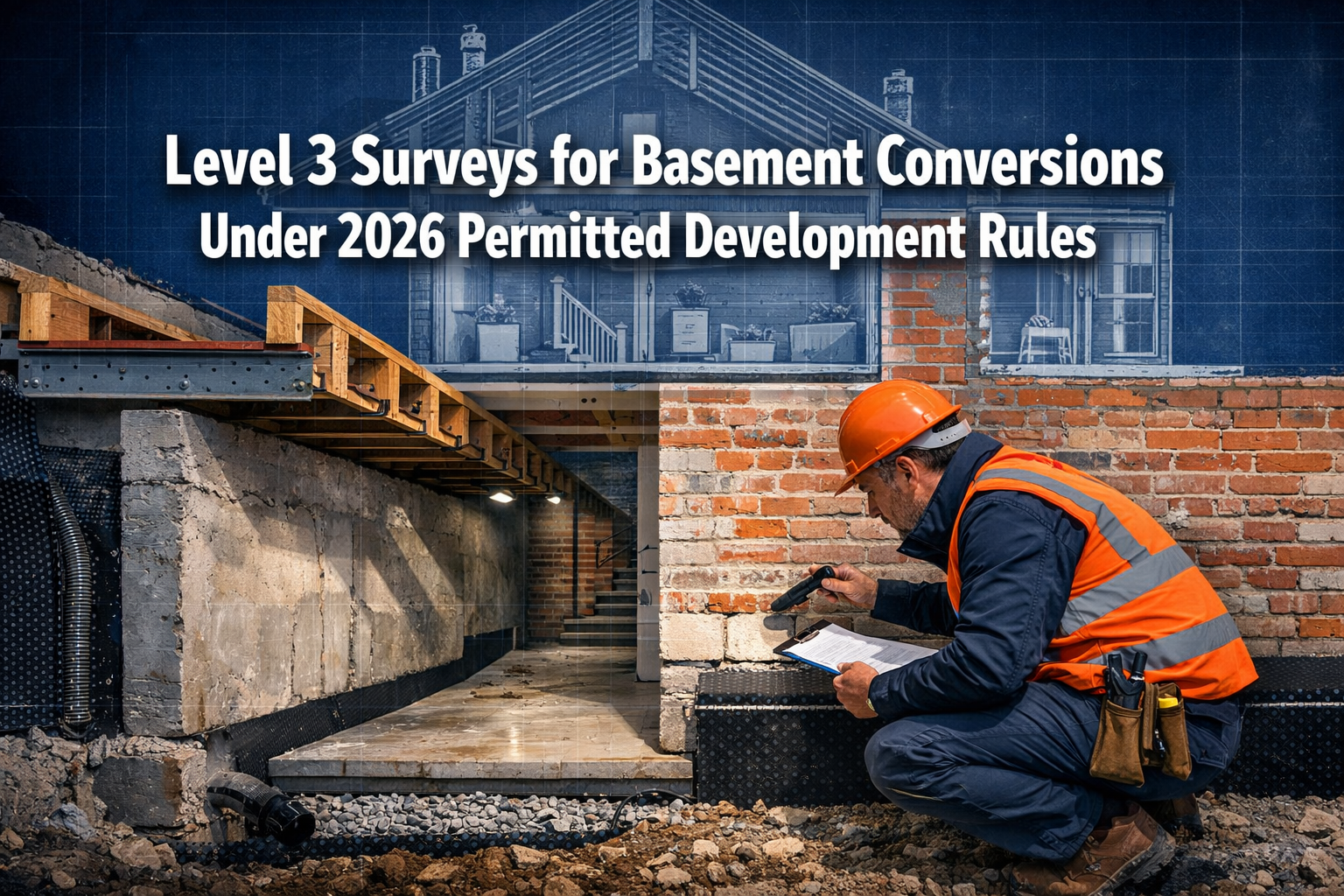
Converting a basement into usable living space has become increasingly popular among UK homeowners in 2026, particularly as permitted development rights continue to expand opportunities for residential improvements. However, before embarking on such a significant structural project, understanding the critical role of Level 3 Surveys for Basement Conversions Under 2026 Permitted Development Rules is essential for protecting your investment and ensuring regulatory compliance.
A Level 3 Building Survey represents the most comprehensive property inspection available, providing detailed insights into structural integrity, existing defects, and potential challenges that could impact your basement conversion project. With structural work costs potentially reaching £3,150 per square metre and party wall agreements adding thousands more to project budgets, commissioning the right survey at the outset can save considerable expense and prevent costly surprises during construction.
Key Takeaways
- Level 3 surveys provide comprehensive structural assessments specifically valuable for properties undergoing basement conversions, identifying critical issues like water ingress, foundation stability, and structural defects before work begins
- 2026 permitted development rules have expanded basement conversion opportunities, but most projects still require building regulations approval and party wall agreements costing £2,000-£15,000
- RICS-approved Level 3 reports deliver detailed documentation of existing damp proofing, structural integrity, and basement-specific concerns essential for planning applications and contractor briefings
- Structural work requiring underpinning or floor lowering demands specialist surveyor expertise to assess feasibility and identify potential complications that could significantly impact project costs
- Timeline planning benefits from early survey commissioning, with the planning and design phase typically requiring 4-6 months before construction can commence
Understanding Level 3 Surveys for Basement Conversions Under 2026 Permitted Development Rules
What Is a Level 3 Building Survey?
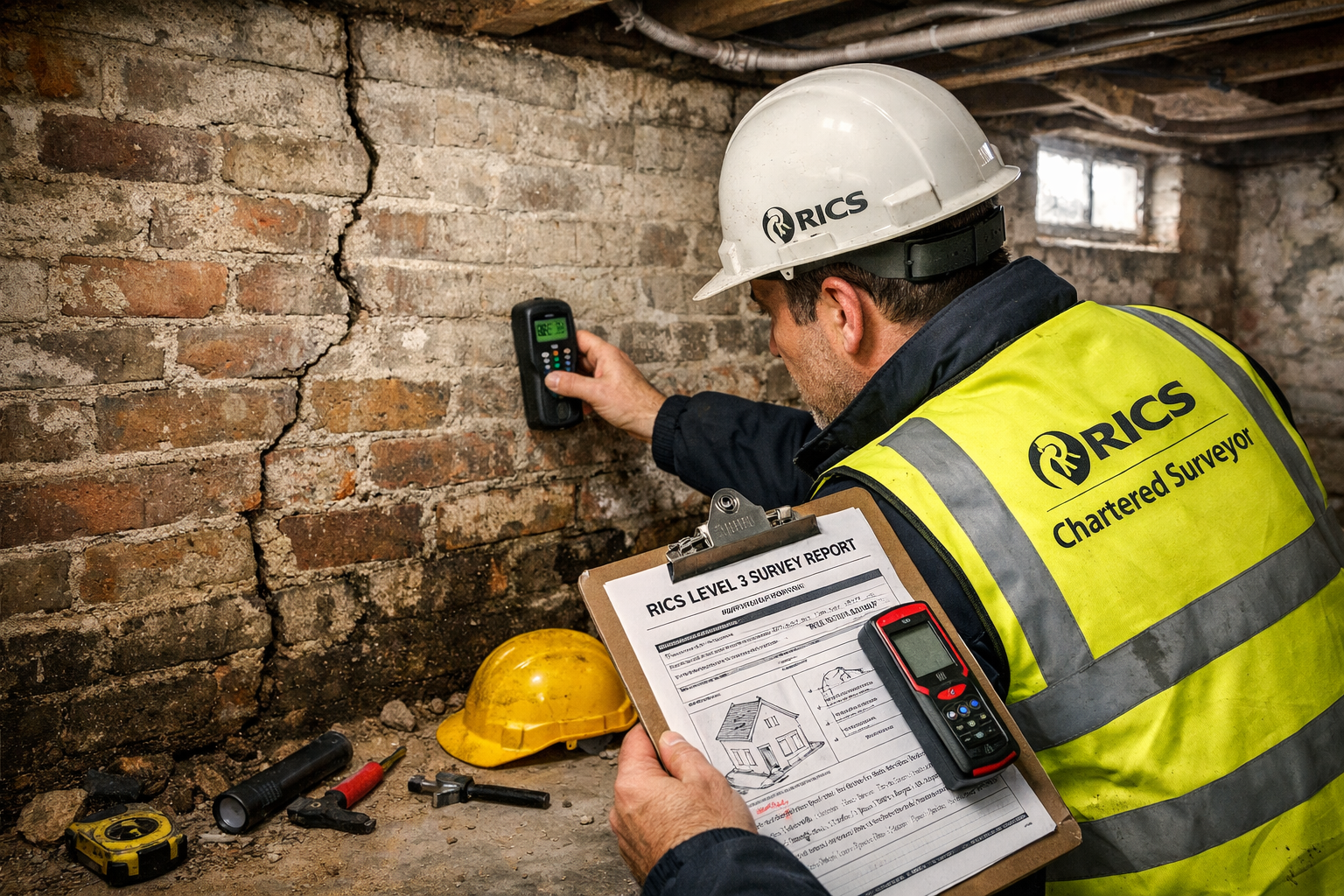
A Level 3 Building Survey (formerly known as a Full Structural Survey) represents the most detailed and comprehensive property inspection available in the UK property market. Conducted by Royal Institute of Chartered Surveyors (RICS) approved professionals, this thorough examination provides an in-depth analysis of a property's structural condition, building defects, and maintenance requirements [1].
Unlike basic homebuyer reports, Level 3 surveys examine every accessible part of the property, including:
- Foundation and substructure condition 🏗️
- Wall construction and structural integrity
- Roof structure and coverings
- Floors, ceilings, and internal structures
- Damp proofing effectiveness and moisture ingress
- Basement and cellar areas (particularly relevant for conversion projects)
- Drainage systems and external works
The survey is typically ordered after a seller accepts an offer but before exchange of contracts, providing buyers with comprehensive information to make informed decisions about proceeding with the purchase and planning renovation work [1].
Why Level 3 Surveys Are Essential for Basement Conversions
Basement conversions represent one of the most complex and structurally demanding home improvement projects. The comprehensive nature of Level 3 Surveys for Basement Conversions Under 2026 Permitted Development Rules makes them particularly valuable for several critical reasons:
Structural Conversion Assessment: Level 3 surveys are specifically recommended when buyers intend to engage in structural conversion work or complete refurbishment projects, including basement conversions [1]. The detailed structural analysis identifies existing weaknesses that could complicate conversion work or require additional reinforcement.
Damp and Water Ingress Evaluation: Basement areas are inherently vulnerable to moisture problems. Level 3 surveys specifically assess existing damp proofing systems and evidence of rising damp, including potential causes and effects [1]. This information is crucial for planning waterproofing strategies and budgeting for tanking systems.
Foundation and Underpinning Requirements: When basement conversions involve lowering floor levels—a common requirement to achieve adequate ceiling heights—the survey identifies foundation depth and condition, informing decisions about underpinning requirements and associated costs that can reach £2,400-£3,150 per square metre [2].
Party Wall Interface Analysis: For terraced and semi-detached properties, Level 3 surveys examine shared walls and foundations, providing essential information for party wall agreements that are typically required for cellar conversions.
RICS Reporting Standards and Templates
RICS (Royal Institution of Chartered Surveyors) provides standardized reporting templates that ensure consistency, professionalism, and comprehensiveness across Level 3 Building Surveys. These templates deliver buyer confidence through:
✅ Standardized condition ratings for building elements (1-3 scale indicating severity)
✅ Detailed defect descriptions with photographic evidence
✅ Repair urgency classifications helping prioritize remedial work
✅ Cost guidance for identified repairs and improvements
✅ Technical terminology explanations making reports accessible to non-specialists
For basement conversion projects, RICS-approved surveyors tailor their reports to highlight conversion-specific concerns, including structural load-bearing capacity, moisture management challenges, and regulatory compliance considerations. This structured approach provides contractors and structural engineers with clear baseline information for designing conversion schemes.
Understanding the difference between Level 2 and Level 3 surveys helps property buyers choose the appropriate inspection level for their specific circumstances and renovation ambitions.
2026 Permitted Development Rights and Basement Conversions
Current Permitted Development Rules for Basements
The landscape of permitted development rights in 2026 continues to evolve, offering homeowners increased flexibility for property improvements while maintaining important safeguards for structural integrity and neighbour interests. Understanding these regulations is crucial when planning Level 3 Surveys for Basement Conversions Under 2026 Permitted Development Rules.
Existing Basement Conversions: Converting an existing basement or cellar into habitable space generally does not require planning permission, provided the conversion doesn't involve significant structural alterations to the external appearance of the property [2]. This means transforming an underutilized storage cellar into a home office, bedroom, or entertainment space typically falls under permitted development.
New Basement Excavation: Creating a new basement through excavation beneath an existing property represents a more complex scenario. Many local authorities, particularly in London and other urban areas, have implemented Article 4 directions that remove permitted development rights for basement excavations due to concerns about:
- Structural stability of neighbouring properties
- Cumulative impact on local infrastructure
- Construction disruption in densely populated areas
- Flood risk and drainage capacity
Structural Changes Requiring Permission: Even when converting existing basements, certain modifications trigger planning permission requirements:
- Extending beyond the existing building footprint
- Adding external access points like basement entrances or light wells
- Significantly altering the external appearance
- Works affecting listed buildings or conservation areas
When Planning Permission Is Required
Despite permitted development allowances, several scenarios necessitate formal planning applications for basement conversions:
Householder Planning Applications: When required, basement planning applications typically cost £206 for standard householder applications, though complex projects may range from £165 to over £750 depending on scope and local authority requirements [3].
Design and Heritage Statements: Most basement planning applications require submission of a design, access, and heritage statement alongside a basement impact assessment. These documents identify potential impacts on neighbouring properties and propose mitigation solutions [3].
Flood Risk and Drainage Assessments: A flood risk assessment and SUDS (Sustainable Drainage System) report are increasingly required to determine project viability and demonstrate appropriate management of surface water drainage [3]. These assessments become part of the planning documentation that informs the scope of necessary structural surveys.
Building Regulations Compliance
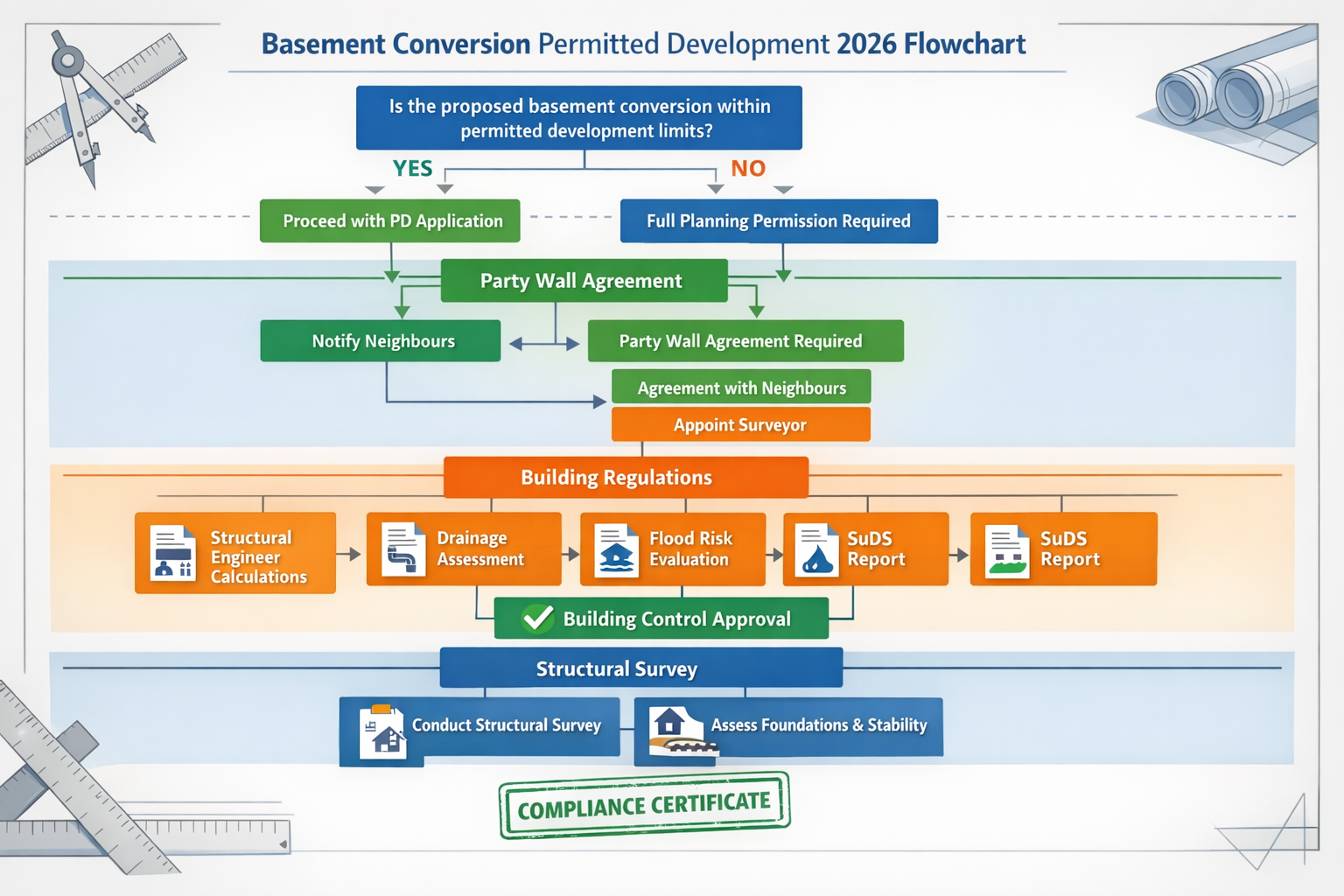
Regardless of whether planning permission is required, all basement conversions must comply with building regulations to ensure safety and habitability. Building regulations for basement conversions address multiple critical areas:
| Regulation Area | Key Requirements |
|---|---|
| Fire Safety 🔥 | Adequate escape routes, fire-resistant materials, smoke detection systems |
| Ventilation 💨 | Mechanical ventilation systems, adequate air changes per hour, condensation control |
| Ceiling Height 📏 | Minimum 2.3m for habitable rooms (often requiring floor lowering) |
| Damp Proofing 💧 | Comprehensive tanking systems, damp proof membranes, drainage solutions |
| Electrical Systems ⚡ | Compliant wiring, appropriate circuit protection, emergency lighting for escape routes |
| Water Supply 🚰 | Adequate plumbing for intended use, backflow prevention, drainage capacity |
| Structural Integrity 🏛️ | Load-bearing capacity, foundation stability, appropriate underpinning where required |
Building control approval typically involves multiple inspection stages throughout the construction process, with final sign-off required before the space can be legally occupied [2].
The complexity of these regulatory requirements underscores why comprehensive structural surveys form an essential foundation for successful basement conversion projects, identifying compliance challenges before significant investment occurs.
Critical Elements Assessed in Level 3 Surveys for Basement Projects
Structural Integrity and Load-Bearing Capacity
The structural assessment component of Level 3 Surveys for Basement Conversions Under 2026 Permitted Development Rules focuses on evaluating whether existing structures can safely accommodate the proposed conversion work and intended use.
Foundation Depth and Condition: Surveyors examine accessible foundation areas to determine depth, construction type, and condition. This information is critical when floor lowering is planned, as underpinning may be necessary to maintain structural stability. The assessment identifies:
- Foundation construction materials (brick, concrete, stone)
- Evidence of previous movement or settlement
- Proximity to neighbouring property foundations
- Suitability for underpinning if floor lowering is required
Wall Construction and Structural Support: The survey evaluates load-bearing walls, identifying which walls carry structural loads and which are non-load-bearing partitions. This distinction is essential for planning internal layouts and determining where structural openings can be created. Key considerations include:
- Wall thickness and construction methods
- Evidence of structural cracks or movement
- Adequacy of existing lintels and supports
- Requirements for additional structural supports (steel beams, columns)
Floor and Ceiling Joists: Upper floor structures that form basement ceilings receive detailed examination to assess their condition and load-bearing capacity, particularly important if the basement will support heavy equipment or high occupancy loads.
Damp, Water Ingress, and Waterproofing Assessment
Moisture management represents perhaps the most critical challenge in basement conversions. Level 3 surveys provide comprehensive assessment of existing and potential water ingress issues:
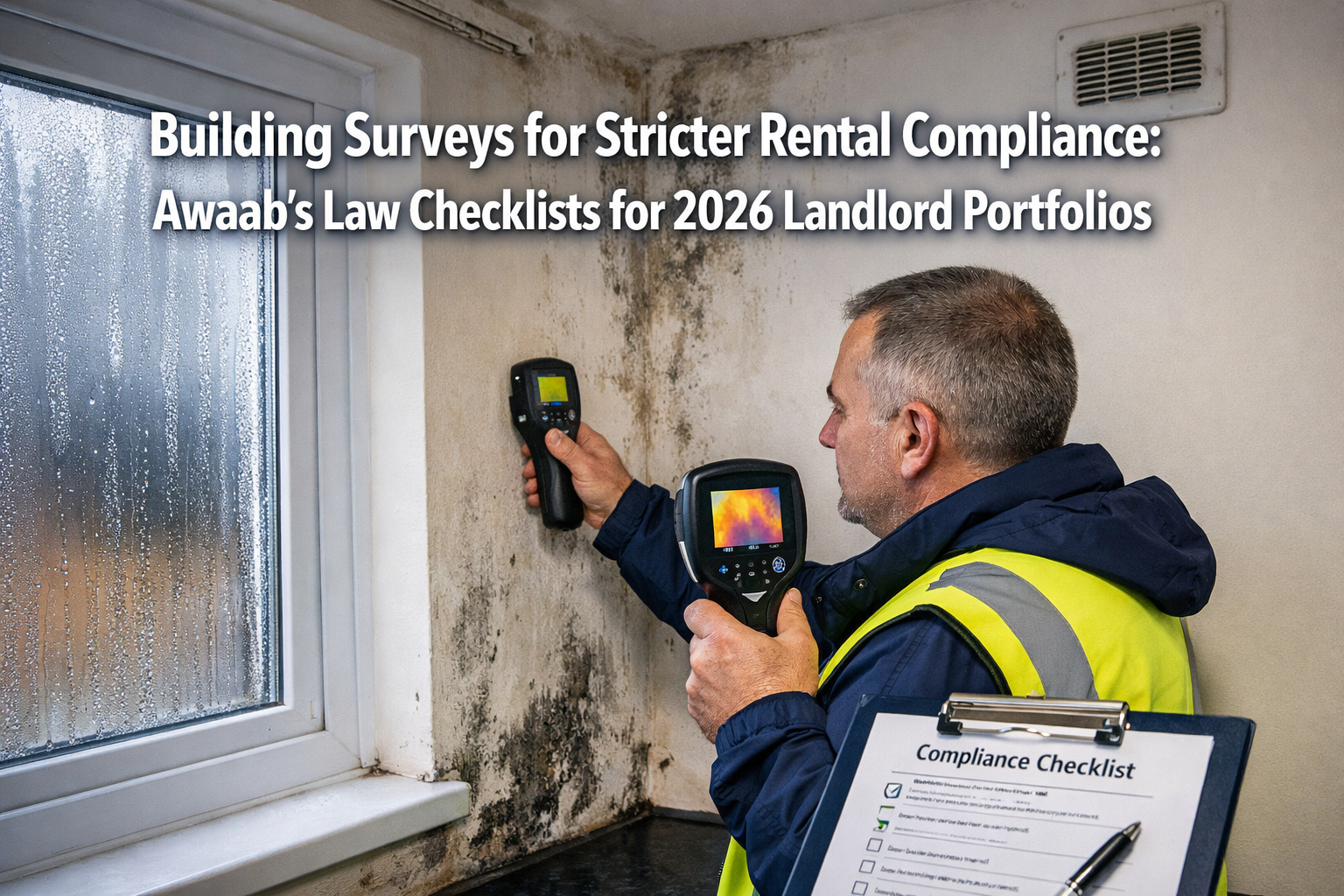
Rising Damp Evaluation: Surveyors use moisture meters and visual inspection to detect rising damp in basement walls and floors, identifying the extent of moisture penetration and effectiveness of existing damp proof courses [1]. The assessment determines whether existing damp proofing can be repaired or whether complete tanking systems are necessary.
Penetrating Damp and External Water Sources: The survey identifies sources of water penetration, including:
- Defective external drainage systems
- Groundwater pressure against walls
- Surface water runoff patterns
- Defective external render or pointing
- Inadequate ground levels adjacent to walls
Detailed damp surveys may be recommended as follow-up investigations when significant moisture issues are identified.
Existing Waterproofing Systems: Where previous waterproofing has been installed, surveyors assess its type, condition, and effectiveness, determining whether it meets current standards or requires upgrading for conversion to habitable space.
Drainage and Flood Risk Considerations
Basement conversions require careful attention to drainage systems to prevent flooding and manage wastewater:
Existing Drainage Infrastructure: Level 3 surveys examine accessible drainage systems, identifying:
- Drainage pipe locations, materials, and condition
- Adequacy of existing drainage for increased usage
- Evidence of blockages or defects
- Suitability for connecting new bathroom or kitchen facilities
Specialized drainage surveys using CCTV inspection may be recommended to assess underground drainage condition comprehensively.
Flood Risk Assessment: Surveyors consider the property's flood risk profile, examining:
- Local flood history and Environment Agency flood maps
- Ground levels and surface water drainage patterns
- Basement floor level relative to external ground
- Requirements for sump pumps or flood resilience measures
Wastewater Management: When basement conversions include bathrooms or kitchens below sewer level, the survey identifies requirements for pump systems or macerators to manage wastewater effectively.
Ventilation and Natural Light Requirements
Habitable basement spaces must meet building regulations for ventilation and natural light:
Ventilation Assessment: Surveyors evaluate existing ventilation provision and identify requirements for mechanical ventilation systems to achieve adequate air changes, prevent condensation, and maintain healthy indoor air quality.
Natural Light Provision: The survey considers opportunities for introducing natural light through:
- Existing windows and light wells
- Potential for new window openings
- Requirements for planning permission for external alterations
- Alternative solutions like roof lights or light tubes
Ceiling Height Considerations: With minimum ceiling heights of 2.3m required for habitable rooms, surveyors measure existing ceiling heights and assess feasibility of floor lowering if necessary, including the structural implications and cost considerations that can reach £2,400-£3,150 per square metre [2].
Party Wall Considerations and Neighbour Impact
Party Wall Agreement Requirements
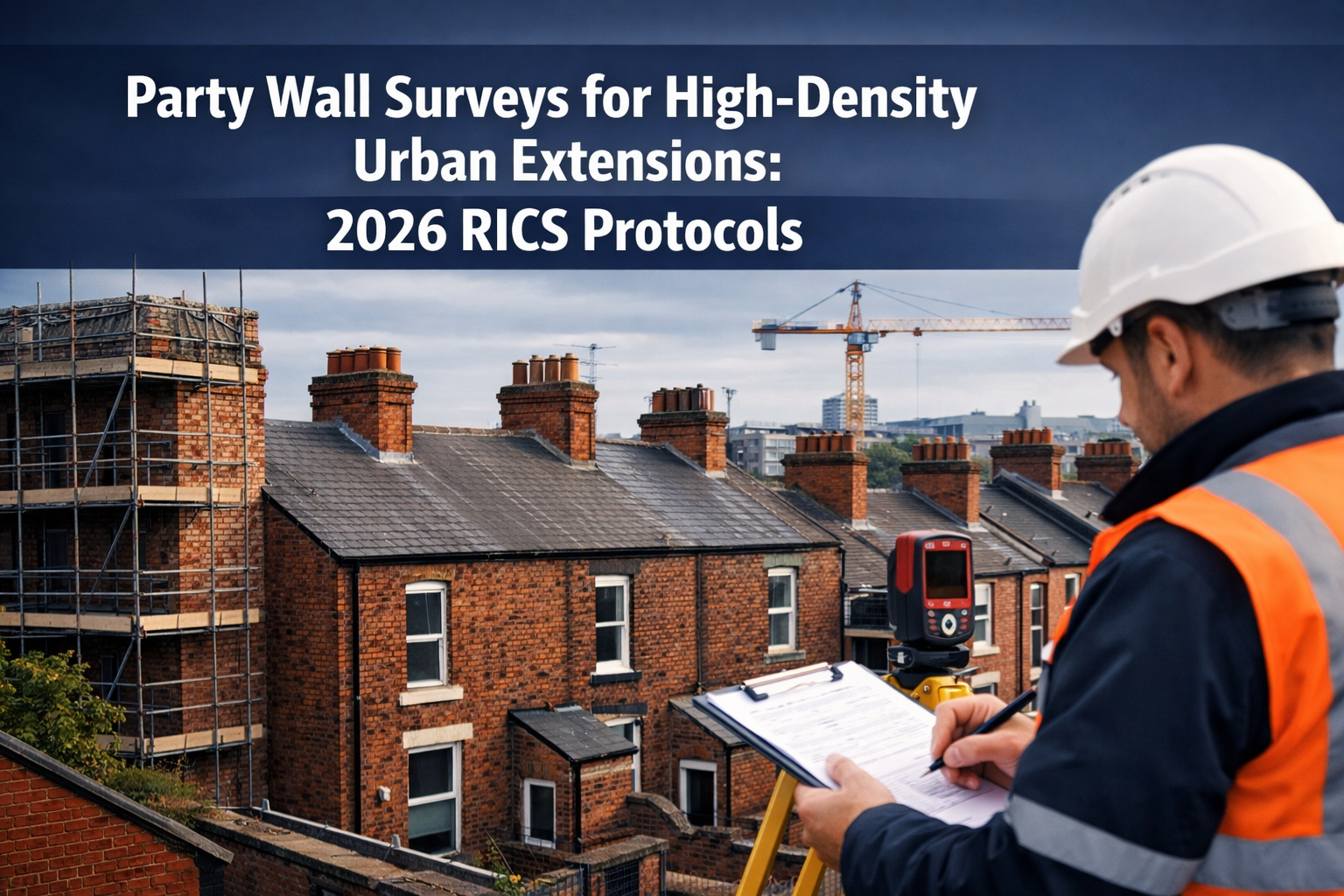
For terraced and semi-detached properties, basement conversions almost invariably trigger requirements under the Party Wall Act 1996. Understanding these obligations is integral to planning Level 3 Surveys for Basement Conversions Under 2026 Permitted Development Rules.
When Party Wall Agreements Are Required: Cellar conversions typically require Party Wall Agreements when work involves:
- Excavating within three metres of neighbouring foundations
- Underpinning existing party walls or foundations
- Lowering basement floors adjacent to party walls
- Creating new openings in party walls
- Structural work affecting shared foundations
The three-meter rule specifies that excavation within three metres of a neighbour's structure, and below their foundation level, requires party wall notification and potentially an award.
Party Wall Surveyor Costs: Arranging party wall agreements involves appointing party wall surveyors to assess the proposed work and prepare party wall awards. Costs typically range between £2,000 and £15,000 depending on the number of affected neighbours and complexity of the work [3]. These costs should be factored into overall project budgets from the outset.
Party Wall Award Process: The process involves:
- Serving notice on affected neighbours (typically 2 months before work commences)
- Neighbour response (consent, dissent, or no response)
- Surveyor appointment (agreed surveyor or separate surveyors for each party)
- Condition survey of neighbouring properties before work begins
- Party wall award detailing work scope, timing, and dispute resolution procedures
- Post-completion inspection to verify no damage occurred
Level 3 surveys provide essential baseline documentation of your property's condition, complementing the party wall surveyor's assessment of neighbouring properties.
Structural Impact on Adjacent Properties
The comprehensive nature of Level 3 surveys helps identify potential impacts on neighbouring properties:
Foundation Proximity Assessment: Surveyors evaluate the relationship between your foundations and those of adjacent properties, identifying risks associated with:
- Underpinning operations near party walls
- Excavation disturbing neighbouring foundation support
- Differential settlement risks
- Requirements for temporary propping or support during construction
Shared Wall Condition: The survey examines party walls for existing defects, structural adequacy, and potential vulnerabilities to construction vibration or movement. This information informs construction methodology and risk mitigation strategies.
Access Requirements: Many basement conversions require temporary access through neighbouring properties for excavation spoil removal or equipment installation. The survey may identify practical access constraints that affect project planning and neighbour negotiations.
Understanding what constitutes a party wall dispute helps homeowners navigate these complex neighbour relationships proactively, avoiding conflicts that can delay or derail conversion projects.
Project Planning Timeline and Cost Implications
Planning and Design Phase (4-6 Months)
The initial phase of basement conversion projects requires careful planning and professional input, with Level 3 surveys forming a critical early component:
Survey Commission and Completion: Level 3 surveys typically take 3-5 hours on-site for average properties, with comprehensive reports delivered within 5-10 working days. For basement conversion projects, expect surveyors to spend additional time examining substructure areas thoroughly.
Design Development: Following survey completion, architects and structural engineers use the detailed findings to develop conversion designs that address identified constraints and opportunities. This phase typically requires 2-3 months for comprehensive design development [2].
Regulatory Applications: Submitting and obtaining approvals for planning permission (where required), building regulations, and party wall agreements occupies the remainder of the planning phase, with total duration typically spanning 4-6 months [2].
Understanding surveyor pricing and rates helps budget appropriately for this essential preliminary work.
Construction Phase Timeline
Following design approval and regulatory clearances, construction proceeds through distinct phases:
Major Construction Work (3-5 Months): The structural phase includes:
- Excavation and spoil removal (if floor lowering required)
- Underpinning operations (where necessary)
- Structural alterations and support installation
- Waterproofing and tanking systems
- Drainage installation and modifications
This phase represents the most disruptive period, with significant noise, vibration, and material movement [2].
Fit-Out Phase (2-4 Months): Following structural completion and building control inspections, the fit-out stage includes:
- Floor finishes and screeds
- Plastering and decoration
- Electrical and plumbing installations
- Heating and ventilation systems
- Final fixtures and fittings
Total project duration from design commencement to completion typically ranges from 9-15 months depending on project complexity and scope [2].
Cost Considerations and Budget Planning
Comprehensive budget planning requires understanding the full scope of costs associated with basement conversions:
Survey and Professional Fees:
- Level 3 Building Survey: £800-£1,500 (depending on property size)
- Structural engineer fees: £1,500-£3,000
- Architect fees: 8-15% of construction costs
- Party wall surveyor fees: £2,000-£15,000 [3]
- Planning application fees: £206-£750 [3]
Construction Costs:
- Basic conversion (no floor lowering): £1,500-£2,000 per m²
- Conversion with underpinning: £2,400-£3,150 per m² [2]
- Waterproofing and tanking: £150-£300 per m²
- Drainage modifications: £2,000-£5,000
- Ventilation systems: £3,000-£8,000
Contingency Allowance: Industry best practice recommends maintaining a contingency budget of 15-20% of total construction costs to address unforeseen issues identified during construction. Level 3 surveys help minimize surprises, but contingencies remain prudent for complex structural projects.
Detailed structural survey pricing information provides additional guidance for budgeting professional fees appropriately.
Choosing the Right Survey Provider
RICS Accreditation and Specialist Experience
Selecting an appropriately qualified surveyor is crucial for obtaining reliable information about basement conversion feasibility:
RICS Membership Requirements: Ensure your surveyor holds Royal Institution of Chartered Surveyors (RICS) accreditation, specifically as a Chartered Building Surveyor. RICS membership demonstrates:
✅ Professional qualifications and continuing education
✅ Adherence to professional standards and ethics
✅ Professional indemnity insurance coverage
✅ Access to dispute resolution procedures if issues arise
Basement Conversion Expertise: Beyond general RICS accreditation, seek surveyors with specific experience in:
- Subterranean structures and foundation assessment
- Damp and waterproofing evaluation
- Structural alterations and underpinning
- Building regulations compliance for basement conversions
- Party wall matters and neighbour impact assessment
Local chartered surveyors with regional knowledge understand local geological conditions, typical construction methods, and common issues affecting properties in your area.
Questions to Ask Potential Surveyors
Before commissioning a Level 3 survey for your basement conversion project, ask prospective surveyors:
- How many basement conversion surveys have you completed? (Look for substantial relevant experience)
- Will you personally conduct the inspection? (Avoid firms that subcontract to less experienced surveyors)
- What specific basement elements will you examine? (Should include foundations, damp proofing, drainage, structural integrity)
- Can you provide sample reports? (Review report quality, detail level, and clarity)
- What is your report turnaround time? (Typically 5-10 working days)
- Do you offer follow-up consultations? (Valuable for discussing findings with architects and engineers)
- What is your total fee? (Ensure no hidden costs for additional investigations)
Coordinating with Structural Engineers and Architects
Level 3 surveys form one component of a comprehensive professional team for basement conversions:
Survey Sharing and Collaboration: Share your Level 3 survey report with your structural engineer and architect early in the design process. The detailed baseline information informs their design decisions and helps avoid proposing solutions incompatible with existing conditions.
Follow-Up Investigations: Level 3 surveys may identify requirements for specialist follow-up investigations, including:
- Drainage surveys using CCTV inspection
- Subsidence monitoring if movement is suspected
- Specialist damp investigations with laboratory analysis
- Soil contamination testing
Integrated Professional Services: Many surveying practices offer integrated services including structural engineering, project management, and party wall services, providing seamless coordination throughout your project.
Common Issues Identified in Basement Conversion Surveys
Structural Defects and Foundation Problems
Level 3 surveys frequently identify structural concerns that significantly impact basement conversion feasibility and costs:
Inadequate Foundation Depth: Victorian and Edwardian properties often have shallow foundations (600mm-900mm depth), requiring substantial underpinning if floor lowering is planned to achieve modern ceiling height requirements.
Historical Movement and Settlement: Existing cracks, distortion, or evidence of past settlement indicates structural instability that must be addressed before conversion work proceeds. The survey distinguishes between historic, stabilized movement and ongoing active movement requiring immediate attention.
Structural Alterations: Previous modifications, including removed walls or altered supports, may have compromised structural integrity. Surveys identify these alterations and assess their impact on conversion proposals.
Load-Bearing Capacity Limitations: Existing floor joists and structural elements may lack capacity for increased loads from conversion use, requiring reinforcement or replacement.
Damp and Moisture Issues
Moisture problems represent the most common and potentially costly challenges in basement conversions:
Rising Damp: Capillary action drawing groundwater up through walls and floors affects many older properties lacking effective damp proof courses. Comprehensive tanking systems costing £150-£300 per square metre may be necessary.
Penetrating Damp: External water penetration through walls, often caused by defective drainage, high external ground levels, or failed pointing, requires remediation before conversion proceeds.
Condensation Risk: Inadequate ventilation in below-ground spaces creates condensation problems, particularly when converting to habitable use with increased moisture generation from occupants.
Groundwater Pressure: Properties in areas with high water tables face hydrostatic pressure against basement walls, requiring robust waterproofing systems and potentially permanent drainage solutions.
Drainage and Service Complications
Existing drainage and service infrastructure often presents challenges for basement conversions:
Inadequate Drainage: Older drainage systems may lack capacity for additional bathroom or kitchen facilities, requiring upgrades or complete replacement.
Below-Sewer-Level Complications: When basement floor levels sit below external sewer connections, wastewater requires pumping systems, adding £3,000-£8,000 to project costs.
Service Routing: Existing gas, water, and electrical services may route through areas planned for conversion, requiring expensive rerouting.
Drainage Defects: Cracked or collapsed drains identified during surveys require repair before conversion work proceeds, preventing future water ingress and structural damage.
Maximizing Value from Your Level 3 Survey
Preparing for the Survey Visit
Maximize the value of your Level 3 survey by ensuring optimal access and information availability:
Property Access: Ensure the surveyor can access all areas, including:
- Removing stored items from basement areas
- Providing keys to all locked spaces
- Arranging access to lofts and roof spaces
- Clearing vegetation obscuring external walls
- Ensuring utilities are connected for testing
Documentation Preparation: Gather relevant property documentation:
- Previous survey reports or structural assessments
- Building regulation approvals for past alterations
- Guarantees for damp proofing or structural work
- Planning permission documentation
- Property deeds showing original construction details
Conversion Plans: Share preliminary conversion ideas with your surveyor, enabling them to focus attention on areas most relevant to your proposals and provide targeted advice about feasibility.
Using Survey Findings Effectively
Transform your Level 3 survey from a document into an actionable project tool:
Negotiation Leverage: Significant defects identified in pre-purchase surveys provide legitimate grounds for price negotiation, potentially recovering survey costs many times over.
Design Briefing: Provide your survey report to architects and structural engineers at the earliest design stage, ensuring proposals address identified constraints and leverage opportunities.
Contractor Briefing: Share relevant survey sections with contractors during tendering, ensuring accurate pricing based on known conditions and reducing claims for unforeseen conditions during construction.
Building Control Discussions: Survey findings help inform preliminary discussions with building control officers, identifying likely approval requirements and potential obstacles early in the planning process.
Insurance Documentation: Comprehensive pre-conversion documentation of property condition proves invaluable for insurance purposes, particularly for party wall matters where disputes about damage causation may arise.
Follow-Up Investigations and Specialist Reports
Level 3 surveys often recommend specialist follow-up investigations for detailed assessment of specific concerns:
When Additional Surveys Are Needed:
- Drainage surveys: When existing drainage condition is uncertain or defects suspected
- Structural monitoring: When active movement requires assessment over time
- Damp specialists: For complex moisture issues requiring laboratory analysis
- Soil investigation: When ground conditions may affect underpinning or excavation
- Asbestos surveys: For properties built before 2000 where asbestos materials may be present
Budget for these potential additional investigations (typically £300-£1,500 each) when planning overall project costs.
Integrating Multiple Reports: Coordinate findings from various specialist reports with your structural engineer and architect, ensuring comprehensive understanding of all constraints and requirements before finalizing designs and commencing work.
Conclusion
Level 3 Surveys for Basement Conversions Under 2026 Permitted Development Rules represent an indispensable investment for homeowners contemplating this complex and potentially costly home improvement project. The comprehensive structural assessment, detailed damp and waterproofing evaluation, and thorough examination of drainage and foundation conditions provided by RICS-accredited surveyors deliver the essential baseline information required for successful project planning and execution.
With basement conversion costs potentially reaching £3,150 per square metre for projects requiring underpinning, and party wall agreements adding £2,000-£15,000 to project budgets, the relatively modest cost of a Level 3 survey (£800-£1,500) provides exceptional value through risk identification, cost certainty, and design optimization. The survey findings inform every subsequent project decision, from architectural design and structural engineering to contractor selection and building regulations compliance.
The evolving landscape of permitted development rights in 2026 offers increased opportunities for residential basement conversions, but the regulatory framework remains complex, with building regulations, party wall requirements, and local planning constraints requiring careful navigation. A comprehensive Level 3 survey provides the foundation for this regulatory compliance, identifying constraints and opportunities early in the project lifecycle.
Next Steps for Homeowners
If you're considering a basement conversion project, take these actionable steps:
- Commission a Level 3 survey from a RICS-accredited surveyor with specific basement conversion experience before finalizing property purchase or commencing design work
- Share survey findings with your architect and structural engineer at the earliest design stage, ensuring proposals address identified constraints
- Budget comprehensively for all project costs including surveys, professional fees, party wall agreements, and construction work, maintaining a 15-20% contingency
- Engage party wall surveyors early if your project affects neighbouring properties, allowing adequate time for the notice and award process
- Coordinate specialist follow-up investigations recommended in your survey report, obtaining detailed information about drainage, damp, or structural concerns
- Consult building control informally before finalizing designs, ensuring your proposals align with regulatory requirements
For expert guidance on choosing the right property survey for your specific circumstances, or to commission a comprehensive Level 3 survey for your basement conversion project, consult with experienced RICS-accredited surveyors who understand the unique challenges and opportunities of subterranean conversions under current permitted development rules.
References
[1] Building Survey Level 3 – https://www.propertysolvers.co.uk/services/building-survey-level-3/
[2] Basement Conversion Cost – https://www.houseup.co.uk/news/basement-conversion-cost
[3] Basement Costs In London – https://architectureforlondon.com/news/basement-costs-in-london/