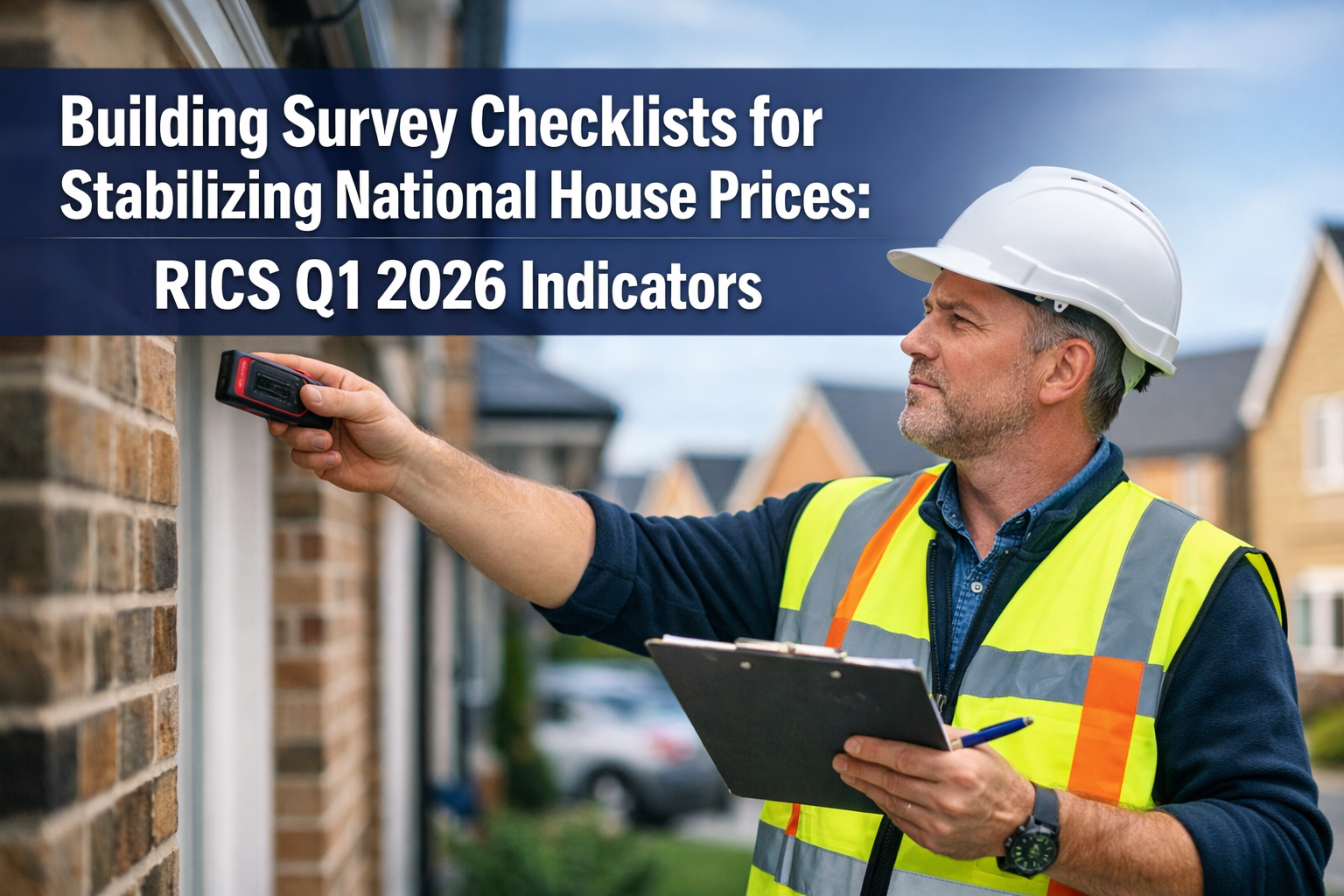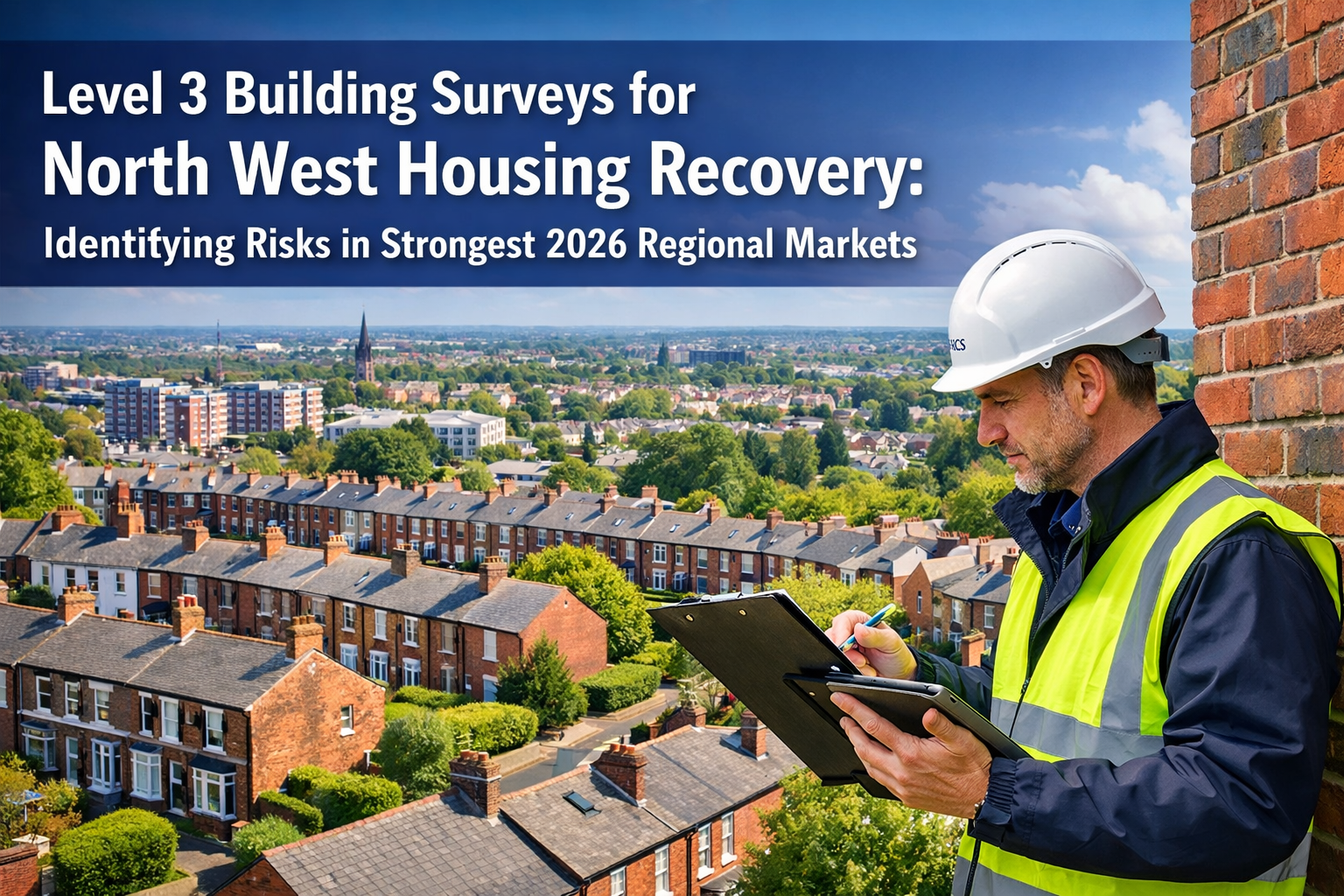

The North West housing market is experiencing a remarkable resurgence in 2026, with buyer enquiries climbing and property prices showing sustained upward momentum. Yet beneath this optimistic surface lies a critical challenge: as more buyers enter the market—particularly targeting older properties and period conversions—the need for thorough defect identification has never been more urgent. Level 3 Building Surveys for North West Housing Recovery: Identifying Risks in Strongest 2026 Regional Markets represent the gold standard for protecting investments in this dynamic landscape, where Victorian terraces, Edwardian semis, and characterful conversions dominate the housing stock.
As the region's property market strengthens, savvy buyers and investors are recognizing that comprehensive building surveys aren't just prudent—they're essential. The Royal Institution of Chartered Surveyors (RICS) reports increasing demand for detailed property assessments as purchasers navigate a competitive market where overlooking structural defects could prove financially devastating.
Key Takeaways
- Level 3 Building Surveys provide the most comprehensive property assessment available, specifically designed for older, altered, or unusual properties common throughout the North West region
- North West housing recovery in 2026 has created heightened demand for thorough defect identification as buyer competition intensifies across Manchester, Liverpool, Lancashire, and Cheshire markets
- Tailored survey checklists addressing region-specific issues—including Victorian construction methods, industrial-era building techniques, and climate-related defects—protect buyers in strengthening markets
- Early risk identification through Level 3 surveys enables informed negotiation and prevents costly post-purchase surprises in properties averaging 80-120 years old
- Professional RICS surveyors with North West expertise provide essential market intelligence alongside technical defect analysis during the 2026 recovery period
Understanding Level 3 Building Surveys in the Context of North West Housing Recovery
What Makes Level 3 Building Surveys Essential for 2026 Markets
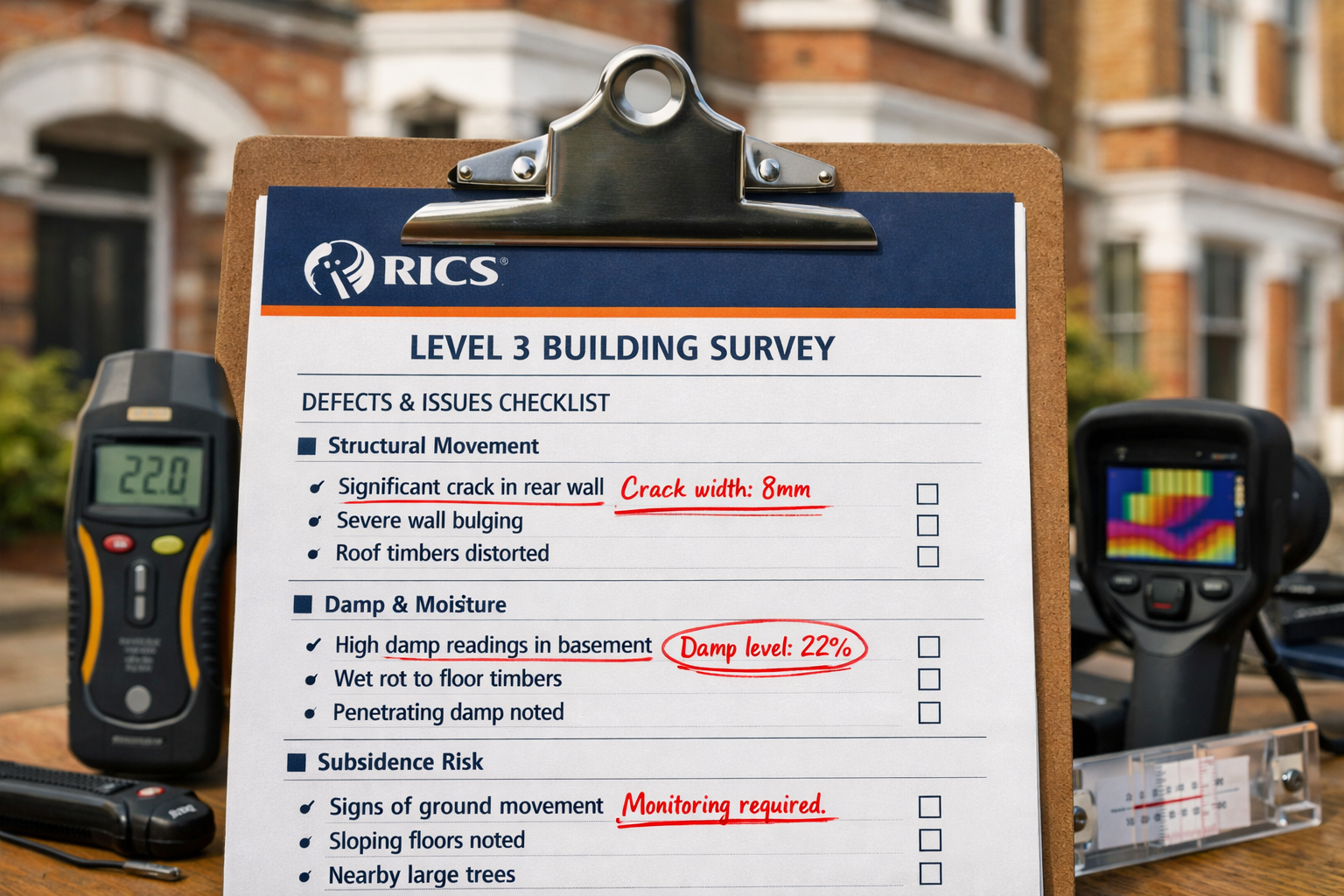
A Level 3 Building Survey—formerly known as a Full Structural Survey—represents the most detailed and comprehensive property inspection available to buyers and property owners[1][5]. Unlike basic valuation surveys or Level 2 HomeBuyer Reports, Level 3 surveys involve exhaustive examination of a property's construction, condition, and defects[2].
Key features of Level 3 Building Surveys include:
- 🏚️ Comprehensive defect identification covering all accessible areas of the property
- 📋 Detailed written reports typically spanning 30-50 pages with photographic evidence
- 🔍 In-depth analysis of construction methods, materials, and structural integrity
- ⚠️ Risk assessment categorizing defects by urgency and estimated repair costs
- 🛠️ Remediation recommendations with prioritized action plans
The North West housing market's 2026 recovery has created unique conditions where Level 3 surveys deliver exceptional value. According to industry specialists, the region's housing stock—characterized by Victorian terraces, Edwardian properties, and industrial-era conversions—requires specialized assessment approaches that standard surveys simply cannot provide[7].
For properties in the North West, a RICS home survey conducted to Level 3 standards addresses region-specific concerns including:
- Solid wall construction common in pre-1920s properties lacking cavity wall insulation
- Historic damp issues resulting from North West climate conditions and aging damp-proof courses
- Subsidence risks in areas with clay soil composition and mining heritage
- Roof condition in properties with traditional slate or stone roofing materials
- Structural alterations from decades of modifications, extensions, and conversions
Properties That Benefit Most from Level 3 Surveys
The RICS specifically recommends Level 3 Building Surveys for properties that are older, unusual in construction, significantly altered, or in poor condition[5][6]. In the North West's 2026 market recovery, this encompasses a substantial proportion of available housing stock.
Property types requiring Level 3 surveys include:
| Property Type | Why Level 3 Survey Needed | North West Prevalence |
|---|---|---|
| Victorian Terraces | Solid wall construction, aging infrastructure, multiple alterations | Very High – dominant housing type |
| Edwardian Semis | Period features, potential structural movement, outdated services | High – widespread in suburbs |
| Listed Buildings | Conservation requirements, specialized materials, restricted alterations | Moderate – concentrated in historic areas |
| Converted Properties | Structural modifications, building regulation compliance, shared facilities | High – especially in urban centers |
| Properties Over 100 Years | Aging materials, historic defects, maintenance backlog | Very High – regional characteristic |
As buyer enquiries improve throughout 2026, competition for these characterful properties intensifies. A thorough specialist defect survey becomes not just advisable but essential for making informed purchasing decisions in fast-moving markets where buyers may feel pressured to skip thorough due diligence.
The 2026 North West Market Context
The North West housing recovery in 2026 follows several years of market uncertainty and adjustment. Current trends shaping the regional market include:
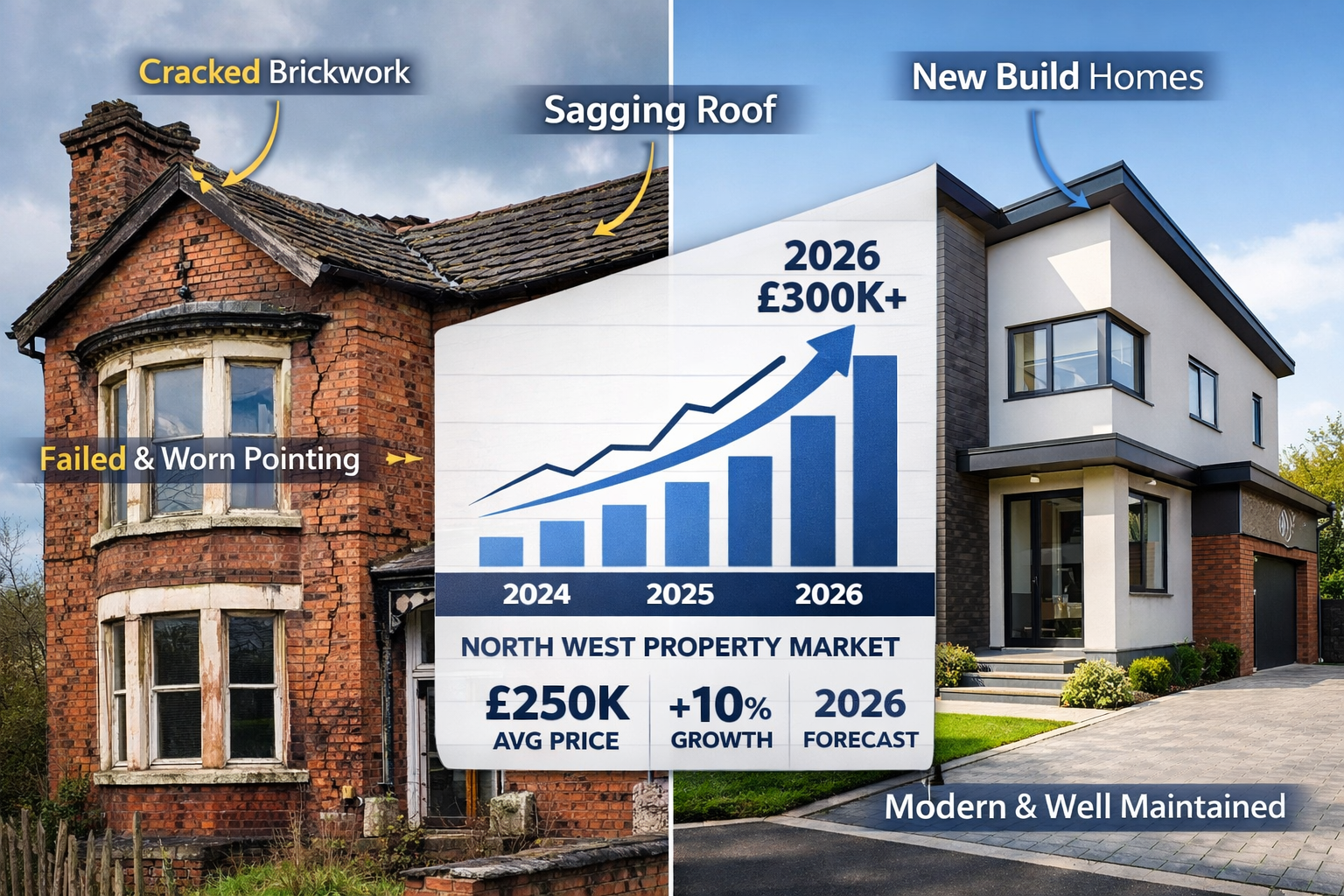
Upward price momentum across key urban centers including Manchester, Liverpool, Preston, and Chester, with annual growth rates exceeding national averages in certain submarkets. This appreciation makes defect identification crucial—overpaying for a property with hidden structural issues compounds financial risk.
Increased buyer competition as confidence returns to the market, creating time pressure during transaction processes. Level 3 surveys conducted early in the purchasing timeline provide competitive advantage and negotiating leverage[3].
Housing stock age profile that skews significantly older than national averages, with the majority of properties predating 1950. This demographic reality makes comprehensive building surveys standard practice rather than exceptional precaution.
Regional construction characteristics reflecting industrial heritage, local materials, and climate-adapted building techniques that require specialized surveyor knowledge. Chartered surveyors in North West London and throughout the region bring essential local expertise to property assessments.
Tailoring Survey Checklists to North West Regional Risk Factors
Region-Specific Defects and Construction Challenges
The North West's unique architectural heritage and environmental conditions create specific defect patterns that experienced surveyors prioritize during Level 3 inspections. Understanding these regional characteristics enables targeted risk identification that generic survey approaches might overlook.
Climate-Related Defects:
The North West experiences higher rainfall and humidity levels compared to many UK regions, creating persistent moisture-related challenges:
- Penetrating damp through solid wall construction lacking effective cavity protection
- Rising damp from failed or absent damp-proof courses in properties built before 1875
- Condensation issues in poorly ventilated period properties with modern heating systems
- Roof deterioration accelerated by weather exposure, particularly in exposed coastal and upland areas
Professional damp surveys form a critical component of Level 3 assessments in the region, utilizing moisture meters, thermal imaging, and visual inspection to identify water ingress points and assess remediation requirements.
Structural Movement and Subsidence:
The North West's geological composition and industrial heritage create elevated subsidence risks:
- Clay soil shrinkage during dry periods causing foundation movement
- Mining subsidence in former coalfield areas including parts of Lancashire, Greater Manchester, and Merseyside
- Tree root damage to shallow foundations common in Victorian properties
- Settlement patterns in properties built on reclaimed industrial land
For properties showing crack patterns or structural distortion, surveys for subsidence provide detailed analysis of movement causes, progression rates, and stabilization requirements.
Victorian and Edwardian Construction Issues:
Period properties throughout the North West share common defect patterns:
- Aging slate roofs requiring re-bedding, replacement, or complete renewal
- Deteriorating pointing in brick and stone facades exposed to weather
- Timber decay in floor joists, roof timbers, and window frames
- Outdated electrical systems with inadequate capacity for modern demands
- Lead plumbing requiring replacement for health and insurance compliance
Developing Comprehensive Defect Identification Protocols
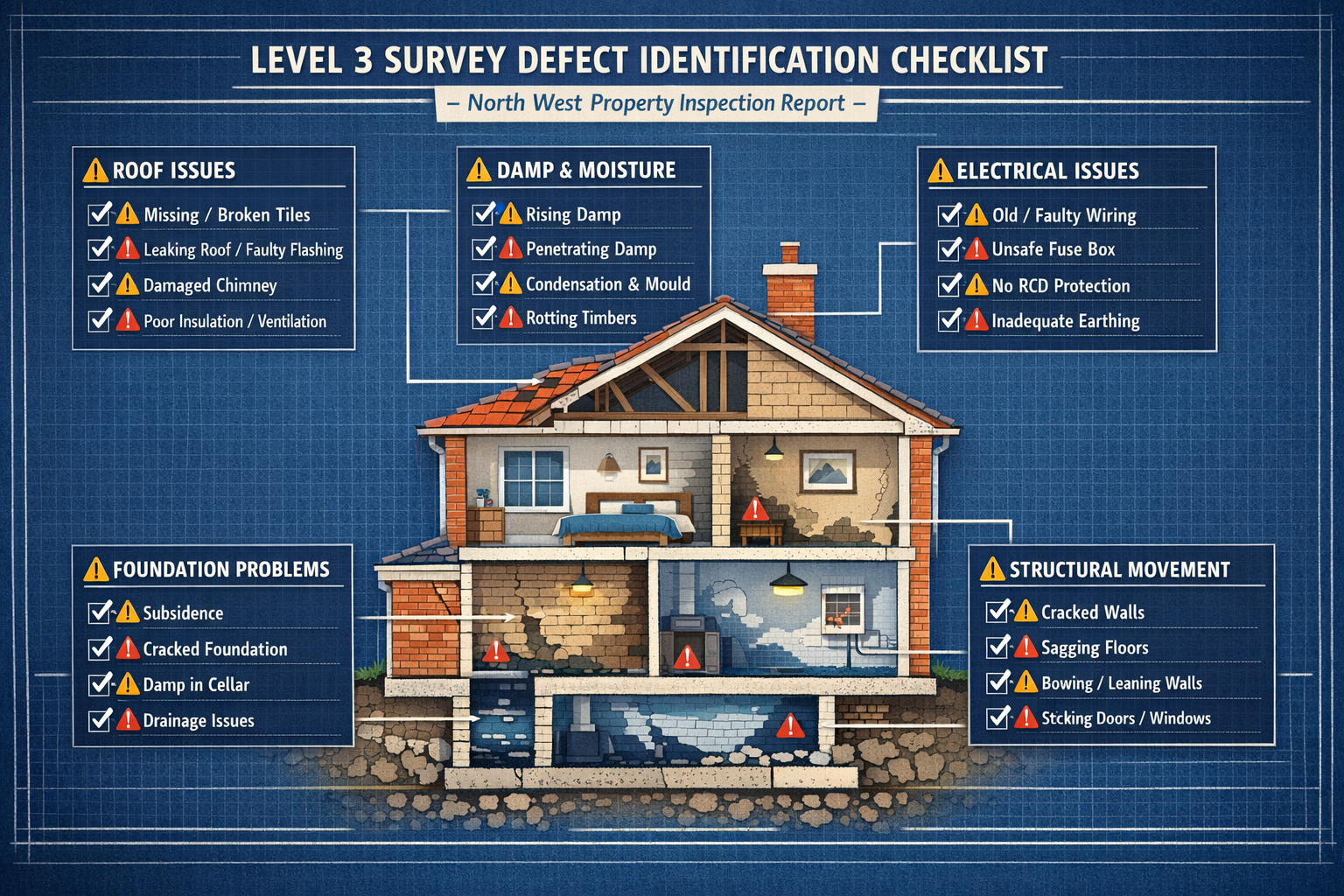
Effective Level 3 Building Surveys for North West Housing Recovery require systematic inspection protocols tailored to regional property characteristics. Professional surveyors develop detailed checklists addressing both universal building defects and location-specific concerns.
Foundation and Substructure Assessment:
- Visual inspection of external ground levels and drainage
- Internal floor level surveys identifying settlement or heave
- Crack pattern analysis distinguishing settlement from structural failure
- Assessment of foundation type and adequacy for soil conditions
- Drainage system evaluation including Victorian-era combined systems
Superstructure and External Fabric:
- Detailed wall construction analysis (solid, cavity, or composite)
- Brick and mortar condition assessment with repointing requirements
- Window and door condition including timber decay and operation
- Render and external coating evaluation
- Structural timber assessment for beetle infestation or fungal decay
Roof Structure and Coverings:
Roof condition represents a critical concern in North West properties, where roof surveys often reveal significant defects:
- Slate or tile condition assessment with replacement percentage estimates
- Roof timber structural integrity evaluation
- Chimney stack condition and stability
- Flashings, valleys, and weatherproofing details
- Gutter and downpipe capacity and condition
Internal Elements and Services:
- Electrical installation age, capacity, and safety compliance
- Plumbing systems including material types and condition
- Heating system efficiency and safety
- Damp penetration and condensation risk assessment
- Internal timber condition including floor joists and staircases
Prioritizing Defects by Risk Level and Cost Impact
Professional Level 3 surveys categorize identified defects using standardized risk classifications that enable informed decision-making:
Category 1 (Urgent Risks): Defects requiring immediate attention that pose safety hazards or will deteriorate rapidly. Examples include structural instability, active water ingress, electrical hazards, or gas safety concerns.
Category 2 (Significant Defects): Issues requiring repair or replacement but not immediately dangerous. These typically include aging roofs, failed damp-proofing, deteriorating windows, or outdated heating systems.
Category 3 (Minor Defects): Maintenance items and cosmetic issues with limited structural or functional impact. Examples include minor decoration, minor plumbing repairs, or routine maintenance tasks.
This categorization system—aligned with RICS guidelines—provides clear prioritization for negotiation, budgeting, and remediation planning. In the competitive 2026 North West market, understanding defect severity enables buyers to distinguish between properties requiring minor cosmetic work and those facing substantial structural expenditure.
Leveraging Level 3 Building Surveys for North West Housing Recovery Investment Decisions
Using Survey Findings for Price Negotiation
In strengthening regional markets where properties receive multiple offers, Level 3 survey findings provide crucial negotiating leverage. Detailed defect identification with cost estimates enables evidence-based price adjustments that protect buyer interests while maintaining transaction momentum.
Effective negotiation strategies include:
📊 Quantified repair cost deductions based on surveyor estimates or contractor quotations for identified defects
🔄 Retention arrangements where agreed repair costs are held back from purchase price pending remediation completion
⚖️ Vendor remediation requiring sellers to address critical defects before completion
💰 Adjusted offer prices reflecting true property condition rather than marketed aspirational values
The 2026 market recovery has created pricing dynamics where properties may be valued optimistically based on comparable sales of renovated properties. A comprehensive Level 3 survey reveals the true condition gap between marketed property and refurbished comparables, supporting realistic valuation adjustments.
For buyers requiring mortgage financing, lender valuations increasingly reference building survey findings when assessing loan security. Properties with significant structural defects may face reduced lending ratios or require remediation conditions, making early survey commissioning essential for transaction certainty.
Identifying Properties with Investment Potential
Beyond risk identification, Level 3 Building Surveys for North West Housing Recovery provide valuable intelligence for investment decision-making. Detailed property analysis reveals renovation potential, value-add opportunities, and long-term maintenance requirements that inform acquisition strategies.
Investment considerations from Level 3 surveys:
✅ Structural capacity for extensions or loft conversions increasing property value
✅ Building regulation compliance status for existing alterations affecting resale potential
✅ Energy efficiency improvement opportunities enhancing rental yields or resale appeal
✅ Heritage features and period details justifying premium pricing in renovated condition
✅ Realistic renovation budgets enabling accurate return-on-investment calculations
Investors targeting the North West's substantial rental market benefit particularly from Level 3 surveys identifying properties requiring strategic rather than cosmetic improvement. Understanding structural condition, service life expectancy, and compliance requirements enables accurate cash flow modeling and risk-adjusted return projections.
For those considering commercial building surveys for mixed-use or investment properties, similar principles apply with additional focus on tenant covenant strength, lease obligations, and commercial property-specific defects.
Timing Surveys Within the 2026 Transaction Process
The evolving homebuying landscape in 2026 emphasizes earlier survey commissioning within transaction timelines[3]. This shift reflects growing recognition that late-stage survey revelations cause transaction delays, renegotiations, or collapses that frustrate all parties.
Optimal survey timing strategies:
Pre-offer surveys: Increasingly common in competitive markets, commissioning Level 3 surveys before making formal offers provides maximum negotiating flexibility and demonstrates buyer seriousness to vendors.
Subject-to-survey offers: Traditional approach where offers are made subject to satisfactory survey, with surveys commissioned immediately upon offer acceptance to minimize delay.
Vendor surveys: Some sellers commission pre-marketing surveys to demonstrate property condition transparency and accelerate buyer decision-making, though independent buyer surveys remain advisable.
Understanding how long a homebuyers survey takes helps buyers plan transaction timelines effectively. Level 3 surveys typically require 3-5 hours on-site with report delivery within 5-10 working days, though complex properties or detailed investigations may extend these timeframes.
Selecting Qualified Surveyors with North West Expertise
The quality and value of Level 3 Building Surveys depend fundamentally on surveyor competence, experience, and local knowledge. In the North West's 2026 recovery market, selecting appropriately qualified professionals ensures comprehensive risk identification and reliable advice.
Essential surveyor qualifications and attributes:
🎓 RICS membership (MRICS or FRICS) demonstrating professional competence and ethical standards
🏘️ Regional experience with North West construction types, defect patterns, and market conditions
🔧 Technical expertise in structural assessment, building pathology, and remediation strategies
📝 Clear communication producing accessible reports with prioritized recommendations
💼 Professional indemnity insurance protecting clients against negligent advice or oversight
When choosing the right property survey, buyers should verify surveyor credentials, request sample reports, and confirm specific experience with similar property types. For specialized concerns such as structural movement or unusual construction, surveyors with additional structural engineering qualifications provide enhanced technical analysis.
Regional surveying practices throughout the North West bring invaluable local knowledge to property assessments. Familiarity with area-specific issues—including mining subsidence zones, flood risk areas, conservation area requirements, and local construction traditions—enhances survey accuracy and relevance.
Integrating Survey Findings with Broader Due Diligence
Level 3 Building Surveys form one component of comprehensive property due diligence alongside legal searches, environmental assessments, and regulatory compliance verification. Integrating survey findings with other information sources provides complete risk understanding.
Complementary due diligence activities:
Legal searches revealing planning permissions, building regulation approvals, rights of way, and restrictive covenants affecting property use or development potential
Environmental reports identifying contamination risks, flood zones, radon areas, and ground stability concerns
Energy Performance Certificates indicating heating efficiency and improvement recommendations
Local authority enquiries confirming adopted drainage, highway adoption, and planning history
Title investigation verifying ownership, boundaries, easements, and legal restrictions
For properties requiring structural interventions or alterations, structural surveys provide detailed engineering analysis supporting renovation planning and building regulation applications. These specialized assessments complement Level 3 building surveys by providing calculation-based structural adequacy verification.
Conclusion: Protecting Investments in the 2026 North West Housing Recovery
The North West housing market's 2026 recovery presents substantial opportunities for buyers, investors, and homeowners—but only when property acquisitions are founded on comprehensive condition understanding. Level 3 Building Surveys for North West Housing Recovery: Identifying Risks in Strongest 2026 Regional Markets provide the detailed defect identification and risk assessment essential for informed decision-making in competitive market conditions.
As buyer enquiries strengthen and property prices trend upward across Manchester, Liverpool, Lancashire, and Cheshire, the temptation to expedite transactions by skipping thorough surveys increases. Yet the region's predominantly period housing stock—characterized by Victorian construction, solid wall buildings, and decades of alterations—makes comprehensive building surveys more critical than ever.
Actionable next steps for property buyers and investors:
- Commission Level 3 surveys early in the transaction process, ideally before making binding offers in competitive situations
- Select RICS-qualified surveyors with demonstrated North West experience and knowledge of regional construction characteristics
- Request tailored survey checklists addressing specific property concerns including damp risks, structural movement, roof condition, and service adequacy
- Use survey findings strategically for price negotiation, renovation planning, and long-term maintenance budgeting
- Integrate survey results with legal searches, environmental reports, and regulatory compliance verification for comprehensive due diligence
- Prioritize defect remediation based on risk categorization, focusing resources on structural and safety-critical issues
The investment required for professional Level 3 Building Surveys—typically £800-£1,500 depending on property size and complexity—represents minimal cost compared to the financial exposure of purchasing properties with undisclosed structural defects. In the North West's strengthening 2026 markets, where property values are appreciating and competition intensifying, comprehensive survey-based risk identification protects both immediate transaction interests and long-term investment returns.
For buyers navigating the region's characterful but challenging housing stock, partnering with experienced professionals who understand both building pathology and local market dynamics provides essential competitive advantage. Whether purchasing a Victorian terrace in Manchester's suburbs, an Edwardian semi in Liverpool's residential neighborhoods, or a period conversion in Lancashire's market towns, thorough defect identification through Level 3 surveys transforms property acquisition from speculation to informed investment.
The North West housing recovery of 2026 rewards diligent buyers who combine market opportunity recognition with rigorous risk assessment. Level 3 Building Surveys provide the foundation for this balanced approach, enabling confident property acquisition in one of the UK's most dynamic regional markets.
References
[1] Building Surveys – https://www.jrvsurveys.com/services/building-surveys/
[2] Home Building Survey Level 3 – https://www.ashallsurveyors.co.uk/services/home-building-survey-level-3
[3] Building Surveys Under New Homebuying Rules Earlier Inspections And Risk Mitigation In 2026 – https://nottinghillsurveyors.com/blog/building-surveys-under-new-homebuying-rules-earlier-inspections-and-risk-mitigation-in-2026
[4] Level 3 Building Survey – https://edwardsgenesis.co.uk/services-overview/residential-surveys/level-3-building-survey/
[5] Level 3 Survey – https://surveymatch.co.uk/level-3-survey/
[6] Rics Level 3 Home Building Survey – https://camsurehomes.com/surveyor-services/rics-level-3-home-building-survey
[7] Level 3 Full Building Surveys In North West – https://www.northwestbuildingsurveyor.co.uk/level-3-full-building-surveys-in-north-west/
[8] Rics Building Survey – https://masonwrightassociates.co.uk/surveys/rics-building-survey/