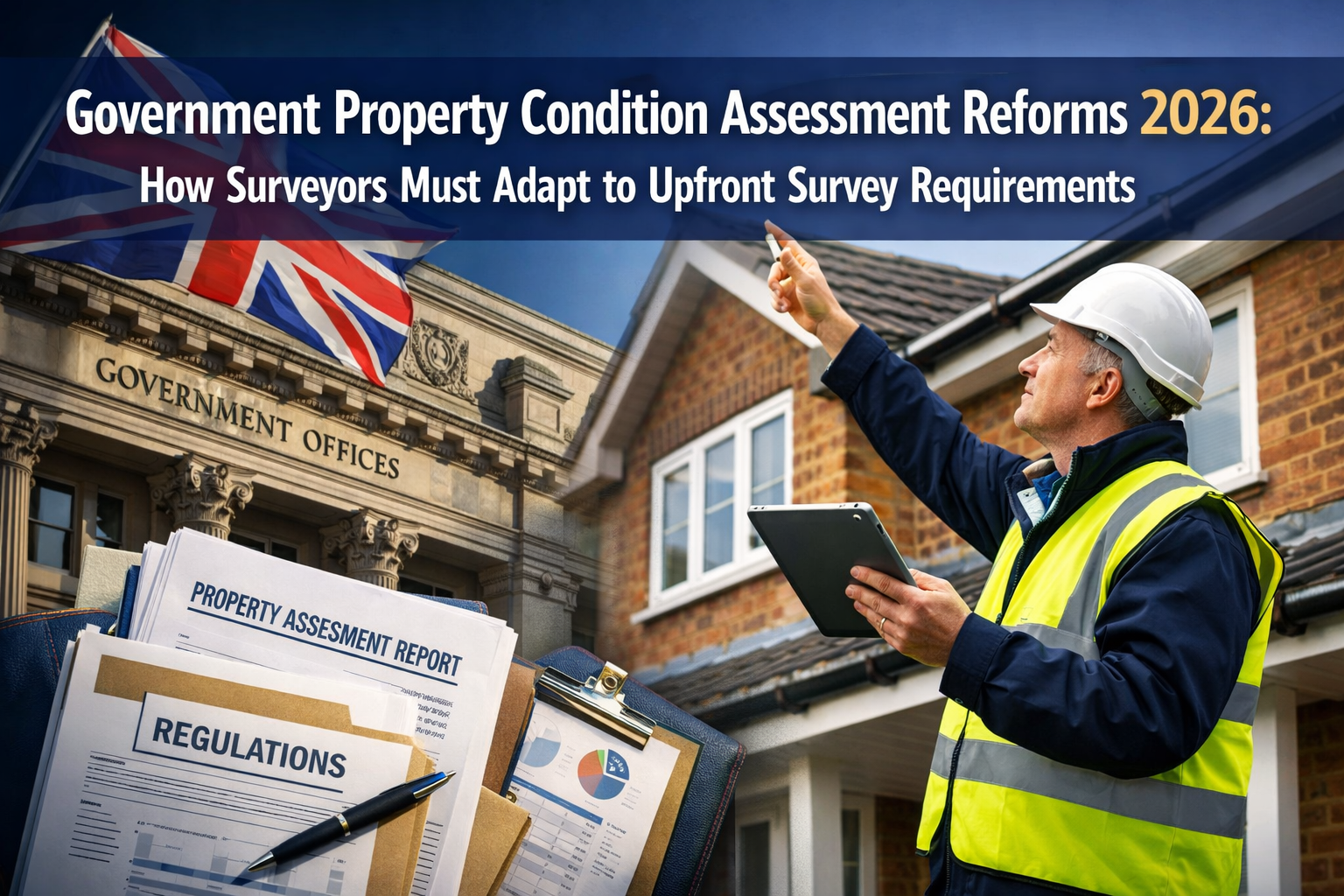
As the UK property market shows signs of recovery in 2026, with lending volumes climbing and buyer enquiries gaining momentum, a new challenge emerges for chartered surveyors: an anticipated surge in mortgage valuation disputes. When market conditions shift rapidly and regional variations create pricing uncertainty, the gap between initial valuations and actual market performance widens—and litigation follows. For expert witness surveyors navigating this complex landscape, understanding the latest RICS guidelines has never been more critical.
The timing couldn't be more significant. RICS launched a comprehensive consultation in August 2025 for the 5th edition of its expert witness standard—the first major update since 2014[1]. This modernized framework arrives precisely when professionals need clear guidance to defend valuations in an increasingly complex and regionally divergent market. Expert Witness Valuations in 2026 Mortgage Disputes: RICS Guidelines Amid Market Recovery and Lending Volume Increases represents not just a technical update, but a fundamental shift in how surveyors approach their tribunal responsibilities.
Key Takeaways
- 📊 Market Recovery Drives Disputes: Rising lending volumes and regional market divergence in 2026 are expected to increase mortgage valuation disputes significantly
- ⚖️ Updated RICS Standards: The 5th edition expert witness guidelines (first major update since 2014) introduce critical provisions for AI use, digital evidence, and modern tribunal procedures[1]
- 🎯 Independence Remains Paramount: Expert witnesses must maintain primary duty to the tribunal, not the client, with strengthened conflict disclosure requirements and fee guidance[1]
- 🏘️ Housing Legislation Impact: New provisions address housing disrepair claims under evolving legislation including Awaab's Law, effective October 2025[1]
- 🌍 Global Applicability: Updated standards are designed for worldwide relevance while recognizing local legal differences across jurisdictions[1]
Understanding the 2026 Mortgage Dispute Landscape
The Market Recovery Context
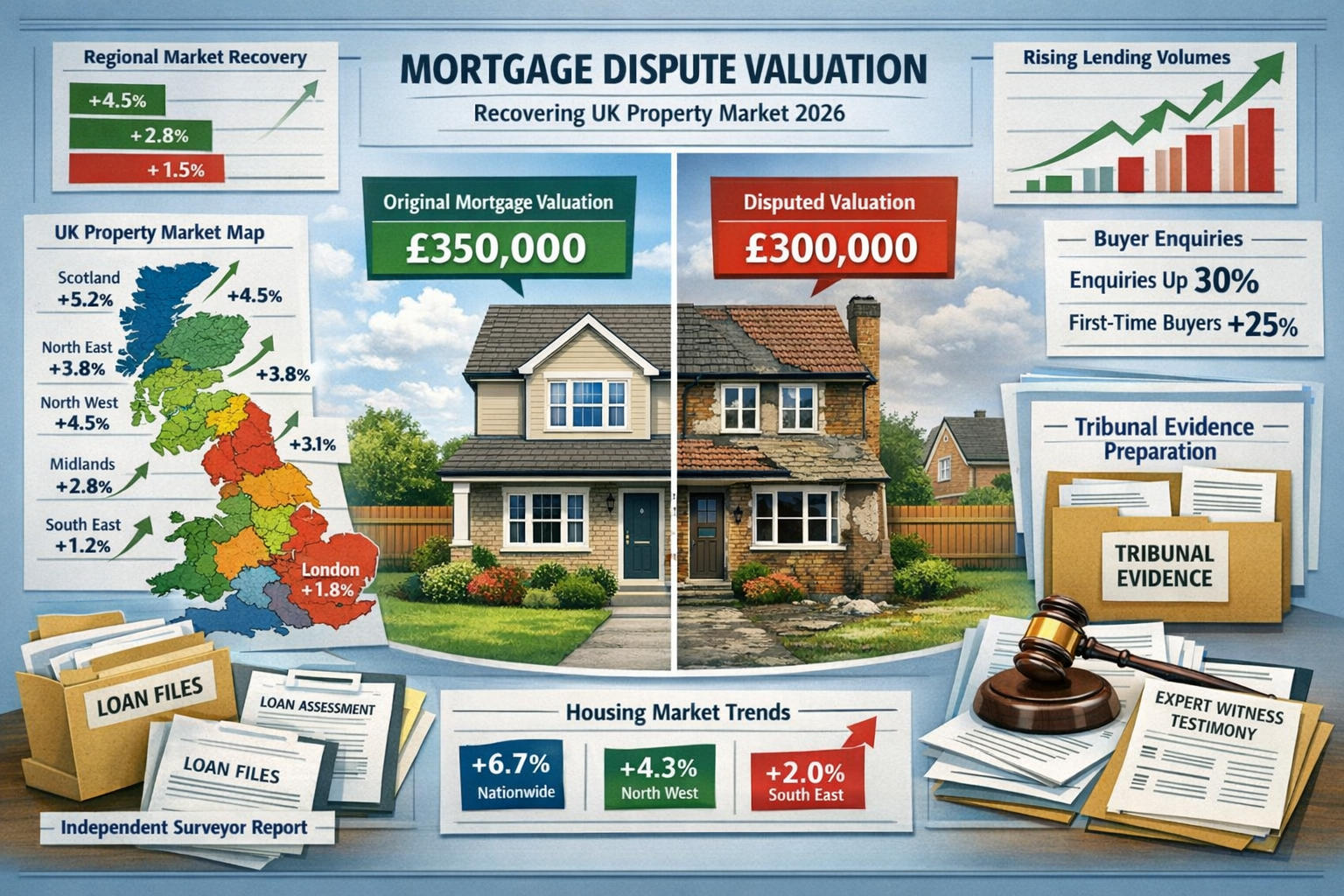
The UK property market in 2026 presents a complex picture of recovery. While overall lending volumes show encouraging growth, the reality beneath these headline figures reveals significant regional variation that creates fertile ground for valuation disputes. Areas experiencing rapid price appreciation may see lenders questioning conservative valuations, while regions with slower recovery might face challenges when optimistic valuations don't align with subsequent market performance.
This divergence matters enormously for expert witnesses. When a mortgage valuation becomes the subject of litigation—whether due to alleged negligence, lender losses, or borrower disputes—the expert must demonstrate not only technical competence but also an understanding of market dynamics at the precise valuation date. The Red Book valuation standards provide the foundation, but expert witness work demands additional layers of scrutiny and justification.
Why Disputes Are Rising
Several factors contribute to the anticipated increase in mortgage-related valuation disputes in 2026:
- Increased Transaction Volumes 📈: More mortgages mean more opportunities for valuation challenges
- Market Volatility: Rapid price changes create gaps between valuation dates and completion dates
- Lender Scrutiny: Financial institutions facing previous losses are more cautious and litigious
- Borrower Expectations: Property purchasers increasingly challenge valuations that affect their borrowing capacity
- Regulatory Pressure: Enhanced oversight of lending practices increases documentation and accountability requirements
Understanding these valuation factors becomes essential when preparing expert evidence that must withstand cross-examination and tribunal scrutiny.
Expert Witness Valuations in 2026 Mortgage Disputes: Key RICS Guideline Updates
The 5th Edition Expert Witness Standard
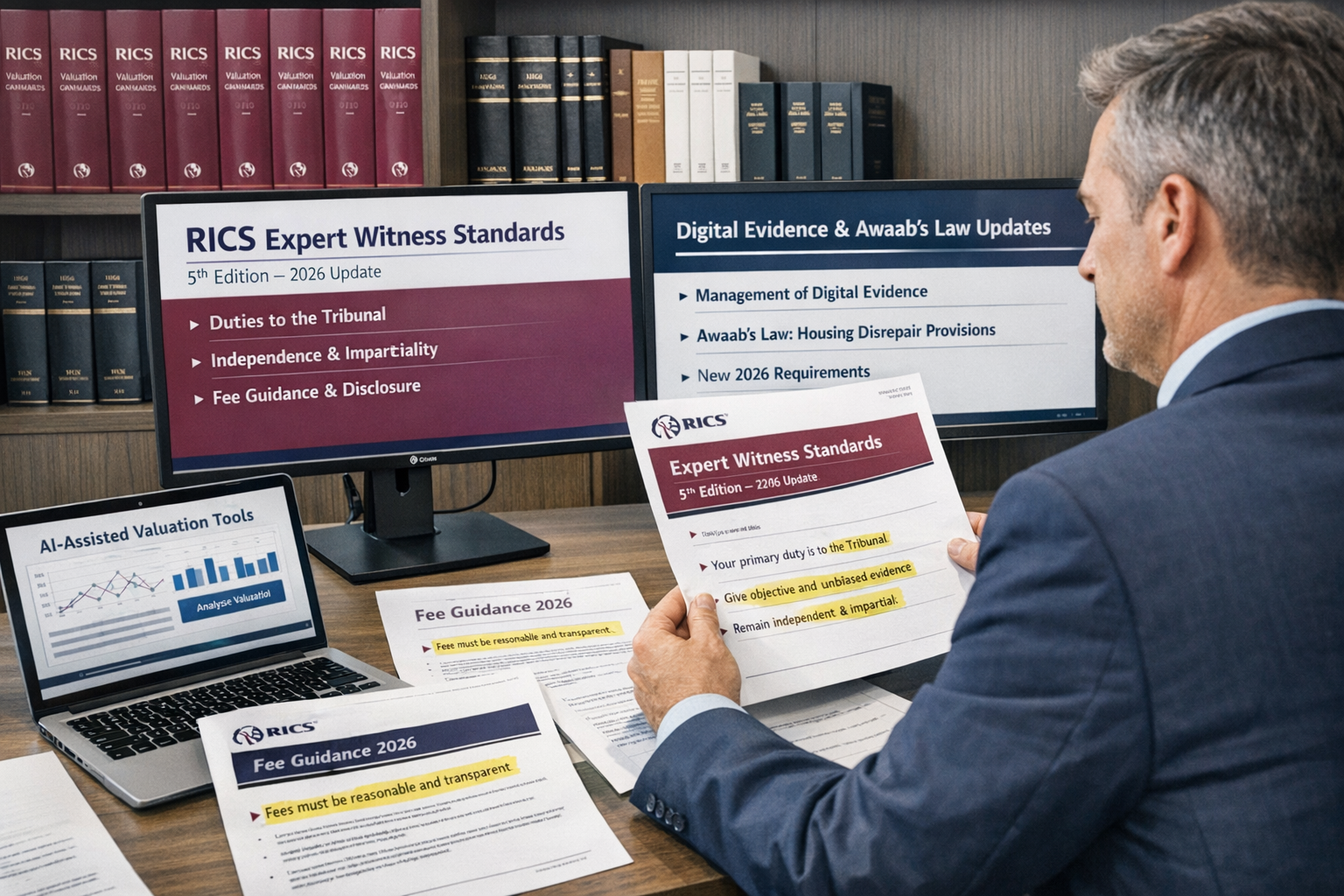
RICS began a six-week public consultation on 26 August 2025 for the 5th edition of its expert witness standard, marking the first major revision since 2014[1]. This timing proves particularly relevant for mortgage dispute work in 2026, as the updated standard addresses modern challenges that simply didn't exist when the previous version was published.
The updated standard is designed to be globally relevant and applicable to members providing expert evidence in civil proceedings before tribunals worldwide, while recognizing local legal differences[1]. For UK-based surveyors handling mortgage disputes, this means the guidance provides robust protection while remaining flexible enough to accommodate specific jurisdictional requirements.
Core Principles Reinforced
The fundamental principle remains unchanged but strengthened: the primary duty of expert witnesses is to the tribunal, not the client[1]. This requirement mandates that all reports and evidence must be independent, unbiased, and within the surveyor's true expertise[1].
In practical terms for mortgage disputes, this means:
- ✅ Independence: The expert must not advocate for the party instructing them
- ✅ Objectivity: Personal relationships with clients cannot influence opinions
- ✅ Competence: Only accept instructions within genuine areas of expertise
- ✅ Transparency: Disclose any factors that might affect perceived independence
This duty to the tribunal supersedes commercial pressures, even when a long-standing client relationship exists. The updated guidance makes clear that protecting professional independence isn't optional—it's mandatory.
Fee Guidance and Independence Protection
One of the most significant updates addresses clear fee guidance on conditional and deferred fees to protect professional independence[1]. In mortgage dispute contexts, this becomes particularly important when lenders or borrowers propose payment structures tied to case outcomes.
The guidance establishes that:
- Expert witness fees should not be contingent on the outcome of the case
- Deferred fee arrangements must not compromise independence or objectivity
- Fee agreements should be transparent and documented before work begins
- Experts must be prepared to justify their fee structure if challenged
For surveyors considering expert witness instructions, understanding the price of valuation work versus expert witness fees is crucial. Expert witness work typically commands premium rates reflecting the additional responsibility, preparation time, and potential tribunal attendance required.
Conflict of Interest Disclosure
The updated standard provides clearer requirements for identifying and disclosing conflicts of interest, with explanation of legal consequences for non-compliance[1]. This addresses a critical area where previous guidance left room for interpretation.
Common conflict scenarios in mortgage disputes include:
- 🔍 Previous work for the same property or client
- 🔍 Professional relationships with parties involved in the dispute
- 🔍 Financial interests in the outcome
- 🔍 Prior expert opinions that might create bias
The new guidance requires proactive disclosure and, where conflicts exist, clear explanation of how they will be managed or why the instruction should be declined. Failure to properly disclose conflicts can result in evidence being excluded, professional sanctions, and reputational damage.
Modern Practice Integration in Expert Witness Valuations
AI and Digital Evidence Provisions
Perhaps the most forward-looking aspect of the updated standard involves provisions covering AI use, digital evidence, and new legal procedures[1]. For mortgage dispute valuations in 2026, this recognition of technological advancement proves essential.
AI-assisted valuation tools are increasingly common, offering benefits like:
- Rapid comparable property analysis
- Market trend identification
- Data validation and cross-checking
- Consistency in methodology application
However, the RICS guidance emphasizes that quality and relevance of expert evidence remain paramount[1]. AI tools must support, not replace, professional judgment. When preparing expert reports, surveyors must:
- Clearly identify which aspects involved AI assistance
- Explain the methodology and data sources used
- Demonstrate professional oversight and validation
- Be prepared to defend AI-generated conclusions under cross-examination
Digital evidence, including photographs, video surveys, and electronic comparable databases, must meet admissibility standards. The expert witness must ensure proper authentication, metadata preservation, and chain of custody documentation.
Housing Disrepair and Awaab's Law
The updated guidance specifically notes that members acting as expert witnesses in housing disrepair claims should note evolving legislation including Awaab's Law (effective October 2025) and the Housing Health and Safety Rating System (HHSRS)[1].
While primarily focused on social housing, these provisions affect mortgage disputes when:
- Property condition impacts valuation significantly
- Disrepair existed at the time of mortgage valuation
- Lender claims negligent failure to identify defects
- Borrower disputes arise from undisclosed conditions
Expert witnesses must demonstrate awareness of current regulatory frameworks and how they inform valuation judgments. This might involve coordination with specialists conducting RICS building surveys or Level 3 building surveys to establish property condition at relevant dates.
Preparing Expert Evidence for Mortgage Dispute Tribunals
Report Structure and Content Requirements
Expert witness reports in mortgage disputes must meet specific standards that exceed typical valuation reporting. The RICS guidance, combined with Civil Procedure Rules requirements, mandates inclusion of:
Essential Report Elements:
| Section | Purpose | Key Content |
|---|---|---|
| Qualifications | Establish expertise | Professional credentials, relevant experience, CPD |
| Instructions | Define scope | Questions to be answered, documents reviewed |
| Factual Background | Provide context | Property details, market conditions, transaction timeline |
| Methodology | Explain approach | Valuation method, comparable selection, adjustments |
| Opinion | State conclusions | Clear valuation figure with supporting reasoning |
| Declaration | Confirm compliance | Duty to tribunal, independence, truth statement |
Each section must withstand rigorous scrutiny. Unlike a standard RICS home survey, expert reports anticipate hostile cross-examination and must pre-emptively address potential challenges.
Comparable Evidence in Volatile Markets
The 2026 market recovery creates particular challenges for comparable evidence. Regional variation means that:
- Properties in adjacent postcodes may show divergent trends
- Timing of comparable transactions becomes critical
- Adjustments for market movement require careful justification
- Historic data may not reliably predict current values
Expert witnesses must demonstrate robust methodology for:
- Comparable Selection: Clear criteria for inclusion/exclusion
- Adjustment Calculations: Transparent, defensible modifications for differences
- Market Analysis: Evidence of market conditions at the valuation date
- Alternative Approaches: Consideration of multiple valuation methods
When market conditions are uncertain, acknowledging limitations and providing ranges (where appropriate) demonstrates professional integrity rather than weakness.
Independence and Impartiality Challenges
Maintaining independence proves particularly challenging when:
- The instructing party is a long-term client
- Commercial pressure exists to support a particular outcome
- Previous work for the same property creates anchoring bias
- Professional relationships with other parties exist
The updated RICS guidance strengthens requirements to actively resist these pressures[1]. Practical strategies include:
- 🛡️ Establishing clear terms of engagement before accepting instructions
- 🛡️ Documenting all communications and instructions received
- 🛡️ Conducting independent research without client influence
- 🛡️ Being prepared to withdraw if independence is compromised
- 🛡️ Maintaining professional indemnity insurance with expert witness coverage
Remember: your reputation and professional standing depend on maintaining independence, even when it means delivering unwelcome opinions.
Regional Market Considerations for 2026 Valuations
Geographic Variations in Recovery
The 2026 market recovery isn't uniform across the UK. Expert witnesses must demonstrate understanding of specific regional dynamics when defending valuations. Areas experiencing different recovery patterns include:
High-Growth Regions:
- London and surrounding commuter belts
- Major regional cities with strong employment
- Areas benefiting from infrastructure investment
Moderate Recovery Areas:
- Secondary cities and towns
- Suburban locations with mixed demand
- Regions with stable but unspectacular growth
Challenged Markets:
- Areas with declining industries
- Regions with oversupply
- Locations with limited economic drivers
For expert witnesses working across multiple regions, partnering with local chartered surveyors who understand specific market nuances can strengthen evidence quality.
Lending Volume Impact on Dispute Types
Increased lending volumes in 2026 affect the types of disputes likely to arise:
Lender-Initiated Disputes:
- Allegations of over-valuation leading to lending losses
- Claims of negligent failure to identify defects
- Challenges to methodology or comparable selection
Borrower-Initiated Disputes:
- Under-valuation affecting borrowing capacity
- Disputes over down-valuation after offer acceptance
- Claims of inadequate inspection or analysis
Third-Party Claims:
- Subsequent purchaser claims against original valuer
- Professional negligence actions
- Regulatory investigations
Each dispute type requires different evidence emphasis and defensive strategies. Understanding the likely challenges helps expert witnesses prepare more robust reports.
Best Practices for Expert Witness Valuations in 2026 Mortgage Disputes
Pre-Instruction Considerations
Before accepting expert witness instructions, surveyors should:
- Assess Competence: Confirm genuine expertise in the specific property type and location
- Check Conflicts: Thoroughly investigate potential conflicts of interest
- Review Instructions: Ensure questions fall within appropriate scope
- Agree Fees: Establish clear, independence-protecting fee arrangements
- Verify Insurance: Confirm professional indemnity coverage includes expert witness work
Declining inappropriate instructions protects professional reputation far more effectively than accepting work outside true competence areas.
Evidence Gathering and Documentation
Robust evidence gathering forms the foundation of defensible expert opinions:
- 📋 Contemporary Records: Obtain documents from the valuation date period
- 📋 Market Data: Compile comprehensive comparable evidence with full details
- 📋 Inspection Records: Review original inspection notes and photographs
- 📋 Communications: Examine all correspondence related to the valuation
- 📋 Methodology: Document the valuation approach and reasoning
This thorough approach mirrors the diligence required for specialized valuations like probate valuation or lease extension valuation, where accuracy and defensibility are paramount.
Report Writing Excellence
Expert witness reports must achieve clarity, comprehensiveness, and compliance:
Writing Principles:
- Plain Language: Avoid unnecessary jargon; explain technical terms
- Logical Structure: Present information in clear, sequential order
- Supported Conclusions: Every opinion must have evidential foundation
- Balanced Analysis: Address weaknesses and alternative interpretations
- Professional Tone: Maintain objectivity throughout
The report should enable a non-expert tribunal member to understand the valuation methodology, evidence considered, and reasoning supporting the conclusion.
Tribunal Preparation and Testimony
If the dispute proceeds to hearing, expert witnesses must prepare for:
- Cross-Examination: Anticipate challenges and prepare responses
- Document Familiarity: Know all referenced materials thoroughly
- Professional Demeanor: Maintain composure and objectivity under pressure
- Clear Communication: Explain complex concepts accessibly
- Admission of Limits: Acknowledge what you don't know rather than speculate
Successful tribunal performance reinforces professional credibility and can lead to future expert witness instructions.
Continuous Professional Development for Expert Witnesses

Staying Current with Standards
The RICS expert witness standard updates demonstrate the importance of ongoing professional development. Surveyors should:
- Monitor RICS guidance updates and consultations
- Attend expert witness training courses
- Participate in relevant CPD activities
- Review case law affecting expert evidence
- Engage with professional networks and forums
Understanding evolving standards protects against inadvertent non-compliance and ensures evidence meets current expectations.
Specialization and Market Knowledge
Expert witness credibility depends on demonstrable expertise. For mortgage dispute work, this requires:
- 🎓 Deep understanding of residential property markets
- 🎓 Current knowledge of lending practices and requirements
- 🎓 Familiarity with valuation methodology evolution
- 🎓 Awareness of regulatory and legislative changes
- 🎓 Experience with the specific property types and locations involved
Maintaining this expertise requires active market engagement, not just theoretical knowledge. Regular valuation practice, combined with expert witness work, creates the most credible foundation.
Conclusion
Expert Witness Valuations in 2026 Mortgage Disputes: RICS Guidelines Amid Market Recovery and Lending Volume Increases represents a critical intersection of market dynamics, professional standards, and legal requirements. As lending volumes increase and regional market variations create valuation challenges, the demand for expert witness services will likely grow significantly.
The updated RICS expert witness standard, with its enhanced provisions for independence protection, conflict disclosure, digital evidence, and modern practice integration, provides essential guidance for navigating this complex landscape[1]. However, guidance alone isn't sufficient—surveyors must actively implement these principles through rigorous methodology, comprehensive documentation, and unwavering commitment to tribunal duties over client preferences.
Key Success Factors
Successful expert witness practice in mortgage disputes requires:
✅ Technical Excellence: Robust valuation methodology and comprehensive market knowledge
✅ Professional Independence: Commitment to tribunal duties above commercial pressures
✅ Clear Communication: Ability to explain complex concepts to non-expert audiences
✅ Ethical Practice: Transparent conflict disclosure and fee arrangements
✅ Continuous Learning: Ongoing engagement with evolving standards and market conditions
Actionable Next Steps
For chartered surveyors considering or currently undertaking expert witness work:
- Review the Updated RICS Standard: Familiarize yourself with the 5th edition provisions and ensure compliance[1]
- Assess Your Expertise: Honestly evaluate whether your knowledge and experience support expert witness instructions in specific areas
- Develop Robust Processes: Create templates, checklists, and procedures that ensure consistent compliance with professional standards
- Invest in Training: Attend expert witness courses and CPD activities to strengthen skills
- Build Quality Networks: Connect with legal professionals, other expert witnesses, and professional bodies
- Maintain Insurance: Verify professional indemnity coverage specifically includes expert witness work
The 2026 market recovery presents both opportunities and challenges for expert witness surveyors. Those who embrace the updated RICS standards, maintain rigorous professional practices, and commit to continuous development will be best positioned to provide valuable tribunal services while protecting their professional reputation.
For surveyors seeking to understand the broader context of professional valuation services, exploring resources on valuation factors and engaging with chartered surveyors in London and other regions can provide valuable market insights that strengthen expert witness credibility.
The intersection of professional standards, market knowledge, and legal expertise defines excellence in expert witness practice. As the property market evolves and disputes inevitably arise, those surveyors who master this intersection will provide invaluable service to tribunals, clients, and the profession itself.
References
[1] Rics Launches Global Consultation On Updated Expert Witness Standard – https://www.rics.org/news-insights/rics-launches-global-consultation-on-updated-expert-witness-standard
[2] Breaking Down The Rics Valuation What Every Valuer Should Know – https://globalvaluation.com/breaking-down-the-rics-valuation-what-every-valuer-should-know/
[3] Surveyors Acting As Expert Witnesses – https://www.rics.org/profession-standards/rics-standards-and-guidance/sector-standards/dispute-resolution-standards/surveyors-acting-as-expert-witnesses
[4] Valuation Standards – https://www.rics.org/profession-standards/rics-standards-and-guidance/sector-standards/valuation-standards
[5] New Expert Witness Guidance For Rics Members – https://www.nmrk.com/en-gb/perspectives/new-expert-witness-guidance-for-rics-members
[6] Dispute Resolution Standards – https://www.rics.org/profession-standards/rics-standards-and-guidance/sector-standards/dispute-resolution-standards