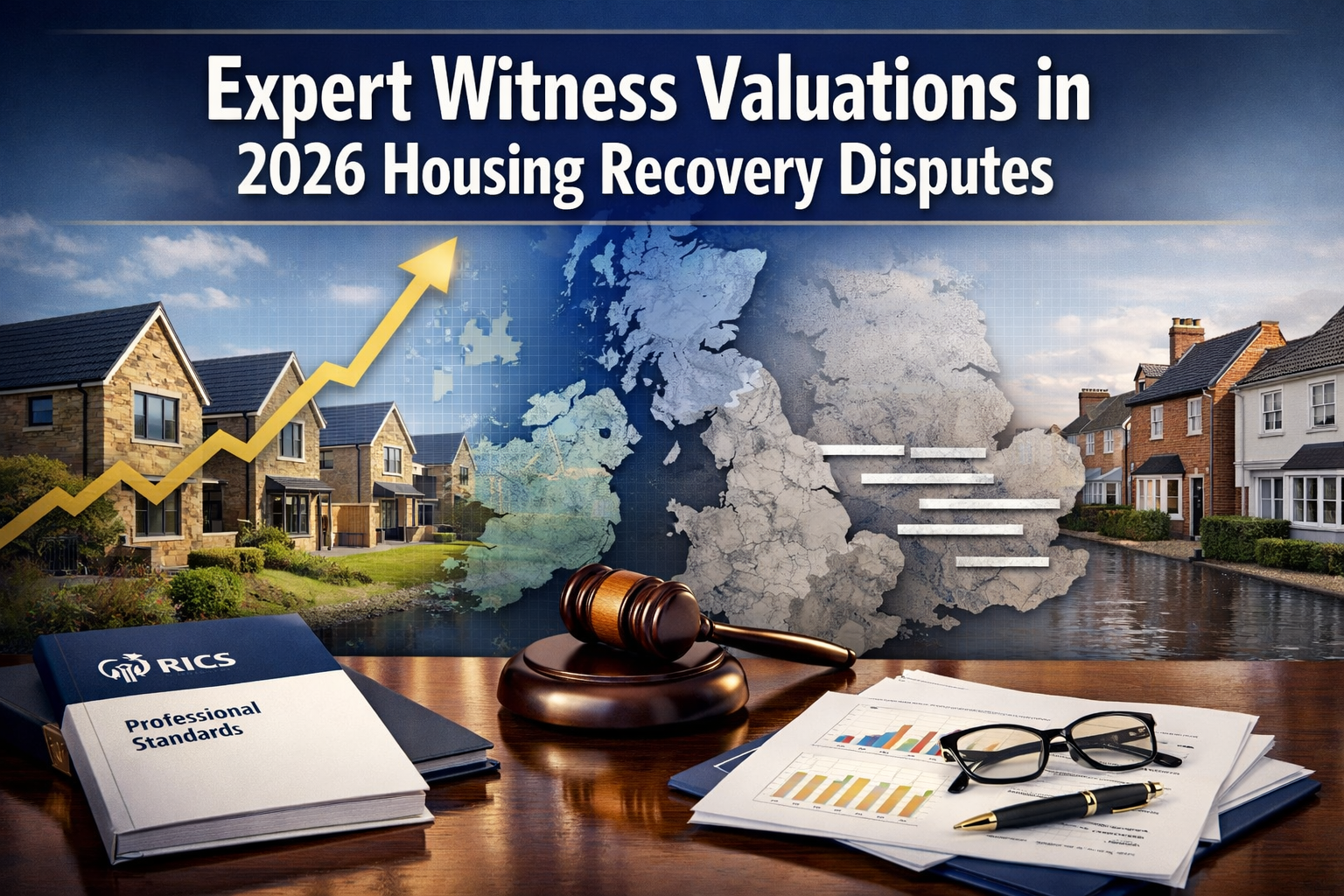

The UK housing market in 2026 presents a unique challenge for property professionals: unprecedented regional price divergence. While Northern markets surge with double-digit growth, Southern regions remain stagnant, creating a perfect storm of valuation disputes. When buyers, sellers, and lenders disagree on property values during this uneven recovery, Expert Witness Valuations in 2026 Housing Recovery Disputes: RICS Guidelines for Price Divergence Challenges become the critical tool for resolving conflicts and establishing credible market values in court proceedings.
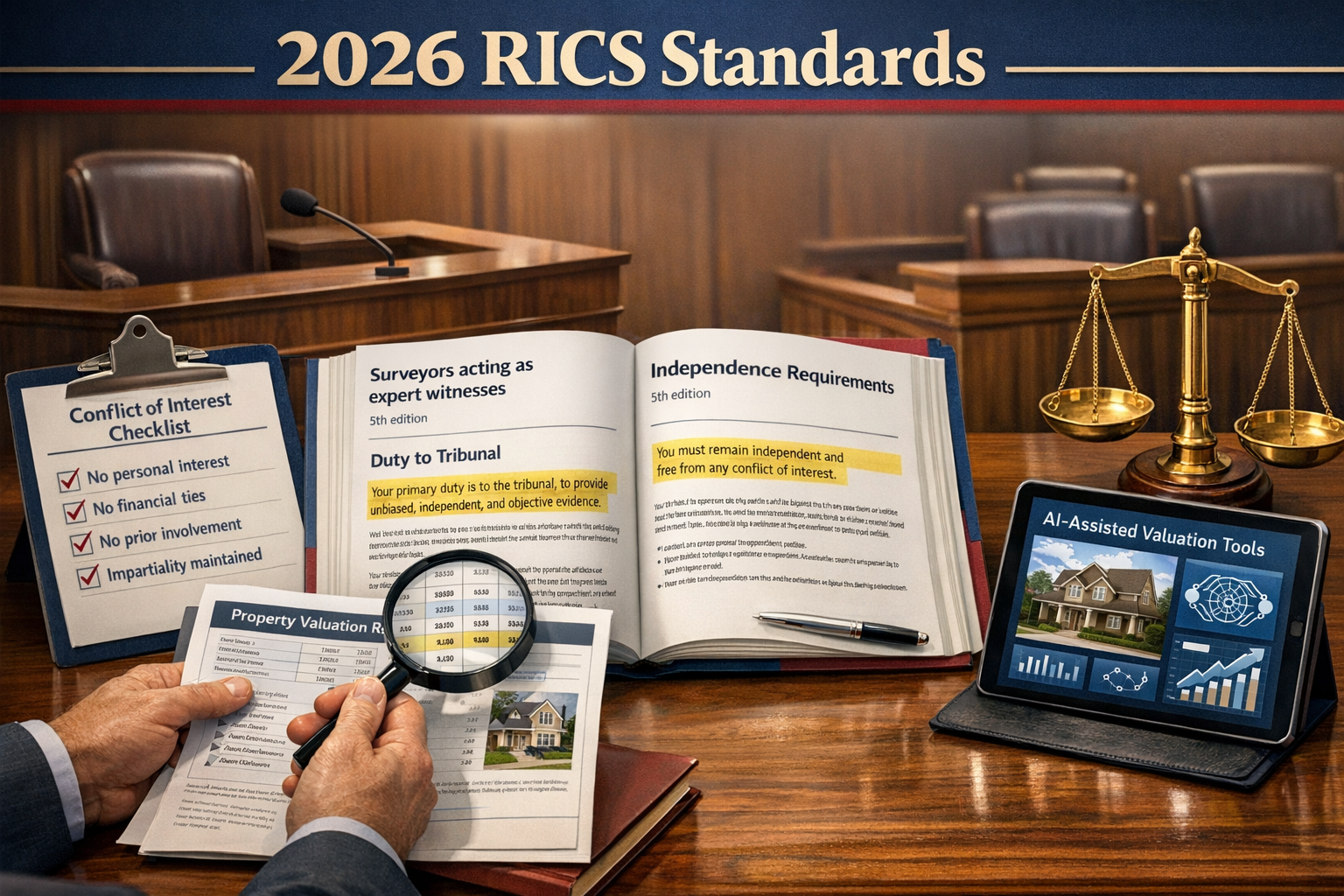
As confidence returns to the residential market following the soft conditions of late 2025, property disputes increasingly require expert testimony to navigate the complex landscape of regional variations, evolving RICS standards, and heightened scrutiny from tribunals. The Royal Institution of Chartered Surveyors (RICS) launched a comprehensive consultation in August 2025 for the 5th edition of its "Surveyors acting as expert witnesses" professional standard—the first major update since 2014—specifically addressing modern challenges including AI integration, enhanced independence requirements, and clearer conflict-of-interest protocols.[1]
Key Takeaways
✅ Regional price divergence in 2026 creates complex valuation disputes requiring expert witnesses to apply sophisticated adjustment methodologies for comparable evidence across different market conditions
✅ RICS 5th edition standards (2025-2026) reinforce the expert's primary duty to the tribunal over the client, with enhanced independence requirements and clearer conflict-of-interest disclosure protocols[1]
✅ Modern technology integration including AI-assisted valuations and digital evidence presentation must be balanced with professional judgment and transparent methodology in expert reports[1]
✅ Structured report preparation following RICS guidelines increases court credibility through clear methodology disclosure, comprehensive comparable analysis, and transparent adjustment factors
✅ Housing recovery disputes require experts to distinguish between temporary market volatility and genuine price trends when establishing credible valuations for litigation purposes
Understanding the 2026 Housing Market Recovery and Regional Divergence
The Uneven Recovery Landscape
The UK housing market entered 2026 with dramatically different trajectories across regions. According to the latest RICS UK Residential Market Survey, while overall market confidence improved from the soft conditions of late 2025, expectations for sales and prices turned "decisively more positive" in certain areas while others remained flat.[1] This creates significant challenges for property valuations, particularly when disputes arise over purchase contracts, mortgage valuations, or development agreements.
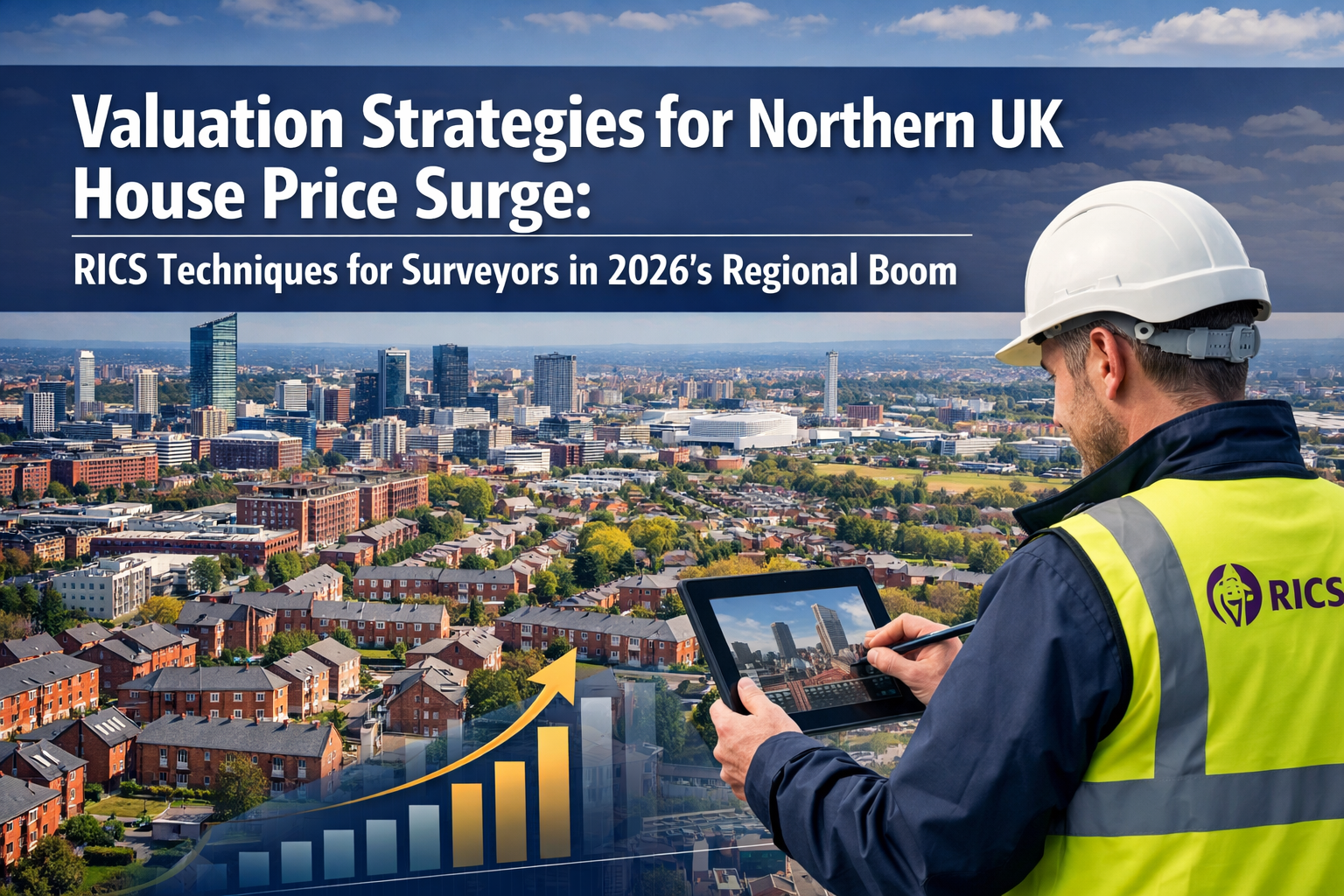
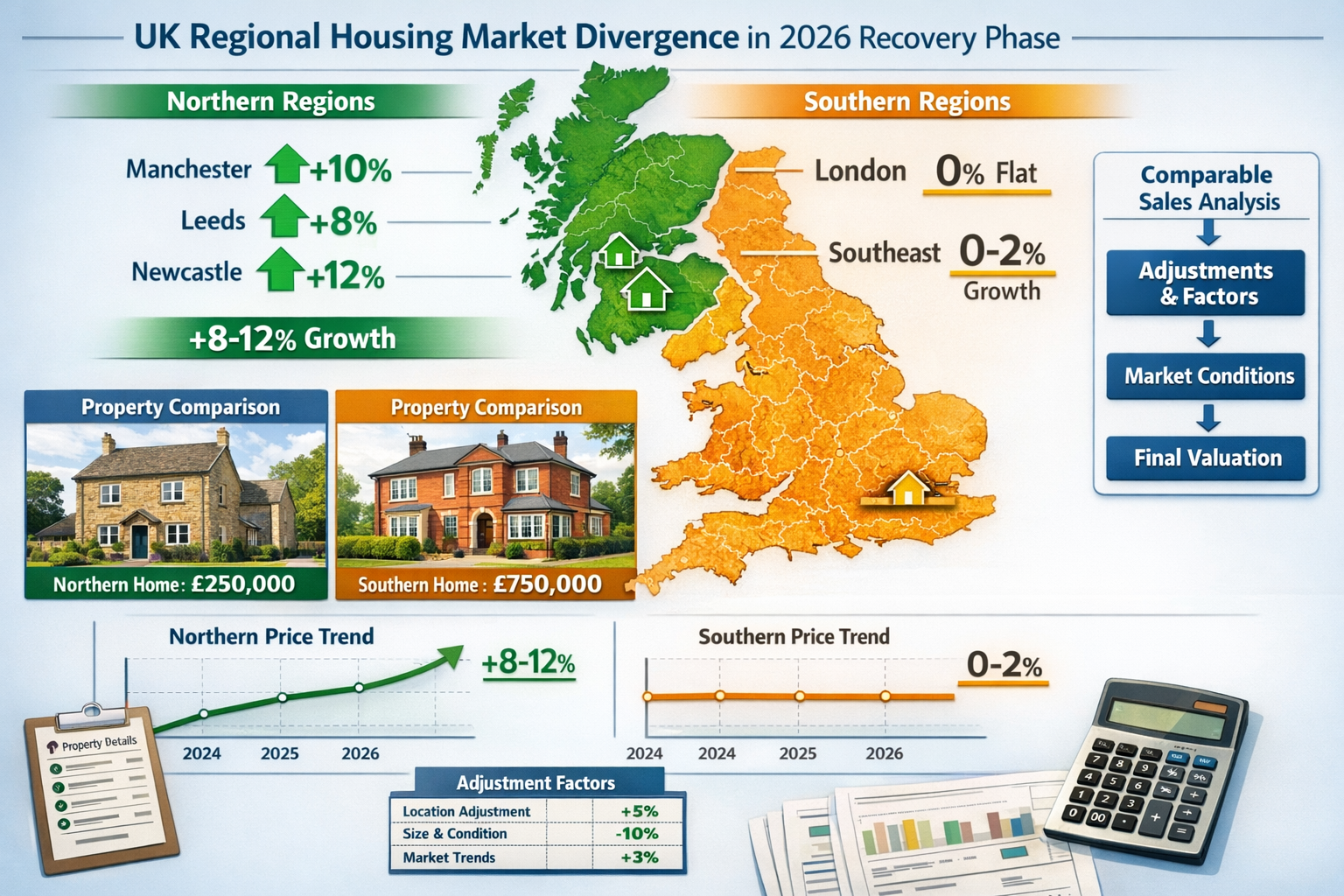
Northern regions including Manchester, Leeds, and Newcastle experienced price growth ranging from 8-12% in early 2026, driven by:
- 🏗️ Infrastructure investment and improved transport links
- 💼 Employment growth in technology and professional services sectors
- 🏠 Relative affordability attracting first-time buyers and investors
- 📈 Strong rental demand supporting buy-to-let valuations
Southern regions particularly London and the Southeast showed minimal growth (0-2%), influenced by:
- 💰 Affordability constraints limiting buyer pools
- 🏦 Stricter lending criteria for high-value properties
- 🏢 Hybrid working reducing premium for proximity to city centers
- 📉 Oversupply in certain segments, particularly luxury flats
Why Price Divergence Creates Valuation Disputes
When regional markets move at different speeds, several dispute scenarios commonly arise:
| Dispute Type | Common Scenario | Expert Witness Role |
|---|---|---|
| Contract disputes | Buyer claims property overvalued based on national trends | Provide localized comparable evidence and market analysis |
| Mortgage challenges | Lender's valuation differs significantly from purchase price | Reconcile valuations using independent market data |
| Development agreements | Land value disputes based on projected housing values | Assess realistic development appraisal assumptions |
| Divorce settlements | Parties dispute property value for asset division | Provide impartial valuation at specific valuation date |
| Compulsory purchase | Compensation disputes over market value assessment | Establish fair market value with comparable evidence |
Understanding these valuation factors becomes essential when preparing expert witness testimony that can withstand cross-examination and tribunal scrutiny.
RICS Guidelines for Expert Witness Valuations in 2026 Housing Recovery Disputes
The 5th Edition Professional Standards Framework
The RICS 5th edition of "Surveyors acting as expert witnesses" establishes comprehensive requirements specifically designed to address modern challenges in property dispute resolution.[1] These standards apply globally while recognizing local legal differences, ensuring that expert witnesses maintain consistent professional principles across different jurisdictions.[1]
Core Principles of Expert Witness Independence
The updated standard reinforces that the expert witness's primary duty is to the tribunal, not the client—a fundamental principle that distinguishes expert testimony from advocacy.[1] This means:
✔️ Unbiased analysis: All reports and evidence must be independent and objective, regardless of which party commissioned the work
✔️ Expertise boundaries: Surveyors must only provide opinions within their genuine area of expertise and experience
✔️ Transparent methodology: Clear explanation of methods of valuation used and rationale for selecting specific approaches
✔️ Honest limitations: Acknowledgment of any constraints, assumptions, or uncertainties affecting the valuation
"The expert witness's duty to the court or tribunal overrides any obligation to the party who has engaged them. This independence is the cornerstone of credible expert testimony."
Enhanced Fee Guidance and Independence Protection
One significant update in the 5th edition addresses fee arrangements that could compromise independence.[1] The standard provides clearer guidance on:
Prohibited fee structures:
- ❌ Contingency fees based on case outcome
- ❌ Success-based bonuses or performance incentives
- ❌ Fee arrangements that create financial interest in specific valuation conclusions
Acceptable approaches:
- ✅ Fixed fees agreed in advance
- ✅ Hourly rates with estimated caps
- ✅ Staged payments based on work completion, not outcomes
Risk mitigation for high-volume cases:
The standard recognizes that some experts handle multiple similar cases (such as housing disrepair claims) and provides guidance on maintaining independence while managing commercial viability.[1] Understanding surveyor pricing structures helps ensure fee arrangements don't compromise professional obligations.
Conflict of Interest Requirements
The 5th edition establishes clearer requirements for identifying and disclosing conflicts of interest, with explanation of legal consequences for non-compliance.[1] Experts must disclose:
- Direct conflicts: Previous or ongoing professional relationships with parties, properties, or related entities
- Indirect conflicts: Relationships with other professionals involved in the case
- Financial interests: Any ownership or financial stake in properties or areas affected by the dispute
- Prior involvement: Previous work on the same property or related matters
When conducting valuation reports, experts must document conflict checks and disclosure processes as part of their professional file.
Modern Technology Integration in Expert Valuations
The 2026 standards acknowledge technological advances while maintaining professional standards. The updated guidance covers:[1]
AI-assisted valuations:
- 🤖 Use of automated valuation models (AVMs) as supporting evidence
- 📊 Machine learning tools for comparable property analysis
- ⚠️ Requirements to disclose AI use and validate outputs with professional judgment
- 🔍 Emphasis on quality and relevance of underlying data
Digital evidence presentation:
- 💻 Virtual site inspections and photographic evidence
- 📱 Digital mapping and geographic information systems (GIS)
- 📈 Interactive data visualization for tribunal presentations
- 🎥 Video evidence of property conditions
Experts must ensure that technology enhances rather than replaces professional judgment, with clear explanation of how digital tools support conclusions.
Housing Disrepair and Regulatory Compliance
RICS members acting as expert witnesses in housing disrepair claims must note specific regulatory developments affecting 2026 valuations.[1] Key considerations include:
Awaab's Law (effective October 2025):
- Sets mandatory timeframes for landlords to address health hazards
- Impacts valuation of properties with damp, mold, or ventilation issues
- Affects rental value assessments and repair cost calculations
Housing Health and Safety Rating System (HHSRS):
- Updated assessment criteria for property hazards
- Influences valuation adjustments for properties with Category 1 or 2 hazards
- Requires expert familiarity with current enforcement standards
Experts providing testimony on housing condition matters should understand the intersection of valuation principles with regulatory compliance requirements.
Preparing Expert Witness Valuations for 2026 Housing Disputes: Practical Guidance
Structuring Your Expert Report for Court Credibility
A well-structured expert witness report following RICS guidelines significantly enhances credibility and withstands cross-examination. The recommended structure includes:
1. Executive Summary and Instructions (1-2 pages)
- Clear statement of your role as independent expert
- Summary of instructions received
- Key questions to be addressed
- Principal conclusions (brief overview)
- Declaration of independence and duty to tribunal
2. Expert Qualifications and Experience (1 page)
- Professional qualifications (MRICS, FRICS)
- Relevant experience in property type and location
- Previous expert witness experience
- Continuing professional development (CPD) relevant to the case
- Any limitations to expertise
3. Property Description and Inspection (2-3 pages)
- Detailed property description
- Inspection date, duration, and conditions
- Photographic evidence
- Site location and context
- Any access limitations or inspection constraints
4. Market Context and Regional Analysis (2-4 pages)
This section is critical for 2026 housing recovery disputes where regional divergence affects values:
- Local market conditions at valuation date
- Recent transaction volumes and price trends
- Regional economic factors influencing values
- Comparison with national trends
- Supply and demand dynamics specific to property type
For example, when valuing a property in Manchester during early 2026, the expert must explain how local market strength (8-10% annual growth) differs from national averages and Southern region stagnation, supporting this analysis with transaction data.
5. Valuation Methodology and Approach (2-3 pages)
Clearly explain the methods of valuation selected and why:
Comparative method (most common for residential):
- Identification of comparable properties
- Adjustment methodology for differences
- Time adjustments for market movement
- Weighting of different comparables
Income approach (for investment properties):
- Rental value assessment
- Capitalization rate selection
- Void and management cost assumptions
Residual method (for development sites):
- Development appraisal assumptions
- Construction cost estimates
- Developer's profit and risk assessment
6. Comparable Evidence Analysis (3-5 pages)
This is the heart of your expert report. Present detailed analysis of comparable transactions:
Comparable Property Table:
| Address | Sale Date | Price | Size (sq ft) | Adjustments | Adjusted Price | Weight |
|---|---|---|---|---|---|---|
| 15 Oak Street | Jan 2026 | £425,000 | 1,850 | +£15,000 (condition) | £440,000 | 30% |
| 42 Elm Road | Dec 2025 | £410,000 | 1,920 | +£25,000 (location) | £435,000 | 25% |
| 8 Maple Avenue | Feb 2026 | £445,000 | 1,900 | -£10,000 (parking) | £435,000 | 30% |
Adjustment explanations:
For each comparable, explain:
- Why it was selected as relevant
- Specific differences from subject property
- Quantification of adjustment amounts
- Supporting evidence for adjustment levels
- Time adjustments for market movement
In 2026's divergent market, time adjustments require particular care. A comparable from six months earlier in a rapidly rising Northern market may need 4-6% upward adjustment, while Southern comparables might need minimal or no time adjustment.
7. Valuation Conclusion and Range (1-2 pages)
- Synthesis of comparable evidence
- Valuation figure or range
- Confidence level and any qualifications
- Sensitivity analysis (how different assumptions affect value)
- Response to any alternative valuations
8. Assumptions and Limitations (1 page)
Clearly state:
- Valuation date and purpose
- Assumptions made (e.g., good title, no contamination)
- Information relied upon from others
- Any matters outside your expertise
- Limitations on inspection or available data
9. Declaration and Statement of Truth
- Confirmation of independence
- Acknowledgment of duty to tribunal
- Statement that report contains expert's true opinions
- Signature and date
Case Example: Resolving a Purchase Price Dispute in 2026
Scenario: A buyer in Leeds agreed to purchase a Victorian terrace for £385,000 in September 2025, with completion scheduled for March 2026. Between contract and completion, the local market surged 9% due to major infrastructure announcements. The buyer's mortgage lender valued the property at £420,000, but the buyer claimed the agreed price was fair at contract date and refused to complete, arguing the seller should reduce the price to reflect "market reality."
Expert witness approach:
-
Establish relevant valuation date: Contract date (September 2025) vs. completion date (March 2026)—the legal question determines which date applies
-
Analyze market movement: Document Leeds market conditions showing 9% growth between September 2025 and March 2026 with transaction evidence
-
Provide valuations at both dates:
- September 2025 valuation: £380,000-£390,000 (contract price within range)
- March 2026 valuation: £415,000-£425,000 (lender's valuation supported)
-
Address comparable evidence: Present 6-8 comparable sales from both periods, clearly showing market appreciation
-
Explain regional context: Distinguish Leeds market performance from national trends, explaining infrastructure investment impact
-
Conclusion: Contract price was fair market value at contract date; subsequent market movement represents genuine appreciation, not overvaluation
This structured approach, following RICS guidelines, provides the tribunal with clear, evidence-based analysis to resolve the dispute.
Preparing for Cross-Examination
Expert witnesses must anticipate challenges to their valuations, particularly in 2026's divergent market:
Common cross-examination areas:
📌 Comparable selection: Why certain properties were included/excluded
📌 Adjustment methodology: How adjustment amounts were calculated
📌 Market trend interpretation: Whether observed trends are sustainable
📌 Alternative approaches: Why other valuation methods weren't used
📌 Assumption validity: Whether assumptions remain appropriate
Preparation strategies:
✅ Maintain detailed working papers documenting all analysis
✅ Prepare clear explanations for non-technical audiences
✅ Review opposing expert's report thoroughly
✅ Identify areas of agreement and genuine disagreement
✅ Practice explaining complex concepts simply
When providing expert testimony on divorce valuations or other high-stakes matters, thorough preparation significantly enhances credibility under cross-examination.
Common Pitfalls to Avoid
❌ Advocacy: Presenting arguments that favor the instructing party rather than independent analysis
❌ Selective evidence: Cherry-picking comparables that support a predetermined conclusion
❌ Insufficient adjustment explanation: Failing to clearly justify adjustment amounts
❌ Ignoring contrary evidence: Not addressing evidence that contradicts your conclusion
❌ Overconfidence: Providing precise valuations without acknowledging uncertainty
❌ Exceeding expertise: Offering opinions on matters outside your professional competence
❌ Inadequate disclosure: Failing to disclose conflicts, assumptions, or limitations
Regional Considerations for 2026 Housing Recovery Disputes
Northern Market Surge: Valuation Challenges
When providing expert witness valuations in high-growth Northern markets during 2026, specific challenges arise:
Rapid price appreciation:
- Limited comparable evidence at current price levels
- Risk of overvaluing based on short-term momentum
- Difficulty distinguishing sustainable growth from speculation
Adjustment strategies:
- Use time-series analysis to establish credible appreciation rates
- Weight recent comparables more heavily while testing against longer-term trends
- Consider multiple valuation approaches for cross-verification
- Adjust for market "froth" in hot micro-markets
Example: When valuing a property in a rapidly gentrifying Manchester neighborhood, compare appreciation rates with similar areas that gentrified 2-3 years earlier to test sustainability of current trends.
Southern Market Stagnation: Different Complexities
Low-growth Southern markets present different expert witness challenges:
Price stagnation issues:
- Wide variation in individual property performance despite flat averages
- Difficulty valuing unique properties with limited comparable transactions
- Increased importance of property-specific factors
Valuation approaches:
- Emphasize property condition and specification differences
- Consider micro-location factors (street, aspect, parking)
- Use longer comparable timeframe due to limited recent transactions
- Apply minimal time adjustments but explain market context
For professionals conducting RICS building surveys in Southern regions, understanding how property condition significantly impacts value in flat markets becomes crucial for expert testimony.
Leasehold and Enfranchisement Disputes
The 2026 housing recovery creates specific challenges for leasehold property valuations and enfranchisement disputes:
Lease extension valuations:
- Market value of existing lease vs. extended lease
- Capitalization rates for ground rent
- Marriage value calculations in recovering markets
When providing expert testimony on lease extension valuations, regional market divergence affects relativity calculations and marriage value assessments.
Collective enfranchisement:
- Freehold value assessments
- Development value considerations
- Hope value in improving markets
Understanding collective enfranchisement principles helps experts navigate complex valuation scenarios where leaseholders seek to purchase their building's freehold.
Technology and Data Sources for Credible Expert Valuations

Leveraging Digital Tools While Maintaining Professional Standards
The RICS 5th edition acknowledges technology's role in modern valuations while emphasizing that professional judgment remains paramount.[1] Effective expert witnesses in 2026 integrate technology strategically:
Automated Valuation Models (AVMs):
- Use as supporting evidence, not primary methodology
- Disclose AVM provider and underlying data sources
- Explain limitations (particularly in unique properties or thin markets)
- Validate AVM outputs against manual comparable analysis
Property data platforms:
- Land Registry price paid data
- Rightmove and Zoopla market analytics
- Commercial databases (CoStar, EG PropertyLink)
- Local authority planning and development data
Presentation technology:
- Interactive maps showing comparable locations
- Photographic evidence with annotations
- Market trend visualizations
- Virtual property tours for tribunal viewing
Building a Robust Evidence Base
Primary sources (strongest evidence):
- Actual transaction prices from Land Registry
- Direct knowledge of comparable sales through professional network
- Personal inspection and photography
- Market participant interviews (agents, developers)
Secondary sources (supporting evidence):
- Published market reports and indices
- Economic data and forecasts
- Planning policy and infrastructure announcements
- Demographic and employment statistics
Tertiary sources (context only):
- Media reports on market conditions
- Online property portals (asking prices, not achieved prices)
- General economic commentary
Expert witnesses must clearly distinguish between these evidence levels in reports, with primary sources forming the foundation of valuation conclusions.
Conclusion: Excellence in Expert Witness Valuations for 2026 Housing Disputes
Expert Witness Valuations in 2026 Housing Recovery Disputes: RICS Guidelines for Price Divergence Challenges require a sophisticated blend of technical expertise, professional integrity, and clear communication. As the UK housing market navigates unprecedented regional divergence, property professionals serving as expert witnesses play a crucial role in resolving disputes fairly and efficiently.
The updated RICS 5th edition professional standards provide a comprehensive framework for maintaining independence, managing conflicts, and integrating modern technology while upholding the fundamental duty to the tribunal.[1] By following these guidelines and applying rigorous valuation methodology, experts can provide credible testimony that withstands scrutiny and assists courts in reaching just outcomes.
Actionable Next Steps for Property Professionals
For surveyors and valuers considering or currently providing expert witness services:
-
Review the RICS 5th edition standards thoroughly and ensure compliance with enhanced independence and disclosure requirements[1][2]
-
Develop regional market expertise specific to areas where you provide valuations, understanding local drivers of the 2026 recovery divergence
-
Invest in technology and data sources that enhance analysis while maintaining transparent methodology and professional judgment
-
Create standardized report templates that incorporate all required RICS elements and ensure consistency across cases
-
Maintain detailed working papers documenting all analysis, comparable selection, and adjustment calculations for potential cross-examination
-
Pursue continuing professional development in expert witness skills, including report writing and courtroom testimony techniques
-
Establish clear fee agreements that protect independence and comply with RICS guidance on prohibited contingency arrangements[1]
-
Build a network of professional contacts for market intelligence and comparable evidence in different regions
For clients seeking expert witness services for housing disputes, prioritize professionals who demonstrate:
✅ Current RICS membership and expert witness accreditation
✅ Specific experience in relevant property types and locations
✅ Clear understanding of 2026 regional market dynamics
✅ Transparent methodology and willingness to explain approaches
✅ Strong track record of credible testimony in similar disputes
The 2026 housing recovery presents both challenges and opportunities for expert witnesses. By adhering to RICS professional standards, maintaining rigorous analytical approaches, and communicating clearly with tribunals, property professionals can provide invaluable service in resolving disputes and supporting fair outcomes in an increasingly complex market environment.
Whether you're navigating probate valuations, capital gains tax assessments, or complex commercial disputes, the principles of independence, transparency, and evidence-based analysis remain constant. As the housing market continues its uneven recovery throughout 2026, expert witnesses who combine technical excellence with professional integrity will remain essential to the fair administration of property justice.
References
[1] Rics Launches Global Consultation On Updated Expert Witness Standard – https://www.rics.org/news-insights/rics-launches-global-consultation-on-updated-expert-witness-standard
[2] Surveyors Acting As Expert Witnesses – https://www.rics.org/profession-standards/rics-standards-and-guidance/sector-standards/dispute-resolution-standards/surveyors-acting-as-expert-witnesses
[3] Valuation Standards – https://www.rics.org/profession-standards/rics-standards-and-guidance/sector-standards/valuation-standards
[4] Dispute Resolution Standards – https://www.rics.org/profession-standards/rics-standards-and-guidance/sector-standards/dispute-resolution-standards