As the UK property market experiences steady growth in 2026, with new build sales climbing alongside modest price increases of 2-5%, a hidden challenge is emerging for homeowners, developers, and legal professionals alike. Latent defects in new construction are becoming increasingly contentious, requiring expert witnesses to navigate complex valuation disputes using the latest RICS standards. Recent cases from Northern markets have highlighted the critical importance of independent, unbiased expert testimony in determining the true financial impact of construction defects on property values.
The intersection of Expert Witness Valuations for New Build Defects: RICS Standards in 2026's 2-5% Price Growth Era represents a crucial area where professional standards, market conditions, and legal requirements converge. With RICS launching its updated 5th edition expert witness standard in 2025, professionals must now integrate modern practices including digital evidence handling and enhanced independence protocols while accurately assessing defect-related diminution in value within today's growth market.

Key Takeaways
✅ Updated RICS Standards: The 5th edition expert witness standard (launched August 2025) reinforces duty to tribunal over client, with enhanced provisions for AI, digital evidence, and conflict of interest disclosure [1]
✅ Market Context Matters: In 2026's 2-5% price growth environment, expert witnesses must carefully distinguish between market-driven value changes and defect-related diminution
✅ Professional Independence: Enhanced fee guidance and conflict protocols protect expert witness independence, particularly crucial in high-volume new build defect claims
✅ Accreditation Requirements: RICS maintains a register of accredited expert witnesses who have completed four training modules, ethics assessments, and professional interviews [2]
✅ Legal Evolution: Experts must stay current with evolving legislation including Awaab's Law (effective October 2025) and updated Housing Health and Safety Rating System requirements [1]
Understanding Expert Witness Valuations for New Build Defects: RICS Standards in 2026's 2-5% Price Growth Era
The Role of Expert Witnesses in New Build Defect Disputes
Expert witnesses serve a fundamentally different function than traditional registered RICS valuers conducting market valuations. Their primary duty is to the tribunal or court, not to the party instructing them. This distinction becomes particularly important when assessing new build defects, where financial stakes are high and emotional tensions often run deep.
In 2026, expert witnesses must provide independent, unbiased opinions on:
- 🏗️ Defect identification and classification (latent vs. patent defects)
- 💰 Diminution in value caused by construction defects
- 🔧 Cost of remedial works required to rectify issues
- 📊 Market impact analysis considering current growth conditions
- ⚖️ Professional standard compliance by original builders and inspectors
The updated RICS standard emphasizes that all expert evidence must fall within the surveyor's true area of expertise. This means a valuation expert should not opine on structural engineering matters without appropriate qualifications, and vice versa [1].
New Build Defects: Common Issues in 2026
The construction boom accompanying 2026's property market growth has unfortunately coincided with an increase in reported defects. Common issues include:
| Defect Category | Examples | Typical Impact on Value |
|---|---|---|
| Structural | Foundation settlement, inadequate load-bearing | 15-30% diminution |
| Water Ingress | Poor waterproofing, drainage failures | 10-20% diminution |
| Building Envelope | Window/door installation, thermal bridging | 5-15% diminution |
| Services | Plumbing leaks, electrical non-compliance | 3-10% diminution |
| Finishes | Cracking, poor workmanship, material defects | 2-8% diminution |
These percentages represent typical ranges, but actual diminution must be assessed case-by-case considering property type, location, market conditions, and severity. A specialist defect survey often precedes expert witness involvement to establish the technical baseline.
The 2026 Market Context: 2-5% Price Growth Considerations
The modest but steady price growth characterizing 2026's property market creates unique challenges for expert witness valuations. When determining diminution in value, experts must carefully separate:
- Market-driven appreciation (the 2-5% growth trend)
- Defect-related depreciation (the actual diminution)
- Time-value adjustments (when defects were discovered vs. purchase date)
"Expert witnesses must demonstrate clear methodology showing how they've isolated defect impact from normal market movements, particularly in a rising market where buyers might not immediately recognize value loss." – RICS Expert Witness Guidance
This separation requires sophisticated comparative market analysis, often examining similar properties both with and without comparable defects within the same timeframe and location.
The Updated RICS Expert Witness Standards: What Changed in 2025-2026
Fifth Edition: Major Updates and Implications
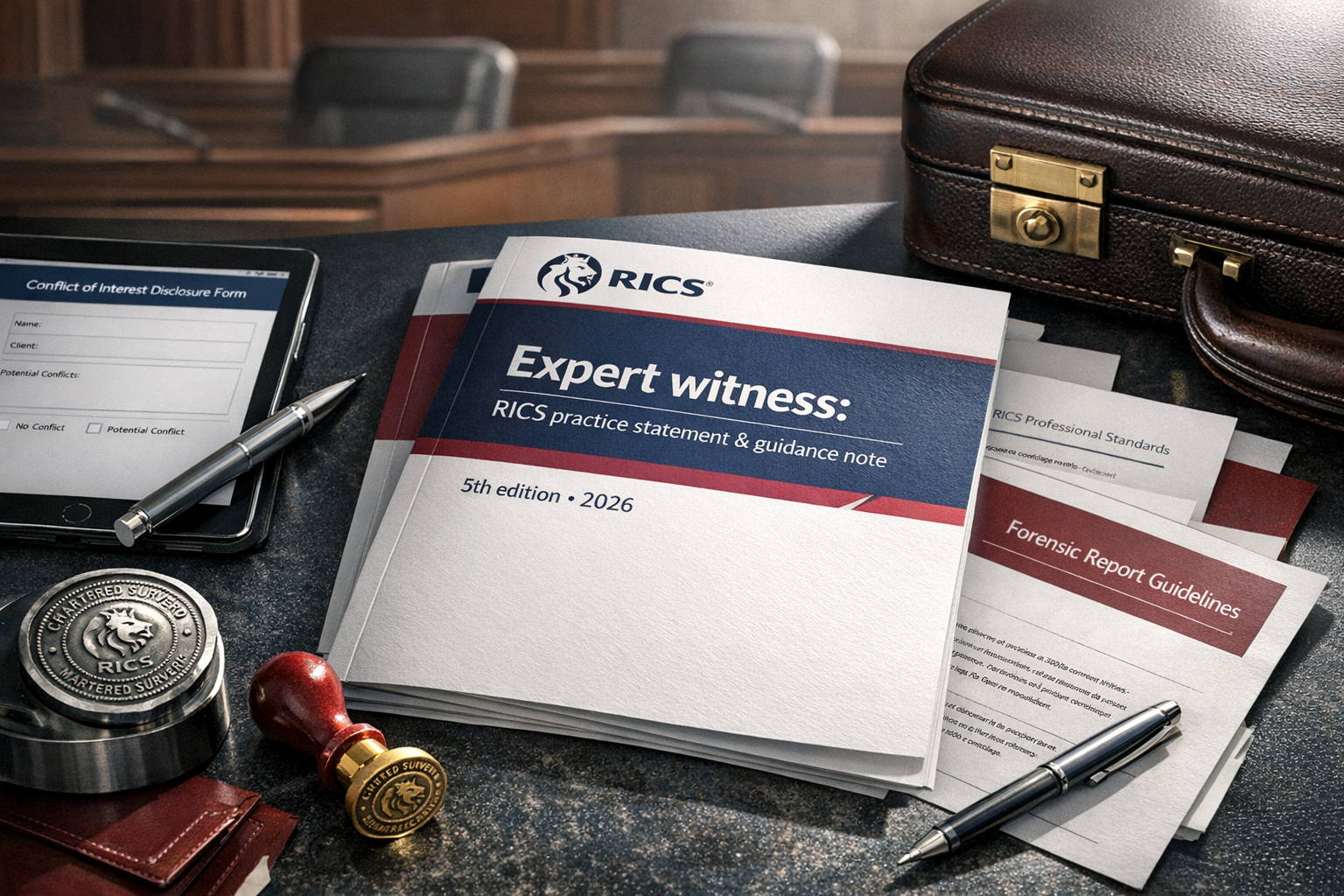
The 5th edition of RICS expert witness standards, launched for consultation on August 26, 2025, represents the first major update since 2014 [1]. This comprehensive revision reflects years of collaborative development with technical experts and addresses modern practice realities.
Key changes include:
🌍 Global Application with Local Flexibility
The updated standard applies worldwide while recognizing local legal differences, designed to work within various legal systems while maintaining core professional principles [1]. This is particularly relevant for international developers operating in the UK market.
🤖 AI and Digital Evidence Integration
For the first time, RICS standards explicitly cover provisions for AI use and digital evidence handling. Expert witnesses can now leverage technology for data analysis, comparative assessments, and report generation—provided they maintain transparency about AI's role and verify all outputs [1].
💼 Enhanced Fee Protection
The standard provides clearer guidance on conditional and deferred fees to protect professional independence. Notably, a February 2023 amendment clarified that expert witnesses can accept instructions from solicitors on conditional fees if the expert themselves operates on an unconditional fee basis [3]. This protects the expert's independence while acknowledging commercial realities.
⚠️ Conflict of Interest Protocols
Enhanced requirements now mandate clearer identification and disclosure of potential conflicts, with specific guidance for high-volume cases where template usage might compromise individualized analysis [1].
Duty to the Tribunal: Reinforced Independence
The updated standard reaffirms and strengthens the fundamental principle that expert witnesses' primary duty is to the tribunal, not the instructing party. This means:
- Reports must present balanced analysis, including evidence that may not favor the instructing party
- Experts must not act as advocates for either side
- Professional opinions must remain within demonstrated areas of competence
- Independence must be maintained throughout the entire process
For expert witness surveyors handling new build defect cases, this independence is tested when developers pressure for favorable valuations or when homeowners expect validation of inflated claims.
Awaab's Law and Evolving Legal Requirements
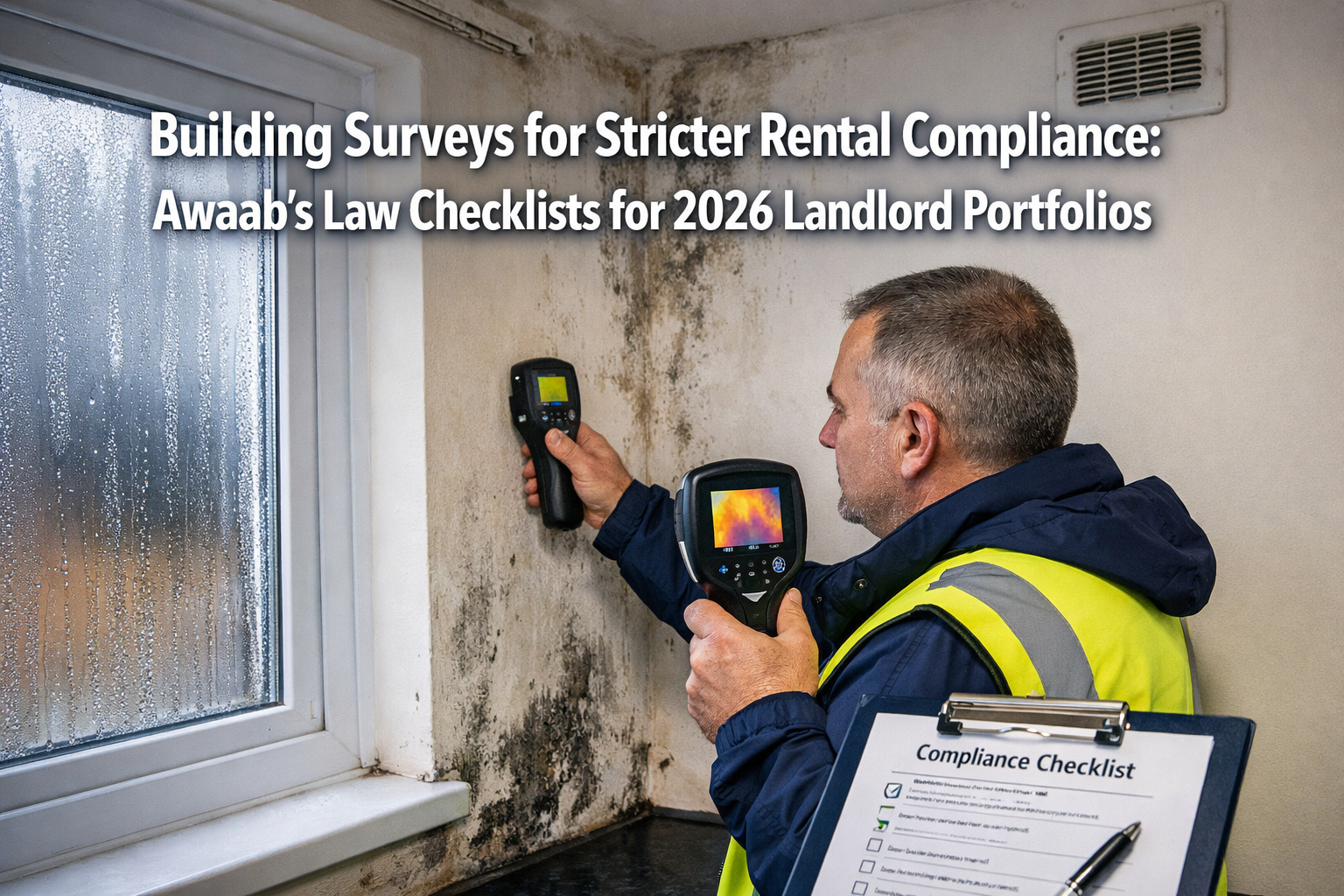
RICS members acting as expert witnesses in housing-related disputes must note Awaab's Law, which became effective in October 2025 [1]. This legislation, named after a two-year-old who died from prolonged exposure to mold, imposes strict timeframes on landlords for investigating and fixing health hazards.
While primarily affecting social housing, Awaab's Law influences expert witness considerations in new build defect cases by:
- Establishing clearer standards for habitability and health hazards
- Creating precedents for liability when defects affect occupant health
- Reinforcing the importance of timely defect remediation
- Providing additional legal context for valuation diminution assessments
Experts must also remain current with the Housing Health and Safety Rating System (HHSRS), which provides a risk-based evaluation tool for potential hazards in residential properties [1].
RICS Accredited Expert Witness Register
The RICS Accredited Expert Witness Register, updated in March 2026, maintains a list of professionals who have completed rigorous training and assessment [2]. To achieve accreditation, surveyors must:
- ✅ Complete four training modules covering expert witness fundamentals
- ✅ Pass ethics assessments demonstrating understanding of professional duties
- ✅ Undergo professional interviews evaluating competence and judgment
- ✅ Maintain continuing professional development in expert witness practice
The register serves as a valuable resource for legal professionals seeking qualified experts, and RICS Dispute Resolution Services can nominate suitably experienced, impartial expert witnesses free from conflicts of interest [2].
For those seeking expert witness services, verification of RICS accreditation provides assurance of professional competence and adherence to current standards.
Practical Application: Expert Witness Valuations for New Build Defects in 2026
Valuation Methodology in Defect Cases
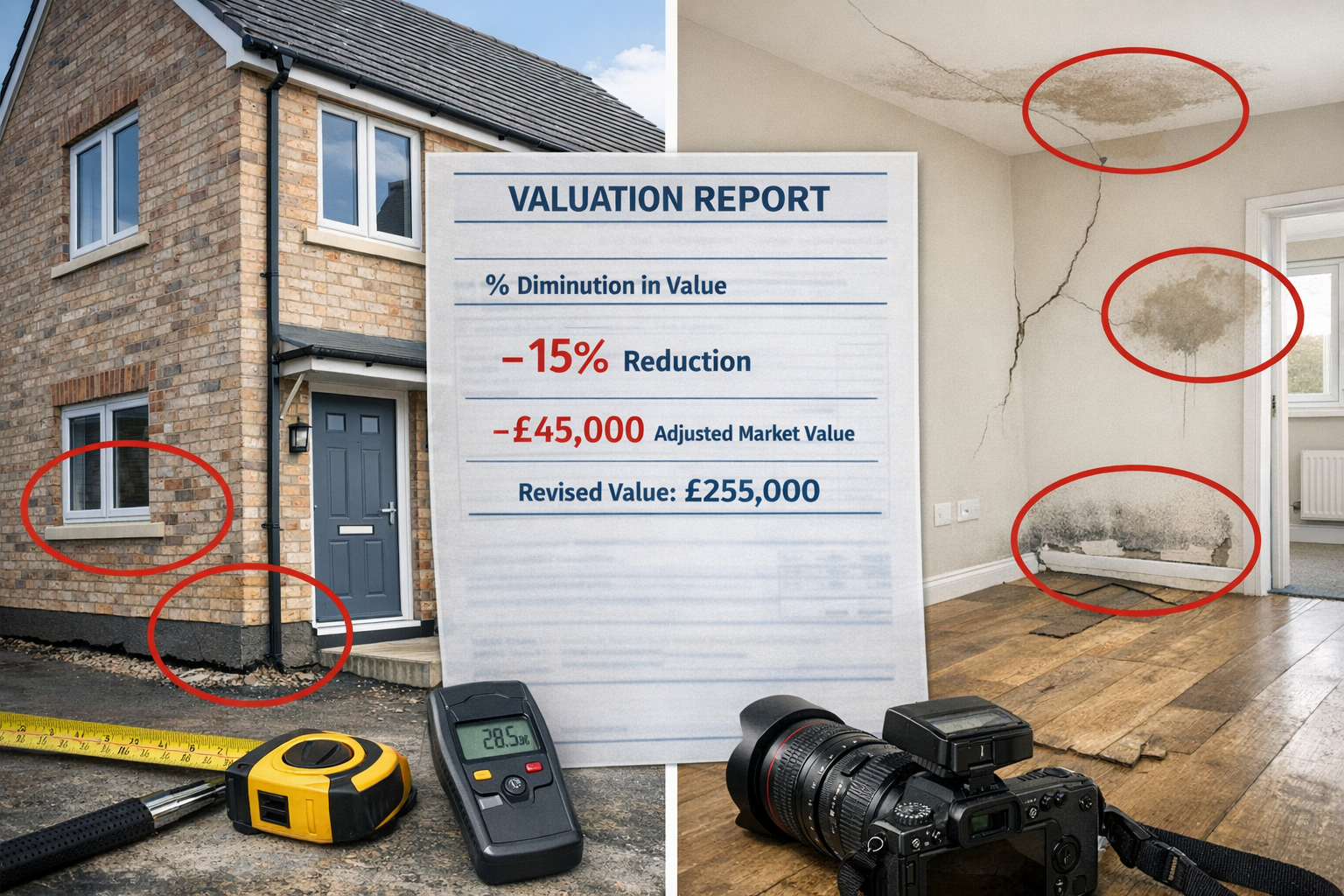
When conducting expert witness valuations for new build defects, professionals typically employ a comparative diminution approach that considers:
Before-and-After Analysis
This method establishes the property's value in its defective condition versus its value if properly constructed. The difference represents the diminution attributable to defects.
Cost-to-Cure Adjustment
While not always equivalent to diminution, remediation costs provide important context. However, experts must recognize that cost to cure may exceed or fall short of actual market diminution depending on buyer perception and market conditions.
Market Resistance Analysis
In 2026's 2-5% growth market, experts must assess how defects affect marketability. A property with disclosed defects may experience:
- Extended marketing periods (time-on-market penalty)
- Reduced buyer pool (risk-averse buyers withdrawing)
- Price negotiation disadvantages (buyer leverage increases)
- Financing complications (lender reluctance for defective properties)
Comparable Evidence
The strongest expert opinions rely on actual market transactions of similar properties with comparable defects. However, such evidence is often scarce, requiring experts to make reasoned adjustments from available comparables.
Case Study Insights: Northern Market Disputes
Recent disputes in Northern England provide valuable insights into Expert Witness Valuations for New Build Defects: RICS Standards in 2026's 2-5% Price Growth Era applications:
Case Example 1: Foundation Settlement in Manchester New Build Estate
A 2024-built development experienced differential foundation settlement affecting 12 properties. Expert witnesses were instructed by both homeowners and the developer. Key issues included:
- Conflicting technical opinions on whether settlement had stabilized
- Valuation disputes ranging from 8% to 25% diminution
- Market evidence challenges due to lack of comparable defective sales
- Resolution approach: Joint expert meetings led to agreed diminution of 15% with developer-funded remediation
Case Example 2: Water Ingress in Leeds Apartment Complex
A 2023 new build apartment block experienced widespread water penetration due to inadequate building envelope design. Expert witness challenges included:
- Separating defect impact from general market softening in the apartment sector
- Accounting for reputational damage to the development
- Assessing collective vs. individual diminution in a multi-unit building
- Outcome: Expert evidence supported 18% diminution for affected units, with additional 5% for reputational impact across the entire development
These cases highlight the importance of thorough documentation, clear methodology, and professional independence in expert witness work.
The Price of Expert Witness Services
Understanding the price of valuation services is important for parties considering litigation. Expert witness fees typically exceed standard valuation costs due to:
- 📋 Report complexity and detail requirements
- ⏰ Time investment for site inspections, research, and analysis
- 💼 Professional liability exposure in contentious matters
- 🎯 Court attendance preparation and testimony
- 📚 Continuing education in legal procedures and standards
Typical fee structures include:
| Service Component | Typical Fee Range |
|---|---|
| Initial instruction and conflict check | £500-£1,000 |
| Site inspection and investigation | £1,500-£3,000 |
| Research and comparable analysis | £2,000-£4,000 |
| Expert report preparation | £3,000-£6,000 |
| Court attendance (per day) | £2,500-£5,000 |
| Expert witness conference | £1,500-£3,000 |
These ranges vary based on property complexity, defect severity, and expert experience. Importantly, fees should never be contingent on case outcome to maintain independence [3].
Integration with Other Professional Services
Expert witness valuations for new build defects often require coordination with other professional services:
- Red Book valuations for establishing baseline market values
- Structural engineering assessments for technical defect analysis
- Building control consultations for regulatory compliance verification
- Damp surveys for moisture-related defects
- Legal expert opinions on contractual and warranty matters
This multidisciplinary approach ensures comprehensive analysis addressing all aspects of defect-related disputes.

Best Practices for Expert Witness Valuations in 2026's Market
Maintaining Professional Independence
The cornerstone of credible expert witness work is unwavering independence. In practice, this means:
🔍 Thorough Conflict Checks
Before accepting instructions, experts must identify any relationships, previous work, or financial interests that could compromise objectivity. The updated RICS standard provides enhanced guidance on conflict identification [1].
📝 Clear Engagement Terms
Written terms of engagement should explicitly state the expert's duty to the tribunal, fee arrangements (avoiding contingency structures), and scope limitations. This protects both the expert and the instructing party.
🎯 Balanced Analysis
Reports must present evidence fairly, including facts that may not support the instructing party's position. This balanced approach enhances credibility and serves the tribunal's need for objective information.
💬 Professional Communication
Experts should maintain professional distance from advocacy, avoiding language that suggests partisan alignment. Communications with instructing solicitors should focus on technical matters rather than case strategy.
Documentation and Evidence Standards
Robust documentation forms the foundation of defensible expert opinions:
Photographic Evidence
Comprehensive photographic documentation of defects, using professional equipment with proper lighting and scale references. Digital timestamps and metadata provide authenticity verification.
Measurement Records
Detailed measurements of defect extent, using calibrated equipment and documented methodologies. For example, crack width measurements should note the instrument used and measurement locations.
Comparable Evidence Files
Organized records of comparable properties, including sale dates, conditions, locations, and adjustment rationale. This transparency allows opposing experts and tribunals to understand the valuation logic.
Correspondence Logs
Dated records of all communications, site access arrangements, and information requests. This creates an audit trail demonstrating thoroughness and professionalism.
Leveraging Technology Appropriately
The 2025-2026 RICS standards explicitly recognize technology's role in expert witness work [1]. Appropriate applications include:
📊 Data Analytics Tools
Software for analyzing market trends, price movements, and comparable property characteristics. These tools enhance accuracy but require expert interpretation.
🤖 AI-Assisted Research
Artificial intelligence can help identify relevant case law, locate comparable sales, and analyze large datasets. However, experts must verify AI outputs and disclose AI's role in their methodology [1].
📱 Digital Evidence Management
Cloud-based systems for organizing photographs, documents, and reports. These platforms facilitate collaboration while maintaining security and version control.
🎥 Virtual Site Inspections
While not replacing physical inspections, video technology enables remote consultations and can supplement in-person assessments, particularly useful for documenting changing conditions over time.
Preparing for Cross-Examination
Expert witnesses must anticipate challenges to their opinions during cross-examination:
Know Your Methodology
Be prepared to explain every assumption, adjustment, and conclusion in detail. Weak or inconsistent methodology will be exposed under questioning.
Acknowledge Limitations
Credibility increases when experts honestly acknowledge data limitations, uncertainty ranges, or alternative interpretations. Overconfidence undermines trust.
Stay Within Expertise
Resist pressure to opine beyond demonstrated competence. Admitting "that's outside my area of expertise" strengthens rather than weakens credibility.
Maintain Composure
Cross-examination can be adversarial, but experts must remain professional, measured, and focused on technical matters rather than emotional responses.
The Future of Expert Witness Valuations for New Build Defects
Emerging Trends in 2026 and Beyond
Several trends are shaping the future of expert witness practice in new build defect cases:
🏡 Increased New Build Scrutiny
As the 2-5% price growth era continues, buyers are becoming more sophisticated about new build quality. This heightened awareness is likely to increase defect claims and expert witness demand.
📱 Digital Evidence Standards
Courts are increasingly accepting digital evidence, including drone photography, thermal imaging, and 3D scanning. Experts must develop competence in these technologies and understand their evidentiary weight.
🌍 Climate-Related Defects
Climate change is introducing new defect categories, including inadequate flood resilience, thermal performance failures, and weather-related material degradation. Experts must stay current with evolving building standards addressing these issues.
⚖️ Alternative Dispute Resolution
There's growing emphasis on resolving defect disputes through mediation and arbitration rather than litigation. Expert witnesses must adapt their approach for these less formal settings while maintaining professional standards.
Continuing Professional Development
RICS accredited expert witnesses must maintain current knowledge through ongoing professional development [2]. Priority areas for 2026 include:
- Updated building regulations and compliance standards
- Emerging construction technologies and materials
- Legal developments affecting expert witness practice
- Advanced valuation methodologies for complex defects
- Technology integration in evidence gathering and presentation
Professional organizations offer specialized training, and experts should participate in peer review groups to discuss challenging cases and methodological approaches.
Collaboration with Legal Professionals
Effective expert witness work requires strong collaboration with legal teams while maintaining independence. Best practices include:
Early Involvement
Engaging experts early in case development allows for strategic evidence gathering and identification of key technical issues.
Clear Communication
Experts should communicate technical matters in accessible language, helping legal professionals understand complex valuation and construction concepts.
Realistic Expectations
Experts should provide honest assessments of case strengths and weaknesses, even when the analysis doesn't fully support the instructing party's position.
Joint Expert Processes
When opposing parties appoint separate experts, joint meetings and agreed statements of fact can narrow disputes and facilitate resolution.
For those requiring comprehensive property assessment services beyond expert witness work, valuation reports provide detailed analysis for various purposes including purchase decisions, refinancing, and estate planning.
Conclusion
Expert Witness Valuations for New Build Defects: RICS Standards in 2026's 2-5% Price Growth Era represents a critical intersection of professional standards, market dynamics, and legal requirements. As new build sales continue in the current growth environment, the demand for independent, credible expert witness opinions on defect-related diminution will only increase.
The updated 5th edition RICS expert witness standard, launched in 2025, provides enhanced guidance addressing modern practice realities including digital evidence, AI integration, and strengthened independence protocols [1]. These standards ensure that expert witnesses maintain the highest professional integrity while adapting to technological and legal evolution.
For property professionals, developers, and homeowners navigating new build defect disputes, understanding the role of expert witnesses and the rigorous standards governing their practice is essential. The cases emerging from Northern markets demonstrate both the complexity of these disputes and the value of properly qualified, accredited expert witnesses in achieving fair resolutions.
Actionable Next Steps
For Property Owners Facing New Build Defects:
- Document defects thoroughly with photographs and written descriptions
- Obtain a specialist defect survey to establish technical baseline
- Consult legal professionals experienced in construction disputes
- Engage RICS accredited expert witnesses early in the process
- Understand that expert duty is to the tribunal, not to support your position at any cost
For Property Professionals Seeking Expert Witness Accreditation:
- Review the updated 5th edition RICS expert witness standard [1]
- Complete the four required training modules and ethics assessments [2]
- Develop expertise in specific property sectors and defect types
- Build robust methodologies for valuation diminution analysis
- Maintain continuing professional development in expert witness practice
For Legal Professionals Instructing Expert Witnesses:
- Verify RICS accreditation through the March 2026 register [2]
- Provide clear instructions and complete background documentation
- Respect expert independence and avoid advocacy pressure
- Facilitate joint expert processes where appropriate
- Engage experts early for strategic case development
The property market's steady growth in 2026 creates both opportunities and challenges. By adhering to rigorous professional standards, maintaining unwavering independence, and leveraging appropriate technology, expert witnesses provide the credible, unbiased analysis essential for fair resolution of new build defect disputes.
For professional assistance with expert witness valuations, defect surveys, or general property assessment needs, contact qualified RICS professionals who understand both current market conditions and the exacting standards governing expert witness practice.
References
[1] Rics Launches Global Consultation On Updated Expert Witness Standard – https://www.rics.org/news-insights/rics-launches-global-consultation-on-updated-expert-witness-standard
[2] Rics Register Of Accredited Expert Witnesses March 2026 – https://www.rics.org/content/dam/ricsglobal/documents/surveying/RICS-Register-of-Accredited-Expert-Witnesses_March-2026.pdf
[3] Surveyors Acting As Expert Witnesses – https://www.rics.org/profession-standards/rics-standards-and-guidance/sector-standards/dispute-resolution-standards/surveyors-acting-as-expert-witnesses