
{"cover":"Professional landscape format (1536×1024) hero image featuring bold text overlay 'Expert Witness Roles in Geopolitical Valuation Disputes: RICS February 2026 Buyer Sentiment Slump' in extra large 72pt white sans-serif font with dark gradient shadow, positioned center-upper third. Background shows sophisticated courtroom setting merged with global financial district imagery, featuring witness stand, legal documents, international flags, property valuation charts on digital screens, and world map with geopolitical tension zones highlighted in red. Color scheme: deep navy blue, gold accents, white text, professional legal aesthetic. High contrast, magazine cover quality, editorial style with subtle overlay of RICS survey data graphs and declining sentiment indicators.","content":["Landscape format (1536×1024) editorial image showing professional expert witness in formal business attire presenting detailed valuation analysis in modern arbitration setting. Scene includes large digital display screens showing property valuation comparison charts, RICS Red Book guidelines, geopolitical risk heat maps with highlighted conflict zones, and February 2026 buyer sentiment decline graphs with downward trending arrows. Foreground features expert gesturing toward evidence documents, background shows panel of arbitrators listening intently. Color palette: professional charcoal gray, burgundy accents, white documentation, warm lighting. Composition emphasizes authority, credibility, technical expertise. Include visible elements: property photographs, valuation methodology flowcharts, sanction impact analysis documents.","Landscape format (1536×1024) detailed infographic-style image displaying multi-layered valuation dispute framework. Central focus shows interconnected circular nodes representing different expert specializations: sanctions compliance specialist, quantum expert, forensic accountant, property valuer, geopolitical analyst. Each node connects to specific case examples with visual icons: shipping containers for trade disputes, oil barrels for energy conflicts, property blueprints for real estate valuation, currency symbols for financial impacts. Background features subtle world map with trade routes and sanction zones marked. Include data visualization elements: pie charts showing expert testimony impact percentages, timeline showing 2026 geopolitical events affecting property markets, bar graphs comparing pre and post-RICS survey valuation confidence levels. Professional color scheme: teal, orange, gray, white.","Landscape format (1536×1024) professional composition showing comparative before-and-after valuation analysis workspace. Left side displays traditional property valuation methods: physical survey documents, comparable sales data, standard RICS valuation reports from pre-2026 period with stable market indicators. Right side shows enhanced 2026 geopolitical valuation approach: multiple computer screens with real-time sanctions databases, geopolitical risk modeling software, counterfactual economic scenarios, forensic data analysis tools, multi-jurisdictional regulatory compliance checklists. Center features registered RICS valuer reviewing both approaches with highlighted differences. Include visible elements: Red Book standards, expert witness report templates, court admissibility criteria, evidence documentation protocols. Color scheme: warm wood tones, blue digital screens, professional office lighting, documentary photography style emphasizing methodological evolution and increased complexity."]"}

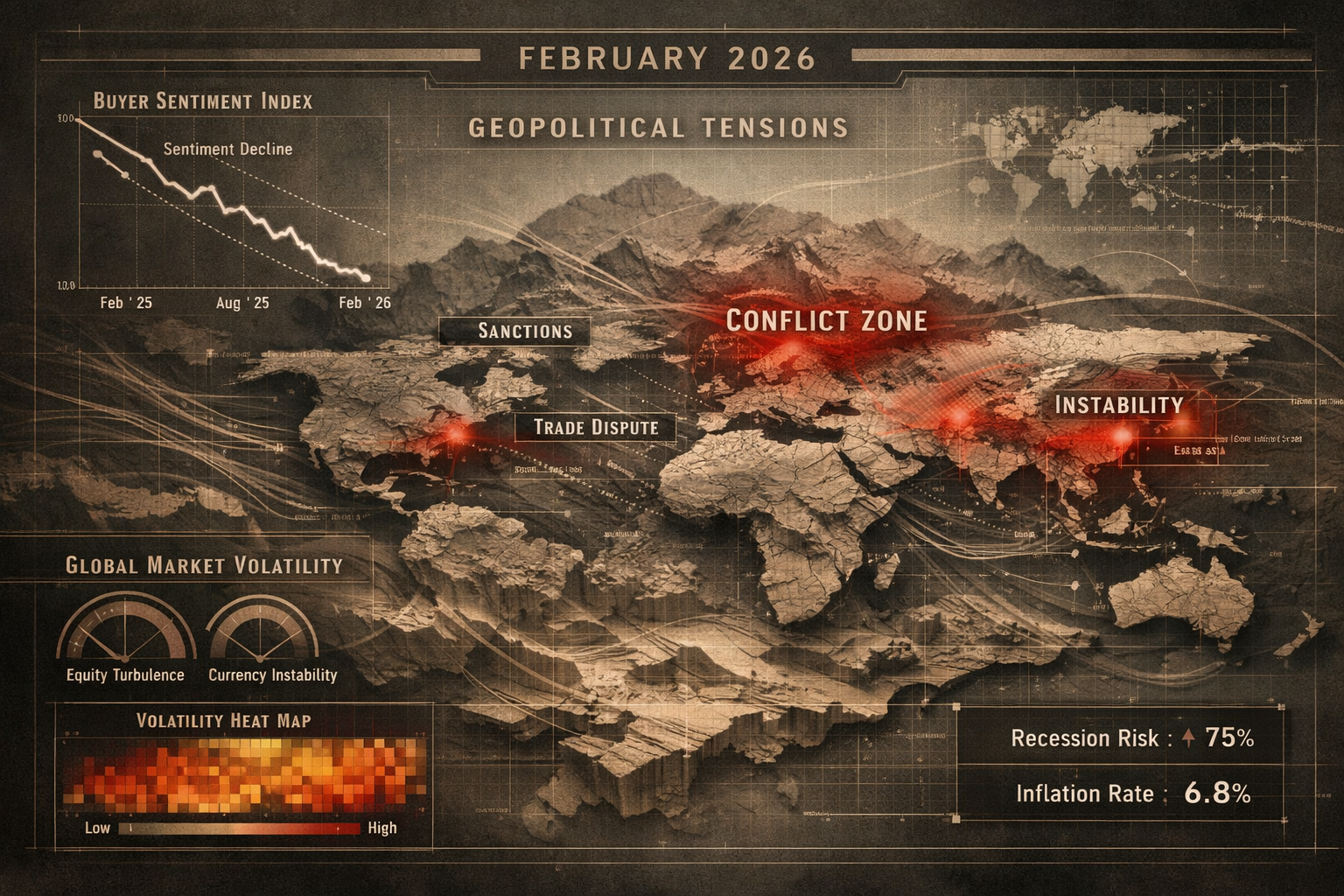
The Royal Institution of Chartered Surveyors (RICS) February 2026 residential market survey revealed a stark reality: buyer enquiries fell to their lowest level in over 18 months, with sentiment indices dropping sharply across major UK markets. This slump arrives precisely when geopolitical tensions—from ongoing conflicts in Ukraine and the Middle East to cascading sanctions regimes—have created unprecedented complexity in property valuation disputes. The convergence of depressed market confidence and international instability demands a fundamental shift in how expert witnesses approach valuation evidence, particularly when mortgage lenders, buyers, and sellers find themselves locked in disagreements over property worth amid uncertainty.
Understanding Expert Witness Roles in Geopolitical Valuation Disputes: Responding to RICS February 2026 Buyer Sentiment Slump has become essential for property professionals, legal teams, and financial institutions navigating this challenging landscape. The traditional valuation methodologies that served well in stable markets now require augmentation with geopolitical risk analysis, sanctions compliance expertise, and sophisticated counterfactual modeling to establish credible, defensible valuations.
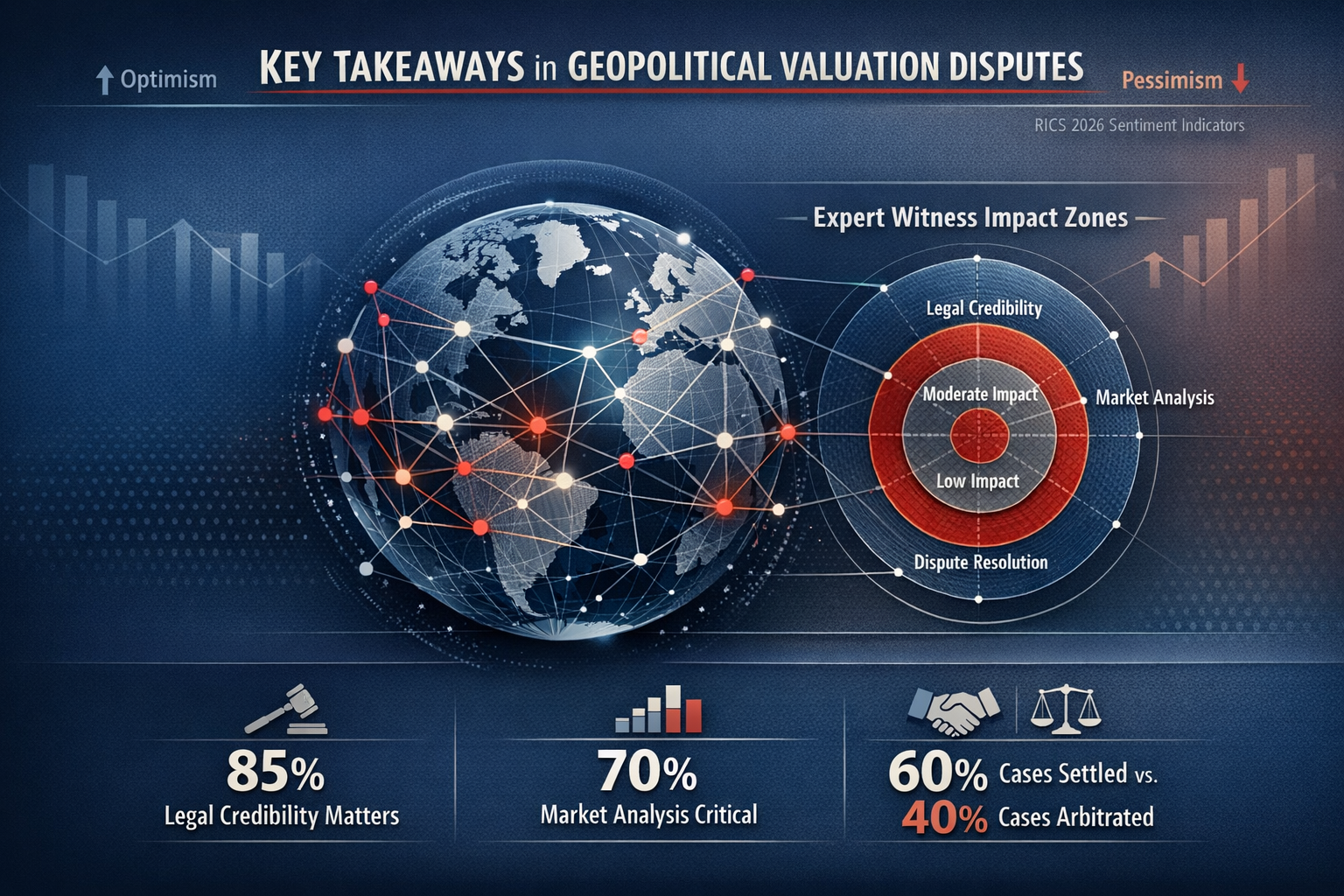
Key Takeaways
- Market uncertainty amplifies disputes: The February 2026 RICS sentiment slump creates fertile ground for valuation disagreements between buyers, sellers, and lenders
- Multi-disciplinary expertise required: Geopolitical valuation disputes now demand teams combining registered RICS valuers, sanctions specialists, and forensic analysts
- Evidence standards evolve: Courts and tribunals increasingly expect expert witnesses to demonstrate robust "but-for" analysis accounting for international tensions
- Proactive documentation critical: Maintaining comprehensive valuation records and geopolitical impact assessments protects parties before disputes arise
- Credibility determines outcomes: Expert witness selection and preparation directly influence settlement negotiations and tribunal decisions in complex property disputes
Understanding the February 2026 Market Context
The RICS Sentiment Decline
The February 2026 RICS Residential Market Survey painted a concerning picture for UK property markets. Buyer enquiries contracted significantly, with the net balance falling to levels not seen since mid-2024. New seller instructions remained subdued, while agreed sales continued their downward trajectory. This triple pressure—reduced demand, limited supply, and fewer transactions—created what industry observers termed a "valuation fog" where establishing accurate property values became increasingly contentious.
Key February 2026 indicators included:
- 📉 Buyer enquiry net balance: -28% (down from -15% in January)
- 📉 New seller instructions: -12% net balance
- 📉 Agreed sales: -22% net balance
- 📊 Price expectations: Mixed regional variation with London showing particular weakness
This market uncertainty coincided with heightened geopolitical pressures throughout early 2026, including the continuation of the Russia-Ukraine conflict, escalating Middle East tensions, and significant developments in Venezuela affecting international investment flows [1]. The combination created perfect conditions for valuation disputes, particularly in transactions involving:
- International buyers subject to sanctions screening
- Properties with foreign ownership structures
- Commercial assets exposed to global supply chain disruptions
- Mortgage valuations challenged by rapidly shifting sentiment
Why Valuation Disputes Intensify During Uncertainty
When market confidence erodes, the gap between buyer and seller expectations widens dramatically. A property that might have commanded £850,000 in December 2025 could face buyer offers of £780,000 by March 2026—not due to physical deterioration but purely from sentiment shifts. Lenders, meanwhile, adopt conservative positions to protect loan-to-value ratios, often commissioning Red Book valuations that come in below agreed purchase prices.
These disputes escalate to formal proceedings when:
- Mortgage offers fall through due to low valuations, triggering contract disputes
- Sellers refuse price reductions despite changed market conditions
- Buyers claim misrepresentation regarding property value or market position
- Lenders seek recovery on defaulted loans with disputed collateral values
The February 2026 sentiment slump transformed these routine disagreements into complex battles requiring sophisticated expert witness testimony to resolve.
Expert Witness Roles in Geopolitical Valuation Disputes: Core Responsibilities
Primary Functions of Valuation Expert Witnesses
Expert witnesses in property valuation disputes serve distinct roles that differ fundamentally from standard surveying practice. While a commercial property surveyor conducting routine work provides opinions for client decision-making, an expert witness owes their primary duty to the court or tribunal, not the instructing party.
Core responsibilities include:
✅ Independent analysis: Providing unbiased opinions regardless of which party engaged them
✅ Methodology transparency: Clearly explaining valuation approaches and assumptions
✅ Evidence documentation: Supporting conclusions with verifiable data and comparable transactions
✅ Counterfactual modeling: Demonstrating "but-for" scenarios showing value absent disputed factors
✅ Cross-examination resilience: Defending opinions under rigorous questioning from opposing counsel
In the context of Expert Witness Roles in Geopolitical Valuation Disputes: Responding to RICS February 2026 Buyer Sentiment Slump, these responsibilities expand to encompass:
- Geopolitical risk quantification: Assessing how international tensions specifically impact subject property values
- Sanctions compliance verification: Confirming transaction legality and identifying restricted parties
- Market sentiment calibration: Distinguishing temporary uncertainty from fundamental value shifts
- Multi-jurisdictional analysis: Understanding cross-border implications for international property holdings
The Multi-Disciplinary Team Approach
Complex geopolitical valuation disputes increasingly require coordinated expert teams rather than single practitioners [1]. A typical high-stakes case might involve:
| Expert Type | Primary Contribution | Interaction with Valuation |
|---|---|---|
| RICS Registered Valuer | Core property valuation using Red Book standards | Foundation opinion on market value |
| Sanctions Specialist | Export control, licensing, entity screening | Legal permissibility of transaction |
| Quantum Expert | Damages calculation, loss modeling | Financial impact quantification |
| Forensic Accountant | Financial records analysis, data verification | Revenue and cost validation |
| Geopolitical Analyst | Country risk assessment, scenario planning | Probability-weighted value adjustments |
| Industry Specialist | Sector-specific market knowledge (energy, shipping, etc.) | Causation and market practice evidence |
This multi-disciplinary approach proved essential in recent high-profile cases. Expert valuations contributed to an $811 million Delaware Court of Chancery award in earnout disputes and supported approval of a landmark $5.89 billion Citgo sale opinion with significant geopolitical implications in Venezuela-related litigation during 2026 [3]. These cases demonstrated that isolated valuation opinions, without supporting sanctions analysis and geopolitical context, lack the credibility tribunals demand.
Establishing Credibility and Independence
The March 2026 Global Arbitration Review Expert Witness Firms' Power Index rankings highlighted the premium tribunals place on established expert witness credentials [3]. Parties selecting experts must prioritize:
🏆 Professional qualifications: RICS fellowship, specialized certifications, relevant academic credentials
🏆 Dispute experience: Track record in similar cases, cross-examination history
🏆 Independence demonstration: Absence of conflicts, transparent fee arrangements
🏆 Methodological rigor: Published research, peer recognition, adherence to professional standards
🏆 Communication skills: Ability to explain complex concepts clearly to non-specialist decision-makers
For property professionals engaging expert witnesses, understanding these credibility factors helps identify appropriate specialists. A registered RICS valuer with extensive local market knowledge provides excellent foundation testimony, but geopolitical disputes may require supplementary expertise in international sanctions regimes and cross-border transaction analysis.
Responding to the 2026 Sentiment Slump: Strategic Approaches
Proving Valuation Resilience Amid Market Uncertainty
The central challenge in Expert Witness Roles in Geopolitical Valuation Disputes: Responding to RICS February 2026 Buyer Sentiment Slump involves demonstrating whether value changes reflect temporary sentiment shifts or fundamental market corrections. Expert witnesses must distinguish between:
Temporary sentiment effects (potentially recoverable):
- Short-term buyer hesitation due to economic headlines
- Seasonal market slowdowns coinciding with geopolitical news
- Liquidity constraints affecting transaction velocity but not underlying value
- Risk premium increases that may normalize as uncertainty resolves
Fundamental value changes (likely permanent):
- Structural market shifts from sanctions permanently restricting buyer pools
- Physical property impacts from supply chain disruptions
- Regulatory changes affecting property use or ownership
- Irreversible neighborhood decline from economic restructuring
Expert witnesses employ several techniques to make this distinction:
- Comparable transaction analysis with timing adjustments: Identifying sales before, during, and after sentiment shifts to isolate pure sentiment effects
- Hedonic regression modeling: Statistically separating property-specific attributes from market-wide sentiment factors
- Investor survey evidence: Documenting stated reasons for valuation adjustments among market participants
- Scenario analysis: Modeling value under different geopolitical outcome probabilities
Forensic Valuation Analysis in Data-Asymmetric Disputes
A significant challenge in modern valuation disputes involves information asymmetry, where one party controls operational data essential for accurate valuation [2]. This commonly occurs when:
- Property owners possess detailed income and expense records while buyers rely on limited disclosure
- Lenders hold comprehensive comparable transaction databases unavailable to borrowers
- Commercial property operators control tenant information, lease terms, and maintenance histories
Expert witnesses must employ forensic techniques to overcome these asymmetries:
Data verification protocols:
- Cross-referencing disclosed information against independent sources
- Identifying data gaps and quantifying uncertainty ranges
- Testing disclosed figures for internal consistency
- Requesting specific discovery to support valuation positions
Counterfactual construction:
- Building "but-for" valuation scenarios from first principles when observable market data proves insufficient
- Modeling expected performance absent disputed factors
- Quantifying damages through difference between actual and counterfactual values
This forensic approach gained prominence in renewable energy infrastructure disputes, where project sponsors controlling generation curves, equipment records, and grid logs held significant informational advantages in valuation disagreements [2]. The methodology transfers directly to property valuation disputes where one party controls critical information.
Addressing Cascading Geopolitical Effects
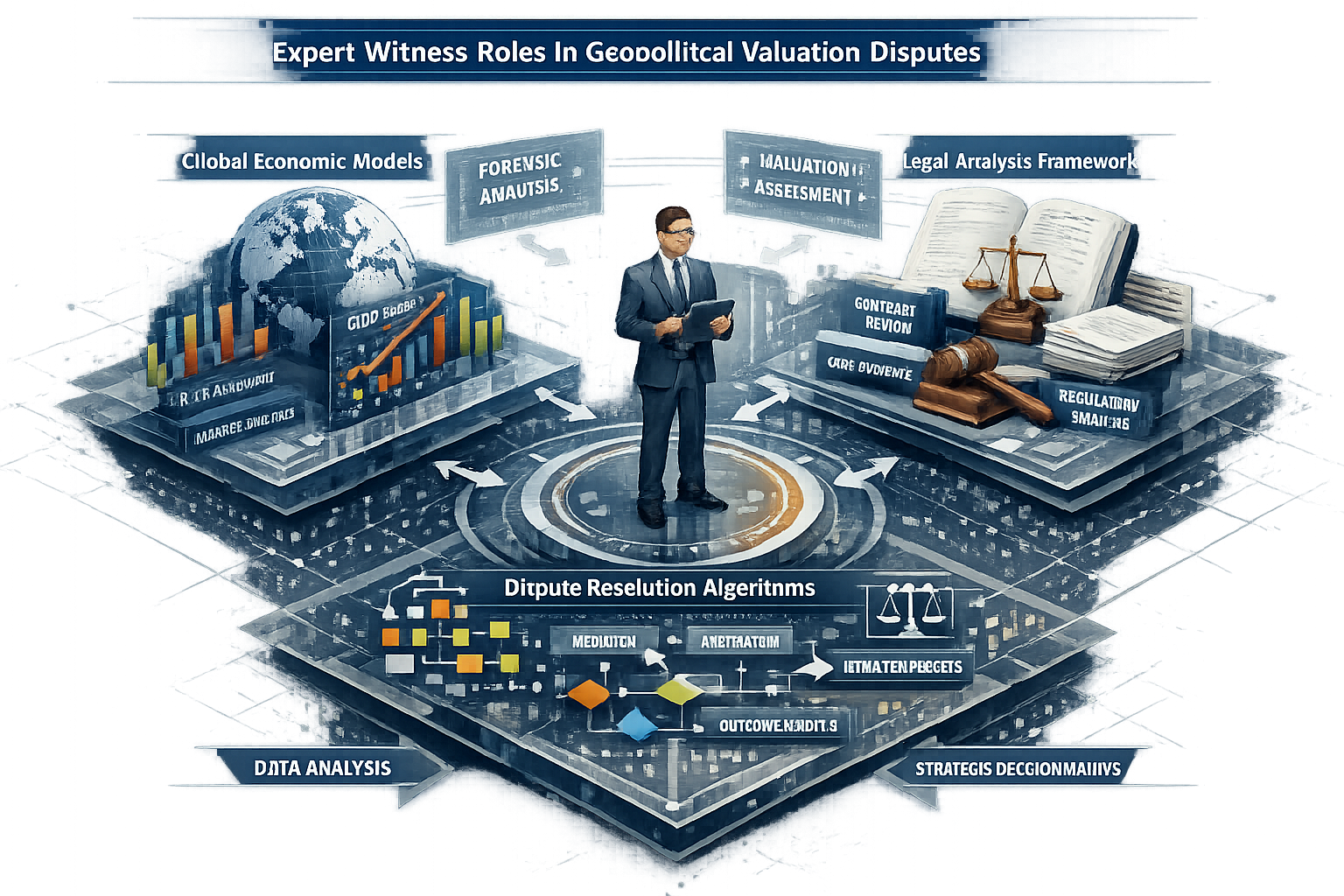
Geopolitical events rarely impact property values through single, direct channels. Instead, expert witnesses must trace cascading effects through multiple regulatory and commercial layers simultaneously [2]. Consider a commercial property valuation dispute involving an industrial facility with international tenant exposure:
Direct impacts:
- Sanctions restricting tenant operations
- Export controls limiting equipment sourcing
- Currency fluctuations affecting lease payment values
Secondary impacts:
- Construction timing delays affecting comparable development values
- Commodity price changes impacting operating costs
- Supply chain disruptions reducing tenant profitability
Tertiary impacts:
- Interconnection queue delays for utility services
- Subsidy eligibility changes from regulatory responses
- Insurance cost increases from heightened geopolitical risk
Expert witnesses must model these interconnected effects comprehensively, demonstrating how initial geopolitical events propagate through complex causal chains to ultimately affect property values. This requires combining:
- Economic modeling expertise to quantify multi-stage impacts
- Industry knowledge to identify relevant causal pathways
- Legal analysis to assess regulatory response probabilities
- Valuation skills to translate complex scenarios into defensible value opinions
Practical Evidence Strategies for Common Dispute Types
Different dispute contexts require tailored evidence strategies:
Mortgage valuation disputes:
When lenders commission conservative valuations following the February 2026 sentiment slump, buyers challenging these assessments should:
- Engage independent RICS valuers to provide counter-opinions
- Document comparable transactions completed at higher values
- Demonstrate property-specific attributes justifying premium positioning
- Quantify temporary sentiment discounts versus fundamental value
- Prepare detailed valuation factor analysis showing resilience
Purchase price disputes:
When agreed prices become contentious due to changed market conditions:
- Establish precise valuation date and applicable market conditions
- Identify material changes occurring between agreement and completion
- Quantify reasonable price adjustment ranges
- Document disclosure obligations and information timing
- Prepare settlement scenarios with supporting valuation evidence
Lease and rent review disputes:
When rent reviews coincide with geopolitical uncertainty:
- Analyze lease-specific review clauses and valuation definitions
- Identify comparable rent evidence from similar market conditions
- Separate temporary market disruption from sustainable rental values
- Model tenant covenant strength under various geopolitical scenarios
- Prepare expert evidence on market rent determination methodology
Building Robust Valuation Evidence Before Disputes Arise
Proactive Documentation Protocols
The most effective dispute strategy involves preventing disagreements through comprehensive documentation during normal transaction processes. Property professionals should implement:
Enhanced valuation reporting:
- Document geopolitical risk factors considered in valuation
- Maintain detailed comparable transaction databases with timing metadata
- Record market sentiment indicators contemporaneous with valuation dates
- Preserve evidence of methodology selection and assumption justification
- Create audit trails for all data sources and adjustments
Geopolitical impact assessments:
- Conduct regular reviews of international exposure affecting property values
- Document sanctions screening for international buyers and tenants
- Maintain records of supply chain dependencies and alternative sourcing
- Track regulatory changes affecting property use and ownership
- Preserve evidence of risk mitigation measures implemented
Market monitoring systems:
- Subscribe to RICS market surveys and preserve historical data
- Track local market transaction volumes and pricing trends
- Monitor geopolitical developments affecting property sectors
- Document market participant sentiment through regular surveys
- Maintain comparable evidence databases with rich metadata
Selecting Expert Witnesses Strategically
When disputes become inevitable despite preventive measures, early expert engagement proves critical. Parties should:
Assess expertise requirements:
- Identify specific valuation issues requiring expert testimony
- Determine whether geopolitical, sanctions, or forensic expertise needed
- Evaluate whether multi-disciplinary team required
- Consider jurisdictional requirements and expert qualification standards
Evaluate candidate experts:
- Review prior testimony and cross-examination performance
- Assess relevant experience in similar property types and disputes
- Verify professional qualifications and current standing
- Check for potential conflicts of interest
- Interview candidates regarding methodology approaches
Engage experts early:
- Involve experts during evidence gathering, not just report preparation
- Seek expert input on discovery requests and document production
- Allow adequate time for thorough analysis and report preparation
- Budget for potential supplementary reports responding to opposing experts
Coordinating Legal and Expert Strategies
Effective expert witness deployment requires close coordination between legal counsel and expert teams [1]. Best practices include:
✅ Joint case strategy sessions: Regular meetings to align legal theories with expert evidence
✅ Discovery coordination: Expert input on document requests and interrogatories
✅ Report sequencing: Strategic timing of expert report exchanges
✅ Cross-examination preparation: Thorough practice sessions addressing likely challenges
✅ Settlement positioning: Expert involvement in negotiation strategy and valuation ranges
This coordination proved essential in recent high-stakes disputes where multi-disciplinary teams combined legal, valuation, sanctions, and industry expertise to secure favorable outcomes [1][3].
Emerging Trends in Geopolitical Valuation Disputes
Increased Regulatory Scrutiny
Throughout 2026, regulatory bodies have intensified scrutiny of property transactions with international dimensions. This trend affects expert witness roles by:
- Requiring enhanced due diligence documentation in valuation reports
- Demanding explicit sanctions compliance analysis in cross-border transactions
- Increasing evidentiary standards for demonstrating transaction legitimacy
- Expanding expert witness obligations to address regulatory compliance
Expert witnesses must now routinely address regulatory considerations that previously fell outside traditional valuation scope.
Technology-Enhanced Forensic Analysis
Advanced data analytics tools increasingly support expert witness work in valuation disputes:
- Machine learning models identifying comparable transactions from vast datasets
- Geospatial analysis tools quantifying location-specific risk factors
- Sentiment analysis algorithms processing market participant communications
- Blockchain verification confirming transaction authenticity and timing
These technologies enhance expert credibility by providing objective, reproducible analysis supporting valuation opinions.
Alternative Dispute Resolution Preference
The complexity and cost of litigating geopolitical valuation disputes have driven increased interest in alternative dispute resolution mechanisms:
- Expert determination: Single expert appointed jointly to resolve valuation disagreements
- Mediation with expert advisors: Facilitated negotiations informed by neutral expert opinions
- Arbitration with specialized panels: Tribunals combining legal and technical expertise
These alternatives often provide faster, more cost-effective resolution while maintaining rigorous evidentiary standards.
Conclusion: Navigating Valuation Disputes in an Uncertain Landscape
The convergence of the RICS February 2026 buyer sentiment slump with heightened geopolitical tensions has fundamentally transformed property valuation dispute dynamics. Understanding Expert Witness Roles in Geopolitical Valuation Disputes: Responding to RICS February 2026 Buyer Sentiment Slump requires recognizing that traditional valuation methodologies must now incorporate sophisticated geopolitical risk analysis, sanctions compliance expertise, and forensic investigation techniques.
Property professionals, legal teams, and financial institutions navigating this landscape should prioritize:
Immediate action steps:
- Enhance documentation practices to create robust evidence trails before disputes arise
- Build expert witness relationships with qualified specialists combining valuation and geopolitical expertise
- Implement proactive monitoring of market sentiment and geopolitical developments affecting property values
- Develop multi-disciplinary capabilities through partnerships with sanctions, forensic, and industry specialists
- Invest in technology tools supporting data-driven valuation analysis and evidence preparation
Strategic considerations:
- Recognize that market uncertainty amplifies valuation disagreements, making expert witness quality increasingly determinative of outcomes
- Understand that credible expert testimony requires demonstrating independence, methodological rigor, and comprehensive analysis of cascading geopolitical effects
- Appreciate that early expert engagement during evidence gathering significantly improves dispute outcomes compared to last-minute report preparation
- Consider alternative dispute resolution mechanisms that leverage expert determination while avoiding costly litigation
The property valuation profession faces unprecedented complexity as international tensions reshape market dynamics and transaction structures. Those who adapt by developing robust expert witness capabilities, implementing comprehensive documentation protocols, and building multi-disciplinary expertise will navigate disputes successfully. Those who continue relying on traditional approaches risk adverse outcomes in an environment where tribunals demand sophisticated analysis of geopolitical impacts on property values.
For property owners, buyers, lenders, and investors facing valuation disputes in this challenging environment, engaging qualified registered RICS valuers with demonstrated expertise in geopolitical risk analysis provides essential protection. The February 2026 sentiment slump may prove temporary, but the fundamental shift toward geopolitically-informed valuation practice represents a permanent evolution in professional standards.
By understanding expert witness roles, implementing proactive evidence strategies, and recognizing the multi-disciplinary nature of modern valuation disputes, property professionals can transform uncertainty from threat into opportunity—providing clients with the sophisticated analysis and credible testimony essential for favorable dispute resolution in 2026's complex geopolitical landscape.
References
[1] Key Practical Steps Commercial Parties Facing State Actions Arising Geopolitical Pressures 0226 – https://www.duanemorris.com/alerts/key_practical_steps_commercial_parties_facing_state_actions_arising_geopolitical_pressures_0226.html
[2] Energy Transition And Renewable Infrastructure Disputes – https://stoneturn.com/insight/energy-transition-and-renewable-infrastructure-disputes/
[3] secretariat-intl – https://secretariat-intl.com