As the UK property market rebounds in 2026, a surge in transactions has triggered an unprecedented wave of boundary disputes reaching the courts. Property owners, developers, and investors are discovering that unclear boundaries—once overlooked during slower market periods—now carry significant financial consequences. Expert Witness Roles in 2026 Boundary Disputes: Court Expectations as Property Transactions Surge has become a critical topic for anyone involved in property litigation, as courts demand increasingly rigorous technical evidence and professional testimony to resolve these complex cases.
The recovering property market has intensified scrutiny on property valuations and boundary determinations, with even minor discrepancies potentially affecting transactions worth hundreds of thousands of pounds. Courts now expect expert witnesses to provide bulletproof evidence that meets evolving RICS (Royal Institution of Chartered Surveyors) protocols while maintaining absolute independence and transparency. Understanding these expectations is essential for property professionals navigating 2026's litigation landscape.
Key Takeaways
- 📈 Market recovery drives litigation: The 2026 property market surge has increased boundary disputes by creating higher financial stakes for accurate property demarcation and valuation
- ⚖️ Stricter court standards: Courts now demand comprehensive, transparent expert reports following RICS protocols with detailed methodology disclosure and independence declarations
- 🎯 Evidence quality matters: Expert witnesses must provide reproducible technical evidence, including historical deed analysis, modern survey data, and GPS-verified measurements
- 🌍 International standardization: Cross-border property disputes increasingly follow ICC Expert Rules and IBA guidelines for expert testimony structure and presentation
- 💼 Professional qualifications essential: Courts prioritize RICS-accredited expert witnesses with proven boundary dispute experience and court testimony credentials
Understanding Expert Witness Roles in 2026 Boundary Disputes: Court Expectations as Property Transactions Surge
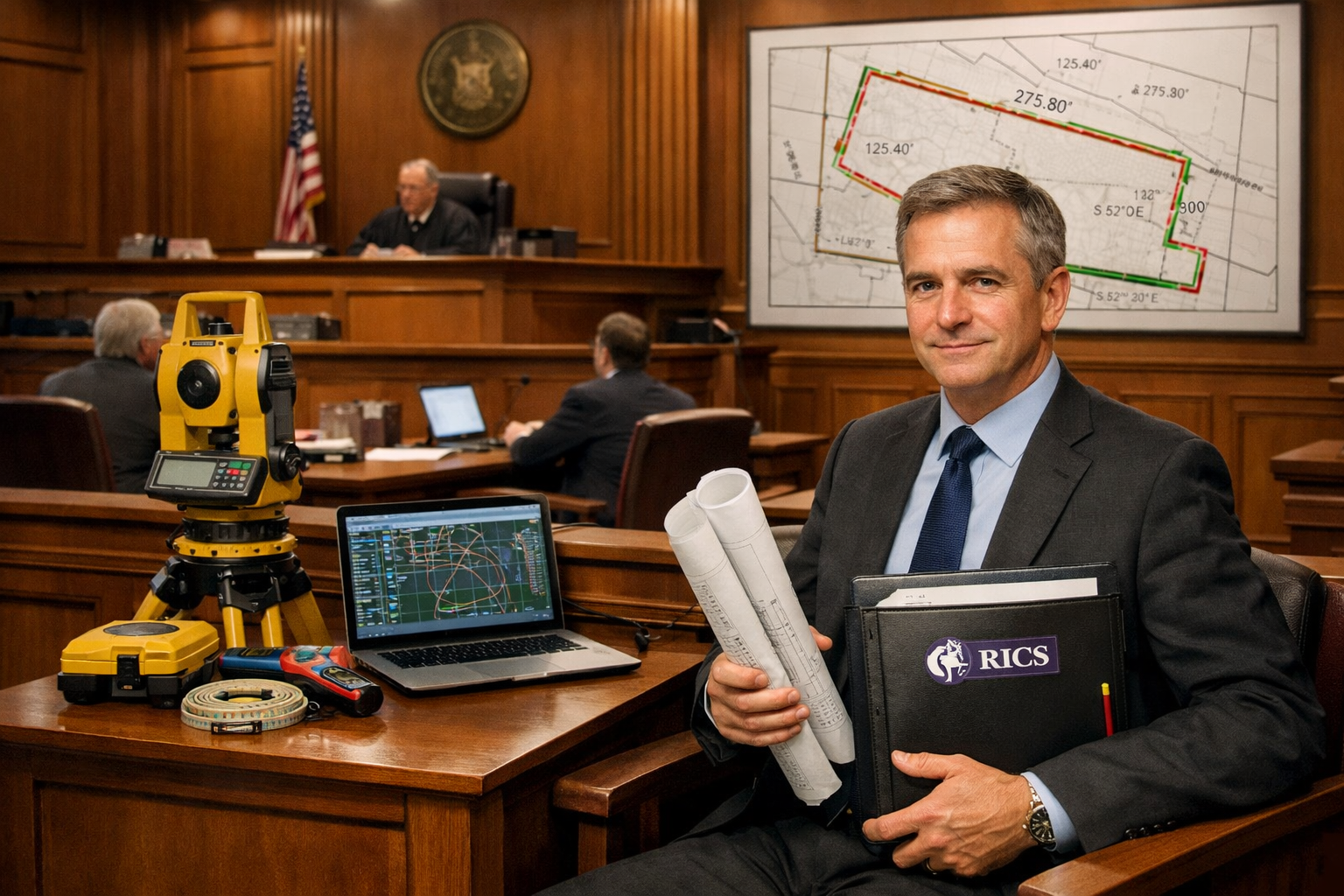
The Fundamental Distinction Between Surveyors and Expert Witnesses
Many property owners mistakenly assume that any qualified surveyor can serve as an expert witness in boundary disputes. However, expert witnesses function fundamentally differently from surveyors conducting routine property assessments.[1] While a standard surveyor evaluates property conditions for buyers or sellers, an expert witness surveyor serves the court first and their instructing party second.
This distinction carries profound implications in 2026's recovering market. Expert witnesses must:
- Maintain absolute independence from the party instructing them
- Provide objective analysis even when findings contradict their client's position
- Follow strict RICS protocols for evidence preparation and presentation
- Withstand rigorous cross-examination in court proceedings
- Produce reproducible findings that other qualified professionals can verify
The recovering property market has raised the stakes considerably. A boundary dispute that might have involved £50,000 in property value during market downturns could now affect transactions worth £200,000 or more, making expert testimony quality absolutely critical.
Court Expectations for Expert Evidence in 2026
Courts have become increasingly demanding about expert witness evidence quality as boundary disputes proliferate. Judges expect expert reports to demonstrate:
Comprehensive Methodology Disclosure 📋
- Detailed explanation of survey techniques employed
- Documentation of equipment used (GPS receivers, theodolites, measuring instruments)
- Clear statement of measurement accuracy and potential margins of error
- Explanation of how historical records were analyzed and interpreted
Transparent Assumption Statements 🔍
- Explicit listing of all assumptions made during analysis
- Justification for why specific assumptions were necessary
- Discussion of how different assumptions might affect conclusions
- Acknowledgment of any limitations in available evidence
Independence Declarations ⚖️
Professional guidelines now require experts to explicitly state they are not advocates for the retaining party.[2] This transparency requirement reflects international trends where independence declarations have become standard requirements across jurisdictions.
The Impact of Property Market Recovery on Boundary Litigation
The 2026 property market recovery has created a perfect storm for boundary disputes. Several factors contribute to this surge:
| Market Factor | Impact on Boundary Disputes |
|---|---|
| Rising Property Values | Small boundary differences now represent substantial financial stakes |
| Increased Transaction Volume | More property transfers expose previously unnoticed boundary issues |
| Development Pressure | Land scarcity drives disputes over every square meter |
| Refinancing Activity | Lenders demand precise boundary verification for loan security |
| Investment Purchases | Professional investors conduct deeper due diligence, uncovering discrepancies |
This market dynamic means that expert witnesses must prepare for cases where clients have significant financial motivations to pursue litigation. The professional obligation to remain independent becomes even more challenging—and more important—when substantial sums are at stake.
Building Robust Evidence: RICS Protocols for Expert Witness Roles in 2026 Boundary Disputes
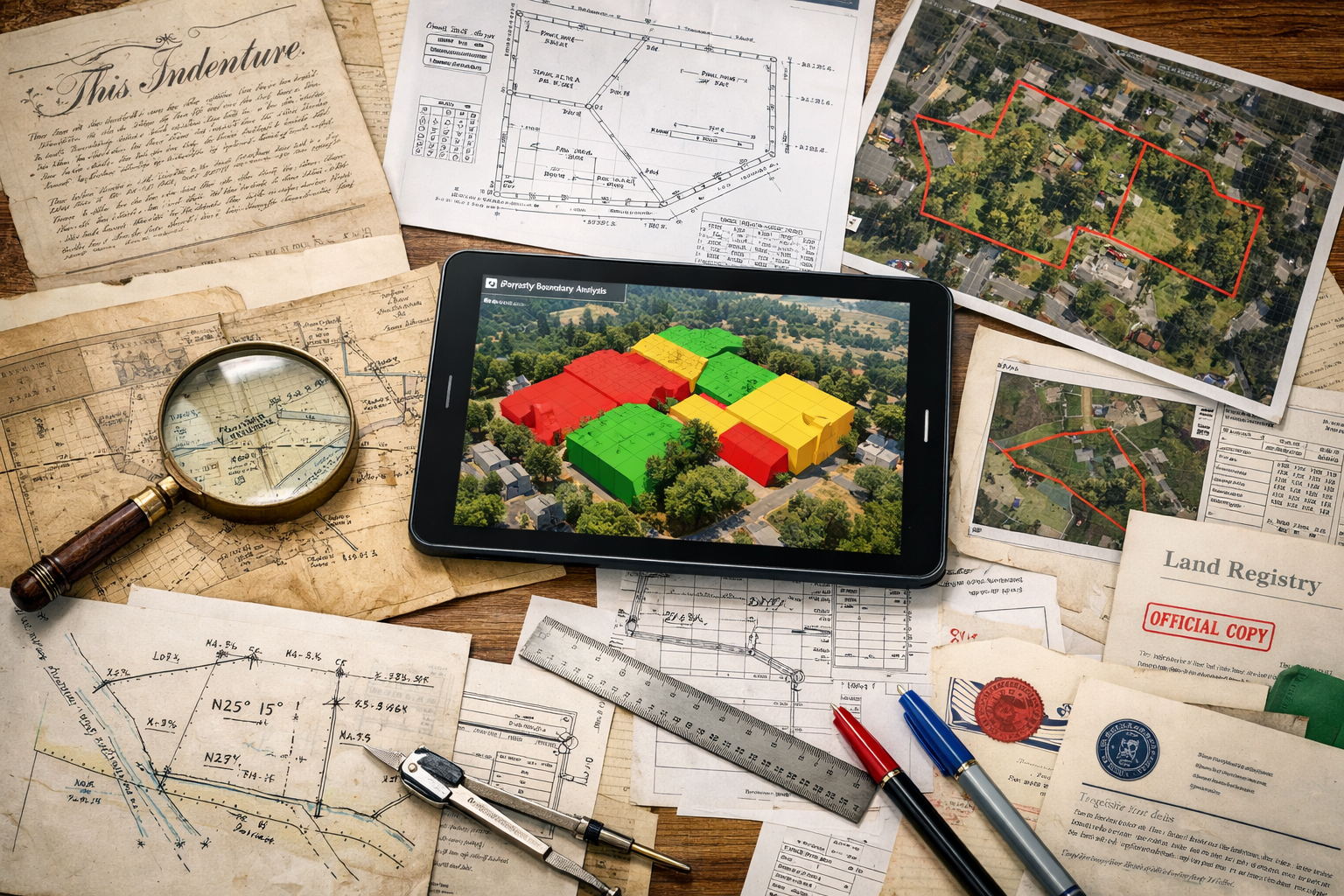
RICS Standards for Boundary Dispute Evidence
The Royal Institution of Chartered Surveyors has established comprehensive protocols that expert witnesses must follow when preparing boundary dispute evidence. These standards have evolved to address the complexities of 2026's property market and ensure consistent, reliable expert testimony.
Multi-Source Evidence Integration 🗂️
Robust boundary evidence requires synthesizing information from multiple sources:
- Historical Title Deeds: Examining property descriptions, measurements, and boundary markers from original conveyances
- Land Registry Plans: Analyzing official registry documents while understanding their general boundaries limitation
- Ordnance Survey Maps: Comparing historical and current OS mapping at various scales
- Physical Site Evidence: Documenting existing fences, walls, hedges, and natural features
- Modern Survey Data: Conducting precise GPS and total station surveys to establish current positions
- Aerial Photography: Reviewing historical and current aerial images to track boundary feature changes
- Witness Statements: Collecting testimony about historical boundary positions and maintenance
Expert witnesses who rely on single evidence sources face severe credibility challenges during cross-examination. Courts expect comprehensive analysis that acknowledges contradictions between sources and explains how conclusions were reached despite conflicting evidence.
Case Study: Northern England Residential Boundary Dispute (2025)
A recent case from Northern England demonstrates how thorough evidence preparation following RICS protocols can resolve complex boundary disputes. While specific identifying details remain confidential, the case involved two semi-detached properties where the boundary fence position had been disputed for over a decade.
The Challenge 🏘️
- Property A claimed the boundary fence had been incorrectly positioned 1.2 meters into their land
- Property B argued the fence had stood in its current position for 30+ years
- Historical deeds contained ambiguous measurements using outdated reference points
- Land Registry plans showed only general boundaries with insufficient precision
Expert Witness Approach 🔬
The appointed expert witness, a RICS-accredited surveyor with extensive boundary dispute experience, employed a multi-layered methodology:
- Historical Analysis: Examined deeds dating back to 1890, identifying original boundary descriptions referencing a demolished outbuilding
- Archaeological Evidence: Located foundation remains of the referenced outbuilding through ground-penetrating radar
- Comparative Measurement: Analyzed measurements in historical deeds against known surviving features
- Modern Survey: Conducted GPS survey achieving ±15mm accuracy for current fence position
- Photographic Timeline: Compiled aerial photographs from 1960, 1985, 2005, and 2024 showing fence evolution
Outcome ✅
The expert's comprehensive report demonstrated that the current fence position aligned within acceptable tolerances to the original boundary description. The court accepted the expert's findings, noting the thoroughness of the multi-source analysis and the expert's willingness to acknowledge measurement uncertainties rather than claiming false precision.
This case illustrates why transparency in expert reports has become near-universal, with written reports expected to follow structured formats disclosing methodology, assumptions, and sources in reproducible ways.[2]
Technology Integration in 2026 Boundary Evidence
Modern expert witnesses leverage advanced technology to build compelling evidence packages:
GPS Survey Equipment 🛰️
- Real-Time Kinematic (RTK) GPS achieving centimeter-level accuracy
- Integration with Ordnance Survey active control stations
- Digital data capture eliminating transcription errors
- Coordinate systems compatible with Land Registry requirements
3D Laser Scanning 📡
- Comprehensive site documentation capturing millions of measurement points
- Creation of detailed 3D models showing boundary features in context
- Ability to take virtual measurements from scan data years after site visit
- Powerful visual aids for court presentations
Geographic Information Systems (GIS) 🗺️
- Overlay analysis combining historical maps, modern surveys, and aerial imagery
- Temporal analysis showing boundary feature changes over decades
- Spatial analysis identifying measurement discrepancies between sources
- Professional visualization for expert reports and court exhibits
These technologies don't replace traditional surveying skills—they enhance them. Expert witnesses must still understand fundamental surveying principles, legal boundary concepts, and property law. Technology provides tools for more accurate measurement and better evidence presentation, but professional judgment remains paramount.
Common Pitfalls Expert Witnesses Must Avoid
Even experienced surveyors can make critical errors when transitioning to expert witness roles. Courts have rejected expert evidence for these common failures:
❌ Advocacy Instead of Independence
- Presenting only evidence favorable to the instructing party
- Failing to disclose contradictory findings
- Overstating certainty of conclusions
❌ Insufficient Methodology Disclosure
- Providing conclusions without explaining analytical process
- Failing to document survey procedures and equipment
- Omitting discussion of alternative interpretations
❌ Inadequate Qualification for Specific Issues
- Accepting instructions outside areas of genuine expertise
- Failing to consult specialists for complex technical aspects
- Overgeneralizing from limited experience
❌ Poor Report Structure
- Burying critical findings in lengthy narratives
- Failing to provide clear executive summaries
- Using excessive technical jargon without explanation
The consequences of these failures extend beyond individual cases. Expert witnesses who provide inadequate evidence damage their professional reputations and may face disciplinary action from RICS or other professional bodies.
International Trends Shaping Expert Witness Roles in 2026 Boundary Disputes: Court Expectations as Property Transactions Surge
Cross-Border Standardization of Expert Procedures
Property disputes increasingly involve cross-border elements—foreign investors, international development companies, or properties near national boundaries. This globalization has driven international standardization of expert procedures, with cross-border expert testimony increasingly following codified procedures through institutions like the International Chamber of Commerce (ICC).[2]
The ICC Expert Rules, revised in 2021, establish frameworks for:
- Expert Appointment: Procedures for selecting qualified experts acceptable to all parties
- Report Structure: Standardized formats ensuring comprehensive disclosure
- Testimony Reception: Protocols for expert questioning and cross-examination
- Independence Standards: Requirements for conflict disclosure and impartiality
While UK boundary disputes typically remain domestic matters, these international standards influence court expectations. Judges familiar with ICC protocols in commercial disputes expect similar rigor in property cases.
The May 2026 Cross-Border Disputes Seminar
The legal and surveying professions continue evolving their approach to expert evidence. The DRI's 2026 Cross-Border Disputes and Compliance Seminar, scheduled for London (May 6–8, 2026), will convene leading international practitioners to discuss trends shaping expert involvement and dispute resolution strategies.[3]
Topics relevant to boundary dispute experts include:
- Evidence Standards Harmonization: How international arbitration standards influence domestic court expectations
- Technology in Expert Testimony: Best practices for digital evidence presentation
- Expert Independence: Maintaining objectivity under commercial pressure
- Collaborative Expert Procedures: Joint expert appointments and hot-tubbing techniques
This professional development reflects the reality that expert witness work demands continuous learning. The standards and expectations of 2026 differ significantly from those of even five years ago, and experts must stay current with evolving protocols.
Lessons from International Boundary Dispute Resolution
International boundary disputes—whether between property owners in different jurisdictions or between nations—offer valuable lessons for UK domestic cases:
Burden of Proof Clarity ⚖️
International tribunals explicitly allocate burden of proof for different aspects of boundary claims. UK expert witnesses can adopt this approach by clearly stating which party bears the burden for each contested issue.
Neutral Expert Appointments 🤝
Some jurisdictions use court-appointed neutral experts rather than party-appointed witnesses. While less common in UK civil litigation, understanding this model helps experts maintain appropriate independence even when instructed by one party.
Sequential Evidence Procedures 📊
International cases often require experts to submit initial reports, then respond to opposing experts' reports, then provide final conclusions. This structured approach can improve evidence quality in complex UK boundary disputes.
Practical Guidance for Property Owners and Legal Professionals
When to Engage an Expert Witness
Not every boundary disagreement requires expert witness involvement. Property owners and their legal advisors should consider expert engagement when:
✅ Financial stakes justify the cost (typically disputes involving £20,000+ in property value)
✅ Technical evidence is essential (historical deed interpretation, precise measurement, or complex site conditions)
✅ Negotiation has failed and litigation appears likely
✅ Multiple evidence sources conflict requiring professional synthesis
✅ The opposing party has engaged an expert creating evidence asymmetry
Early expert engagement often proves more cost-effective than delayed involvement. An expert witness can assess case strength before substantial legal costs accumulate, potentially identifying weaknesses that suggest settlement rather than litigation.
Selecting the Right Expert Witness
Choosing an appropriate expert witness requires careful consideration of several factors:
Professional Qualifications 🎓
- RICS membership (preferably Fellow status – FRICS)
- Specific boundary dispute experience
- Expert witness training and accreditation
- Professional indemnity insurance adequate for case value
Relevant Experience 💼
- Previous boundary dispute cases in similar property types
- Court testimony experience (Crown Court, County Court, or tribunals)
- Familiarity with local property market conditions
- Understanding of relevant legal principles
Communication Skills 🗣️
- Ability to explain technical concepts clearly
- Professional report writing capabilities
- Composure under cross-examination
- Credibility with judges and juries
Independence and Integrity ⚖️
- Reputation for objectivity
- Willingness to provide honest opinions
- No conflicts of interest with parties involved
- Professional standing within surveying community
For property owners in specific regions, engaging local experts familiar with regional property characteristics can provide advantages. However, technical expertise and independence should never be compromised for local knowledge alone.
Working Effectively with Your Expert Witness
Legal professionals and property owners can maximize expert witness value by:
Providing Comprehensive Instructions 📝
- Clear statement of disputed issues
- All relevant documentation (deeds, plans, correspondence, photographs)
- Timeline of events leading to dispute
- Specific questions requiring expert opinion
Respecting Professional Independence 🛡️
- Avoiding pressure to reach predetermined conclusions
- Accepting unfavorable findings when evidence supports them
- Understanding the expert's duty to the court supersedes duty to client
- Refraining from suggesting specific wording for expert reports
Facilitating Site Access 🏠
- Arranging access to disputed property areas
- Coordinating with opposing parties for joint site inspections when appropriate
- Providing historical photographs or documentation of site conditions
- Ensuring expert can conduct necessary measurements and investigations
Managing Expectations 💭
- Understanding that boundary disputes often involve inherent uncertainties
- Recognizing that expert opinions are not guarantees of court outcomes
- Accepting that thorough expert work requires time and appropriate fees
- Appreciating that honest expert opinions strengthen rather than weaken cases
Cost Considerations for Expert Witness Services
Expert witness fees represent significant litigation costs, but appropriate investment in quality expertise often proves economical compared to losing a case due to inadequate evidence.
Typical Fee Structures 💷
| Service Component | Typical Range (2026) |
|---|---|
| Initial Case Review | £500 – £1,500 |
| Site Survey and Investigation | £1,500 – £4,000 |
| Historical Research and Analysis | £1,000 – £3,000 |
| Expert Report Preparation | £2,500 – £6,000 |
| Court Attendance (per day) | £2,000 – £4,000 |
| Additional Consultation | £150 – £300/hour |
These figures vary based on case complexity, expert experience, geographic location, and urgency. Complex boundary disputes involving multiple properties, extensive historical research, or challenging site conditions may exceed these ranges.
Cost Management Strategies 💡
- Early expert consultation: Identify case weaknesses before substantial legal costs accumulate
- Focused instructions: Clearly define specific issues requiring expert opinion
- Efficient document provision: Organize and provide all relevant materials simultaneously
- Settlement leverage: Use preliminary expert opinions to facilitate negotiated resolutions
- Cost recovery: Remember that successful parties often recover expert witness costs from losing parties
The Future of Expert Witness Roles in Boundary Disputes
Emerging Technologies and Their Impact
The next several years will see continued technological advancement affecting how expert witnesses gather and present boundary evidence:
Artificial Intelligence and Machine Learning 🤖
- Automated analysis of historical deed descriptions
- Pattern recognition in aerial photograph sequences
- Predictive modeling of boundary positions based on multiple evidence sources
- Quality control algorithms identifying measurement inconsistencies
Blockchain Property Records ⛓️
- Immutable records of boundary determinations and surveys
- Smart contracts automatically updating boundary data with property transfers
- Distributed ledger systems reducing reliance on centralized Land Registry
- Enhanced verification of historical property transactions
Augmented Reality Court Presentations 🥽
- Immersive visualization of boundary disputes for judges and juries
- Virtual site visits allowing courts to "experience" disputed areas
- Overlay of historical boundary positions onto current site conditions
- Interactive models enabling real-time exploration of expert evidence
These technologies will enhance expert capabilities but won't eliminate the need for professional judgment, independence, and communication skills. Courts will continue prioritizing expert witnesses who can explain complex technical matters clearly while maintaining absolute integrity.
Regulatory Developments on the Horizon
Several regulatory changes may affect expert witness practice in coming years:
Enhanced Expert Witness Accreditation 📜
- Mandatory specialized training beyond general professional qualifications
- Periodic reaccreditation requirements
- Standardized competency assessments for expert witnesses
- Public registers of accredited expert witnesses
Stricter Independence Requirements 🔒
- Enhanced conflict disclosure obligations
- Limitations on repeat expert appointments for same instructing parties
- Mandatory independence declarations in all expert reports
- Potential restrictions on expert witness advertising or marketing
Technology Standards 💻
- Minimum accuracy requirements for survey equipment
- Standardized data formats for digital evidence submission
- Cybersecurity requirements for expert witness data handling
- Validation protocols for AI-assisted analysis
Property professionals should monitor these developments and ensure their practices evolve accordingly. Membership in professional organizations like RICS provides access to guidance on emerging standards and regulatory changes.
The Continuing Importance of Human Expertise
Despite technological advancement and regulatory evolution, human expertise remains central to boundary dispute resolution. Courts rely on expert witnesses to:
- Exercise professional judgment in ambiguous situations where data alone provides insufficient guidance
- Communicate complex technical concepts in ways judges and juries can understand
- Maintain ethical standards that preserve the integrity of legal proceedings
- Provide context and nuance that algorithms and databases cannot capture
- Withstand adversarial testing through cross-examination and peer review
The surge in property transactions during 2026's market recovery ensures continued demand for qualified expert witnesses who can navigate the intersection of technical surveying, property law, and court procedure. Those who invest in developing these multifaceted skills while maintaining absolute professional integrity will find rewarding opportunities serving the justice system.
Conclusion
Expert Witness Roles in 2026 Boundary Disputes: Court Expectations as Property Transactions Surge represents a critical evolution in property litigation. As the UK market recovers and transaction volumes increase, boundary disputes have proliferated, creating unprecedented demand for qualified expert witnesses who can provide robust, transparent, and independent evidence meeting rigorous court standards.
The key principles governing expert witness practice in 2026 include:
🎯 Independence Above All: Expert witnesses serve the court first, maintaining objectivity regardless of which party instructs them
📊 Comprehensive Evidence: Robust opinions require synthesizing multiple sources—historical deeds, modern surveys, physical site evidence, and technological data
📋 Transparent Methodology: Courts demand detailed disclosure of analytical processes, assumptions, and limitations
🌍 International Standards: Cross-border trends toward standardized expert procedures influence domestic court expectations
💼 Professional Development: Continuous learning about evolving RICS protocols, technologies, and legal requirements is essential
For property owners facing boundary disputes, early engagement with qualified expert witness surveyors can provide clarity about case strength and facilitate efficient resolution—whether through negotiated settlement or successful litigation. Understanding that expert witnesses differ fundamentally from surveyors conducting routine property assessments helps set appropriate expectations for their role and value.
Legal professionals should prioritize expert witness selection based on technical qualifications, relevant experience, communication skills, and demonstrated independence. While cost considerations matter, inadequate expert evidence often proves far more expensive than appropriate investment in quality expertise.
Next Steps for Property Professionals
If you're involved in a boundary dispute or anticipate potential boundary issues:
- Assess the situation early: Don't wait until litigation is imminent to seek expert advice
- Gather documentation: Compile all relevant deeds, plans, photographs, and correspondence
- Engage qualified experts: Prioritize RICS-accredited professionals with proven boundary dispute experience
- Understand court expectations: Recognize that judges demand comprehensive, transparent, and independent expert evidence
- Consider alternative resolution: Use expert opinions to facilitate negotiated settlements when appropriate
- Stay informed: Monitor developments in expert witness standards and property law affecting boundary disputes
The intersection of recovering property markets, evolving technology, and increasingly rigorous court standards creates both challenges and opportunities for expert witnesses in 2026. Those who embrace professional development, maintain unwavering independence, and leverage modern tools while respecting fundamental surveying principles will continue providing invaluable service to the justice system and property sector.
For comprehensive support with boundary disputes, party wall matters, or other property-related technical issues, consulting with experienced chartered surveyors ensures access to the expertise necessary for successful outcomes in today's demanding litigation environment.
References
[1] Expert Witness Essentials For 2026 Boundary Disputes Strengthening Cases In A Recovering Property Market – https://nottinghillsurveyors.com/blog/expert-witness-essentials-for-2026-boundary-disputes-strengthening-cases-in-a-recovering-property-market
[2] Trends In Expert Witnessing Cross Border Experts – https://www.roundtablegroup.com/the-experienced-expert/trends-in-expert-witnessing-cross-border-experts/
[3] Cross Border Dispute – https://www.dri.org/education-cle/seminars/2026/cross-border-dispute