
The homebuying landscape in 2026 has transformed dramatically, with new upfront survey requirements and regulatory reforms creating unprecedented challenges for property professionals. As disputes over survey evidence intensify under these reforms, Expert Witness Preparation for Homebuying Reform Challenges: Evidence Standards in Early 2026 Implementation has become a critical competency for chartered surveyors navigating the complex intersection of property law, professional standards, and courtroom testimony.
The ongoing 2026 reforms have amplified disputes over upfront surveys, requiring expert witnesses to master new RICS protocols for court-ready evidence. With multiple states implementing manufactured housing zoning reforms and affordability pressures mounting, property professionals must understand how to prepare evidence that withstands legal scrutiny while meeting evolving regulatory standards[1].
Key Takeaways
✅ New RICS protocols require expert witnesses to maintain enhanced documentation standards and evidence chains for all survey reports in 2026
✅ Upfront survey reforms have increased litigation rates by creating disputes over defect disclosure timing and professional liability boundaries
✅ Evidence admissibility standards now demand that expert witnesses demonstrate specific competencies in both surveying expertise and courtroom testimony procedures
✅ Manufactured housing reforms across multiple states have created new categories of disputes requiring specialized expert witness knowledge
✅ Court-ready preparation involves mastering cross-examination techniques, maintaining professional independence, and presenting complex technical findings in accessible language
Understanding the 2026 Homebuying Reform Landscape
The Regulatory Shift in Property Transactions
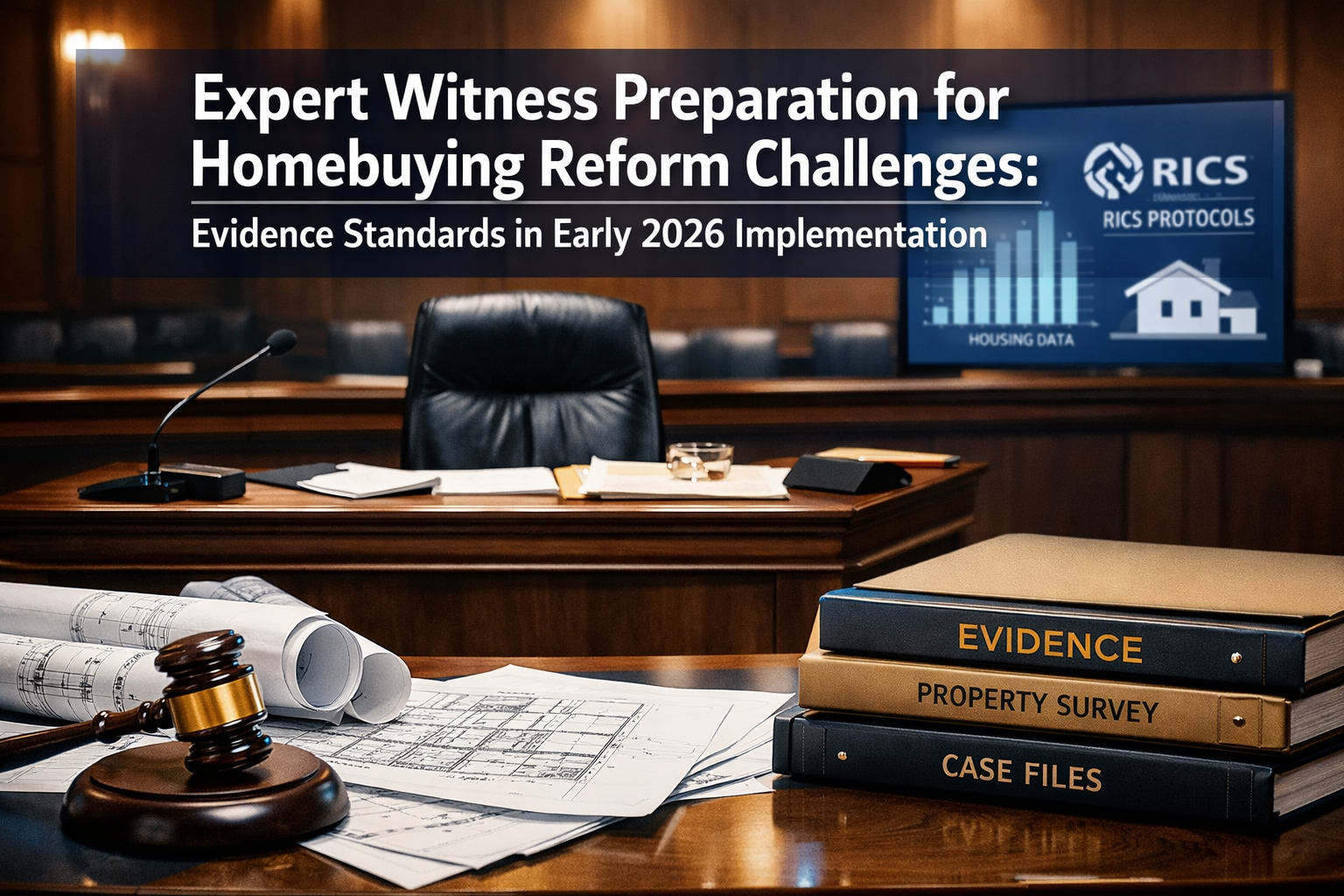
The homebuying reforms implemented in early 2026 represent the most significant changes to property transaction procedures in decades. These reforms mandate upfront surveys before properties are marketed, fundamentally altering the traditional sequence of property inspections and creating new liability frameworks for surveyors.
Key regulatory changes include:
- 📋 Mandatory pre-marketing survey requirements for residential properties
- ⚖️ Enhanced disclosure obligations for material defects
- 🏠 Standardized reporting formats aligned with RICS guidelines
- 💼 Extended professional liability periods for survey reports
- 🔍 Stricter evidence documentation requirements for dispute resolution
The reforms aim to reduce transaction failures and provide buyers with comprehensive property information earlier in the purchasing process. However, this shift has generated numerous disputes over survey accuracy, defect interpretation, and professional standards[1].
Manufactured Housing and Affordability Pressures
Manufactured homes have emerged as a critical component of affordable housing strategies in 2026, with these properties being 35-73% cheaper than site-built homes[2]. Multiple states, including Kentucky, Maine, and Maryland, passed legislation in 2024-2025 limiting municipalities' authority to impose unreasonable design requirements on manufactured homes[2].
These reforms have created new categories of expert witness cases involving:
- Zoning compliance disputes over manufactured home placement
- Quality standard disagreements between builders and buyers
- Valuation challenges for non-traditional housing types
- Construction defect claims specific to manufactured housing
As affordable housing remains a polycrisis in 2026, with inventory shortages and rising costs affecting buyers nationwide[3], expert witnesses must understand both traditional property standards and the specialized requirements for manufactured housing assessments.
Expert Witness Preparation for Homebuying Reform Challenges: Evidence Standards in Early 2026 Implementation
Core Competencies for Expert Witnesses in 2026
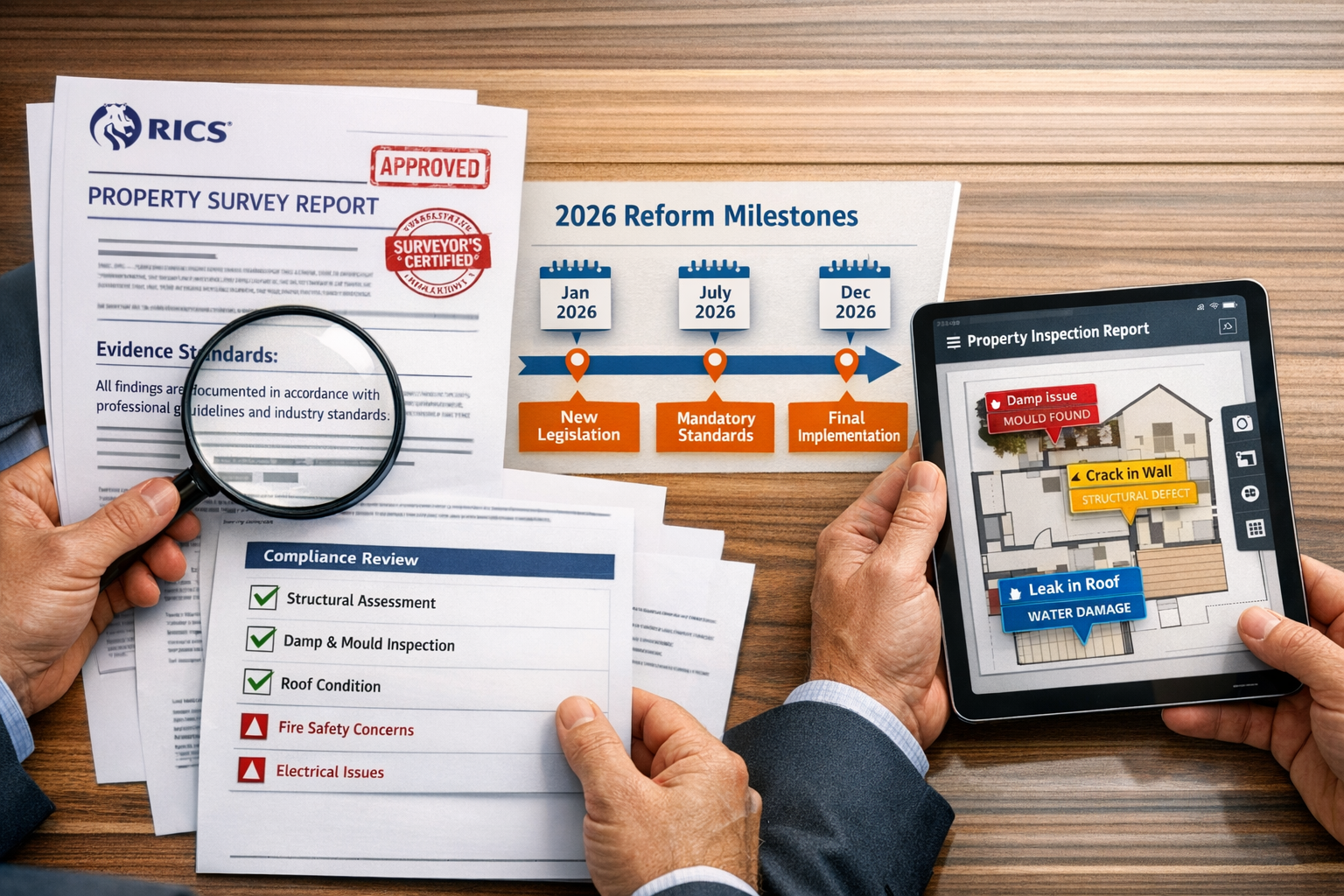
Expert witnesses serving in homebuying reform disputes must demonstrate multiple overlapping competencies that extend beyond traditional surveying expertise. The 2026 implementation standards require professionals to master both technical and testimonial skills.
Technical Expertise Requirements
Surveying Qualifications:
- RICS-accredited expert witness surveyor credentials
- Specialized knowledge in relevant property types
- Current understanding of building regulations and standards
- Experience conducting different types of survey assessments
- Proficiency in defect analysis and causation determination
Evidence Documentation Skills:
- Comprehensive photographic documentation techniques
- Chain-of-custody protocols for physical evidence
- Digital evidence preservation and metadata management
- Report writing that meets legal admissibility standards
- Cross-referencing survey findings with supporting documentation
Legal and Procedural Knowledge
Expert witnesses must understand the legal framework governing their testimony and the procedural requirements of different court systems. This includes:
- Admissibility Standards – Understanding Daubert or Frye standards for expert testimony
- Professional Duty – Recognizing the overriding duty to the court rather than the instructing party
- Disclosure Requirements – Properly declaring conflicts of interest and previous involvement
- Report Formatting – Following court-mandated structures for expert reports
- Cross-Examination Protocols – Preparing for adversarial questioning techniques
Evidence Standards Under New RICS Protocols
The Royal Institution of Chartered Surveyors (RICS) has updated its guidance for expert witnesses in response to the 2026 reforms. These protocols establish enhanced evidence standards that expert witnesses must follow when preparing expert witness reports and testimony.
Documentation Requirements
| Evidence Category | Standard Requirement | 2026 Enhancement |
|---|---|---|
| Photographic Evidence | Clear images of defects | Timestamped, GPS-tagged, RAW format preservation |
| Measurement Data | Accurate dimensional records | Calibrated equipment certificates, multiple verification methods |
| Material Testing | Laboratory analysis results | Accredited lab certification, sample chain-of-custody |
| Historical Research | Property record review | Comprehensive title search, planning history documentation |
| Comparative Analysis | Market data references | Statistical validation, peer-reviewed methodologies |
Report Structure and Content
Expert witness reports must now include specific sections that address the 2026 evidence standards:
Executive Summary – Clear statement of instructions, scope, and principal conclusions
Qualifications and Experience – Detailed CV demonstrating relevant expertise for the specific dispute
Methodology Statement – Explicit description of investigation techniques, standards applied, and limitations
Findings and Analysis – Factual observations separated from opinion, with supporting evidence referenced
Conclusions and Opinions – Professional judgments clearly distinguished from factual findings
Declaration of Truth – Formal statement acknowledging duty to the court and belief in report accuracy
Preparing Court-Ready Survey Evidence
The transition to upfront surveys has created new challenges in preparing evidence that remains valid and defensible months after initial inspection. Expert witnesses must implement rigorous documentation practices from the outset of every survey engagement.
Initial Survey Documentation
When conducting surveys that may later require expert witness testimony, professionals should:
🔍 Document comprehensively – Photograph all areas systematically, not just identified defects
📝 Record contemporaneous notes – Maintain detailed inspection notes with timestamps and observations
🎥 Consider video documentation – Use video walkthroughs to capture context and spatial relationships
📊 Collect baseline data – Measure and record conditions that may change over time
🗂️ Organize systematically – Implement consistent file naming and storage protocols for easy retrieval
Evidence Preservation Techniques
Maintaining evidence integrity is critical for admissibility. Expert witnesses should establish protocols for:
- Digital file management – Using write-once media or blockchain verification for original files
- Physical sample handling – Following forensic chain-of-custody procedures for material samples
- Backup procedures – Maintaining redundant copies in separate secure locations
- Access logs – Recording all instances of evidence review or handling
- Version control – Tracking all report drafts and revisions with clear audit trails
Navigating Common Dispute Categories in 2026 Homebuying Reforms
Upfront Survey Disclosure Disputes
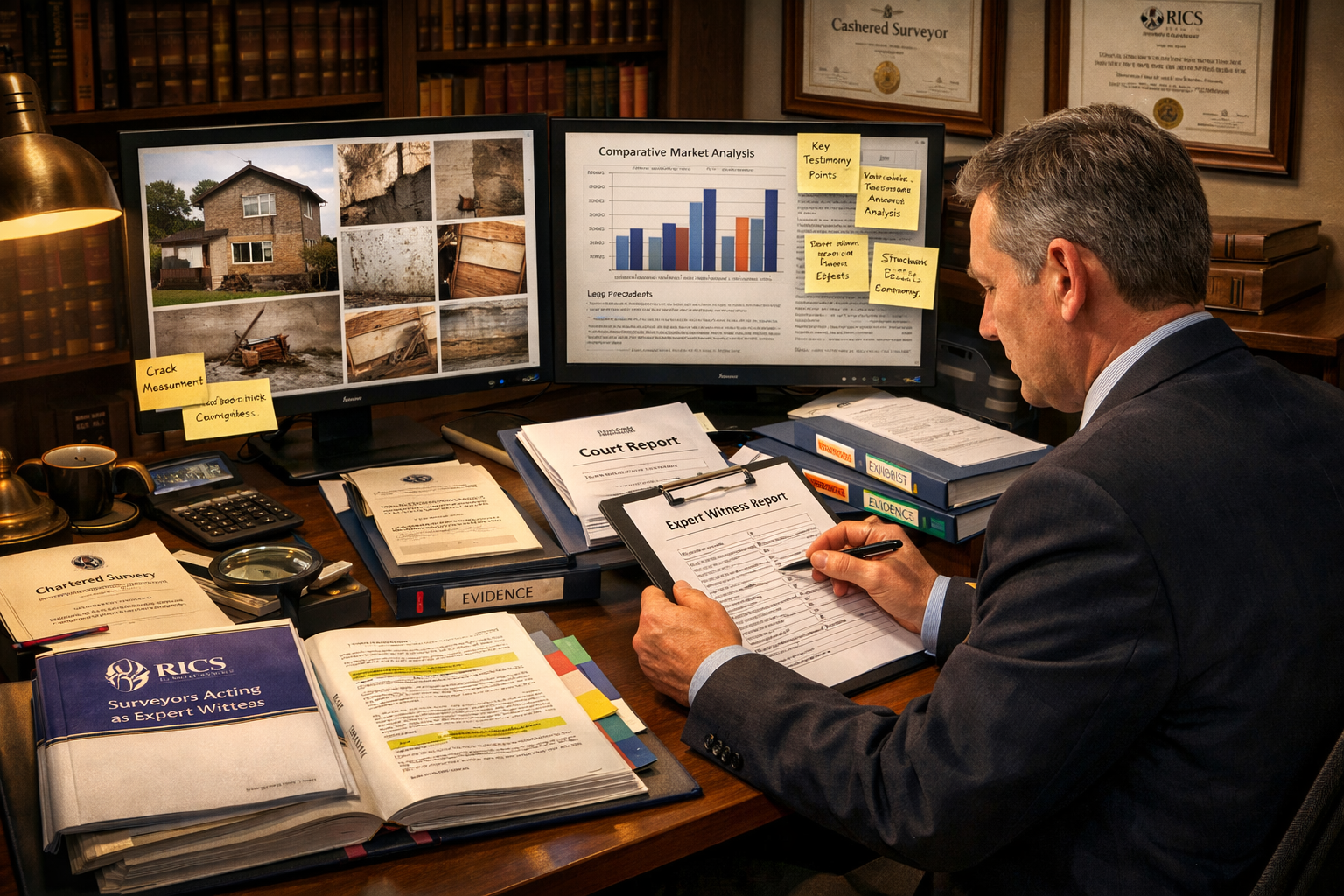
The most prevalent category of disputes in early 2026 involves disagreements over what defects should have been disclosed in upfront surveys and how those defects should have been characterized[1].
Common dispute scenarios include:
- Latent defect claims – Buyers alleging surveyors missed concealed defects
- Severity characterization – Disagreements over whether defects are "material" or "significant"
- Scope limitations – Disputes about what areas were included in survey instructions
- Temporal changes – Claims that conditions deteriorated between survey and completion
- Valuation impacts – Disagreements over how defects affect property value
Expert witnesses in these cases must demonstrate that their survey methodology was appropriate for the property type, that their findings were accurately reported, and that their conclusions were reasonable based on the evidence available at the time of inspection.
Professional Standard Compliance Cases
Disputes frequently arise over whether surveyors met applicable professional standards in conducting upfront surveys. Expert witnesses must be prepared to opine on:
RICS Standards Compliance:
- Whether the survey level was appropriate for the property
- If the inspection was sufficiently thorough given the circumstances
- Whether reporting met RICS Home Survey standards
- If limitations were properly communicated to clients
Negligence Determinations:
Expert witnesses must carefully evaluate whether alleged failures constitute professional negligence or merely represent differences in professional judgment. This requires understanding the distinction between:
- Substandard practice – Falling below minimum competency levels
- Professional disagreement – Reasonable practitioners reaching different conclusions
- Scope limitations – Restrictions inherent in the survey type or instructions
Manufactured Housing Specific Disputes
The 2026 reforms affecting manufactured housing have created specialized dispute categories requiring expert witnesses with specific knowledge of manufactured home construction, installation, and regulatory compliance[2].
Key dispute areas include:
🏗️ Installation Standards – Proper foundation, anchoring, and site preparation compliance
🔧 Construction Quality – Manufacturing defects versus installation issues
📏 Zoning Compliance – Municipal requirement challenges under new state legislation
💰 Valuation Methods – Appropriate approaches for manufactured home appraisals
🏡 Comparison Standards – Whether manufactured homes should be held to site-built standards
Expert witnesses in manufactured housing cases must demonstrate familiarity with HUD Code requirements, state-specific regulations, and industry standards that differ from traditional construction practices.
Cross-Examination Preparation and Courtroom Testimony
Anticipating Challenges to Expert Testimony
Effective expert witness preparation requires anticipating the lines of attack opposing counsel will pursue during cross-examination. Common challenge strategies include:
Qualification Attacks:
- Questioning relevant experience in the specific property type
- Highlighting lack of courtroom testimony experience
- Emphasizing gaps in continuing professional development
- Suggesting bias due to previous work for instructing party
Methodology Challenges:
- Questioning whether inspection was sufficiently thorough
- Highlighting alternative investigation techniques not employed
- Suggesting selective consideration of evidence
- Challenging reliance on particular standards or guidance
Opinion Undermining:
- Presenting alternative expert opinions
- Highlighting uncertainties or limitations in findings
- Questioning basis for definitive conclusions
- Suggesting overreach beyond surveying expertise
Effective Testimony Techniques
Expert witnesses must present complex technical information in accessible language while maintaining professional credibility. Key techniques include:
Clarity and Simplicity:
- Using analogies to explain technical concepts
- Avoiding unnecessary jargon or defining technical terms
- Speaking directly to judge or jury rather than counsel
- Maintaining consistent terminology throughout testimony
Professional Demeanor:
- Remaining calm and composed under aggressive questioning
- Acknowledging limitations and uncertainties appropriately
- Avoiding defensive or argumentative responses
- Demonstrating objectivity and independence
Evidence-Based Responses:
- Referring to specific documentation when answering questions
- Distinguishing between observations, inferences, and opinions
- Acknowledging when questions fall outside expertise
- Maintaining consistency with written report
Managing Professional Independence
The overriding duty to the court requires expert witnesses to maintain independence from the parties instructing them. This principle becomes particularly challenging when:
- Long-term client relationships create pressure for favorable opinions
- Fee arrangements create financial incentives for particular outcomes
- Instructing solicitors suggest specific conclusions or language
- Cross-examination reveals weaknesses in initial opinions
Expert witnesses must establish clear boundaries at the outset of engagements, documenting their independent role and refusing instructions that compromise objectivity. When evidence or analysis reveals findings unfavorable to the instructing party, professional integrity requires honest reporting regardless of commercial consequences.
Implementing Best Practices for 2026 Evidence Standards
Creating Robust Evidence Management Systems
Professional practices serving as expert witnesses should implement comprehensive evidence management systems that ensure compliance with 2026 standards:
Digital Asset Management:
- Centralized repositories with redundant backup systems
- Metadata preservation for all digital photographs and documents
- Access controls and audit trails for evidence handling
- Integration with case management systems for efficient retrieval
Quality Assurance Protocols:
- Peer review processes for expert reports before submission
- Technical review checklists aligned with RICS guidance
- Regular calibration and certification of inspection equipment
- Continuing professional development in evidence procedures
Client Communication Systems:
- Clear engagement letters defining expert witness scope and duties
- Regular updates on evidence gathering and analysis progress
- Transparent discussion of findings, including unfavorable evidence
- Written confirmation of independence and court duty
Staying Current with Evolving Standards
The 2026 reforms represent an ongoing evolution rather than a fixed endpoint. Expert witnesses must maintain currency with:
📚 Regulatory Updates – Monitoring changes to building regulations, planning law, and professional standards
⚖️ Case Law Developments – Tracking judicial decisions affecting expert witness duties and evidence admissibility
🎓 Professional Guidance – Following RICS updates to expert witness practice statements and technical standards
🏛️ Court Procedure Changes – Understanding modifications to civil procedure rules affecting expert evidence
💡 Industry Best Practices – Participating in professional forums discussing emerging challenges and solutions
Maintaining involvement with professional organizations, attending specialized training, and engaging with the expert witness community helps practitioners stay ahead of evolving expectations.
Leveraging Technology for Evidence Enhancement
Modern technology offers significant advantages for expert witnesses preparing evidence under 2026 standards:
Advanced Documentation Tools:
- Thermal imaging cameras for concealed defect detection
- Laser measurement systems for precise dimensional recording
- Drone surveys for inaccessible areas or comprehensive site context
- 3D scanning technology for detailed spatial documentation
Evidence Presentation Software:
- Interactive floor plans with annotated defect locations
- Before-and-after comparison tools for condition changes
- Virtual property tours for remote court presentations
- Data visualization for complex technical information
Analytical Enhancements:
- Building information modeling (BIM) for structural analysis
- Moisture mapping software for damp investigation
- Statistical analysis tools for comparative market data
- Database systems for tracking defect patterns across properties
These technologies not only improve evidence quality but also enhance courtroom presentations, making complex technical findings more accessible to judges and juries.
Building an Expert Witness Practice in the Reform Era
Developing Specialized Expertise
The complexity of 2026 homebuying reform disputes creates opportunities for surveyors to develop specialized expert witness practices. Successful specialization requires:
Niche Focus Areas:
- Specific property types (period properties, new builds, manufactured homes)
- Particular defect categories (structural issues, damp, subsidence)
- Geographic specialization with local market knowledge
- Regulatory expertise (planning disputes, building control matters)
Credential Development:
- Advanced RICS qualifications in expert witness practice
- Specialized technical certifications (structural engineering, building pathology)
- Courtroom advocacy training programs
- Mediation and alternative dispute resolution qualifications
Marketing Expert Witness Services
Building a successful expert witness practice requires strategic marketing that demonstrates credibility while maintaining professional standards:
Professional Positioning:
- Publishing technical articles on surveying standards and reform impacts
- Speaking at professional conferences on expert witness topics
- Maintaining detailed case studies (with appropriate confidentiality)
- Developing thought leadership on emerging dispute trends
Relationship Development:
- Building networks with solicitors specializing in property disputes
- Maintaining connections with insurance companies handling professional indemnity claims
- Engaging with alternative dispute resolution providers
- Participating in professional body expert witness directories
Fee Structures and Commercial Considerations
Expert witness work requires different commercial approaches than standard surveying services:
Hourly Rate Models:
- Premium rates reflecting specialized expertise and liability exposure
- Separate rates for preparation, court attendance, and travel time
- Minimum engagement fees for case review and initial opinions
- Cancellation fees for aborted court appearances
Disbursement Management:
- Clear protocols for specialist testing or consultant fees
- Travel and accommodation expense policies
- Document production and copying charges
- Technology and presentation material costs
Payment Terms:
- Advance retainers before commencing substantial work
- Regular interim invoicing for long-running cases
- Clear terms addressing payment responsibility if instructing party changes
- Professional indemnity insurance considerations for fee disputes
Conclusion
Expert Witness Preparation for Homebuying Reform Challenges: Evidence Standards in Early 2026 Implementation represents a critical competency for chartered surveyors navigating the transformed property transaction landscape. The ongoing reforms have fundamentally altered the timing, scope, and liability framework for property surveys, creating unprecedented demands for expert witnesses who can defend their evidence under rigorous legal scrutiny.
Success in this evolving environment requires mastering multiple interconnected skills: technical surveying expertise, comprehensive evidence documentation, legal procedural knowledge, and effective courtroom communication. Expert witnesses must understand both traditional property standards and emerging requirements for manufactured housing and affordable housing alternatives that are reshaping the market in 2026[2][3].
The enhanced RICS protocols and evidence standards implemented in 2026 demand systematic approaches to documentation, evidence preservation, and report preparation. Professionals who implement robust evidence management systems, maintain professional independence, and stay current with evolving standards will be best positioned to serve effectively as expert witnesses in homebuying reform disputes[1].
Actionable Next Steps
For surveyors seeking to develop or enhance their expert witness capabilities:
- Assess Current Competencies – Evaluate your qualifications against 2026 evidence standards and identify development needs
- Implement Documentation Protocols – Establish systematic evidence management procedures for all survey work
- Pursue Specialized Training – Complete RICS expert witness courses and courtroom testimony preparation programs
- Build Professional Networks – Develop relationships with legal professionals handling property disputes
- Stay Informed – Monitor regulatory changes, case law developments, and professional guidance updates
- Consider Specialization – Identify niche areas where your expertise can provide particular value in dispute resolution
The homebuying reforms of 2026 have created both challenges and opportunities for property professionals. Those who invest in developing expert witness capabilities while maintaining the highest standards of professional integrity will find themselves in high demand as the property market continues to evolve.
For surveyors conducting property assessments that may later require expert testimony, the message is clear: document comprehensively, report objectively, and maintain evidence standards that will withstand legal scrutiny months or years after the initial inspection. The expert witness surveyor role has never been more important to ensuring fair outcomes in property disputes.
References
[1] Expert Witness Roles In 2026 Homebuying Reform Disputes Defending Survey Evidence Under New Upfront Standards – https://nottinghillsurveyors.com/blog/expert-witness-roles-in-2026-homebuying-reform-disputes-defending-survey-evidence-under-new-upfront-standards
[2] States Take Crucial Steps To Expand Supply Of Lower Cost Single Family Homes – https://www.pew.org/en/research-and-analysis/articles/2025/09/03/states-take-crucial-steps-to-expand-supply-of-lower-cost-single-family-homes
[3] Affordable Housing Is A Polycrisis Here Are 5 Things To Know In 2026 – https://www.inman.com/2026/02/18/affordable-housing-is-a-polycrisis-here-are-5-things-to-know-in-2026/