
The North West England property market has entered 2026 with unprecedented momentum. January data from the Royal Institution of Chartered Surveyors (RICS) reveals a dramatic 47% surge in buyer enquiries across Manchester, Liverpool, and surrounding regions—the highest spike recorded in three years. This heated market activity brings both opportunity and risk, as increased transactions inevitably lead to disputes requiring expert witness testimony. For RICS-accredited professionals, understanding Expert Witness Preparation for Buyer Enquiry Surges: RICS Strategies in North West England 2026 has become essential to maintaining professional standards while navigating the complex landscape of property litigation.

Key Takeaways
- 📈 Market Surge: North West England experienced a 47% increase in buyer enquiries in January 2026, creating heightened dispute potential
- ⚖️ RICS Standards: Expert witnesses must maintain strict impartiality and evidence-based testimony aligned with RICS Dispute Resolution Service requirements
- 📋 Preparation Framework: Comprehensive documentation, anticipation of cross-examination, and understanding regional market nuances are critical success factors
- 🎯 Common Pitfalls: Advocacy bias, inadequate documentation, and failure to acknowledge limitations remain the primary causes of expert witness credibility challenges
- 🔄 Continuous Development: Regular training and accreditation updates through RICS programmes ensure expert witnesses remain competent amid evolving market conditions
Understanding the North West England Property Market Surge in 2026
The North West England property market has demonstrated remarkable resilience and growth entering 2026. Manchester and Liverpool have emerged as economic powerhouses, attracting significant investment in residential and commercial developments. This growth trajectory has created a perfect storm for property disputes.
Regional Market Dynamics
Several factors contribute to the current buyer enquiry surge:
- Economic regeneration initiatives in post-industrial areas
- Transport infrastructure improvements connecting major cities
- Affordability compared to London and South East markets
- Remote work flexibility enabling professionals to relocate
- Investment opportunities in build-to-rent and student accommodation
When markets heat up rapidly, transaction volumes increase exponentially. With higher volumes come inevitable disputes over valuations, survey findings, structural defects, and misrepresentation claims. This creates substantial demand for qualified expert witness services capable of providing impartial, evidence-based testimony.
The Dispute Landscape in 2026
Property disputes in the North West typically involve:
| Dispute Type | Frequency | Common Issues |
|---|---|---|
| Valuation Disputes | High | Market value disagreements, comparable evidence |
| Defect Claims | Very High | Undisclosed structural issues, damp problems |
| Boundary Disputes | Moderate | Land registry discrepancies, encroachments |
| Leasehold Matters | Moderate | Service charge disputes, lease extensions |
| Professional Negligence | Growing | Surveyor liability, inadequate reporting |
The RICS Register of Accredited Expert Witnesses confirms that maintaining professional standards requires rigorous adherence to impartiality and competence criteria [2]. As disputes multiply with market activity, expert witnesses face increased scrutiny regarding their methodologies and conclusions.
RICS Expert Witness Standards and Accreditation Requirements
The Royal Institution of Chartered Surveyors maintains strict standards for professionals providing expert witness services. Understanding these requirements forms the foundation of Expert Witness Preparation for Buyer Enquiry Surges: RICS Strategies in North West England 2026.
Core RICS Expert Witness Principles
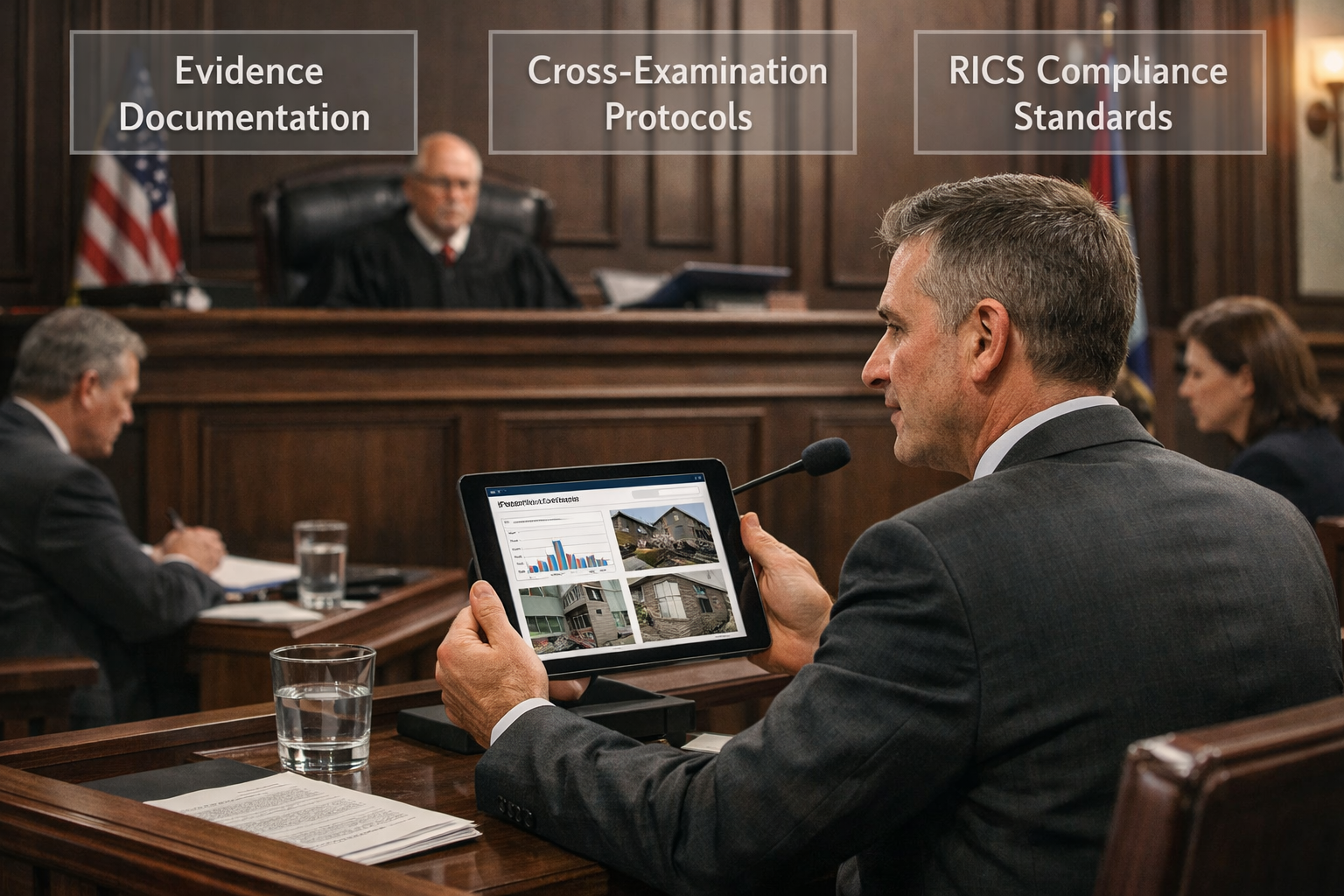
Impartiality stands as the cornerstone principle. Expert witnesses owe their primary duty to the court or tribunal, not to the instructing party. This fundamental requirement distinguishes expert testimony from advocacy. The RICS Dispute Resolution Service emphasizes that experts must:
- Provide objective opinions based solely on evidence and expertise
- Acknowledge limitations in their knowledge or available data
- Avoid advocacy for either party's position
- Disclose any conflicts of interest immediately
- Present balanced analysis of alternative interpretations
Accreditation and Continuing Professional Development
The RICS Expert Witness Accreditation Directory lists professionals who have demonstrated competence through formal assessment [2]. Accreditation requires:
- Minimum experience: Typically 10+ years in relevant property discipline
- Training completion: Approved expert witness training programmes
- CPD commitment: Annual continuing professional development hours
- Peer review: Assessment by experienced practitioners
- Ethical compliance: Adherence to RICS professional conduct standards
For chartered surveyors operating in the North West, maintaining accreditation ensures credibility when providing testimony on RICS specialist defect surveys or registered valuations.
Regional Expertise Requirements
Expert witnesses working on North West England cases must demonstrate specific regional knowledge:
- Local market conditions and pricing trends
- Regional construction methods and materials
- Climate-specific issues (rainfall, subsidence patterns)
- Planning regulations across different local authorities
- Economic factors affecting property values
This regional specialization becomes particularly important when disputes involve properties with unique characteristics common to the area, such as Victorian terraced housing in Liverpool or converted mill buildings in Manchester.
Essential Preparation Strategies for Expert Witness Testimony
Effective preparation separates competent expert witnesses from those whose testimony fails under scrutiny. Expert Witness Preparation for Buyer Enquiry Surges: RICS Strategies in North West England 2026 requires systematic approaches to evidence gathering, analysis, and presentation.
Comprehensive Documentation Protocols
Documentation quality directly impacts testimony credibility. Expert witnesses should establish rigorous protocols:
Site Inspection Standards
- Conduct thorough inspections with detailed photographic records
- Use calibrated equipment for measurements and testing
- Document weather conditions and access limitations
- Record time spent and areas examined
- Note any restricted access or incomplete inspections
When preparing reports on properties requiring RICS home surveys, maintaining comprehensive records ensures defensibility during cross-examination.
Evidence Chain Management
Proper evidence management includes:
- Contemporaneous notes taken during inspections
- Metadata preservation for digital photographs
- Sample retention protocols for materials testing
- Third-party reports obtained and properly attributed
- Version control for draft and final reports
Anticipating Cross-Examination Challenges
Preparation for cross-examination represents perhaps the most critical aspect of expert witness readiness. Experienced legal counsel will probe for weaknesses, inconsistencies, and bias.
Common Cross-Examination Areas
Methodology Challenges: Opposing counsel frequently questions:
- Why specific inspection methods were chosen
- Whether alternative approaches might yield different conclusions
- Adequacy of sample sizes or testing protocols
- Reliance on third-party information
Qualification Attacks: Expect scrutiny regarding:
- Specific experience with similar properties or issues
- Relevant training and certifications
- Previous testimony record
- Potential conflicts of interest
Opinion Consistency: Lawyers examine:
- Consistency between written reports and oral testimony
- Changes in opinions between draft and final versions
- Alignment with published standards and guidance
- Differences from other experts' opinions
"The expert witness who acknowledges reasonable limitations and alternative interpretations demonstrates greater credibility than one who presents absolute certainty on every point." [3]
Report Writing Excellence
Expert witness reports must meet exacting standards for clarity, logic, and completeness. Essential elements include:
Executive Summary: Concise statement of key findings and conclusions
Instructions Received: Clear documentation of scope and questions posed
Methodology: Detailed explanation of inspection and analysis approaches
Factual Findings: Objective observations separated from interpretative opinions
Analysis and Reasoning: Logical progression from evidence to conclusions
Conclusions: Clear, unambiguous statements answering instructed questions
Qualifications and Assumptions: Explicit statement of limitations
Declaration of Truth: Confirmation of impartiality and accuracy
Reports addressing specific defects or schedule of condition assessments require particular attention to photographic evidence and precise descriptions.
Common Pitfalls in Expert Witness Testimony and How to Avoid Them
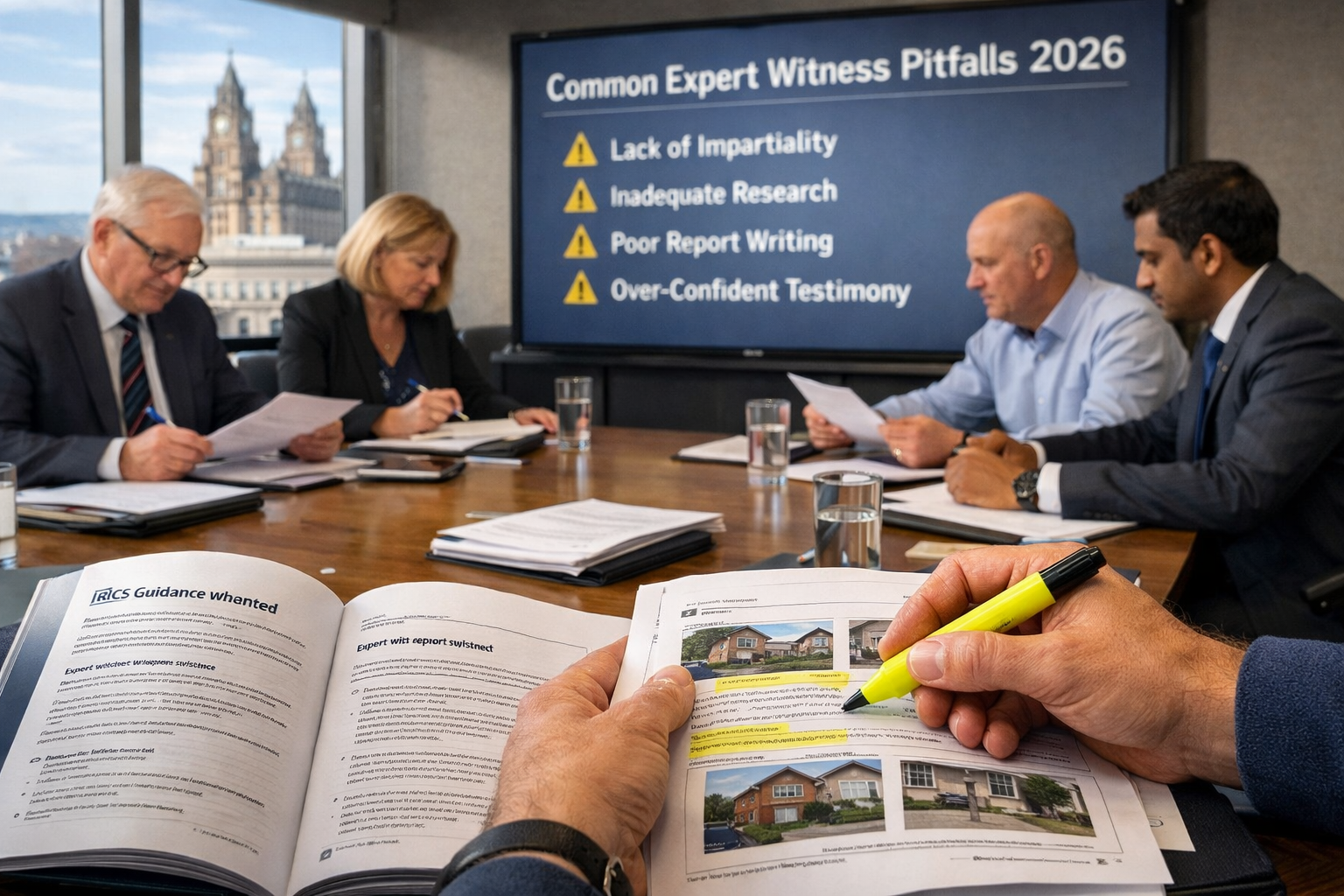
Even experienced professionals encounter challenges when transitioning from technical practice to expert witness roles. Understanding common pitfalls enables proactive mitigation strategies essential to Expert Witness Preparation for Buyer Enquiry Surges: RICS Strategies in North West England 2026.
The Advocacy Trap
Advocacy bias represents the most dangerous pitfall. When instructed by one party, experts may unconsciously align their analysis to support that party's position. Warning signs include:
- Selective emphasis on supporting evidence while minimizing contradictory findings
- Failure to acknowledge reasonable alternative interpretations
- Defensive responses to legitimate questions about methodology
- Language suggesting certainty beyond what evidence supports
Prevention strategies:
- Regularly review RICS impartiality guidance
- Seek peer review of draft reports
- Explicitly consider alternative explanations
- Use measured language ("in my opinion," "based on available evidence")
Inadequate Documentation
Insufficient or disorganized documentation undermines even sound technical analysis. Common documentation failures include:
- Missing photographs of critical defects or conditions
- Incomplete measurements or testing data
- Undated notes making timeline reconstruction difficult
- Lost source materials referenced in reports
- Poor quality images that don't clearly show described conditions
These deficiencies become particularly problematic in disputes involving damp surveys or monitoring surveys where temporal changes matter significantly.
Overstepping Expertise Boundaries
Experts sometimes venture opinions beyond their genuine expertise, particularly in complex cases involving multiple disciplines. Examples include:
- Structural engineers opining on market valuations
- Valuers making definitive statements about construction defects
- Building surveyors providing legal interpretations
Best practice: Clearly state when issues fall outside expertise and recommend additional specialist input. This demonstrates professional integrity rather than weakness.
Failure to Update Knowledge
Property markets, construction techniques, and regulatory frameworks evolve continuously. Expert witnesses relying on outdated knowledge face credibility challenges. In 2026's dynamic North West market, staying current requires:
- Regular attendance at CPD seminars and conferences
- Subscription to industry publications and market data services
- Participation in professional networks and discussion forums
- Review of recent case law affecting expert witness duties
- Familiarity with updated standards and guidance documents
Poor Presentation and Communication
Technical competence means little if experts cannot communicate effectively. Common presentation failures include:
- Using excessive jargon without explanation
- Providing overly technical explanations to lay audiences
- Appearing defensive or argumentative under questioning
- Failing to listen carefully to questions before answering
- Speaking too quickly or quietly in court settings
Effective communication requires adapting technical knowledge to audience understanding while maintaining accuracy.
Regional Considerations for North West England Property Disputes
Expert Witness Preparation for Buyer Enquiry Surges: RICS Strategies in North West England 2026 demands specific attention to regional characteristics that influence property disputes.
Manchester Market Dynamics
Manchester's rapid development creates unique dispute scenarios:
- New build quality issues in high-rise residential developments
- Conversion projects in former industrial buildings
- Cladding concerns following national safety reviews
- Leasehold disputes in apartment complexes
- Valuation challenges in rapidly appreciating areas
Experts must understand Manchester's planning policies, conservation areas, and regeneration zones when assessing properties and providing opinions on value or condition.
Liverpool Property Characteristics
Liverpool's distinct housing stock presents different challenges:
- Victorian terraced properties with characteristic structural issues
- Waterfront developments with specific environmental considerations
- Student accommodation disputes involving multiple stakeholders
- Heritage property restrictions affecting renovation options
- Subsidence patterns related to historical mining activity
Knowledge of Liverpool's local authority procedures and heritage designations proves essential for credible testimony.
Broader Regional Factors
Across the North West, experts should consider:
Economic Indicators: Understanding regional employment trends, wage growth, and investment patterns that affect property values
Transport Links: Impact of HS2, Northern Powerhouse Rail, and other infrastructure projects on property desirability
Climate Factors: Higher rainfall and specific weather patterns affecting building performance and maintenance requirements
Construction Heritage: Regional building traditions, materials, and techniques that influence defect patterns and repair approaches
Training and Professional Development for 2026
As buyer enquiries surge and dispute volumes increase, continuous professional development becomes non-negotiable for expert witnesses.
Essential Training Programmes
RICS and other professional bodies offer specialized training covering:
Expert Witness Fundamentals:
- Legal framework and court procedures
- Report writing standards
- Cross-examination techniques
- Ethical obligations and conflicts management
Technical Updates:
- Current building regulations and standards
- Emerging construction technologies
- Updated valuation methodologies
- New testing and inspection equipment
Regional Market Knowledge:
- North West property market analysis
- Local authority planning policies
- Regional construction characteristics
- Economic development initiatives
Practical Experience Development
Formal training complements but cannot replace practical experience. Developing expert witness competence requires:
- Shadowing experienced experts during inspections and testimony
- Mock cross-examination practice with legal professionals
- Peer review participation for report quality assessment
- Case study analysis of successful and failed expert testimony
- Mentorship relationships with established practitioners
Staying Current with Legal Developments
Expert witness duties evolve through case law and procedural changes. Key developments in 2026 include:
- Updated Civil Procedure Rules affecting expert evidence
- Recent judgments on expert witness immunity and liability
- Changes to disclosure requirements for expert communications
- Evolving standards for electronic evidence presentation
- New accreditation requirements from professional bodies
Regular review of legal updates ensures compliance with current expectations. Resources include RICS guidance documents, legal journals, and professional development seminars.
Practical Case Study: Buyer Enquiry Dispute in Manchester 2026
Consider a representative scenario illustrating Expert Witness Preparation for Buyer Enquiry Surges: RICS Strategies in North West England 2026:
Scenario: A buyer purchased a converted warehouse apartment in Manchester's Northern Quarter in February 2026 during the enquiry surge. Three months post-completion, significant water ingress occurred, allegedly from defective external cladding. The buyer claims the selling agent's survey failed to identify obvious defects, seeking damages of £150,000 for repairs and consequential losses.
Expert Witness Role
A RICS-accredited building surveyor receives instructions to provide expert opinion on:
- Whether defects were reasonably identifiable during pre-purchase inspection
- Appropriate repair methodology and costs
- Whether the original survey met professional standards
Preparation Approach
Documentation Review:
- Original survey report and photographs
- Purchase documentation and marketing materials
- Building specifications and warranty documents
- Weather records for the inspection date
- Subsequent inspection reports and repair quotations
Site Inspection:
- Comprehensive examination of cladding system
- Internal inspection of affected areas
- Review of building records and maintenance history
- Photography and measurement of defect extent
- Testing of moisture levels and material samples
Analysis:
- Comparison of original survey findings with current condition
- Assessment of defect progression timeline
- Evaluation of inspection methodology used
- Review of relevant standards and guidance
- Consideration of alternative explanations
Report Preparation:
- Clear statement of instructions and scope
- Detailed methodology description
- Factual findings separated from opinions
- Balanced analysis acknowledging uncertainties
- Explicit conclusions on each instructed question
- Professional declaration of impartiality
Testimony Considerations
During cross-examination, the expert anticipates questions about:
- Why the original surveyor might have missed the defect
- Whether weather conditions affected inspection adequacy
- Alternative causes of water ingress
- Reasonableness of repair cost estimates
- Consistency with published professional guidance
By thoroughly preparing documentation, conducting comprehensive analysis, and anticipating challenges, the expert provides credible, defensible testimony that assists the court in reaching a fair resolution.
Building a Sustainable Expert Witness Practice
For RICS professionals in the North West, developing an expert witness practice requires strategic planning beyond technical competence.
Marketing and Reputation Building
Establishing credibility as an expert witness involves:
- Professional accreditation through RICS and specialist registers
- Published articles and conference presentations
- Networking with legal professionals and instructing parties
- Website presence showcasing expertise and experience
- Professional references from satisfied instructing solicitors
Maintaining an updated profile with expert witness services demonstrates commitment to this specialized practice area.
Practice Management
Effective expert witness practice requires:
Time Management: Balancing expert witness work with other professional commitments while meeting court deadlines
Fee Structures: Establishing appropriate hourly rates reflecting expertise and accreditation level
Insurance Coverage: Ensuring adequate professional indemnity insurance for expert witness activities
Records Management: Maintaining comprehensive file systems for potential future reference
Conflict Checking: Implementing robust procedures to identify potential conflicts before accepting instructions
Ethical Considerations
Maintaining the highest ethical standards protects both professional reputation and client interests:
- Declining inappropriate instructions that compromise impartiality
- Transparent fee arrangements avoiding contingency-based payments
- Prompt disclosure of any matters affecting independence
- Respectful interaction with opposing experts
- Honest acknowledgment of errors or changed opinions
Conclusion: Excellence in Expert Witness Preparation for 2026 and Beyond
The surge in buyer enquiries across North West England in 2026 creates unprecedented demand for qualified expert witnesses capable of navigating complex property disputes. Success requires more than technical competence—it demands rigorous preparation, unwavering impartiality, and commitment to professional standards.
Key success factors for Expert Witness Preparation for Buyer Enquiry Surges: RICS Strategies in North West England 2026 include:
✅ Comprehensive documentation from initial inspection through final testimony
✅ Regional expertise specific to North West property characteristics and market dynamics
✅ Continuous professional development maintaining current knowledge of standards, regulations, and case law
✅ Ethical integrity prioritizing duty to the court over instructing party interests
✅ Communication excellence translating technical analysis into clear, accessible testimony
✅ Anticipatory preparation for cross-examination challenges and alternative interpretations
For RICS-accredited professionals seeking to develop or enhance expert witness capabilities, the current market environment offers significant opportunities. However, these opportunities come with substantial responsibilities. The courts and disputing parties rely on expert witnesses to provide objective, evidence-based opinions that facilitate just outcomes.
Actionable Next Steps
For Established Practitioners:
- Review and update RICS expert witness accreditation
- Attend specialized training on recent legal and technical developments
- Conduct peer review of recent expert reports for quality assurance
- Develop regional market knowledge specific to North West England
- Establish relationships with legal professionals requiring expert services
For Those Entering Expert Witness Practice:
- Complete foundational expert witness training programmes
- Seek mentorship from experienced practitioners
- Build comprehensive documentation protocols
- Gain practical experience through shadowing and mock exercises
- Pursue formal RICS accreditation when eligible
For All Professionals:
- Maintain detailed records of all property inspections and assessments
- Stay current with market data and regional property trends
- Regularly review RICS guidance on expert witness duties
- Invest in continuing professional development
- Prioritize impartiality and ethical conduct in all professional activities
The North West England property market shows no signs of cooling in 2026. As transactions multiply, disputes will inevitably follow. Expert witnesses who prepare thoroughly, maintain rigorous standards, and communicate effectively will find themselves in high demand—serving the essential function of helping courts reach fair, evidence-based decisions in an increasingly complex property landscape.
For additional guidance on expert witness services and professional surveying standards, professionals can contact specialized RICS practices offering support across the full spectrum of property dispute resolution.
References
[1] Expert Witness Preparation For 2026 Rental Regulation Disputes Surveyor Evidence Amid Stricter Landlord Compliance – https://nottinghillsurveyors.com/blog/expert-witness-preparation-for-2026-rental-regulation-disputes-surveyor-evidence-amid-stricter-landlord-compliance
[2] Rics Register Of Accredited Expert Witnesses March 2026 – https://www.rics.org/content/dam/ricsglobal/documents/surveying/RICS-Register-of-Accredited-Expert-Witnesses_March-2026.pdf
[3] Expert Witness Roles In 2026 Northern Property Disputes Building Cases Amid Regional Price Divergence – https://nottinghillsurveyors.com/blog/expert-witness-roles-in-2026-northern-property-disputes-building-cases-amid-regional-price-divergence