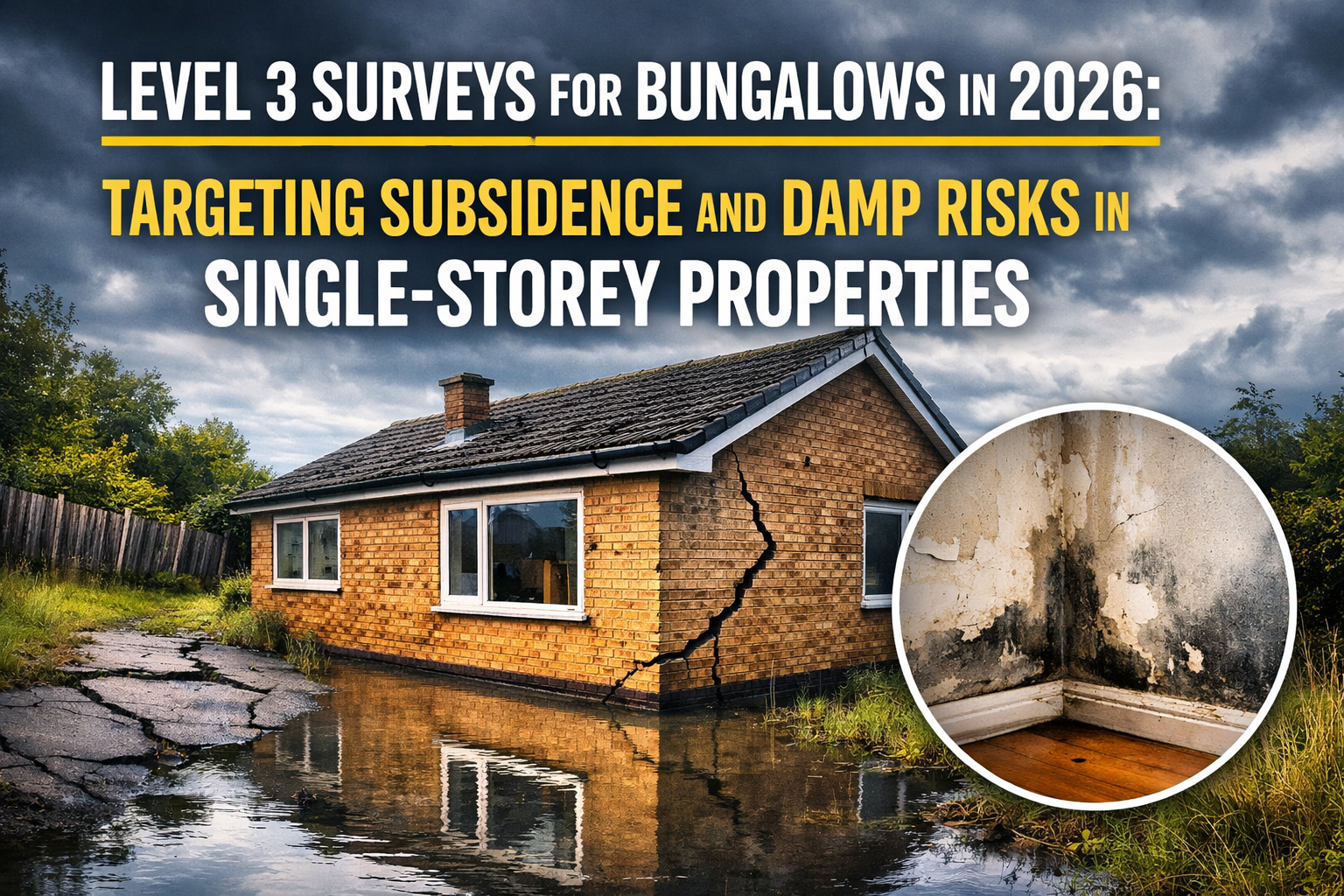

Dilapidation Surveys: The Essential Guide to Protecting Property Interests in 2026

Imagine discovering significant structural damage to your property after a major construction project next door—only to find you have no proof the damage didn’t exist beforehand. Or picture yourself as a landlord facing thousands of pounds in repair costs at lease end, uncertain whether your tenant is truly responsible. These scenarios highlight why dilapidation surveys have become an indispensable tool for property owners, tenants, developers, and contractors across the United Kingdom in 2026.
A dilapidation survey provides detailed, professional documentation of a property’s condition at a specific point in time. Whether you’re a commercial landlord protecting your investment, a tenant safeguarding against unfair repair claims, or a developer mitigating construction-related disputes, understanding dilapidation surveys can save you significant money and prevent costly legal battles.
Key Takeaways
- 🏢 Dilapidation surveys create comprehensive baseline records of property condition before construction, demolition, or at lease commencement/termination to establish clear accountability
- 💰 These surveys prevent financial disputes by providing unbiased professional evidence that clarifies repair responsibilities and prevents overpayment for pre-existing damage
- 📋 Modern dilapidation surveys utilize advanced technology including 360-degree cameras, drones, and web-based platforms to deliver detailed, accessible documentation
- ⚖️ They serve as crucial legal protection for all parties involved in property transactions, construction projects, and lease agreements
- 🔍 Professional surveyors provide color-coded remedial action plans with accurate cost estimates, enabling informed decision-making and budget planning
What Are Dilapidation Surveys?

Dilapidation surveys are comprehensive professional assessments that document the physical condition of buildings, structures, and surrounding areas at a specific moment in time. These detailed records serve as an objective baseline against which future changes, damage, or deterioration can be measured[1][2].
Unlike standard property surveys, dilapidation surveys focus specifically on identifying and recording existing defects, wear and tear, and structural concerns. They create an irrefutable snapshot of condition that protects all parties involved in property-related activities.
Key Components of a Dilapidation Survey
A thorough dilapidation survey typically includes:
- Comprehensive visual inspection of all accessible areas
- Photographic evidence documenting every aspect of the property
- Detailed written descriptions of existing conditions and defects
- Video documentation for complex or extensive properties
- Risk assessments identifying potential safety concerns
- Remedial cost proposals for identified issues
- Location mapping using modern technology to pinpoint specific areas
Modern surveys in 2026 increasingly incorporate cutting-edge technology such as 360-degree cameras, drones for roof and elevation surveys, and rovers for detailed inspections, all accessible through web-based platforms that allow remote site exploration[1].
When Are Dilapidation Surveys Necessary?
Understanding when to commission a dilapidation survey can mean the difference between protected interests and expensive disputes. These surveys serve multiple purposes across various scenarios.
Before Construction or Demolition Projects
When planning construction or demolition work, particularly in urban areas with adjacent properties, a pre-construction dilapidation survey becomes essential. These surveys record the condition of:
- Neighboring properties that might be affected by vibrations, excavation, or accidental damage
- Public infrastructure including roads, pavements, and footpaths
- Shared boundaries and party walls
- Surrounding vegetation and landscaping
- Underground services and utilities
This documentation serves as a vital risk mitigation tool that safeguards relationships and reputations for builders, contractors, and property owners[1]. Without this baseline record, contractors may face unfounded claims for pre-existing damage.
At Lease Commencement
Landlords and tenants both benefit from commissioning a schedule of condition report at the start of a lease agreement. This survey:
- Establishes the property’s baseline condition before tenant occupation
- Clarifies repair obligations for both parties
- Identifies expected remedials the landlord should address
- Protects tenants from liability for pre-existing defects
- Provides landlords with clear documentation of property standards
This proactive approach prevents misunderstandings and sets clear expectations from day one of the tenancy.
At Lease End or Break
Perhaps the most common application of dilapidation surveys occurs at lease termination. These assessments determine whether tenants have fulfilled their repair and maintenance obligations under the lease agreement[2][3].
A lease-end dilapidation survey:
- Documents the property’s current condition against the lease requirements
- Identifies breaches of repair covenants
- Calculates remedial costs for necessary repairs
- Provides evidence for negotiation or legal proceedings
- Clarifies financial liability between landlord and tenant
For commercial properties, these surveys often form the basis of a schedule of dilapidations—a formal document served by landlords detailing required repairs and associated costs.
During Property Transactions
Savvy property buyers and sellers increasingly commission dilapidation surveys as part of their due diligence process. These surveys complement standard building surveys by providing detailed condition records that can:
- Inform purchase negotiations with accurate repair cost estimates
- Protect sellers from post-sale claims
- Enable buyers to budget appropriately for necessary works
- Support valuation assessments for lending purposes
Why Dilapidation Surveys Are Important in 2026
The value of professional dilapidation surveys extends far beyond simple documentation. These assessments deliver tangible benefits that protect financial interests and support informed decision-making.
1. Dispute Prevention and Resolution
Dilapidation surveys provide unbiased professional documentation that prevents disputes between tenants and landlords, contractors and property owners, or buyers and sellers[3][4]. When disagreements arise, the survey serves as objective evidence that can:
- Resolve conflicts without litigation
- Support mediation and negotiation
- Provide expert witness testimony if legal action becomes necessary
- Establish clear timelines of when damage occurred
“A comprehensive dilapidation survey acts as an insurance policy against unfounded claims and protects all parties’ interests through transparent, professional documentation.”
2. Financial Protection and Cost Savings
Perhaps the most compelling reason to commission a dilapidation survey is the potential for significant cost savings. These surveys prevent overpayment for repairs not attributable to a party’s responsibility[2].
Consider these financial benefits:
| Scenario | Without Survey | With Survey | Potential Savings |
|---|---|---|---|
| Pre-existing structural crack | Contractor blamed, pays £15,000 | Survey proves pre-existence, £0 liability | £15,000 |
| Lease-end flooring damage | Tenant pays £8,000 for all flooring | Survey shows 60% pre-existing, tenant pays £3,200 | £4,800 |
| Adjacent property claim | Developer settles £25,000 claim | Survey disproves claim, £0 paid | £25,000 |
3. Informed Maintenance and Budget Planning
Comprehensive dilapidation surveys enable smart maintenance decisions through detailed deterioration analysis and accurate cost budgeting[1][4]. Property owners and managers can:
- Prioritize repairs based on urgency and safety
- Plan capital expenditure with confidence
- Schedule maintenance to minimize disruption
- Forecast long-term costs for property portfolios
Modern surveys employ color-coded remedial actions—typically categorized as repair, redecoration, or reinstatement—with location mapping technology that makes prioritization straightforward[5].
4. Safety Compliance and Risk Management
Dilapidation surveys ensure compliance with building regulations and health and safety standards[4]. They identify:
- ⚠️ Immediate safety hazards requiring urgent attention
- 🔍 Potential structural concerns needing specialist investigation
- 📋 Regulatory compliance issues that could result in enforcement action
- 🛡️ Liability risks that could expose property owners to claims
For commercial properties especially, demonstrating due diligence through regular condition assessments protects against corporate liability.
5. Enhanced Negotiating Position
Whether negotiating lease terms, construction contracts, or property sales, a professional dilapidation survey provides credible evidence that strengthens your position. The detailed, impartial documentation from a qualified surveyor carries significant weight in negotiations and provides:
- Objective cost estimates that counter inflated claims
- Professional credibility that supports your position
- Detailed evidence that’s difficult to dispute
- Clear remedial specifications that define required works
The Dilapidation Survey Process
Understanding what happens during a dilapidation survey helps property owners, tenants, and developers prepare effectively and maximize the value of the assessment.
Step 1: Initial Consultation and Scope Definition
The process begins with a consultation between the client and surveyor to establish:
- Survey objectives and specific concerns
- Property type and size affecting survey scope
- Access arrangements and timing constraints
- Reporting requirements and format preferences
- Budget considerations for the survey itself
For complex properties or commercial building surveys, this planning phase ensures comprehensive coverage.
Step 2: On-Site Inspection
Qualified surveyors conduct thorough inspections of all accessible areas, typically examining:
External Elements:
- Roof coverings, chimneys, and rainwater goods
- External walls, windows, and doors
- Foundations and ground conditions
- Drainage systems and utilities
- Boundaries, paving, and landscaping
Internal Elements:
- Structural elements including walls, floors, and ceilings
- Internal finishes and decorations
- Mechanical and electrical installations
- Plumbing and heating systems
- Fire safety provisions
Modern surveyors utilize advanced equipment including thermal imaging cameras, moisture meters, and drones for roof surveys to ensure comprehensive assessment.
Step 3: Documentation and Analysis
During and after the inspection, surveyors create detailed records through:
- Extensive photography capturing every defect and condition issue
- Video walkthroughs for complex or extensive properties
- Detailed notes describing observations and concerns
- Measurements and sketches documenting specific issues
- 360-degree imagery enabling virtual site revisits
This documentation undergoes careful analysis to identify patterns, assess severity, and determine appropriate remedial actions.
Step 4: Report Preparation
The surveyor compiles findings into a comprehensive report that typically includes:
📊 Executive Summary – Key findings and recommendations
📸 Photographic Schedule – Annotated images of all defects
📋 Detailed Descriptions – Room-by-room or area-by-area condition assessments
💷 Cost Estimates – Remedial work budgets based on current market rates
🎨 Color-Coded Priorities – Visual indicators for repair urgency
🗺️ Location Plans – Mapping technology showing defect locations
Modern reports often include web-based platforms allowing clients to explore findings interactively, filter by severity or location, and share information with stakeholders[1].
Step 5: Presentation and Consultation
Professional surveyors typically conclude the process with a presentation or consultation discussing:
- Key findings and their implications
- Recommended actions and timescales
- Cost implications and budget planning
- Dispute resolution strategies if applicable
- Follow-up inspections or specialist investigations needed
Types of Dilapidation Surveys
Different circumstances require different approaches to condition assessment. Understanding the various types helps ensure you commission the appropriate survey for your needs.
Schedule of Condition
A schedule of condition is typically prepared at lease commencement to record the property’s state before tenant occupation. This document:
- Limits tenant repair obligations to maintaining the property in its documented condition
- Protects tenants from liability for pre-existing defects
- Provides landlords with clear baseline documentation
- Often includes less detail than full dilapidation surveys
Interim Schedule of Dilapidations
During a lease term, landlords may serve an interim schedule to notify tenants of repair breaches. These surveys:
- Identify current breaches of lease covenants
- Encourage tenants to undertake repairs during occupancy
- Prevent deterioration from worsening
- Reduce terminal dilapidation costs
Terminal Schedule of Dilapidations
The most comprehensive type, a terminal schedule is prepared at lease end and includes:
- Complete assessment of all lease breaches
- Detailed specifications for required remedial works
- Accurate cost estimates for repairs
- Legal framework for recovery of dilapidation costs
This document forms the basis for negotiations between landlord and tenant regarding financial settlement.
Pre-Construction Condition Survey
Before commencing construction or demolition work, developers commission these surveys to:
- Document adjacent properties’ existing condition
- Protect against unfounded damage claims
- Establish baseline for post-construction comparison
- Support insurance requirements
Similar to monitoring surveys, these may include crack monitoring and vibration assessment protocols.
Choosing a Qualified Dilapidation Surveyor
The value of a dilapidation survey depends entirely on the expertise and professionalism of the surveyor conducting it. Selecting the right professional ensures credible, defensible documentation.
Essential Qualifications and Credentials
Look for surveyors with:
✅ RICS Membership – Royal Institution of Chartered Surveyors accreditation demonstrates professional competence
✅ Relevant Experience – Specific expertise in dilapidation surveys and property type
✅ Professional Indemnity Insurance – Protection for clients against professional negligence
✅ Local Knowledge – Understanding of regional construction practices and costs
✅ Specialist Technology – Access to modern survey equipment and reporting platforms
Questions to Ask Potential Surveyors
Before commissioning a survey, consider asking:
- How many dilapidation surveys have you completed in the past year?
- Do you have experience with similar property types?
- What technology and equipment do you use?
- How long will the survey and report take?
- What format will the report take?
- Can you provide expert witness services if disputes arise?
- What are your fees and what do they include?
Understanding Survey Costs
Dilapidation survey costs vary based on several factors:
- Property size and complexity – Larger or more complex properties require more time
- Survey type and scope – Comprehensive terminal schedules cost more than basic condition reports
- Location – London and Southeast England typically command higher fees
- Urgency – Expedited surveys may incur premium charges
- Additional services – Cost estimates, expert witness services, and ongoing monitoring add to base fees
While costs vary, investing in a thorough professional survey almost always proves more economical than facing disputes without proper documentation.
Common Issues Identified in Dilapidation Surveys
Understanding typical defects and concerns found during dilapidation surveys helps property owners anticipate potential issues and budget accordingly.
Structural Concerns
Surveyors frequently identify:
- Cracks in walls – Requiring assessment to determine if structural or cosmetic
- Foundation movement – Potentially indicating subsidence or settlement
- Roof structure defects – Sagging, timber decay, or inadequate support
- Floor level changes – Suggesting structural movement or failure
Significant structural issues may require follow-up structural surveys by specialist engineers.
Building Fabric Deterioration
Common building fabric issues include:
- Roof covering failures – Missing tiles, felt deterioration, or leaking
- Rainwater goods defects – Blocked, damaged, or inadequate gutters and downpipes
- External wall problems – Render failure, brickwork deterioration, or pointing defects
- Window and door issues – Rot, poor operation, or failed seals
Services and Installations
Mechanical and electrical systems often show:
- Heating system failures – Boiler defects or radiator problems
- Plumbing issues – Leaks, poor water pressure, or drainage problems
- Electrical deficiencies – Outdated installations or safety concerns
- Ventilation inadequacy – Insufficient or failed extraction systems
Decorative Condition
Interior finish issues commonly identified include:
- Paint and wallpaper deterioration – Peeling, staining, or damage
- Floor covering wear – Carpet damage, tile cracks, or wood floor issues
- Ceiling stains – Indicating leaks or condensation problems
- General wear and tear – Distinguishing from tenant damage
Compliance and Safety Issues
Modern dilapidation surveys also assess:
- Fire safety provisions – Adequate detection, alarms, and escape routes
- Asbestos presence – Particularly in older commercial properties
- Accessibility compliance – Meeting current regulations for commercial premises
- Energy efficiency – EPC ratings and improvement opportunities
Legal Aspects of Dilapidation Surveys
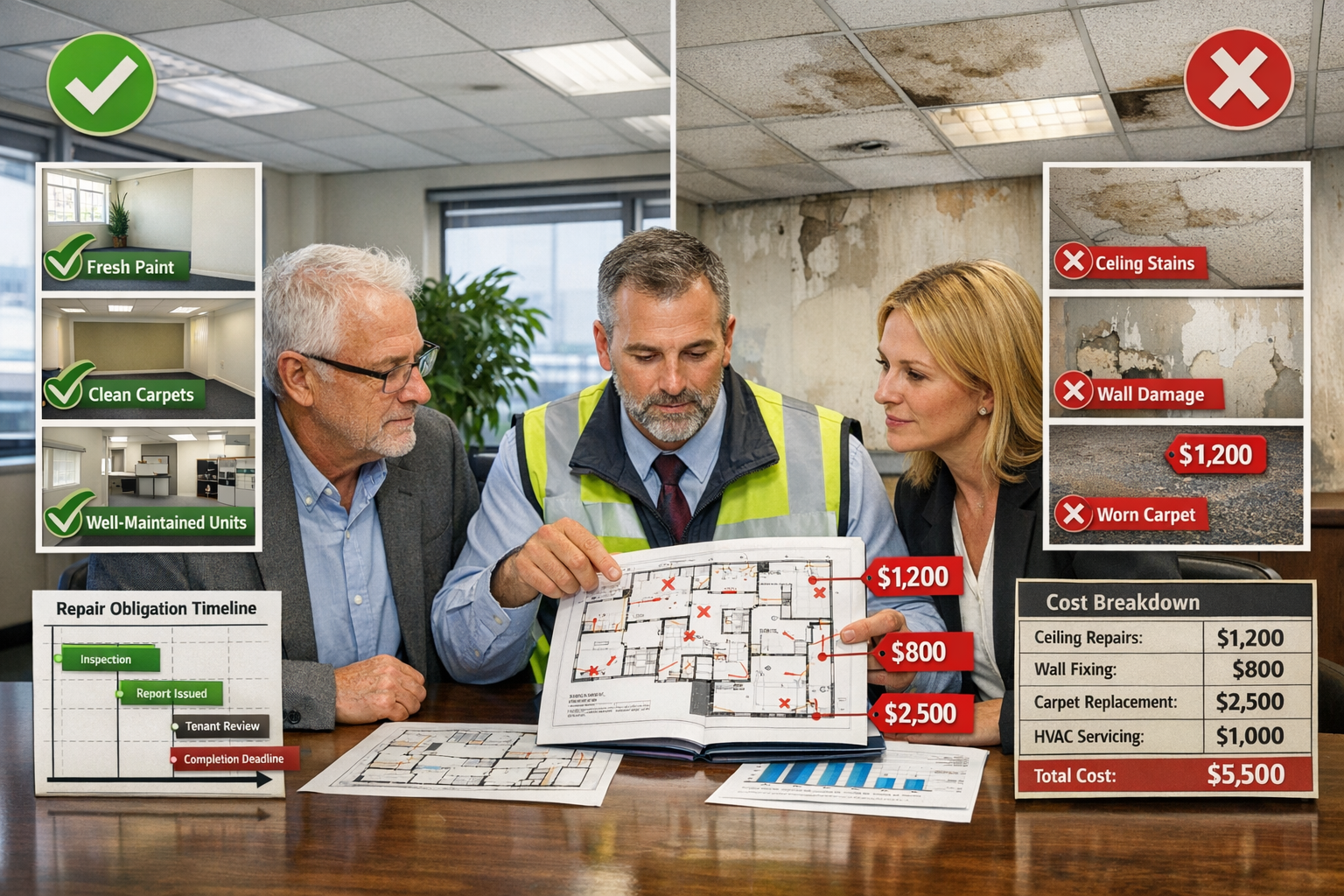
Dilapidation surveys operate within a complex legal framework that governs landlord and tenant relationships, particularly for commercial properties.
The Legal Basis for Dilapidations Claims
Dilapidation claims arise from breach of lease covenants—specifically, repair and decoration obligations that tenants fail to fulfill. The lease agreement defines:
- Repairing obligations – What the tenant must maintain
- Decoration standards – Frequency and quality requirements
- Reinstatement requirements – Removing alterations and restoring original condition
- Yielding-up obligations – Condition required at lease end
Statutory Protections and Limitations
Several legal provisions protect tenants from excessive claims:
Section 18 Landlord and Tenant Act 1927 limits recoverable damages to the diminution in property value—often significantly less than full repair costs.
Dilapidations Protocol requires landlords to follow specific procedures when pursuing claims, including:
- Serving schedules within reasonable timeframes
- Providing detailed cost breakdowns
- Engaging in meaningful negotiation
- Considering tenant improvement contributions
Leasehold Property (Repairs) Act 1938 provides additional protections for long leases.
The Role of Expert Evidence
When disputes reach litigation, dilapidation surveys serve as crucial expert evidence. Chartered surveyors may provide:
- Expert reports analyzing condition and costs
- Expert witness testimony in court or arbitration
- Independent assessments for mediation
- Technical advice supporting legal teams
The credibility and thoroughness of the original survey significantly impacts case outcomes.
Dilapidation Surveys vs. Other Property Surveys
Understanding how dilapidation surveys differ from other assessment types helps property owners commission appropriate surveys for their specific needs.
Dilapidation Survey vs. Building Survey
While both assess property condition, key differences include:
| Aspect | Dilapidation Survey | Building Survey |
|---|---|---|
| Primary Purpose | Document condition at specific time for liability purposes | Inform purchase decisions and identify defects |
| Timing | Lease events or construction projects | Pre-purchase |
| Detail Level | Extensive documentation with photos | Comprehensive but purchase-focused |
| Cost Estimates | Detailed remedial costs | General repair budget guidance |
| Legal Use | Designed for dispute resolution | Advisory only |
For comprehensive property assessments, consider RICS Building Surveys which follow standardized methodologies.
Dilapidation Survey vs. Schedule of Condition
These terms are sometimes used interchangeably but have distinct purposes:
Schedule of Condition:
- Prepared at lease commencement
- Limits tenant repair obligations
- Less detailed, focuses on existing defects
- Protects tenants primarily
Dilapidation Survey:
- Conducted at various lease stages
- Comprehensive condition assessment
- Detailed documentation for claims
- Serves both landlord and tenant interests
Dilapidation Survey vs. Specific Defect Report
Specific defect reports focus on individual problems like damp or subsidence, while dilapidation surveys provide comprehensive whole-property assessments. However, dilapidation surveys may recommend follow-up specific defect investigations for complex issues.
Technology and Innovation in Dilapidation Surveys
The surveying profession has embraced technological advancement, transforming how dilapidation surveys are conducted and reported in 2026.
Advanced Survey Equipment
Modern surveyors deploy sophisticated tools including:
360-Degree Cameras – Capture immersive imagery allowing virtual site revisits and detailed remote examination[1]
Drone Technology – Enable safe, detailed inspection of roofs, elevations, and inaccessible areas without expensive access equipment
Thermal Imaging – Identify hidden defects like moisture ingress, insulation failures, and heating system issues
Laser Measurement – Provide accurate dimensional data for cost estimation and specification
Moisture Meters – Detect damp problems invisible to visual inspection
Digital Reporting Platforms
Web-based reporting systems have revolutionized how survey findings are delivered and used:
- Interactive floor plans with clickable defect markers
- Filterable databases allowing sorting by severity, location, or cost
- Photo galleries with zoom and annotation features
- Cost calculators enabling scenario planning
- Sharing capabilities for multi-stakeholder collaboration
- Mobile accessibility for on-site reference
These platforms transform static PDF reports into dynamic tools supporting informed decision-making[1].
Data Analytics and Predictive Maintenance
Forward-thinking property managers use dilapidation survey data for:
- Portfolio-wide analysis identifying common issues across multiple properties
- Predictive maintenance scheduling based on deterioration patterns
- Budget forecasting using historical cost data
- Lifecycle planning for building components
- Performance benchmarking against industry standards
Best Practices for Property Owners and Tenants
Whether you’re a landlord, tenant, or property developer, following best practices maximizes the value of dilapidation surveys and minimizes disputes.
For Landlords
At Lease Commencement:
✅ Commission a comprehensive schedule of condition
✅ Ensure lease terms clearly define repair obligations
✅ Photograph the property thoroughly
✅ Discuss expectations with tenants explicitly
During the Lease:
✅ Conduct regular inspections to monitor condition
✅ Address structural issues promptly to prevent deterioration
✅ Maintain good tenant communication
✅ Consider interim schedules if significant breaches emerge
At Lease End:
✅ Commission terminal dilapidation survey early
✅ Follow the Dilapidations Protocol procedures
✅ Engage in good-faith negotiation
✅ Consider tenant improvement contributions
For Tenants
At Lease Commencement:
✅ Insist on a schedule of condition limiting repair obligations
✅ Photograph the property extensively
✅ Understand your specific repair covenants
✅ Budget for ongoing maintenance obligations
During the Lease:
✅ Maintain the property according to lease requirements
✅ Document all repairs and improvements
✅ Address issues promptly before they worsen
✅ Communicate with landlords about structural concerns
At Lease End:
✅ Commission your own dilapidation survey before vacating
✅ Complete obvious repairs before landlord inspection
✅ Challenge unreasonable claims with evidence
✅ Engage professional advisors for significant disputes
For Developers and Contractors
Before Construction:
✅ Commission comprehensive pre-construction surveys of all potentially affected properties
✅ Serve notice on neighbors about planned works
✅ Establish monitoring protocols for sensitive structures
✅ Ensure adequate insurance coverage
During Construction:
✅ Implement vibration and movement monitoring
✅ Respond promptly to neighbor concerns
✅ Document work progress photographically
✅ Maintain detailed site records
After Construction:
✅ Conduct post-construction surveys comparing to baseline
✅ Address legitimate damage claims promptly
✅ Use survey evidence to defend against unfounded claims
✅ Maintain positive community relationships
Conclusion: Protecting Your Property Interests Through Professional Dilapidation Surveys
In an increasingly complex property landscape, dilapidation surveys have evolved from optional documentation to essential risk management tools. Whether you’re managing commercial property portfolios, undertaking major construction projects, or navigating lease obligations, these comprehensive condition assessments provide the objective evidence needed to protect financial interests and prevent costly disputes.
The investment in a professional dilapidation survey—typically a fraction of potential dispute costs—delivers peace of mind through credible, defensible documentation. Modern technology has made these surveys more accessible, detailed, and useful than ever before, with interactive digital platforms transforming how findings are delivered and utilized.
Take Action Today
Don’t wait until disputes arise to wish you had proper documentation. Consider these next steps:
- Assess your current situation – Identify upcoming lease events, construction projects, or property transactions requiring condition documentation
- Research qualified surveyors – Find RICS-accredited professionals with relevant experience in your property type and location
- Request consultations – Discuss your specific needs with several surveyors to understand scope and costs
- Commission appropriate surveys – Whether you need a simple schedule of condition or comprehensive terminal schedule, act proactively
- Implement findings – Use survey recommendations to prioritize repairs, budget effectively, and maintain property value
For expert guidance on dilapidation surveys and schedules, consider consulting with qualified chartered surveyors who can tailor assessments to your specific circumstances.
The property sector in 2026 demands professional documentation and evidence-based decision-making. Dilapidation surveys provide exactly that—transforming potential conflicts into clear, manageable processes supported by objective professional assessment. Whether you’re protecting a valuable investment, fulfilling lease obligations, or managing construction risks, these surveys offer indispensable protection for all parties involved.
References
[1] Watch – https://www.youtube.com/watch?v=1vxAWNvp5JM
[2] Surveys – https://www.dilapsolutions.com/services/surveys/
[3] Dilapidations – https://www.bradley-mason.com/commercial/dilapidations/
[4] 5 Reasons Why Dilapidation Surveys Are Important – https://www.giromax.co.uk/blog/5-reasons-why-dilapidation-surveys-are-important/
[5] Dilapidations For Surveyors – https://goreport.com/dilapidations-for-surveyors/