

When mortgage disputes escalate to litigation, the credibility of expert witness testimony can determine the outcome of multi-million-pound cases. In 2026, Digital Twins and AI in Expert Witness Valuations: Enhancing Credibility for 2026 Mortgage Disputes represents a fundamental shift in how property professionals present evidence in court. Traditional valuation methods—relying on photographs, manual measurements, and subjective assessments—are increasingly challenged by opposing counsel. However, chartered surveyors who leverage RICS-endorsed digital tools and AI analytics are transforming virtual property inspections into defensible, data-driven testimony that withstands rigorous cross-examination. 🏛️
The convergence of digital twin technology and artificial intelligence is revolutionizing expert witness work in property disputes. These advanced tools create comprehensive virtual replicas of properties, enabling surveyors to conduct detailed analyses with unprecedented accuracy and transparency. As the global digital twin technology market reaches approximately USD $36 billion in 2026 [4], forward-thinking property professionals are discovering how these innovations strengthen their courtroom credibility and accelerate dispute resolution.
Key Takeaways
- Digital twins provide verifiable, data-rich property models that significantly enhance expert witness credibility in mortgage dispute litigation compared to traditional valuation methods
- AI-powered analytics deliver objective, transparent valuations that reduce bias concerns and withstand rigorous cross-examination in 2026 legal proceedings
- RICS-endorsed digital tools enable faster, more defensible testimony through comprehensive virtual inspections and standardized reporting frameworks
- Implementation challenges include data quality and standardization issues, but early adopters gain competitive advantages in complex dispute resolution
- Integration with established valuation frameworks like Red Book valuation standards ensures regulatory compliance and professional acceptance
Understanding Digital Twins and AI in Property Valuation Context
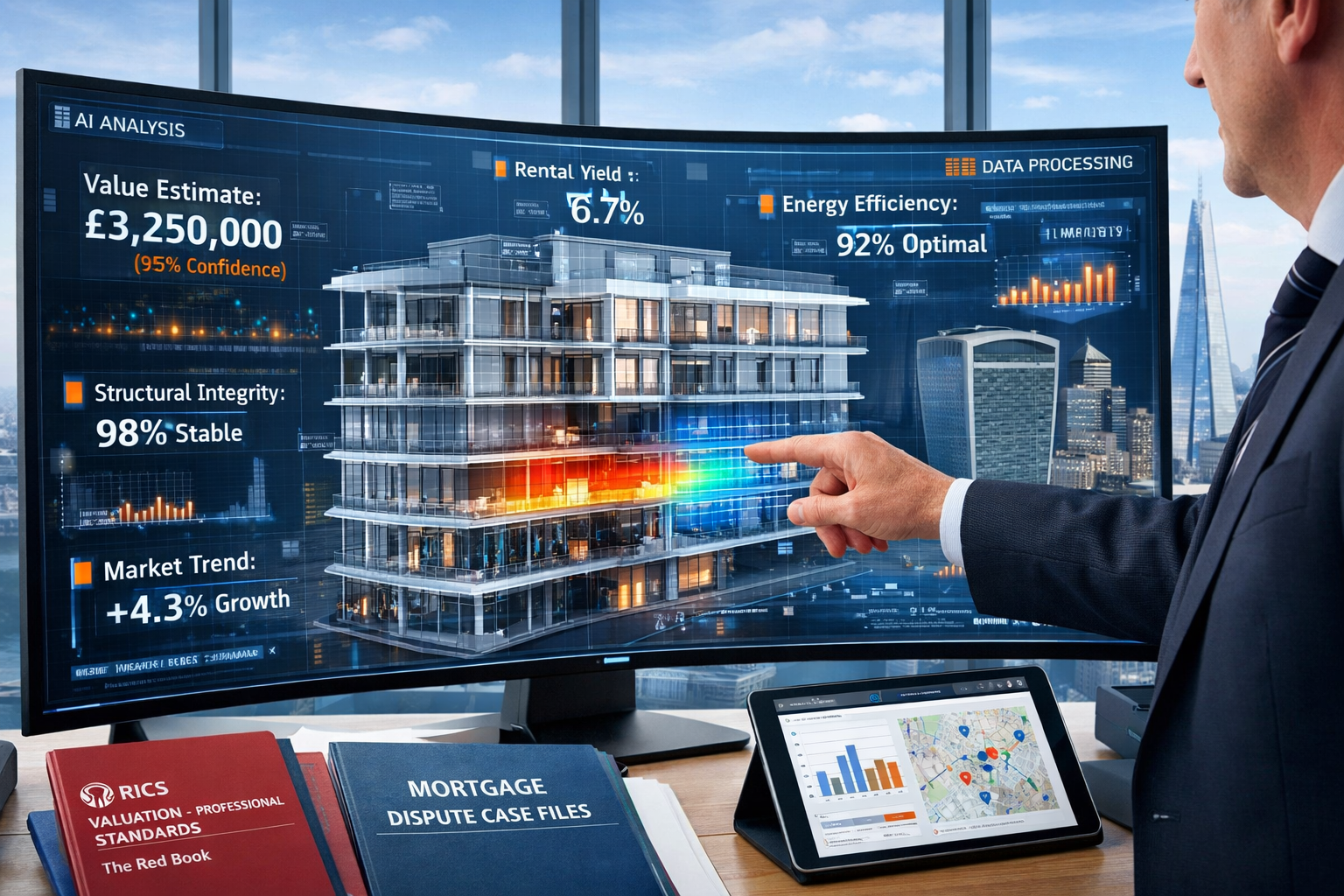
What Are Digital Twins in Property Valuation?
A digital twin is a virtual replica of a physical property that integrates real-time data, historical information, and predictive analytics into a comprehensive digital model. Unlike simple 3D renderings or photographs, digital twins create dynamic representations that capture:
- Structural characteristics with millimeter-level precision
- Material specifications and condition assessments
- Environmental factors affecting property value
- Historical data on modifications and maintenance
- Market comparables and location analytics
For expert witnesses in mortgage disputes, digital twins transform subjective observations into objective, verifiable evidence. When presenting valuations for commercial properties or residential assets, chartered surveyors can demonstrate exactly how they arrived at specific figures, eliminating the "black box" problem that often undermines traditional appraisals.
The Role of AI in Modern Property Valuations
Artificial intelligence enhances property valuations through several critical mechanisms:
Automated Valuation Models (AVMs): AI systems analyze vast datasets of comparable sales, market trends, and property characteristics to generate valuations [2]. These models process information far beyond human capacity, identifying patterns and correlations that traditional methods might miss.
Predictive Analytics: Machine learning algorithms forecast future value trajectories based on neighborhood development, economic indicators, and demographic shifts. This capability proves invaluable in mortgage disputes involving long-term projections.
Bias Reduction: While concerns exist about transparency in AI-driven mortgage decision-making [1], properly implemented AI systems can actually reduce human bias by applying consistent criteria across all valuations. Expert witnesses can demonstrate that their assessments follow standardized, auditable processes rather than subjective judgment.
Quality Control: AI tools flag inconsistencies, outliers, and potential errors in valuation data before reports reach court, significantly improving the reliability of expert testimony.
Current Market Context for 2026
The adoption of digital twins and AI in property valuation faces both opportunities and challenges in 2026:
| Factor | Status | Impact on Expert Witnesses |
|---|---|---|
| Market Size | USD $36 billion globally [4] | Growing vendor ecosystem and tool availability |
| Data Standardization | Limited in many estates [3] | Implementation challenges require careful planning |
| RICS Acceptance | Increasing endorsement | Enhanced professional credibility for adopters |
| Legal Precedent | Emerging case law | Early adopters establishing standards |
| Client Demand | Rising expectations | Competitive advantage for tech-savvy surveyors |
Many estates teams currently lack normalized asset data and integrated systems [3], creating a temporary barrier to widespread adoption. However, expert witnesses who overcome these challenges position themselves as industry leaders in Digital Twins and AI in Expert Witness Valuations: Enhancing Credibility for 2026 Mortgage Disputes.
How Digital Twins and AI Enhance Expert Witness Credibility in Mortgage Disputes
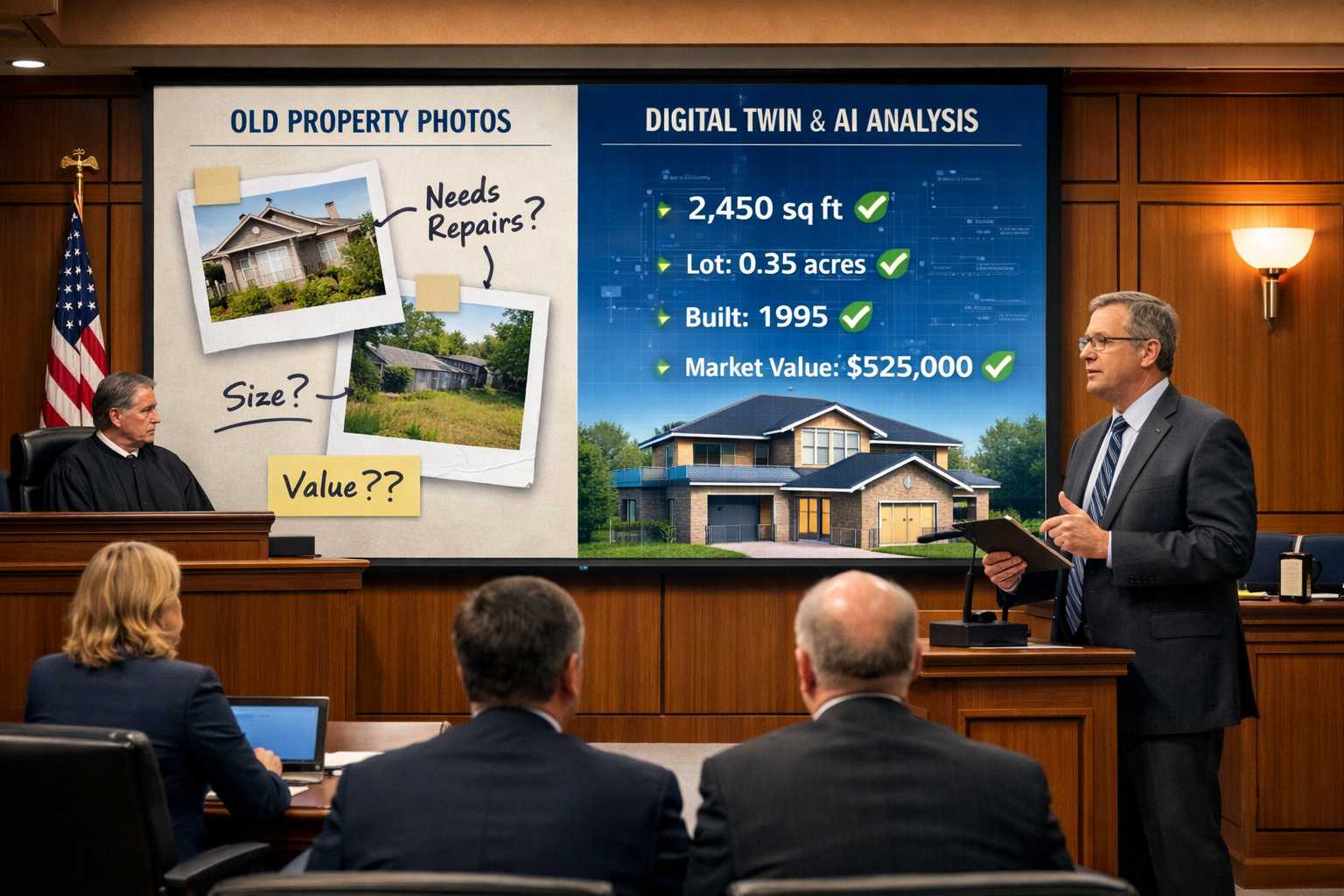
Transparency and Verifiability
The fundamental advantage of Digital Twins and AI in Expert Witness Valuations: Enhancing Credibility for 2026 Mortgage Disputes lies in unprecedented transparency. Traditional expert reports often present conclusions without fully explaining the analytical process, creating opportunities for opposing counsel to challenge methodology.
Digital twin-based valuations provide:
✅ Complete audit trails showing every data point and calculation
✅ Reproducible results that other experts can verify independently
✅ Visual evidence that judges and juries easily understand
✅ Time-stamped documentation proving when observations were made
✅ Standardized metrics aligned with RICS professional standards
When presenting valuations in mortgage disputes—whether for help-to-buy properties or complex shared ownership arrangements—chartered surveyors can demonstrate exactly how digital tools enhanced accuracy and objectivity.
Objective Data Collection and Analysis
Digital twins eliminate many subjective elements that undermine traditional valuations:
Precise Measurements: Laser scanning and photogrammetry capture property dimensions with accuracy impossible through manual methods. When disputes involve questions about usable space or structural modifications, millimeter-level precision proves invaluable.
Consistent Comparables: AI systems identify truly comparable properties using dozens of variables simultaneously, rather than the handful a human expert might consider. This comprehensive approach strengthens commercial valuation testimony by demonstrating thorough market analysis.
Environmental Factors: Digital twins integrate location data, flood risk assessments, transportation access, and neighborhood characteristics into valuation models. Expert witnesses can quantify how these factors affect property value rather than offering vague generalizations.
Condition Assessment: AI-powered image analysis detects structural issues, maintenance needs, and quality indicators that might escape visual inspection. This capability enhances credibility in disputes involving property condition disagreements.
"The integration of digital twin technology with AI analytics transforms expert witness testimony from opinion-based assessment to data-driven evidence, fundamentally strengthening credibility in mortgage dispute litigation."
Faster Dispute Resolution
Speed matters in mortgage disputes, where delayed resolution costs all parties significant time and money. Digital Twins and AI in Expert Witness Valuations: Enhancing Credibility for 2026 Mortgage Disputes accelerates proceedings through:
Virtual Inspections: Expert witnesses can conduct comprehensive property assessments remotely, eliminating scheduling conflicts and travel delays. This proves particularly valuable for building surveys of multiple properties in complex portfolio disputes.
Rapid Analysis: AI systems process market data and generate comparative analyses in hours rather than weeks. When courts require expedited expert reports, digital tools enable chartered surveyors to meet tight deadlines without compromising quality.
Pre-Trial Clarity: The transparency of digital twin valuations often facilitates settlement negotiations before trial. When both parties can examine the same detailed property model and understand the valuation methodology, disputes frequently resolve without lengthy court proceedings.
Efficient Updates: When new information emerges during litigation, digital twin models can be updated quickly to reflect changed circumstances. Traditional valuations might require complete re-inspection, while AI-enhanced models incorporate new data seamlessly.
Withstanding Cross-Examination
The courtroom test of expert witness credibility occurs during cross-examination, where opposing counsel attempts to undermine testimony. Digital twins and AI provide several defensive advantages:
Documented Methodology: Every analytical step exists in the digital record, making it impossible for opposing counsel to claim the expert "made up" conclusions or applied inconsistent standards.
Peer Validation: AI-generated valuations can be compared against multiple AVMs and market databases, demonstrating that conclusions align with broader industry consensus rather than representing outlier opinions.
Visual Presentation: Digital twin models can be displayed in court, allowing judges and juries to "walk through" properties virtually and understand valuation factors directly. This visual evidence proves far more persuasive than verbal descriptions or static photographs.
Professional Standards Compliance: Integration with RICS Red Book standards demonstrates that digital methods enhance rather than replace established professional frameworks, addressing concerns about novel approaches.
Implementation Strategies for Chartered Surveyors
Selecting Appropriate Digital Twin and AI Tools
Not all digital twin platforms and AI systems suit expert witness work equally well. Chartered surveyors should evaluate tools based on:
RICS Compatibility: Ensure selected platforms align with professional standards and produce reports that meet regulatory requirements. Tools designed for building operations may lack features necessary for legal testimony.
Data Quality and Sources: Investigate what datasets AI systems use for comparative analysis. Valuations based on comprehensive, verified data withstand scrutiny better than those relying on limited or questionable sources [2].
Transparency Features: Prioritize platforms that provide clear audit trails and methodology documentation. "Black box" AI systems that don't explain their calculations create credibility problems in court.
Integration Capabilities: Select tools that work with existing surveying equipment and software. Seamless integration with laser scanners, drones, and traditional valuation frameworks reduces implementation complexity.
Training and Support: Vendor-provided training ensures chartered surveyors can effectively use digital tools and explain their methodology in testimony. Inadequate training undermines the credibility benefits these technologies offer.
Building Digital Twin Valuation Workflows
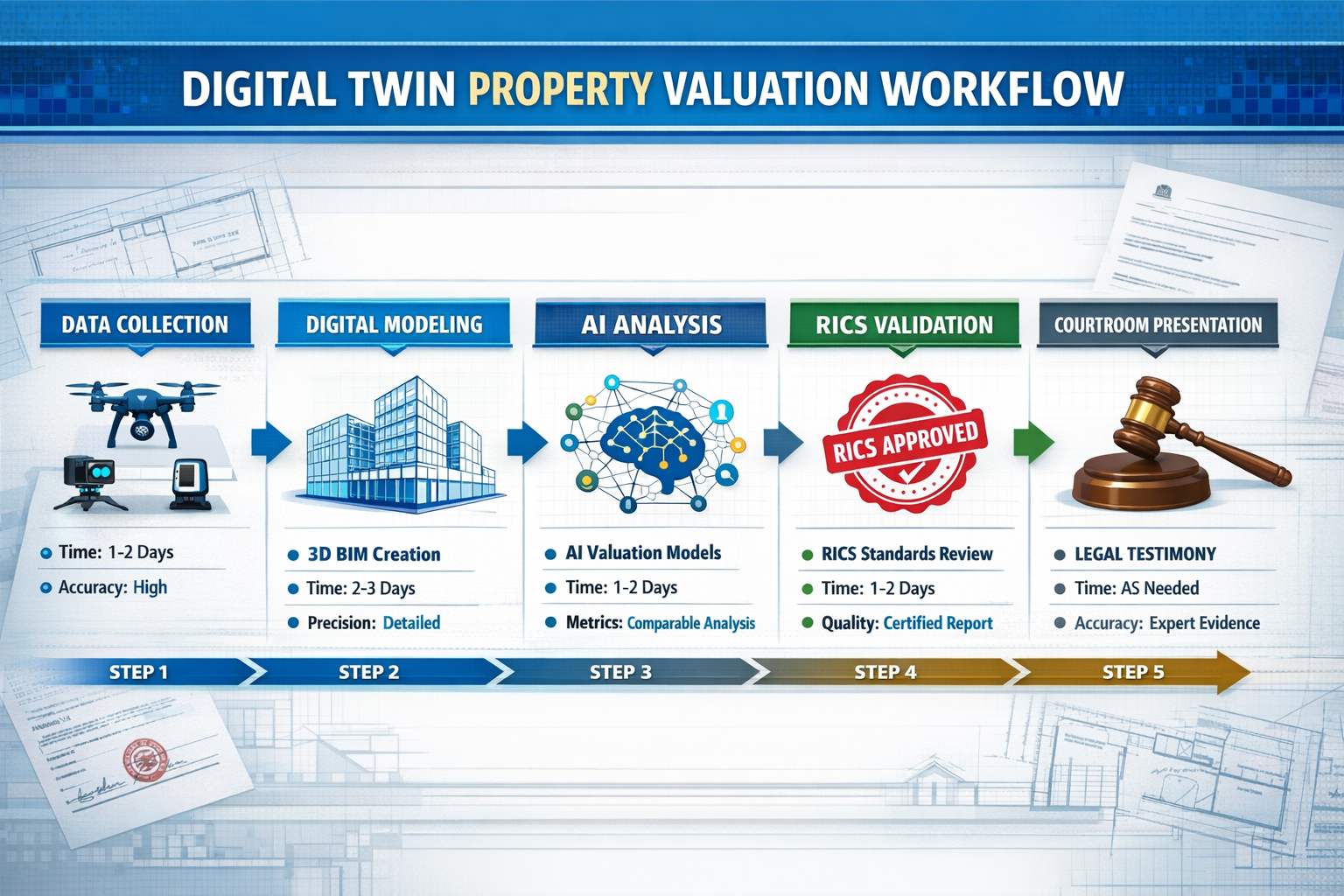
Successful implementation requires systematic workflows that integrate digital tools with established professional practices:
Phase 1: Initial Property Assessment
- Conduct traditional site inspection to identify key valuation factors
- Capture high-resolution imagery and laser scan data
- Document property characteristics using standardized checklists
- Identify comparable properties for AI analysis
Phase 2: Digital Twin Creation
- Process scan data to create accurate 3D property model
- Integrate property characteristics and condition assessments
- Verify model accuracy against physical measurements
- Document any limitations or data gaps
Phase 3: AI-Enhanced Analysis
- Run AVM analysis using multiple data sources [2]
- Compare AI-generated valuations against traditional methods
- Identify and investigate significant discrepancies
- Document analytical process and assumptions
Phase 4: Report Preparation
- Generate comprehensive valuation report integrating digital evidence
- Create visual presentations from digital twin model
- Prepare methodology documentation for potential cross-examination
- Ensure compliance with Red Book standards
Phase 5: Testimony Preparation
- Review digital twin model and AI analysis thoroughly
- Prepare responses to anticipated challenges
- Test visual presentations for courtroom use
- Coordinate with legal counsel on presentation strategy
Addressing Data Quality Challenges
The effectiveness of Digital Twins and AI in Expert Witness Valuations: Enhancing Credibility for 2026 Mortgage Disputes depends critically on data quality. Many estates currently lack normalized asset data and integrated systems [3], creating implementation challenges.
Standardization Strategies:
📊 Develop internal data protocols ensuring consistent property information capture across all valuations
📊 Invest in data cleaning to normalize historical property records before AI analysis
📊 Establish verification procedures to validate AI-generated insights against traditional methods
📊 Document data limitations transparently in expert reports to maintain credibility
📊 Collaborate with industry initiatives working toward standardized property data formats
When data quality issues exist, expert witnesses should acknowledge limitations clearly rather than presenting AI-generated valuations as definitive. This transparency actually enhances credibility by demonstrating professional judgment and intellectual honesty.
Case Study Examples
While specific 2026 mortgage dispute cases remain confidential, implementation patterns are emerging:
Scenario 1: Complex Commercial Property Dispute
A chartered surveyor used digital twin technology to value a mixed-use development in a mortgage foreclosure case. The digital model revealed structural modifications not apparent in original plans, affecting valuation by 15%. The visual presentation helped the court understand technical issues, leading to settlement before trial.
Scenario 2: Residential Portfolio Valuation
An expert witness employed AI analytics to value 47 properties in a mortgage-backed securities dispute. The AI system identified market trends and comparable sales across multiple regions, producing consistent valuations in three weeks—a timeline impossible with traditional methods. The comprehensive documentation withstood extensive cross-examination.
Scenario 3: Historic Property Assessment
Digital twin technology enabled detailed condition assessment of a listed building without invasive inspection. The 3D model documented architectural features and maintenance issues, supporting a capital gains tax valuation that both parties accepted as authoritative.
Professional Development and Training
Chartered surveyors implementing digital twin and AI technologies should pursue:
- Technical training in digital twin platform operation and AI system interpretation
- Legal education on admissibility standards for digital evidence in property disputes
- Professional certification in emerging valuation technologies from RICS or equivalent bodies
- Peer collaboration through industry groups sharing implementation best practices
- Continuous learning as digital tools and legal precedents evolve
The investment in professional development pays dividends through enhanced credibility, competitive differentiation, and ability to handle complex, high-value disputes that traditional methods cannot address effectively.
Regulatory Considerations and Professional Standards
RICS Red Book Compliance
The RICS Valuation – Global Standards (Red Book) provides the professional framework for property valuations in the UK and internationally. Digital Twins and AI in Expert Witness Valuations: Enhancing Credibility for 2026 Mortgage Disputes must align with these established standards to maintain professional credibility.
Key compliance considerations include:
Transparency Requirements: Red Book standards mandate clear disclosure of valuation methodology, assumptions, and limitations. Digital twin and AI-enhanced valuations must document how technology was used and what data sources informed conclusions.
Professional Judgment: While AI provides powerful analytical capabilities, RICS standards emphasize that professional judgment remains essential. Expert witnesses must demonstrate they applied critical thinking to AI-generated insights rather than accepting them uncritically.
Competence Standards: Chartered surveyors using digital twin technology must possess adequate training and expertise in these tools. Offering expert testimony based on technology the surveyor doesn't fully understand violates professional standards and undermines credibility.
Independence and Objectivity: AI systems must be configured and used in ways that maintain the expert witness's independence. Relying on AI tools provided by parties to the dispute, or using systems with undisclosed biases, creates ethical problems.
Legal Admissibility Standards
Courts evaluate expert witness testimony based on reliability, relevance, and qualification criteria. Digital twin and AI evidence must meet these standards:
Reliability (Daubert/Frye Standards): Courts assess whether methodologies are scientifically valid and generally accepted in the professional community. As digital twin technology gains acceptance, expert witnesses should be prepared to demonstrate:
- Peer-reviewed validation of AI valuation models
- Error rates and accuracy metrics for digital twin measurements
- Professional acceptance within chartered surveyor community
- Quality control procedures ensuring reliable results
Relevance: Digital evidence must directly address issues in dispute. Expert witnesses should focus on how digital twin technology provides insights specifically relevant to mortgage dispute questions rather than overwhelming courts with technical details.
Qualification: Chartered surveyors must demonstrate both traditional valuation expertise and technical competence with digital tools. Courts may question whether experts truly understand the AI systems they're relying upon, making thorough training essential.
Data Protection and Privacy Considerations
Digital twin models and AI analysis often involve sensitive property and personal data, creating privacy obligations:
- GDPR compliance when collecting and processing property owner information
- Secure data storage protecting confidential property details from unauthorized access
- Limited data retention disposing of digital twin models appropriately after disputes resolve
- Transparent data usage informing property owners how digital tools will analyze their information
Expert witnesses who demonstrate rigorous data protection practices enhance their professional credibility and avoid legal complications that could undermine testimony.
Future Trends and Emerging Developments
Integration with Blockchain for Evidence Verification
Emerging technologies are combining digital twins with blockchain to create tamper-proof records of property valuations. This integration could revolutionize expert witness work by:
- Timestamping property assessments in immutable ledgers
- Preventing manipulation of valuation data after disputes arise
- Enabling verification by opposing experts without compromising confidentiality
- Documenting changes to property conditions over time with cryptographic certainty
While still in early stages, blockchain-verified digital twins may become standard practice for high-value mortgage disputes where evidence integrity is paramount.
AI Bias Detection and Mitigation
As concerns about AI bias in property valuations grow [1], new tools are emerging to detect and correct algorithmic biases. Expert witnesses in 2026 can enhance credibility by:
- Using bias-detection software to analyze AI valuation models for discriminatory patterns
- Documenting bias mitigation steps taken to ensure fair assessments
- Comparing AI results against human expert judgment to identify systematic discrepancies
- Transparently discussing potential limitations of AI systems in expert reports
The financial services industry is developing sophisticated approaches to digital twin implementation [5] that property professionals can adapt for mortgage dispute contexts.
Standardization Initiatives
Industry organizations are working toward standardized digital twin formats and AI valuation protocols. These initiatives will:
- Improve interoperability between different digital twin platforms
- Establish benchmarks for AI valuation accuracy and reliability
- Create professional guidelines for digital evidence in legal proceedings
- Facilitate peer review of digital twin-based expert opinions
Chartered surveyors who participate in standardization efforts position themselves as thought leaders in Digital Twins and AI in Expert Witness Valuations: Enhancing Credibility for 2026 Mortgage Disputes.
Expanded Applications Beyond Mortgage Disputes
While this article focuses on mortgage disputes, digital twin and AI technologies are expanding into related areas:
- Party wall disputes where precise structural documentation proves essential
- Dilapidations surveys requiring detailed condition assessments
- Lease extension valuations benefiting from AI-powered market analysis
- Insurance claims where digital twins document pre-loss property conditions
Expert witnesses who develop expertise across these applications maximize the return on their technology investments.
Conclusion
Digital Twins and AI in Expert Witness Valuations: Enhancing Credibility for 2026 Mortgage Disputes represents a transformative shift in how chartered surveyors provide litigation support. The combination of comprehensive virtual property models and AI-powered analytics delivers unprecedented transparency, objectivity, and defensibility in expert testimony. As the global digital twin market reaches USD $36 billion in 2026 [4], forward-thinking property professionals are discovering that these technologies don't replace traditional expertise—they amplify it, enabling surveyors to present more compelling, verifiable evidence in court.
The credibility advantages are clear: complete audit trails that withstand cross-examination, objective data analysis that reduces bias concerns, and visual presentations that help judges and juries understand complex valuation issues. While implementation challenges exist—particularly around data quality and standardization [3]—chartered surveyors who overcome these obstacles gain significant competitive advantages in complex, high-value disputes.
Actionable Next Steps
For chartered surveyors looking to enhance their expert witness practice with digital twin and AI technologies:
-
Assess current capabilities: Evaluate existing equipment and software to identify gaps preventing digital twin implementation
-
Invest in training: Pursue professional development in digital twin platforms, AI valuation tools, and legal admissibility standards
-
Start with pilot projects: Implement digital technologies on straightforward cases to build expertise before tackling complex mortgage disputes
-
Develop standardized workflows: Create documented procedures integrating digital tools with RICS Red Book standards
-
Build vendor relationships: Establish partnerships with reputable digital twin and AI platform providers offering robust support
-
Document methodology thoroughly: Create comprehensive records of how digital tools enhance rather than replace professional judgment
-
Collaborate with legal counsel: Work closely with solicitors to understand how courts in your jurisdiction view digital evidence
-
Join industry initiatives: Participate in professional organizations developing standards for digital twin valuations
The future of expert witness work in mortgage disputes increasingly depends on technological sophistication combined with traditional professional expertise. Chartered surveyors who embrace Digital Twins and AI in Expert Witness Valuations: Enhancing Credibility for 2026 Mortgage Disputes position themselves as authoritative voices in an evolving field, capable of delivering the transparent, defensible testimony that modern litigation demands. 🚀
References
[1] How Ai Is Influencing The Purchase Of Homes – https://www.tomorrow.city/how-ai-is-influencing-the-purchase-of-homes/
[2] Ai Property Analysis – https://www.growthfactor.ai/blog-posts/ai-property-analysis
[3] What Do Digital Twins Hold For 2026 From Visualisation To Smart Building Operations – https://www.twinview.com/insights/what-do-digital-twins-hold-for-2026-from-visualisation-to-smart-building-operations
[4] Digital Twins In 2026 From Buzzword To Business Value – https://instandart.com/whitepapers-reports/digital-twins-in-2026-from-buzzword-to-business-value/
[5] Digital Twins In Financial Services – https://materialize.com/guides/digital-twins-in-financial-services/