The Complete Guide to Understanding the Difference Between Level 2 and Level 3 Survey
When purchasing a property, one decision can save you thousands of pounds and prevent costly surprises down the road. The difference between level 2 and level 3 survey options represents a critical choice that every property buyer must navigate, yet many homeowners find themselves confused by the technical jargon and varying recommendations from professionals.
Property surveys serve as your first line of defense against hidden structural issues, costly repairs, and unexpected maintenance problems. Understanding which survey level suits your specific situation can mean the difference between a smooth property purchase and a financial nightmare that unfolds months after you’ve moved in.
Key Takeaways
• Level 2 surveys are suitable for conventional properties in good condition, providing essential structural assessments at a moderate cost
• Level 3 surveys offer comprehensive analysis for older, complex, or potentially problematic properties requiring detailed investigation
• Cost differences typically range from £400-800 for Level 2 surveys versus £600-1,500 for Level 3 surveys
• Timeline variations show Level 2 surveys completed in 1-2 days while Level 3 surveys require 3-5 days for thorough assessment
• Property characteristics such as age, construction type, and visible defects determine which survey level provides optimal value
Understanding Property Survey Fundamentals
Property surveys represent professional assessments conducted by qualified surveyors to evaluate a building’s condition, structural integrity, and potential issues. These comprehensive examinations protect buyers from purchasing properties with hidden defects that could result in substantial financial losses.
The Royal Institution of Chartered Surveyors (RICS) established standardized survey levels to help consumers choose appropriate assessment types based on property characteristics and individual requirements. This standardization ensures consistent quality and coverage across different surveying firms.
Why Property Surveys Matter 🏠
Property surveys provide crucial insights that basic valuations cannot offer. While mortgage lenders require valuations to confirm property worth, surveys focus on identifying:
- Structural defects and safety concerns
- Maintenance requirements and associated costs
- Legal issues affecting property use
- Environmental factors impacting long-term value
- Insurance implications for specific property types
“A comprehensive survey can reveal issues that cost tens of thousands to rectify, making the survey fee seem insignificant by comparison.” – RICS Property Survey Guidelines
Level 2 Survey: Essential Assessment Overview
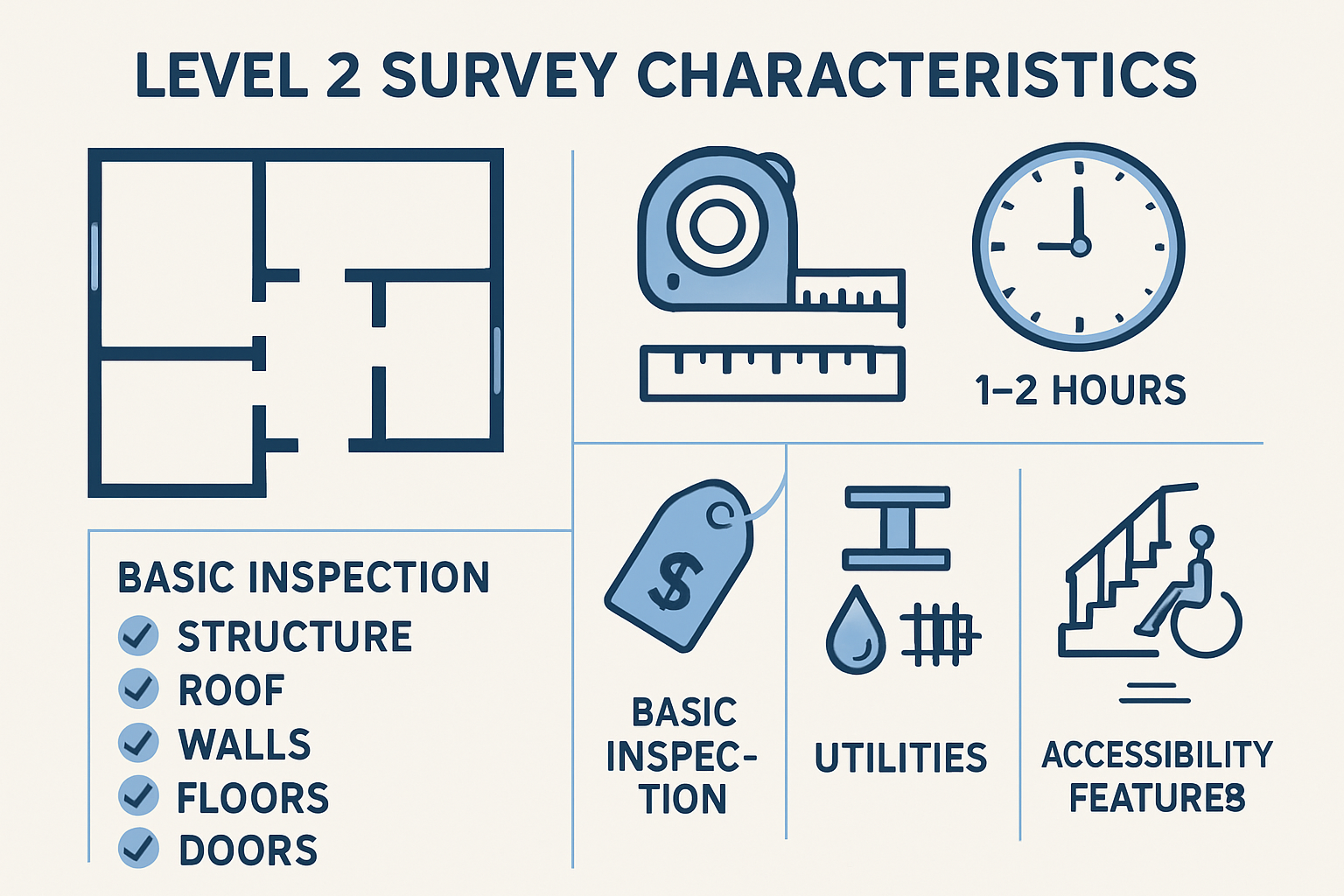
Level 2 surveys, formerly known as HomeBuyer Reports, provide intermediate-level property assessments suitable for most conventional residential properties. These surveys strike a balance between thoroughness and cost-effectiveness, making them popular choices for standard property purchases.
Key Characteristics of Level 2 Surveys
Level 2 surveys focus on visible and accessible areas of properties, providing comprehensive assessments without invasive investigation techniques. Surveyors examine readily apparent structural elements while noting areas requiring further investigation.
Coverage Areas Include:
- External walls, roofing, and guttering systems
- Internal structural elements and load-bearing walls
- Electrical, plumbing, and heating system basics
- Windows, doors, and insulation effectiveness
- Damp, timber defects, and pest evidence
- Garage, outbuildings, and boundary structures
Level 2 Survey Process and Timeline ⏰
The Level 2 survey process typically requires 1-2 days for completion, depending on property size and complexity. Surveyors conduct visual inspections using basic equipment while documenting findings through photographs and detailed notes.
Typical Timeline Breakdown:
- Initial assessment (2-3 hours): External examination and structural overview
- Internal inspection (3-4 hours): Room-by-room evaluation and system checks
- Documentation (1-2 hours): Photograph compilation and preliminary notes
- Report preparation (1-2 days): Comprehensive analysis and recommendation development
Cost Considerations for Level 2 Surveys 💰
Level 2 survey costs generally range from £400 to £800, varying based on property size, location, and surveyor qualifications. Additional factors influencing pricing include:
- Property value and associated liability risks
- Geographic location and local market rates
- Surveyor experience and professional certifications
- Report complexity and additional service requirements
- Urgency factors affecting standard scheduling
Level 3 Survey: Comprehensive Property Analysis
Level 3 surveys, previously called Building Surveys or Structural Surveys, represent the most thorough property assessment available to residential buyers. These comprehensive examinations suit complex properties requiring detailed investigation and analysis.
Detailed Scope of Level 3 Surveys
Level 3 surveys provide extensive investigation of property conditions, employing advanced techniques and equipment to uncover hidden defects. Surveyors examine both visible and concealed areas where safely accessible.
Comprehensive Coverage Includes:
- Detailed structural analysis of foundations, load-bearing elements, and framework
- Advanced system evaluation covering electrical, plumbing, heating, and ventilation
- Specialist testing for damp, timber defects, and pest infestations
- Roof space inspection including insulation, ventilation, and structural integrity
- Basement/cellar examination focusing on waterproofing and structural soundness
- Outbuilding assessment covering garages, sheds, and boundary structures
Level 3 Survey Methodology and Duration
Level 3 surveys require 3-5 days for thorough completion, reflecting the comprehensive nature of these detailed assessments. Surveyors utilize specialized equipment and testing methods to evaluate property conditions accurately.
Extended Process Components:
- Preliminary research (4-6 hours): Historical records and planning permission review
- Comprehensive inspection (8-12 hours): Detailed examination using advanced equipment
- Specialist testing (2-4 hours): Moisture meters, endoscopes, and structural analysis tools
- Documentation phase (4-6 hours): Extensive photography and measurement recording
- Report compilation (2-3 days): Detailed analysis, recommendations, and cost estimates
Investment Requirements for Level 3 Surveys
Level 3 survey costs typically range from £600 to £1,500, reflecting the comprehensive nature and extended time requirements. Premium pricing factors include:
- Property complexity and age-related investigation requirements
- Specialist equipment usage and advanced testing procedures
- Extended surveyor time commitment and detailed analysis
- Comprehensive reporting with cost estimates and priority rankings
- Professional liability coverage for detailed recommendations
Key Differences Between Level 2 and Level 3 Survey Options
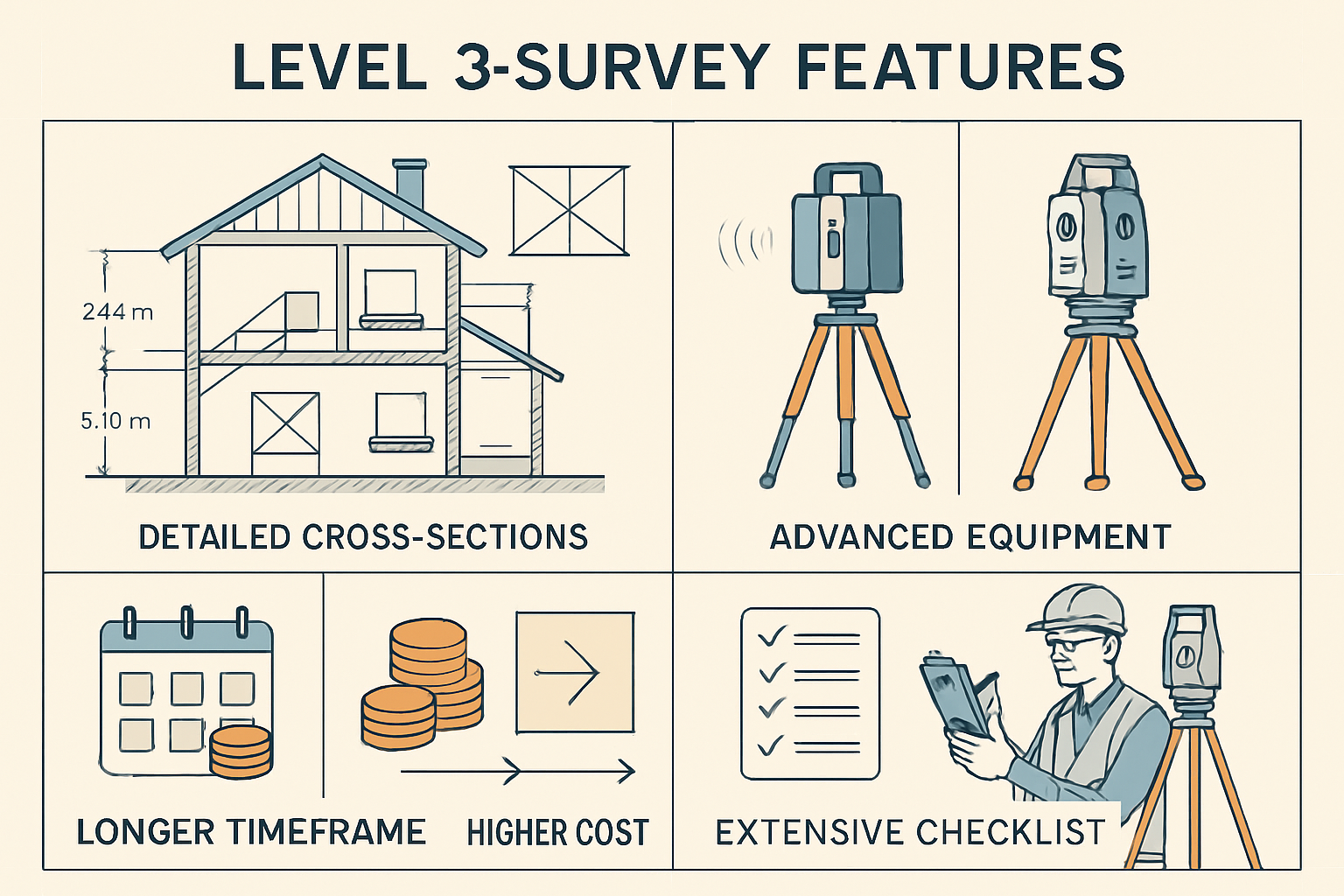
Understanding the difference between level 2 and level 3 survey choices requires examining multiple factors that distinguish these assessment types. Each survey level serves specific property types and buyer requirements.
Scope and Depth Comparison
| Assessment Factor | Level 2 Survey | Level 3 Survey |
|---|---|---|
| Inspection Depth | Visual examination of accessible areas | Comprehensive investigation including concealed spaces |
| Equipment Used | Basic tools and visual assessment | Advanced testing equipment and specialist tools |
| Report Detail | Standard format with key findings | Extensive documentation with detailed analysis |
| Defect Investigation | Surface-level identification | In-depth analysis and root cause examination |
| Recommendations | General guidance and priorities | Specific solutions with cost estimates |
Property Suitability Factors
Level 2 surveys work best for:
- ✅ Modern properties (built after 1960) in good condition
- ✅ Standard construction using conventional materials and methods
- ✅ Well-maintained properties with no obvious defects
- ✅ Budget-conscious buyers seeking essential information
- ✅ Straightforward purchases without complex considerations
Level 3 surveys are essential for:
- ✅ Period properties (pre-1960) with potential age-related issues
- ✅ Unusual construction methods or non-standard materials
- ✅ Properties requiring renovation or showing visible defects
- ✅ High-value investments where detailed analysis justifies costs
- ✅ Complex purchases involving planning or structural concerns
Time and Cost Analysis 📊
The difference between level 2 and level 3 survey costs reflects varying complexity and time investments required for thorough assessment.
Comparative Investment Analysis:
- Level 2 surveys: £400-800 investment over 1-2 days
- Level 3 surveys: £600-1,500 investment over 3-5 days
- Cost per insight: Level 2 provides basic coverage; Level 3 offers comprehensive analysis
- Risk mitigation: Level 2 covers standard risks; Level 3 addresses complex potential issues
- Long-term value: Level 2 suits straightforward purchases; Level 3 protects complex investments
Making the Right Survey Choice for Your Property
Selecting between survey levels requires careful consideration of property characteristics, personal circumstances, and risk tolerance levels. The difference between level 2 and level 3 survey options becomes clearer when evaluated against specific criteria.
Decision-Making Framework 🎯
Choose Level 2 surveys when:
- Property age falls within modern construction periods (post-1960)
- Visual inspection reveals no obvious structural concerns
- Budget constraints require cost-effective assessment options
- Standard mortgage applications without lender concerns
- Conventional construction using typical materials and methods
Opt for Level 3 surveys when:
- Property age indicates potential complexity (pre-1960 construction)
- Visible defects suggest underlying structural issues
- Renovation plans require detailed condition understanding
- High purchase price justifies comprehensive investigation
- Unusual features need specialist assessment and analysis
Professional Consultation Benefits
Qualified surveyors provide valuable guidance when determining appropriate survey levels. Professional consultation helps identify property-specific factors that influence survey selection decisions.
Surveyor Expertise Includes:
- Property assessment based on age, construction, and condition factors
- Risk evaluation considering potential defects and associated costs
- Cost-benefit analysis comparing survey investments against protection levels
- Timeline coordination ensuring survey completion meets purchase deadlines
- Report interpretation explaining findings and recommended actions
Maximizing Survey Value and Next Steps
Understanding survey options represents just the beginning of effective property assessment. Maximizing survey value requires proper preparation, clear communication, and strategic follow-up actions.
Preparation Strategies for Optimal Results
Pre-Survey Preparation:
- Research property history including previous surveys and planning applications
- Compile specific concerns for surveyor attention and investigation
- Ensure property access to all areas requiring examination
- Coordinate timing with purchase timeline and mortgage requirements
- Clarify scope and expectations with chosen surveying professional
Post-Survey Action Planning 📋
Survey completion marks the beginning of informed decision-making processes. Effective post-survey actions maximize assessment value and protect investment interests.
Strategic Follow-Up Actions:
- Review findings thoroughly with professional guidance when needed
- Prioritize identified issues based on safety, cost, and urgency factors
- Obtain specialist quotes for significant defects requiring remediation
- Negotiate purchase terms reflecting survey findings and associated costs
- Plan maintenance schedules addressing identified concerns and prevention strategies
Conclusion
The difference between level 2 and level 3 survey options ultimately depends on property characteristics, buyer requirements, and risk tolerance levels. Level 2 surveys provide cost-effective assessments for standard properties in good condition, while Level 3 surveys offer comprehensive analysis for complex or potentially problematic buildings.
Making informed survey choices protects property investments and prevents costly surprises that can emerge after purchase completion. Whether selecting Level 2 or Level 3 options, professional surveys provide essential insights that guide confident property decisions.
Take action today by consulting qualified surveyors who can assess your specific property requirements and recommend appropriate survey levels. Schedule consultations early in your property search process to ensure adequate time for thorough assessment and informed decision-making. Remember that survey costs represent minimal investments compared to potential savings from identifying significant defects before purchase completion.
The right survey choice provides peace of mind, protects your investment, and ensures your property purchase proceeds with complete confidence in the building’s condition and future maintenance requirements.