

The Complete Guide to Desktop House Valuation in 2025
Imagine getting an instant estimate of your home’s value without leaving your desk or paying expensive appraisal fees. Desktop house valuation has revolutionized how property owners, investors, and real estate professionals assess property values in today’s digital age. This technology-driven approach combines vast databases, sophisticated algorithms, and market analytics to deliver property valuations at the click of a button.
Key Takeaways
• Desktop house valuation uses automated systems and online tools to estimate property values without physical inspections
• These valuations are faster and cheaper than traditional appraisals but may lack accuracy for unique properties
• Multiple data sources including recent sales, tax records, and market trends feed into desktop valuation models
• Best used for initial estimates and market research rather than final lending or legal decisions
• Professional appraisals remain necessary for mortgage applications and official property transactions
What Is Desktop House Valuation?
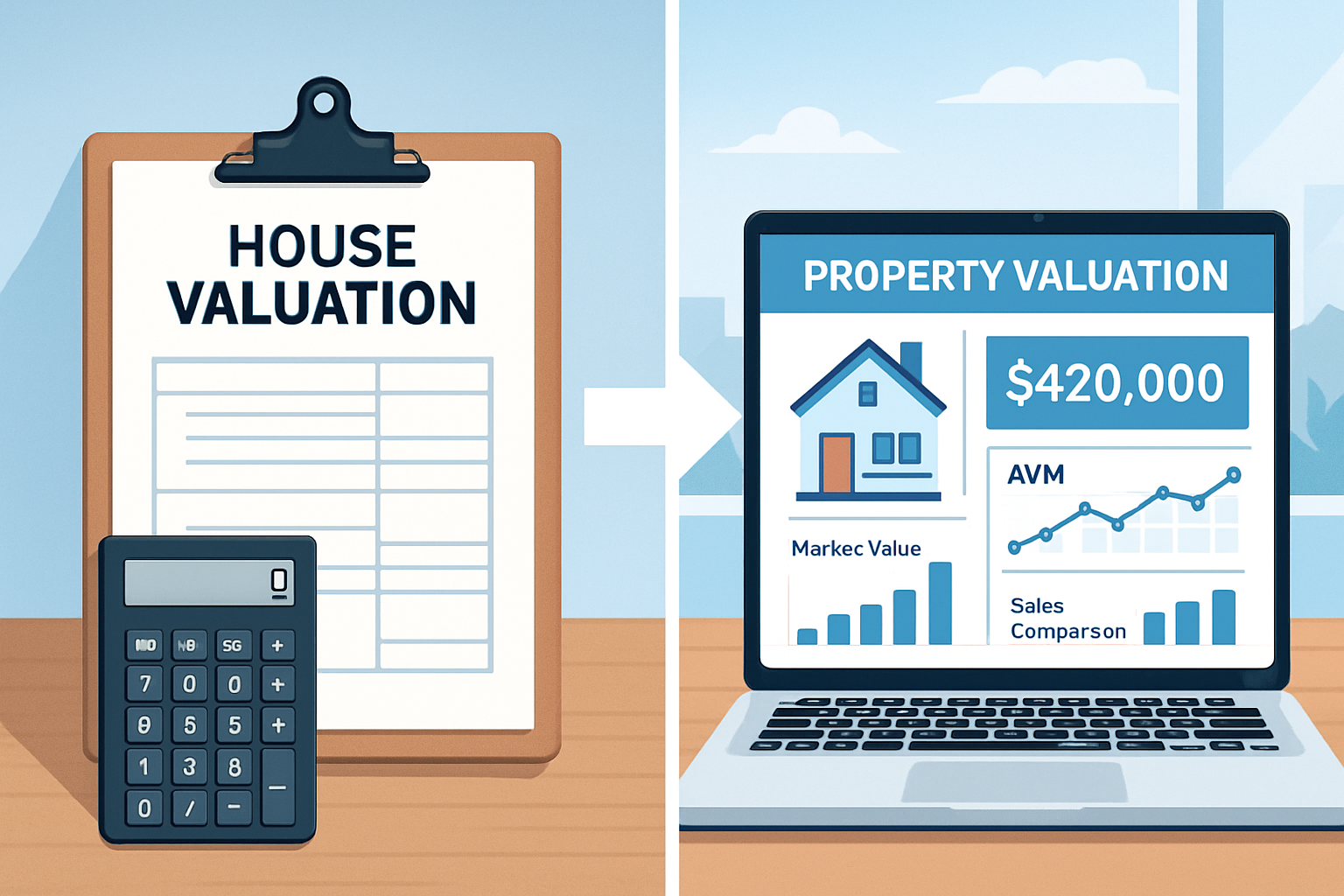
Desktop house valuation refers to the process of estimating a property’s market value using computer-based tools and databases without conducting a physical inspection. Also known as Automated Valuation Models (AVMs) or drive-by appraisals, these digital solutions analyze vast amounts of property data to generate value estimates.
How Desktop Valuations Work
The technology behind desktop house valuation relies on several key components:
📊 Data Collection Sources:
- Recent comparable sales (comps)
- Public tax assessment records
- Property characteristics databases
- Market trend analytics
- Geographic information systems (GIS)
- Multiple listing service (MLS) data
🤖 Algorithm Processing:
Modern desktop valuation systems use machine learning algorithms that:
- Analyze thousands of comparable properties
- Weight various property features and market factors
- Account for location-specific trends
- Generate confidence scores for accuracy estimates
Types of Desktop House Valuation Tools
| Tool Type | Best For | Accuracy Level | Cost |
|---|---|---|---|
| Online Estimators | Quick estimates | Moderate | Free |
| Professional AVMs | Investment analysis | High | $10-50 |
| Lender Desktop Tools | Pre-qualification | Very High | Varies |
| Real Estate Platforms | Market research | Moderate-High | Free-Paid |
Benefits and Limitations of Desktop House Valuation
🎯 Major Advantages
Speed and Convenience ⚡
Desktop house valuation delivers results instantly, making it perfect for:
- Initial property research
- Investment opportunity screening
- Market trend monitoring
- Portfolio management
Cost-Effectiveness 💰
Traditional appraisals cost $300-600, while desktop valuations often cost nothing or under $50.
Accessibility 🌐
Available 24/7 from anywhere with internet access, these tools democratize property valuation information.
⚠️ Key Limitations
Accuracy Concerns
Desktop valuations may struggle with:
- Unique or custom properties
- Recent renovations or improvements
- Local market nuances
- Properties with limited comparable sales
“Desktop valuations are excellent starting points, but they should never replace professional judgment for important financial decisions.” – National Association of Realtors
Data Dependency Issues
The quality of desktop house valuation depends heavily on:
- Data freshness – Outdated information skews results
- Market coverage – Rural areas often lack sufficient data
- Property details – Missing or incorrect property characteristics
Popular Desktop House Valuation Platforms
Free Consumer Tools
Zillow Zestimate 🏠
- Covers 100+ million properties
- Updates values regularly
- Provides price history and trends
- Accuracy: ±5-7% for on-market homes
Redfin Estimate 📈
- MLS-integrated data
- Local market expertise
- Confidence scores included
- Accuracy: ±2-3% in major markets
Professional Solutions
CoreLogic AVM 🏢
- Institutional-grade accuracy
- Risk assessment tools
- Cascade modeling approach
- Used by major lenders
Collateral Analytics 📊
- Advanced statistical modeling
- Property condition adjustments
- Market volatility indicators
- Enterprise-level reporting
Best Practices for Desktop House Valuation
🔍 Getting Accurate Results
1. Use Multiple Sources
Never rely on a single desktop valuation. Compare results from:
- At least 3 different platforms
- Various data sources and methodologies
- Both free and paid services
2. Verify Property Information
Ensure accuracy by:
- ✅ Confirming square footage
- ✅ Checking bedroom/bathroom counts
- ✅ Updating recent improvements
- ✅ Verifying lot size and features
3. Consider Market Conditions 📈
Factor in current market dynamics:
- Local supply and demand trends
- Seasonal variations
- Economic indicators
- Interest rate impacts
When to Use Desktop House Valuation
✅ Appropriate Uses:
- Initial property research
- Investment screening
- Refinancing considerations
- Insurance purposes
- Estate planning estimates
❌ Inappropriate Uses:
- Mortgage lending decisions
- Legal proceedings
- Tax appeals
- Final purchase/sale pricing
The Future of Desktop House Valuation Technology
Emerging Trends in 2025
Artificial Intelligence Integration 🤖
Advanced AI models are improving accuracy by:
- Processing satellite imagery
- Analyzing neighborhood characteristics
- Incorporating social media data
- Predicting market trends
Blockchain Integration 🔗
Distributed ledger technology promises:
- Improved data transparency
- Reduced fraud potential
- Faster transaction processing
- Enhanced security measures
Real-Time Market Analytics ⏱️
Next-generation desktop house valuation tools offer:
- Live market updates
- Dynamic pricing models
- Instant comparable sales integration
- Predictive value forecasting
Industry Impact
The desktop house valuation market continues expanding, with key developments including:
📱 Mobile-First Solutions
- Smartphone-optimized interfaces
- GPS-based property identification
- Photo-based property analysis
- Voice-activated queries
🏘️ Neighborhood-Level Intelligence
- Micro-market analysis
- School district impact modeling
- Crime statistics integration
- Infrastructure development tracking
Choosing the Right Desktop House Valuation Service
Evaluation Criteria
When selecting a desktop house valuation platform, consider:
Data Quality Factors:
- Update frequency
- Source reliability
- Geographic coverage
- Historical accuracy rates
Feature Requirements:
- Confidence intervals
- Comparable sales details
- Market trend analysis
- Export capabilities
Cost Considerations:
- Free vs. paid options
- Volume pricing for professionals
- Subscription vs. per-use models
- Additional feature costs
Professional vs. Consumer Tools
| Feature | Consumer Tools | Professional Tools |
|---|---|---|
| Accuracy | Good | Excellent |
| Data Depth | Basic | Comprehensive |
| Reporting | Simple | Detailed |
| Support | Limited | Full Service |
| Compliance | Basic | Regulatory Grade |
Regulatory and Legal Considerations
Industry Standards
Desktop house valuation services must comply with:
USPAP Guidelines ⚖️
The Uniform Standards of Professional Appraisal Practice provide:
- Methodology requirements
- Disclosure standards
- Quality control measures
- Professional ethics guidelines
Fair Lending Regulations 🏛️
Financial institutions using desktop valuations must ensure:
- Non-discriminatory practices
- Consistent application standards
- Adequate documentation
- Regular accuracy monitoring
Liability and Limitations
Disclaimer Requirements ⚠️
Most desktop house valuation services include disclaimers about:
- Accuracy limitations
- Intended use restrictions
- Professional appraisal recommendations
- Market volatility impacts
Maximizing Desktop House Valuation Accuracy
Data Enhancement Strategies
Property Information Updates 📝
Improve accuracy by providing:
- Recent renovation details
- Unique feature descriptions
- Current condition assessments
- Lot and landscaping improvements
Market Context Addition 🏘️
Consider local factors like:
- Pending developments
- Zoning changes
- School district updates
- Transportation improvements
Quality Control Measures
Cross-Reference Validation ✅
- Compare multiple estimate sources
- Verify against recent sales
- Check tax assessment alignment
- Review market trend consistency
Professional Consultation 👥
When desktop valuations show:
- Wide variance between sources
- Unusual market positioning
- Significant recent changes
- High-value property assessments
Conclusion
Desktop house valuation has transformed property assessment by making preliminary valuations faster, cheaper, and more accessible than ever before. While these digital tools excel at providing quick estimates for standard properties in data-rich markets, they work best as starting points rather than final authorities on property value.
The key to success with desktop house valuation lies in understanding both its capabilities and limitations. Use multiple sources, verify property information, and recognize when professional appraisals become necessary. As technology continues advancing, desktop valuations will become increasingly sophisticated, but the human expertise of qualified appraisers remains irreplaceable for critical financial decisions.
Next Steps:
- Try multiple desktop valuation tools to establish a value range for your property
- Update property information across major platforms to improve accuracy
- Monitor market trends using desktop tools for ongoing insights
- Consult professionals when precision matters for major financial decisions
- Stay informed about new desktop valuation technologies and features
By leveraging desktop house valuation effectively while respecting its boundaries, property owners and professionals can make more informed decisions in today’s dynamic real estate market.