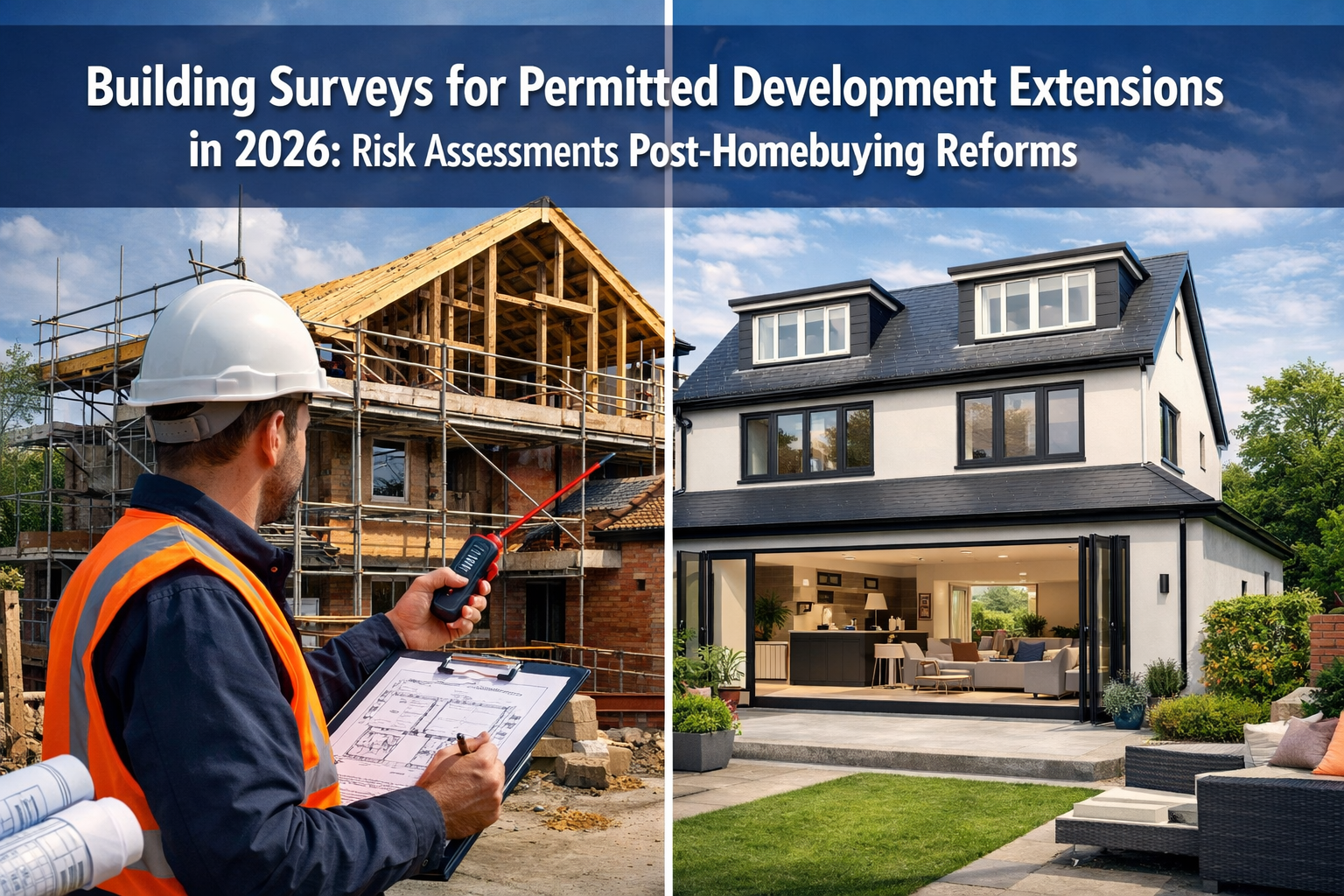

The UK property market is experiencing a significant shift in 2026, as new homebuying reforms introduce potential upfront survey mandates that fundamentally change how buyers approach permitted development extensions. With loft conversions, rear extensions, and basement developments seeing renewed demand, understanding Building Surveys for Permitted Development Extensions in 2026: Risk Assessments Post-Homebuying Reforms has become essential for property owners and prospective buyers navigating this evolving landscape.
The convergence of regulatory changes and increased extension activity means that comprehensive building surveys are no longer optional—they're a critical safeguard against costly mistakes. Whether planning a permitted development project or purchasing a property with existing extensions, the risk assessment protocols established post-reform demand careful attention and professional expertise.
Key Takeaways
- 🏗️ Upfront survey mandates in 2026 reforms require comprehensive Level 3 building surveys before permitted development extensions proceed
- ⚠️ Risk assessment frameworks now emphasize structural integrity, party wall compliance, and hidden defects specific to PD extensions
- 📋 Lender requirements have tightened significantly, with mortgage providers demanding detailed survey documentation for properties with extensions
- 🔍 Pre-purchase surveys must now include specific PD extension checklists covering lofts, basements, and rear additions
- 💰 Cost implications of inadequate surveys can exceed £50,000 when structural issues emerge post-purchase
Understanding Building Surveys for Permitted Development Extensions in 2026
What Are Permitted Development Extensions?
Permitted development (PD) rights allow homeowners to extend or alter their properties without requiring full planning permission, subject to specific limitations and conditions. Common PD extensions include:
- Loft conversions (up to 40-50 cubic metres additional space)
- Rear extensions (up to 6 metres for terraced/semi-detached, 8 metres for detached)
- Single-storey side extensions (within specific height and width parameters)
- Basement conversions (subject to volume and impact restrictions)
While PD rights streamline the approval process, they don't eliminate the need for compliance with Building Regulations or the importance of thorough structural assessments. The 2026 homebuying reforms recognize this gap, introducing enhanced survey requirements that protect buyers from inheriting problematic extensions.
The 2026 Homebuying Reform Landscape
The homebuying reforms implemented in 2026 represent the most significant changes to property transaction protocols in over two decades. Key elements affecting building surveys include:
Upfront Information Requirements: Sellers must now provide comprehensive property information packs that include survey documentation for any PD extensions completed within the last 15 years. This transparency requirement aims to reduce transaction fall-throughs and protect buyers from discovering defects late in the purchase process.
Mandatory Survey Disclosure: Properties with PD extensions must undergo a RICS Level 3 building survey before listing, with results disclosed to potential buyers. This shifts the survey burden from buyer to seller in many cases, though buyers retain the right to commission independent assessments.
Enhanced Lender Requirements: Mortgage providers now require detailed survey evidence that PD extensions comply with Building Regulations and don't compromise structural integrity. Properties failing to meet these standards face valuation reductions or mortgage refusals.
Why Level 3 Building Surveys Are Essential
For properties with permitted development extensions, a comprehensive building survey provides the most thorough assessment available. Unlike basic condition reports, Level 3 surveys examine:
- Structural integrity of load-bearing modifications
- Building Regulation compliance for extension work
- Hidden defects in roof spaces, foundations, and party walls
- Damp and moisture issues common in poorly executed conversions
- Electrical and plumbing installations within extensions
The detailed nature of these surveys makes them invaluable for risk assessment, particularly when evaluating the quality of PD work that may have been completed without professional oversight.
Risk Assessment Frameworks for PD Extensions Post-Reform
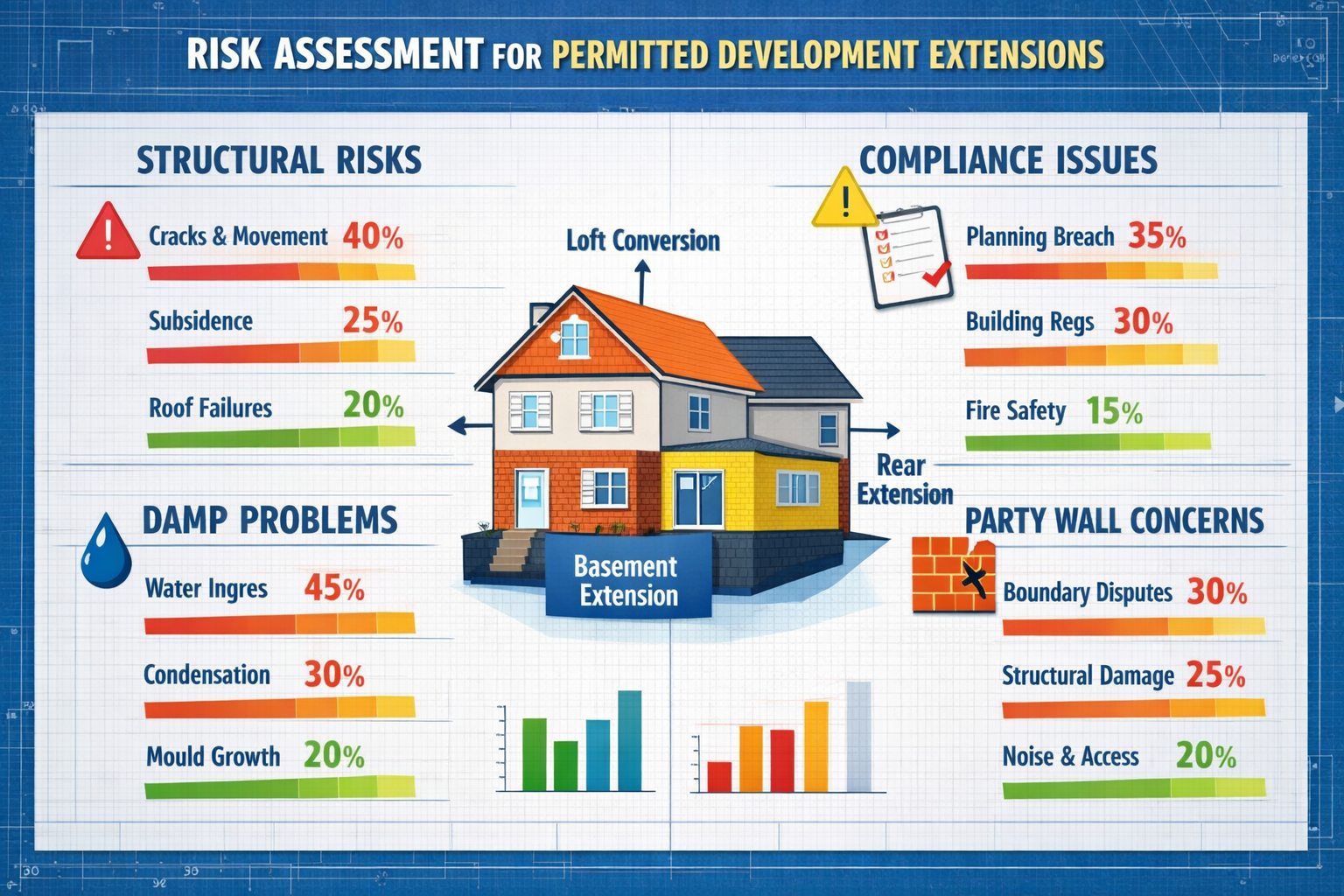
Structural Risk Categories
Building Surveys for Permitted Development Extensions in 2026: Risk Assessments Post-Homebuying Reforms must address specific structural concerns that vary by extension type:
Loft Conversion Risks
Load-Bearing Capacity: Original roof structures rarely designed to support habitable space require steel beam installations and reinforced floor joists. Survey assessments must verify:
- Adequate steel beam specifications and installation quality
- Proper load distribution to existing walls
- Floor joist sizing and spacing compliance
- Staircase structural integration
Roof Integrity: Dormer additions and roof light installations create potential water ingress points. Critical assessment areas include:
- Flashing quality around dormers and roof windows
- Lead work standards and weatherproofing
- Insulation adequacy (minimum 270mm for current standards)
- Ventilation provision to prevent condensation
Party Wall Compliance: Loft conversions in semi-detached or terraced properties must comply with Party Wall Act requirements. Surveys should document whether proper notices were served and awards obtained, as failure can result in costly legal disputes and remedial work. Learn more about party wall considerations.
Rear Extension Risks
Foundation Adequacy: Single and double-storey rear extensions require foundations appropriate to ground conditions and structural loads. Survey red flags include:
- Insufficient foundation depth (minimum 1 metre typically required)
- Poor connection to existing foundations
- Differential settlement between old and new structures
- Inadequate drainage provision
Damp and Waterproofing: Junction points between existing walls and new extensions are vulnerable to water penetration. Specialist damp surveys should assess:
- Damp-proof course continuity
- Cavity tray installations above doors and windows
- Render quality and crack patterns
- Internal moisture readings at junction points
Structural Connection: The interface between original structure and extension requires careful engineering. Assessment criteria include:
- Steel beam support adequacy
- Wall tie specifications and installation
- Lintel sizing over removed sections
- Roof connection details
Basement Conversion Risks
Basement developments present the highest risk profile among PD extensions due to excavation requirements and complex waterproofing needs.
Underpinning Quality: Excavating below existing foundations necessitates underpinning. Critical survey elements include:
- Underpinning methodology verification (mass concrete vs. mini-piled)
- Structural engineer certification
- Evidence of sequential bay construction
- Settlement monitoring records
Waterproofing Systems: Basement waterproofing failures cause catastrophic damage. Surveys must evaluate:
- Waterproofing type (Type A tanking, Type B protection, Type C drainage)
- Sump pump installation and capacity
- Drainage system functionality
- Condensation control measures
Structural Loading: Removing soil from beneath properties affects load distribution. Assessment requirements include:
- Structural calculations review
- Steel beam specifications
- Temporary works records during construction
- Long-term monitoring provisions
Compliance and Documentation Risks
The 2026 reforms emphasize documentation transparency, making incomplete records a significant risk factor.
Building Control Approval: All PD extensions requiring structural work must comply with Building Regulations. Survey checklists should verify:
- ✅ Building Control approval obtained
- ✅ Completion certificate issued
- ✅ Structural calculations approved
- ✅ Electrical and plumbing certifications provided
- ✅ Energy performance compliance documented
Retrospective Regularisation: Extensions completed without proper Building Control approval require retrospective regularisation certificates. This process involves:
- Commissioning structural surveys to assess compliance
- Obtaining retrospective Building Control approval
- Completing remedial work if deficiencies identified
- Securing indemnity insurance for uncertifiable elements
Properties lacking proper documentation face valuation reductions of 10-20% and may be unmortgageable without regularisation.
Hidden Defect Identification
Permitted development extensions often conceal defects that only comprehensive surveys reveal:
Concealed Structural Issues:
- Undersized or improperly installed steel beams
- Inadequate floor joist reinforcement
- Missing or incorrectly positioned wall ties
- Compromised fire separation in party walls
Services and Systems:
- Non-compliant electrical installations
- Inadequate heating system capacity
- Poor ventilation causing condensation
- Drainage system overloading
Workmanship Quality:
- Substandard plastering hiding structural cracks
- Poorly fitted windows and doors
- Inadequate insulation installation
- Rushed finishing work concealing defects
Specialist defect surveys can provide targeted assessments when specific concerns arise during initial evaluations.
Implementing Comprehensive Survey Checklists for 2026

Pre-Purchase Survey Protocols
Building Surveys for Permitted Development Extensions in 2026: Risk Assessments Post-Homebuying Reforms require structured approaches that address reform requirements while protecting buyer interests.
Stage 1: Initial Property Assessment
Before commissioning a full survey, buyers should:
-
Request PD Extension Documentation: Under 2026 reforms, sellers must provide:
- Building Control approval certificates
- Structural engineer reports and calculations
- Party Wall awards (if applicable)
- Contractor warranties and guarantees
- Photographs of construction process
-
Review Planning Portal History: Verify whether PD rights were properly exercised or if planning permission was required but not obtained.
-
Identify Survey Scope Requirements: Determine whether standard Level 3 survey suffices or if specialist assessments needed (structural engineering, damp surveys, etc.).
Stage 2: Comprehensive Building Survey
A thorough RICS building survey for properties with PD extensions should include:
External Assessment:
- Roof condition and dormer construction quality
- External wall condition at extension junctions
- Foundation inspection (where accessible)
- Drainage system adequacy
- Boundary and party wall condition
Internal Assessment:
- Structural element inspection (beams, joists, load-bearing walls)
- Floor level variations indicating settlement
- Crack pattern analysis
- Damp and moisture testing
- Services installation quality
Specialist Testing:
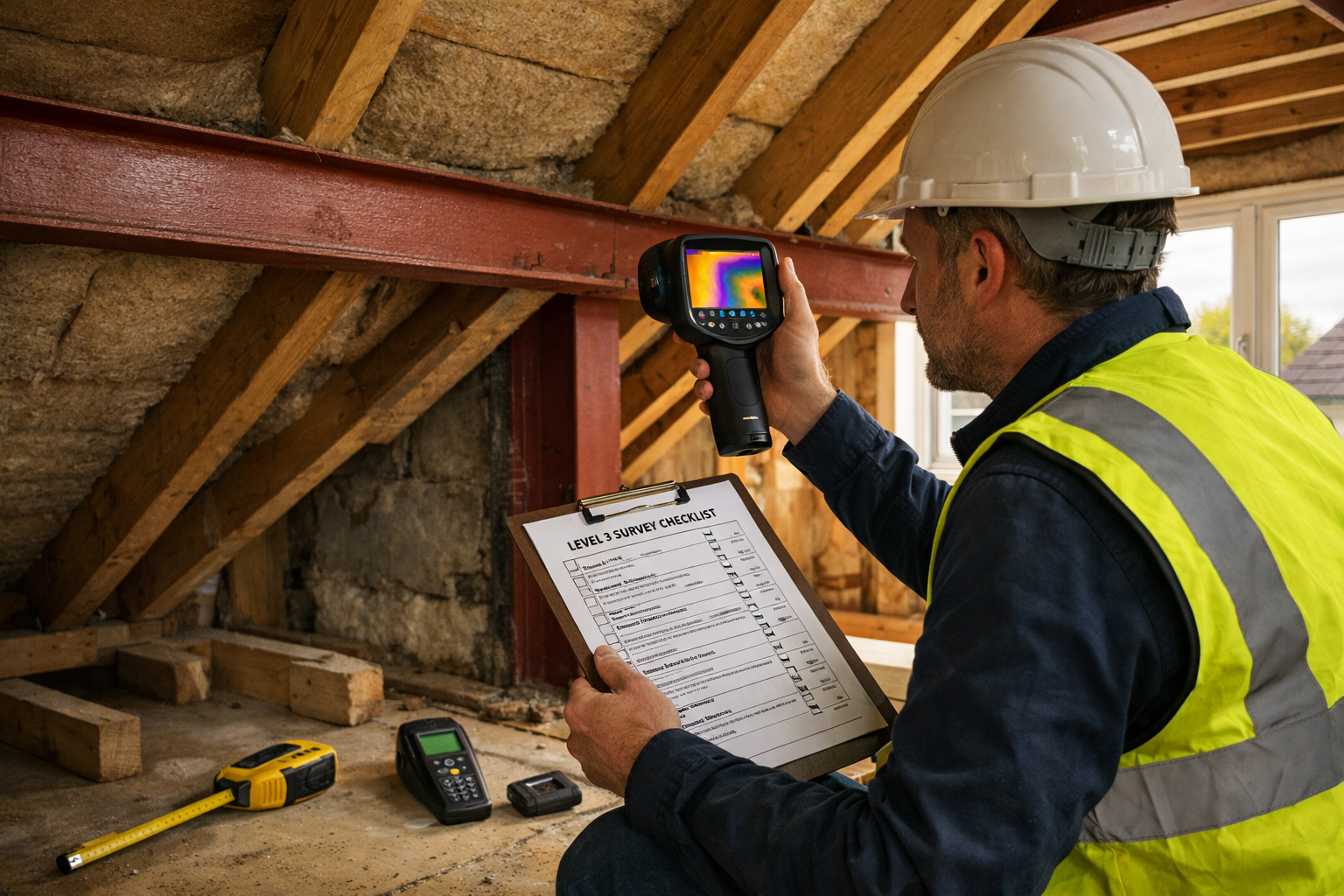
- Thermal imaging for insulation defects
- Moisture meter readings at vulnerable points
- Electrical installation testing
- Drainage camera surveys if concerns identified
Stage 3: Risk Prioritisation and Remediation Costing
Survey reports should categorise defects by urgency:
Category 1 – Urgent Repairs (immediate safety concerns):
- Structural instability requiring temporary support
- Active water ingress causing progressive damage
- Dangerous electrical installations
- Fire safety non-compliance
Category 2 – Significant Defects (requiring attention within 12 months):
- Moderate structural concerns
- Damp issues requiring remediation
- Building Regulation non-compliance
- Missing or inadequate insulation
Category 3 – Minor Defects (maintenance items):
- Cosmetic finishing issues
- Minor weatherproofing improvements
- Routine maintenance requirements
Detailed remediation cost estimates enable informed negotiation, with typical PD extension defect rectification ranging from £5,000 to £50,000+ depending on severity.
Lender-Specific Requirements
Mortgage providers have implemented stringent requirements for properties with PD extensions following the 2026 reforms:
Documentation Requirements:
- Completion certificates for all structural work
- Structural engineer certification for load-bearing modifications
- Electrical and plumbing compliance certificates
- Energy Performance Certificate showing extension impact
Valuation Impact:
Lenders apply valuation adjustments based on survey findings:
| Issue Type | Typical Valuation Reduction |
|---|---|
| Missing Building Control approval | 10-15% |
| Structural concerns identified | 5-20% |
| Damp or waterproofing issues | 5-10% |
| Non-compliant electrical work | 3-5% |
| Multiple defect categories | 15-25% |
Mortgage Retention: Lenders may retain portions of the mortgage advance until defects are rectified, typically:
- 150% of estimated remediation costs for Category 1 defects
- 125% of estimated costs for Category 2 defects
- Released upon completion and certification of works
Post-Purchase Extension Planning
For buyers planning PD extensions after purchase, the 2026 reform environment demands proactive survey strategies:
Pre-Extension Surveys: Commission schedule of condition reports documenting property condition before work commences, particularly important for:
- Party wall protection
- Establishing baseline for insurance claims
- Contractor dispute resolution
- Neighbouring property protection
Structural Engineering Input: Engage structural engineers early in planning to:
- Assess feasibility of proposed extensions
- Design appropriate structural solutions
- Specify steel beam and foundation requirements
- Ensure Building Regulation compliance
Phased Inspection Protocols: Arrange building control and independent survey inspections at critical construction stages:
- Foundation excavation and concrete pour
- Steel beam installation
- Roof structure completion
- Waterproofing installation
- First fix services
- Final completion
This phased approach identifies defects when rectification costs remain minimal, avoiding expensive retrospective remediation.
Cost-Benefit Analysis of Comprehensive Surveys
Investment vs. Risk Mitigation
The cost of comprehensive building surveys represents a small fraction of potential defect remediation expenses:
Survey Investment:
- Standard Level 3 Building Survey: £800-£1,500
- Structural Engineer Assessment: £500-£1,200
- Specialist Damp Survey: £300-£600
- Drainage Survey: £250-£500
- Total Comprehensive Assessment: £1,850-£3,800
Potential Risk Exposure Without Survey:
- Underpinning remediation: £15,000-£50,000
- Roof reconstruction: £10,000-£30,000
- Damp remediation: £5,000-£20,000
- Building Regulation retrospective approval: £2,000-£8,000
- Potential Combined Exposure: £32,000-£108,000
The risk-to-investment ratio of 8:1 to 28:1 demonstrates the compelling financial case for comprehensive surveys, particularly in the reformed 2026 environment where transparency requirements expose previously hidden issues.
Market Impact and Transaction Confidence
The 2026 reforms have created a two-tier market:
Compliant Properties (full documentation and survey evidence):
- Achieve asking prices or above
- Complete transactions 15-20% faster
- Attract competitive mortgage offers
- Generate buyer confidence
Non-Compliant Properties (incomplete documentation):
- Experience 10-25% valuation reductions
- Face extended marketing periods
- Receive limited mortgage offers
- Require price negotiations
Sellers investing in pre-listing surveys and documentation compilation recover costs through higher achieved prices and faster sales, while buyers benefit from reduced transaction uncertainty.
Professional Survey Selection and Engagement
Choosing Qualified Surveyors
Building Surveys for Permitted Development Extensions in 2026: Risk Assessments Post-Homebuying Reforms require surveyors with specific expertise:
Essential Qualifications:
- ✅ RICS (Royal Institution of Chartered Surveyors) membership
- ✅ Experience with permitted development extensions
- ✅ Knowledge of 2026 homebuying reform requirements
- ✅ Professional indemnity insurance (minimum £1 million)
- ✅ Local market knowledge
Specialist Expertise for Complex Extensions:
- Structural engineering qualifications for basement conversions
- Damp and waterproofing expertise for below-ground works
- Party wall surveyor experience for terraced/semi-detached properties
- Building pathology knowledge for defect diagnosis
Survey Scope Definition
Clear scope definition ensures comprehensive coverage without unnecessary expense:
Standard Scope Elements:
- Visual inspection of accessible areas
- Defect identification and categorisation
- Remediation cost estimates
- Building Regulation compliance assessment
- Photographic documentation
Enhanced Scope Additions:
- Thermal imaging surveys
- Moisture testing and analysis
- Drainage camera inspections
- Structural load calculations review
- Party wall condition assessment
Engaging surveyors early in the purchase process allows scope refinement based on initial findings, optimising assessment depth while controlling costs.
Interpreting Survey Reports
Modern survey reports following 2026 reform standards provide structured information:
Executive Summary: High-level overview of key findings, risk ratings, and recommended actions.
Detailed Findings: Room-by-room analysis with photographic evidence, defect descriptions, and technical explanations.
Risk Assessment: Categorised defect listings with urgency ratings and remediation priorities.
Cost Implications: Estimated remediation costs with ranges reflecting uncertainty levels.
Recommendations: Specific advice on further investigations, specialist assessments, and negotiation strategies.
Buyers should schedule follow-up consultations with surveyors to clarify technical findings and develop action plans, ensuring full understanding before proceeding with purchases.
Future-Proofing Extension Investments
Anticipating Regulatory Evolution
The 2026 reforms represent the first phase of ongoing regulatory development. Property owners should anticipate:
Enhanced Energy Performance Requirements: Future PD extensions will likely face stricter thermal efficiency standards, making current insulation specifications minimum baselines.
Increased Documentation Burdens: Digital property logs may become mandatory, requiring comprehensive records of all modifications and maintenance activities.
Stricter Structural Certification: Independent structural engineer certification may become compulsory for all load-bearing modifications, regardless of PD status.
Climate Resilience Standards: Flood risk, overheating prevention, and sustainable drainage requirements will likely expand.
Building Survey Best Practices for 2026 and Beyond
Property stakeholders should adopt forward-looking survey strategies:
For Buyers:
- Commission surveys before making offers to strengthen negotiating positions
- Engage specialist consultants for complex extension types
- Request digital survey reports with embedded photographs and floor plans
- Maintain comprehensive property files documenting all findings
- Schedule periodic re-surveys (every 5-7 years) to monitor condition evolution
For Sellers:
- Commission pre-listing surveys to identify and address defects proactively
- Compile complete documentation packages for all PD extensions
- Obtain retrospective Building Control approval where necessary
- Invest in remediation of significant defects before marketing
- Provide survey reports to prospective buyers transparently
For Extension Planners:
- Engage surveyors and engineers before commencing work
- Document construction process photographically at all stages
- Obtain all required certifications and approvals
- Retain comprehensive records for future sale purposes
- Commission completion surveys verifying quality standards
These practices align with 2026 reform objectives while protecting long-term property values and marketability.
Conclusion
Building Surveys for Permitted Development Extensions in 2026: Risk Assessments Post-Homebuying Reforms represent a fundamental shift in how property transactions address extension quality and compliance. The convergence of upfront survey mandates, enhanced documentation requirements, and stricter lender protocols has elevated comprehensive building surveys from optional due diligence to essential transaction components.
For property buyers, the investment in thorough Level 3 building surveys provides critical protection against inheriting defective extensions that could cost tens of thousands to remediate. The risk assessment frameworks established post-reform enable informed decision-making, supported by detailed technical analysis and clear remediation cost estimates.
Sellers benefit equally from proactive survey engagement, with pre-listing assessments facilitating faster sales at stronger prices by demonstrating transparency and quality. The two-tier market emerging in 2026 rewards compliant properties while penalising those lacking proper documentation and survey evidence.
As permitted development extensions continue experiencing renewed demand—particularly loft conversions and rear additions—the importance of professional survey expertise will only intensify. The regulatory trajectory suggests ongoing enhancement of standards, making current best practices the minimum baseline for future transactions.
Actionable Next Steps
If purchasing a property with PD extensions:
- Request all extension documentation from sellers immediately
- Commission a comprehensive RICS Level 3 building survey from qualified professionals
- Engage specialist consultants for complex extension types (basements, substantial lofts)
- Review survey findings with your surveyor before proceeding
- Negotiate price adjustments or remediation requirements based on findings
- Ensure mortgage lender receives complete survey documentation
If planning PD extensions:
- Commission pre-construction surveys documenting existing property condition
- Engage structural engineers and Building Control early in planning
- Implement phased inspection protocols throughout construction
- Maintain comprehensive photographic and documentary records
- Obtain all required certifications before considering work complete
- Schedule completion surveys verifying quality and compliance
If selling a property with PD extensions:
- Compile all extension documentation proactively
- Commission pre-listing surveys to identify potential buyer concerns
- Address significant defects before marketing
- Obtain retrospective approvals where documentation gaps exist
- Provide transparent survey evidence to prospective buyers
The 2026 homebuying reform environment demands professional expertise, comprehensive documentation, and proactive risk management. By embracing these principles and engaging qualified surveyors early in property transactions or extension projects, stakeholders can navigate the reformed landscape confidently while protecting their investments and ensuring compliance with evolving standards.
For expert guidance on building surveys for permitted development extensions, contact qualified chartered surveyors who understand the 2026 reform requirements and can provide comprehensive risk assessments tailored to your specific property needs.