
The luxury property market has entered a new era of scrutiny. With the 2026 Budget introducing significant changes to taxation and valuation thresholds, properties valued over £2 million now face unprecedented challenges. Building Surveys for High-Value Properties Post-2026 Budget: Spotting Valuation Risks Over £2 Million has become essential for buyers, sellers, and investors navigating this transformed landscape. Understanding how to identify valuation risks can mean the difference between a sound investment and a costly mistake.
The stakes have never been higher. Market data reveals that offers on luxury properties are increasingly falling below asking prices as buyers become more cautious about hidden defects and valuation discrepancies. Professional building surveys now serve as critical tools for protecting investments and ensuring accurate property valuations in this volatile market.
Key Takeaways
- 🏛️ Enhanced RICS standards introduced in February 2026 provide more rigorous assessment protocols for high-value properties, including AI-assisted technology and drone inspections
- 💷 Valuation accuracy is critical as properties over £2 million face increased tax implications and market volatility requiring detailed defect identification
- 🔍 Level 3 surveys are essential for luxury properties to uncover hidden structural issues, heritage complications, and environmental risks that standard surveys miss
- ⚠️ Red-flag checklists help identify common valuation risks including subsidence, boundary disputes, non-standard construction, and regulatory compliance issues
- 📊 Adjustment strategies enable accurate valuations by quantifying defect costs and market positioning in the post-Budget landscape
Understanding the 2026 Budget Impact on High-Value Property Valuations
The 2026 Budget has fundamentally reshaped the luxury property market. Properties valued above £2 million now face enhanced scrutiny from both regulatory bodies and potential buyers. The changes have created a more cautious marketplace where accurate valuations are paramount.
New Valuation Thresholds and Tax Implications
The £2 million threshold has become a critical marker in property transactions. Properties crossing this boundary encounter different tax treatments, lending criteria, and buyer expectations. Understanding these implications is essential for accurate market positioning.
Key threshold considerations include:
- Stamp duty land tax escalations at higher price bands
- Capital gains tax implications for investment properties
- Inheritance tax planning requirements
- Enhanced due diligence from mortgage lenders
Market Volatility and Buyer Caution
Luxury property offers are increasingly falling below asking prices as buyers demand comprehensive evidence of property condition. This trend reflects heightened awareness of potential hidden defects and their impact on long-term value.
The market has witnessed a shift toward buyer empowerment, with detailed commercial building surveys becoming standard requirements rather than optional extras. Buyers now routinely request extensive documentation before committing to purchases above £2 million.
RICS Standards Evolution for 2026
The Royal Institution of Chartered Surveyors released updated Home Survey Standards (2nd edition) in February 2026, introducing enhanced requirements for residential property surveys. These standards maintain consistent quality benchmarks across the UK residential sector while incorporating modern assessment technologies.
Notable updates include:
- Expanded valuation options across all survey levels, with VRS-regulated surveyors now authorized to undertake valuations for Level 1, Level 2, and Level 3 properties
- Enhanced guidance for 'additional risk' dwellings that fall outside standard property categories
- Technology and AI integration guidance reflecting modern assessment methods
- Drone inspection protocols as part of expanded survey offerings
These changes directly impact how high-value properties are assessed and valued, creating more comprehensive evaluation frameworks.
Essential Components of Building Surveys for High-Value Properties Post-2026 Budget
Properties exceeding £2 million require meticulous examination beyond standard survey protocols. The complexity of luxury homes—from heritage features to advanced building systems—demands specialized expertise and comprehensive assessment methodologies.
Choosing the Right Survey Level for Properties Over £2 Million
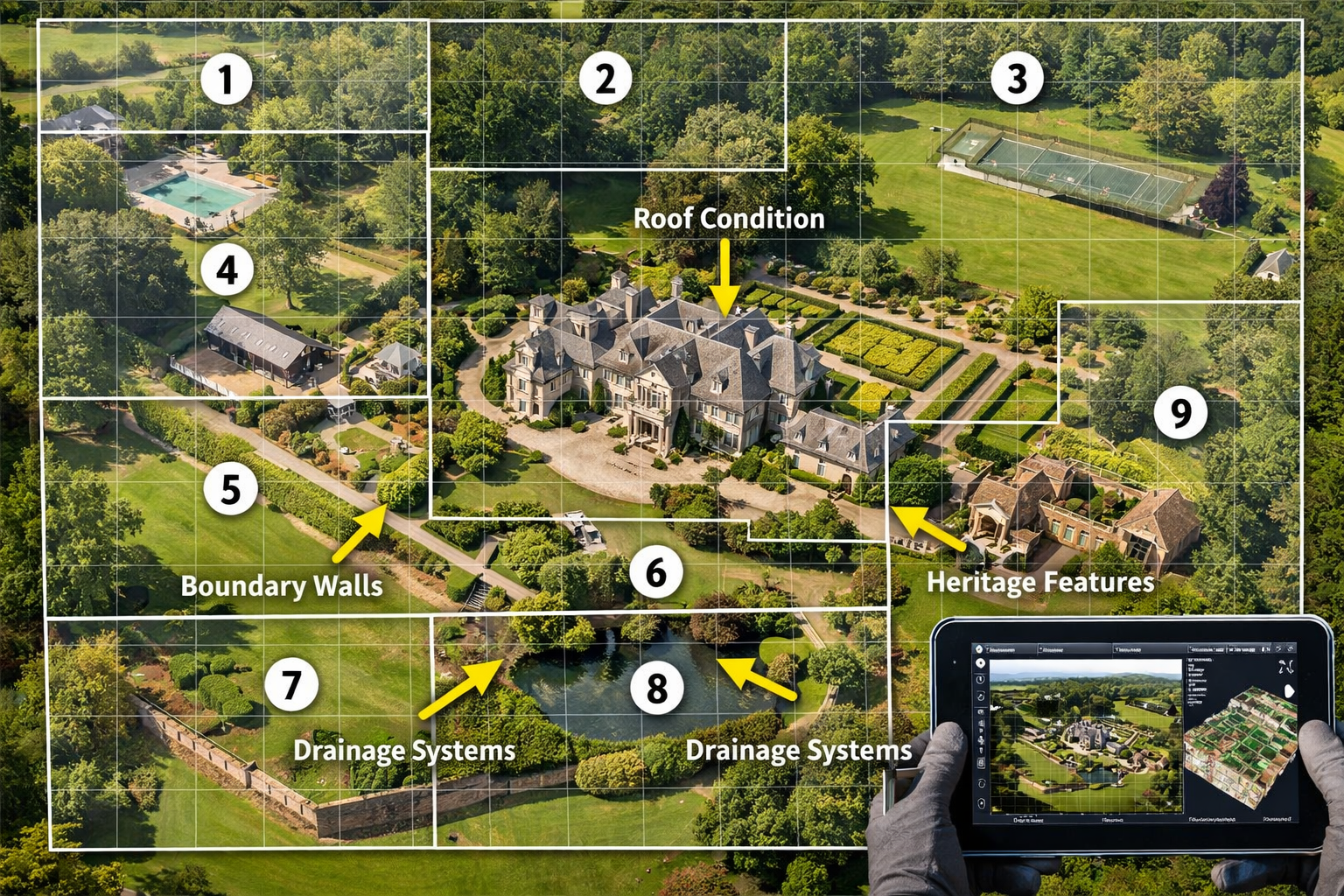
For high-value properties, Level 3 surveys (formerly known as full structural surveys) provide the most detailed examinations. These comprehensive assessments uncover hidden issues including building fabric problems, interstitial condensation concerns, and structural integrity questions that could significantly impact valuations.
A RICS home survey at Level 3 includes:
- Detailed inspection of all accessible areas
- Assessment of building fabric and structural elements
- Identification of defects with severity ratings
- Advice on repairs and ongoing maintenance
- Comprehensive valuation considerations
The difference between survey levels becomes critical at higher price points. While a Level 2 homebuyer survey may suffice for standard properties, luxury homes with unique features, period architecture, or complex systems require the depth that Level 3 provides.
Technology Integration in Modern High-Value Surveys
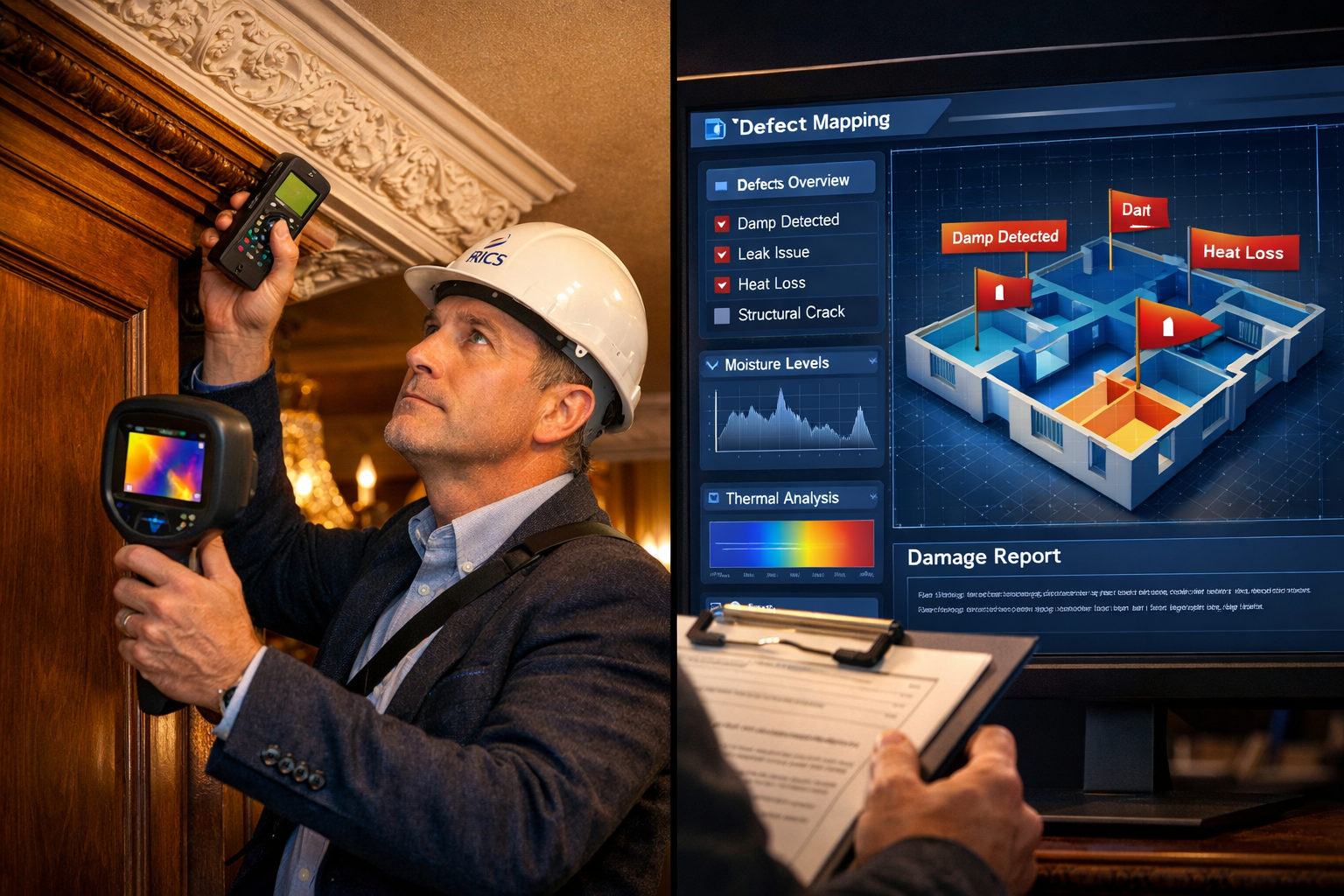
The 2026 RICS standards now include guidance on technology and AI integration in surveying practices. Modern surveys for properties over £2 million increasingly incorporate:
Advanced assessment tools:
| Technology | Application | Benefit |
|---|---|---|
| Thermal imaging | Detecting heat loss and moisture | Identifies hidden insulation defects |
| Drone inspections | Roof and chimney assessment | Safe access to dangerous areas |
| 3D laser scanning | Dimensional accuracy | Precise structural measurements |
| Moisture meters | Damp detection | Quantifies moisture levels |
| AI analysis software | Pattern recognition | Identifies structural anomalies |
These technologies enhance survey accuracy and provide documentary evidence that supports valuation adjustments. Drone inspections, in particular, have become invaluable for assessing large estates and properties with extensive roof systems.
Specialist Assessments for Luxury Property Features
High-value properties often contain features requiring specialist expertise beyond standard surveying:
Heritage and listed buildings demand understanding of traditional construction methods and conservation requirements. A specialist defect survey may be necessary to assess period features, original materials, and compliance with heritage regulations.
Swimming pools, home cinemas, and wine cellars require specialized knowledge of mechanical systems, waterproofing, and environmental controls. These features can significantly impact property values but also present unique maintenance and defect risks.
Extensive grounds and outbuildings need separate assessment, including boundary verification, drainage systems, and structural condition of ancillary buildings. Boundary surveys become particularly important for properties with large estates where encroachment or access disputes could affect valuations.
Environmental and Regulatory Compliance
Building safety regulations have strengthened significantly, with redefinition of higher-risk buildings and mandatory fire safety strategies for multi-occupancy residential buildings. These changes impact valuations for:
- Converted mansion flats
- Properties with multiple dwellings
- Buildings with complex fire safety requirements
- Properties requiring retrospective compliance work
Environmental assessments should address potential contamination, flood risk, and energy performance. Properties with poor EPC ratings may face future regulatory challenges that impact marketability and value.
Critical Red Flags: Spotting Valuation Risks in Properties Over £2 Million
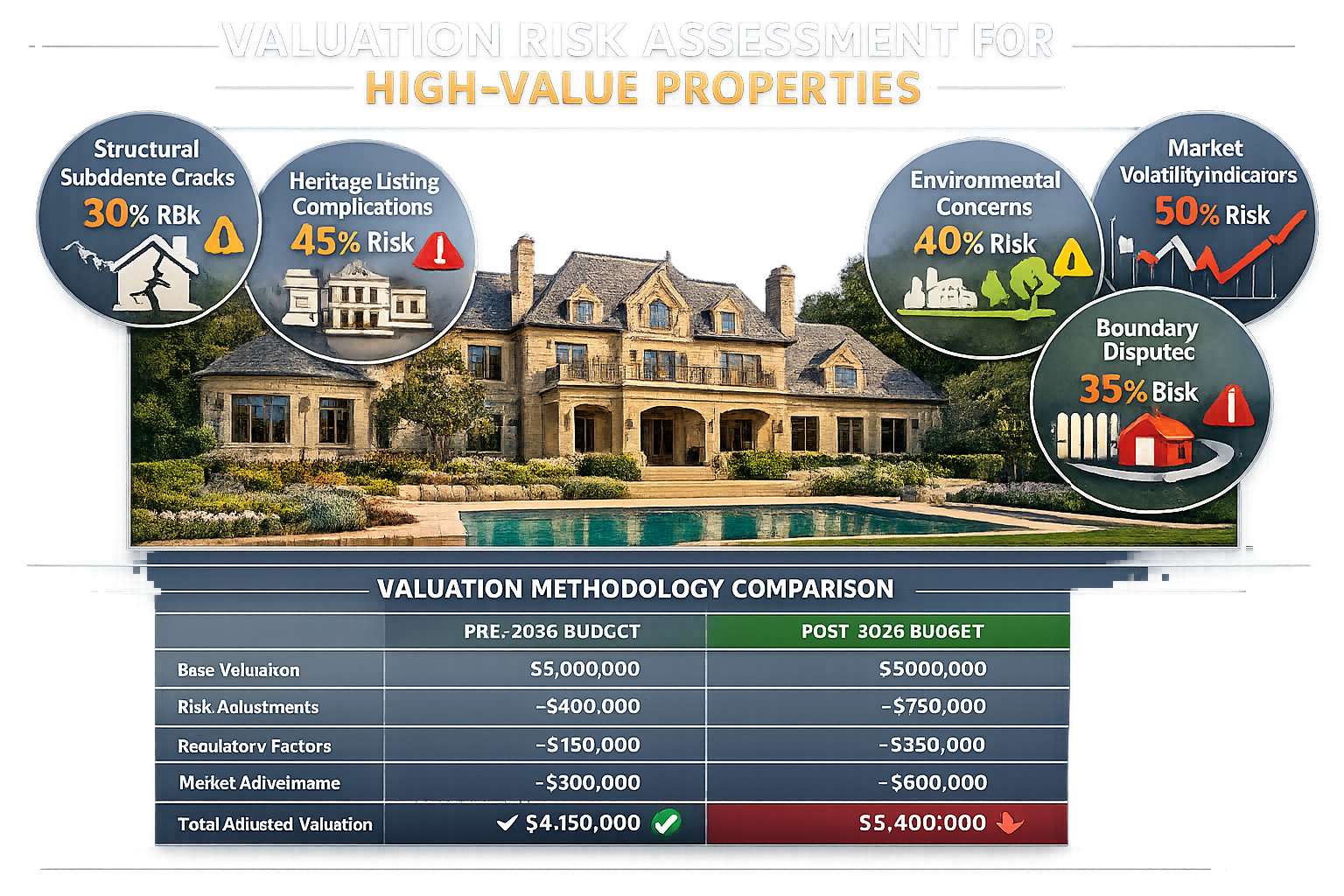
Identifying valuation risks early prevents costly surprises and enables accurate pricing adjustments. High-value properties present unique challenges that require systematic evaluation and expert interpretation.
Structural Integrity Concerns
Subsidence and settlement represent the most significant structural risks affecting property valuations. Warning signs include:
- Diagonal cracking in walls, especially near doors and windows
- Cracks wider than 3mm or showing progressive movement
- Distorted door and window frames
- Uneven floors or sloping ceilings
Professional surveys for subsidence should be commissioned when indicators appear. Subsidence remediation can cost £50,000 to £150,000 or more, significantly impacting property values.
Foundation issues in older properties may stem from inadequate original construction or changing ground conditions. Clay soils, tree root activity, and drainage problems commonly contribute to foundation movement.
Heritage and Conservation Complications
Listed buildings and properties in conservation areas face unique valuation challenges:
- Restricted alteration rights limiting modernization potential
- Specialized repair requirements using traditional materials and methods
- Higher maintenance costs for period features
- Planning consent complications affecting development value
These factors can reduce marketability while simultaneously increasing maintenance expenses. Accurate valuations must account for both the heritage premium and the associated constraints.
Non-Standard Construction Issues
Properties built using non-standard construction methods may face mortgage lending restrictions and insurance difficulties:
- Concrete frame construction from certain periods
- Timber frame buildings without proper certification
- Properties with asbestos-containing materials
- Unconventional roofing systems
Surveys for asbestos are essential for properties built between 1950 and 1985, as asbestos removal costs can exceed £10,000 and significantly impact valuations.
Hidden Service and System Defects
Luxury properties often feature complex mechanical and electrical systems requiring specialized assessment:
Heating systems in large properties may include:
- Multiple boiler installations
- Underfloor heating networks
- Swimming pool heating systems
- Smart home climate controls
System failures or outdated installations can require £30,000+ in replacement costs. Survey reports should specifically address system age, condition, and remaining service life.
Electrical installations must meet current regulations. Properties with outdated wiring, insufficient capacity, or non-compliant installations face rewiring costs of £15,000 to £40,000+ depending on property size.
Damp, Condensation, and Water Ingress
Moisture-related defects remain among the most common and costly issues affecting property values. Damp surveys should identify:
- Rising damp from failed damp-proof courses
- Penetrating damp through walls, roofs, or windows
- Condensation from inadequate ventilation
- Interstitial condensation within building fabric
Treatment costs vary significantly, from £2,000 for minor damp-proofing to £50,000+ for comprehensive remediation in large properties.
Boundary and Legal Complications
Boundary disputes can severely impact property values and saleability. Red flags include:
- Unclear boundary definitions on title plans
- Evidence of encroachment by neighbors
- Disputed access rights or easements
- Unregistered land or missing title documentation
Professional boundary verification through structural surveys and legal title review prevents costly disputes and valuation uncertainties.
Environmental and Location Risks
External factors affecting high-value property valuations include:
- Flood risk from rivers, surface water, or groundwater
- Contaminated land from previous industrial use
- Aircraft noise or flight path proximity
- Future development affecting views or privacy
- Infrastructure projects impacting access or amenity
These factors may not be immediately apparent during property viewings but can significantly affect long-term value and desirability.
Valuation Adjustment Strategies for High-Value Properties Post-2026 Budget
Accurate valuations require systematic approaches to quantifying defect impacts and market positioning. Professional surveyors employ specific methodologies to adjust valuations based on identified risks and required remediation.
Quantifying Defect Impact on Market Value
When defects are identified, valuation adjustments follow a structured process:
1. Cost-to-cure analysis determines the expense required to remedy identified defects. This includes:
- Materials and labor for repairs
- Professional fees for specialists
- Temporary accommodation during works
- Project management costs
2. Market impact assessment evaluates how defects affect buyer perception and marketability beyond simple repair costs. Significant structural issues may reduce value by more than the repair cost due to:
- Buyer reluctance and stigma
- Mortgage lending restrictions
- Insurance complications
- Extended marketing periods
3. Negotiation positioning uses survey evidence to support price adjustments. Detailed property valuation reports provide objective documentation for renegotiation discussions.
Comparative Market Analysis for Luxury Properties
Properties over £2 million require specialized comparable analysis:
Location-specific factors significantly impact luxury valuations:
- Proximity to premium schools and amenities
- Neighborhood prestige and character
- Historical price trends in the micro-market
- Supply and demand dynamics at the high end
Property-specific attributes requiring adjustment include:
- Plot size and grounds quality
- Architectural significance and design quality
- Condition and specification standards
- Unique features and amenities
Professional valuers apply methods of valuation including the comparison method, investment method, and residual method depending on property type and intended use.
Pre-Purchase Negotiation Tactics
Armed with comprehensive survey evidence, buyers can negotiate effectively:
Retention strategies involve:
- Holding back funds in escrow until defects are remedied
- Obtaining contractor quotes for required works
- Agreeing completion deadlines for repairs
Price reduction approaches should be:
- Evidence-based using professional survey reports
- Proportionate to identified defects and market impact
- Presented with supporting documentation and quotations
Warranty and insurance solutions may include:
- Structural warranty policies for identified risks
- Specialist insurance for specific defects
- Indemnity policies for legal complications
Post-Survey Action Planning
Following survey completion, strategic planning ensures optimal outcomes:
Immediate priorities:
- Review survey findings with the surveyor
- Obtain specialist reports for significant defects
- Commission contractor quotations for remediation
- Assess impact on financing and insurance
- Determine negotiation strategy
Medium-term considerations:
- Schedule essential repairs and maintenance
- Plan phased improvement programs
- Budget for ongoing maintenance requirements
- Consider energy efficiency upgrades
Long-term value protection:
- Implement preventative maintenance schedules
- Monitor identified risks for progression
- Maintain comprehensive property records
- Plan strategic improvements for value enhancement
Working with Professional Surveyors for Properties Over £2 Million
The complexity of high-value property surveys demands exceptional professional expertise. Selecting the right surveyor and understanding the collaborative process ensures comprehensive assessment and accurate valuations.
Selecting Qualified RICS Surveyors
Professional qualifications matter for properties over £2 million. Look for:
- RICS membership (MRICS or FRICS designation)
- Specialist experience with high-value and luxury properties
- Local market knowledge of the specific area
- Professional indemnity insurance adequate for property value
- Positive client testimonials and verifiable references
Local chartered surveyors with regional expertise understand local market conditions, common construction types, and area-specific issues that affect valuations.
Understanding Survey Costs and Value
Survey fees for properties over £2 million typically range from £1,500 to £5,000+ depending on:
- Property size and complexity
- Survey level and scope
- Additional specialist assessments required
- Technology deployment (drones, thermal imaging)
- Report detail and turnaround time
While costs may seem substantial, they represent minimal investment compared to property values and potential defect remediation expenses. A comprehensive survey identifying £100,000 in previously unknown defects provides exceptional return on investment.
The Survey Process Timeline
Typical timeline for comprehensive high-value property surveys:
| Stage | Duration | Activity |
|---|---|---|
| Initial consultation | 1-2 days | Scope definition and quotation |
| Survey booking | 3-7 days | Scheduling and preparation |
| On-site inspection | 1-2 days | Physical property examination |
| Specialist assessments | 3-10 days | Additional testing if required |
| Report preparation | 5-10 days | Analysis and documentation |
| Report delivery | 1 day | Final report and consultation |
Total timeline: 2-4 weeks from instruction to final report, though urgent surveys can be expedited.
Interpreting Survey Reports Effectively
Professional survey reports for high-value properties contain:
Executive summary highlighting critical findings and immediate concerns
Detailed condition assessment organized by building element:
- Roof and chimneys
- External walls and features
- Internal elements
- Services and systems
- Grounds and boundaries
Defect categorization typically uses a traffic light system:
- 🔴 Condition 3 (Red): Urgent defects requiring immediate attention
- 🟡 Condition 2 (Amber): Defects requiring future repair or monitoring
- 🟢 Condition 1 (Green): No significant issues identified
Recommendations for further investigation, specialist reports, and remediation priorities
Valuation commentary (when included) providing market value assessment considering identified defects
Coordinating Multiple Specialist Reports
Complex properties may require additional specialist assessments:
- Structural engineers for significant structural concerns
- Drainage specialists for underground drainage systems
- Arboricultural consultants for tree-related issues
- Environmental consultants for contamination or flood risk
- Heritage specialists for listed building assessments
Coordinating these specialists ensures comprehensive risk assessment while avoiding duplication and unnecessary expense.
Future-Proofing High-Value Property Investments
Beyond identifying current defects, strategic property assessment considers long-term value protection and enhancement opportunities in the evolving post-2026 market landscape.
Regulatory Compliance and Future Legislation
Building safety regulations continue to evolve, with potential impacts on:
- Fire safety requirements for residential conversions
- Energy performance standards and minimum EPC ratings
- Accessibility and adaptability requirements
- Environmental and sustainability mandates
Properties requiring significant compliance work may face reduced marketability and value erosion. Forward-thinking buyers assess regulatory trajectory and plan proactive compliance strategies.
Energy Efficiency and Sustainability
EPC ratings increasingly influence property values as buyers prioritize:
- Lower running costs through efficient systems
- Environmental credentials and carbon footprint
- Future-proofing against regulatory changes
- Enhanced comfort and living quality
Upgrading properties from EPC rating E or F to C or above may require investments of £20,000 to £100,000+ but can enhance value and marketability while reducing operating costs.
Technology and Smart Home Integration
Modern luxury buyers expect sophisticated technology integration:
- Advanced security and surveillance systems
- Climate control and energy management
- Integrated audio-visual systems
- Smart lighting and automated controls
Properties lacking modern infrastructure may require significant investment to meet contemporary expectations, affecting relative market positioning.
Maintenance Planning and Life-Cycle Costing
Comprehensive maintenance planning protects long-term value by:
- Scheduling preventative maintenance for major building elements
- Budgeting for cyclical replacement of systems and finishes
- Monitoring identified defects for progression
- Maintaining detailed property records and documentation
Life-cycle cost analysis for major elements:
- Roofing systems: 20-50 year replacement cycles (£50,000-£200,000+)
- Heating systems: 15-20 year replacement cycles (£20,000-£60,000+)
- External decoration: 5-8 year cycles (£15,000-£50,000+)
- Kitchen and bathroom refurbishment: 15-25 year cycles (£50,000-£200,000+)
Understanding these costs enables informed investment decisions and realistic budgeting for property ownership.
Conclusion
Building Surveys for High-Value Properties Post-2026 Budget: Spotting Valuation Risks Over £2 Million has become an essential discipline in today's transformed luxury property market. The 2026 Budget changes, combined with enhanced RICS standards and heightened buyer awareness, have created an environment where comprehensive due diligence is non-negotiable for properties exceeding the £2 million threshold.
The key to successful high-value property transactions lies in systematic risk identification and accurate valuation adjustment. Professional Level 3 surveys, enhanced with modern technology including drone inspections and thermal imaging, provide the detailed intelligence necessary for informed decision-making. Understanding common red flags—from subsidence and heritage complications to service defects and boundary disputes—enables buyers and investors to negotiate from positions of knowledge and strength.
Actionable next steps for property buyers and investors:
- Commission comprehensive Level 3 surveys for all properties over £2 million, engaging RICS-qualified surveyors with luxury property experience
- Request specialist assessments for identified concerns including structural, environmental, and regulatory compliance issues
- Obtain detailed remediation quotations for all significant defects to support accurate valuation adjustments
- Negotiate strategically using professional survey evidence to achieve fair pricing that reflects true property condition
- Implement proactive maintenance planning to protect long-term value and prevent defect progression
- Consider future regulatory trends and plan compliance strategies that maintain marketability and value
The luxury property market will continue to evolve throughout 2026 and beyond. Those who invest in comprehensive professional surveys and systematic risk assessment will be best positioned to identify genuine value, avoid costly mistakes, and protect their substantial investments in this challenging market environment.
For properties over £2 million, the question is not whether to commission a detailed building survey, but rather how quickly you can engage qualified professionals to protect your investment and ensure accurate valuation in this new era of enhanced scrutiny and regulatory oversight.
References
[1] Post Budget 2026 Valuation Challenges Surveyor Strategies For High Value Properties Over 2 Million – https://nottinghillsurveyors.com/blog/post-budget-2026-valuation-challenges-surveyor-strategies-for-high-value-properties-over-2-million