The UK property market is witnessing a remarkable shift in 2026. Young professionals are abandoning London's sky-high prices and heading north in search of affordable homeownership opportunities. This migration pattern is creating unprecedented demand for building surveys in regions that offer better value, from Manchester and Leeds to Newcastle and Liverpool. Understanding Building Surveys for First-Time Buyers Migrating North: Capturing Demand as Young Professionals Seek Affordable Properties Beyond London has become essential for surveyors, estate agents, and property professionals looking to serve this growing demographic effectively.
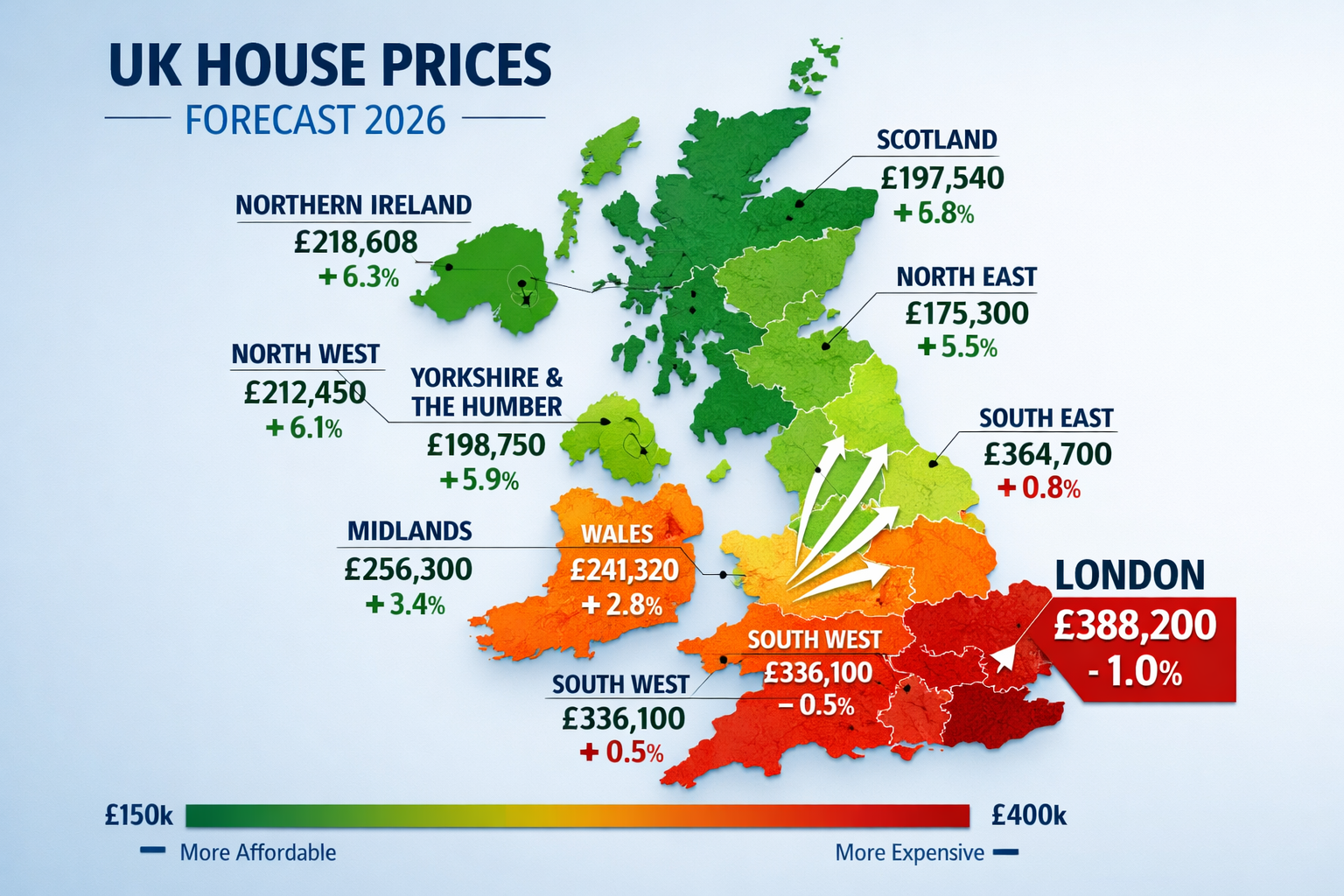
With London property prices averaging £388,200 and declining by 1.0% year-on-year, while Northern Ireland sees growth of 6.3% at just £218,608[1], the financial incentive for migration has never been clearer. First-time buyers are discovering that their deposit can stretch significantly further in northern cities, but they need comprehensive building surveys to navigate unfamiliar property markets confidently.
Key Takeaways
- 🏠 Regional price divergence creates opportunities: London prices fell 1.0% to £388,200 while northern regions like Northern Ireland grew 6.3% to £218,608, making northern properties increasingly attractive to first-time buyers[1][3]
- 📊 First-time buyer budgets remain constrained: Average asking prices for first-time buyers reached £226,955 in March 2026, with mortgage rates climbing to 4.51%, emphasizing the need for thorough surveys to avoid costly surprises[1]
- 🔍 Northern property stock requires specialized assessment: Older Victorian and Edwardian housing stock common in northern cities demands comprehensive building surveys to identify structural issues, damp, and maintenance requirements
- 💼 Migration patterns favor affordability: Young professionals are prioritizing homeownership over London rental costs, with rental growth lowest in London at 1.1% but highest in the North East at 8.0%[2]
- ✅ Survey investment protects tight budgets: First-time buyers stretching their finances to enter northern markets need detailed risk assessment to negotiate prices and budget for repairs effectively
Understanding the Northern Migration Trend in 2026
Why Young Professionals Are Leaving London
The exodus from London isn't merely about cheaper property prices—it's a fundamental reassessment of lifestyle priorities and financial sustainability. In 2026, the average London property costs £388,200, representing a significant barrier for first-time buyers whose average budget sits at £226,955 nationally[1]. This £161,000+ gap has made London homeownership virtually impossible for many young professionals without substantial family support.
Remote work flexibility has accelerated this trend dramatically. With many employers maintaining hybrid or fully remote policies post-pandemic, young professionals no longer need to sacrifice living space and financial security for proximity to London offices. Northern cities offer:
- Larger properties for the same monthly payment
- Shorter commute times within regional hubs
- Lower cost of living beyond housing (transport, dining, entertainment)
- Growing cultural scenes in cities like Manchester, Leeds, and Liverpool
- Better work-life balance with reduced financial stress
The rental market dynamics further incentivize this shift. With UK private rents rising 3.5% year-on-year but London seeing only 1.1% growth compared to 8.0% in the North East[2], young professionals recognize that purchasing property in northern regions can actually cost less monthly than renting in London—while building equity.
Regional Price Performance Creating Opportunities
The 2026 property market demonstrates stark regional divergence that savvy first-time buyers are exploiting. While London prices declined 1.0% and the South East fell 2.2% to £383,834, regions in the North, Scotland, and Wales showed robust growth[3]. This creates a compelling value proposition for buyers willing to relocate.
| Region | Average Price | Annual Change | First-Time Buyer Advantage |
|---|---|---|---|
| London | £388,200 | -1.0% | Declining prices, high entry cost |
| South East | £383,834 | -2.2% | Expensive, falling values |
| Northern Ireland | £218,608 | +6.3% | Affordable, growing market |
| North East | ~£195,000 | +5.2% | Best value, strong growth |
| Scotland | ~£210,000 | +4.8% | Affordable cities, quality stock |
National growth averaged just 1.8%, with momentum led by Scotland, Wales, and northern regions, while London dragged averages down by 2.5% year-on-year[7]. This divergence isn't temporary—it reflects fundamental shifts in where people want to live and work.
Housing supply dynamics also favor northern buyers. Available stock nationally is 6% above year-ago levels, particularly benefiting buyers in southern England where increased choice keeps price inflation constrained[4]. Northern markets offer this increased choice without the premium pricing, giving first-time buyers negotiating power they rarely experience in London.
For professionals considering this migration, understanding the importance of choosing the right property survey becomes critical when evaluating unfamiliar regional markets.
Building Surveys for First-Time Buyers Migrating North: Essential Survey Protocols
Why Northern Properties Require Comprehensive Surveys
Northern England's housing stock presents unique challenges that demand thorough investigation. Many properties in cities like Manchester, Liverpool, Leeds, and Newcastle were built during the Victorian and Edwardian eras, featuring construction methods and materials that differ significantly from modern London developments or newer southern housing estates.
Common characteristics of northern housing stock include:
- Solid brick walls without cavity insulation (pre-1920s construction)
- Traditional slate roofing requiring specialized maintenance
- Suspended timber floors vulnerable to damp and rot
- Single-glazed sash windows in conservation areas
- Older heating systems with cast iron radiators and dated boilers
- Coal cellars and basements prone to moisture issues
- Shared party walls in terraced properties
These features aren't necessarily problems—many represent quality craftsmanship—but they require expert assessment. First-time buyers unfamiliar with these construction types can easily overlook warning signs that experienced surveyors recognize immediately.
A comprehensive RICS Level 3 Building Survey provides the detailed analysis necessary for older northern properties. This isn't an area to cut corners. The £600-1,200 investment in a thorough survey can save tens of thousands in unexpected repairs and provide crucial negotiating leverage.
Specific Issues to Investigate in Northern Properties
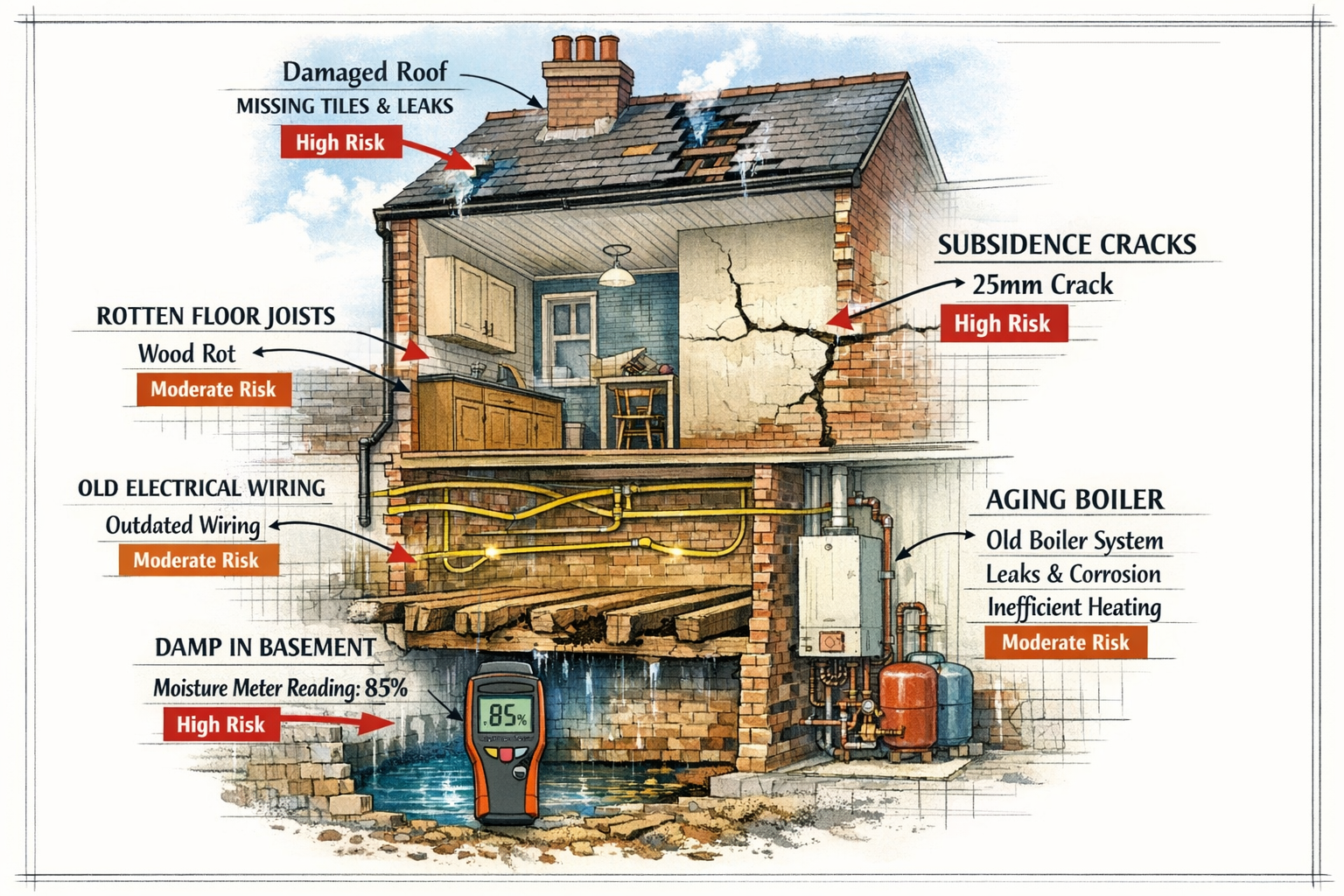
Damp and moisture problems top the list of concerns in northern properties. The region's higher rainfall and humidity levels, combined with older construction lacking modern damp-proof courses, create conditions where moisture penetration becomes common. Surveyors should specifically assess:
- Rising damp in solid wall construction
- Penetrating damp from failed pointing or roof issues
- Condensation problems from poor ventilation
- Basement and cellar moisture ingress
- Failed or absent damp-proof membranes
Professional damp surveys use specialized equipment like moisture meters and thermal imaging to identify hidden problems that visual inspection alone might miss. For first-time buyers on tight budgets, understanding the extent and cost of damp remediation before purchase is essential.
Subsidence and structural movement represent another critical concern, particularly in areas with clay soils or former mining activity. Northern England has extensive coal mining history, and while most subsidence from mining has stabilized, buyers should verify this through proper investigation. Additionally, Victorian properties commonly show minor settlement cracks that are cosmetic, but distinguishing these from active structural problems requires professional expertise.
Subsidence surveys can identify whether cracks indicate ongoing movement or historic settlement, potentially saving buyers from purchasing properties with expensive underlying problems.
Roof condition deserves particular attention in northern climates. Traditional slate roofs can last 100+ years but eventually require replacement at costs of £10,000-25,000 depending on property size. Surveyors should assess:
- Slate condition and remaining lifespan
- Lead flashing around chimneys and valleys
- Gutter and downpipe condition
- Roof timber condition (accessible areas)
- Evidence of previous repairs or patching
Tailoring Survey Approaches for Budget-Conscious Buyers
First-time buyers migrating north typically operate on maximum financial stretch. With average first-time buyer prices at £226,955 and mortgage rates at 4.51%[1], every pound matters. Survey approaches must balance thoroughness with cost-effectiveness while ensuring buyers receive actionable information.
Survey level selection should match property age and condition:
- Level 2 Homebuyer Survey: Suitable for relatively modern properties (post-1950s) in reasonable condition, typically £400-600
- Level 3 Building Survey: Essential for pre-1950s properties, unusual construction, or properties showing visible defects, typically £600-1,200
- Specialist surveys: Additional investigations for specific concerns (damp, subsidence, structural issues)
For most northern Victorian and Edwardian properties, a Level 2 Homebuyer Survey provides good value, though buyers should upgrade to Level 3 if the property shows concerning signs during viewing.
Timing considerations matter significantly for first-time buyers. Understanding how long a homebuyer survey takes helps buyers plan their purchase timeline and avoid rushed decisions. Most surveys complete within 5-10 working days from instruction to report delivery, allowing time for negotiation before exchange.
Cost transparency builds trust with first-time buyers who may be unfamiliar with surveying processes. Clear explanations of what structural survey pricing includes—and what might trigger additional costs—helps buyers budget appropriately and avoid surprises.
Affordability-Focused Risk Assessment for Northern Properties
Quantifying Repair Costs and Maintenance Requirements
First-time buyers need concrete financial information, not vague assessments. When surveying northern properties for budget-conscious buyers, quantifying repair costs transforms a survey from a list of defects into a practical financial planning tool.
Effective cost quantification includes:
- Immediate repairs (safety issues, weather protection): £X-Y range
- Short-term maintenance (1-2 years): £X-Y range
- Medium-term replacements (3-5 years): £X-Y range
- Long-term considerations (5-10 years): £X-Y range
For example, instead of noting "the roof shows signs of aging," a helpful survey states: "The slate roof is approximately 90 years old and approaching the end of its serviceable life. Budget £15,000-20,000 for replacement within 5-7 years."
This specificity allows first-time buyers to:
- Negotiate purchase price based on documented repair costs
- Plan renovation budgets with realistic figures
- Prioritize spending on urgent versus deferred maintenance
- Assess true affordability beyond the purchase price
Common northern property costs to quantify:
| Issue | Typical Cost Range | Urgency |
|---|---|---|
| Damp-proof course installation | £1,500-3,000 | High |
| Slate roof replacement | £12,000-25,000 | Medium-term |
| Sash window restoration (per window) | £800-1,500 | Low-medium |
| Boiler replacement | £2,500-4,000 | Medium |
| Rewiring (3-bed terrace) | £4,000-6,000 | High if outdated |
| Timber floor repairs | £1,000-5,000 | Medium |
| External repointing | £3,000-8,000 | Medium |
Identifying Deal-Breakers Versus Manageable Issues
Not all defects carry equal weight. Experienced surveyors help first-time buyers distinguish between properties requiring cosmetic updates versus those with fundamental problems that exceed their financial capacity.
Deal-breaker indicators include:
- Active structural movement requiring underpinning (£10,000-50,000+)
- Extensive dry rot throughout timber elements (£8,000-20,000+)
- Major roof failure requiring immediate replacement (£15,000-25,000)
- Severe damp affecting multiple areas with underlying drainage issues (£5,000-15,000)
- Dangerous electrical installations requiring complete rewiring (£4,000-6,000)
- Asbestos requiring professional removal throughout property (£2,000-10,000)
Manageable issues that shouldn't deter buyers:
- ✅ Minor settlement cracks (cosmetic repair £200-500)
- ✅ Dated bathroom and kitchen (planned renovation on buyer's timeline)
- ✅ Single-glazed windows in good condition (upgrade when budget allows)
- ✅ Decorative condition requiring updating (sweat equity opportunity)
- ✅ Garden requiring landscaping (DIY potential)
- ✅ Minor damp patches from specific causes (targeted repair £500-1,500)
The key is honest communication about what's realistic for a first-time buyer's budget and capabilities. A £180,000 property requiring £30,000 of immediate structural work isn't affordable for someone at their maximum mortgage capacity. However, the same property needing £5,000 of work over two years might be perfect—especially if the purchase price can be negotiated down by £8,000-10,000.
Creating Actionable Maintenance Plans
First-time buyers often lack experience in property maintenance. A valuable survey goes beyond identifying problems to provide a practical roadmap for property care that prevents small issues from becoming expensive emergencies.
Effective maintenance plans include:
Year 1 Priorities:
- Address weather protection issues (roof leaks, broken gutters)
- Resolve safety concerns (electrical, structural)
- Complete essential damp remediation
- Service heating system
Years 2-3:
- External decoration and repointing where needed
- Window repairs or upgrades
- Minor structural repairs
- Bathroom/kitchen updates if desired
Years 4-5:
- Major component replacements as needed (boiler, roof)
- Energy efficiency improvements
- Garden and external works
This phased approach helps buyers understand they don't need to fix everything immediately while ensuring critical issues receive prompt attention. It also provides a framework for budgeting ongoing maintenance costs—typically 1-2% of property value annually.
Client Communication Strategies for Building Surveys for First-Time Buyers Migrating North
Educating Buyers About Regional Property Characteristics
First-time buyers relocating from London often have limited experience with northern property types. They may be accustomed to modern apartments or newer suburban houses, making Victorian terraces and Edwardian semis unfamiliar territory. Effective surveyors act as educators, not just inspectors.
Key educational topics include:
Construction differences: Explaining why solid brick walls, suspended timber floors, and traditional slate roofs are actually quality construction methods—not problems—when properly maintained. Many buyers mistakenly believe newer always means better.
Regional climate considerations: Northern England's higher rainfall and humidity require different maintenance approaches than drier southern regions. Regular gutter cleaning, external painting cycles, and ventilation become more critical.
Period property advantages: Victorian and Edwardian properties often feature superior craftsmanship, larger room sizes, higher ceilings, and more characterful features than modern equivalents. These aren't "old problems"—they're desirable characteristics when buyers understand them.
Realistic expectations: Helping buyers understand that a 120-year-old property will never be perfect, but imperfections don't necessarily indicate poor condition. Minor cracks, slight floor slopes, and quirky features are normal in period properties.

Presenting Survey Findings Accessibly
Survey reports can overwhelm first-time buyers with technical terminology and extensive detail. Accessible presentation ensures buyers understand findings and can make informed decisions.
Effective presentation strategies:
Executive summary approach: Begin reports with a clear summary of key findings, organized by urgency and cost impact. Buyers should immediately understand the three most important things about the property.
Visual documentation: Include annotated photographs showing defects with clear explanations. A picture of a crack with arrows and measurements communicates more effectively than paragraphs of description.
Plain language: Avoid unnecessary jargon. Instead of "significant deleterious hygroscopic salt contamination," write "rising damp has damaged plaster, requiring removal and replacement."
Priority coding: Use traffic light systems (red/amber/green) to indicate urgency:
- 🔴 Red: Urgent attention required (safety/weather protection)
- 🟡 Amber: Address within 1-2 years
- 🟢 Green: Monitor or address when convenient
Cost context: Always provide cost implications. "The boiler is 18 years old and approaching the end of its typical 15-20 year lifespan. Budget £2,500-4,000 for replacement within 2-3 years."
Supporting Negotiation and Decision-Making
Survey findings become powerful negotiation tools when presented strategically. First-time buyers often lack confidence in negotiation, so surveyors can provide crucial support.
Negotiation support includes:
Documented cost estimates: Specific repair cost ranges (supported by recent quotes or industry standards) give buyers concrete figures for negotiation. "Based on the survey findings, immediate repairs total £8,500-11,000" provides a clear basis for price reduction requests.
Prioritized repair lists: Helping buyers distinguish between issues the seller should address versus items they can manage themselves. Major structural problems or safety issues warrant seller action; cosmetic updates typically don't.
Comparative context: When appropriate, explaining how the property compares to typical northern housing stock. "This property is in above-average condition for a Victorian terrace of this age" or "The extent of damp issues is more significant than typically encountered" helps buyers assess whether to proceed.
Follow-up availability: Offering to discuss findings by phone or video call ensures buyers fully understand the report and can ask questions before making decisions. This personal touch particularly benefits first-time buyers who may feel overwhelmed.
Specialist referrals: When surveys identify issues requiring further investigation, providing referrals to trusted specialists (structural engineers, damp specialists, electricians) helps buyers obtain necessary additional information efficiently.
The goal is empowering informed decisions, not creating unnecessary fear. Many first-time buyers need reassurance that older properties can be excellent purchases when approached knowledgeably—which is exactly what comprehensive surveys provide.
Market Dynamics and Future Outlook for 2026-2027
Current Transaction Activity and Buyer Behavior
Despite economic headwinds, transaction activity remains surprisingly robust in early 2026. Sales agreed ran just 2% below the strong 2025 market but remained 5% ahead of 2024 levels, with February sales agreed at one of the strongest levels of the past decade[4][2]. This indicates sustained buyer demand, particularly from first-time buyers seeking to enter the market before potential future price increases.
However, buyer behavior has become more cautious and strategic. The RICS February 2026 survey showed new buyer enquiries fell to a net balance of -26, with buyers proceeding carefully and negotiating harder[2]. This creates opportunities for well-informed first-time buyers who have completed thorough surveys—they can negotiate from positions of knowledge while sellers face a more selective market.
Mortgage rates climbing to 4.51% as of March 16, 2026 (from 4.24% the previous week)[1] have reinforced affordability constraints, making the northern migration pattern even more compelling. A £250,000 London property versus a £180,000 northern equivalent represents £70,000 less borrowing—approximately £300+ monthly payment difference at current rates.
Regional Investment Opportunities
The northern property market offers multiple entry points for first-time buyers with different budgets and preferences:
Manchester and Greater Manchester (average £220,000-250,000): Strong employment market, excellent transport links, vibrant cultural scene, diverse property stock from Victorian terraces to modern apartments.
Leeds and West Yorkshire (average £200,000-230,000): Growing financial and professional services sector, good value Victorian and Edwardian properties, strong rental market for future investment potential.
Liverpool and Merseyside (average £180,000-210,000): Excellent value for money, significant regeneration, characterful period properties, growing creative and digital sectors.
Newcastle and North East (average £170,000-200,000): Best value in major northern cities, quality Georgian and Victorian stock, strong sense of community, improving transport links.
Sheffield and South Yorkshire (average £190,000-220,000): Affordable, green spaces, quality housing stock, growing tech sector, excellent universities.
Each market requires localized knowledge that comprehensive surveys provide. Understanding neighborhood-specific issues (former industrial sites, flood risk areas, conservation restrictions) helps buyers select properties wisely.
Preparing for Continued Migration Patterns
The northward migration shows no signs of slowing. With London prices declining while northern regions grow, and remote work patterns firmly established, surveyors and property professionals should prepare for sustained demand from first-time buyers relocating from southern England.
Strategic preparations include:
- Developing regional expertise in northern property types and common issues
- Building networks with local tradespeople for accurate cost estimates
- Creating educational resources specifically for relocating buyers
- Offering virtual survey options for buyers still based in London during property search
- Partnering with relocation specialists and northern estate agents
- Maintaining knowledge of regional planning policies and development plans
The 6% increase in available housing stock[4] means buyers have more choice than in recent years, but this also means they can afford to be selective. Properties with clean survey reports and realistic pricing will sell; those with hidden issues or inflated prices will languish. This environment rewards thorough, honest surveying that helps quality properties stand out.
Conclusion
Building Surveys for First-Time Buyers Migrating North: Capturing Demand as Young Professionals Seek Affordable Properties Beyond London represents a significant opportunity for property professionals in 2026 and beyond. The stark regional price divergence—with London declining 1.0% to £388,200 while northern regions like Northern Ireland grow 6.3% to £218,608[1][3]—has created compelling financial incentives for young professionals to relocate northward.
This migration pattern demands specialized surveying approaches that recognize the unique characteristics of northern housing stock, particularly Victorian and Edwardian properties that dominate cities like Manchester, Leeds, Liverpool, and Newcastle. First-time buyers stretching their budgets to enter these markets need comprehensive RICS building surveys that identify potential issues, quantify repair costs, and provide actionable maintenance plans.
The most effective surveyors will combine technical expertise with educational support, helping buyers understand that older northern properties represent excellent value when approached knowledgeably. By presenting findings accessibly, quantifying financial implications, and supporting negotiation processes, surveyors become trusted advisors rather than mere inspectors.
Actionable Next Steps
For first-time buyers considering northern migration:
- Research target locations thoroughly before viewing properties—understand local employment, transport, and amenities
- Budget for comprehensive surveys—the £600-1,200 investment protects much larger financial commitments
- Engage surveyors early in your property search to understand what to look for during viewings
- Request detailed cost estimates in survey reports to support negotiation and financial planning
- Don't fear older properties—with proper surveys and realistic expectations, Victorian and Edwardian homes offer exceptional value
For surveyors and property professionals:
- Develop specialized knowledge of northern property types and regional issues
- Create first-time buyer-focused services with clear pricing and educational support
- Build networks with local specialists for accurate cost estimates and referrals
- Invest in communication skills—technical expertise means little if buyers don't understand findings
- Position services to capture growing demand from London-based buyers exploring northern markets
The northward migration of first-time buyers isn't a temporary trend—it reflects fundamental shifts in work patterns, lifestyle priorities, and housing affordability. Property professionals who recognize this shift and adapt their services accordingly will capture significant opportunities in the years ahead, while helping young professionals achieve homeownership goals that seemed impossible in London's expensive market.
With mortgage rates at 4.51% and affordability constraints continuing[1], the northern regions' value proposition only strengthens. The time to develop expertise in serving this growing demographic is now, as young professionals increasingly discover that their homeownership dreams are achievable—just not where they originally expected.
References
[1] Rightmove Hpi 16 March Final 1 – https://www.rightmove.co.uk/news/content/uploads/2026/03/Rightmove-HPI-16-March-Final-1.pdf
[2] Uk Residential Property Market Update Spring 2026 – https://www.vailwilliams.com/uk-residential-property-market-update-spring-2026/
[3] Weekly Summary 6th March 2026 – https://builtplace.com/weekly-summary-6th-march-2026/
[4] Uk Property March 2026 – https://www.garrington.co.uk/market-review/uk-property-march-2026/
[7] England And Wales March 2026 House Price Index – https://www.esurv.co.uk/insight/house-price-index/england-and-wales-march-2026-house-price-index/