The buy-to-let sector is experiencing a remarkable transformation in 2026. With 74% of commercial real estate investors planning to acquire more assets this year compared to 2025, institutional landlords are driving unprecedented demand in the rental market. However, this bullish sentiment comes with heightened scrutiny—particularly around property condition assessments. Building Surveys for Buy-to-Let Institutional Investors: 2026 Protocols in a Recovering Rental Market have evolved significantly, especially following regulatory changes like Awaab's Law, which mandates strict timelines for addressing damp and mould hazards.
For institutional investors deploying millions into rental portfolios, comprehensive building surveys are no longer optional—they're essential risk management tools. These detailed assessments identify structural defects, regulatory compliance issues, and hidden maintenance costs that can erode investment yields. In a market where 97% of investors are maintaining or increasing their real estate allocations, understanding the latest survey protocols ensures capital is deployed wisely and rental properties meet both tenant safety standards and long-term profitability targets.

Key Takeaways
- 🏢 Institutional demand is surging: 74% of investors plan to buy more rental assets in 2026, requiring rigorous due diligence through comprehensive building surveys
- 📋 Awaab's Law compliance is mandatory: Surveys must identify damp and mould risks with detailed remediation timelines to avoid regulatory penalties
- 🔍 Level 3 surveys are the gold standard: Institutional investors need detailed structural assessments beyond basic homebuyer reports to protect portfolio value
- 💰 Hidden defects impact yields: Comprehensive surveys uncover maintenance liabilities that can reduce rental income by 15-30% if unaddressed
- 📊 Regulatory scrutiny is intensifying: 57% of international investors report housing regulations significantly influence investment decisions
Understanding the 2026 Buy-to-Let Landscape for Institutional Investors
The rental market in 2026 presents unique opportunities and challenges for institutional investors. Single-family rentals now command a larger institutional allocation (1.1%) than manufactured housing, data centers, and senior housing combined. This shift reflects changing demographics and affordability pressures that have created sustained demand for quality rental accommodation.
Market Recovery Indicators
Several factors signal a robust recovery in the buy-to-let sector:
- Capital deployment acceleration: Institutional investors are moving from cautious observation to active acquisition
- Workforce housing focus: Investors are targeting properties where rents represent 60-100% of area median income
- Regulatory stabilization: After years of uncertainty, housing regulations have become more predictable
- Yield compression in traditional sectors: Rental property offers competitive returns compared to other real estate classes
Why Building Surveys Matter More Than Ever
For institutional investors managing large portfolios, the stakes are considerably higher than for individual landlords. A single property with undisclosed structural issues can:
- Trigger cascade liabilities across similar properties in the portfolio
- Damage reputation with tenants and regulatory bodies
- Reduce portfolio valuation by 10-20% if systemic issues are discovered
- Create legal exposure under tenant safety legislation
Professional RICS building surveys provide the detailed analysis institutional investors need to make informed acquisition decisions. These comprehensive assessments go far beyond superficial inspections to examine structural integrity, building systems, and long-term maintenance requirements.
Building Surveys for Buy-to-Let Institutional Investors: Essential Survey Types and Protocols
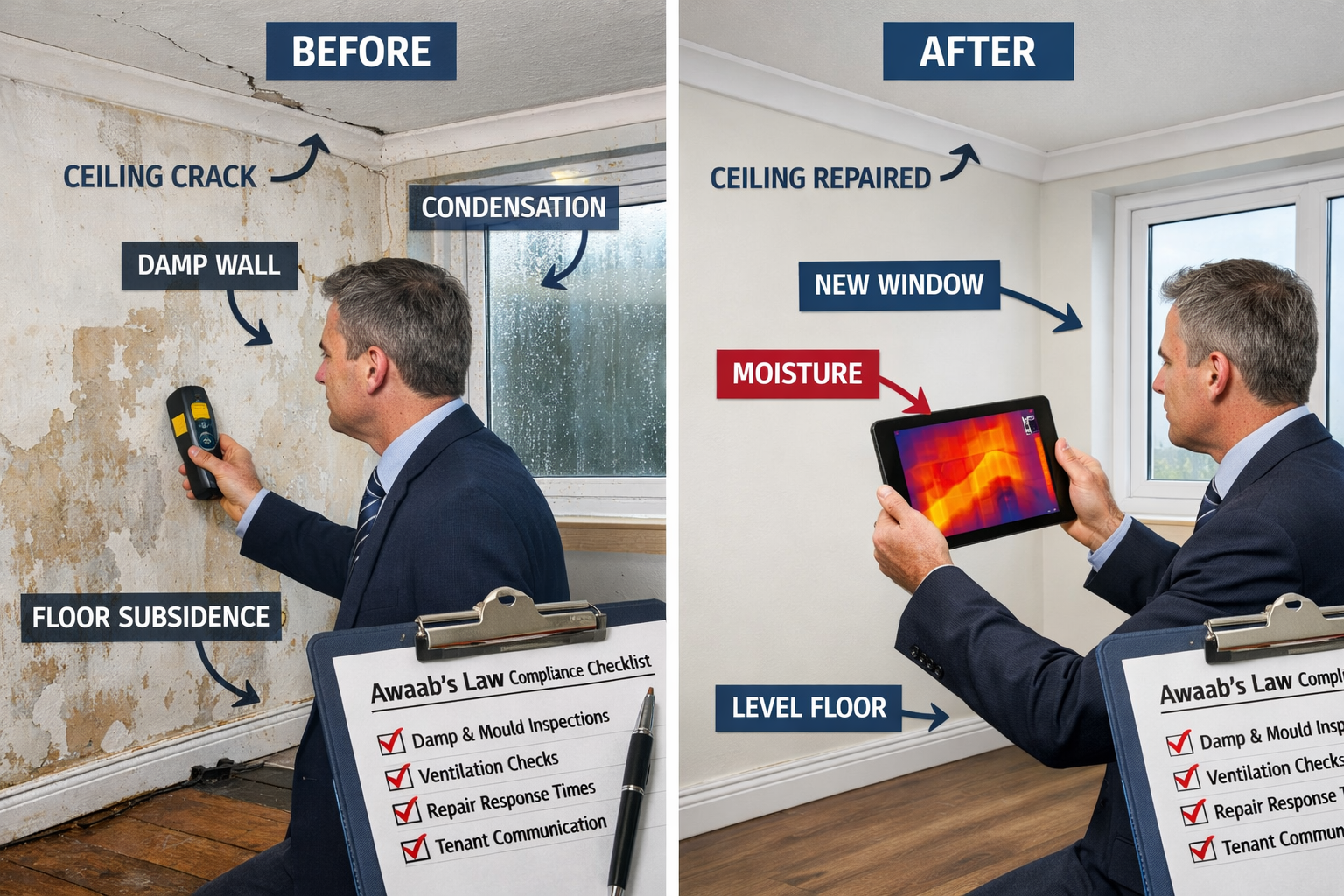
Institutional investors require different survey approaches depending on property type, age, and portfolio strategy. Understanding which survey type matches specific investment scenarios is crucial for effective due diligence.
RICS Level 3 Building Surveys: The Institutional Standard
For buy-to-let portfolios, RICS Level 3 surveys (formerly called full structural surveys) represent the most comprehensive assessment available. These detailed inspections are particularly valuable for:
- Properties built before 1950
- Buildings with visible defects or previous alterations
- Portfolios requiring detailed condition assessments
- Properties in areas with known subsidence or flooding risks
A Level 3 survey includes:
✅ Detailed structural analysis of foundations, walls, roofs, and floors
✅ Comprehensive defect identification with severity ratings
✅ Repair cost estimates for budgeting and negotiation
✅ Regulatory compliance assessment including fire safety and energy performance
✅ Long-term maintenance planning with projected capital expenditure schedules
Commercial building surveys follow similar protocols but include additional assessments for multi-unit properties and mixed-use developments.
Specialized Survey Components for 2026 Compliance
Modern building surveys for institutional investors must address specific regulatory requirements introduced or strengthened in recent years:
| Survey Component | Purpose | Regulatory Driver |
|---|---|---|
| Damp & Mould Assessment | Identify moisture ingress and ventilation issues | Awaab's Law compliance |
| Electrical Safety Certification | Verify wiring meets current standards | Landlord safety regulations |
| Energy Performance Analysis | Assess EPC rating and improvement potential | Minimum energy efficiency standards |
| Fire Safety Review | Evaluate escape routes and fire protection | Building Safety Act requirements |
| Structural Stability Testing | Identify subsidence, settlement, or movement | Liability protection |
For properties with suspected moisture problems, specialized damp surveys provide detailed analysis using thermal imaging and moisture meters to identify hidden water ingress that could violate tenant safety requirements.
The Awaab's Law Impact on Survey Protocols
Awaab's Law, introduced following the tragic death of a two-year-old from prolonged mould exposure, has fundamentally changed how building surveys must address damp and mould risks. The legislation requires:
- 14-day response timeline for hazard reports from tenants
- Mandatory remediation within specified timeframes based on severity
- Proactive identification of damp and mould risks during property acquisition
For institutional investors, this means surveys must now include:
- Comprehensive moisture mapping of all habitable rooms
- Ventilation adequacy assessment in bathrooms, kitchens, and bedrooms
- Condensation risk analysis based on building design and heating systems
- Remediation cost estimates for any identified moisture issues
Failure to identify these risks during acquisition can result in significant unexpected costs. Properties requiring extensive damp remediation may need £5,000-£15,000 per unit in repairs, plus potential rental income loss during works.
Stock Condition Surveys for Portfolio Acquisitions
When acquiring multiple properties simultaneously, stock condition surveys provide standardized assessments across entire portfolios. These surveys:
- Create consistent condition ratings for comparison
- Generate 30-year maintenance forecasts with capital expenditure projections
- Identify priority repair requirements across the portfolio
- Support accurate portfolio valuation based on actual condition
This approach is particularly valuable for institutional investors acquiring portfolios from smaller landlords or housing associations.
Building Surveys for Buy-to-Let Institutional Investors: Risk Identification and Mitigation Strategies

Comprehensive building surveys serve as the foundation for effective risk management in institutional buy-to-let portfolios. Understanding how to interpret survey findings and translate them into actionable investment decisions separates successful institutional investors from those who experience unexpected portfolio devaluation.
Critical Defect Categories and Investment Impact
Building surveys identify defects across a spectrum of severity. For institutional investors, understanding the financial implications of each category is essential:
Category 1: Cosmetic Issues (Low Risk)
- Examples: Minor decoration wear, small cracks in plaster, worn fixtures
- Investment impact: 1-3% of property value
- Action: Include in routine maintenance budget
Category 2: Significant Defects (Medium Risk)
- Examples: Aging boilers, roof tile replacement needs, window seal failures
- Investment impact: 5-12% of property value
- Action: Negotiate purchase price reduction or schedule planned repairs
Category 3: Serious Defects (High Risk)
- Examples: Structural movement, major damp penetration, roof structural failure
- Investment impact: 15-30% of property value
- Action: Consider walking away or require significant price reduction with guaranteed remediation
For properties showing signs of structural movement, specialized surveys for subsidence can determine whether issues are historic and stable or represent ongoing problems requiring extensive underpinning.
Quantifying Survey Findings for Investment Decisions
Institutional investors need survey data translated into financial metrics that align with portfolio performance targets. Effective survey protocols should provide:
Immediate Capital Requirements
- Emergency repairs needed before letting
- Regulatory compliance upgrades
- Safety-critical remediation
Short-Term Maintenance (1-3 Years)
- Component replacements approaching end-of-life
- Preventive maintenance to avoid deterioration
- Energy efficiency improvements
Long-Term Capital Expenditure (3-10 Years)
- Major system replacements (heating, roofing, windows)
- Structural repairs with extended timelines
- Building envelope improvements
This financial framework allows investors to calculate true acquisition cost and compare properties on a like-for-like basis:
True Acquisition Cost = Purchase Price + Immediate Repairs +
PV(Short-Term Maintenance) + PV(Long-Term CapEx)
Regulatory Compliance Verification
With 57% of international investors reporting that housing regulations significantly inform their investment decisions, survey protocols must explicitly verify compliance with current standards:
🔍 Electrical Safety: EICR certificates valid and all remedial work completed
🔍 Gas Safety: Annual CP12 certificates and appliance compliance
🔍 Fire Safety: Smoke alarms, CO detectors, and fire doors where required
🔍 Energy Performance: EPC rating meets minimum standards (currently E or above)
🔍 Legionella Risk: Water system assessment completed for HMOs
🔍 Asbestos: Management plan for pre-2000 properties
Properties failing compliance checks require immediate remediation before letting, impacting cash flow projections and investment returns.
Specialized Assessments for High-Value Properties
Premium buy-to-let properties targeting professional tenants often require additional specialized surveys:
- Roof surveys: Detailed assessment using drone technology for large or complex roofs
- Structural surveys: Engineering-level analysis for properties with unusual construction or visible movement
- Specific defect reports: Focused investigation of particular concerns identified during initial surveys
These specialized assessments provide the detailed technical information needed to make confident decisions on higher-value acquisitions where the stakes justify additional due diligence investment.
Selecting Survey Providers and Managing the Survey Process
The quality of building surveys varies significantly between providers. Institutional investors need to establish rigorous selection criteria to ensure consistent, reliable survey outputs across their portfolio acquisitions.
Essential Surveyor Qualifications and Experience
When selecting survey providers for buy-to-let portfolios, prioritize:
✅ RICS Chartered Status: Ensures professional standards and insurance coverage
✅ Residential Rental Experience: Understanding of landlord-specific risks and regulations
✅ Local Market Knowledge: Familiarity with regional construction types and common defects
✅ Institutional Client Track Record: Experience delivering portfolio-scale assessments
✅ Technology Integration: Digital reporting and database compatibility
Working with local chartered surveyors who understand regional property characteristics can identify area-specific issues that national firms might miss.
Survey Brief Development for Institutional Requirements
Standard residential surveys may not address all institutional investor concerns. Develop a comprehensive survey brief that includes:
Property-Specific Requirements
- Detailed assessment of rental-critical systems (heating, hot water, kitchens, bathrooms)
- Tenant safety compliance verification
- Energy efficiency improvement opportunities
- Accessibility features and potential adaptations
Portfolio Management Integration
- Standardized condition rating system
- Digital reporting format compatible with asset management software
- Photographic evidence of all significant defects
- Comparable data for portfolio benchmarking
Financial Analysis Components
- Itemized repair cost estimates with priority rankings
- Maintenance schedule projections (5, 10, and 15 years)
- Energy improvement cost-benefit analysis
- Rental income impact assessment during repair periods
Survey Timing and Transaction Coordination
For institutional investors, survey timing can significantly impact transaction success:
Pre-Offer Surveys: Commissioned before making formal offers, allowing accurate bid pricing but requiring upfront investment in properties that may not be acquired.
Post-Offer, Pre-Exchange Surveys: Traditional timing that allows negotiation based on findings but may delay transactions in competitive markets.
Portfolio Batch Surveys: Coordinated assessment of multiple properties within a short timeframe, requiring surveyor capacity planning but enabling comparative analysis.
Effective coordination with legal teams, lenders, and vendors ensures survey findings inform negotiations while maintaining transaction momentum.
Cost Considerations and Value Optimization
Survey costs represent a small percentage of total acquisition costs but vary based on property characteristics:
| Property Type | Survey Cost Range | Cost as % of Purchase |
|---|---|---|
| 2-bed flat | £600-£900 | 0.3-0.5% |
| 3-bed house | £800-£1,200 | 0.3-0.4% |
| 4-bed house | £1,000-£1,500 | 0.25-0.35% |
| Multi-unit block | £2,000-£5,000+ | 0.2-0.4% |
For detailed guidance on survey pricing, review structural survey cost considerations to understand factors affecting professional fees.
Cost optimization strategies for institutional investors include:
- Volume discounting: Negotiate reduced per-property rates for portfolio acquisitions
- Phased assessments: Initial screening surveys followed by detailed surveys for shortlisted properties
- Risk-based allocation: Apply comprehensive surveys to higher-risk properties, streamlined assessments to newer stock
- Long-term partnerships: Establish preferred surveyor relationships with consistent pricing and priority scheduling
Digital Survey Platforms and Data Management
Modern institutional investors leverage technology to maximize survey value:
- Digital survey platforms that integrate with property management systems
- Photographic databases documenting property condition at acquisition
- Maintenance scheduling tools triggered by survey recommendations
- Portfolio benchmarking dashboards comparing property conditions across holdings
- Predictive maintenance algorithms using survey data to forecast capital requirements
This digital infrastructure transforms surveys from one-time transaction costs into valuable long-term portfolio management assets.
Building Surveys for Buy-to-Let Institutional Investors: Implementation Framework for 2026
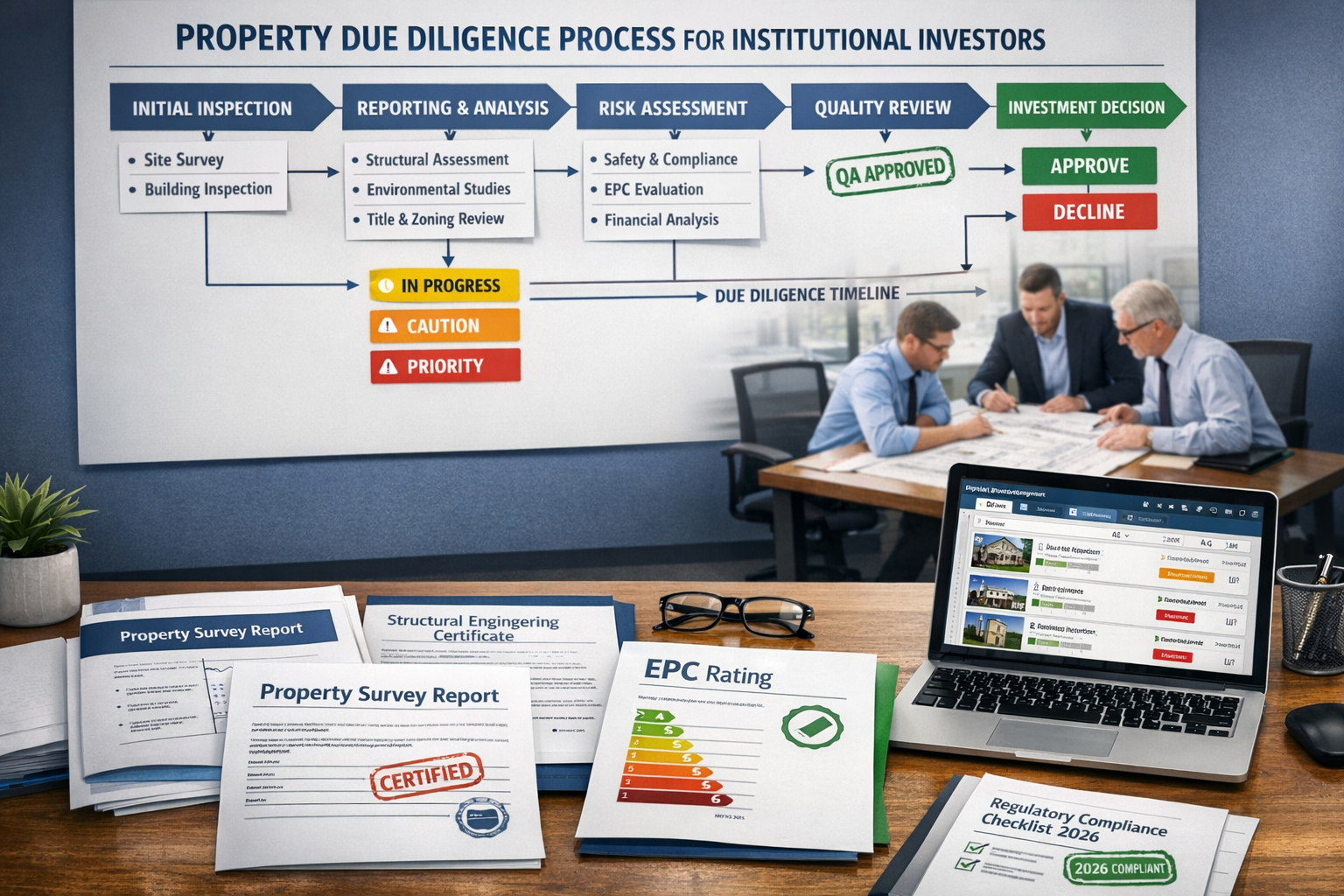
Successful institutional investors don't simply commission surveys—they integrate survey findings into comprehensive acquisition and portfolio management frameworks. The following implementation approach ensures maximum value from building survey investments.
Pre-Acquisition Survey Protocol
Step 1: Initial Property Screening
Before commissioning full surveys, conduct preliminary assessments:
- Desktop valuation and comparable analysis
- Online listing review for disclosed defects
- External inspection for obvious red flags
- Energy Performance Certificate review
- Local authority planning and building control searches
Step 2: Survey Commissioning
For properties passing initial screening:
- Select appropriately qualified surveyors from approved panel
- Provide detailed survey brief including institutional requirements
- Coordinate access with vendors or agents
- Set clear timeline expectations aligned with transaction schedule
Step 3: Survey Review and Analysis
Upon receiving survey reports:
- Technical review by in-house or consulting engineers for complex issues
- Financial analysis translating defects into cost implications
- Risk categorization using standardized portfolio framework
- Comparison against investment underwriting assumptions
Step 4: Investment Decision Integration
Survey findings should directly inform:
- Purchase price negotiations: Quantified deductions for identified defects
- Acquisition approval: Go/no-go decisions based on defect severity
- Financing arrangements: Lender requirements for pre-completion repairs
- Budgeting: Immediate and long-term capital allocation
Post-Acquisition Survey Utilization
Building surveys provide value long after property acquisition:
Maintenance Planning
- Create property-specific maintenance schedules based on survey recommendations
- Prioritize repairs by urgency, cost, and tenant impact
- Schedule preventive maintenance to avoid deterioration
- Track actual versus projected maintenance costs for future underwriting refinement
Tenant Safety Management
- Address all safety-critical items before first letting
- Provide tenants with relevant survey information about property limitations
- Establish monitoring protocols for issues requiring ongoing observation
- Document compliance with Awaab's Law and other tenant safety regulations
Portfolio Benchmarking
- Compare property conditions across portfolio
- Identify systemic issues affecting multiple properties
- Optimize maintenance contractor selection based on common repair needs
- Refine acquisition criteria based on actual defect patterns
Exit Strategy Preparation
- Maintain comprehensive property condition documentation
- Track improvements and repairs completed during ownership
- Prepare disposal condition reports demonstrating property care
- Maximize disposal values through proactive maintenance
Case Study: Institutional Portfolio Acquisition
A mid-sized institutional investor acquired a 50-property portfolio in 2026. Their comprehensive survey approach included:
Survey Investment: £45,000 (average £900 per property)
Key Findings:
- 12 properties required immediate damp remediation (£84,000 total)
- 23 properties needed boiler replacement within 2 years (£69,000)
- 8 properties had EPC ratings below minimum standards (£32,000 to upgrade)
- 3 properties had serious structural issues requiring withdrawal from acquisition
Financial Impact:
- Purchase price negotiated down by £215,000 based on survey findings
- 3 problematic properties removed, improving portfolio quality
- Maintenance budget accurately forecast, avoiding cash flow surprises
- Compliance issues addressed before first lettings, avoiding regulatory penalties
Return on Survey Investment: The £45,000 survey investment generated £215,000 in price reductions plus avoided costs of approximately £50,000 in unexpected repairs and regulatory penalties—a 6x return on survey expenditure.
Regulatory Compliance Checklist for 2026
Ensure all building surveys verify compliance with current requirements:
Mandatory Compliance Items:
- ✅ Electrical Installation Condition Report (EICR) valid within 5 years
- ✅ Gas Safety Certificate (CP12) current
- ✅ Energy Performance Certificate (EPC) rating E or above
- ✅ Smoke alarms on every floor
- ✅ Carbon monoxide detectors in rooms with solid fuel appliances
- ✅ Legionella risk assessment (for HMOs and larger properties)
- ✅ Fire safety equipment (for HMOs and flats in converted buildings)
- ✅ Electrical safety standards compliance
- ✅ Damp and mould risk assessment (Awaab's Law)
Recommended Additional Assessments:
- 🔍 Asbestos survey for pre-2000 properties
- 🔍 Japanese knotweed inspection for properties with gardens
- 🔍 Flood risk assessment in vulnerable areas
- 🔍 Radon testing in high-risk regions
Continuous Improvement and Protocol Refinement
Institutional investors should treat survey protocols as living documents that evolve based on:
- Portfolio performance data: Correlating survey findings with actual maintenance costs
- Regulatory changes: Updating survey requirements as new legislation emerges
- Market conditions: Adjusting survey scope based on acquisition competition and pricing
- Technology advances: Incorporating new survey technologies (thermal imaging, drones, AI analysis)
- Tenant feedback: Identifying survey gaps based on tenant-reported issues
Quarterly protocol reviews ensure survey approaches remain aligned with portfolio objectives and regulatory requirements.
Emerging Technologies and Future Survey Innovations
The building survey sector is experiencing rapid technological advancement. Institutional investors who adopt these innovations gain competitive advantages in property assessment and portfolio management.
Thermal Imaging and Moisture Detection
Advanced thermal imaging cameras identify:
- Hidden moisture ingress before visible damage appears
- Insulation gaps reducing energy efficiency
- Heating system inefficiencies
- Air leakage points compromising building envelope
This technology is particularly valuable for Awaab's Law compliance, detecting condensation risks and moisture problems in early stages.
Drone Surveys for Roof and Exterior Assessment
Drone surveys provide:
- Safe access to high or dangerous roof areas
- Detailed photographic evidence of roof condition
- Chimney and gutter inspection without scaffolding
- External wall condition assessment for tall buildings
For institutional portfolios with multiple properties, drone technology reduces survey time and costs while improving assessment quality.
AI-Powered Defect Analysis
Emerging artificial intelligence systems can:
- Analyze survey photographs to identify common defects
- Compare property conditions against portfolio benchmarks
- Predict maintenance requirements based on building age and condition
- Generate automated repair cost estimates
While not yet replacing professional surveyor judgment, AI tools enhance consistency and efficiency in portfolio-scale assessments.
Building Information Modeling (BIM) Integration
Forward-thinking institutional investors are creating digital twins of rental properties that:
- Integrate survey data with building plans and specifications
- Track maintenance history and component lifecycles
- Model energy efficiency improvement scenarios
- Support predictive maintenance scheduling
This approach transforms static survey reports into dynamic property management tools.
Conclusion
Building Surveys for Buy-to-Let Institutional Investors: 2026 Protocols in a Recovering Rental Market represent a critical evolution in property due diligence. With institutional capital flooding into rental markets and regulatory requirements intensifying, comprehensive building assessments are no longer optional—they're essential risk management tools that protect portfolio value and ensure long-term investment success.
The key principles for institutional investors in 2026 include:
🏆 Prioritize RICS Level 3 surveys for comprehensive defect identification and regulatory compliance verification
🏆 Integrate Awaab's Law requirements into every survey protocol, with detailed damp and mould risk assessment
🏆 Translate survey findings into financial metrics that inform investment decisions and portfolio management
🏆 Establish standardized survey protocols across portfolios for consistent risk assessment and benchmarking
🏆 Leverage emerging technologies including thermal imaging, drones, and AI analysis to enhance survey quality
🏆 Maintain long-term survey data as valuable portfolio management assets supporting maintenance planning and exit strategies
Actionable Next Steps
For institutional investors looking to optimize their building survey approach:
- Review current survey protocols against 2026 regulatory requirements and best practices
- Establish relationships with qualified surveyors experienced in institutional buy-to-let portfolios
- Develop standardized survey briefs that address institutional-specific requirements
- Implement digital survey management systems to maximize long-term data value
- Create feedback loops connecting survey findings with actual property performance
- Schedule regular protocol reviews to incorporate regulatory changes and technological advances
The recovering rental market offers substantial opportunities for institutional investors who approach property acquisition with rigorous due diligence. Comprehensive building surveys provide the foundation for confident investment decisions, regulatory compliance, and long-term portfolio success. By implementing the protocols outlined in this guide, institutional investors can navigate the 2026 market with clarity, protecting capital while maximizing rental returns in an increasingly competitive landscape.
For expert guidance on building surveys tailored to institutional buy-to-let portfolios, contact qualified chartered surveyors who understand the unique requirements of institutional rental property investment.