

The UK property market is experiencing an unexpected resurgence in 2026, and one housing type is capturing particular attention: the humble bungalow. As suburban markets witness a surge in enquiries for single-story living, Building Surveys for 2026 Bungalow Boom: Assessing Demand Drivers and Structural Retrofit Needs has become a critical topic for surveyors, buyers, and homeowners alike. Recent data shows house prices holding steady with renewed buyer confidence [6], creating ideal conditions for bungalow transactions that require thorough professional assessment.
This comprehensive guide examines the factors driving bungalow demand, the specific defects surveyors must identify in aging bungalow stock, and the retrofit opportunities that can transform these properties into modern, energy-efficient homes.
Key Takeaways
- 🏡 Demographic shifts are driving unprecedented demand for bungalows, particularly from downsizers aged 65+ and accessibility-focused buyers
- 🔍 Age-related defects in 1960s-1980s bungalows require specialized survey attention, including roof structures, cavity walls, and concrete floors
- ⚡ Energy retrofits offer substantial value enhancement, with EPC improvements and modern heating systems becoming essential for marketability
- 📊 Market conditions in 2026 show stabilizing prices and improved transaction volumes, creating opportunities for bungalow conversions
- 🛠️ Extension potential in bungalows presents unique structural considerations that demand expert surveyor assessment
Understanding the 2026 Bungalow Market Resurgence
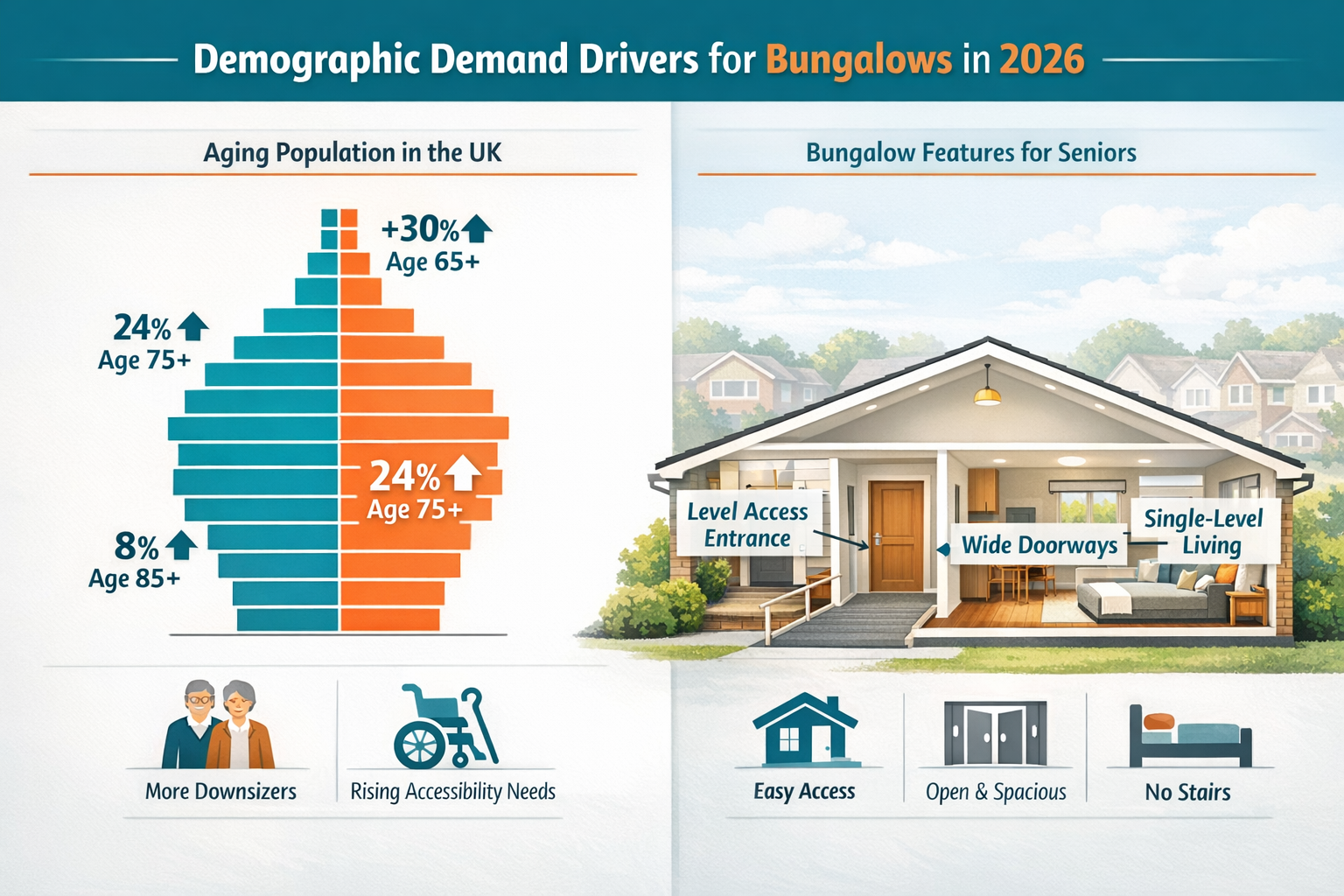
Demographic Demand Drivers
The bungalow boom of 2026 isn't happening by accident. Multiple demographic forces are converging to create exceptional demand for single-story properties across suburban and semi-rural markets.
The UK's aging population represents the primary driver. With over 12 million people now aged 65 and above, downsizing has become a national trend. Bungalows offer:
- Level access living that eliminates stair-related mobility challenges
- Reduced maintenance compared to multi-story properties
- Garden accessibility with direct ground-floor access
- Future-proofing for aging-in-place strategies
- Lower heating costs due to compact footprints
Market analysts note that house prices are experiencing gentle rises in 2026 [4], making bungalows an attractive option for equity-rich downsizers seeking to release capital while maintaining quality of life.
Beyond retirees, younger buyers with accessibility needs are increasingly targeting bungalows. Families with disabled members, individuals with long-term health conditions, and those planning for multi-generational living find bungalows offer practical solutions that two-story homes cannot match.
Geographic Hotspots and Supply Constraints
Bungalow demand is particularly acute in specific regions. Suburban areas within commuting distance of major cities show the strongest activity, with buyers seeking:
- Established neighborhoods with mature infrastructure
- Proximity to healthcare facilities and amenities
- Good transport links without urban density
- Larger plot sizes for potential extensions
However, supply remains severely constrained. Bungalows represent only 7-9% of UK housing stock, and many were built during the 1960s-1980s construction boom. This scarcity has created competitive markets where properties often receive multiple offers, making comprehensive RICS Building Surveys Level 3 assessments essential for informed purchasing decisions.
Recent data indicates that property transaction volumes are improving after the bumper start to 2026 [6], suggesting sustained buyer confidence in the bungalow sector despite broader economic uncertainties.
Building Surveys for 2026 Bungalow Boom: Essential Survey Considerations
Age-Specific Defect Patterns in Bungalow Stock
When conducting Building Surveys for 2026 Bungalow Boom scenarios, surveyors must recognize that most available bungalows were constructed 40-60 years ago. This vintage presents characteristic defect patterns that require systematic assessment.
Roof Structure and Coverings
Bungalow roofs present unique challenges:
| Defect Type | Common in Era | Survey Priority |
|---|---|---|
| Concrete tile degradation | 1960s-1970s | High |
| Inadequate roof ventilation | Pre-1980s | Medium-High |
| Purlin sagging | 1960s timber construction | High |
| Missing or damaged sarking felt | All eras | Medium |
| Inadequate insulation | Pre-2000s | High |
Professional roof surveys should include loft space inspection to assess timber condition, insulation levels, and ventilation adequacy. Many bungalow roofs were constructed with minimal pitch, creating drainage concerns and increased maintenance requirements.
Wall Construction and Cavity Issues
Most bungalows feature cavity wall construction that requires careful evaluation:
- Cavity wall tie corrosion: Steel ties installed in the 1960s-1970s are now reaching failure age
- Retrospective insulation problems: Many bungalows received cavity wall insulation in the 1990s-2000s, sometimes improperly installed
- Damp penetration: Low-level damp proof courses may have failed or been bridged
- Render deterioration: External render systems show age-related cracking and delamination
Surveyors should conduct thorough damp surveys using moisture meters and thermal imaging to identify hidden problems that aren't visible during standard inspections.
Foundation and Floor Slab Concerns
Bungalow foundations differ significantly from modern standards:
Concrete floor slabs in 1960s-1980s bungalows frequently lack adequate damp-proof membranes, leading to:
- Rising dampness through the slab
- Cold floor surfaces reducing energy efficiency
- Potential for radon gas ingress in affected areas
- Cracking due to settlement or tree root activity
A comprehensive structural survey should assess floor levels, identify cracking patterns, and evaluate whether remedial work is required before purchase.
Extension and Alteration Assessment
One key advantage of bungalows is their extension potential, but this creates specific survey requirements.
Existing Extensions
Many bungalows have been extended over decades, creating assessment challenges:
- Building regulation compliance: Extensions from the 1970s-1990s often lack proper documentation
- Structural integration: Poor connections between original structure and extensions
- Roof valley problems: Complex roof geometries create leak-prone junctions
- Foundation adequacy: Extensions may have shallow or inadequate foundations
Surveyors conducting RICS specialist defect surveys should pay particular attention to junction details where extensions meet original structures.
Future Extension Potential
Buyers often purchase bungalows specifically for extension opportunities. Survey reports should address:
- Plot boundary constraints and setback requirements
- Permitted development rights and planning history
- Structural capacity of existing foundations to support additional loads
- Drainage adequacy for increased occupancy
- Party wall considerations for semi-detached bungalows
Professional advice on structural engineering requirements helps buyers understand the feasibility and costs of planned improvements.
Structural Retrofit Needs and Energy Upgrade Opportunities
Energy Performance Challenges in Bungalow Stock
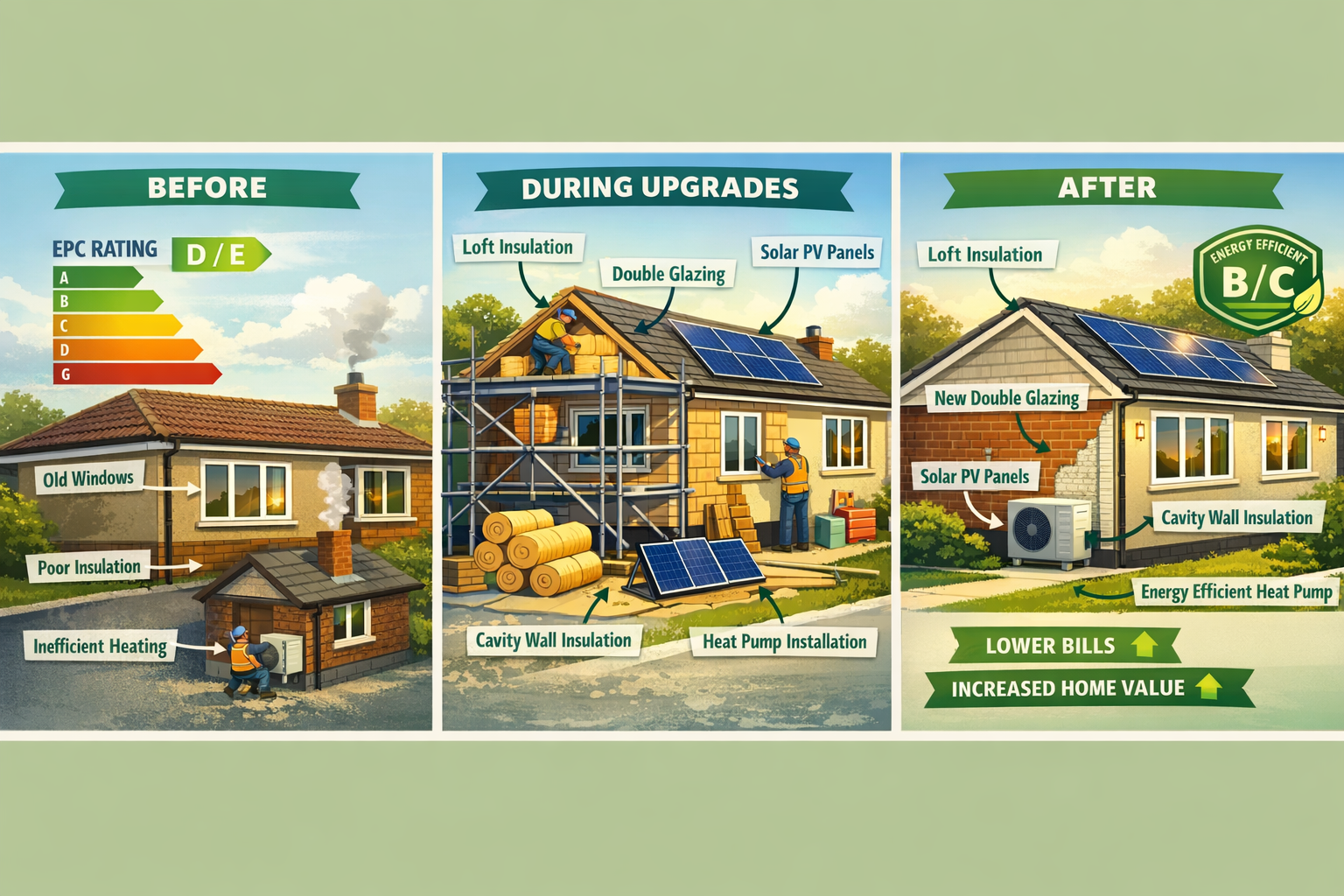
The 2026 property market increasingly demands energy-efficient homes, yet most bungalows present significant EPC challenges. Typical 1960s-1980s bungalows rate D or E without upgrades, creating both problems and opportunities.
Common Energy Deficiencies
Bungalow-specific energy issues include:
- High surface area to volume ratio: More external wall area per square meter of floor space
- Inadequate loft insulation: Many have less than 100mm of outdated materials
- Single-glazed windows: Original timber frames with poor thermal performance
- Inefficient heating systems: Aging boilers and inadequate controls
- Thermal bridging: Uninsulated lintels and wall ties
"Upgrading a bungalow from EPC rating E to B can reduce annual heating costs by 40-50% while significantly improving marketability and value."
Practical Retrofit Solutions
Building Surveys for 2026 Bungalow Boom scenarios should identify retrofit opportunities that enhance both comfort and value.
Insulation Upgrades
Prioritized insulation improvements include:
- Loft insulation to 300mm: Relatively inexpensive with excellent payback
- External wall insulation: Particularly effective for solid wall bungalows
- Floor insulation: Can be added during renovation or via suspended floor methods
- Cavity wall insulation review: Ensure existing insulation is performing correctly
Heating System Modernization
Modern heating solutions transform bungalow efficiency:
- Air source heat pumps: Ideal for bungalows with adequate insulation and radiator capacity
- Underfloor heating: Works exceptionally well with concrete slab floors during renovation
- Smart controls and zoning: Maximizes efficiency in single-story layouts
- Solar thermal or PV systems: Large roof areas provide excellent installation opportunities
Surveyors should note whether existing heating systems are suitable for modern heat pumps or require complete replacement, as this significantly impacts renovation budgets.
Window and Door Replacement Considerations
Original timber windows in bungalows often require attention:
Replacement options include:
- High-performance double or triple glazing
- Retention and upgrade of original timber frames (in conservation areas)
- Modern composite materials with period styling
- Improved threshold details for accessibility compliance
Survey reports should assess window condition and provide realistic replacement cost estimates, as this often represents 10-15% of total renovation budgets.
Surveyor Checklists for Bungalow Assessments
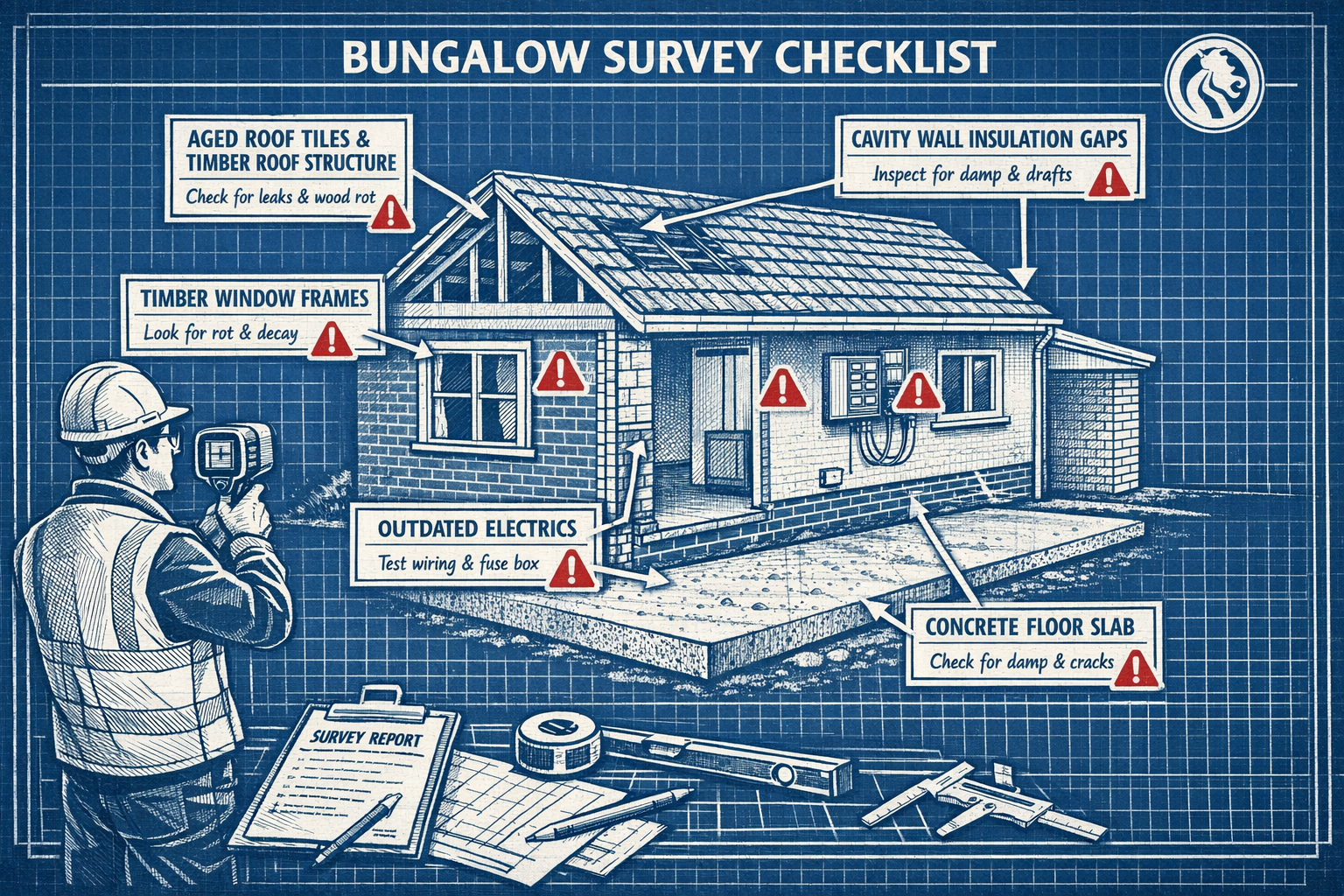
Pre-Purchase Survey Checklist
When conducting comprehensive RICS home surveys on bungalows, professionals should systematically address:
Exterior Assessment:
- ✅ Roof covering condition and remaining lifespan
- ✅ Chimney stack stability and pointing
- ✅ Rainwater goods adequacy and condition
- ✅ External wall condition and damp evidence
- ✅ Window and door condition and operation
- ✅ Driveway and hardstanding condition
- ✅ Boundary walls and fencing
- ✅ Evidence of ground movement or subsidence
Interior Assessment:
- ✅ Floor level variations and slab condition
- ✅ Wall and ceiling crack patterns
- ✅ Damp evidence at skirting and wall bases
- ✅ Electrical installation age and safety
- ✅ Plumbing system condition
- ✅ Heating system operation and efficiency
- ✅ Bathroom and kitchen condition
- ✅ Loft space access and condition
Specialized Investigations:
- ✅ Drainage survey for older clay pipe systems
- ✅ Subsidence assessment in clay soil areas
- ✅ Asbestos presence in pre-2000 properties
- ✅ Japanese knotweed or invasive species
- ✅ Radon risk assessment in affected regions
Extension Feasibility Checklist
For buyers planning bungalow extensions:
Structural Considerations:
- Foundation depth and type
- Wall construction and load-bearing capacity
- Roof structure and potential for conversion
- Ground conditions and drainage
- Access for construction equipment
Planning and Regulatory:
- Permitted development rights availability
- Local planning policy on bungalow extensions
- Conservation area restrictions
- Tree preservation orders
- Building regulation requirements for new work
Cost and Feasibility:
- Realistic extension cost estimates
- Impact on existing structure
- Temporary accommodation requirements
- Professional fee budgets
- Contingency for unforeseen issues (typically 15-20%)
Market Implications and Investment Considerations
Valuation Factors in the 2026 Bungalow Market
The improving market conditions in 2026 [2] create specific valuation considerations for bungalows:
Premium factors that increase bungalow values:
- Recent energy efficiency upgrades (EPC B or above)
- Modern heating systems with low running costs
- High-quality extensions with proper certification
- Accessible bathrooms and wet rooms
- Off-street parking and garage facilities
- Mature, manageable gardens
- Proximity to healthcare and shopping amenities
Discount factors that reduce values:
- Deferred maintenance on roofs or structure
- Poor energy performance (EPC E or below)
- Outdated kitchens and bathrooms
- Evidence of damp or structural movement
- Restrictive plot sizes limiting extension potential
- Proximity to busy roads or commercial areas
Investment Return Potential
Bungalow renovation projects can deliver exceptional returns when properly executed:
Typical renovation ROI scenarios:
- Basic cosmetic upgrade: 10-15% value increase
- Full energy retrofit: 15-25% value increase
- Quality extension (20-30m²): 25-40% value increase
- Complete renovation and extension: 40-60% value increase
However, these returns depend heavily on accurate initial assessment through professional building surveys that identify all defects and costs before purchase.
Future Market Outlook
Looking beyond 2026, several factors suggest sustained bungalow demand:
- Demographic trends: The 65+ population continues growing through 2030
- Supply constraints: Limited new bungalow construction maintains scarcity
- Accessibility legislation: Increasing focus on inclusive housing design
- Energy regulations: Retrofitted bungalows meet emerging standards
- Lifestyle preferences: Single-story living appeals across age groups
Property market forecasts indicate gentle price rises continuing through 2026 [4], with bungalows likely outperforming broader market averages due to supply-demand imbalances.
Professional Survey Standards and Best Practices
RICS Standards for Bungalow Surveys
Professional surveyors conducting Building Surveys for 2026 Bungalow Boom assessments must adhere to RICS standards that ensure comprehensive, consistent reporting.
Key RICS requirements include:
- Systematic inspection of all accessible areas
- Clear identification of defects with severity ratings
- Realistic repair cost estimates
- Advice on urgency of remedial work
- Recommendations for specialist investigations
- Professional indemnity insurance coverage
The RICS Home Survey Standard distinguishes between different survey levels, with most bungalow purchases benefiting from Level 3 surveys due to the age and complexity of typical stock.
When to Recommend Specialist Investigations
Surveyors should recommend additional specialist assessments when encountering:
- Structural movement: Cracks exceeding 3mm width or showing progressive patterns
- Damp readings: Moisture meter readings above 20% in walls or floors
- Roof concerns: Significant sagging, tile slippage, or internal water staining
- Drainage issues: Evidence of blockages, root ingress, or system failure
- Electrical hazards: Installations older than 30 years or showing safety concerns
- Asbestos materials: Any suspected asbestos-containing materials in pre-2000 properties
These specialist investigations protect both surveyor and client by ensuring all significant defects receive appropriate expert attention.
Conclusion
The Building Surveys for 2026 Bungalow Boom: Assessing Demand Drivers and Structural Retrofit Needs represents a significant opportunity for property professionals, buyers, and investors alike. As demographic pressures intensify and market conditions stabilize [6], bungalows are transitioning from overlooked assets to highly sought-after properties.
Success in this market requires understanding the unique characteristics of bungalow construction, recognizing age-related defect patterns, and identifying retrofit opportunities that transform energy performance and livability. Professional building surveys provide the foundation for informed decision-making, protecting buyers from unexpected costs while highlighting value-enhancement potential.
Actionable Next Steps
For prospective buyers:
- Commission a comprehensive Level 3 RICS Building Survey before purchase
- Budget 15-25% of purchase price for likely renovations and upgrades
- Obtain specialist reports for drainage, electrics, and structural concerns
- Research local planning policies on bungalow extensions
- Consider future energy efficiency requirements in purchase decisions
For current bungalow owners:
- Conduct professional energy assessments to identify cost-effective upgrades
- Address deferred maintenance before market conditions shift
- Document all improvement works with proper certification
- Consider extension feasibility to maximize property value
- Maintain regular roof and drainage maintenance schedules
For property professionals:
- Develop specialized expertise in bungalow-specific defects and solutions
- Build networks with retrofit specialists and extension designers
- Stay current with accessibility standards and aging-in-place design
- Understand local bungalow market dynamics and pricing trends
- Provide clients with comprehensive, actionable survey reports
The 2026 bungalow boom presents exceptional opportunities for those who approach these properties with professional expertise, thorough assessment, and strategic vision. By combining comprehensive building surveys with understanding of demographic demand drivers and retrofit potential, stakeholders can navigate this market successfully and create homes that serve occupants for decades to come.
References
[1] February2026 – https://www.ons.gov.uk/economy/inflationandpriceindices/bulletins/privaterentandhousepricesuk/february2026
[2] Weekly Summary 6th February 2026 – https://builtplace.com/weekly-summary-6th-february-2026/
[4] House Prices Set For A Gentle Rise In 2026 – https://malloryfinancial.co.uk/2026/01/30/house-prices-set-for-a-gentle-rise-in-2026/
[6] Uk House Prices Hold Steady In February After Bumper Start To 2026 – https://global.morningstar.com/en-gb/news/alliance-news/1771200097476297000/uk-house-prices-hold-steady-in-february-after-bumper-start-to-2026