Wales's housing landscape in 2026 presents a unique challenge for property professionals. While construction activity has slowed rather than boomed, the Welsh Government's record £471 million housing investment allocation signals significant shifts ahead [2]. This investment—the highest on record under the current Infrastructure Investment Plan—aims to deliver 20,000 new social sector homes while addressing one of Europe's oldest and least energy-efficient housing stocks. For surveyors and buyers navigating this complex market, understanding Building Survey Protocols for Wales Regional Boom: Spotting Defects in 2026's Accelerating Housing Demand has become essential to protecting investments and ensuring property safety.
The Welsh housing sector faces a distinctive mix of challenges that demand updated survey approaches. With 459 buildings currently enrolled in the Building Safety Remediation Programme and one-third of Welsh homes built before 1919 [2], surveyors must balance traditional defect identification with modern safety standards. This article explores how professional building survey protocols are adapting to Wales's unique rural-urban property mix, where flood risks, traditional stone construction defects, and new regulatory requirements converge.
Key Takeaways
- Record housing investment of £471 million in 2026-27 is driving demand for comprehensive building surveys across Wales's diverse property stock [2]
- Enhanced survey protocols must address both traditional Welsh construction defects (stone walls, timber decay) and modern safety requirements (fire safety, energy efficiency)
- Building Safety Remediation Programme affects 459 buildings, with 83 completed and 120 in progress, requiring specialized defect assessment [2]
- New Design Quality Requirements mandate EPC A ratings for government-funded homes, raising the bar for survey standards [2]
- Rural-urban property diversity demands flexible survey approaches that account for flood risks, heritage construction, and modern building failures
Understanding Wales's 2026 Housing Market Context
The Reality Behind the "Boom" Narrative
Despite headlines suggesting rapid growth, Wales's construction sector tells a more nuanced story. According to RICS, "construction activity has lost momentum; commercial, occupier and investor demand has softened; and skills shortages continue to constrain growth" [1]. This slowdown doesn't diminish the importance of robust building survey protocols—instead, it heightens the need for thorough defect identification as buyers compete for quality properties in a constrained market.
Affordability remains a significant barrier for renters and buyers across Wales [1]. This pressure creates urgency around purchase decisions, making comprehensive RICS building surveys more critical than ever. Buyers cannot afford costly post-purchase surprises when property budgets are already stretched.
Government Investment Driving New Standards
The Welsh Government's Infrastructure Finance Plan 2026-27 allocates substantial resources across three key areas:
| Investment Area | Allocation | Purpose |
|---|---|---|
| Housing Development | £471 million | Building 20,000 social sector homes [2] |
| Decarbonization | £207 million | Retrofitting existing housing stock [2] |
| Building Safety | Ongoing | Remediating 459 buildings with fire safety issues [2] |
These investments create both opportunities and challenges for building surveyors. New construction must meet enhanced Design Quality Requirements exceeding standard Building Regulations, including mandatory EPC A ratings for approximately 2,500 affordable homes [2]. Surveyors must understand these elevated standards when assessing new builds and identifying defects that fall short of these requirements.
The Building Safety Remediation Challenge
Wales's Building Safety Remediation Programme provides crucial context for understanding defect priorities in 2026. The programme has surveyed all buildings 11 metres and over in both private and social sectors to identify fire safety issues [2]. Current progress shows:
- ✅ 83 buildings completed (subject to final sign-off)
- 🔨 120 buildings in progress
- 📋 221 buildings in planning stages
- ⚠️ 29 buildings without plans in place
This systematic approach to identifying and remedying building safety defects demonstrates the elevated scrutiny now required across Wales's housing stock. Surveyors must incorporate similar thoroughness when assessing properties for buyers.
Building Survey Protocols for Wales Regional Boom: Essential Defect Categories
Traditional Welsh Construction Defects
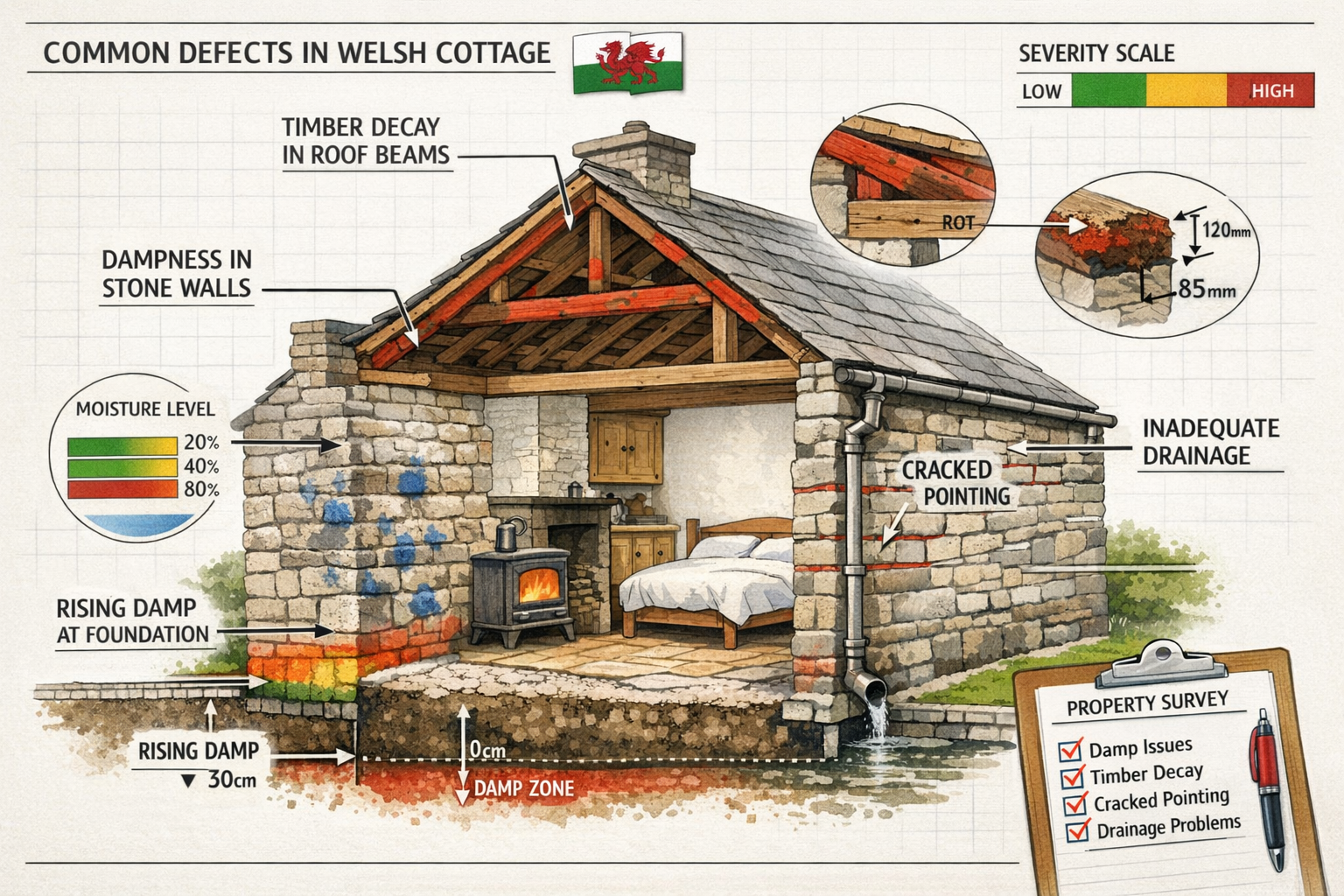
Wales's housing stock presents unique challenges due to its age and construction methods. With one-third of homes built before 1919 [2], surveyors must possess specialized knowledge of traditional construction defects that rarely appear in modern properties.
Stone Wall Issues
Traditional Welsh stone cottages and terraced properties commonly exhibit:
- Dampness penetration through solid stone walls without cavity protection
- Deteriorating pointing between stones, allowing water ingress
- Structural movement in load-bearing stone walls
- Inadequate damp-proof courses or complete absence in older properties
These issues require experienced assessment through structural surveys that go beyond basic visual inspection. Moisture meter readings, thermal imaging, and careful examination of internal wall surfaces provide essential data for accurate defect identification.
Timber Decay and Infestation
Wales's damp climate creates ideal conditions for timber deterioration. Survey protocols must include thorough inspection of:
- Roof timbers for rot, beetle infestation, and structural integrity
- Floor joists in solid-floor conversions and suspended timber floors
- Window and door frames in traditional properties
- Structural beams supporting walls and upper floors
A comprehensive specific defect report may be necessary when timber issues are suspected but not fully visible during standard surveys.
Modern Building Defects in New Welsh Developments
The push to deliver 20,000 new social sector homes [2] brings modern construction defects into focus. New build properties require different survey approaches, as highlighted by recent changes to homebuying rules in 2026 [5].
Energy Efficiency Failures
With new Design Quality Requirements mandating EPC A ratings for government-funded homes [2], surveyors must identify:
- Inadequate insulation in walls, roofs, and floors
- Thermal bridging at junctions and openings
- Air leakage around windows, doors, and service penetrations
- Underperforming heating systems that fail to meet efficiency targets
"Enhanced home survey standards being implemented include earlier inspections and risk mitigation protocols, with snagging surveys becoming increasingly essential for new build buyers." [5]
These defects may not be immediately visible but significantly impact long-term running costs and property value.
Fire Safety Compliance
The Building Safety Remediation Programme's focus on buildings 11+ metres [2] reflects heightened awareness of fire safety standards. Surveyors assessing apartment buildings and multi-storey developments must evaluate:
- Compartmentation integrity in walls and floors
- Fire door specifications and proper installation
- External cladding materials and fire resistance ratings
- Escape route adequacy and emergency lighting
Regional-Specific Risks: Flood and Drainage Defects
Wales's topography creates significant flood risks that demand specialized survey attention. RICS has called for embedding specialist skills in infrastructure assessments [1], and flood risk evaluation represents a critical component.
Flood Risk Assessment Protocol
Building survey protocols for Welsh properties must incorporate:
- Historical flood data review for the specific location
- Natural Resources Wales flood maps consultation
- Site drainage system evaluation including gutters, downpipes, and soakaways
- Ground level assessment relative to surrounding terrain
- Basement and cellar vulnerability analysis
Properties in flood-prone areas require enhanced drainage surveys to identify defects that could exacerbate water ingress during flooding events.
Drainage System Defects
Common drainage issues affecting Welsh properties include:
- Inadequate surface water management on sloping sites
- Blocked or collapsed drainage pipes in older properties
- Insufficient soakaway capacity for modern rainfall patterns
- Groundwater infiltration affecting foundations
These defects often interact with other building issues, making comprehensive survey protocols essential for accurate risk assessment.
Implementing Enhanced Building Survey Protocols for Wales Regional Boom in 2026
Level 3 Survey Enhancements for Welsh Properties
RICS has highlighted "the need to strengthen some areas of home surveys in addition to providing further clarification to reflect consumer insight and technological changes" [1]. For Welsh properties, this means adapting standard Level 3 building surveys to address regional characteristics.
Technology Integration
Modern survey protocols increasingly incorporate:
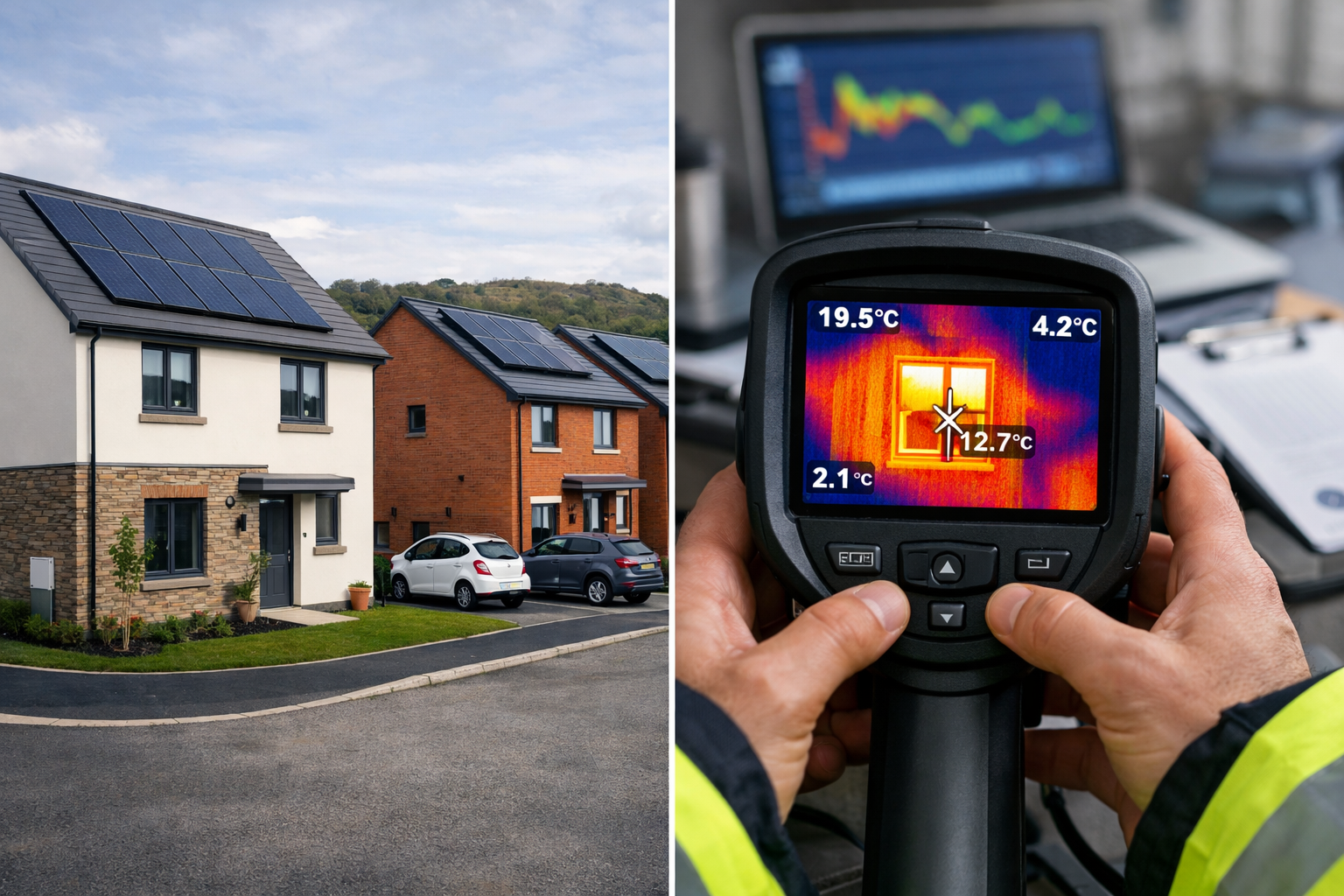
- Thermal imaging cameras to identify insulation defects and heat loss
- Moisture meters for accurate dampness measurement in stone and solid walls
- Drone surveys for roof and chimney inspection in difficult-to-access properties
- Digital reporting platforms enabling real-time updates and photographic evidence
These technologies enhance defect identification accuracy while providing clearer documentation for buyers and lenders. Professional surveys now routinely include digital enhancements that would have been considered specialist services just years ago.
Expanded Inspection Checklists
Welsh property surveys in 2026 require expanded checklists addressing:
Traditional Construction Elements:
- Stone wall condition and pointing integrity
- Timber frame condition in older properties
- Traditional roof construction (slate, tile, thatch)
- Historic window and door installations
- Chimney stack stability and condition
Modern Compliance Requirements:
- EPC rating verification and improvement potential
- Fire safety compliance in multi-occupancy buildings
- Building Safety Remediation Programme status
- Energy efficiency measures and performance
- Accessibility standards compliance
Regional Risk Factors:
- Flood risk assessment and mitigation measures
- Drainage system capacity and condition
- Ground stability on hillside locations
- Coastal exposure impacts (where applicable)
- Rural infrastructure adequacy (septic systems, private water supplies)
New Build Snagging Protocols
With approximately 2,500 affordable homes being delivered through the Land Unit [2], new build snagging has become increasingly important. Property buying predictions for 2026 emphasize earlier inspections and risk mitigation [5].
Pre-Completion Inspection Timing
Optimal snagging survey timing includes:
- Pre-plaster stage inspection (where developer access permits)
- Pre-completion snagging (2-4 weeks before legal completion)
- Post-completion verification (within defects liability period)
This phased approach catches defects before they become concealed, reducing remediation costs and disputes.
Common New Build Defects in Welsh Developments
Surveyors should prioritize inspection of:
- Plumbing installations and water pressure adequacy
- Electrical installations and consumer unit compliance
- Window and door alignment and weather sealing
- Plastering quality and finish standards
- Heating system commissioning and controls functionality
- External works completion including drainage and landscaping
Coordinating with Regulatory Requirements
Building survey protocols must align with evolving Welsh regulatory frameworks. The Federation of Master Builders calls for raising the threshold for "major developments" to 50 units [4], which would affect survey requirements for larger projects.
Planning System Integration
RICS identifies "planning delays affecting infrastructure and renewable energy projects" as a major obstacle [1]. Surveyors can add value by:
- Identifying planning compliance issues that could affect property use
- Assessing developer contribution obligations that may impact service charges
- Evaluating biodiversity net gain measures and their maintenance requirements
- Reviewing renewable energy installations for compliance and performance
Welsh Housing Survey Data Utilization
Propertymark's call for a Welsh Housing Survey to be undertaken in 2026-27 [3] will eventually provide valuable comparative data for surveyors. This systematic housing stock assessment will help establish regional benchmarks for property condition and defect prevalence.
Professional Standards and Buyer Confidence
RICS Survey Standards Evolution
The Royal Institution of Chartered Surveyors continues refining survey standards to reflect market changes and consumer needs. In Wales specifically, RICS emphasizes the importance of:
- Transparent reporting that clearly communicates defect severity
- Risk-based prioritization helping buyers understand urgent versus long-term issues
- Cost estimation guidance for remedial works
- Specialist referral protocols when defects require further investigation
These standards support buyer confidence in a market where affordability pressures create purchase urgency [1].
Supporting SME Builder Participation
The Federation of Master Builders advocates for mandatory allocation of small sites in development plans [4]. This policy would increase SME builder participation, potentially affecting defect patterns as smaller builders may have different quality control processes than volume housebuilders.
Surveyors must adapt protocols to assess properties from diverse builders, understanding that:
- Smaller developments may show more variation in build quality
- Traditional craftsmanship may be more prevalent in SME projects
- Innovative construction methods might be tested on smaller scales
- Quality control systems may differ from large-scale developer approaches
Addressing Skills Shortages
RICS notes that "skills shortages continue to constrain growth" [1] in Wales's built environment sector. This shortage affects both construction quality and survey capacity. Building survey protocols must account for:
- Workmanship variability due to skills gaps in construction trades
- Increased defect likelihood when experienced tradespeople are unavailable
- Quality control challenges during rapid construction phases
- Surveyor capacity constraints requiring efficient inspection methodologies
Future-Proofing Survey Approaches
Decarbonization Impact on Surveys
The £207 million allocated to retrofit and improve Wales's social housing stock [2] represents a massive undertaking that will affect survey protocols for years to come. Surveyors must understand:
- Retrofit technologies being deployed across Welsh housing
- Performance expectations for upgraded properties
- Common retrofit defects such as inadequate ventilation after insulation upgrades
- Long-term maintenance requirements for new systems
Properties that have undergone retrofit require specialized inspection to verify work quality and identify any unintended consequences of energy efficiency improvements.
Climate Adaptation Considerations
Wales's housing stock must adapt to changing climate patterns, including increased rainfall and flood risk. Forward-thinking survey protocols incorporate:
- Climate resilience assessment evaluating property vulnerability
- Adaptation measure identification such as flood barriers and improved drainage
- Long-term maintenance planning for climate-stressed building elements
- Insurance implications of climate-related risks
Digital Transformation of Survey Delivery
The survey profession continues embracing digital tools that enhance service delivery:
- Virtual property tours supplementing physical inspections
- AI-assisted defect identification improving inspection thoroughness
- Cloud-based reporting platforms enabling collaborative review
- Integrated cost databases providing accurate remediation estimates
These innovations support the enhanced survey standards RICS advocates [1] while improving efficiency in a skills-constrained market.
Practical Implementation for Buyers and Professionals
Selecting the Right Survey Level
Welsh property buyers should consider survey level based on:
Level 2 (HomeBuyer Survey):
- Modern properties (post-1990) in good condition
- Standard construction with no obvious defects
- Properties not requiring detailed investigation
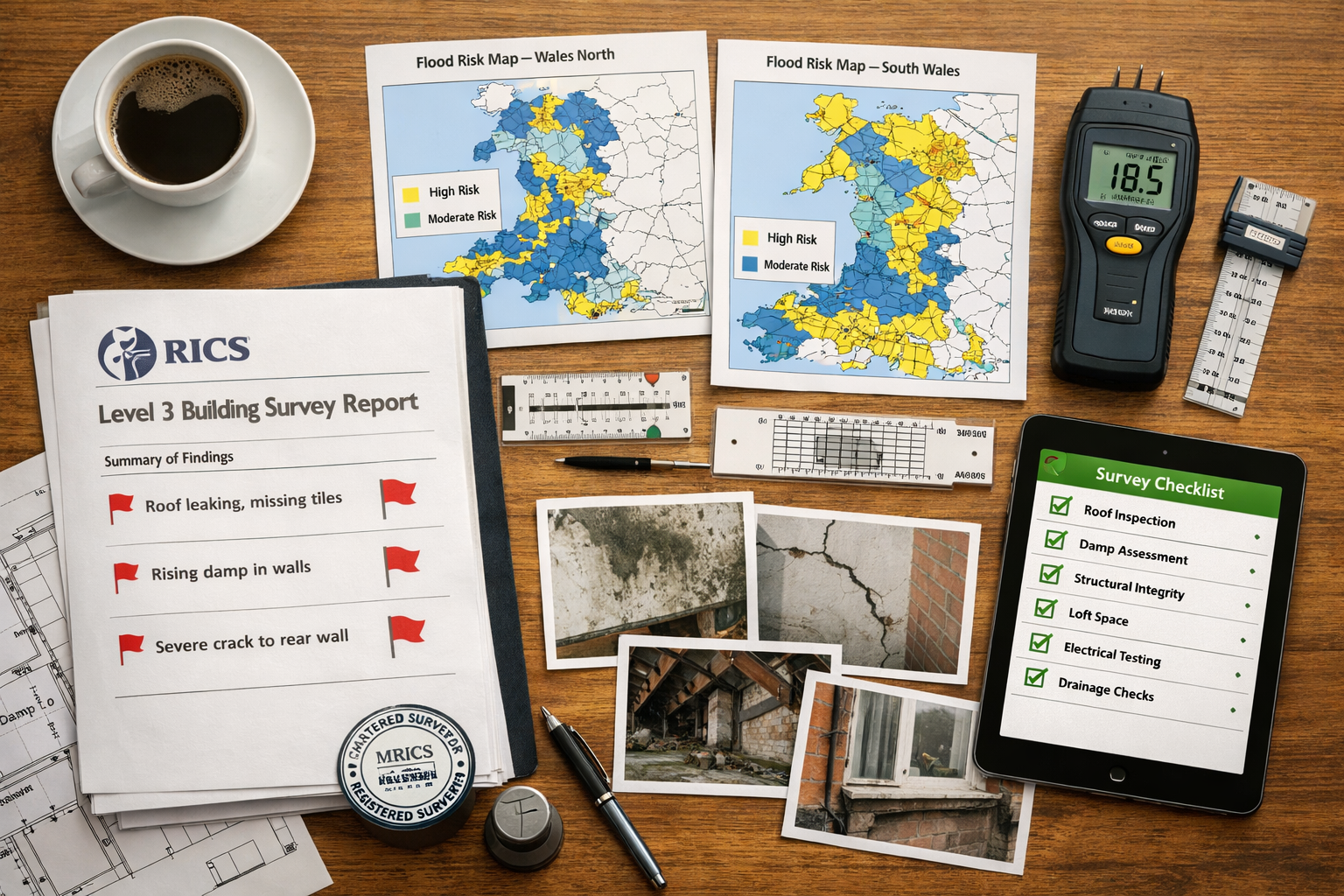
Level 3 (Building Survey):
- Properties built before 1990
- Traditional Welsh construction (stone, timber frame)
- Properties with visible defects or alterations
- Flood risk areas
- Buildings requiring renovation or conversion
Given Wales's housing stock characteristics—with one-third built before 1919 [2]—Level 3 surveys provide appropriate depth for many Welsh properties.
Specialist Survey Additions
Certain Welsh properties benefit from supplementary specialist surveys:
- Damp surveys for properties with visible moisture issues
- Roof surveys for complex or traditional roof structures
- Drainage surveys in flood-prone locations
- Timber surveys where rot or infestation is suspected
- Structural engineering assessments for properties with movement or stability concerns
Cost Considerations and Value
Survey costs represent a small percentage of property purchase price but provide significant protection. Understanding surveyor pricing helps buyers budget appropriately while recognizing the value delivered.
Investment in comprehensive surveys typically returns value through:
- Negotiation leverage when defects are identified
- Avoided purchases of properties with severe issues
- Maintenance planning with clear defect prioritization
- Insurance protection through documented condition
- Resale preparation understanding future buyer concerns
Conclusion
Building Survey Protocols for Wales Regional Boom: Spotting Defects in 2026's Accelerating Housing Demand requires sophisticated approaches that balance traditional construction knowledge with modern regulatory requirements. While Wales's construction sector has experienced momentum loss rather than explosive growth [1], the Welsh Government's record £471 million housing investment [2] signals significant market activity ahead.
The unique characteristics of Welsh housing—from pre-1919 stone cottages to new EPC A-rated developments—demand flexible survey protocols that address diverse defect types. Surveyors must integrate traditional skills in assessing stone walls and timber structures with modern capabilities in thermal imaging, energy efficiency evaluation, and fire safety compliance.
Key Actions for Property Buyers
✅ Commission appropriate survey levels based on property age, construction type, and condition
✅ Engage RICS-qualified surveyors with Welsh property experience and regional knowledge
✅ Request specialist surveys for identified concerns such as dampness, drainage, or structural movement
✅ Review Building Safety Remediation Programme status for buildings 11+ metres
✅ Assess flood risk using Natural Resources Wales data and site-specific evaluation
✅ Verify energy efficiency claims in new builds against Design Quality Requirements
Next Steps for Property Professionals
For surveyors and property professionals operating in Wales's evolving market:
- Update inspection checklists to reflect 2026 regulatory requirements and regional risks
- Invest in technology including thermal imaging and digital reporting platforms
- Develop specialist knowledge in traditional Welsh construction and modern retrofit techniques
- Stay informed on Building Safety Remediation Programme progress and implications
- Collaborate with specialists for complex defect assessment beyond core competencies
The Welsh housing market in 2026 presents both challenges and opportunities. By implementing robust building survey protocols that address the region's unique property characteristics, professionals can support buyer confidence while maintaining the high standards essential for Wales's housing future. As the Welsh Government's investment programs unfold and the Building Safety Remediation Programme progresses, thorough defect identification will remain the foundation of sound property transactions across Wales.
References
[1] Wales Manifesto 2026 Launch – https://www.rics.org/news-insights/wales-manifesto-2026-launch
[2] Infrastructure Finance Plan 2026 To 2027 – https://www.gov.wales/sites/default/files/publications/2025-11/infrastructure-finance-plan-2026-to-2027.pdf
[3] Propertymark Releases Action Plan For Next Welsh Government – https://www.propertymark.co.uk/resource/propertymark-releases-action-plan-for-next-welsh-government.html
[4] The Builders Manifesto For Wales 2026 – https://www.fmb.org.uk/resource/the-builders-manifesto-for-wales-2026.html
[5] Building Surveys Under New Homebuying Rules Earlier Inspections And Risk Mitigation In 2026 – https://nottinghillsurveyors.com/blog/building-surveys-under-new-homebuying-rules-earlier-inspections-and-risk-mitigation-in-2026