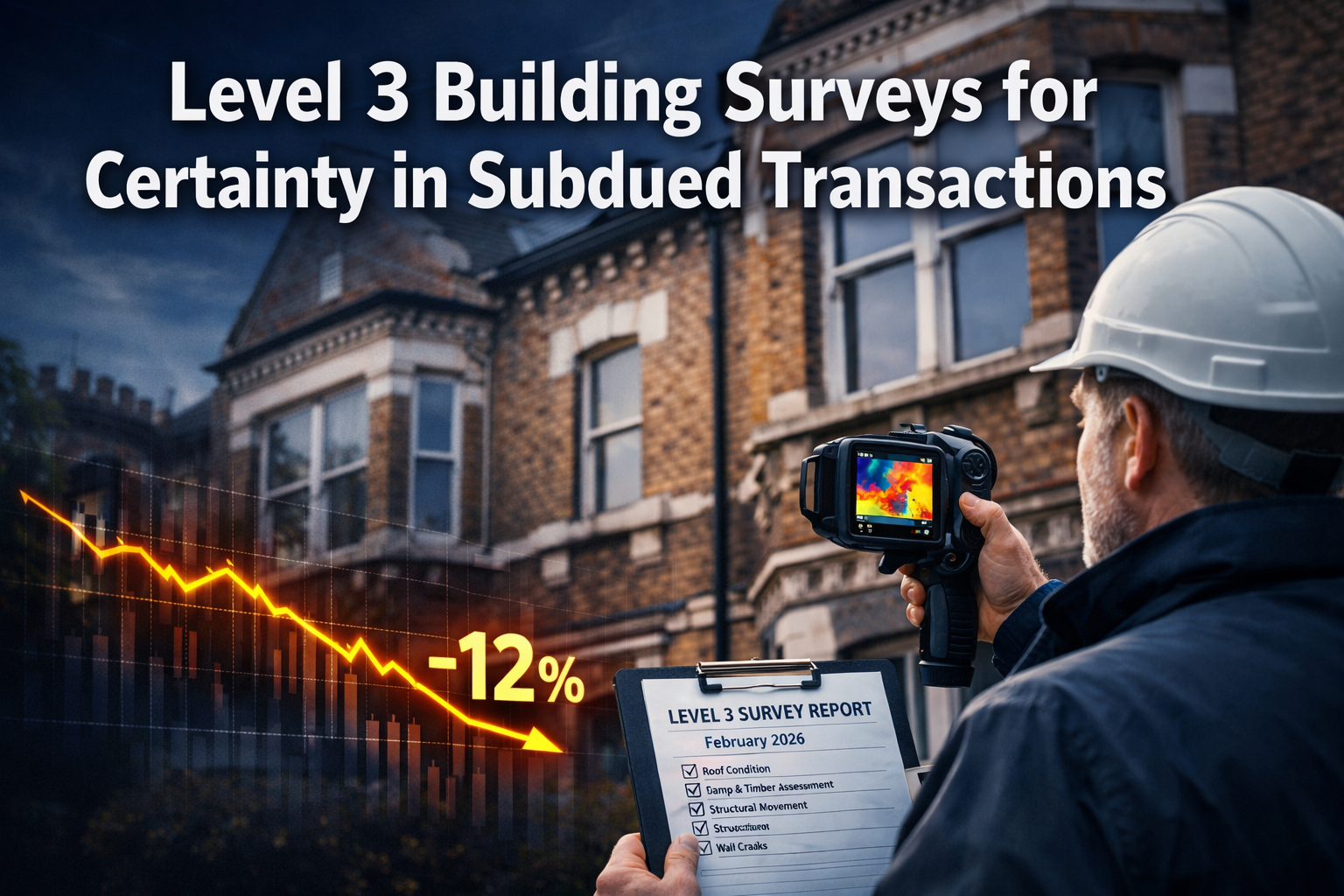

The property market landscape is transforming dramatically in 2026, and chartered surveyors find themselves at the center of this evolution. With the Royal Institution of Chartered Surveyors (RICS) pushing forward consultations on mandatory upfront condition assessments, building survey protocols are undergoing their most significant overhaul in decades. The Building Survey Protocols for Upfront Condition Assessments: RICS Consultation Impacts on Surveyor Workflows in Q2 2026 represents a pivotal shift that promises to reduce transaction failures, minimize buyer risk, and fundamentally change how professionals approach property inspections.
This transformation isn't happening in isolation. Following renewed buyer demand across regions like North West England and government pressure to streamline the home buying process, surveyors must now adapt their methodologies to accommodate earlier involvement in transactions. The implications stretch far beyond simple scheduling adjustments—they encompass technological integration, reporting standards, liability considerations, and client communication protocols.
Key Takeaways
- 🏗️ RICS consultations in Q2 2026 are driving mandatory upfront condition assessments, requiring surveyors to conduct inspections earlier in the transaction process
- 📋 The Home Survey Standard 2nd Edition is undergoing multi-stage review with enhanced clarity on survey areas, consumer insight integration, and technological adaptation
- ⚡ Surveyor workflows must adapt to accommodate increased demand, tighter timelines, and digital reporting requirements while maintaining professional standards
- 🔍 Upfront assessments reduce transaction risks by identifying property defects before offers are made, decreasing fall-through rates significantly
- 💼 Government reforms support greater professional involvement early in property transactions, positioning qualified surveyors as essential transaction facilitators
Understanding the RICS Consultation Framework for Building Survey Protocols
The RICS consultation process represents a comprehensive response to long-standing inefficiencies in the UK property market. For years, buyers have made offers on properties without full knowledge of their condition, leading to renegotiations, delays, and transaction failures when surveys reveal unexpected defects. The Building Survey Protocols for Upfront Condition Assessments: RICS Consultation Impacts on Surveyor Workflows in Q2 2026 addresses these systemic issues head-on.
The Home Survey Standard 2nd Edition Development
RICS is actively developing an updated Home Survey Standard following extensive member feedback and regulatory guidance. [2] This second edition reflects the need to strengthen survey areas and provide clarification that aligns with consumer insight and technological changes. The development process involves multiple review stages designed to ensure comprehensive quality control:
| Review Stage | Purpose | Stakeholders |
|---|---|---|
| Editorial Review | Clarity and consistency checks | RICS editorial team |
| Residential Professional Group Panel | Technical accuracy and practical application | Senior residential surveyors |
| Knowledge and Practice Committee | Standards alignment and best practice integration | Cross-discipline experts |
| Standards and Regulation Board | Final approval and regulatory compliance | RICS governance leadership |
This rigorous multi-stage review process ensures that the updated standards reflect both theoretical best practices and real-world surveying conditions. [2]
Government Support for Upfront Information
The UK Government's consultation on reforming the home buying and selling process has received strong support from RICS, which emphasizes the critical role of improved upfront information provided by qualified professionals. [3] RICS responded with recommendations designed to:
- Reduce transaction delays and fall-throughs
- Minimize consumer frustration during property purchases
- Create greater certainty earlier in the transaction process
- Position chartered surveyors as essential transaction facilitators
However, RICS has also cautioned against piecemeal changes that risk adding unnecessary cost or complexity without delivering meaningful improvements. [3] This balanced approach recognizes that reforms must be practical, affordable, and genuinely beneficial to all parties involved in property transactions.
Regional Demand Pressures Driving Protocol Changes
The January 2026 RICS survey highlighted specific regional pressures that necessitate protocol adaptations. In North West England, surveyors reported surging buyer enquiries that required immediate adjustments to their operational approaches. [1] These regional variations demonstrate that Building Survey Protocols for Upfront Condition Assessments: RICS Consultation Impacts on Surveyor Workflows in Q2 2026 must account for geographic market differences while maintaining consistent professional standards.
When considering choosing the right property survey, buyers increasingly expect comprehensive upfront information that was previously only available after making offers. This expectation shift places additional pressure on surveyors to deliver detailed assessments within compressed timeframes.
Practical Workflow Adaptations for Surveyors in Q2 2026
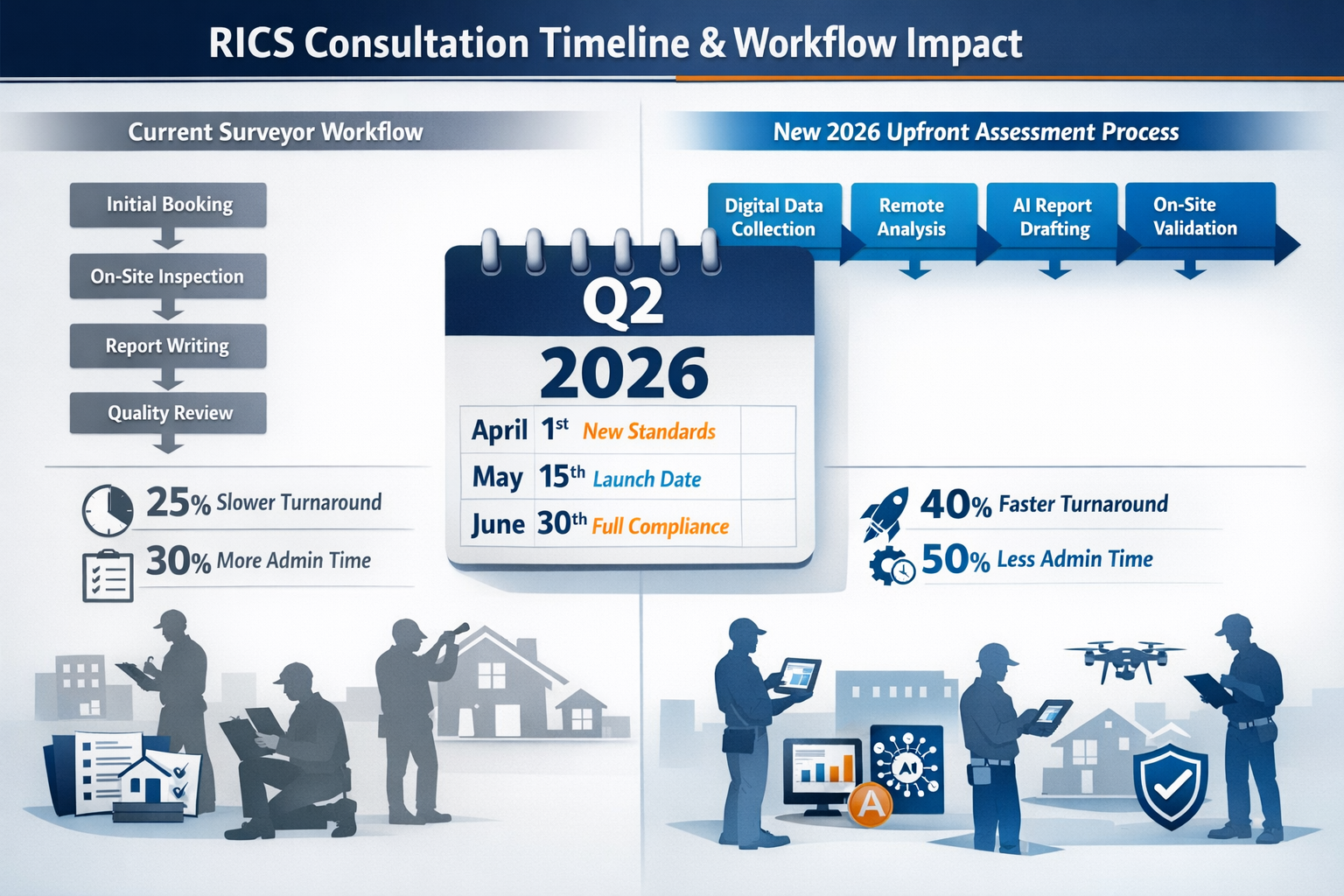
The transition to upfront condition assessment protocols requires surveyors to fundamentally rethink their operational workflows. Traditional models where surveys occurred after offer acceptance must evolve to accommodate pre-offer inspections without compromising professional thoroughness.
Earlier Transaction Involvement
Surveyors must now engage with properties before buyers make formal offers, shifting their position in the transaction timeline. This earlier involvement creates several practical challenges:
Scheduling Complexity: With multiple potential buyers potentially commissioning surveys on the same property, surveyors must develop efficient scheduling systems that accommodate overlapping requests without creating conflicts.
Report Validity Periods: Upfront surveys conducted for sellers must remain valid for reasonable periods while market conditions and property status may change. Establishing clear validity timeframes protects both surveyors and clients.
Access Coordination: Coordinating property access with sellers who may not yet have accepted offers requires diplomatic communication and flexible scheduling arrangements.
For those conducting RICS commercial building surveys, these challenges multiply due to the complexity of commercial properties and the higher stakes involved in commercial transactions.
Digital Reporting and Technology Integration
The Building Survey Protocols for Upfront Condition Assessments: RICS Consultation Impacts on Surveyor Workflows in Q2 2026 emphasizes technological adaptation as a core component of modernized practices. [2] Surveyors must integrate:
- Digital survey templates that ensure consistency and completeness
- Photographic documentation systems with geo-tagging and timestamp verification
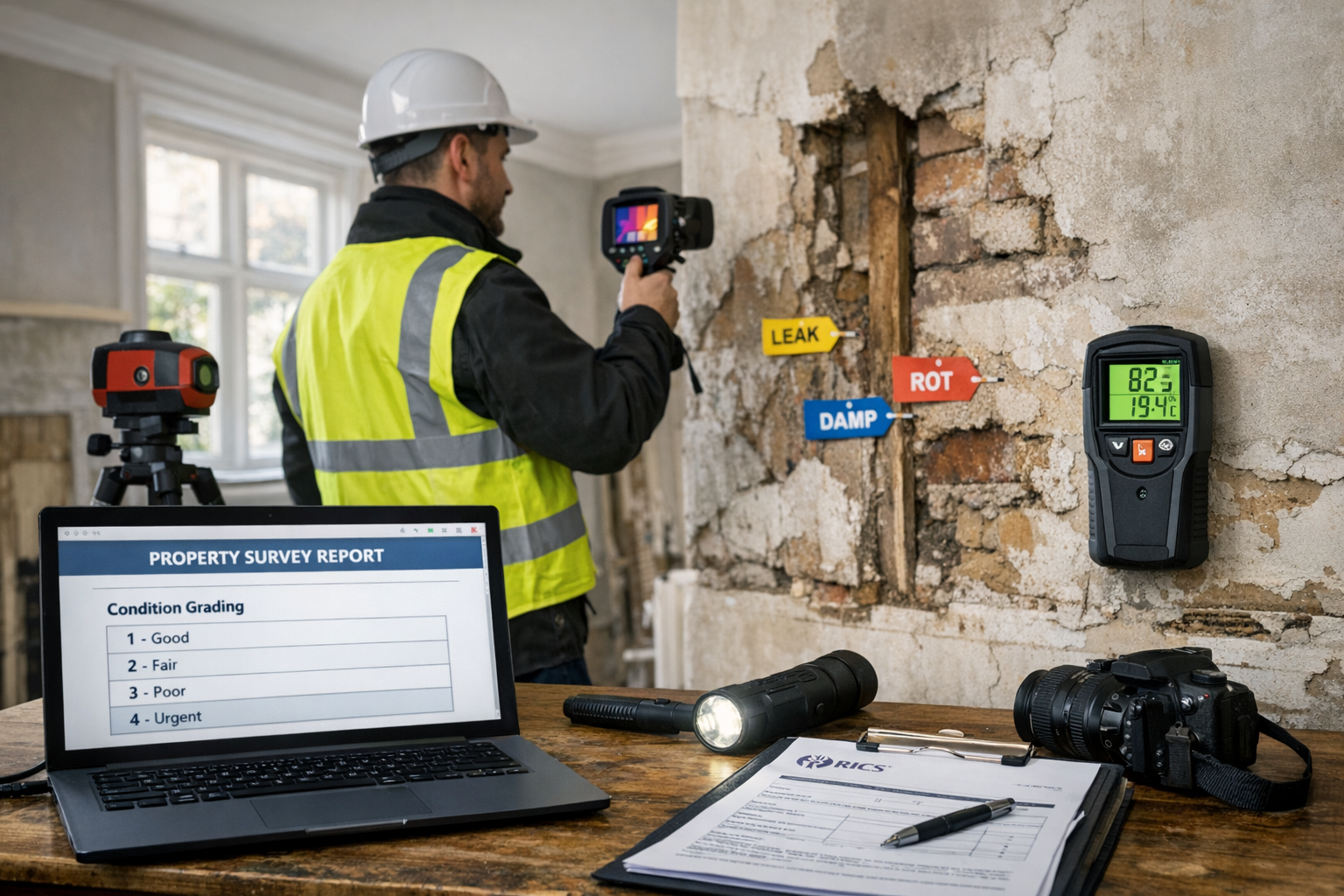
- Thermal imaging and moisture detection technology for non-invasive defect identification
- Cloud-based reporting platforms enabling rapid report delivery and secure storage
- Mobile inspection applications that facilitate on-site data capture and preliminary analysis
These technological tools don't replace professional judgment but rather enhance the surveyor's ability to document conditions comprehensively and communicate findings clearly. Understanding structural survey pricing becomes more transparent when digital systems provide detailed breakdowns of inspection components.
Enhanced Defect Identification Protocols
Upfront assessments require heightened attention to defect identification since buyers will rely on these reports to make offer decisions rather than using them to renegotiate after commitment. This increased reliance demands:
- Comprehensive visual inspection of all accessible areas
- Systematic documentation of defects with severity grading
- Clear repair cost estimates or ranges for identified issues
- Maintenance recommendations for ongoing property care
- Risk assessment for potential hidden defects requiring specialist investigation
For properties with specific concerns, surveyors may recommend specialized assessments such as RICS specialist defect surveys or damp surveys to provide comprehensive condition information before buyers commit financially.
Liability and Professional Indemnity Considerations
The shift to upfront assessments creates new liability considerations for surveyors:
"When surveys inform pre-offer decisions rather than post-offer negotiations, the professional responsibility intensifies. Surveyors must ensure their professional indemnity insurance adequately covers this expanded exposure."
Key liability considerations include:
- Report audience expansion: Reports may be relied upon by multiple parties including sellers, buyers, lenders, and solicitors
- Extended validity periods: Upfront reports remain relevant longer than traditional post-offer surveys
- Transaction influence: Survey findings directly influence whether offers are made rather than simply adjusting agreed prices
- Defect disclosure obligations: Surveyors must balance thoroughness with avoiding unnecessary alarm over minor issues
Understanding the difference between Level 2 and Level 3 surveys becomes crucial when advising clients on appropriate assessment depth for upfront inspections.
Strategic Implementation and Future Outlook for Building Survey Protocols
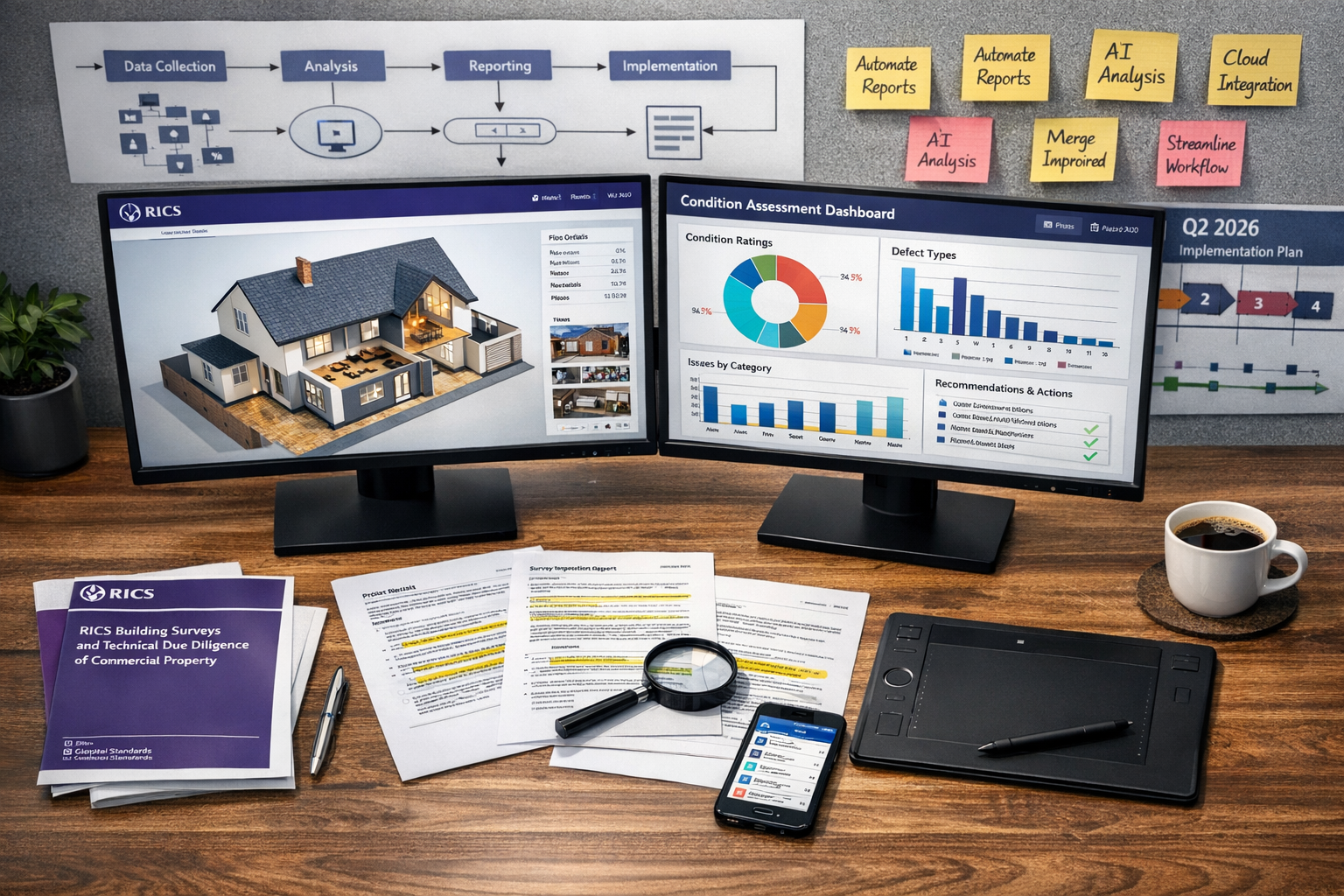
As Q2 2026 progresses, the Building Survey Protocols for Upfront Condition Assessments: RICS Consultation Impacts on Surveyor Workflows in Q2 2026 continues to evolve based on implementation feedback and market response. Strategic planning ensures surveyors remain competitive while maintaining professional standards.
Aligning with Future Homes and Buildings Standards
The UK Government's publication of Future Homes and Buildings Standards in early 2026 strengthens building regulations toward net zero targets, with RICS positioning professionals as central to delivering this transition. [4] Building survey protocols must now incorporate:
- Energy efficiency assessments as standard components of condition reports
- Retrofit potential evaluation identifying opportunities for sustainability improvements
- Building regulation compliance verification ensuring properties meet current standards
- Future-proofing recommendations advising on anticipated regulatory changes
This integration positions surveyors not merely as defect identifiers but as strategic advisors helping clients understand properties within the broader context of environmental regulations and sustainability goals.
Training and Professional Development Requirements
Adapting to new protocols requires ongoing professional development. Surveyors must invest in:
Technical Skills Enhancement: Training on new inspection technologies, digital reporting platforms, and updated building regulations ensures competency with modern assessment methods.
Communication Skills Development: Explaining complex technical findings to non-specialist audiences becomes increasingly important when reports inform pre-offer decisions.
Regulatory Knowledge Updates: Staying current with evolving RICS standards, government reforms, and regional variations ensures compliance and professional credibility.
Risk Management Training: Understanding liability implications and appropriate professional boundaries protects both surveyors and clients.
For those conducting stock condition surveys or building surveys, these professional development investments pay dividends through enhanced service quality and client satisfaction.
Client Communication and Expectation Management
The shift to upfront assessments requires refined client communication strategies:
Setting Realistic Timelines: Clients must understand that thorough inspections cannot be rushed, even when market pressures demand quick turnarounds.
Explaining Scope Limitations: Clear communication about what surveys can and cannot determine prevents unrealistic expectations and subsequent disappointment.
Presenting Findings Constructively: Balancing honesty about defects with appropriate context helps clients make informed decisions without unnecessary anxiety.
Providing Actionable Recommendations: Moving beyond defect identification to offer practical next steps empowers clients to act on survey findings effectively.
Understanding surveyor pricing helps clients appreciate the value delivered through comprehensive upfront assessments rather than viewing surveys as transactional expenses.
Regional Service Delivery Considerations
Implementing standardized protocols across diverse regional markets requires flexibility. Surveyors operating in areas like London, North London, or Berkshire must adapt approaches to local property characteristics, market conditions, and client expectations while maintaining consistent professional standards.
Regional considerations include:
- Property age and construction types varying significantly between areas
- Local market velocity affecting scheduling pressures and report turnaround expectations
- Regional defect patterns requiring specialized knowledge of area-specific issues
- Client sophistication levels influencing communication approaches and report detail requirements
Measuring Success and Continuous Improvement
Successful implementation of Building Survey Protocols for Upfront Condition Assessments: RICS Consultation Impacts on Surveyor Workflows in Q2 2026 requires ongoing performance measurement:
Key Performance Indicators:
- Report turnaround times from instruction to delivery
- Client satisfaction scores and feedback quality
- Transaction completion rates for surveyed properties
- Defect identification accuracy and comprehensiveness
- Professional development participation and competency assessments
Continuous Improvement Mechanisms:
- Regular review of survey templates and reporting formats
- Peer review programs ensuring quality consistency
- Client feedback integration into service refinement
- Technology evaluation and adoption of beneficial innovations
- Industry collaboration sharing best practices and lessons learned
For surveyors offering specialized services like schedule of condition reports or specific defect reports, these quality assurance processes ensure services remain relevant and valuable as market expectations evolve.
Conclusion
The Building Survey Protocols for Upfront Condition Assessments: RICS Consultation Impacts on Surveyor Workflows in Q2 2026 represents a watershed moment for the property surveying profession. As mandatory upfront assessments become standard practice, surveyors who adapt their workflows, embrace technology, and enhance their professional capabilities will thrive in this transformed landscape.
The benefits extend beyond individual surveyors to the entire property market ecosystem. Reduced transaction failures, improved buyer confidence, and greater market efficiency create value for all stakeholders. By positioning qualified professionals earlier in the transaction process, these reforms recognize surveyors as essential facilitators of successful property transactions rather than optional service providers.
Actionable Next Steps for Surveyors
Immediate Actions (Next 30 Days):
- Review current survey templates against emerging RICS standards
- Assess technology stack and identify gaps requiring investment
- Update professional indemnity insurance to ensure adequate coverage
- Develop client communication materials explaining upfront assessment benefits
Short-Term Priorities (Next 90 Days):
- Complete relevant professional development training on new protocols
- Implement digital reporting systems for enhanced efficiency
- Establish scheduling systems accommodating pre-offer inspections
- Build relationships with estate agents and solicitors facilitating upfront assessments
Long-Term Strategic Goals (Next 12 Months):
- Position practice as specialist in upfront condition assessments
- Develop niche expertise in areas like energy efficiency or sustainability
- Build reputation through consistent quality and reliable turnaround times
- Contribute to industry knowledge sharing and best practice development
The transformation underway in Q2 2026 challenges surveyors to evolve, but it also creates unprecedented opportunities for those willing to embrace change. By understanding the Building Survey Protocols for Upfront Condition Assessments: RICS Consultation Impacts on Surveyor Workflows in Q2 2026 and implementing strategic adaptations, surveyors can position themselves at the forefront of a more efficient, transparent, and professional property market.
For comprehensive surveying services that reflect these evolving standards, explore our full range of survey options or contact us to discuss how upfront condition assessments can benefit your property transaction.
References
[1] Rics January 2026 Survey Insights Building Survey Protocols For Surging Buyer Enquiries In North West England – https://nottinghillsurveyors.com/blog/rics-january-2026-survey-insights-building-survey-protocols-for-surging-buyer-enquiries-in-north-west-england
[2] Home Survey Standard 2nd Edition A Progress Update – https://www.rics.org/news-insights/home-survey-standard-2nd-edition-a-progress-update
[3] Uk Influence And Advocacy Update January 2026 – https://www.rics.org/news-insights/uk-influence-and-advocacy-update-january-2026
[4] Rics Ceo Comments On The Publication Of The Future Homes And Building Standards – https://www.rics.org/news-insights/rics-ceo-comments-on-the-publication-of-the-future-homes-and-building-standards